Diane Keaton: Rare and Superb

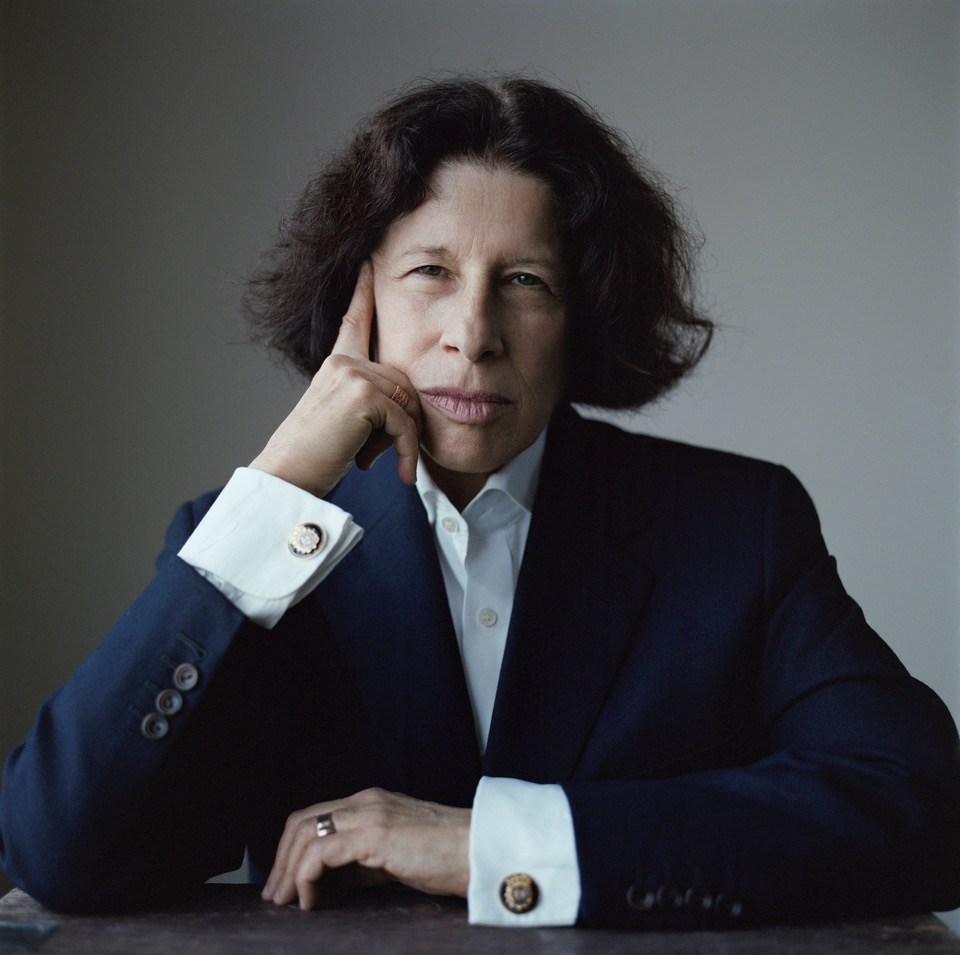
We’ve just added “Something’s Gotta Give” to our streaming collection—Diane Keaton’s own favorite among the seventy films in which she starred.

I’ve never been much drawn to romantic comedies, but this one—also featuring Jack Nicholson and Keanu Reeves—has held a special place for me.

A compassionate woman, Keaton was more than a Hollywood icon. She gave freely of her time and means to causes close to her heart, including animal welfare. I hadn’t known she refused to eat meat: “I don’t eat meat. I’m a vegetarian, and I’ve been a vegetarian for twenty-five years—and I’ve stopped even eating fish.” Learning this, I admire her all the more.

Art, as Keats reminded us, transcends mortality. We’ve lost you, Diane, but through your movies—and the goodness that shaped you—your legacy endures.
RIP.

Finding New Ways to Choose Books I Want to Read

Every New Year’s Day for the past six years I’ve posted on Brimmings my annotated recommendations for the finest fiction and nonfiction reads. I spend hours culling my lists from authoritative sources. I give emphasis to canonical works, both domestic and international—books intellectually stimulating, challenging, and broadening, the kind that will still be read generations hence. Often one of my criteria has been to fill gaps in my own reading, those books I should have read long ago, but somehow missed.

But lately I’ve been musing on a new way of choosing books—more personal than public, more in keeping with my desire to read systematically, to fill in the areas I don’t know well but should.

While my published lists have value, they fall short of providing full acquaintance with an author through a single recommendation. A fragmented forest, bisected by a highway or development, comes to mind—isolated stands of trees cut off from the territorial expanse essential for their flourishing.

It used to be that when I encountered a great writer for the first time, I would read five books: two about the author (often biographies), and three by the author. It worked well—Tolstoy, for example.

But now I want to do better still.

Perhaps I could read not only by author but by theme—a focus on, say, the environment, doing a minimal five books, maybe beginning with the late E. O. Wilson, who never disappoints, or the sagacious Carl Sagan. Reading only The Great Gatsby hardly gives one the fullest sweep of Fitzgerald’s range and mastery. It’s like movie buffs: if you admire Tom Hanks, you don’t stop at one film.

To really round out my education, I should read chronologically, starting with the classics. I’ve read and taught Euripides’ Medea, but it’s only one play—nineteen of his tragedies survive.

So yes, I can focus on an author or a theme—or read chronologically across disciplines.

Here’s another approach: why not read geographically, and I mean largely internationally? I know so little of Chinese literature, philosophy, and culture—the same for India and Japan.

Or I could venture a European country that most readers overlook—Finland, for example, a nation whose people are addicted to both writing and reading, dark interminable Arctic nights surely contributing. I already have Finland on my list.

I’ll still publish my annual New Year’s list, but when push comes to shove, know that privately I’ll be trekking the road not taken.

–rj

Out of Nowhere: Gaza in Poetry

I’m about to eat breakfast, but I feel guilty for the good life I wake to daily when so much of the world, removed from our shores, knows only war, destruction, death, and incalculable grief: Sudan, the Democratic Republic of the Congo, Ukraine and Gaza. Still others.

I am moved by Palestinian-American poet and physician Fady Joudah’s recent poem about Gaza. The death toll, vastly civilian, now approaches 70,000.

Joudah has lost 100 members of his Gaza family. He has served as a volunteer with Doctors Without Borders.

Since his poem is under copyright, I can only share an excerpt:

“And out of nowhere…”

And out of nowhere a girl receives an ovation
from her rescuers, all men on their knees and bellies
clearing the man-made rubble with their bare hands, disfigured by dust into ghosts.
All disasters are natural including this one, because humans are natural.
The rescuers tell her she’s incredible, powerful,
and for a split second, before the weight of her family’s disappearance sinks her, she smiles,
like a child who lived for seven years above ground receiving praise.

PostScript:
Joudah is a winner of The Yale Series of Younger Poets Competition and long listed for the National Book Award for Poetry (2024).

—rj

What I Read and How I Choose

I am committed to reading the best that has been thought and said. Escapism and the utilitarian have never been my guides to what I read. In our age of competing stimuli, we’ve imperiled our ability to reflect, to think hard about life’s meaning and live it well.

Stillness is prerequisite for reflection that enlargens our thinking, renders us more humane, the finding time for the right read that nurtures the goodness that lies within us.

I am dismayed about contemporary classrooms, vastly different from those of my New England childhood that lent emphasis to the reads that expand awareness and humane endeavor.

Classicist Michael S. Rose sums up for me what today’s classrooms have lost with their inability to distinguish the wheat from the tares:

“The great catastrophe of our time is not that children fail to learn, but that they have never been taught what is worth knowing. The tragedy that unfolds daily in classrooms across the land is the presence of amnesia, a colossal forgetting of our inheritance. The inheritance of human genius and beauty—from Athens and Jerusalem, through Rome and the Renaissance, to Shakespeare’s London and Lincoln’s prairie—is what now stands in peril. It has not been violently seized; that would require too much effort and too much awareness of what was being lost. Rather, it has been carelessly misplaced, forgotten among the dazzling distractions of modernity” (Substack, Oct. 9, 2025).

—rj

A Book’s Greatest Compliment

I think the greatest compliment one can pay a book is to want to read it again. I doubt I can ever shed Eliot’s Middlemarch or Tolstoy’s Anna Karenina—or, more contemporary, Pullman’s The Dark Materials.

You know me as loving anything by Virginia Woolf: a summer day of floating clouds in sea of blue, daisies blooming at my feet; a tranquil sojourn in the shade of a leafy maple, my back propped against its furrowed bark, To the Lighthouse in my hands.

A momentary escape from a troubled world of tribal factions…

How can I not enter into character Lily Briscoe’s insightful awareness of art’s ability to unify experience and grant it meaning?

“She could see it so clearly, so commandingly, when she looked: it was when she took her brush in hand that the whole thing changed.”

And then the question that hovers over all our lives:

“What is the meaning of life? That was all—a simple question; one that tended to close in on one with years. The great revelation had never come. The great revelation perhaps never did come. Instead there were little daily miracles, illuminations, matches struck unexpectedly in the dark.”

The artist’s struggle to render visible her inner contemplations—it’s all there. Those rare moments when the gates of mystery yield, and we glimpse the whole.

As Lily exclaims in triumph and exhaustion:

“Yes, she thought, laying down her brush in extreme fatigue, I have had my vision.”

Great artistry helps us find our own vision, makes us more aware, and doing so, lends nurturance for living our lives better.

And so it is for me with To the Lighthouse: like a well-brewed tea, to be sipped slowly, savored, drunk down to the very lees.

—rj

Three Places I Remember Most: Reveries in Stillness


There are three places I’ve been that I’ve loved the most, but not in the way most travelers recount their memories.

Each remains a palpable memory, not because they yielded an Eiffel Tower, Cancun beach, or haute cuisine New York restaurant; but on the contrary, a stunning silence, sweeping me out of myself and a landscape weighted with human duplicity.

In those moments I floated, unmoored from gravity, a wanderer among the stars —part of everything that has been or ever will be, glimpsing eternity beneath all mortal breath, my entrance into epiphany.

It happened first for me years ago at Arlington National Cemetery, the white rows glimmering in the rays of early morning sun.

The second at Kitty Hawk, where the Wright brothers’ fragile dream first lifted from the earth. I stood alone, wombed in stillness, as if the air itself remembered that first exultant rise.

Most memorable of all, traveling eastward from Edinburgh, and suddenly they unfurled, the Highlands, spectacular in their rolling verdure. I stepped from the car into a silence so immense it seemed alive.

In its haunting stillness, I understood Emily Brontë’s fierce passion for the Yorkshire moors, resounding in her poetry and prose:

“you are not broken for needing stillness
you are not flawed for shrinking from noise
your mind is simply attuned to something different
something more aligned with the quiet current
that flows beneath all of existence.”

Like Emily, I exalt in that stillness, shaking hands with Eternity.

A Polarizing Artist: Rudyard Kipling’s Legacy

I remember it well. I was a young graduate student, privileged to study under one of the world’s foremost professors of Victorian literature, a renowned authority on Thomas Hardy.

The course was rigorous. We read the greats of the age—Macaulay, Tennyson, Browning, Dickens, Mill, Newman, Arnold, Morris, Ruskin, the Rossettis, Swinburne, Hopkins, Pater, and of course Hardy. Yet strikingly absent was Rudyard Kipling. Our professor dismissed him as the mere voice of imperialist Britain—an attitude then dominant in the Academy, and one I suspect still lingers on American university campuses.

I had never read Kipling. I had not yet learned to question. I accepted what I was told.

It was only later, during a summer course at Exeter College, Oxford, that I encountered another view: one that esteemed Kipling’s literary brilliance without committing the American folly of conflating his politics with the merits of his artistry.

Kipling’s literary range was astonishing. His verse, endowed with rhythmic command, borders on the hypnotic. He opened poetry to colloquial speech and became a supreme craftsman of the ballad form.

Yes, he gave voice to Empire in works like The White Man’s Burden, Kim, and The Jungle Books. But he also revered Indian culture—its spirituality, wisdom, and sensory richness. Often, with subtle irony, he questioned the very order he seemed to affirm.

Perhaps his greatest achievement lies in the short story. With precision and nuance, he crafted narratives of extraordinary compression, modern in their suggestiveness, wide-ranging in their scope. The Man Who Would Be King remains a masterpiece—its sweep and power undiminished. Kipling’s influence on Conrad, Maugham, Hemingway, Borges, and others is beyond doubt.

He was awarded the Nobel Prize in Literature in 1907—the first English-language writer to receive it—honored for his “power of observation, originality of imagination, virility of ideas, and remarkable talent for narration.”

Kipling’s stories, like all enduring art, probe psychological depths. They are complex, skeptical of conventional wisdom, and riveting in their precision.

In today’s multicultural Britain, he is taught in context: his genius as a storyteller acknowledged, his colonial perspective rejected. Lewis, Tolkien, and Pullman have recognized him as a precursor to modern fantasy.

In India, where he was born and spent his early years, his reception is understandably ambivalent: many readers disdaining his imperial condescension, yet acknowledging his literary craftsmanship. Salman Rushdie has called Kim “one of the greatest novels written about India,.” Other Indian writers continue where Kipling left off, offering vivid vignettes of India, but through an Indian prism.

Controversy about his place in the Western literary canon remains. Vladimir Nabokov, in his Cornell lectures, dismissed Kipling for his moralizing, He deemed his indulgence in exotic adventure stories as juvenile. Great literature, he argued, obeys the aesthetic imperative of narrative neutrality, or distance, as in Flaubert and Joyce.

On the other hand, the late eminent Yale critic Harold Bloom came to Kipling’s defense. In his The Western Canon. Bloom lists Kipling among hundreds of writers deserving inclusion in the canon. Bloom saw Kipling as a myth maker and gifted story teller, especially in his short stories. On the other hand, he found his poetry “scarcely bear reading.”

While I find merit in both Nabokov’s and Bloom’s arguments, I lean towards Bloom’s appraisal as more balanced. I have long resisted either/or equations, particularly as to the political or aesthetic. Over a lifetime, I have frequently found reasoned judgment occupies a middle place. I have given my own arguments earlier in this essay for his belonging in the canon.

Whatever a reader’s verdict, Kipling was a singular voice, very much his own man. In short, authentic. As he said in an interview shortly before his death,

“The individual has always had to struggle to keep from being overwhelmed by the tribe. To be your own man is a hard business. If you try it, you’ll be lonely often, and sometimes frightened. But no price is too high to pay for the privilege of owning yourself” (Qtd. in the Kipling Journal, June 1967).

rj

A Candle Has Gone Out: The Legacy of Jane Goodall

It’s with profound sadness I learned yesterday of primatologist Jane Goodall’s death at age 91.

Blessed with remarkable genes, she lived life with zest up to the very last, tirelessly traveling across international landscapes to raise funds for her Jane Goodall Institute in Tanzania, founded in 1977.

I read her NY Times obituary, but it falls short in evaluating the plenitude of her achievement and its significance for all of us. I learned some time ago that the NYT composes many of its obituaries in advance, ready-to-go like a frozen pizza.

It doesn’t take into account her devotion to the Tanzanians among whom she worked for sixty years, as earnest for their welfare as she was for chimpanzees, humanity’s closest relatives, possessed like us with dual capacity for good and evil.

She gave early warning of climate change as an eyewitness of its exponential ravages in Africa, the front line of its advance.

You can learn much of what she accomplished through reading among her many books The Shadow of Man or A Reason for Hope of her work in Africa, breakthroughs in science, and personal beliefs, some of them controversial such as her advocacy of birth control availability to help African families limit their family size. Tanzania is second among Africa’s 54 nations in population growth. With a present population of 68 million, its projected 2100 population will swell to 283 million, imperiling its subsistence resources.

Goodall had faced an uphill climb in winning acceptance among male scientists, stubbornly suspicious of any woman’s achievement in investigative research. Initially, when setting out for Africa, she had been a waitress and secretary. A wealthy donor, however, recognizing her brilliance, provided the funding for a Ph.D. in ethology at Cambridge University, Goodall one of the rare individuals to directly achieve a Ph. D., not having been an undergraduate.

I confess to a personal attachment to Goodall who, like me, suffered from lifelong prosopagnosia, a neurological disorder inhibiting one’s ability to recognize faces.

Currently the fate of her African investment, employing thousands of Tanzanians, remains under unrelenting threat with population growth, agricultural expansion, deforestation, fragmented forest, habitat loss, logging, and lack of consistent government enforcement of land use laws; not least, the volatility of donor contributions on which the work depends, collectively posing a Sword of Damocles hovering over its future.

There remain just 2300 chimpanzees throughout Tanzania, with an estimated 90 to 100 in Gombe National Park, the site of her research. Those numbers are down from the original 150 as elsewhere in Tanzania, bush meat remains a frequent staple despite its health risks. AIDS had its origin in Africa, consequent with eating chimpanzees harboring the Simian Immunodeficiency Virus (SIV). Goodall was a committed vegan, ardently opposed to factory farming.

Also contributing to their demise is ever expanding human encroachment.

A friend of animals, champion of Mother Earth, always with passion and never without hope, Dr. Goodall is in my pantheon of heroes, her many awards including the Presidential Medal of Freedom (USA), the Steven Hawking Medal of Science for Communication, and designation as Dame Commander of the Order of the British Empire (DBE).

Acknowledging her advanced age, she approached death as her “next great adventure. When you die, there’s either nothing, it’s the end, or there’s something. And things have happened to me in my life that I feel there is something. And if there is, I can’t think of a greater adventure than dying.” 

I wish I lived in a world which lowered its flags in tribute to Dr. Goodall:

”Somehow we might keep hope alive—a hope we can find a way to alleviate poverty, assuage anger, and live in harmony with the environment, with animals, and with each other,” she wrote.

A candle has gone out and I feel lonely and in a dark place.

rj

Hungry to Connect: The Addiction That Plagues Us

“Look at all the lonely people,” the Beatles sang in their haunting “Eleanor Rigby.”

You’ll find them not only in bars but, much more these days, glued to their TV screens and 24/7 social media, hungry to connect.

It’s the true addiction that plagues us.

Cultural critic Ted Goia—12 books—writes perceptibly of our mania to whittle our way out of our daily ennui via screen subservience, unwitting of the corporate entities feeding our habit:

“No drug cartel makes as much money as the screen-and-app companies. It’s not even close.

“… screen media providers will never tell you the truth about the screens themselves. These interfaces appear—falsely!—as innocent and without agenda. But just follow the money trail, and it’s not hard to figure out what’s really going on.

“The richest people on the planet are the ones who control our screens. That doesn’t happen by coincidence.

“If we abandon ourselves completely to the tech (as many now do), we become pawns in the corporate agenda to monetize us—at a tremendous cost in loneliness, depression, and social disconnection” (“David Foster Wallace Tried to Warn Us,” Substack, Sept. 26, 2025).

Goia quotes the late literary genius, David Foster Wallace, who didn’t own a TV, knowing his susceptibility to its mind-numbing allure:

“Entertainment’s chief job is to make you so riveted by it that you can’t tear your eyes away, so the advertisers can advertise.…At a certain point we’re gonna have to build up some machinery, inside our guts, to help us deal with this. Because the technology is just gonna get better and better and better and better. And it’s gonna get easier and easier and more and more convenient, and more and more pleasurable, to be alone with images on a screen, given to us by by people who do not love us but want our money(Interview with David Lipsky, Rolling Stone, 1993).

By the way, I’m planning to read everything Wallace wrote—the short stories, the essays, his magnus opus, Infinite Jest and unfinished The Pale King.

Prescient and mesmerizing, he deserves nothing less.

rj

Mental Decline on Exhibit: The Spectacle of Trump at the UN

Trump’s address to the U.N. General Assembly last week, too long and consistent only in its rambling, narcissism, and cantankerous bombast, surely rates as one of America’s most embarrassing spectacles on display before world leaders. Clearly, we are witnessing a leader’s mental decline, posing grave danger, not only for our nation, but the world at large.

It began when he stepped on an escalator that stopped moving midway. Trump thought it not accidental.

Addressing the UN, Trump showed the world how to win friends and influence people:

“I’m really good at this stuff. Your countries are going to hell.”

Trump’s your consummate ego-maniac. It’s always about him:

“No president or prime minister. And for that matter, no other country has ever done anything close to that restoring stability and I did it in just seven months. It’s never happened before. There’s never been anything like that. Very honored to have done it.”

In his megalomania, Trump presented himself as the world’s greatest peacemaker, no thanks to the UN:

“I ended seven wars, dealt with the leaders of each and every one of these countries, and never even received a phone call from the United Nations offering to help in finalizing the deal. All I got from the United Nations was an escalator that on the way up stopped right in the middle. If the First Lady wasn’t in great shape, she would’ve fallen. But she’s in great shape…. Everyone says that I should get the Nobel Peace Prize for each one of these achievements….”

On climate change, ignoring decades of peer-reviewed science, Trump excoriated renewable energy efforts as a “green scam.”

So much of what Donald says isn’t easy reading. Take this example from his UN speech:

“Nothing bad can happen, it can only good happen.”

I ask myself, How did this guy get into Penn’s prestigious Wharton School of Business? I remember a former Wharton prof allegedly saying he was “the dumbest student” he ever had (William T. Kelley, Wharton Professor of Marketing). Wharton was selective in those days, taking in transfers by the bushel, including Trump, a Fordham student. And then there were the family connections. For the record, Trump didn’t graduate with honors.

Trump displays all the earmarks of lacking impulse control. I used to give him a pass—ok, he’s impulsive—my mistake, only to realize this is a psychological disorder that can lead to harmful consequences, if not professionally addressed.

Think about it, an impulsive man in thought and action able to trigger a nuclear response. He called war hero John McLain “a loser.” Biden is “sleepy Joe.” Zelensky is “ungrateful.”

We have on our hands a president who skips his morning intelligence briefings, runs government by the seat of his pants. Acts on whim.

For 57 minutes before the UN, he rambled on—angry, vengeful, inflammatory. His speeches grow darker in their menacing.

Essentially, he was telling UN delegates they could go to hell.

We’ve had presidents who’ve been physically impaired (Wilson, FDR), but never one mentally incapacitated.

Some propose impeachment. That’s been tried twice, but with no result, Republican lackeys to the rescue.

There does exist the 25th Amendment allowing for removal of a president unable to govern.

Either way, impeachment or invoking the 25th, we await the midterms, expectant of a substantial majority who will act this time to assure the safety of its citizenry and restore dignity to our nation and garner respect from world leaders.

RJ