The Ship is Listing and Congress Sits on its Hands


I am not partisan when it comes to politics. I support those whom I believe best represent the interests of our country and its democratic institutions.

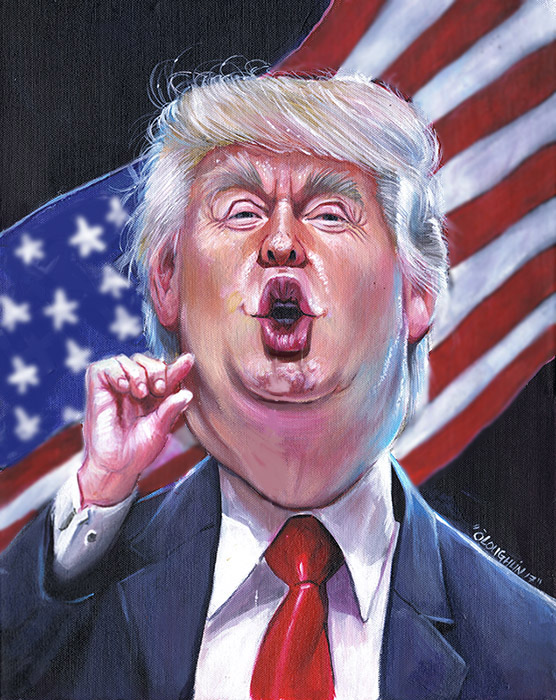
Unfortunately, as many of us recognize, we are now in imminent danger under an obviously incompetent, self-centered, reactionary president whose conduct increasingly places personal interests above national stability and global responsibility.

Not only has he launched an unnecessary and destabilizing conflict, he now appears willing to offer Iran terms that verge on appeasement in his haste to bring the crisis to an end—without meaningful guarantees regarding nuclear enrichment, missile delivery systems, or Tehran’s support for terrorist proxies throughout the region.

This is a pariah regime that brutalizes its own people under the cloak of religion, yet the administration’s posture suggests geopolitical calculation rather than principled strategy, particularly with China looming in the background ahead of his upcoming visit there.

Trump has long displayed an affinity for authoritarian leaders such as Putin and Xi Jinping, often showing greater respect for strongmen abroad than for democratic allies at home.

Meanwhile, climate change is ignored, Ukraine is increasingly abandoned, FEMA and Medicaid are weakened, violence spreads across international shipping lanes, and the economy shows growing signs of strain. The list is long, and the cumulative effect is profound national instability.

Midterm elections are still six months away, while this presidency has another two and a half years remaining. Congress, despite its constitutional responsibilities, appears unwilling to act.

The ship of state is listing badly, and unless the country changes course, this president may take us all down with him.

—RJ

Averted Eyes: Iran’s Atrocities and the Politics of Selective Coverage

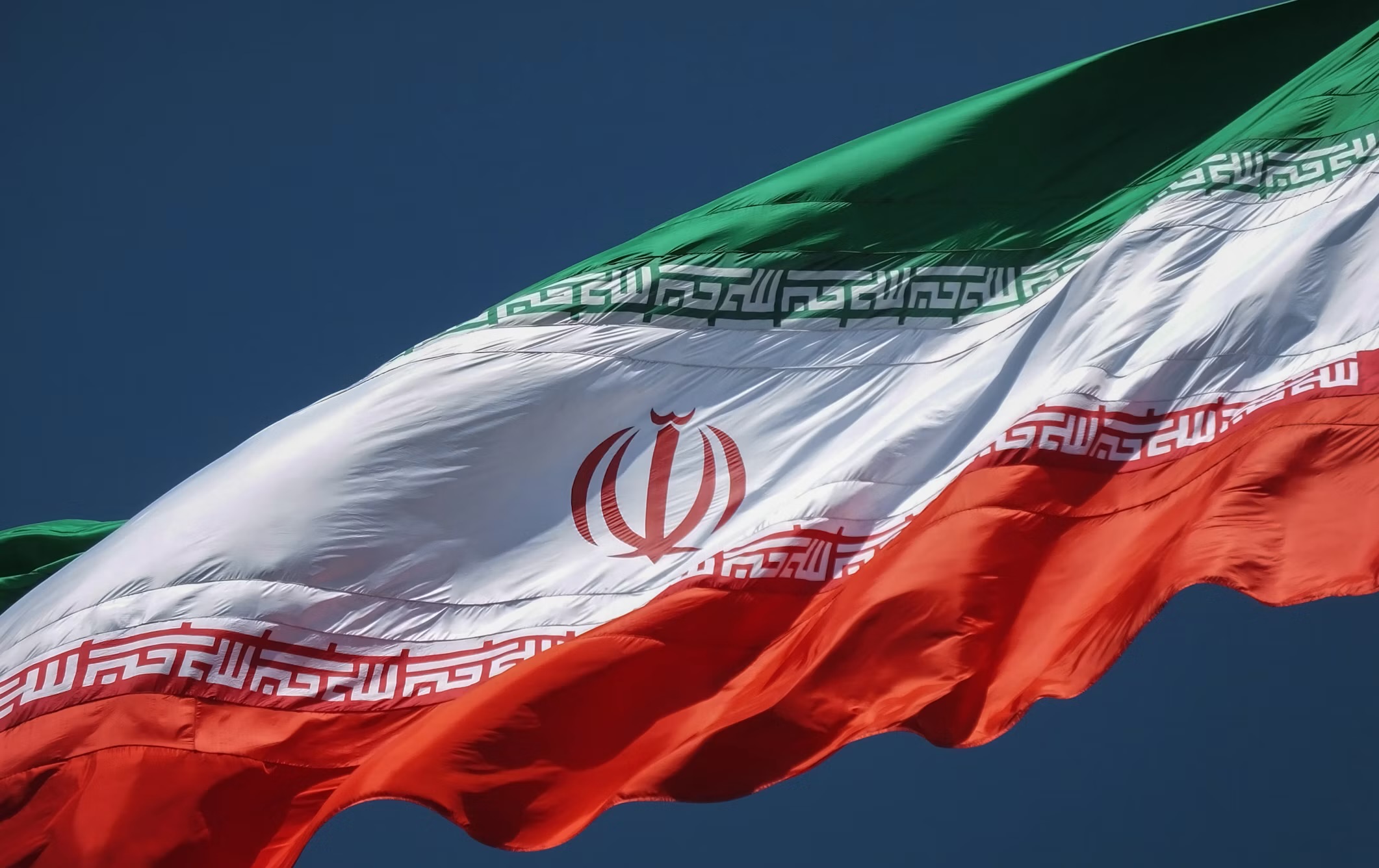
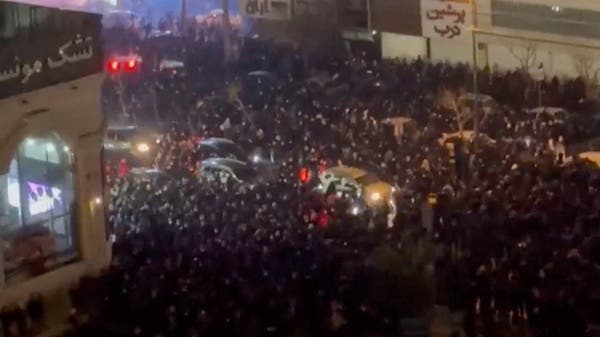
Tehran: January, 2026

Why some of the world’s most documented abuses fail to generate sustained global response

Iran, by almost any measure, ranks among the world’s most repressive regimes, much of its coercive power cloaked in religious authority.

It has not hesitated to use lethal force against its own citizens and consistently ranks among the highest globally in executions and political imprisonment (Amnesty International, 2023; United Nations Human Rights Council, 2024).

In the aftermath of the 1979 revolution (1979–1981), mass executions targeted former officials of the Shah’s government, military personnel, and political opponents.

One of the most notorious episodes occurred in 1988, when Ayatollah Khomeini issued a secret fatwa ordering the execution of political dissidents, primarily leftists. Estimates range from 3,000 to 5,000 victims, though human rights organizations place the toll closer to 30,000. The state has never acknowledged these killings; mass graves have been concealed, and public mourning by families has been forbidden (Human Rights Watch, 2024; Amnesty International, 2023; UN Special Rapporteur reports on Iran).

More recently, during the 2019 protests triggered by fuel price increases, security forces killed approximately 1,500 people within days (Amnesty International, 2020).

In 2022–2023, the death of Mahsa Amini, arrested by the Morality Police for alleged hijab violations, sparked nationwide protests. Authorities claimed she died of a heart attack, but eyewitness accounts and leaked medical evidence suggested severe physical abuse. At least 415 protesters were killed, including around fifty children (Human Rights Watch, 2023; IranWire, 2026).

Reports of an even more extreme crackdown emerged following protests beginning in late December 2025. On January 6, 2026, the government reportedly shut down internet access to obscure its response, culminating in a major escalation on January 8.

Official figures claimed 3,117 deaths, though these are widely disputed. The Human Rights Activists News Agency estimates approximately 6,800 civilians killed, with thousands more detained (UK Parliament Commons Library, 2026).

Further reporting suggests even higher numbers, with intelligence-linked documents alleging over 36,000 deaths in just two days (Iran International, 2026). If accurate, this would represent one of the deadliest short-term crackdowns in modern history.

Analysis of verified victim lists indicates that 16.1% of those killed were under 18, drawn from across Iranian society (IranWire, 2026).

Beyond Human Targets

The regime’s record of violence extends beyond human rights.

In July 2022, more than 1,700 dogs were reportedly killed during a raid on the Gandalf Dog Shelter near Damavand. The operation was documented with photos and video, and the animals were reportedly vaccinated and sterilized, undermining any public health justification (Al Bawaba, 2022; One Green Planet, 2022). Fire trucks were deployed afterward to wash away the evidence. Several animal rights advocates who attempted to reach the shelter were arrested (Source: Iran International).

The response from major Western animal rights organizations was, by any measure, shameful. PETA issued a tweet or two. The Humane Society, the ASPCA, and World Animal Protection said nothing of substance. There were no sustained campaigns, no petitions with celebrity endorsements, no diplomatic pressure on Western governments to raise the matter with Iran.

Animal organizations genuinely wary of having their condemnations exploited by hawkish political actors to justify sanctions or military posturing toward Iran. While this is not an entirely unreasonable concern, it produces a paralysis in which documented atrocities go unaddressed to avoid political repercussions.

Dog ownership itself is increasingly restricted in Iran. Municipal bans now exist in eleven Iranian cities, forbidding dog-walking in public spaces (Iran International, 2025; Wikipedia, n.d.).

A proposed law—“Protection of the Public’s Rights Against Animals”—would require government permits for pet ownership, even for common animals such as cats and rabbits (Network for Animals, 2021).

Part of the rationale offered by authorities draws on religious interpretation. In many traditions of Islamic jurisprudence, dogs are considered ritually impure (najis), particularly in relation to saliva, based on certain hadith literature. While the Qur’an does not prohibit dogs and even depicts them in functional roles such as hunting and guarding, later legal interpretations in some schools of thought discouraged close domestic contact.

Importantly, these interpretations are not uniform across the Muslim world. In many Muslim-majority societies, dogs are widely kept as pets or working animals. However, in the Islamic Republic of Iran, clerical authorities have drawn on stricter interpretations to reinforce social stigma and justify periodic enforcement campaigns.

The result is a convergence of ideology and governance: religious framing reinforcing state control over private life, including animal ownership.

A Pattern of Silence

Despite extensive documentation, international response has often been uneven.

Many large Western NGOs lean left politically, and the Iranian regime has long been framed, however implausibly, as a victim of Western imperialism and sanctions. Forceful condemnation of Iranian state conduct sits uncomfortably within that worldview.

The same dynamic has led Western feminist organizations to largely sidestep sustained criticism of Iran’s mandatory hijab laws. The tension between anti-imperialism and universal rights, whether human or animal, is never cleanly resolved, and Iran consistently receives the benefit of the doubt.

This selective principle of bearing witness has a broader parallel. Holocaust photographs—mass graves, liberation of the camps—are reproduced in textbooks and museums on the entirely defensible grounds that visual evidence is essential to bearing witness and resisting denial. Yet equivalent documentation from contemporary atrocities is routinely suppressed or ignored. The principle turns out to be applied not universally, but according to whose suffering fits the prevailing political narrative.

“When it comes to Iran, nothing matters.”
— Marjan Keypour (Jerusalem Post, 2022)

The result is a selective visibility of suffering—where political context shapes not only diplomatic response, but also moral attention.

Conclusion

From the mass executions of the 1980s to recent protest crackdowns and ongoing social controls, the record points to a sustained pattern of repression.

Yet international attention remains intermittent.

What stands out is not only the severity of the abuses, but the unevenness of the world’s willingness to consistently see them.

References

Al Bawaba. (2022). Animal rights activists angry after Iran forces kill over 1,000 dogs.

Amnesty International. (2020). Iran: Details of 304 deaths in crackdown on November 2019 protests.

Amnesty International. (2023). Iran 2022/23.

Human Rights Watch. (2023). Iran: Security forces use lethal force against protesters.

Human Rights Watch. (2024). World report 2024: Iran.

Iran International. (2025). Dog-walking bans expand across Iranian cities.

Iran International. (2026). Report on January 2026 crackdown and intelligence figures.

IranWire. (2026). What do we know about the employment status of January 2026 massacre victims?.

IranWire. (n.d.). History of dog culling and animal treatment in Iran.

Jerusalem Post. (2022). Interview with Marjan Keypour.

Network for Animals. (2021). Iranian government seeks to ban pet ownership.

One Green Planet. (2022). Animal rights activists claim Iranian forces slaughtered over 1,000 dogs.

UK Parliament Commons Library. (2026). Iran: January 2026 protests.

United Nations Human Rights Council. (2022). Fact-finding mission on Iran.

United Nations Human Rights Council. (2024). Special Rapporteur report on Iran.

Wikipedia contributors. (n.d.). Dog walking in Iran.

ON TRUTH, POWER, AND THE STORIES WE TELL OURSELVES

In moments of political outrage, we often hear that some “moral compact” has been broken between the government and the people, as though public life rests on an understood promise of honesty and good faith. It is a comforting idea. It’s also, I think, a naïve one.

The record we inherit suggests otherwise. Bill Clinton misled the public under oath. John F. Kennedy and Lyndon B. Johnson deepened American involvement in the Vietnam War under a widening credibility gap. Franklin D. Roosevelt withheld the full truth of his condition from the electorate. These are not anomalies. They are reminders.

None of this excuses Donald Trump, whose conduct stands as an extreme case in its brazenness. But it does suggest that the deeper problem is not the breaking of a compact, but our belief that such a compact has ever governed political life in more than name.

Niccolò Machiavelli understood that those who govern must often act against truth while preserving its appearance. Thomas Hobbes argued that we submit to authority not because it is virtuous, but because it is necessary. Between them, the so-called compact begins to look less like a foundation than a useful fiction, one that steadies public faith even as it obscures political reality.

If that is so, then the question is not how to restore a moral politics, but how much of our moral life we should ever have entrusted to politics in the first place.

Here Henry David Thoreau offers a necessary restraint: that government is best which governs least, not because it is especially good, but because it is always liable to be otherwise.

And Wendell Berry reminds us, more quietly, that the work of responsibility does not belong first to governments at all, but to persons, living within limits, bound to places, accountable to one another in ways no distant authority can finally secure.

We have asked too much of politics, and in doing so, we have misunderstood it.

Power does not keep faith; it manages necessity. It persuades, it conceals, it endures. It cannot bear the weight of the moral order we would like to rest upon it.

That burden remains where it has always been—closer to home.

Not in the abstractions of the state, nor in the promises of those who govern, but in the small, stubborn practices of truthfulness and care: in what we say, what we refuse to say, what we permit, and what we will not.

If there is any compact worth defending, it is not the one we imagine between ourselves and power. It is the one we keep, or fail to keep, with one another.

—RJ

A War America Can’t Win: The Iran Crisis

On February 28, 2026, the United States and Israel launched coordinated aerial strikes on Iran, ostensibly to induce regime change and secure stability in the Middle East.

Central to this strategy was the expectation of a mass popular uprising—something glimpsed in January 2026, when tens of thousands of unarmed civilians took to the streets and were met with lethal force. Estimates suggest as many as 30,000 were killed, 7000 independently confirmed. The regime they opposed—a repressive Islamic theocracy entrenched since 1979—remains intact.

This is a war America is unlikely to win.

Despite the destruction of command centers, arsenals, and the targeted killing of senior leadership, including Supreme Leader Ayatollah Ali Khamenei, Iran has demonstrated a capacity for resilience that was either underestimated or ignored.

Its response has been asymmetric and expansive: ballistic missiles and drone strikes aimed not only at Israel but at a widening circle of nations hosting American bases—Qatar, the United Arab Emirates, Kuwait, Jordan, and Saudi Arabia. Recent launches have extended even farther, toward Crete, Turkey, and the joint UK–U.S. base on Diego Garcia in the Indian Ocean, 2400 miles distant.

At such range, the perimeter of vulnerability shifts. Southeastern Europe comes into view; with further technological refinement, even cities such as Rome or Berlin may not remain beyond reach; in a decade, the United States.

As this conflict widens, its economic consequences are already apparent. Iran’s disruption of the Strait of Hormuz, through which roughly one-fifth of the world’s oil supply passes, has driven prices upward, with projections rising sharply. The leverage is stark: Iran need not defeat the United States militarily to impose severe costs. It need only prolong the conflict.

The political implications are equally stark. Domestic opposition is mounting here at home, shaped less by geopolitics than by inflation, felt daily in grocery bills and at the gas pump. A war that amplifies those pressures becomes difficult to sustain, regardless of its stated aims.

Even proposed escalations such as a seizure of Kharg Island, which handles a significant portion of Iran’s oil exports, risk becoming symbolic victories at disproportionate cost.

The comparison to Iwo Jima is not misplaced: a tactical gain unlikely to alter the strategic reality. Much of Iran’s missile infrastructure remains embedded and protected, beyond the reach of conventional assault.

Recent Trump statements suggesting that U.S. objectives have largely been met already signal a search for an exit. Yet an off-ramp may not be readily available. Iran’s advantage lies in time. By sustaining pressure, economic as much as military, it can compel concessions without decisive confrontation.

There was another path.

Rather than precipitating war, a strategy of containment through sanctions and patience might have allowed the regime to atrophy under the weight of its own contradictions. Iran faces converging crises: acute water scarcity, environmental degradation, declining agricultural productivity, economic duress, and deep internal dissent. A large portion of its population—diverse, young, and increasingly disillusioned—has already demonstrated a willingness to demand change at great personal risk.

That internal pressure, not external force, may have proven the more decisive agent of transformation.

–RJ

Presidents’Day and the Enigma of George Washington and a Nation

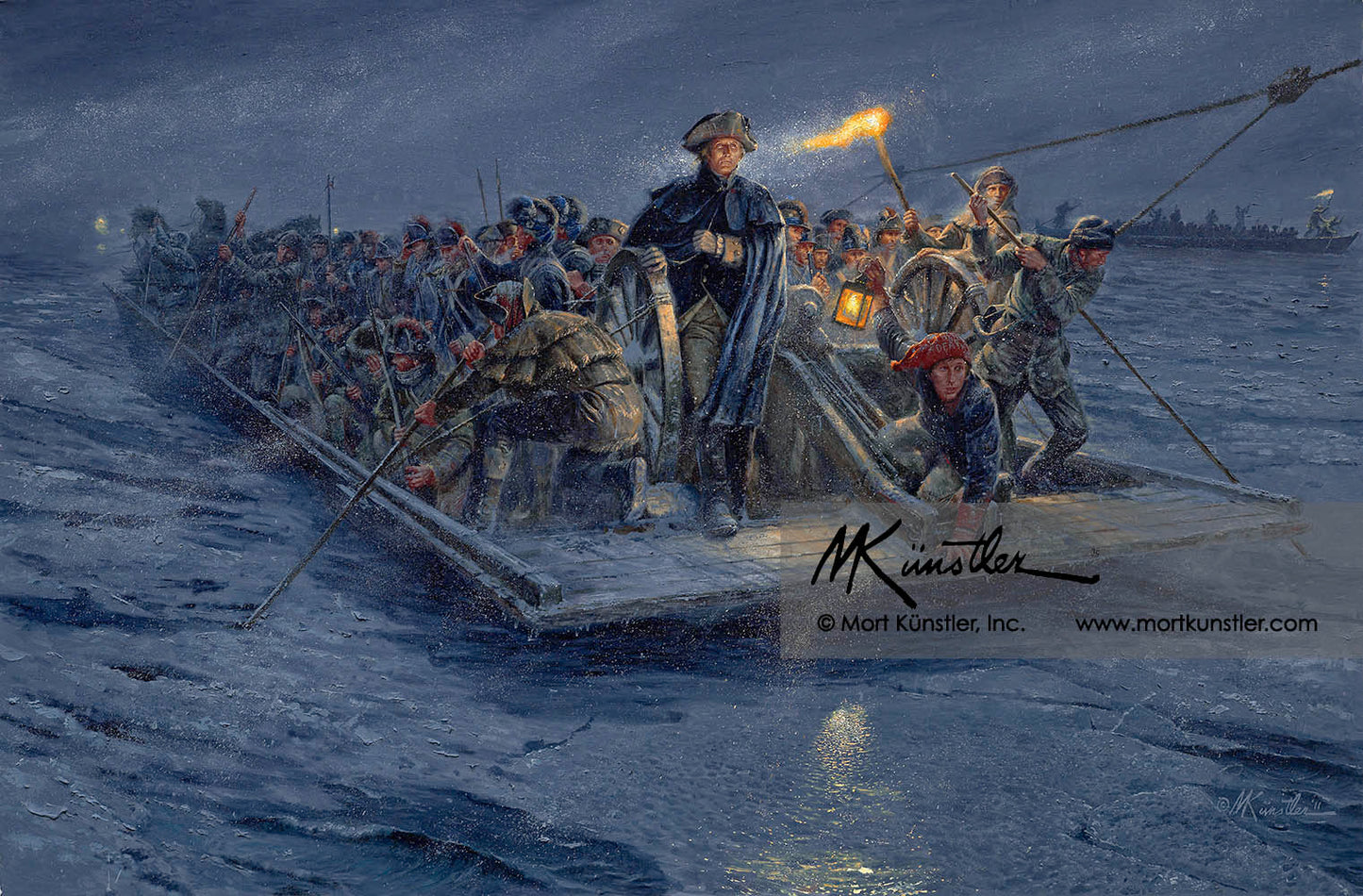
Painting: John Trumbull. George Washington resigns as Commander-in-Chief, Continental Army.

I grew up in an America that celebrated George Washington’s February 22 birthday as a national holiday, signed into law by President Rutherford B. Hayes in 1879 as a federal workers’ holiday, then extended nationally in 1885.

Things changed in 1968 when Congress passed the Uniform Monday Holiday Act, providing longer weekends and consolidating observances. Washington’s Birthday was reassigned to the third Monday in February, still legally designated as his birthday, though some congressional members proposed including Lincoln’s February 12 birthday under the broader aegis of Presidents’ Day.

That broader title caught on. Retailers and state governments increasingly adopted “Presidents’ Day.” Like so many holidays, it became a corporate sales opportunity.

Accordingly, the first item in my email this morning was a Presidents’ Day furniture sale—the first of what will no doubt be a barrage as the third Monday approaches.

Historian Jonathan Horn finds it absurd that we no longer distinctly celebrate Washington’s Birthday, given that it was observed in the young nation even before the framers of the Constitution met in 1787 (“Just Call It Washington’s Birthday,” Free Press, Feb. 11, 2026).

We owe much to this exemplary leader. Ken Burns credits Washington as “the glue that held it all together” in his PBS documentary The American Revolution. Facing superior, disciplined British forces, Washington understood that victory would require patience: knowing when to retreat, striking unexpectedly, and prolonging the war.

After defeats in New York, expiring enlistments, and desertions, matters reached their nadir during the winter encampment at Valley Forge outside British-occupied Philadelphia in 1777. Starvation loomed. Smallpox ravaged the ranks. Soldiers were unpaid, underfed, and poorly clothed.

With sagacity, Washington enlisted the Prussian officer Baron von Steuben, who molded the army into a disciplined fighting force. Recruits followed in greater numbers.

After General Gates’ victory at Saratoga, Washington was able to engage French support, working through liaison with the Marquis de Lafayette.

The decisive blow came when French naval forces blocked Cornwallis’s escape at Yorktown. Washington had deceived Cornwallis into believing New York was his objective while covertly moving his troops south. The British capitulated, leading ultimately to peace in 1783.

Washington had endured criticism without vindictiveness, even surviving a mutiny threat by disgruntled, unpaid officers.

For Burns, Washington’s greatest moment was not Yorktown or Trenton, but his resignation of his commission in Annapolis in 1783. As Burns tells it, he “knew how to defer to Congress, knew how to inspire ordinary people in the dead of night, knew how to pick subordinate talent—just had a kind of presence to him that, without him, we don’t have a country” (Chadwick Moore, New York Post, Nov. 11, 2025).

He did something similar in refusing a third presidential term. His 1796 Farewell Address remains prescient in its warnings against partisanship, permanent foreign alliances, sectionalism, and constitutional usurpation: “Let there be no change by usurpation; for though this, in one instance, may be the instrument of good, it is the customary weapon by which free governments are destroyed.”

Yet Washington has come under fierce attack, criticized for slave holding and judged by contemporary moral standards. Some view him primarily as a symbol of racial oppression and seek removal of his name and likeness from public spaces.

In the aftermath of George Floyd’s killing in 2020 and the ensuing unrest, efforts accelerated to eliminate reminders of racial injustice, including monuments to Washington, Jefferson, Lincoln, Theodore Roosevelt, and Woodrow Wilson. Streets, buildings, and schools were renamed; statues toppled or defaced.

In Portland in 2020, protesters toppled and defaced a statue of Washington in a public park.

At the University of Washington, protesters called for removal of his statue.

In 2020, a statue of Washington at George Washington University was beheaded.

In 2021, the San Francisco Board of Education voted to rename a school honoring Washington, later reversing course after public scrutiny.

A Washington, D.C. working group, commissioned amid racial justice protests, recommended reviewing public names and monuments, suggesting federal sites be reconsidered for contextualization or renaming.

While some of this fury can be understood as anger over longstanding injustice, historian Howard Zinn argues in A People’s History of the United States that Washington’s mythic stature obscures his slaveholding and his violent campaigns against Indigenous peoples. Jill Lepore, in These Truths, likewise underscores the inseparability of his leadership from slavery.

It is painful to read, but much rings true.

Burns recounts Washington’s 1779 campaign against the Iroquois, ordering the destruction of settlements in retaliation for their alliance with the British: “Lay waste all the settlements around… that the country may not be merely overrun, but destroyed.” Towns and crops were burned. Many perished in the ensuing winter from famine and disease.

America was founded on a compromise that would lead to civil war and immense loss of life. Our history is marked by both courage and cruelty, liberty and bondage. We diminish ourselves if we pretend otherwise.

But we also diminish ourselves if we forget the magnitude of what was achieved: a fragile republic wrested from empire, sustained not by perfection but by discipline, restraint, and the voluntary surrender of power.

We are a nation still struggling to reconcile our ideals with our conduct. The work of ordered liberty, of constitutional self-government, of moral reckoning without erasure, remains unfinished.

The Revolution continues—not in the toppling of statues or canceling history, but by whether we can tell the truth about our past without losing the capacity to honor it.

—rj

The Moral Arithmetic of American Capitalism

Did you know that the average CEO compensation at large U.S. public companies now stands at roughly 280 times the pay of a frontline worker?

That represents a staggering shift from the 1960s, when CEOs earned 20 to 30 times what their workers made. Since the 1970s, the CEO-to-worker pay ratio has increased by over 1,000 percent.

This divergence did not occur by accident. One pivotal change came in the late 1970s, when American corporations moved away from a model centered on growth, stability, and shared prosperity toward one focused on maximizing shareholder value. Executive pay was increasingly tied to stock price rather than the long-term health of the firm.

With the rise of stock options and equity grants, CEOs could reap enormous rewards without raising wages, expanding productivity, or strengthening the workforce. Compensation ballooned even when companies stagnated.

Tax policy amplified the effect. In the 1950s and 1960s, top marginal income tax rates exceeded 70 to 90 percent, effectively discouraging runaway executive pay. That restraint largely disappeared in the 1980s, as marginal tax rates fell sharply, making extreme compensation both legal and cheap.

At the same time, labor power collapsed. Union membership declined, offshoring and automation accelerated, and job security eroded. Productivity rose; worker wages did not. Executive compensation absorbed the gains.

Business leaders defend this system by claiming that outsized pay is necessary to attract top talent. In practice, this has produced a self-perpetuating escalation, as boards benchmark CEO pay against ever-rising peer averages. In a globalized economy, profits flow upward, not outward.

Yet America’s extreme CEO-worker wage gap is not an inevitable feature of advanced capitalism.

Consider international comparisons:

Typical CEO-to-worker pay ratios (large firms):

  • United States: ~250–350:1
  • Western Europe: ~40–90:1
  • Japan: ~15–40:1

In much of Europe, workers sit on corporate boards, restraining excess. In Japan, adopting the American compensation model would be seen as collective irresponsibility, not enlightened management.

Public anger is justified—especially amid persistent inflation and decades of wage stagnation. Can the old restraints return?

There are tentative steps. The Tax Excessive CEO Pay Act of 2025, introduced by Rep. Rashida Tlaib and Sen. Bernie Sanders among others, would raise corporate tax rates on companies whose CEO pay exceeds worker pay by extreme margins, beginning at 50-to-1. But meaningful reform would require broad coalitions and a substantial shift in Congress. Change, if it comes, will be slow—and uncertain.

Transparency may be the public’s strongest immediate tool.

What has happened in America is not merely an economic evolution; it is a moral shift. Accumulation has replaced public responsibility as the dominant ethic, not only in corporate life but across society. Its most vivid emblem is the twice-elected billionaire president, Donald Trump, whose politics celebrate wealth while dismantling social safeguards.

Since 1990, the number of U.S. billionaires has grown from 66 to more than 800, while the median hourly wage has increased by only about 20 percent.

This is not efficiency.

It is not merit.

It is not inevitability.

It is obscene.

—rj

When Elections Are Not Enough: Removing Trump From Office

It is now 2026, with the midterm elections approaching in November. My New Year’s wish is straightforward: the impeachment of Donald Trump—assuming Democrats regain a decisive House majority—followed by a Senate trial resulting in his removal from office.

The Framers of the Constitution were not naïve about power. They were steeped in history’s lessons about its corrupting tendencies and had lived, in their own time, under the despotism of a foreign monarch. Their revolution was not merely against a man, but against unchecked executive authority.

Accordingly, the 55 delegates to the Constitutional Convention of 1787 chose to create a president, not a king. Crucially, they did not rely solely on periodic elections as a safeguard. Recognizing that elections alone might prove insufficient in moments of grave danger, they embedded in the Constitution a remedy for removing a corrupt or dangerous chief executive.

Those impeachment provisions are found in Articles I and II. Article I grants the House of Representatives the sole power of impeachment by majority vote and assigns the Senate the sole power to try impeachments, requiring a two-thirds vote of members present for conviction. Article II, Section 4 defines the standard:

“The President, Vice President and all civil Officers of the United States, shall be removed from Office on Impeachment for, and Conviction of, Treason, Bribery, or other high Crimes and Misdemeanors.”

Impeachment, it bears emphasis, is an accusation; removal requires conviction.

Presidential impeachment trials are exceedingly rare. In more than two centuries of constitutional government, only four have occurred:

Andrew Johnson (1868)
Bill Clinton (1999)
Donald Trump (2019 and 2021)

All four trials ended in acquittal. Richard Nixon almost certainly would have been removed, but he resigned before the House could vote on impeachment—the first presidential resignation in American history.

The rarity of impeachment trials reflects not restraint alone, but the gravity of the remedy. As Alexander Hamilton explained, impeachable offenses are those that violate the public trust—abuses of power that strike at the constitutional order itself.

Measured against that standard, there should be little ambiguity regarding Donald Trump’s “high crimes and misdemeanors.” They include conduct that betrays the nation’s best interests and undermines the rule of law: defiance of judicial orders; the use of the Department of Justice to shield allies and punish perceived enemies; and the deployment of violent rhetoric that incites threats against judges and congressional critics, including calls for the execution of former public servants from the military and intelligence communities.

To these may be added the consistent placation of authoritarian foreign leaders and the initiation of military actions—such as attacks on Venezuela and vessels at sea—without clear congressional authorization.

Conviction in the Senate requires 67 votes. Given political realities, Republicans alone are unlikely to supply them. That leaves responsibility where it has always rested in a constitutional democracy: with the electorate.

If the Constitution is to function as intended—if law is to prevail over personal power—then it falls to citizens to vote in numbers sufficient to make accountability possible. The midterms present such a moment.

Whether the nation seizes it will determine not merely the fate of one presidency, but the durability of the constitutional order itself.

–RJ

Brigitte Bardot: Beauty, Activism, Controversy

Brigitte Bardot : ses photos quand elle était jeune.

French movie star Brigitte Bardot died on Sunday at age 91. Sometimes referred to as France’s Marilyn Monroe, her startling beauty and engaging singing voice won her instant international fame with her initial film, “And God Created Woman.”

Like Marilyn, she was an intelligent, sensitive woman. But also controversial, given her right wing political views and support for Marine Le Pen’s National Rally party.

She inspired young Beatles John Lennon and Paul McCarthy, who insisted their girlfriends dye their hair blonde.

Intellectuals admired her as well. In 1959, ardent feminist Simone de Beauvoir penned her landmark essay, “Brigitte Bardot and the Lolita Syndrome,” lauding her as France’s most liberated woman.

A non-conformist, she withdrew early from making films to support animal welfare, founding the Brigitte Bardot Foundation, and engaging in activist politics: “I gave my youth and beauty to men. I give my wisdom and experience to animals.”

I do not subscribe to her political views—she detested Muslims and gays. But as a passionate lover of animals and a vegetarian, I have admired her devoted witness on their behalf, protesting dolphin hunts in the Faroe Islands, religious sacrificial rituals, cat slaughter in Australia among other international cruelties.

This was her truest blooming.

In his tribute, French president French president, Emmanuel Macron wrote, “Her films, her voice, her dazzling glory … her sorrows, her generous passion for animals, her face that became Marianne, Brigitte Bardot embodied a life of freedom. A French existence, a universal radiance. She moved us. We mourn a legend of the century.”

Repozez en paix!

—rj

Ken Burn’s The American Revolution

I’ve finished watching Ken Burns’ six part series, The American Revolution, and I think it brilliant, reproducing through letters, paintings, actual locale, staged reenactment, and historian insight a reasonable, balanced portraiture of the genesis of a new nation.

In watching it, I’ve found myself unlearning the version of American history I absorbed in school—one that portrayed the country as born purely of promise, while minimizing its foundations in slavery and the seizure of Indigenous lands.

I hadn’t realized, for instance, that the Revolution was in effect America’s first civil war: nearly 20 percent of the population sided with Britain as Loyalists. Atrocities occurred on both sides—burned homesteads, pillage, and widespread rape.

George Washington emerges as essential to the colonies’ improbable victory over seasoned British troops, often intuitive, and when necessary, boldly improvisational—especially in his surprise attack on the Hessian garrison at Trenton.

He also also fought with chronically scarce resources, including men and weapons. Smallpox devastated his ranks until ever practical Washington ordered mandatory inoculation for the entire Continental Army. For this, and much more, he merits the accolade, “the father of our country.”

The second sentence of the Declaration of Independence remains, for me, among the greatest ever written: “We hold these truths to be self-evident, that all men are created equal, that they are endowed by their Creator with certain unalienable Rights, that among these are Life, Liberty and the pursuit of Happiness.”

It’s also, as historian Jill Lepore points out in These Truths, proved an instrument of exclusion, its author Thomas Jefferson—like Washington—owning hundreds of enslaved people and enjoying immense wealth.

The Declaration is a document of soaring ideals and deep compromises, and we live with those contradictions still—half of America’s wealth held by one percent of the population, and inequities woven through our social and economic life.

The American Revolution, then, is best understood as a work in progress. It inspires hope that we can do better—and in some respects, we have—though much remains unfinished.

While the Revolution’s principal architects—Jefferson, Adams, Franklin—were men of the Enlightenment who trusted reason to guide human flourishing, the war itself was largely fought by working-class coalitions, many lured by the promise of 100 acres of land taken from Indigenous nations.

Burns isn’t receptive to the argument advanced by the 1619 Project—that American history truly begins with the arrival of enslaved Africans in 1619, and that the Revolution was in part propelled by Southern fears that Britain would eventually abolish slavery.

We do see, however, that the Dunmore Proclamation (1775)—offering freedom to enslaved people who joined the British cause—galvanized Southern resistance. Yet Britain itself, as Burns points out, was hardly on the brink of abolition, its Caribbean wealth built on massive slave labor. Simply a political ploy, Dunmore owned many slaves, and slavery would endure in the Empire for another sixty years.

France entered the conflict in 1777, driven not by idealism but by a desire to avenge its humiliation at Britain’s hands and to reclaim lost influence. Without French military and financial support, the colonies almost certainly would have remained British dominions. By this point, the Revolution had become a global conflict, fought on many fronts.

Part V turns to Valley Forge, outside Philadelphia—the de facto capital of the newly united colonies. There the Revolution reached its nadir: troops half-starved, poorly clothed, ill-housed, and undersupplied as a brutal winter descended, the Congress unable for months to pay the troops. Many died. Many deserted.

With Spring, the French presence is felt, dividing British resources. By 1781, the British suffer massive defeat at Yorktown through a combined force of American troops and the French fleet, blocking British escape. A peace treaty, however, would not ensue until 1783.

The war left the new nation weak and divided, its economy wracked with inflation, huge national debt, and resentful farmers who bore much of the burden, leading to the insurrection in western Massachusetts of 1000 farmers before it was put down by militia. The nation’s weakness would lead, however, to the Constitutional Convention of 1787 defining American governance with its checks and balances under The Constitution.

Women and slaves were, nonetheless, still omitted from the democratic franchise; indigenousness lands seized with violent alacrity.

Washington emerges the series hero, not only innovative on the battlefield with few resources, but committing to democratic rule in resigning his military commission at war’s end.

The series’ central insight is that while the Revolution promised a nation unlike any other, that promise survives only through continual reengagement.

It merits wide viewing: a masterpiece deserving of the highest praise.

—rj

Not Without Consequences: Trump Rolls Back Biden’s Gasoline Mandate

One of Trump’s ugliest moments as President, and there have been far too many, occurred yesterday when, surrounded by applauding auto executives, he rolled back Biden’s 50 mpg gasoline mandate to 35 mpg by 2031, assuring along with suspension of tax credits, the death of electric vehicles in the U.S.

This can only mean more trucks, more SUVs. And—yes—more carbon discharge, escalating ocean temperatures already soaring, the disruption of marine life, and rising seas as the Alaskan Arctic and Antarctica glaciers continue to melt.

In the meantime, what a boon all of this is to China’s burgeoning EV sales in world markets that includes Europe as well as Africa, Asia and Oceania, some models selling in the $10,000 dollar range. China now is a majority stock holder in Volvo.

But Trump thinks climate change is just a hoax, despite overwhelming scientific evidence to the contrary, declaring on signing the bill into law that climate change is “the greatest scam in American history, the Green New Scam a quest to end the gasoline powered car. This is what they wanted to do even though we have more gasoline than any other country by far.”

What Trump has just done will have its consequences, the best estimates of media and environmental groups informing us that under the earlier standards, gasoline consumption would have been reduced by 14 billion gallons by 2050: Long term, more drought, more forest fires and, ominously, the dissolution of ocean currents fundamental to mammal well-being, which includes ourselves.

Trump’s lackeys argue the president’s bill is a boon to consumers, reducing car prices by a projected $1000, as if that’s going to dent a stagnant auto market, the average vehicle price now $50,000 and faulting on auto loans at a record high.

Mind you, this is just empty rhetoric when it comes to curbing inflation, The truth is the president’s tariffs potentially increase builder costs from $7,500 to $10,000 per home, with every $1,000 increase in the median price of a new home pricing out roughly 106,000 potential buyers, according to the National Home Builders Association.

Along with rising home prices, this president’s hysteria when it comes to renewables is costing you monthly electric bills averaging 12% over those of 2024, all of which means less disposable income, and fated to impact low wage households the most.

But back to CO₂, pollutants from tailpipe emissions like nitrogen oxides (NO), volatile organic compounds (VOC), and particulate matter hasten poor air quality and generate respiratory health issues as well.

Trump gets none of this. He runs government as a business, reaping profits for himself and family members. A derelict president, he’s more absent than present in the Oval Office, this fiscal year thus far, spending $371 million dollars on flights at tax payer expense to play golf at his Florida haven, Mar-a-Lago.

Off message as usual, he used the occasion to assault Minnesota’s Somali community whom, the day before, he called “garbage.” Today, it was “they had “destroyed Minnesota” and “destroyed our country.” The “Somalians should be out of here.”

If I asked you what was the fastest warming area of the U.S. outside of Alaska, would it surprise you that it’s New England, where I was born and raised in my early years? The winters I knew as a child are filled with memories of frequent snow fall, frozen lakes, hockey, sledding, skiing, and maple syrup.

Weather experts report New England “has heated up by 2.5C (4.5F) on average from 1900 to 2024, far in excess of the global average, with the world warming by around 1.3C due to the release of heat-trapping gases from burning fossil fuels” (The Guardian, 4 December 2025).

That’s a shocking increase and may prove a portent of what lies ahead. The UN and climate experts have set a maximum goal of 1.5°C (2.7°F) of warming above pre-industrial levels as the threshold, above which we reach the tipping point of near impossible reversal.

Meanwhile, Trump ignores the coming apocalyptic fallout of unrestrained fossil fuel policy, eco systems destroyed, famine common, forest fires ubiquitous, unbearable heat, polluted air, whales and elephants reduced to children’s picture books.

In sum, the Trump administration’s assault on the environment in the context of exponential climate change exhibits all too well the earmarks of corporate denial in the pursuit of monetary gain, whose consequences none of us will escape.

A nation can survive incompetence; what it cannot survive is deliberate blindness to the world burning at its door.

–RJ