“Sunday Morning”: Wallace Stevens’ Secular Hymn


It was at Exeter College, Oxford, in 1979, while doing a course in modern poetry, that I first heard of Philip Larkin, featured among the poets we studied..

Many critics consider him Britain’s best poet since WWII. Later, I would make him a staple of my own university courses in modern poetry. One Larkin poem that impressed me tremendously was “Church Going,” with its somber reflection on Christianity’s demise and, by extension, religion in contemporary life. Larkin, a librarian at the University of Hull, was slated to visit our tutorial, only to cancel for whatever reason at the last minute. He died a few years later.

While “Church Going” remains my favorite Larkin poem, it had its thematic precedent, however, in modernist American poet Wallace Steven’s “Sunday Morning,” published in 1915 and revised in 1923. Like Larkin, Stevens takes up the embers of a once vibrant faith.

It’s not an easy read, Stevens perhaps with Eliot the most erudite of modernists poets. I’ve been thinking a lot of Stevens and this particular poem as Easter approaches. The resurrection, whether mythic or historical, is the poem’s underlying centripetal force that energizes this magnificent poem.

I.

Complacencies of the peignoir, and late
Coffee and oranges in a sunny chair,
And the green freedom of a cockatoo
Upon a rug mingle to dissipate
The holy hush of ancient sacrifice.
She dreams a little, and she feels the dark
Encroachment of that old catastrophe,
As a calm darkens among water-lights.
The pungent oranges and bright, green wings
Seem things in some procession of the dead,
Winding across wide water, without sound.
The day is like wide water, without sound,
Stilled for the passing of her dreaming feet
Over the seas, to silent Palestine,
Dominion of the blood and sepulchre.

Commentary:

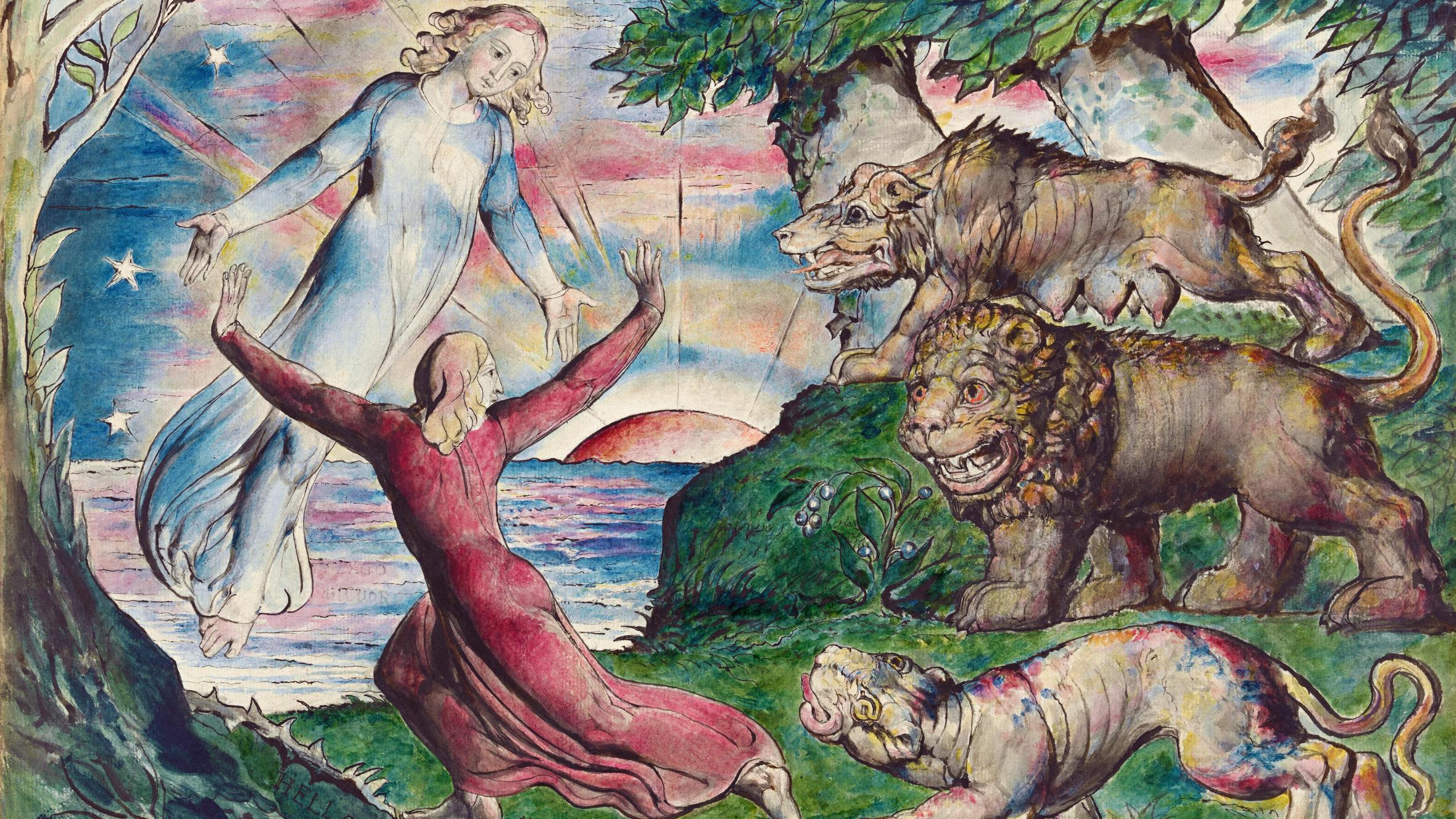
The poem commences on a Sunday morning, moving intermittently from the palpable, sensory present—an anonymous woman in nightgown, lounging on a couch, enjoying her coffee and oranges, a green parrot resting on her rug.

An interlocutor voice intrudes with philosophic reflection, setting up dialectic tension: nature’s plenitude versus a “silent Palestine/Dominion of the blood and sepulchre,” vague and distant.

II.

Why should she give her bounty to the dead?
What is divinity if it can come
Only in silent shadows and in dreams?
Shall she not find in comforts of the sun,
In pungent fruit and bright, green wings, or else
In any balm or beauty of the earth,
Things to be cherished like the thought of heaven?
Divinity must live within herself:
Passions of rain, or moods in falling snow;
Grievings in loneliness, or unsubdued
Elations when the forest blooms; gusty
Emotions on wet roads on autumn nights;
All pleasures and all pains, remembering
The bough of summer and the winter branch.
These are the measures destined for her soul.

Commentary:

The idea of paradise distant and abstract, vividly contrasts with the pungency of the physical world, sufficient in both “grievings” and “elations.”

III.

Jove in the clouds had his inhuman birth.
No mother suckled him, no sweet land gave
Large-mannered motions to his mythy mind.
He moved among us, as a muttering king,
Magnificent, would move among his hinds,
Until our blood, commingling, virginal,
With heaven, brought such requital to desire
The very hinds discerned it, in a star.
Shall our blood fail? Or shall it come to be
The blood of paradise? And shall the earth
Seem all of paradise that we shall know?
The sky will be much friendlier then than now,
A part of labor and a part of pain,
And next in glory to enduring love,
Not this dividing and indifferent blue.

Commentary:

The ancient myth of Jove, the Roman sky-father, and his non-human birth yields a deity absent of human experience, a monarch remote from sensory, earthly life, suggestive of Jesus born of a virgin (“virginal,” “star”). Blood, “commingling…With heaven” implies the Incarnation. “Muttering”suggests incomprehensibility, a divine speech not relevant to human need, an indicting of the traditional transcendent god, absent from daily life. The several symbols — Jove, blood, the Virgin, the star, the hinds (female deer)—suggest their man-made origins. Humans project on the universe their need for the palpable (i.e., “blood) to meet what fulfills their longing for a deity who co-mingles among them (“requital to desire”). Requital means reciprocation, a satisfying of longing. Several pivotal questions are raised toward the stanza’s end:

“Shall our blood fail?” — Will human desire for the divine simply die out?

“Or shall it come to be the blood of paradise?” — Or will we succeed in sacralizing earthly life itself?

“Shall it give back all that it has absorbed?” — Will heaven (the sky, the idea of transcendence) return what it has taken from us — our energy, our desire, our consolation?

“Or shall men gather and make hymns to what / Is left of paradise?” Or shall they celebrate / The sky, the sun, the earth?”

In sum, the human-wrought Incarnation is needless, for Earth functions sufficiently as our sole paradise (i.e., heaven): “A part of labor and a part of pain.” Nature, woven into our experiential world, yields a friendlier, knowable cosmos, the stuff of human experience.

IV.

She says, “I am content when wakened birds,
Before they fly, test the reality
Of misty fields, by their sweet questionings;
But when the birds are gone, and their warm fields
Return no more, where, then, is paradise?”
There is not any haunt of prophecy,
Nor any old chimera of the grave,
Neither the golden underground, nor isle
Melodious, where spirits gat them home,
Nor visionary south, nor cloudy palm
Remote on heaven’s hill, that has endured
As April’s green endures; or will endure
Like her remembrance of awakened birds,
Or her desire for June and evening, tipped
By the consummation of the swallow’s wings.

Commentary:

Here, Stevens address the poem’s pervasive anxiety, the longing for immortality. The woman worries that the beauty of the earth—the “green of April” or the “plum on the golden plate”—is too ephemeral to satisfy the human soul’s longing for something eternal. In rebuttal, the voice argues the insufficiency of vague, mythic afterlife narratives, the “chimera of the grave,/Neither the golden underground, nor isle/Melodious, where spirits gat them home,” to cyclic nature’s sustaining cornucopia of delight.

V.

She says, “But in contentment I still feel
The need of some imperishable bliss.”
Death is the mother of beauty; hence from her,
Alone, shall come fulfilment to our dreams
And our desires. Although she strews the leaves
Of sure obliteration on our paths,
The path sick sorrow took, the many paths
Where triumph rang its brassy phrase, or love
Whispered a little out of tenderness,
She makes the willow shiver in the sun
For maidens who were wont to sit and gaze
Upon the grass, relinquished to their feet.
She causes boys to pile new plums and pears
On disregarded plate. The maidens taste
And stray impassioned in the littering leaves.

Commentary:

The woman longs for assurance of a heaven with its bliss in the conflict between rejecting religion and persistent emotional need. Mortality, the voice argues, heightens our awareness of present beauty resplendent in human event.

VI.

Is there no change of death in paradise?
Does ripe fruit never fall? Or do the boughs
Hang always heavy in that perfect sky,
Unchanging, yet so like our perishing earth,
With rivers like our own that seek for seas
They never find, the same receding shores
That never touch with inarticulate pang?
Why set the pear upon those river-banks
Or spice the shores with odors of the plum?
Alas, that they should wear our colors there,
The silken weavings of our afternoons,
And pick the strings of our insipid lutes!
Death is the mother of beauty, mystical,
Within whose burning bosom we devise
Our earthly mothers waiting, sleeplessly.

Commentary:

The interlocutor’s musing as to the nature of heaven. Is it a place of unchanging sameness, absent of ending ,where “fruit never falls” and the “boughs hang always in that perfect sky”? Is it a place, like earth, of continuing longing,
“With rivers like our own that seek for seas
They never find…?” Mortality intensifies an awareness of life’s intrinsic value.

VII.

Supple and turbulent, a ring of men
Shall chant in orgy on a summer morn
Their boisterous devotion to the sun,
Not as a god, but as a god might be,
Naked among them, like a savage source.
Their chant shall be a chant of paradise,
Out of their blood, returning to the sky;
And in their chant shall enter, voice by voice,
The windy lake wherein their lord delights,
The trees, like serafin, and echoing hills,
That choir among themselves long afterward.
They shall know well the heavenly fellowship
Of men that perish and of summer morn.
And whence they came and whither they shall go
The dew upon their feet shall manifest.

Commentary:

The poem’s climax opens with an extended auditory image of a naturalistic celebration of life—“a chant of paradise”!—cognitive of mortality, enhancing acceptance of its ending:
“They shall know well “the heavenly fellowship
Of men that perish and of summer morn.”

VIII.

She hears, upon that water without sound,
A voice that cries, “The tomb in Palestine
Is not the porch of spirits lingering.
It is the grave of Jesus, where he lay.”
We live in an old chaos of the sun,
Or old dependency of day and night,
Or island solitude, unsponsored, free,
Of that wide water, inescapable.
Deer walk upon our mountains, and the quail
Whistle about us their spontaneous cries;
Sweet berries ripen in the wilderness;
And, in the isolation of the sky,
At evening, casual flocks of pigeons make
Ambiguous undulations as they sink,
Downward to darkness, on extended wings.

Commentary:

The concluding stanza commences with the speaker’s rejection of the Resurrection:

“The tomb in Palestine
Is not the porch of spirits lingering.
It is the grave of Jesus, where he lay.”

Independent of a transcendent deity, we are granted autonomy (“freedom”), our lives governed by ancient, impersonal physical laws (the “dependency of day and night”) rather than a moral or spiritual prerequisite.

The stanza concludes with the image of an evening flock of pigeons making “Ambiguous undulations as they sink,
Downward to darkness, on extended wings.”

“Ambiguous undulations” suggests impermanence, the inevitable intrusion of change as life transitions from beauty to death. We, like these birds, glide gracefully (“extended wings”), “sinking” inevitably toward the “darkness” of extinction.

REFLECTIONS:

Previous to my retirement, I had taught this poem for some twenty years as part of my course in Modern Poetry, unceasingly admiring its resonant Keats and Wordsworth innuendos.

Paradoxically modern in its delivery, cerebral and image focused, the poem is rooted in English Romanticism, celebrating the imagination’s witness to our fated passage into a parenthesis of light suspended between spheres of darkness.

Like much of Romantic poetry, again that of Wordsworth in its blank verse of unrhymed pentameter, melancholic disposition, rich symbolism, and lofty diction, its voluptuous fantasy, reminiscent of Keats, it supremely celebrates nature.

While there is an insistent tension through much of the poem between nature’s plenitude and the woman’s expressed need for something more, it’s crucial to Stevens’ purpose of philosophical debate.

The final stanza proffers epiphany, the woman’s possible acceptance of a cosmos devoid of divine certitude—“the old chaos of the sun,” a realm of “ambiguous undulations,” where no promise of resurrection intrudes upon the flux of being. We cannot be sure the woman is even present here. Critic Frank Kermode points out Stevens preference for open endings. He sees the poem’s final stanza as process, not conclusion.

Distinguished critic Helen Vender reads the poem as a movement toward a “natural supernaturalism”—a vision in which transcendence is reabsorbed into nature. The final stanza’s birds and “ambiguous undulations” affirm process, not permanence.

Stevens’ masterpiece, a secular hymn, grants solace not in transcendence but in the acceptance—and even the aesthetic affirmation—of metaphysical ambiguity: the freedom to choose, to become arbiters of all that we define as beautiful, grounded wholly within a mortal world.

–RJ

The Shouting Silence

D.G. Chapman, Upsplash

Silence has always allured me, most often when it is bound to expanses empty of people—though not always. I can find it just as readily in a library, or even in my own home when left to myself.

It is not, I believe, a resistance to an oppressive environment—work, academics, trauma, peer pressure, or the quotidian churn of human caprice—what psychiatry terms “psychological reactance.” It goes deeper than that, perhaps rooted in my introversion, which inclines me away from crowds and constant social encounter.

I carry memories of three landscapes that produced instant rapture: a sense of detachment, of absence from time itself—something larger than me, and yet intimately felt.

The first occurred when I was a graduate student in North Carolina, visiting the hillside at Kitty Hawk where the Wright brothers first achieved sustained flight in their ungainly aerial contraption. I had gone with friends, who wandered along the beachfront below, leaving me alone atop the hill. There, history seemed to recede. The wind moved through the grass, the sky stretched open and unmarked, and for a moment the present dissolved, as though time itself had paused in reverence.

Then there was Arlington National Cemetery, its vast rows of symmetrical white grave markers extending beyond easy comprehension. The stillness there was not empty but weighted, a silence shaped by collective sacrifice. For a brief moment, the eternal peace of America’s fallen became my own.

Most memorable of all were Scotland’s Highlands. Driving eastward from Edinburgh, they rose suddenly and unexpectedly across the horizon—rugged, green, and seemingly untouched by human intrusion. I pulled over, stepped out, tested the firmness of their verdure beneath my feet, and listened to what I can only call their shouting silence. That moment remains my most cherished travel memory.

As an English major in college, I once took a course devoted entirely to Wordsworth—England’s great poet of landscape. I am, perhaps, a rarity in having read all of his several hundred poems. Among them, “Tintern Abbey” most fully captures my response to those landscapes:

“…that serene and blessed mood,
In which the affections gently lead us on,—
Until, the breath of this corporeal frame
And even the motion of our human blood
Almost suspended, we are laid asleep
In body, and become a living soul…”

Literary scholars describe this response under the notion of the sublime: the experience of being overwhelmed through intimacy with nature, a flash of clarity in which one intuits a larger coherence behind nature’s mystery. Wordsworth gives it further voice:

“And I have felt
A presence that disturbs me with the joy
Of elevated thoughts; a sense sublime
Of something far more deeply interfused,
Whose dwelling is the light of setting suns,
And the round ocean and the living air,
And the blue sky, and in the mind of man….”

Psychology approaches the experience from another angle. One theory frames it as a sensory reset—the mind’s need to unburden itself from obligation and affliction, a release from the cognitive overload of daily life.

I am especially drawn to E. O. Wilson’s Biophilia Hypothesis, which proposes that humans evolved in constant contact with nature, calibrating the nervous system through millennia of hunter-gatherer life. In that context, a deserted landscape could signal safety—the absence of predators, permission to rest.

Another perspective, the Default Mode Network, suggests that quiet environments can trigger awe by suspending habitual rumination. Freed from constant external demands, the mind drifts toward reflection, memory, and imaginative connection. In such moments, the brain is allowed to hear the rhythms it evolved to monitor.

This makes intuitive sense. We live in a world saturated with anthropophonic noise—human-made sound without pause or mercy. Though nature is never truly silent—wind, water, and the subtle movements of life persist—these sounds soothe rather than assault. They restore rather than demand.

Wordsworth seems to anticipate this longing even in the heart of the city. In “Composed upon Westminster Bridge, September 3, 1802,” he finds London redeemed by a rare moment of stillness:

“Earth has not any thing to show more fair:
Dull would he be of soul who could pass by
A sight so touching in its majesty:
This City now doth, like a garment, wear
The beauty of the morning; silent, bare,
Ships, towers, domes, theatres, and temples lie
Open unto the fields, and to the sky;
All bright and glittering in the smokeless air.
Never did sun more beautifully steep
In his first splendour, valley, rock, or hill;
Ne’er saw I, never felt, a calm so deep!
The river glideth at his own sweet will:
Dear God! the very houses seem asleep;
And all that mighty heart is lying still!”

Perhaps silence, then, is not an absence but a presence—one that returns us to ourselves, quiets the mind’s noise, and restores a way of listening we once possessed, and have not entirely forgotten.

Convergence: Seeing Others as Ourselves

I’ve been keeping a list for some time of my favorite blogs. There are so many to choose from that discovering one capable of sparking genuine enthusiasm often feels like chance—like gazing nightly at the starry heavens and marveling at what lies beyond human reach. When such a blog does appear, it draws me back again and again, not out of habit but wonder.

Relying on that list, I came upon a short paragraph-poem this morning by Dr. Drew Lanham, the award-winning African American professor of environmental studies at Clemson University. Lanham confesses to being “a man in love with nature—a wanderer finding foundation in wild places.” What follows is both intimate and expansive:

Handle my life in your hands as if it were your own. Feel the heart beating—small as it may be—and imagine it in your own chest. Beating in syncopated time to become shared meter. That pulse, the breathing, is your rhythm. Your in’s and out’s, its in’s and out’s. Look close under
whatever warty skin or soft fur or gaudy feathers and see self. Its being is your being. Be in that same skin for what moments it will allow. Then, when the convergence between you is sealed, release that wild soul to free roaming as you would desire of your own.

What strikes me is the poem’s quiet tone: a persona grounded in kinship with the natural world, alive with empathy for the vulnerable. Applied beyond nature—to our fellow humans—it gestures toward something transcendent: a way of bridging difference, whether of creed, ethnicity, or race.

Such bridging begins only when we recognize our linkage, when we are willing, even briefly, to see ourselves in others—“Be in that same skin for what moments it will allow.”

Lanham wrote this poem after rescuing a frog from his cat’s pursuit.

Childhood Should Be Our Eden

Childhood should be our Eden, a time for innocence before the shadows come and we lament its loss.

This morning I’m enjoying my romp in Joy Sullivan’s Instructions for Traveling West Poems, a collection of her prose poems, reminiscent in many ways of beloved Mary Oliver’s peace-conferring verse. Sullivan lived her childhood in Africa, the daughter of medical missionaries.

In one poem that means much to me, she shares her memory of untainted innocence that helps us recover our own dormant memories of a garden world we cannot enter again:

“Growing Up”

All I could think about
was filling these cups
and staining these lips and being some new kind of loveable. All the while, my mama in her quiet, weary way: one day, you’ll wish for this time without worry. No one can really ever warn you how the world is a thick leather boot. A midnight car slowing down. An oil spill. A matchstick.

I miss the girl my mother still could see— unadorned, untired. The one, at dusk, who followed the dog into the woods unafraid.

—rj

Out of Nowhere: Gaza in Poetry

I’m about to eat breakfast, but I feel guilty for the good life I wake to daily when so much of the world, removed from our shores, knows only war, destruction, death, and incalculable grief: Sudan, the Democratic Republic of the Congo, Ukraine and Gaza. Still others.

I am moved by Palestinian-American poet and physician Fady Joudah’s recent poem about Gaza. The death toll, vastly civilian, now approaches 70,000.

Joudah has lost 100 members of his Gaza family. He has served as a volunteer with Doctors Without Borders.

Since his poem is under copyright, I can only share an excerpt:

“And out of nowhere…”

And out of nowhere a girl receives an ovation
from her rescuers, all men on their knees and bellies
clearing the man-made rubble with their bare hands, disfigured by dust into ghosts.
All disasters are natural including this one, because humans are natural.
The rescuers tell her she’s incredible, powerful,
and for a split second, before the weight of her family’s disappearance sinks her, she smiles,
like a child who lived for seven years above ground receiving praise.

PostScript:
Joudah is a winner of The Yale Series of Younger Poets Competition and long listed for the National Book Award for Poetry (2024).

—rj

Sorry Emerson: Money is NOT the Prose of Life

Ralph Waldo Emerson ranks high on any list of frequently quoted American sages. He has a special way of rendering human experience palpable.

Among his many essays, I’ve especially liked “Compensation,” which I first read as a young graduate student in an American Lit class.

Undoubtedly a residue of his exploration of Eastern thought, this essay has journeyed a lifetime with me in its karma undertones, buoying me up in its harbinger of moral recompense for life’s myriad inequities.

But on occasion, Emerson fumbled, as when he wrote that “money represents the prose of life, and which is hardly spoken of in parlors without an apology, is, in its effects and laws, as beautiful as roses” (“Nominalist and Realist,” Essays: Second Series, 1844).

Critics were quick to pounce, Marxists in particular seeing it as capitulating to capitalism. Emerson probably meant that the pecuniary is an integral component of the natural order.

Still, it seems a passage one wants to expunge like disturbing phlegm.

I like Saul Bellow’s correction: “Uch! How they love money, thought Wilhelm. They adore money! Holy money! Beautiful money! It was getting so that people were feeble-minded about everything except money. While if you didn’t have it you were a dummy, a dummy! You had to excuse yourself from the face of the earth!” (“Seize the Day”).

But let me also share psychologist and poet Pamela Joyce Shapiro’s response to Emerson’s remark. Her poem speaks for me and perhaps for you:

If money is the prose of life
as beautiful as roses,
poetry it seems must be
the soil and sun of infinity,
without which surely nothing grows.
I see the pleasures each might bring,
when flourishing in abundant spring.
Though stocks and petals tend to fall
in drought or storm or just because,
poetry survives it all.
What losses can define what loss is?
Waning wealth or stolen roses?
Forget the till and till the mind,
plant poetry and praise the sky.

rj


Why I’m Still Reading Yeats

I’ve always been a devotee of the poetry of William Butler Yeats, though not of his metaphysics or his politics. Certainly, his reception in Ireland over the years has been bleak, the latest hostile critic, contemporary novelist Sally Rooney piling on, dismissing his politics as fascist, with the takeaway he isn’t worth reading.

Though he flirted with authoritarianism, agitated by the chaos he associated with democracy, he supported the Free State and later repudiated Mussolini, whom he initially admired. He was never the likes of Ezra Pound. In one of his final poems, “Politics,” he expresses his disillusionment with political ideologies proffering easy remedies for society’s ills.

Yeats should not be judged removed from the convulsions that gave birth to an Ireland free of its English masters.

Ireland’s ostracizing of its literary giants has a long history, not only with Yeats, but James Joyce, Samuel Beckett, Frank O’Connor, Sean O’Faoláin, and the late Edna O’Brien, all of whom chose exile.

I bristle against censorship and book banning to which it often leads. Things are changing in Ireland, a nation I know well, but old attitudes can find an audience still.

Yeats remains worth reading, his poetry arguing for itself in its craftsmanship, beauty, and relevance. His often quoted “The Second Coming” hovers over us in its prescient warning of autocracy’s sinister reach.

“A Prayer for My Daughter” remains among my favorite Yeats poems—subdued in tone, subtle in rhythm, redolent in wisdom.

Written in 1919 in the context of Ireland’s incipient nationalism that would spark a civil war and the country’s ultimate partition, the poem expresses Yeats’ hopes for his new daughter in a less turbulent future.

A poem abundant in symbolism, Yeats prays she shun hatreds, value inner over external beauty, find solace in tradition and ceremony.

I value the poem, not least, for its relevance to our own time.

Excerpt:

May she become a flourishing hidden tree
That all her thoughts may like the linnet be,
And have no business but dispensing round
Their magnanimities of sound,
Nor but in merriment begin a chase,
Nor but in merriment a quarrel.
O may she live like some green laurel
Rooted in one dear perpetual place.

My mind, because the minds that I have loved,
The sort of beauty that I have approved,
Prosper but little, has dried up of late,
Yet knows that to be choked with hate
May well be of all evil chances chief.
If there’s no hatred in a mind
Assault and battery of the wind
Can never tear the linnet from the leaf.

An intellectual hatred is the worst,
So let her think opinions are accursed.
Have I not seen the loveliest woman born
Out of the mouth of Plenty’s horn,
Because of her opinionated mind
Barter that horn and every good
By quiet natures understood
For an old bellows full of angry wind?

This last stanza obviously alludes to Maude Gonne, who had become a strident voice of Irish nationalism and to whom Yeats had twice proposed marriage, but was rejected.

In 1990, I was privileged to meet and converse with Anne, the daughter in this poem.

Whatever our views on artists such as Yeats, or antisemite T.S. Eliot, or Chilean fervent communist Pablo Neruda, I subscribe to the autonomy of art. It’s narcissistic to think artists must share our views.

rj

What Makes It Poetry

I read a lot, but the genre that makes my heart beat faster is poetry,
doubtless because I’m a very feeling person.

A lot of what I read these days purports to being poetry when it isn’t.

I know I’m reading poetry when it becomes more than it is, words taking on nuance beyond themselves.

Often I find poetry in music. Take, for example, Bono’s “Grace,” transcending a girl’s name, to becoming extended metaphor of redemptive goodness:

Grace
It’s the name for a girl
It’s also a thought that
Changed the world
And when she walks on the street
You can hear the strings
Grace finds goodness
In everything

Another example would be the Beatles’ haunting “Eleanor Rigby,” exemplum of loneliness, or disconnectedness, hidden amid the crowd, but profoundly present:

Eleanor Rigby picks up the rice in the church where a wedding has been
Lives in a dream
Waits at the window, wearing the face that she keeps in a jar by the door
Who is it for?

All the lonely people
Where do they all come from?
All the lonely people
Where do they all belong?

This, my friends, is poetry!

Celebrating Emily Dickinson’s Birthday

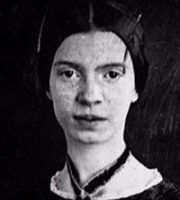
Yesterday, Dec. 10th, marked the 194th birthday of Emily Dickinson (b. 1830), one of America’s most gifted poets.

Her love of nature, keen observations on life’s ironies, and daring truthfulness won me over early. I know of no poetry with more nuance.

Of her many poems, my favorite is “A Wounded Deer Leaps Highest” with its nature analogies exhibiting the incongruity of the outer appearance with the inner reality. We are often masters at concealing life’s griefs.

Though I’ve visited The Homestead (Amherst , MA) on several occasions, I’m ready to visit again to take-in the Dickinson Museum updates, which include the restoration of Emily’s beloved garden, her father’s gifted conservatory to Emily and her sister, Lavinia, and the recently completed reconstruction of the family’s carriage house.

In short, The Homestead is my literary Mecca, as there is much in Emily’s sensibility that resonates with me.

Below, Emily’s upstairs bedroom where she composed her nearly 2000 poems and many letters:

It was cerebral musician Patty Smith who reminded me of Dickinson’s birthday in her substack post, replete with quotations from her poems and letters.

I’m repeating them here, as they superbly express Dickinson’s keen sensitivity and writing acumen. Smith observes that any of them would serve well as a writing prompt:

“Forever is composed of nows.”

“I am out with lanterns, looking for myself.”

“We turn not older with years but newer every day.”

“The soul should always stand ajar, ready to welcome the ecstatic experience.”

“I know nothing in the world that has as much power as a word. Sometimes I write one, and I look at it, until it begins to shine.”

“That it will never come again is what makes life sweet. Dwell in possibility. Find ecstasy in life; the mere sense of living is joy enough.”

“If I read a book and it makes my whole body so cold no fire can warm me, I know that is poetry. If I feel physically as if the top of my head were taken off, I know that is poetry. These are the only ways I know it. Is there any other way?”

“Not knowing when the dawn will come, I open every door.”

“The dearest ones of time, the strongest friends of the soul–BOOKS.”

“The lovely flowers embarrass me. They make me regret I am not a bee…”

“I don’t profess to be profound; but I do lay claim to common sense.”

“Life is a spell so exquisite that everything conspires to break it.”

“Whenever a thing is done for the first time, it releases a little demon.”

“To shut your eyes is to travel.”

“your brain is wider than the sky”

“How do most people live without any thought? There are many people in the world,–you must have noticed them in the street,–how do they live? How do they get strength to put on their clothes in the morning?”

“I have been bent and broken, but -I hope- into a better shape.”

–RJoly

Ruth Stone: The Poetic Genius of Resilience and Reflection

I’ve been writing poetry or whatever it is since I was five or six years old, and I couldn’t stop, I never could stop. I don’t know why I did it.… It was like a stream that went along beside me, you know, my life went along here, and I got married and had three kids and did all the things you have to do, and all along the time this stream was going along. And I really didn’t know what it was saying. It just talked to me, and I wrote it down. So I can’t even take much credit for it.” — Ruth Stone

The late Ruth Stone’s poetry gives me goosebumps. It’s that good —observant, conversational, intimate, punctuated with humor, resonating life in all its undulations.

It’s Saturday afternoon. I lie here on my bed, going through Stone’s poems as the world pursues its daily tasks. Quietness is my paradise, allowing space to reflect on essentials that matter. Stone’s poetry does that well.

Ruth Stone (1915-2011) didn’t have it easy. A mother of three children, her husband committed suicide, plunging her into abject poverty. Her poetry prowess, however, earned her a piecemeal income through itinerant, short term teaching assignments at universities across America.

Between teaching gigs, she’d return to her home in Goshen, Vermont, crafting new poems and short stories, her talent earning her two Guggenheim awards.

Academy recognition came late. In 2002, she won the National Book Award for Poetry at age 87 (2002).

What puzzles me is that she remains widely unknown. Her poetry, abundant in robust metaphor, drawn from science and nature, stands on its own, defiant of imitation.

Stone saw life in all its teeming distillations, especially in regard to aging, about which she could be merciless.

Her death came in 2011 at age 96.

Her humble home in Goshen, soul of her prodigious output (13 books), has been designated a historical landmark and become a retreat for literary studies. Her informal grave is nearby.

Below, the Ruth Stone poem that fulfills Emily Dickinson observation on what makes for a good poem: “If I feel physically as if the top of my head were taken off, I know that is poetry…Is there any other way?” ( L342a, 1870):

“Always on the Train”

Writing poems about writing poems
is like rolling bales of hay in Texas.
Nothing but the horizon to stop you.

But consider the railroad’s edge of metal trash;
bird perches, miles of telephone wires.
What is so innocent as grazing cattle?
If you think about it, it turns into words.

Trash is so cheerful; flying up
like grasshoppers in front of the reaper.
The dust devil whirls it aloft; bronze candy wrappers,
squares of clear plastic–windows on a house of air.

Below the weedy edge in last year’s mat,
red and silver beer cans.
In bits blown equally everywhere,
the gaiety of flying paper
and the black high flung patterns of flocking birds.

—rj