Habits, History, and Rebirth Through Reading

Thus far, my plan to read 50–60 books a year, based on a new approach to how and what I read, has become one of the most fufilling disciplines of my life. I’ve just completed Sue Prideaux’s Wild Thing: A Life of Paul Gauguin, an award-winning biography based on newly discovered manuscripts that shatter long-held fallacies regarding Gauguin. It’s my twenty-third book this year, with six months still to go.

It’s not numbers per se that interest me, but the cultivation of reading as a daily habit, as natural as brushing one’s teeth. I was inspired by James Clear’s Atomic Habits, which demonstrates how small, repeated behaviors, faithfully practiced, become almost automatic.

I’m reminded of B.F. Skinner. I was immersed in behaviorism in an intensive graduate seminar at the University of Minnesota, where I wrote a paper on teaching oneself a new language. Years later, I learned Spanish by applying those very principles.

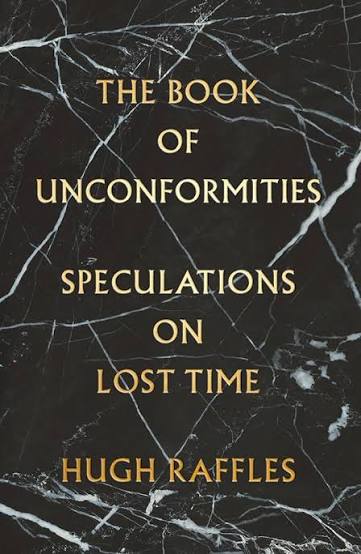
My new read is Hugh Raffles’ The Book of Unconformities: Speculations on Lost Time, a scholarly masterpiece, riveting in its exploration of “unconformity”—the violent rupture where geological strata meet across immense reaches of time: earth’s history, from life’s primitive transition from water to land some 400 million years ago, prodigious in unconformity, cyclic cooling and warming, and sudden, often violent morphings into alien landscapes redolent of ever more evolved flora and fauna; reverberations of random catastrophe, the dominion of the temporal yielding at last the first vertebrates.

So too the human record bears its own unconformities: the clash of values, old and new, secular and religious, progressive and conservative; the collisions of mores, civilizations, and cultures.

I am fascinated, learning so many new things. That is why I relish reading, for with each challenging book I am reborn.

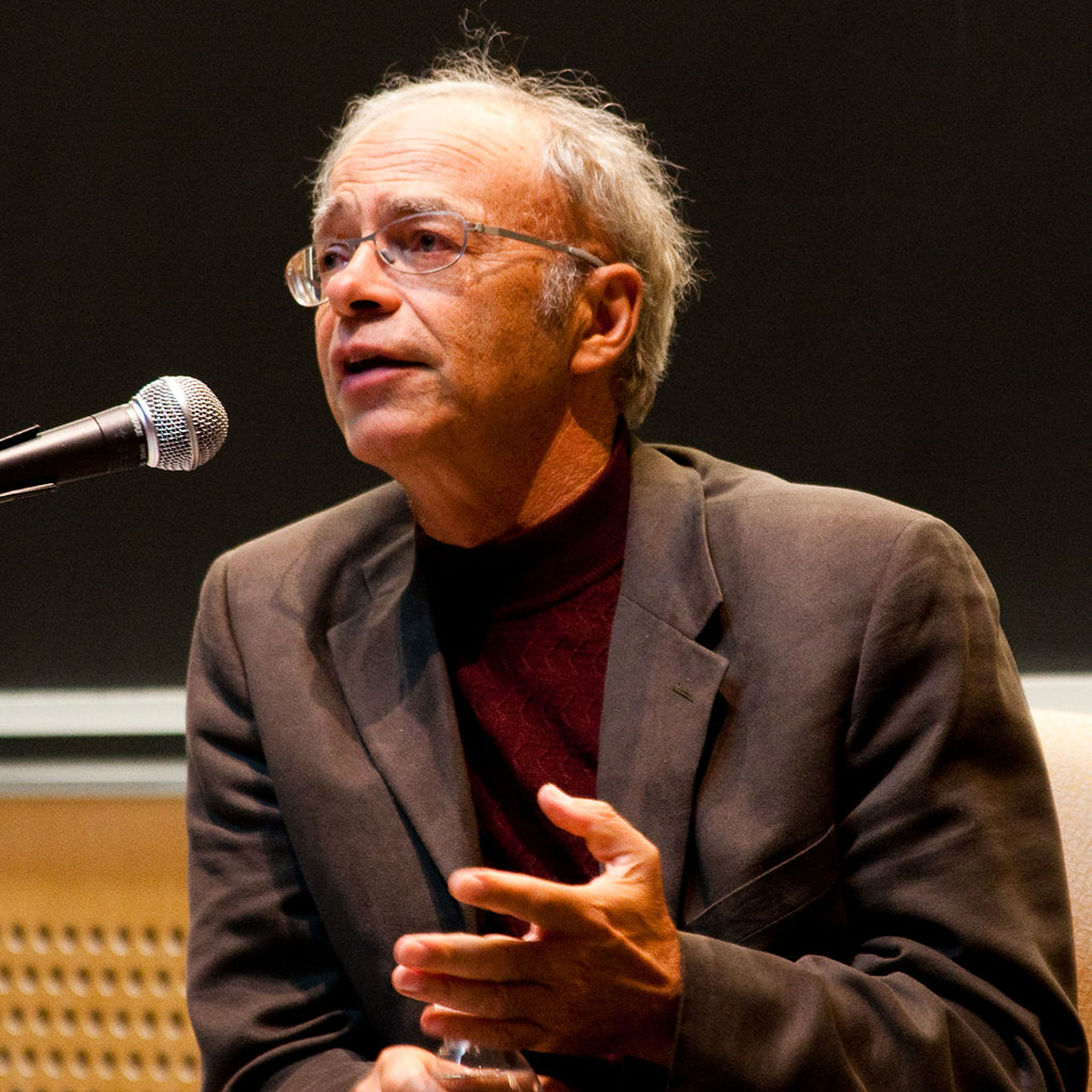
Resplendent Brilliance: A Birthday Tribute to Peter Singer

Today is renowned ethicist Peter Singer’s birthday, and I wish him everything well, both now and in the future. No one has shaped my values more than Peter, consistently monitoring the ethical dilemmas of contemporary life with courage, sensitivity, candor, and clarity—attributes resplendent in the intellectual brilliance of some fifty books treating animal suffering, poverty, mortality, the environment, affluence, and the plight of developing nations.

As a dedicated environmentalist, I wouldn’t be a vegetarian were it not for Singer: “We are, quite literally, gambling with the future of our planet—for the sake of hamburgers” (Animal Liberation).

Across the years, I’ve made transparent my profound admiration for utilitarian John Stuart Mill, whose On Liberty is a must-read. In Singer, we have his worthy successor, reinvigorating the intrinsic value of philosophy rooted in the factual and empirical, while putting to the test the prejudicial assumptions that deter our collective happiness.

In a time of ubiquitous existential despair, he reminds us that humans possess a latent altruism that can respond and make for a better world; one more equitable, lived with empathy and tolerance.

And Singer walks the talk. Upon graduating university, he began donating 10% of his income to charity. Today, that’s mushroomed to an astonishing 33% of his income, directed entirely to high-impact charities. On winning the coveted Berggruen Prize for Philosophy and Culture in 2021, he gave its $1 million award entirely to charity.

Singer has restored philosophy as an axiom of the purposeful life, writing that “philosophy ought to question the basic assumptions of the age. Thinking through, critically and carefully, what most of us take for granted is, I believe, the chief task of philosophy, and the task that makes philosophy a worthwhile activity.”

The happiest of birthdays to you, Peter, and many more!

–RJ

Saving What Remains

Every now and then, I find myself captivated by a book I stumbled upon by pure serendipity. So much of life is like that, isn’t it?—a lifelong friend suddenly made, an unexpected alpine view, a chance conversation on a plane.

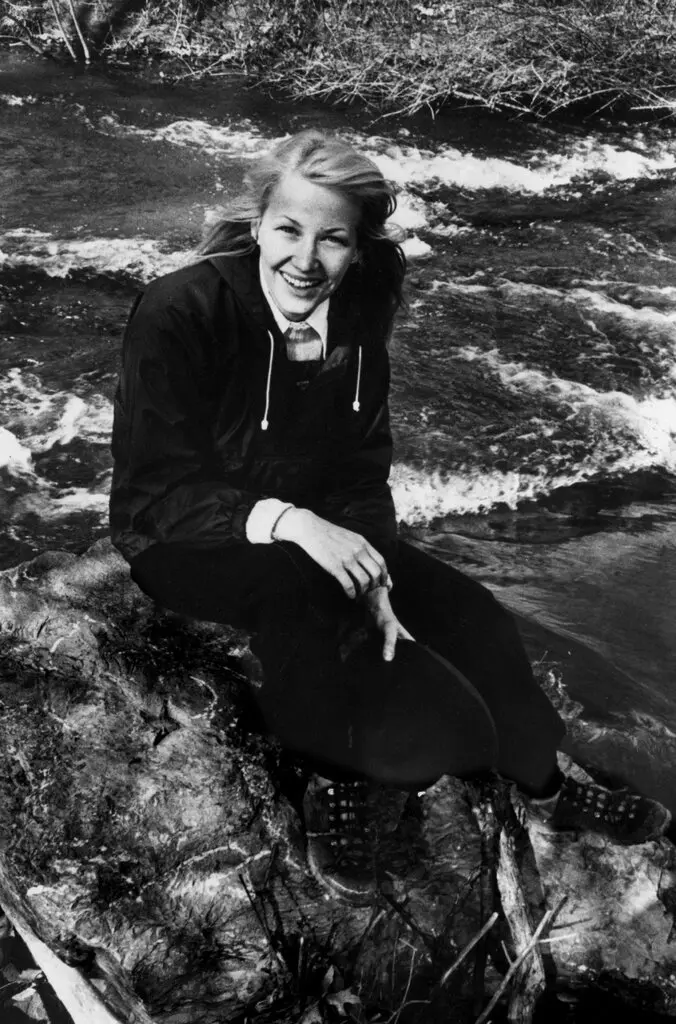
I am currently reading Pam Houston’s Deep Creek: Finding Hope in the High Country (2019), a memoir of healing from a traumatic childhood on a remote ranch in the Colorado mountains.

Her writing is electric, sumptuous with vivid metaphor, jolting the reader into an awareness of nature’s turning wheel and inherent vulnerability. She explores the solace of animals, the loyalty of friends who show up in times of need, the sharp contrasts between urban and rural life—all of it intuitive, and all of it beautiful

It is so superbly written that, should I ever need an exit from insomnia, I would choose its audio version to placate the night, inducing deep slumber as swiftly as anesthesia on a patient lying on a surgeon’s table.

What moves me even more than her narrative of healing from life’s traumas on a remote Colorado ranch is Houston’s passionate love for our wounded earth, currently suffering the consequences of human disregard in the pursuit of profit and self-indulgence.

I am imbibing this book not just cerebrally, but emotionally, as it adumbrates my own passion for saving what remains. I cannot fathom a world bequeathed to our children and grandchildren that is absent of seals, humpback whales, polar bears, and salmon-filled streams—a world where the last untouched forests have given way to roads, lumberjacks, and pipelines.

Houston’s book carries a profound urgency, reminding us how little time remains to get our priorities right:

“Something is definitely wrong….The closer one got to the North and South poles, the more dramatic and obvious the effects of climate change. I didn’t want to live in a world without polar bears. I wasn’t sure an ocean without whales in it was any kind of ocean at all. My entire life I had watched, heartbroken, as individual pieces of wilderness that mattered to me got destroyed or developed, but I had believed, for reasons I am not clear on now (propaganda? denial? naïveté?), that the earth contained vast tracts of land humans had not pushed into. Now, I understood this thing we called technology had advanced to a point where no place on the planet was safe from our penchant for destruction. I found myself glad we had never colonized the moon.”

Houston writes here of her 2015 journey as a journalist encountering British Columbia’s Great Bear Rainforest, the largest intact temperate rainforest in the world. No roads. No lumberjacks. No liquefied natural gas pipelines.

Five months later, an agreement protecting the rainforest’s fate was reached between the provincial government, the First Nations, and the logging industry, shielding 85 percent of the forest from felling.

Yet, only a few months after that, an inattentive tugboat driver fell asleep at the helm, running his ship and its towed barge aground, releasing more than 110,000 gallons of diesel fuel into the pristine waters of the Great Bear’s Seaforth Channel.

I relish this book for its affirmation of nature’s grandeur, mystery, and moods, and for its acknowledgement that our fellow animals are possessed of unique personalities, emotions, and an astonishing intelligence. Elephants mourn their dead. Chimpanzees recognize themselves in mirrors. And yes, they can suffer—and often do, largely at human hands.

In Houston, I have found a co-conspirator on their behalf, whether the creature is a dog, a horse, a lamb, or even a chicken:

“I had been born knowing that if you held the proper measuring stick, animals would always test smarter than people, and nothing I’ve seen in my lifetime has disabused me of that notion. We may have more complicated language, opposable thumbs and this dangerous thing called reason, but any self-respecting llama or buffalo or spider knows enough not to destroy its own home.”

Houston’s book offers both joy and sorrow, and it is well worth your time. Great books endure long after their final page is turned.

–RJ

Their Hearts Have Not Grown Old: The Rhythmic Wisdom of Roger Rosenblatt

 Here I am, back again, recommending another book. I think it comes down to the social creatures we are at heart. Those best portions of our memories—of travel, a good meal, an unexpected kindness—are never isolated; they are more fulfilling when shared.

I’ve been reading Roger Rosenblatt’s Rules for Aging. Its sequel, More Rules for Aging, comes out June 2.

Originally published a quarter-century ago, this book is a slim, deceptively simple survival manual for the twilight of life. Rather than offering earnest scientific breakthroughs or dense psychological theories on growing older, Rosenblatt delivers fifty-eight bite-sized, counterintuitive gems of wisdom rooted in a liberating truth: most of the little things we agonize over simply do not matter.

Armed with a rueful, tongue-in-cheek irony, he instructs us to stop defending our character, to run when someone says “we must do this again,” and to realize that nobody is thinking about us anyway.

Rosenblatt’s crystalline writing is breathtaking, the sagacity drawn from a vast repertoire of experience, a way of saying things that startles. Rhythmic in cadence, exhibiting sustained, aphoristic eloquence, it’s a book you’ll want to read, pen in hand.

A learned man—Harvard Ph.D., essay writer extraordinaire, journalist, playwright, and author of more than twenty books—he’s your Renaissance man. In his spare time, he is an accomplished jazz pianist who plays by ear.

Reading Rosenblatt feels as though he’s sitting at a table across from you in a quiet café, conversing like a friend you’ve known all your life and care deeply about. He makes you think, distilling options, engaging your interior life.

With grace, he helps you accept your griefs and regrets, revise your hopes, and embrace aging and ending.

A famed memoirist, he shuns nostalgia, exemplifying the sanctity of life’s daily rituals, whether making toast for a grandchild or paddling a kayak on a foggy morning.

There’s a sadness in finishing anything Rosenblatt writes—his sheer ability to extract wisdom from close observation reveals truths we too often miss. He lingers like the aftermath of a fine wine.

He once wrote of the writer’s calling, words that capture his entire spirit:

“What are we here for? We are here to write our way into the hearts of total strangers… If a piece of writing does not touch, alter, or shake the human heart, it is nothing. It is a beautifully constructed house with no one living inside” (Unless It Moves the Heart).

—RJ

Colette: Flesh, Freedom, and Contradiction

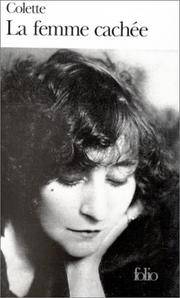
Few twentieth-century writers combine sensual brilliance, personal scandal, and literary influence as completely as the French novelist Colette (1873-1954). Revered in France as one of the great stylists of modern prose, she remains comparatively underread in America. Her life was marked by artistic triumph, erotic independence, moral ambiguity, and deep contradiction, qualities inseparable from the extraordinary vitality of her work.

I hadn’t encountered Colette until I came across reprints of several of her best-known works in the New York Review of Books, including Chéri and The Pure and the Impure. Curious, I decided to begin at the beginning with Claudine at School, the first of her semi-autobiographical Claudine novels, featuring the rebellious schoolgirl whose wit, sensuality, and independence challenged conventional notions of womanhood as passive, domestic, and sexually muted.

The Claudine novels emerged from one of the most exploitative literary marriages of the era. Colette’s husband, the flamboyant Parisian critic and entrepreneur Willy, recognized her talent and pressured her into writing the series, which was initially published entirely under his own name. The books became enormously successful, while Colette remained publicly overshadowed. Her eventual break from Willy marked not only a personal emancipation but the beginning of her emergence as an independent literary figure.

After reading Claudine at School, I turned to Secrets of the Flesh: A Life of Colette by Judith Thurman, a massive and meticulous biography produced from nearly a decade of research in French archives and sources.

Thurman had previously written Isak Dinesen: The Life of a Storyteller, which won the National Book Award for Nonfiction in 1983 and later helped inspire the Academy Award-winning film Out of Africa. She was co-producer.

Her Colette biography became a finalist for both the National Book Award and the Pulitzer Prize, while France honored her with the title of Chevalier of the Order of Arts and Letters in 2016. She has also been one of the longtime staff writers of The New Yorker.

Yet I suspect many Americans remain only vaguely aware of Colette, even if they have seen Gigi, Vincente Minnelli’s celebrated adaptation of her 1944 novella.

In France, however, Colette long ago entered the cultural canon, the first female president of the prestigious Académie Goncourt, and remains a central figure in the French literary curriculum. Her Claudine novels, Chéri, and Gigi continue to be widely read.

Among her admirers were some of the century’s most distinguished literary figures: Marcel Proust, André Gide, Jean Cocteau, and even Jean-Paul Sartre. William Faulkner reportedly kept her photograph on his writing desk, a tribute from one master stylist to another.

Upon her death in 1954, she became the first French woman granted a state funeral, though the Catholic Church denied her religious burial because of her divorces and unconventional private life.

Colette’s writings eventually filled more than eighty volumes: novels, memoirs, journalism, literary criticism, essays on theatre, fashion, cuisine, and animals. During the First World War, she even worked as a war correspondent, visiting battlefields and interviewing soldiers.

Yet one finds little overt political or philosophical argument in her work. What distinguishes Colette is her total immersion in the senses. She does not merely describe experience; she inhabits it, merging the physical world with psychological perception.

One feels physically present in her prose: the ripening of a peach, the texture of a cat’s fur, the shifting power between lovers, the ache of aging, the fierce necessity of independence.

Her evocations of her native Burgundy possess extraordinary sensory delicacy:

“Je redescendais… Le jardin frissonnait encore, les roses étaient froides. J’attendais que le premier rayon de soleil touchât le mur, et alors l’odeur du buis montait comme une prière. Tout était bleu, argenté et nacré. C’était un monde où la rosée n’était pas encore de l’eau, mais une sorte de lait céleste qui adoucissait le monde avant que le jaune cruel du jour ne commence à le brûler.”

Translation:

“I would go down into the garden… The garden was still shivering, the roses were cold. I would wait for the first ray of sun to touch the wall, and then the scent of the boxwood would rise like a prayer. Everything was blue, silver, and nacreous. It was a world where the dew was not yet water, but a kind of celestial milk that softened the world before the harsh yellow of the day began to burn it away.”

She was equally perceptive about aging and female self-awareness:

“Elle regarda son reflet — le cou qui commençait à perdre sa tension, le fin réseau de rides autour des yeux qu’aucune poudre ne pouvait vraiment bannir. Elle ne pleura pas ; elle étudia sa ruine comme un général pourrait étudier la carte d’un territoire perdu. Il y avait une magnificence dans cette défaite. Elle se rendait compte qu’être une femme, c’était être une série de peaux, muées l’une après l’autre, jusqu’à ce qu’enfin, on ne reste qu’avec les os de son propre caractère, qui sont, après tout, les seules choses qui durent vraiment.”

Translation:

“She looked at her reflection—the neck that was beginning to lose its tension, the fine web of lines around the eyes that no amount of powder could truly banish. She did not weep; she studied her ruin as a general might study a map of a lost territory. There was a magnificence in this defeat. She realized that to be a woman was to be a series of skins, shed one after the other, until finally one is left with only the bones of one’s own character, which are, after all, the only things that truly endure.”

She also possessed an uncanny sensitivity toward animals, especially cats:

“Elle restait là, ombre gris-argent, ses yeux comme deux raisins translucides. Elle ne se contentait pas de regarder ; elle humait la chambre. Ses oreilles bougeaient comme de petits radars indépendants, captant le bruit d’une aile de phalène ou le tassement lointain de la maison. Dans son immobilité, il y avait une concentration terrible et belle — l’orgueil d’une créature qui s’appartient tout entière et ne doit aucune explication au monde.”

Translation:

“She lay there, a silver-grey shadow, her eyes like two translucent grapes. She did not merely watch; she inhaled the room. Her ears moved like small, independent radars, catching the sound of a moth’s wing or the distant settling of the house. In her stillness there was a terrible, beautiful concentration—the pride of a creature that belongs entirely to itself and owes no explanation to the world.”

Colette’s private life, however, remains controversial. Her relationships were often transgressive; she had a strained relationship with her daughter, engaged in an affair with her teenage stepson, and continued publishing in journals associated with Vichy France during the Nazi occupation.

Thurman describes Colette’s maternal style as one of “ruthless detachment.” Much of the child-rearing was delegated to a nanny. Mother and daughter frequently quarreled. At one point, returning from boarding school, her daughter reportedly remarked that she wished they were Jewish because Jewish parents seemed more emotionally involved with their children.

Thurman suggests that Colette regarded motherhood as an intrusion upon the artistic life—a conflict that has shadowed many women writers navigating the competing demands of creativity, erotic freedom, and domestic expectation.

Her conduct during the Nazi occupation remains morally ambiguous. Although she used her connections to secure the release of her Jewish husband from internment, she nevertheless continued publishing under the Vichy regime, actions critics still debate. Thurman offers a pragmatic possibility: survival.

In many respects, Colette embodied contradiction, shaped by a conservative provincial upbringing while seeking freedoms historically reserved for men.

Though later embraced by many feminists as a symbol of female independence, Colette often denounced feminism, once remarking that women “deserved the whip and the harem.” In a 1927 interview with Walter Benjamin, she suggested that women wielding power could become “worse than men.” Bisexual and involved in numerous relationships with women, she nevertheless disapproved of her own daughter’s lesbianism, perhaps knowing the difficulties of gay life, Thurman suggests.

And yet, despite these contradictions, Colette helped redefine what modern womanhood could be. She fashioned a public life of artistic independence, sexual autonomy, and professional achievement at a time when few such paths existed openly for women.

French culture has often shown a greater willingness than Anglo-American culture to celebrate women who combine sensual freedom with intellectual authority, as seen in figures such as George Sand and Simone de Beauvoir. Colette belongs within that lineage, though she remains more elusive, less ideological, and ultimately more instinctive than either.

Thurman’s biography succeeds precisely because it resists simplification. She neither canonizes nor condemns Colette, but instead reveals a woman of immense artistic gifts, profound appetites, emotional blind spots, courage, vanity, discipline, selfishness, and brilliance.

Above all, Colette endures because of the precision and sensual richness of her prose. Few writers have rendered nature, animals, desire, aging, and the textures of ordinary experience with such tactile immediacy and lyrical control. Whatever her personal failings, her writing continues to justify the devotion of her readers and her enduring place in French literature.

–RJ

Wendell Berry and the Things That Matter

Unsplash: Amy Reed

I’ve finished my clustered reading of Wendell Berry with his Port William novel, Hannah Coulter, and feel I know him now as an adamant lover of the old ways: the community of belonging; simpler living and inherited traditions; the sanctity of the family farm; nature’s cyclic wheel, ushering change and mortality’s inevitable visit; the enduring power of love to redeem life’s frequent anguish.

Reading Wendell Berry has made me more mindful of what truly matters and, like him, I mourn the passing of a better way of life—less angry, more humane, sustaining in the daily beneficence of the familiar and the abiding.

—rj

The Diminishing Commons of Reading

Upsplash

We live in an age of unprecedented access to information, and yet books themselves are becoming harder to obtain. Prices rise, libraries strain, and even digital access comes with invisible expiration dates. The result is a quiet paradox: the more abundant knowledge becomes, the less equitably it is distributed.

I have long been a fervent devotee of Virginia Woolf, unquestionably among the greatest writers of the twentieth century. For nearly thirty years, Mrs Dalloway and To the Lighthouse were central texts in my modern novel course. Most recently, I read her diary (1918–1941), an extraordinary record of a writer’s inner life and artistic evolution.

I had assumed that we possessed a full collection of Woolf’s extant letters—some 3,100 of them, published in six volumes spanning 1888–1941. Yet recent scholarship has uncovered more than 1,400 additional letters, now published by Edinburgh University Press. The problem, however, is cost: the retail price approaches $255 (£188), and the collection is unavailable in e-book form. What should be a scholarly enrichment becomes, for many readers, an inaccessible luxury.

Even in the digital age, book prices—especially for hardbacks, the staples of libraries, bookstores, and schools—continue to rise. I am fortunate to have a well-stocked independent bookstore nearby, yet like many such stores, it survives as much on gift merchandise and an in-house café as on book sales. Across the country, independent bookstores have declined, leaving some communities without any physical access to books.

School budgets are under comparable strain. In the United States, library funding has remained essentially flat in recent years, even as costs rise. More than half (58%) of school librarians reported restrictions on spending in 2023–24, up from 48% in 2020–21; some report being unable to purchase books (Cockcroft, 2024).

In the United Kingdom, 15% of secondary schools report having no library budget whatsoever, while 69% of those with budgets indicate that funding has remained static or declined, eroding real purchasing power (Reading Cloud, 2023). In England more broadly, school funding fell by 8.5% in real terms between 2009 and 2020, with predictable consequences for library acquisitions (Sibieta, 2021).

An underreported consequence is the strain on public libraries. Approximately 94–96% of public library funding derives from government sources—primarily local governments through property taxes, with supplementary state and federal support, including grants from the Institute of Museum and Library Services. Only 4–6% comes from fines, fees, or philanthropy (Sweeney, 2025). This reliance on local funding creates a structural inequity: communities with weaker tax bases, often those most in need of library services, are least able to support them.

Yet public libraries remain indispensable. Roughly 17,000 public libraries in the United States receive more than 1.3 billion visits annually, exceeding the combined attendance of major professional sports leagues (Sweeney, 2025). They are not luxuries, but essential civic institutions: centers of learning, access, and communal life.

Recent federal policy has compounded these pressures. In March 2025, the administration of Donald Trump mandated reductions to the budget of the Institute of Museum and Library Services, the nation’s only federal agency dedicated to library funding, as part of a broader effort to reduce government spending. A coalition of 21 state attorneys general successfully challenged these cuts in federal court, restoring funds that had amounted to just $266.7 million in 2024—approximately 0.003% of the federal budget, or roughly 75 cents per capita (NPR, 2025).

Meanwhile, the publishing industry has consolidated into five dominant firms—Penguin Random House, HarperCollins, Simon & Schuster, Hachette Book Group, and Macmillan Publishers—three of them foreign-owned. Together, they exert enormous influence over what is published. Such consolidation reduces competition and contributes to rising prices.

Libraries face an additional burden in the form of digital licensing. Unlike consumers, who may purchase an e-book outright, libraries must often pay steep licensing fees; for example, $55 for a popular title that a consumer can buy for $15, and must repurchase access after a limited term, typically two years (Goode, 2024). If a library declines to renew, the title simply disappears from its collection. When high-demand titles—such as The Women by Kristin Hannah—are involved, libraries have little choice but to pay.

Efforts by states to legislate fairer licensing terms have thus far failed in the courts.

At the same time, Amazon dominates the market, controlling roughly 68% of e-book sales—rising to 83% when Kindle Unlimited is included—and an increasingly large share of print sales as well (eReaders Forum, 2024; WordsRated, 2024). Its Kindle Direct Publishing platform has democratized access to publishing, allowing authors to earn up to 70% royalties on certain e-books, but it does so within a system that further concentrates market power.

The result is a feedback loop: as platform dominance reshapes the market, major publishers compensate by raising prices, especially for institutional buyers such as libraries and schools, and by concentrating resources on high-profile authors and guaranteed bestsellers.

In 2017, Barack Obama and Michelle Obama secured a reported $65 million joint publishing deal with Penguin Random House for their memoirs, Becoming and A Promised Land (Weaver, 2017). Such advances reflect market realities but may also crowd out emerging voices.

We have, in other words, not resolved the paradox but deepened it. As prices rise, access narrows, and even our digital abundance proves conditional, knowledge becomes less a shared inheritance than a gated resource. What is at stake is not simply the cost of books, but the principle that they, and the intellectual life they sustain, belong to everyone.

–RJ

REFERENCES

Cockcroft, M. (2024, April 4). School library budgets remain strained. School Library Journal.

Goode, L. (2024). E-book licensing and libraries. GoTech.

Reading Cloud. (2023). UK school library funding report.

Sibieta, L. (2021). School funding trends in England. Institute for Fiscal Studies / Wiley.

Sweeney, P. (2025, September 4). Public library funding in the U.S. Candid.org.

Weaver, H. (2017, March 1). _The Obamas’ publishing deal. Vanity Fair.

NPR. (2025). Court restores IMLS funding.

eReaders Forum. (2024). E-book market share statistics.

WordsRated. (2024). Amazon book market share projections.

My Porch of Books

I have always imagined that Paradise will be a kind of library.” — Jorge Luis Borges

This year I decided to overhaul my reading habits by adopting what I call focused reading—pursuing a subject deeply rather than wandering endlessly from book to book. Instead of grazing randomly across titles, I try to follow a particular vein: reading several works that illuminate a topic, an author, an era, or a historical moment until the subject begins to feel textured and alive.

For years, though my reading had been eclectic, and not without pleasure, I began to sense that the most memorable intellectual experiences of my life had come, not from isolated books, but from immersion, one work leading naturally to another, ideas conversing across pages and centuries.

Reading then becomes less a pastime than a form of exploration, the mind moving gradually through a landscape rather than darting past it from the window of a passing train.

This year I began, as usual, with my annual eclectic list of fiction and non-fiction culled from authoritative sources. But going forward, I hope to limit that list to perhaps twenty titles—books that seem especially deserving of attention.

Alongside these, I’ve begun concentrating on several areas. This year they include the farming iconoclast Wendell Berry; the conservative economist Thomas Sowell; the late historian Walter Johnson; and the classical world—an area where I lack deeper exposure.

Next year, should I still walk the planet, I can imagine expanding the method further: perhaps ten topic areas, each composed of primary and secondary works. Five books per topic would yield roughly fifty works of focused reading, in addition to the twenty eclectic titles.

To give an example, one of this year’s areas of focus is the classical milieu. Staying within my five-book limit, I chose the following:

• The Republic — Plato
• Nicomachean Ethics — Aristotle
• The Bacchae — Euripides
• Metamorphoses — Ovid
• Letters from a Stoic — Seneca the Younger

So far, my experiment is yielding dividends. I’ve committed to reading a minimum of fifty pages a day—assuming an average book length of about three hundred pages—and by mid-March I’ve completed twelve books. Last year, by contrast, I finished only twenty.

I should confess that Atomic Habits by James Clear helped inspire the discipline. Clear’s practical application of behavioral psychology, ideas traceable to B. F. Skinner, encouraged me to approach reading not merely as an aspiration but as a daily practice. Nowadays I cringe when my routine threatens the minimum and will sometimes delay sleep simply to complete my pages.

Such discipline may seem quaint in an age that offers a thousand distractions. Once it was linear television that eroded the nation’s reading habits; today, the Internet amplifies the trend. Last year, nearly half of Americans, 48.5 percent, did not read a single book. In Britain, the figure stood at 40 percent, according to a YouGov poll reported in the Times Literary Supplement.

Bottom line, Americans spend roughly four to five hours each day watching television or streaming media; in Britain, the average approaches four and a half hours. Platforms such as Netflix, Hulu, YouTube, and Facebook dominate much of that viewing.

Add the hours spent on smartphones, computers, and tablets and the total easily approaches seven hours a day, nearly the equivalent of a full workday, devoted to screens. Much of that time is spent watching movies, sports, or the endless scroll of digital entertainment.

Younger generations, though still fond of sports and films, increasingly inhabit the fast-moving currents of TikTok, YouTube, and video games.

Reading, by contrast, has steadily fallen out of fashion.

Nor has reading alone suffered. The social fabric has frayed as well. I remember when houses faced the street with broad porches where neighbors gathered in the evening, waiting the advent of night’s coolness, conversation drifting unhindered from one subject to another, board games on small tables, laughter an abundant sprinkling of neighborly fellowship.

This simple act of sitting together seemed reason enough to linger.

Today, many houses turn their porches to the rear, facing private yards rather than the street, as if community itself had quietly retreated.

Perhaps this is why books continue to matter.

Reading restores a community the modern world has forsaken.. Open a book and time folds in upon itself: Plato resumes his patient inquiry into justice; Seneca counsels composure in adversity; Ovid reminds us that the human story is one long sequence of transformations. The centuries speak again in voices at once distant and intimate.

Books, in this sense, comprise the old porch of civilization.

There we sit again with the living and the dead alike, the conversation unbroken. The room grows quiet, the hour late, yet the mind moves freely—wandering Athens with Aristotle, pausing in the tragic shadows of Euripides, or returning, perhaps a little wiser, to our own small corner of the world.

So I keep my modest covenant of fifty pages a day. Not simply to finish more books, though that is pleasant enough. I read because within those pages waits a larger company and a wider horizon.

In a distracted age, the turning of a page may be one of the last quiet forms of freedom left to us.

—rj

My Experiment in Simultaneous Reading

I’ve just finished Donna Tartt’s The Goldfinch alongside Wendell Berry’s The Unsettling of America.

I’ve never read two books simultaneously before, but the pairing worked. The Goldfinch proved a genuine page-turner for me—a Dickensian, plot-driven suspense novel layered with thematic, even philosophical, meditations on life’s meaning.

Berry, by contrast, is at his consummate best in The Unsettling of America, distilling a passionate defense of the rural, the sanctity of non-industrial agriculture free of chemicals and heavy machinery. It is, finally, a lament for the erosion of community in our contemporary drift toward urbanization and accumulation. Berry is Thoreau à la mode. Simplicity, he reminds us, yields contentment.

I’m now reading Berry’s Jayber Crow, perhaps the finest introduction to his Port William novels, sixteen in number.

Since my experiment of reading two books at once has proven fruitful, I’m also reading A Beginner’s Guide to Japan by renowned travel writer Pico Iyer.

Iyer never disappoints in his genius for illuminating the subtle ambiences of disparate cultures. I confess I’m easy prey for this particular read as a longtime devotee of Japanese culture, now under threat. May ikigai, the art of pursuing one’s bliss, never meet its end.

My decision to weave a topical thread through my otherwise eclectic reading marks a meaningful turning in my reading approach. Last year I read twenty books. With ten already read this year, I anticipate—barring life’s interruptions—fifty or even sixty by year’s end.

But numbers surely are incidental. To read this way is to live more than one life, testing long held convictions, enlarging sympathies, and keeping my mind unsettled in the best sense of the word.

—rj

Why Wendell Berry Still Matters

I’ve been absent from Brimmings for nearly a week, recovering from a serious bout with the flu—the fever lingering for ten days. A chronic cough remains my daily companion.

That hasn’t stopped me from reading—slowly, attentively—six books already this year.

As I’ve previously shared, alongside my annual eclectic reading list, I’ve committed to a topical approach to reading as a way of resisting intellectual grazing and cultivating sustained attention (Topical Reading). I’ve begun with Kentucky sage Wendell Berry, now in his ninety-second year.

I didn’t want to one day come upon his obituary and feel the guilt pangs of having neglected an agrarian pacifist, a champion of the local, often described, without much exaggeration, as America’s “moral conscience.”

Berry has farmed a 125-acre hilly tract adjacent to the Ohio River at Port Royal in Henry County, Kentucky, for more than forty years. Farming, for him, is not metaphor but moral practice. As he writes, “The care of the Earth is our most ancient and most worthy, and after all our most pleasing responsibility.”

Academically, Berry is no lightweight: a BA and MA in English from the University of Kentucky, a Stegner Fellowship at Stanford, and a Guggenheim that took him to Italy, he taught briefly at New York University before returning—against the counsel of colleagues who believed he was jettisoning a promising academic career—to rural Kentucky and the family farm.

They were wrong.

Berry has since written more than fifty books spanning essays, novels, and poetry. His great theme is stewardship—not management or control, but reverent care. “The idea that people have a right to an economy that destroys nature is a contradiction,” he writes, insisting that economic life must answer to ecological reality.

For the farmer Berry, stewardship begins with the soil: an antipathy to chemicals, a reverencing of the biosphere, and a life lived according to natural rhythms. He is deeply opposed to industrial agriculture, which he regards as a cultural as well as ecological calamity: “Industrial agriculture is not just bad for farmers; it is bad for land, for rural communities, and ultimately for culture.”

Among American environmental writings, the two most salient works I’ve encountered are Thoreau’s Walden (1854) and Rachel Carson’s Silent Spring (1962). Thoreau’s aphoristic brilliance lends itself to endless quotation: “Our life is frittered away by detail… Simplify, simplify,” while Carson’s prose approaches poetry. Her opening paragraphs of Silent Spring remain, to my mind, the finest in environmental literature, exposing the arrogance behind what she called “the control of nature, a phrase conceived in arrogance, born of the Neanderthal age of biology and philosophy.”

I’m only in the early stages of getting acquainted with Berry, but he keeps distinguished company with Thoreau and Carson in his passion for preserving nature’s bounty and the pulchritude of a simplified life lived in fidelity to place and community.

In this sense, Berry reaches back to Thomas Jefferson, whom he quotes more than any other figure: “In my own politics and economics I am Jeffersonian.” Jefferson believed liberty was best secured in small, decentralized communities of independent producers, warning that distant power—whether governmental or economic—inevitably corrodes responsibility and freedom.

Though Berry was an activist who vehemently opposed the Vietnam War and has voted Democratic, his politics resist easy classification. He has lamented that America’s two major parties have grown increasingly to resemble one another.

There may appear, at first glance, to be overlap with libertarianism—his opposition to big government, military expansion, and imperial intervention—but the resemblance is superficial. Libertarianism exalts the autonomous individual; Berry emphasizes communal obligation. “We do not have to sacrifice our economic well-being in order to act responsibly toward our land and our neighbors,” he writes. “Rather, we must do so in order to preserve our economic well-being.”

Berry has his critics. His suspicion of technology strikes some as untenable in a hungry, overpopulated world. Can an aggregate of small family farms feed a wired and burgeoning global population, particularly in parts of Africa?

I find myself grappling with his apparent parochialism. Only a tiny fraction of Americans now farm. What of the rest of us who earn our livelihoods elsewhere? And in an interconnected age, can the local truly stand apart from the global?

Berry would respond that the issue is not technology itself, but dependence. “There is a difference between being technologically advanced and being technologically dependent,” he reminds us—a distinction too often elided in contemporary debates.

Ironically, Berry would fit comfortably in an Amish community. He still plows with horses. He owns no computer, television, or mobile phone, and has no internet access. He writes first in pencil, then types. He uses electricity sparingly, supplemented by solar panels, and his writing studio is without electricity. He walks the talk, living a life rooted—quite literally—in the land. Thoreau would have approved.

An iconoclast, Berry remains well worth reading. Growth, he reminds us, is not synonymous with the earth’s welfare. Economies, like soils, can be exhausted. Big government and industrial systems, he argues, erode local responsibility, foster dependency, and inflame military and international tensions. Rural poverty in places like Appalachia persists, in his view, because urban prosperity has been purchased by the plundering of these regions.

In 2013, President Barack Obama awarded Berry the National Humanities Medal.

In 2015, he became the first living writer inducted into the Kentucky Writers Hall of Fame.

That same year, the Library of America published a boxed set of his work—an honor accorded to only two living American writers at the time.

Berry may be impractical. He may be impossible to scale. But he leaves us with an uncomfortable and necessary reminder: care, once abandoned, is not easily restored—and neither are the land, the culture, nor the communities that depend upon it.

—rj