
Today is “Poem in Your Pocket Day,” a chance to carry a poem with you and share it. Poetry speaks to the feeling dimension at the heart of who we are, most often through metaphor.
I’ve chosen Sara Teasdale’s “Stars,” first published in 1917. Teasdale is also known for “There Will Come Soft Rains,” whose title Ray Bradbury later borrowed for one of his most memorable stories. She was the first woman to win the Pulitzer Prize for Poetry.
“Stars” is a short poem whose apparent simplicity conceals careful craft:
“Stars”
Alone in the night
On a dark hill
With pines around me
Spicy and still,
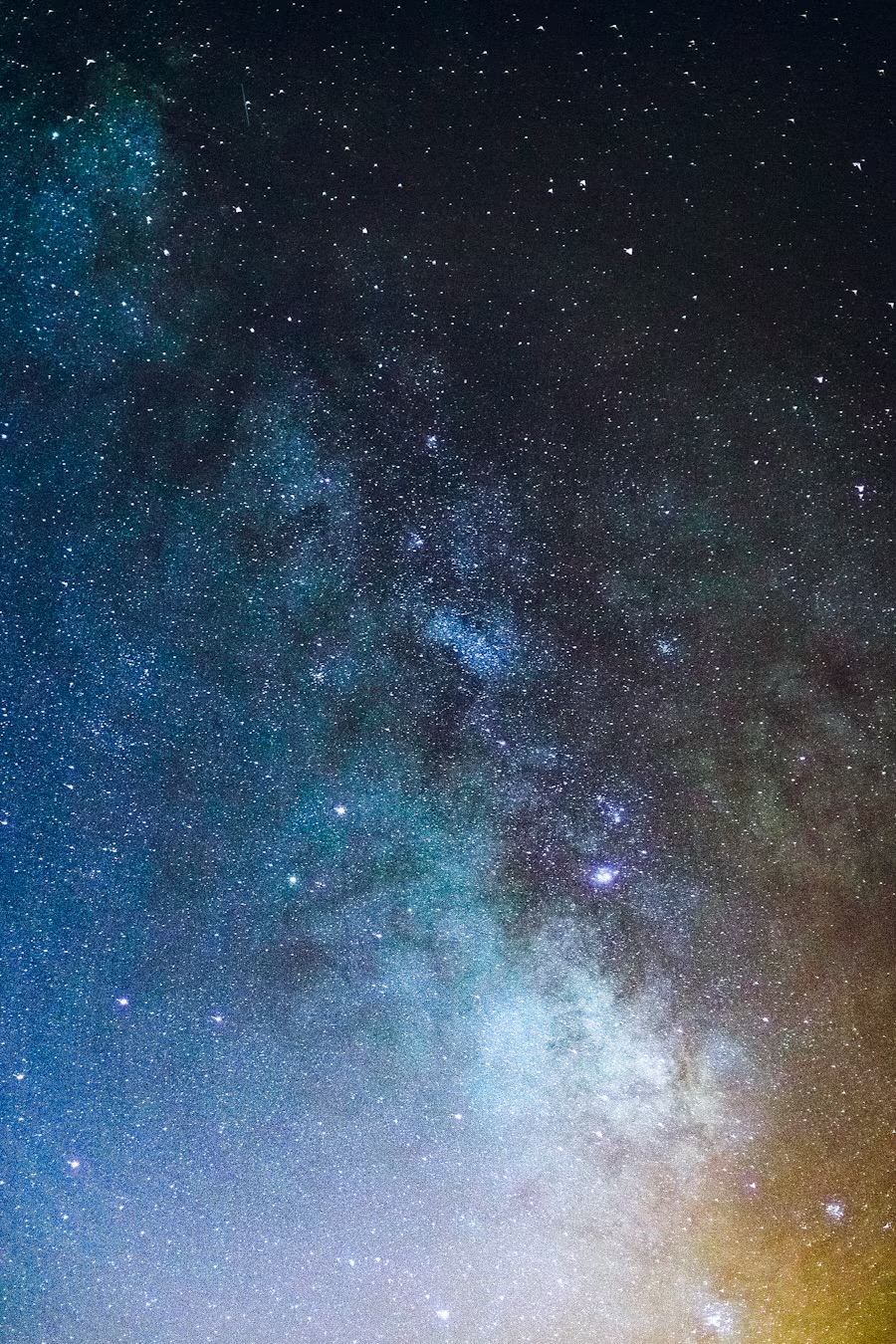
And a heaven full of stars
Over my head,
White and topaz
And misty red;
Myriads with beating
Hearts of fire
That aeons
Cannot vex or tire;
Up the dome of heaven
Like a great hill,
I watch them marching
Stately and still,
And I know that I
Am honored to be
Witness of so much majesty.
The opening stanza—“Alone in the night / On a dark hill”—does not suggest loneliness so much as attentiveness. The speaker is set apart in order to perceive more fully. The “spicy and still” pines engage not only sight but scent, grounding the experience in the physical world.
In the second stanza, the sky’s “white and topaz / And misty red” stars introduce a quiet richness of color. Rather than dramatizing emotion, the imagery gently intensifies perception, drawing us into a heightened awareness.
The third stanza personifies the stars as having “beating / Hearts of fire.” This is a form of pathetic fallacy, but it feels less like projection than kinship. The stars are not indifferent; they seem alive with a steady, enduring energy, untouched by time’s vexations.
By the fourth stanza, the speaker’s response becomes more clearly shaped: the stars “marching / Stately and still” evoke a ceremonial procession, ordered and serene.
The final tercet—departing from the earlier quatrains—serves as a quiet coda:“I am honored to be witness of so much majesty.”
The shift in form underscores the inward turn toward gratitude.
A small poem, yet it opens onto something vast: a moment in which solitude becomes not isolation but privilege—the chance to witness a universe both immense and strangely intimate.
—rj