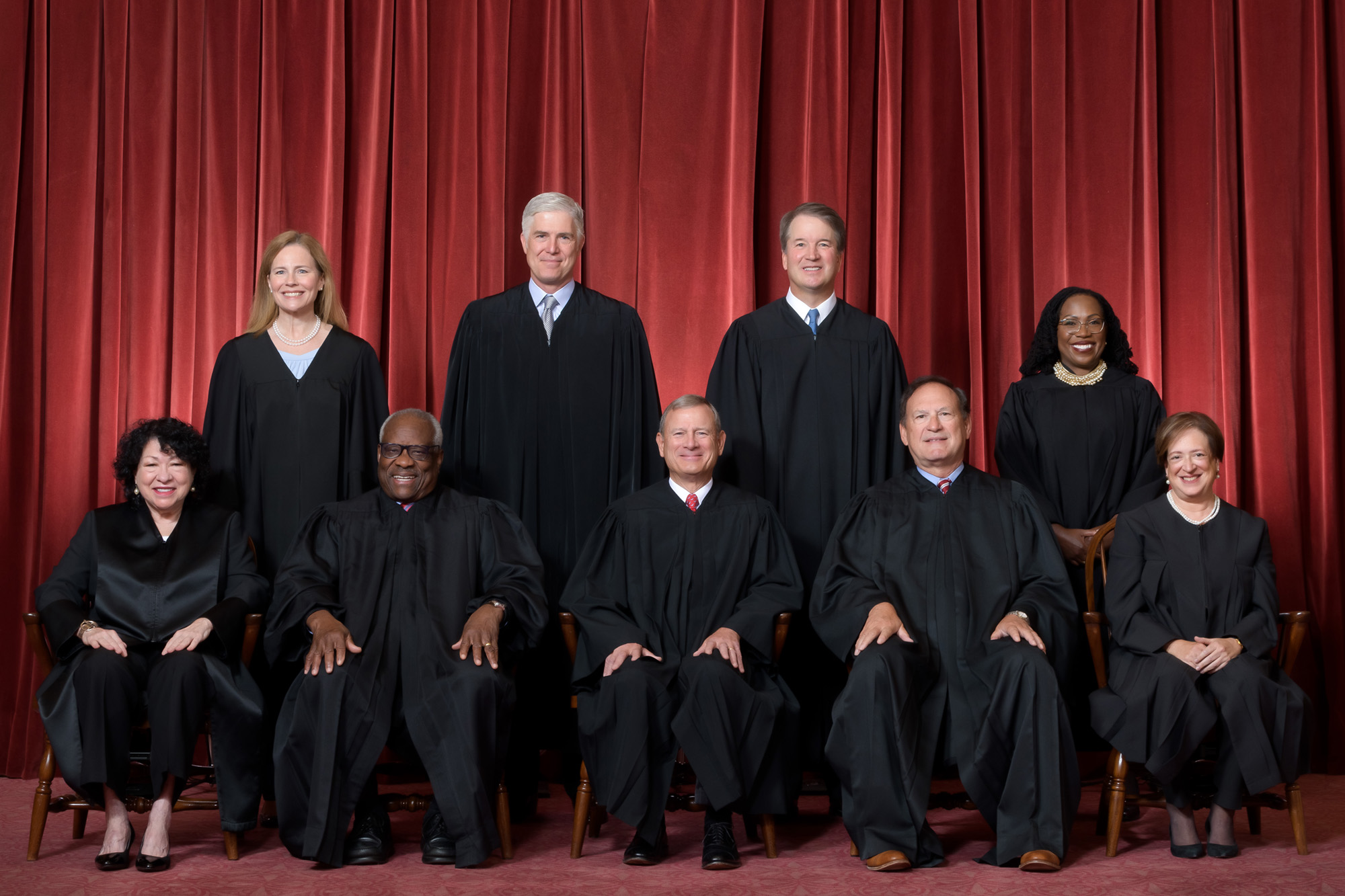
I had been opposed to packing the U.S. Supreme Court—that is, expanding the court to thirteen members. I’ve changed my mind.
In fact, I regard it as a necessity, given the threat of two more years of Trump, even if Democrats control both the House and Senate subsequent to the mid-terms.
As is, there is little Democrats can do to stop him. While the House may very well vote to impeach him, removing him from office requires a two-thirds majority of 67 senators to convict. Even with a likely Democratic surge, all polls indicate that Democrats will fall short of that number. I am, of course, assuming Republicans will not join Democrats in voting for conviction.
The Roberts Court has inflicted serious limitations on what Congress can do. In its 2024 decision, Trump v. United States, it ruled presidents have immunity from prosecution in connection with their core constitutional powers and presumptive immunity for other official acts.
The new Congress can halt funding for the Iran war, but the Trump administration can simply use existing funds to continue the conflict.
Congressional committees can initiate investigations into Trump administration excesses, and the judiciary may rule against its mandates, but Trump has proven able to delay enforcement by repeated appeals, ultimately to the Supreme Court.
Congress can endeavor to restrict funding, but the president can veto, requiring a two-thirds majority to overcome.
It’s imperative that, with all deliberate speed, we liberate the highest court from its Republican tenure.
It is this court that has ruled corporations are people, ushering in massive financial contributions motivated by pecuniary interests.
It is this court that overthrew Roe v. Wade (1973), which had granted women abortion rights.
It is this court that, in rulings such as AT&T Mobility v. Concepcion, restricted class-action lawsuits, making it far more difficult for consumers to hold large corporations accountable.
It is this court that allowed partisan gerrymandering (Rucho v. Common Cause, 2019), resulting in the ongoing erosion of voting rights.
It is this court that created steeper hurdles for holding prosecutors and state institutions accountable for constitutional violations (Connick v. Thompson).
Chief Justice Roberts counters that the court should not be mischaracterized as a partisan entity, but through its ongoing rulings, it has emerged as clearly partisan, unheeding of safeguards to protect public welfare and, worse, enhancing the president over the sovereignty of Congress, eroding the Founding Fathers’ constitutional framework of checks and balances.
To protect our nation from the erosion of democracy, it is time to restore our nation to sanity and expand the U.S. Supreme Court.
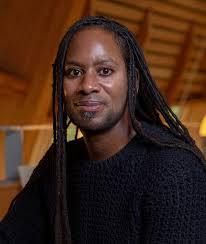
Slender and youthful at 37, with chest-length hair and a gentle, affable demeanor, Dr. Jason Arday was widely popular among students and colleagues when he was appointed Professor of Sociology of Education at the University of Cambridge in March 2023.
His hire made history. The child of Ghanaian immigrants, he was the youngest Black professor in the university’s centuries-old record, holding a prestigious seat alongside a Professorial Fellowship at Jesus College.
Yet, just three years later, Arday abruptly resigned.
Days after stepping down, on August 14, 2026, police found him dead at his Battersea, London residence under non-suspicious circumstances, a tragic end to a meteoric rise brought down by an escalating controversy over his academic credentials and personal backstory.
THE SHELVED INVESTIGATION The unraveling began long before it reached the public. In September 2025, Jack Grove, a senior reporter for Times Higher Education, alerted by Arday’s extraordinary athletic claims, sent Arday three direct emails requesting a response to alleged instances of plagiarism in his doctoral thesis and journal publications.
Rather than addressing the queries, Arday hired the law firm Carter-Ruck, known for aggressive media litigation, and reported Grove to the Metropolitan Police for criminal harassment.
The Met spent four months investigating the journalist. In February 2026, an officer called Grove, ordering him to cease contacting Arday because the inquiries were impacting Arday’s mental health. Facing legal threats and police intervention, Times Higher Education shelved Grove’s draft article.
THE WHISTLEBLOWER AND THE BLOG POST The story broke wide open through a different channel. In June 2026, an unnamed Cambridge faculty member, frustrated by what they alleged was an internal administrative cover-up to avoid a public scandal, approached Nathan Cofnas, a former Cambridge philosophy researcher.
Cofnas subsequently ran Arday’s 2015 doctoral dissertation through plagiarism-detection software and, in July 2026, published his findings on Substack, alleging extensive verbatim text duplication.
Cofnas was already a lightning rod for controversy. In February 2024, he had published an essay claiming that Black people possess lower average cognitive ability due to genetic differences, asserting that in a meritocracy the proportion of Black professors at elite institutions like Harvard “would approach zero percent.”
While a Cambridge University investigation concluded that Cofnas’s essay fell within lawful free speech under UK law, Emmanuel College severed ties with him in July 2024, citing the hostile environment created by his public statements.
Cofnas challenged his dismissal in court, but in March 2026, a tribunal ruled that while his philosophical beliefs qualified for legal protection, Emmanuel College acted lawfully in terminating his affiliation due to the disruptive impact and tone of his writings.
Despite Cofnas’s controversial background, his technical analysis of Arday’s text duplication was undeniable. On July 24, 2026, The Times published an explosive front-page exposé documenting passages in Arday’s dissertation that were identical or near-identical to previously published scholarship without attribution. Media scrutiny quickly spread to his published journal papers and his autobiography, which claimed he had remained non-verbal until age 11, illiterate until 18, and had run 30 marathons in 35 days.
RESIGNATION AND AFTERMATH On August 5, 2026, Arday resigned his Cambridge professorship. In an open letter addressed to colleagues and the public, he maintained his innocence while pointing to the unbearable personal strain:
When I accepted the extraordinary honour of becoming Professor of Sociology at Cambridge, it was, without question, the greatest professional privilege of my life… Sadly, the years since my appointment have also been marked by an unrelenting level of public scrutiny and personal attack… The relentless accusations, speculation and public commentary have taken a profound toll on me and on those I love… This decision should not be interpreted as a loss of faith in scholarship or in the values that first brought me to Cambridge. Nor should it be mistaken for an acceptance of the narratives that have surrounded me.”
Following his death nine days later, his family expressed shock, stating that Arday was a “gentle man” who had been “subjected to a campaign of sustained abuse… by those who would leave no stone unturned in their quest to undermine him.”
AN ACADEMIC EVALUATION Who bears responsibility for this tragic aftermath? In academia, the appropriation of another scholar’s work is an unpardonable offense. In my view as a former academic, the evidence of Arday’s unacknowledged text duplication and hyperbolic biographical claims is beyond doubt. Multiple passages in his writing trace directly back to uncredited source material, while his personal timeline, progressing from total illiteracy at age 18 to a doctoral dissertation in his twenties without an established paper trail of remedial education, defies statistical reality.
The root of this tragedy lies in an elite university rushing headlong to project progressive credentials. Cambridge was under immense pressure to diversify. According to reporting by The New York Times (August 15, 2026), internal hiring documents reveal that the selection panel bypassed candidates with far stronger scholarly records, brushing aside early warnings regarding Arday’s work as “vile efforts” to discredit a rising Black scholar. In doing so, the university abandoned its primary duty: to act as an impartial arbiter of intellectual truth.
While it is imperative that we confront racism wherever it rears its head, when institutions substitute top-down equity of outcome for equality of opportunity based on individual merit, they do not defeat prejudice: on the contrary, they merely replace rigorous judgment with performance art.
By waiving standard vetting out of ideological panic or political ideology, Cambridge did not elevate Jason Arday; instead, it exposed him, elevating a vulnerable man to a height built on sand, leaving him defenseless when the tide of inevitable scrutiny came in.
This tragedy serves as stark warning for modern higher education. When universities lower the bar to purchase moral virtue on the cheap, the consequences are ubiquitous: real scholarship is devalued, public trust in academia is shattered, and the genuine, unassailable achievements of minority scholars are quietly cast under a shadow of institutional doubt.
Everyone gets a prize—until the bill comes due. Cambridge got its headline, the ideologues got their symbol, and Jason Arday paid with his life.
Many years ago, I took a graduate seminar on John Milton centered on ParadiseLost (1667), one of the crowning achievements of the English Renaissance. But it was another work—Areopagitica (1644), his impassioned defense of freedom of speech—that has resonated with me ever since.
Written in opposition to Parliament’s Licensing Order, Milton argued that truth is strengthened, not endangered, by being tested against error, a bold stance in an age when dissent could invite imprisonment or execution.
Milton’s intellectual hero was Galileo. In Paradise Lost, he evokes the great astronomer when describing Satan’s massive shield:
“…the moon, whose orb Through optic glass the Tuscan artist views…”
The “Tuscan artist” is Galileo, whose telescope transformed humanity’s understanding of the heavens.
In Areopagitica, Milton recalls visiting Galileo at his villa in Arcetri, where the aging scientist lived under house arrest after being condemned by the Roman Inquisition for advocating the Copernican model of the solar system.
Forced under threat of torture to recant what he knew to be true, Galileo spent his final years blind and confined. I like to imagine that Milton’s visit offered some measure of consolation to a man whose only offense had been to follow the evidence where it led.
Today, speaking one’s conscience seldom risks imprisonment in liberal democracies, but it can still carry severe consequences: reputational ruin, professional ostracism, organized harassment, and targeted campaigns intended to silence rather than engage.
Public discourse, accelerated by social media, spreads these consequences with astonishing speed, rewarding denunciation far more readily than disagreement.
Our universities bear part of this responsibility. Among the intellectual influences that have shaped portions of academic life is Marxist philosopher Herbert Marcuse, mentor of the New Left. In his 1965 essay Repressive Tolerance, Marcuse proposed a striking inversion of classical free expression:
“Liberating tolerance, then, would mean intolerance against movements from the Right, and toleration of movements from the Left.”
He made the practical implications explicit, advocating for the “withdrawal of tolerance before the deed, at the stage of communication in word, print, and picture.”
In Marcuse’s view, there are issues where “certain ideas cannot be expressed, certain policies cannot be proposed.”
Whether one agrees with Marcuse or not, his framework represents a profound departure from Milton’s conviction that truth emerges through open contest rather than enforced orthodoxy.
I have no dog in today’s culture wars. Censorship has become an equal-opportunity temptation for both the Left and the Right. Battles over gender, sexuality, race, religion, history, and politics have produced book bans, withdrawn publications, disinvited speakers, removed art, renamed institutions, and ousted educators. The particulars vary; the impulse to silence does not.
Milton himself understood the cost of dissent. Like Galileo, he eventually lost his sight. Following his death in 1674, he was denied burial in Westminster Abbey’s Poets’ Corner due to his support for the Parliamentary cause during the English Civil War. Buried instead at St. Giles Cripplegate, his grave was desecrated more than a century later by souvenir hunters who carried away portions of his bones as grisly relics.
Some may dismiss Milton’s model as anachronistic, but I remain convinced that falsehood is exposed by argument, not by prohibition. The remedy for bad ideas remains better ideas, fearlessly expressed.
History offers sobering reminders of what happens when enforced orthodoxy replaces open debate. Authoritarian regimes throughout history have always understood that controlling speech is the prerequisite to controlling thought.
America has never perfectly reconciled its ideals with its practice, which is precisely why freedom of speech remains indispensable.
We improve our republic not by silencing one another, but by arguing honestly, listening seriously, and trusting that truth has nothing to fear from debate.
As Milton wrote in Areopagitica nearly four centuries ago:
“And though all the winds of doctrine were let loose to play upon the earth, so Truth be in the field, we do injuriously, by licensing and prohibiting, to misdoubt her strength. Let her and Falsehood grapple; who ever knew Truth put to the worse, in a free and open encounter?”
I hadn’t known that Andy Burnham, Britain’s new prime minister, is a fan of Philip Larkin—England’s premier poet since Auden. It aligns with Burnham having read English at Cambridge, making him rare among a long line of prime ministers.
I find that refreshing—not because English majors possess superior virtue, but because the finest literature is fundamentally moral in its urgings, even in unsettling works like A Clockwork Orange or Joyce’s Ulysses. As for poetry, moral resonance often defines its very existence.
Of course, Larkin has come under fierce attack, his published letters revealing objectionable racist and sexist views. It’s the familiar, troubling dilemma of separating an artist from the work.
I’ve just finished reading Sue Prideaux’s revelatory Wild Thing: A Life of Paul Gauguin, with its unsettling account of his relationships with young native girls. Picasso physically abused several of his partners. Richard Wagner was a vehement anti-Semite, yet his music endures in our concert halls. Even foundational thinkers—Hume, Kant, and Hegel—harbored implicit racism, while Aristotle viewed women as flawed versions of men.
But back to Burnham. What does he see in Larkin? Will his affinity for the poet make him a more responsive leader, attuned to his nation’s pressing domestic needs?
This much is clear: Larkin possessed an extraordinary gift for bringing poetry into quotidian life, capturing present urgencies, human longing, despair, and the precise mood of the British landscape. I can still hear the train wheels rhythmically clicking along the rails, carrying newly married couples, in “The Whitsun Weddings.”
Larkin rendered poetry conversational and, in doing so, deeply palpable.
What better guiding text for a new prime minister than these lines from “The Mower”?
…we should be careful Of each other, we should be kind While there is still time.
Or from “Going, Going”:
Their kids are screaming for more More houses, more parking allowed More caravan sites, more pay.
Reading Larkin might just keep Andy Burnham anchored to the everyday lives of working people in an era of corporate autocracy, widening economic disparity, and self-interested oligarchy.
Larkin reminds us that ordinary lives matter, not a bad script for a new prime minister to follow.
Despite assurances from several Republicans that they’ve spoken at length with Senator Mitch McConnell, hospitalized five weeks ago, we have yet to hear a single public word from the eighty-four-year-old Kentuckian himself. Governor Andy Beshear did the proper thing this week by sending the senator a letter requesting a candid accounting of his health.
Kentuckians, and indeed the nation, are entitled to such transparency from those they elect to high office. This is not a partisan demand but a democratic one.
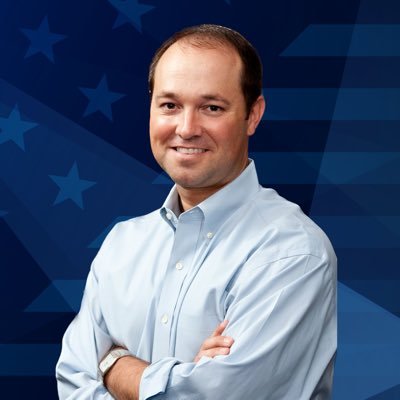
I find myself in rare agreement with Republican Representative Marlin Stutzman of Indiana, whose unusually candid remarks distinguish him from the practiced evasions of so much contemporary politics:
“You know, just the things that I’ve heard and seen from some friends is that he’s obviously not doing well, but don’t know if he’s alive or has passed away. His constituents deserve answers where he is at,” Stutzman said.
“I think that the governor of Kentucky has every right to ask after three weeks that no one has said anything. As a Republican, I think we need to hold our own party accountable. And so, the fact that we haven’t heard anything really from Senator McConnell is very discouraging and concerning,” Stuzman added.
Politics, by its partisan nature, so often assumes the countenance of Machiavelli, cloaking its embarrassments in the respectable garments of euphemism and doublespeak until concealment itself becomes a civic virtue.
Stutzman’s plainspoken willingness to question his own party is refreshing not because it is extraordinary in principle, but because it has become extraordinary in practice.
Democrats are hardly immune to the same temptation. For months they brushed aside mounting evidence that Maine’s Graham Platner was unfit for public office, choosing loyalty over candor until the testimony of a liberal woman made further denial impossible. One is left to wonder how differently events might have unfolded had the whistleblower been a conservative.
Such questions are uncomfortable precisely because they expose a habit shared by both parties: the instinct to protect power first and truth afterward.
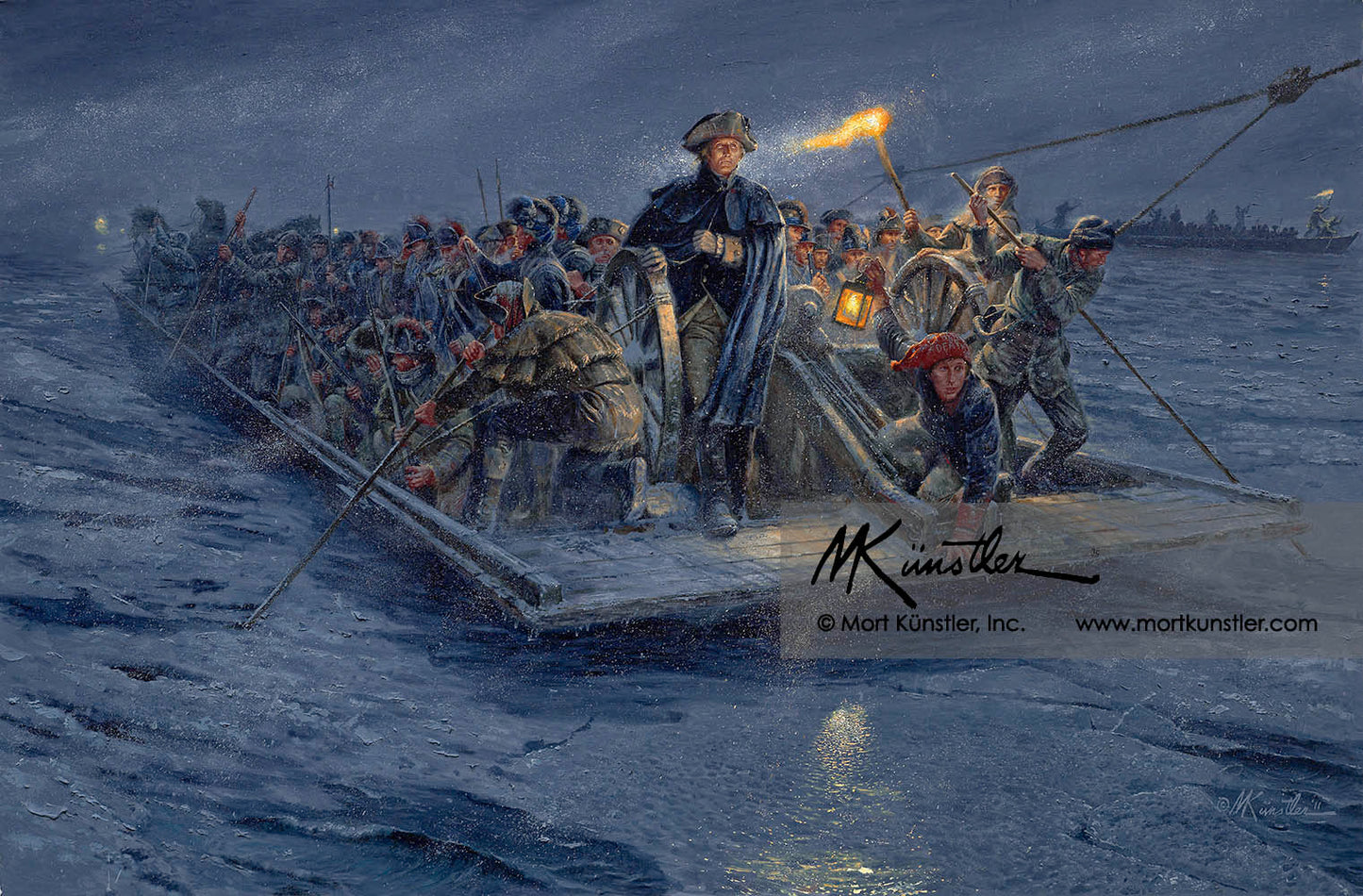
I didn’t celebrate America’s 250th birthday yesterday. How could I, with Trump still at the helm of a listing ship? Our country is so deeply fractured that I lack confidence our ship of state can ever be restored to an even keel again.
While the mid-terms loom, a new, more radical faction seems to be taking hold, offering simple remedies, under the aegis of expanded government, to complex problems that may well prove incendiary to America’s best interests.
History is being distorted—accompanied by the rise of a heated rhetoric, the past filtered through a modern lens, as if we can sanitize our heritage by consigning to oblivion our flawed heroes who nonetheless made America possible.
To contend, as some now do, that the Revolution was fought primarily to preserve slavery is a profound untruth. In 1776, Great Britain had no intention of dismantling the institution. While Royal Governor Lord Dunmore famously offered freedom to slaves who fled rebel masters to fight for the Crown, his proclamation was a cynical tactic of war, not a moral crusade; Dunmore himself owned a hundred slaves whom he exempted from his proclamation, and Britain did not outlaw slavery in its empire until 1833. The colonists revolted over representation and imperial overreach, not a defense of bondage.
Far from protecting slavery, the radical ideals unleashed by the Revolution ignited the Western world’s very first widespread abolitionist movement, a moral arc that would ultimately culminate in a bloody Civil War and Lincoln’s Emancipation Proclamation.
History taught from the periphery, filtered through rigid ideology or simplified into monolithic narratives, is intrinsically dangerous. It rests on a priori assumptions and is too often promulgated with dogmatism. True understanding requires nuance, humility, and courage.
Intolerance and intimidation increasingly menace our daily life. It’s a different America from the one I grew up with—dynamic, prosperous, a nation deserving of its patriotism.
And why not?
At the end of WWII, a victorious America was the sole nuclear power. It possessed an army of 14 million, an air force of 50,000 planes, and the largest naval force in history with nearly 7,000 ships, including 99 aircraft carriers.
Yet, alone among the global empires of history, America walked away from total dominion and chose peace over subjugation.
This is the America I remember and want back again.
As America increasingly turns its attention to politics with the midterms looming, there exist inherent dangers to guard ourselves against, the most prominent among them the ideologue who offers simple answers to complex problems, caters to popular sentiment, promises much, ignoring the consequences.
The foremost tragedies of twentieth-century history were wrought by the rise of autocrats—Lenin, Hitler, Stalin, and Mao—advocates of total government who were intolerant of dissension and bound by the collective dictum that the end justifies the means.
As the late Sir Isaiah Berlin cautioned, “All forms of tampering with human beings, getting at them, shaping them against their will to your own pattern, all thought control and conditioning is, therefore, a denial of that in men which makes them men and their values ultimate.”
Voters today must be discriminating, wary of the “brave new worlders” who would trade the painful, magnificent burden of personal choice for the comfortable chains of an enforced, singular truth.
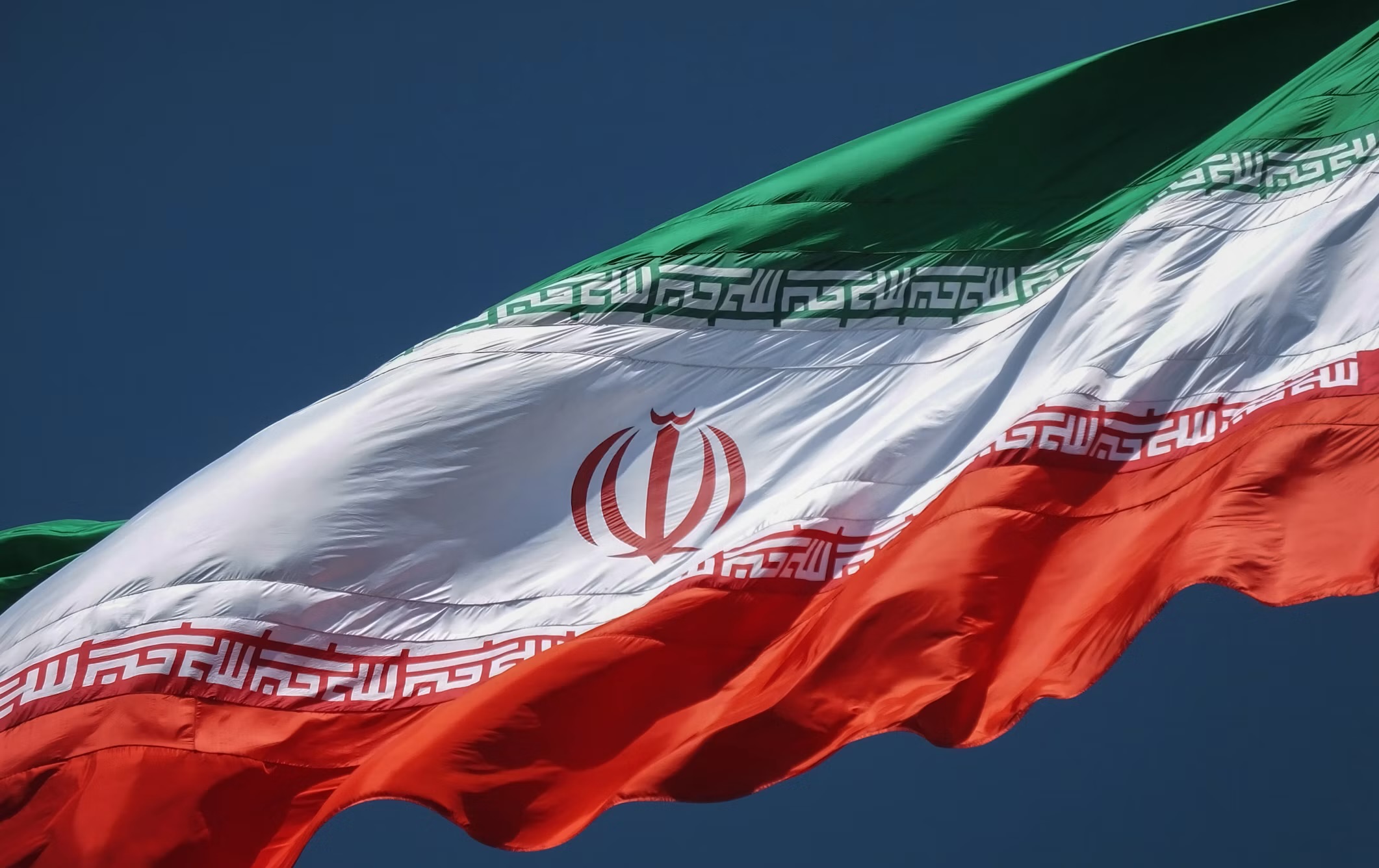
It had seemed, for a fleeting moment, that congressional Republicans were emerging at last from their long cocoon, appearing ready to join Democrats in calling out President Trump’s profound blunder—not only in launching a 110-day war (Operation Epic Fury) heedless of its catastrophic risks, but in his subsequent appeasement of a rogue, murderous regime.
Initial Republican scrutiny was fierce, public, and remarkably direct. Senator Bill Cassidy of Louisiana openly declared the deal “the worst foreign policy blunder in decades,” thirteen American service members dead, families crushed at the pump, only for sanctions to be lifted and the bombing to stop.
Senator Ted Cruz of Texas was even more unsparing, capturing the core absurdity of the framework by warning that “history teaches that giving billions of dollars to theocratic lunatics who want to murder us is a bad idea.” For a few days, it looked as though a genuine, unified groundswell of Republican consensus had taken shape.
What sparked this rare mutiny were emerging details of the newly brokered Memorandum of Understanding (MOU), reading less like calculated diplomacy and more like a wholesale capitulation by a president eager to flee a senseless conflict.
The concessions granted to Tehran are immediate and staggering. Through instant Treasury waivers, the administration has bypassed existing sanctions, leaving Iranian freighters entirely free to ship crude oil to China, their best customer.
A fragile 60-day period of free passage through the Strait of Hormuz has begun, yet the fundamental balance of power has been upended.
While negotiators commence talks on the vital issue of nuclear acquisition, the regime’s potent, increasingly long-range ballistic missile and drone capabilities receive no mention in the text. Neither do its beleaguered citizens—thousands of whom were killed by rooftop snipers last January, with many more imprisoned, including a Nobel Peace Prize winner, as state executions continue unabated.
Furthermore, the agreement features a deeply controversial provision to open the gates for a $300 billion reconstruction and development mechanism, effectively enriching the coffers of a regime that was bordering on total economic collapse.
Trump loudly protests that the windfall is conditional on Tehran’s behavior, promising that if they prove stubborn about their uranium stockpile, the U.S. will simply recommence its bombing. It is a hollow gamble, built on the unconscionable premise of offering a massive financial lifeline to a theocratic dictatorship.
Democrats recognize the MOU for exactly what it is: a desperate attempt by a frightened president, booed at public appearances, to walk away from a historic blunder.
They point out that trading away massive economic leverage upfront just to buy a 60-day dialogue leaves the United States in a vastly inferior strategic position than it occupied before the conflict began, back when Iran’s uranium enrichment was still capped.
For a brief window, initial Republican scrutiny gave teeth to a potential congressional resistance. Lawmakers began drafting legislation to strip the Executive Branch’s ability to issue these oil waivers, a move that would collapse the $300 billion mechanism.
Yet the glaring obstacle remains—the presidential veto. To truly stop the administration, Congress would require a two-thirds supermajority in both chambers—a hill that has suddenly become far too steep to climb.
The resistance effectively crumbled when Senator Lindsey Graham, who had previous dubbed the fund “a Marshall Plan with the Nazis still in charge,” executed his sharp turnabout. Initially vehemently opposed, the leading hawk offered a tepid endorsement of the agreement after a single closed-door briefing. Vice President JD Vance instantly weaponized Graham’s reversal, using it during a blunt White House press conference to excoriate a deeply disillusioned Israel, warning their cabinet to fall in line or risk losing their last major ally.
Once again, Trump’s immense gravitational pull has had its way, dampening conservative scrutiny and fracturing any hope of a unified legislative front.
The emperor wears no clothes, yet Capitol Hill has folded. We are left watching a presidency trade away hard-won geopolitical leverage for a temporary reprieve, like a used car salesman successfully selling the country a piece of junk.
I dare you to look at photographs of what Trump has done to the once pristine White House lawn—yesterday’s campus for a public UFC cage-match on the occasion of his turning eighty.
Meanwhile, the skeletal steel grids of his coveted ballroom, replacing the former historical East Wing, now surface above ground as he rushes to complete the project before the courts ultimately render their final verdict. The next project: his touted arch.
This morning he left the country for the annual G7 summit in Evian, France, leaving behind a polarized nation in supreme danger as he walks away from a senseless war that ultimately disrupted the economic welfare of many nations, including our own, achieving minimal returns.
Topping things off, Trump thanked Putin, whom he called before his departure like a child seeking parental approval, allegedly—with Xi Jinping as well for helping secure the present settlement by “not interfering.”
No thanks whatever for the Omani, Qatari, and Pakistani intermediaries who worked feverishly to secure this agreement. Rest assured, he’ll be reviving his campaign for the Nobel Prize.
In the negotiated ceasefire with Iran, the primary issue of Iran’s close proximity to creating a nuclear bomb has been deferred; its growing ballistic prowess, conceivably capable of striking the U.S. heartland, receives no mention.
Nevertheless, the effective U.S. blockade of the Strait of Hormuz has been immediately lifted, with billions in held Iranian assets and the undoing of sanctions to follow shortly. Trump, in keeping with his mercantile lusts, foresees an economic jackpot in a close partnership with Iran.
As for the fate of millions of repressed Iranians—7,000 murdered just last January, thousands still imprisoned, hangings continuing—Trump is indifferent to their suffering, on vivid display in this dubious agreement.
There is every likelihood that Iran will continue to violate any agreement. They are already contradicting his claims of a “toll-free” passage, proving they will use the threat of closure of the Hormuz waterway to gain their ends. What then?
As for Iran’s proxy, Hezbollah, suspending the lobbing of Iranian-supplied missiles into Israel—that’s just not going to happen.
In truth, this dubious agreement paves the way for a chilling reality the media has completely failed to grasp: a nuclear domino effect across the Middle East.
If a transactional, unreliable America signals it will tolerate a near-nuclear Iran for the sake of mercantile optics, do we honestly believe Saudi Arabia, Egypt, and the United Arab Emirates will merely stand by? We are staring down the barrel of a terrifying regional arms race, triggered by the collapse of Western deterrence.
Worse still is the immediate, existential scenario that should send goosebumps up your torso. It is a poorly kept secret that an isolated, cornered Israel is already a potent nuclear power, with an estimated arsenal of up to 90 plutonium warheads.
Sidelined from the ceasefire negotiations and facing what it perceives as an absolute threat of extinction, what stops Israel from deciding that a preemptive first strike on a dangerous Iran is its only path to survival?
By washing his hands of the conflict, Trump hasn’t created peace; he has backed a nuclear-armed ally into a corner where dropping the Big One becomes a logical choice.
As for the G7, Macron altered the starting date to accommodate Sunday’s bash. Musn’t upset the volatile president.
European leaders must now wade through the wreckage of his current unilateralism. Blinded previously by his February bombing of Iran, what hidden concessions lie buried?
In sum, we have an incompetent president devoid of any defined, consistent policy, ruthless to his critics, including members of his own party. Narcissistic, pecuniary, dictatorial, and omnivorously menacing, he is our Caesar.
His Brutus lies in a looming midterms Democratic sweep in both chambers, reducing his regime to a lame-duck presidency.
Still, the idea he’s in the White House for another two years—I don’t want to think about it!
I am not partisan when it comes to politics. I support those whom I believe best represent the interests of our country and its democratic institutions.
Unfortunately, as many of us recognize, we are now in imminent danger under an obviously incompetent, self-centered, reactionary president whose conduct increasingly places personal interests above national stability and global responsibility.
Not only has he launched an unnecessary and destabilizing conflict, he now appears willing to offer Iran terms that verge on appeasement in his haste to bring the crisis to an end—without meaningful guarantees regarding nuclear enrichment, missile delivery systems, or Tehran’s support for terrorist proxies throughout the region.
This is a pariah regime that brutalizes its own people under the cloak of religion, yet the administration’s posture suggests geopolitical calculation rather than principled strategy, particularly with China looming in the background ahead of his upcoming visit there.
Trump has long displayed an affinity for authoritarian leaders such as Putin and Xi Jinping, often showing greater respect for strongmen abroad than for democratic allies at home.
Meanwhile, climate change is ignored, Ukraine is increasingly abandoned, FEMA and Medicaid are weakened, violence spreads across international shipping lanes, and the economy shows growing signs of strain. The list is long, and the cumulative effect is profound national instability.
Midterm elections are still six months away, while this presidency has another two and a half years remaining. Congress, despite its constitutional responsibilities, appears unwilling to act.
The ship of state is listing badly, and unless the country changes course, this president may take us all down with him.