Women are better lovers

byronThere is this passage in the poet Byron’s Don Juan that has always impressed me as one of the keenest observations concerning women to be found in literature:  “Man’s love is of his life a thing apart,/’Tis woman’s whole existence” (Canto I, 194).

In my thinking, most men lack women’s capacity to love fully.  I write this knowing the tendency of stereotype to overlook exceptions, which are often many.  Still, I think my observation holds.  And thus I count women superior to us men, for surely love is the noblest of human emotions.

Women think with their hearts, though not at risk of their intelligence, for they know how to discern; witness any shopping outing and you’ll catch my drift.  They’re no less so when it comes to sorting out men.

Women frequently assume risk, or gamble on love, unlike many men who prefer the safety of the status quo over commitment.  While marriage in the West continues its decline, given opportunity, most women prefer it; less so, men.  As the late Toronto Star columnist Merle Shain reminds us, “Men opt for security in lieu of feeling and call their decision maturity” (Some Men are more Perfect than Others, p. 6).

 Sometimes women lose heavily, having bet all, and thus they grieve; yet they excel even in their loss, since we’re defined more by what we attempt than what we lose.  The ancient Greeks had it right: assertion validates identity.  Far better to enter into your feelings and chance possibility than to awake one day to numbing emptiness, the sorrow of not having loved and wishing you had.

They say women adore intelligence in their males, and they do; but what really seizes their hearts are the courageous kind, who accepting their vulnerability, refuse to let fear foreclose on happiness.  With brave men such as these, love offers its amplest bloom.

–rj

Ransacking nature: Deforestation in Indonesia

indonesia

When we hear of deforestation we’re apt to think of Brazil with its persistent denigration of the Amazon jungle.  But an equally bad scenario is that of Indonesia, with half its rich forest tapestry now gone and complete decimation a mere decade away, all for the sake of plantation (usually for palm oil) and logging profits.

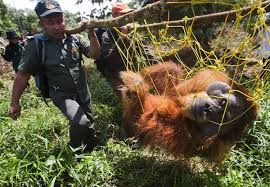
A heartless calamity in the making, it has consequences ultimately for all of us.  Consider, for example, that Indonesia ranks third in species diversity after Brazil and the Democratic Republic of Congo.  More specifically, it’s home to between 10 and 15 percent of the earth’s known plant, mammal and bird species.  It’s also residence for tigers, rhinoceroses, and elephants, increasingly refugees from a reduced or degraded habitat.  Soon the unique orangutan and Sumatran tiger may vanish into memory.

orang

While the central government in Jakarta has tried to impose a moratorium on logging, it goes on unabatedly in many distant local areas where law enforcement is rare.  Consequently, Indonesia is now the world’s third largest emitter of greenhouse gases, which promote temperature rise.

Financial incentives topping a billion in U. S. dollars are now underway, but their success remains in doubt, given widespread political corruption.

What’s going on in Indonesia affects not only many of its citizens displaced by plantations, but the global village as well.  Indonesia’s vast peatlands store an estimated 35 tons of carbon.  Burn or drain them and you release their warming carbons into the atmosphere.

Several weeks ago the UN’s updated report on global warming made headlines.  While deliberately opting for a subdued, or conservative report, to avoid ridicule as alarmist, it warns of an approaching irreversibility in limiting global warming if we continue at our present pace of carbon emission.  As the UN report panel’s co-chair warns, “Climate change is the greatest challenge of our time.”

Unfortunately, there still exists a minority of skeptics even among scientists, who primarily proffer up the now recognized slowing-down of temperature rise over the last fifteen years.  The truth is that no one really knows why.  While acknowledging this, the report suggests it may be a matter of variability, or simply a cyclical pause, or staircase effect.  In the long term, however, it suggests tides by century end of up to three feet.  (Other reports put it at five feet.)

Regardless of the debate, the fact remains of our witnessing forest carnage in places like Brazil, Indonesia, and the Malayan archipelago with resultant permanent ecological loss and diversity reduction with unknown consequences for all of us.

If we could invest in humanity’s ultimately viewing its relationship with nature as one of dependence rather than exploitation, then we would surely find our way out of this morass; but this is an unlikely hope, given our seeming inveterate instinct to pursue self-interest rather than collective good, abetted in turn by ignorance and indifference.

–rj

To Truman: Beloved Friend

photo 1

You came into our lives twelve years ago in late August 2001, a compact Bichon bundle of playful love, in a pre-arranged handoff at an I-64 road stop.  I had ordered you by phone from a breeder in Myrtle Beach.  It was instant mutual love.  We decided to call you Truman, and it fit you just right.

Rarely, but it does happen, a mind-boggling event brands itself into memory and we never forget what we were doing and where we were at.  My father often reminisced that early Sunday morning, December 7, 1941.  For me, it had been November 22, 1963 and July 20, 1969 that stood out.  And now a third:  You were getting your first shots.  Our vet, a dog show judge, was admiring your confirmation, saying it was the best he had come across among Bichons in his practice, when the news broke of horrendous misdeeds.  It was September 11, 2001.

Now that’s one of the compelling reasons I’ve always been drawn to dogs and cats.  Unlike many humans caught-up in calculated self-interest with cruel consequences, they want only to love and be loved.  You loved everyone and they loved you.  But you gave me preference, waiting at the door for Daddy’s entrance, then bounding up with enthusiasm on my legs.  How wonderful to come home daily from a world of stress and non-entity to unconditional, uninhibited affection.

How you loved your backyard and how we loved watching you playing the mighty hunter card, one-cautious step after another, standing still, then more steps, gaining, then only, inevitably, the scurrying squirrel, knowing you were there all the time, hustling up the tree.  You at its trunk, patiently looking up, waiting for it to come down

You liked roaming the perimeter or fence line.  Your joy was complete when you heard neighbor dogs bark and scrambled full speed for canine fellowship.  I had read  somewhere that for all their human contact, given a choice, dogs prefer their own kind.  I can understand that, sometimes myself opting for their company over that of homo sapiens.

I remember how tiny you were at first and that there were several times you squeezed through the board fencing, even though I had spent days in winter cold nailing chicken wire over the gaps.  There was the time you got into the neighbor’s yard behind us where several llamas grazed and I climbed over the fence to rescue you from an advancing llama, only to have it come after me.  I grabbed you and jumped over to safety.  Close call for us both!

You liked walking on your leash with me down the street.  I never really had to train you at it, since from the beginning you took instantly to walking at my heel on my left, seldom pulling to get ahead.

But I did enroll you in an individualized obedience course.  Unfortunately, your trainer relied on treats and I could never find a way to wean you away from your addiction and do something simply because it was worthy for its own sake.  But then our own children aren’t all that different.  Getting you to stay was simply impossible for someone as passionate as you.  The gold standard was to take you to a safe area of a shopping mall and get you to stay.  I didn’t even try.  $300 dollars down the drain.  Ironically, you trained me!  Still, you did retain the habit of sitting on cue right up to the end, until your arthritic limbs compelled my pardoning you.

You liked keeping company with us on the couch, snuggling up to Karen and me.  You also had this funny habit of flipping the pillows off the couch and finding your way to the other arm and propping yourself up for a cozy snooze.

You also had this cute habit of carrying your metal dish over to your living room pad after your evening meal and licking it clean.  You delighted us with this gesture from the time you were a pup up almost to the end.

How excited you got to go outside with me to feed the birds whenever you saw me filling the plastic pitcher with seed!

At night when we turned out the living room lights, always the landmark clicking of your nails on the hallway floor as you made your way to join us in slumber.

When you were seven they found a heart murmur and I felt then the first scary pangs I might lose you.  You liked to run at full speed.

Around age nine, they found calcium crystals in your bladder, and so they put you on meds and a special diet.  I don’t know if the crystals caused you any discomfort.  You always acted the happy part.

At age eleven you had slowed down and seemed to labor in your walk.  We put you on glucosomine for that.

Just after your twelfth birthday, or this past June, I took you in for another checkup for the crystals and arthritis.  The ultrasound was distressing, showing not only more crystals despite your prescribed diet, but a tumor  over the right adrenal gland and a nodule adjacent to the left adrenal.  Ominously, the tumor occluded the vena cava, making any surgery risky.   The follow-up radiology report didn’t clearly indicate metastasis, but it remained a possibility.

You were still your active self through June, but then came the weight loss.  Once a robust 21 pounds, you were down to 18 by September, and 14 by the end.  You found it difficult to shadow Daddy from room to room and pretty much snoozed on the couch most of the day.  Your dark black eyes, tinged with sadness, gave off a pleading gaze–as if to say, “please help me”!

I knew things were getting really bad when you increasingly turned away from your food or ate very little, though I tried tempting you with lots of treats and canned meat in place of your former kibbles.  You were always crazy after peanut butter filled bones,  but now  you no longer could muster the appetite to enjoy the feast.

It hurt you to walk and even to lie down.  You couldn’t hold your water.  That last night, Tuesday, I knew we needed to do the right thing when you let out two yelps, one of them when Karen tried to pet your head.  Obviously you were hurting all over.

I caught myself in my own selfishness.  I had wanted to keep you forever.  I should have been thinking about your interests.  I needed to let go as my ultimate gift of love for you, my friend, our friend, always kind, gentle and loving.

Yesterday at the vet’s, we were with you in your final moments.  You seemed unafraid as I stroked you and laid a last kiss on your darling head. You went quickly and peacefully into that long sleep.  No more suffering.

I know that death is part of the deal we make for life, but it doesn’t lessen our grief or bridge the emptiness.  We miss you terribly.  You were a gift of love and we thank you for the daily joy you brought into our lives.  You will be in our hearts forever.

–rj and kj
Memory: Something to be Cherished

Do you ever get something tossing around in your head that seemingly you can’t get rid of no matter how you try?  I get that way when I listen to music, for example, the lyrics wearing down my synapses like “We had it all/ Just like Bogie and Becall/ Starring in our old late, late show/Sailing to Key Largo.”  But sometimes it’s a memory that pops up, crazy like, since there’s no triggering context, maybe reaching way back into early childhood’s opaque alleys.

Sometimes something sticks because we associate it with an event or person that brought us great happiness or, alas, considerable pain.   Maybe we never forget anything really, the mind simply archiving everything that makes us who we are. While time may soften the edges of past experience, its essence remains

Freud built his formidable psychological schema on memory, which he argued was always latent, and thus influential on what we do and say, want and fear.  His former protégée, Carl Jung, contended memory transcended time and individuals, ultimately taking on evolutionary status as archetype, or primordial pattern, shaping both our thinking and behavior.  According to Jung, the repository of memory is defined best in myth, which reenacts the human repertoire of experience.  Its roman a clef  lies in symbols compressing our individual and collective destinies.

On the literary front, some of our foremost fiction writers like Joyce, Proust and Faulkner have made a legacy of memory in works like Ulysses, Remembrance of Things Past, and The Sound and the Fury.  In poetry, the English poet Wordsworth famously defined poetry as “emotion recollected in tranquillity,” building his poetic artifice on reflecting past experiences.  Perhaps the bottom line modus operandi latent in literary creation is to keep memory, or human experience, alive.

Often memory over time embellishes or distorts as we add or subtract.  It’s a good reason to keep journals. Verbal photos I like to call them.  Poor recall is the nemesis in legal matters when witnesses can’t accurately recall what they saw or heard or when witnesses prove contradictory.

Too often we take our ability to remember for granted, when the truth is it begins to decline as we age and increasingly we can’t find those damned keys, or forget what we came to the store for, or that doctor’s appointment.  Nothing to be worried about, save when forgetfulness takes on habit such as:

1 .    We repeat the same questions.

2.    We struggle for common words.

3.    We find it difficult to follow directions

4.    We lose our way in our neighborhood.

5.    We put things in odd places.

6.    We can’t recall something recently learned.

If I lost my sight or hearing, this would be debilitating and surely grievous, yet I think not equal to the loss of recall, condemned to an eternal present and essentially returning me to an infantile state as in dementia and its acute species, Alzheimer’s, that wipes away everything defining my humanity and lending  my life significance.

I don’t know, nor do any of us, what Fate holds, but in the meantime, I choose not to take this gift of memory for granted but to cherish it by nurturing it through learning new things, exercising regularly and vigorously, and eating nutritious foods.

Doctors who specialize in aging increasingly report that dementia may not necessarily happen if we keep our brains healthy by doing the right things.  Dr.  Majid Fotuhi, Chair of the Department of Neurology at Johns Hopkins, informs us that Alzheimer’s has only a limited genetic factor.  It can be delayed and even prevented with lifestyle changes undertaken in midlife.

I choose to run with that hope,

–rj

Fall Fever in Kentucky

FallKY

Autumn carries more gold in its pockets
than all the other seasons
.  (Jim Bishop)

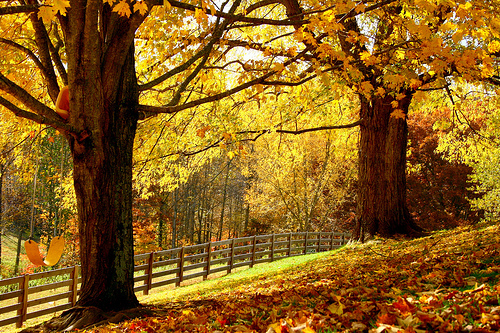
Of all the seasons in Kentucky, I like fall best with its myriad days bathed in soft light, keeping company with tepid warmth and gentle breezes following summer’s humid heaviness.  I like the way it lingers, sometimes right up to Thanksgiving, a seductress stubbornly clinging to her teasing ways.

Fall helps creation catch its breath and prepare for winter’s long sleep. The prescient wrens, doves, jays and cardinals jostle for space at their feeder, fattening themselves for aerial flight to distant climes.  Scurrying squirrels ransack the ground, greedy for winter  provision.  Trees flame and flicker in a palette of oranges, yellows, and reds, a few of their leaves–emissaries of snowflakes–softly eddying their way earthward.

My roses renew their glory, liberated from summer’s scourge of heat and insect.  And I am also quickened, eager to cross over the threshold of human artifact to immerse myself in Fall’s last blooms.

Oh that life might be like this–languorous days when even time stands still and we wake to find our haunting ghosts have fled.

–rj

What Being Centered Really Means

True peace is achieved
By 
centering
And blending with life (Tao 22).

You hear a lot about being centered, but just what is it?

The ancient Greeks advocated “the golden mean,” or middle way.

Roman writer Vergil based his Aeneid on Pietas, or something akin to self-control.

Perhaps drawing on his Hellenic education, St. Paul advised moderation in all things.

Excess is always dangerous in any pursuit, for it forecloses on alternatives that may prove more tempered and thus wiser than those fostered by our passions.

Unfortunately, indulgence, or excess, defines history with its repeated accounts of obsession gone astray for power and possession.  History is narcissism writ large.

At the everyday level, we hear continually of people who have ruined their lives and hurt others simply because they were unable to rule themselves.

Because self-interest especially dominates in politics and religion, I generally am suspicious of them both.  As I write, there’s the rancor in Congress over raising the debt ceiling so government can pay its bills.  Currently, however, a persistent few are willing to shut down government unless they have their way.  As I’ve written  in an earlier blog, political parties lead to narrow partisanship, as President Washington so wisely observed in his Farewell Address.

In religion, we needn’t dial back to the Crusades or Inquisition to access the violence of fanatical fundamentalism.  If you look at a worldwide map, you’ll find religious mayhem abundantly distributed, whether in the Middle East, India, Pakistan, Thailand, Burma, the Philippines, and Indonesia.  As for Africa, there’s last week’s heinous massacre at Nairobi’s West Gate Mall in Kenya by Somali militants, who selectively shot non-Muslims.  Nigeria has its own ongoing debacle with Islamic extremists. These things happen because without centeredness we lack balance and thus forfeit stability and often our humanity, too.

On the other hand, fraudulent centeredness can possess its own rigidity if focused merely on ourselves.  True centeredness serves as a reference point that proffers balance, always its marker, between extremes. Think acoustics. Think harmony.

Centeredness promotes equilibrium, a check on ego, a capacity to not confuse the parts with the whole, enabling us to respond more patiently and thus more wisely.  A state of being, it isn’t found in having.

Centered people aren’t dismayed by the fallout of time or chance.  They see the evolving pattern and not the ephemeral circumstance.  They’re grounded in the Eternal, not the transitory.  Thus change and loss and disappointment don’t throw them off balance.  In touch with themselves, they live in harmony with nature’s artifice. .

Writing from a jail cell and facing imminent execution, St. Paul could cogently advise his friends that they pursue “all that is noble, all that is just and pure, all that is lovable and gracious, whatever is excellent and admirable–fill all your thoughts with these things.”

This is centeredness.  This is harmony.  This is the fabric of Eternity.

–rj

Musings on Freud

kerala

At the beginning of one of Freud’s most perceptive works, Civilization and Its Discontents, Freud discusses what he calls that “oceanic feeling,” or sense of connectedness to something larger than ourselves.  He had borrowed the phrase from his cherished friend, French writer Romain Rolland, who while accepting Freud’s rejection of anthropomorphic religion, still retained a notion of kinship with an enervating source permeating all existence.

Freud hadn’t ever experienced it and derisively equated it with notions of a deity serving as an avatar need for a surrogate father.  In doing so, I think he erred in narrowing its limits.  I’m not religious, but I’ve experienced this sense of  connectedness, and found it both transforming and moving in the mystery of that sudden moment when I am become clairvoyant, my hand on the pulse of all things.

I would use the word mystical, despite its usual religious context, to describe it; that is, an intuitive moment in which one comprehends a reality normally denied to the senses.  Perhaps epiphany gets at it as well, or immediate apprehension of the essence of an experience.  I think this is how James Joyce employed the latter term so central to his notion of artistry as defined in A Portrait of the Artist as a Young Man.

It happened for me many years ago in the Indian state of Kerala, bordering on the Arabian Sea.  A place of velvet green mountains and palmed jungle laced by myriad canals, it smacked of Venice, howbeit, in tropical mode.  I had come to India to give a paper at the University of Delhi, but allotted extra time to see a bit of its wonderfully different culture.  I chose Kerala simply because I had worked with a colleague who came from there and my Lonely Planet guidebook abounded in promises.  Unwittingly, I wandered into a good choice.

One of the things I wanted to do in Kerala was visit a tiger sanctuary in the hill station countryside famed for its sprawling tea and coffee plantations. (This is where the Brits hung out to escape the heat.)  I had been staying in a humble hotel in the port city of Kolchi.  That first evening I hired an Indian lingering at the door, hoping to glean some earnings from tourists and businessmen as a guide.  Since he had a small boat, I asked if he could take me across the bay that evening so that I could take in one of India’s most exotic traditional dances, the Kathakali, in a town on the other shore.  I marvel now how brave I was back then, perhaps governed more by naïveté than any wisdom.  He waited for me after the dance as he had promised.  Otherwise, I don’t know what I’d have done.  As it was, we returned to Kolchi in total darkness–no stars, no compass.

He asked if I had any plans for the next day, so I shared my thoughts about the tiger sanctuary.  He offered to take me there, only we would need to leave before dawn because of the long journey it entailed.

I pulled myself out of bed in the wee hours accordingly and found my waiting friend outside.  Again, we would have to cross the bay before catching a bus into the hill country.  This time, he had a fifteen year old boy with him to help with the oars.  I wish I knew their names still, but no matter.  I see them before me as I write:  the one, a slender man perhaps in his early forties with five children at home; the youth, dark haired, good natured, eager to please.

As we moved across the bay, suddenly we passed long hulled fishing boats, their crews singing rhythmically as they stood, flinging their large nets into the water.  Behind us, the western sky with its tenacious blackness; eastward, the groping soft fingering pinks of dawn.

Here we were: the three of us, specks silhouetted against the early light, one of us a Christian; my guide, a Hindu; our young man, Muslim, and yet we were one, diverse in creed and culture,  linked by the humanity we shared.  In that moment, a peace descended and I was at one with the universe, transcending time and space; a seer granted entrance into that “oceanic feeling,” knowing that we are all parts of a Whole, or like individual leaves upon a tree.

How petty our quarrels, the enmity fostered by individual ego, that annuls our linkage and with it, our duty to each other as finite creatures sharing the same dreams for love and peace and joy in this brief interval of light.

I haven’t experienced any occurrence of oceanic feeling since, but it doesn’t matter, for I have sampled its existence and drunk its wisdom and its peace abides with me still.

–rj

The Joy of fellowship with Nature

monarch

One of the best hobbies I’ve ever come upon is that of being an amateur naturalist.  It needn’t be expensive and you can do it in your own yard or on a walk or, believe it or not, from a car window.  And, yes, you don’t even have to leave the house.

Here’s a little checklist to see how versed you are on the natural world around you:

1.     Identify the ten most common trees in your neighborhood.

2.     Name five wild flowers that grow in your area.

3.     Identify ten flowers or plants common to your neighborhood landscaping.

4.     Identify five migrating birds that visit your yard.

5.     Name five birds that are year long residents.

6.     Identify ten common weeds in your yard.

7.     Name the planets and identify three of them in the sky

8.     Locate the North Star.

9.     Identify five rocks in your yard or area.

10.   Identify five insects in your garden

Most of us are hard pressed to do half of these IDs.  But then, that’s the fun of it, that you can begin, anytime, anywhere, and discover kingdoms all around you—and even below your feet.

Be careful, though, for discovery can be addictive.  You may even choose to specialize, maybe on rocks, bees or flowers.

Being connected with nature can yield release from daily stress.

It can also give you awareness of the fragility of nature’s weave of flora and fauna, their delicate balance and our dependency on that balance.  One third of our crops are pollinated by bees, for example, but our sprays have caused a serious threat to their survival.

One other gift that comes from a love for nature is how it develops your powers of observation.   My favorite American poet, Emily Dickinson, had this acuteness, with nature’s minutia a dominant motif in her poetry.  Take, for example, this delighful poem.

A Bird came down the Walk –
He did not know I saw –
He bit an Angleworm in halves
And ate the fellow, raw,

And then he drank a Dew
From a convenient Grass –
And then hopped sidewise to the Wall
To let a Beetle pass –

 He glanced with rapid eyes
That hurried all abroad –
They looked like frightened Beads, I thought –
He stirred his Velvet Head

Like one in danger, Cautious,
I offered him a Crumb
And he unrolled his feathers
And rowed him softer home –

Than Oars divide the Ocean,
Too silver for a seam –
Or Butterflies, off Banks of Noon
Leap, plashless as they swim.

Naturalism can grow friends for you.  There are groups of people out there like you who would gladly welcome you.  It’s fun to be among other gentle stewards of the earth, sharing their experiences and concerns, working together to promote awareness and preservation.  I like the Nature Conservancy.  It buys up threatened habitat and maintains it.

Your new hobby can afford you numerous excellent, often moving, reads, like Rachel Carson’s land mark Silent Spring or Thoreau’s classic Walden.  Good stuff on rainy days!

Think about how much you and your family can enjoy that country hike, park excursion, or neighborhood walk, connecting with what you now know, challenged by what remains to fathom in a hobby salient with retreating horizon.

Through its repetitive rhythms, nature confers assurance that tomorrow the dawn and dusk will come again, the seas will rise, and the moon ascend; that after winter, spring will surely come and our aerial friends return.

In sum, Nature amply rewards those who fellowship with her, conferring not merely release, but blessedness in an often troubled world.

–rj

Proceed with Caution: Acid Suppressants and Mortality Risk

Scanning electron micrograph of Clostridium di...
Scanning electron micrograph of Clostridium difficile bacteria.. Obtained from the CDC Public Health Image Library. Image credit: CDC/ Lois S. Wiggs (PHIL #6260), 2004. (Photo credit: Wikipedia)

I’ve been on omeprazole for eighteen months now and don’t like it one bit.  Like all drugs, it’s a trade off in risk.  Along the way to a cure or relief, side effects can work misery for you.  Omeprazole is what we call an acid blocker, designed to relieve the symptoms of too much acid in the stomach, often resulting in heartburn, a key symptom of GERD, or acid reflux.  More formally, we call them PPIs, an acronym for proton pump inhibitors.  Millions of us take them, sometimes for gastritis, esophagitis, and ulcers as well as for heartburn.  In fact, they’re the second most prescribed medication in America.  You can get omeprazone over the counter

Acid blockers are potent, altering the normal balance of acid and alkaline in your stomach, a balance critical to sound nutrition.  They mug, for example, needed vitamins and minerals like B12, vitamin D, calcium, iron and zinc.  They can make you anemic.

They may also do damage to your bones when taken for a protracted period, leading to hip fractures, though research, sometimes contradictory, hasn’t provided a clear-cut finding on this.

It’s universal, however, that PPIs can lead to a Clostridium difficile infection.  The FDA has been so concerned that it issued an alert on the danger in 2010 and of its consequent, severe diarrhea.  C. difficile is especially menacing to the elderly.

You diagnose it through a stool sample.  If confirmed, they put you on a round of antibiotics.  It isn’t, however, easy to get rid of, as it’s highly resistant.  C. difficile can survive a lack of moisture and collects on many surfaces, then spreads through hand contact.  It’s resistant enough that even alcohol containing hand sanitizers can’t kill it.  For the most part, you get it in a hospital or nursing home.

One of the perils of PPIs is that they do their job so well in reducing stomach acid that C. difficile can ravage your stomach with impunity.  But the real kicker is in the findings of a recent study:  C. difficile is especially hard on PPI users.  In fact, they’re five times more likely to die from it than those not taking PPIs, or its cousins, H2 blockers.  This study, published in the Clinical Infections Diseases journal (Oct. 5, 2011), included 485 patients with the infection at the Naval Medical Center (2004-2008).  Half of those infected were on acid suppressants, with the  majority on PPIs.  Of the 485 infected, 23 died from C. difficile.  19 of the 23 were on acid suppressants.

This has led Dr.  Edith Lederman, an infectious disease expert at the Naval Medical Center, to caution that “stomach acid is a very important defense mechanism against pathogens.  It kills them.” Although there isn’t “enough data that people should forgo use of acid suppression, clinicians and patients need to be aware of the potential consequences.”

As the saying goes, “Sometimes the cure is worse than the disease.”  Doctors often prescribe medications indiscriminately, not taking in the patient’s medical history, contraindications, age, and sensitivity.  This behooves you and me to always do our own research and proceed with upmost caution.  Our lives may depend on it.

–rj

Unlearning our anger

English: Angry woman.
English: Angry woman. (Photo credit: Wikipedia)

I was angry with my friend:
I told my wrath, my wrath did end.
I was angry with my foe.  I told it not, my wrath did grow.

And I watered it in fears,
Night and morning with my tears;
And I sunned it with smiles,
And with soft deceitful wiles.
(from William Blake, “A Poison Tree”)

 I have known people who rise each morning to nourish their anger in resolve never to forget or forgive wrongs done to themselves.

Anger makes them feel alive, that they have significance and sovereignty over their lives.  The truth is that their anger masquerades their inability to set things right again.

The sources of anger are sometimes surprising.  Often we take up arms against family members, friends, and former loves.  As such, anger is many times symptomatic of love’s betrayal in the hands of those we’ve esteemed most through hurtful words, favoritism, or simply their not taking us seriously.

Anger may lead to sabotaging ourselves in acquiring a doomed dependency on others in the very likeness of ghosts that wronged us long ago, often in a childhood deficient in love.

The chronically angry are easily spotted in the sheer volume of their impassioned complaints against lovers and friends, the workplace, and government, surrogates for targets embedded in the past.

Hate stokes the past, unlike love which invests in the future.  Oddly, time may dull our memory of just what the hurt was or who did it, and yet we know we still feel the heat of rage.

To heal ourselves we may seek out love, only to reject it when it appears, fearful of its possibility for new hurt, or our becoming dependent on it, or its ultimate loss.

Anger can assume many shapes, among them a masochism of self-loathing; or a censuring of others; or a passive aggressiveness that denies one’s anger.

Anger has a way of becoming habit, or addiction to bookkeeping life’s liabilities; a kind of cowardice in a reluctance to confront one’s grievances, attempt their solution and, if unsuccessful, assume loss and invest one’s assets in the future.  As such, it’s self-defeating.  The late Merle Shain put it eloquently in her Hearts That We Broke Long Ago:

As long as you blame someone it makes the problem not yours but theirs, and allows you to keep it without taking responsibility for anything but pointing the finger.  Which means you give them responsibility for your life and paralyze yourself in a place you don’t want to be.

The positive side of anger is that it can help us assert ourselves against injustice; but when it entices us into a snare from which we cannot free ourselves, when we live our lives in the narrow confines of resentment, then it makes a wrong turn.  Quagmired in the past, we are unable to step into the future with its promise of new beginning

–rj