Averted Eyes: Iran’s Atrocities and the Politics of Selective Coverage

Tehran: January, 2026

Why some of the world’s most documented abuses fail to generate sustained global response

Iran, by almost any measure, ranks among the world’s most repressive regimes, much of its coercive power cloaked in religious authority.

It has not hesitated to use lethal force against its own citizens and consistently ranks among the highest globally in executions and political imprisonment (Amnesty International, 2023; United Nations Human Rights Council, 2024).

In the aftermath of the 1979 revolution (1979–1981), mass executions targeted former officials of the Shah’s government, military personnel, and political opponents.

One of the most notorious episodes occurred in 1988, when Ayatollah Khomeini issued a secret fatwa ordering the execution of political dissidents, primarily leftists. Estimates range from 3,000 to 5,000 victims, though human rights organizations place the toll closer to 30,000. The state has never acknowledged these killings; mass graves have been concealed, and public mourning by families has been forbidden (Human Rights Watch, 2024; Amnesty International, 2023; UN Special Rapporteur reports on Iran).

More recently, during the 2019 protests triggered by fuel price increases, security forces killed approximately 1,500 people within days (Amnesty International, 2020).

In 2022–2023, the death of Mahsa Amini, arrested by the Morality Police for alleged hijab violations, sparked nationwide protests. Authorities claimed she died of a heart attack, but eyewitness accounts and leaked medical evidence suggested severe physical abuse. At least 415 protesters were killed, including around fifty children (Human Rights Watch, 2023; IranWire, 2026).

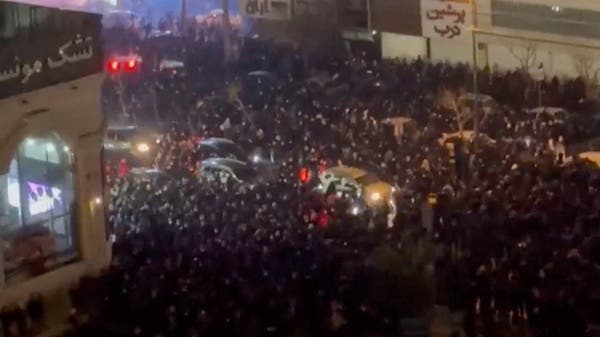
Reports of an even more extreme crackdown emerged following protests beginning in late December 2025. On January 6, 2026, the government reportedly shut down internet access to obscure its response, culminating in a major escalation on January 8.

Official figures claimed 3,117 deaths, though these are widely disputed. The Human Rights Activists News Agency estimates approximately 6,800 civilians killed, with thousands more detained (UK Parliament Commons Library, 2026).

Further reporting suggests even higher numbers, with intelligence-linked documents alleging over 36,000 deaths in just two days (Iran International, 2026). If accurate, this would represent one of the deadliest short-term crackdowns in modern history.

Analysis of verified victim lists indicates that 16.1% of those killed were under 18, drawn from across Iranian society (IranWire, 2026).

Beyond Human Targets

The regime’s record of violence extends beyond human rights.

In July 2022, more than 1,700 dogs were reportedly killed during a raid on the Gandalf Dog Shelter near Damavand. The operation was documented with photos and video, and the animals were reportedly vaccinated and sterilized, undermining any public health justification (Al Bawaba, 2022; One Green Planet, 2022). Fire trucks were deployed afterward to wash away the evidence. Several animal rights advocates who attempted to reach the shelter were arrested (Source: Iran International).

The response from major Western animal rights organizations was, by any measure, shameful. PETA issued a tweet or two. The Humane Society, the ASPCA, and World Animal Protection said nothing of substance. There were no sustained campaigns, no petitions with celebrity endorsements, no diplomatic pressure on Western governments to raise the matter with Iran.

Animal organizations genuinely wary of having their condemnations exploited by hawkish political actors to justify sanctions or military posturing toward Iran. While this is not an entirely unreasonable concern, it produces a paralysis in which documented atrocities go unaddressed to avoid political repercussions.

Dog ownership itself is increasingly restricted in Iran. Municipal bans now exist in eleven Iranian cities, forbidding dog-walking in public spaces (Iran International, 2025; Wikipedia, n.d.).

A proposed law—“Protection of the Public’s Rights Against Animals”—would require government permits for pet ownership, even for common animals such as cats and rabbits (Network for Animals, 2021).

Part of the rationale offered by authorities draws on religious interpretation. In many traditions of Islamic jurisprudence, dogs are considered ritually impure (najis), particularly in relation to saliva, based on certain hadith literature. While the Qur’an does not prohibit dogs and even depicts them in functional roles such as hunting and guarding, later legal interpretations in some schools of thought discouraged close domestic contact.

Importantly, these interpretations are not uniform across the Muslim world. In many Muslim-majority societies, dogs are widely kept as pets or working animals. However, in the Islamic Republic of Iran, clerical authorities have drawn on stricter interpretations to reinforce social stigma and justify periodic enforcement campaigns.

The result is a convergence of ideology and governance: religious framing reinforcing state control over private life, including animal ownership.

A Pattern of Silence

Despite extensive documentation, international response has often been uneven.

Many large Western NGOs lean left politically, and the Iranian regime has long been framed, however implausibly, as a victim of Western imperialism and sanctions. Forceful condemnation of Iranian state conduct sits uncomfortably within that worldview.

The same dynamic has led Western feminist organizations to largely sidestep sustained criticism of Iran’s mandatory hijab laws. The tension between anti-imperialism and universal rights, whether human or animal, is never cleanly resolved, and Iran consistently receives the benefit of the doubt.

This selective principle of bearing witness has a broader parallel. Holocaust photographs—mass graves, liberation of the camps—are reproduced in textbooks and museums on the entirely defensible grounds that visual evidence is essential to bearing witness and resisting denial. Yet equivalent documentation from contemporary atrocities is routinely suppressed or ignored. The principle turns out to be applied not universally, but according to whose suffering fits the prevailing political narrative.

“When it comes to Iran, nothing matters.”
— Marjan Keypour (Jerusalem Post, 2022)

The result is a selective visibility of suffering—where political context shapes not only diplomatic response, but also moral attention.

Conclusion

From the mass executions of the 1980s to recent protest crackdowns and ongoing social controls, the record points to a sustained pattern of repression.

Yet international attention remains intermittent.

What stands out is not only the severity of the abuses, but the unevenness of the world’s willingness to consistently see them.

References

Al Bawaba. (2022). Animal rights activists angry after Iran forces kill over 1,000 dogs.

Amnesty International. (2020). Iran: Details of 304 deaths in crackdown on November 2019 protests.

Amnesty International. (2023). Iran 2022/23.

Human Rights Watch. (2023). Iran: Security forces use lethal force against protesters.

Human Rights Watch. (2024). World report 2024: Iran.

Iran International. (2025). Dog-walking bans expand across Iranian cities.

Iran International. (2026). Report on January 2026 crackdown and intelligence figures.

IranWire. (2026). What do we know about the employment status of January 2026 massacre victims?.

IranWire. (n.d.). History of dog culling and animal treatment in Iran.

Jerusalem Post. (2022). Interview with Marjan Keypour.

Network for Animals. (2021). Iranian government seeks to ban pet ownership.

One Green Planet. (2022). Animal rights activists claim Iranian forces slaughtered over 1,000 dogs.

UK Parliament Commons Library. (2026). Iran: January 2026 protests.

United Nations Human Rights Council. (2022). Fact-finding mission on Iran.

United Nations Human Rights Council. (2024). Special Rapporteur report on Iran.

Wikipedia contributors. (n.d.). Dog walking in Iran.

A War America Can’t Win: The Iran Crisis

On February 28, 2026, the United States and Israel launched coordinated aerial strikes on Iran, ostensibly to induce regime change and secure stability in the Middle East.

Central to this strategy was the expectation of a mass popular uprising—something glimpsed in January 2026, when tens of thousands of unarmed civilians took to the streets and were met with lethal force. Estimates suggest as many as 30,000 were killed, 7000 independently confirmed. The regime they opposed—a repressive Islamic theocracy entrenched since 1979—remains intact.

This is a war America is unlikely to win.

Despite the destruction of command centers, arsenals, and the targeted killing of senior leadership, including Supreme Leader Ayatollah Ali Khamenei, Iran has demonstrated a capacity for resilience that was either underestimated or ignored.

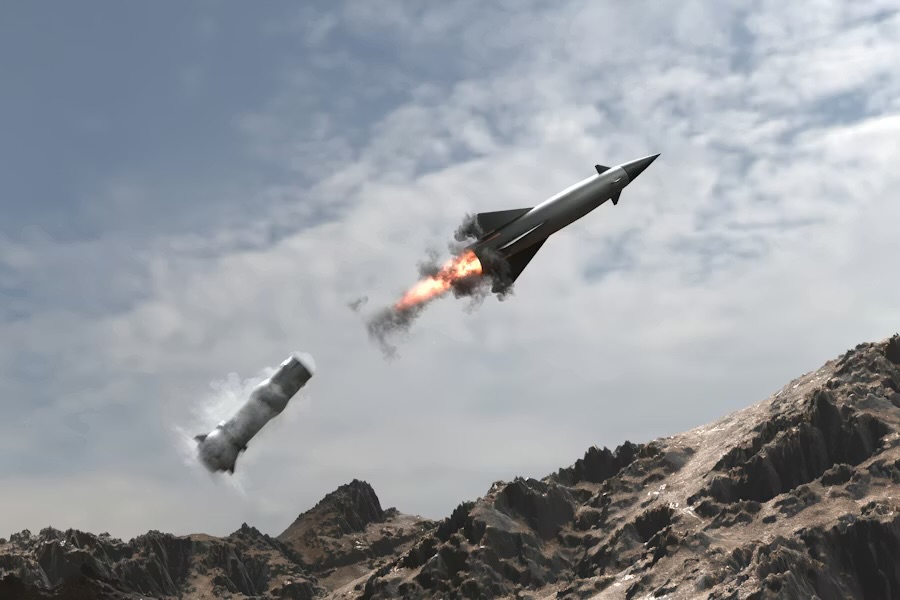
Its response has been asymmetric and expansive: ballistic missiles and drone strikes aimed not only at Israel but at a widening circle of nations hosting American bases—Qatar, the United Arab Emirates, Kuwait, Jordan, and Saudi Arabia. Recent launches have extended even farther, toward Crete, Turkey, and the joint UK–U.S. base on Diego Garcia in the Indian Ocean, 2400 miles distant.

At such range, the perimeter of vulnerability shifts. Southeastern Europe comes into view; with further technological refinement, even cities such as Rome or Berlin may not remain beyond reach; in a decade, the United States.

As this conflict widens, its economic consequences are already apparent. Iran’s disruption of the Strait of Hormuz, through which roughly one-fifth of the world’s oil supply passes, has driven prices upward, with projections rising sharply. The leverage is stark: Iran need not defeat the United States militarily to impose severe costs. It need only prolong the conflict.

The political implications are equally stark. Domestic opposition is mounting here at home, shaped less by geopolitics than by inflation, felt daily in grocery bills and at the gas pump. A war that amplifies those pressures becomes difficult to sustain, regardless of its stated aims.

Even proposed escalations such as a seizure of Kharg Island, which handles a significant portion of Iran’s oil exports, risk becoming symbolic victories at disproportionate cost.

The comparison to Iwo Jima is not misplaced: a tactical gain unlikely to alter the strategic reality. Much of Iran’s missile infrastructure remains embedded and protected, beyond the reach of conventional assault.

Recent Trump statements suggesting that U.S. objectives have largely been met already signal a search for an exit. Yet an off-ramp may not be readily available. Iran’s advantage lies in time. By sustaining pressure, economic as much as military, it can compel concessions without decisive confrontation.

There was another path.

Rather than precipitating war, a strategy of containment through sanctions and patience might have allowed the regime to atrophy under the weight of its own contradictions. Iran faces converging crises: acute water scarcity, environmental degradation, declining agricultural productivity, economic duress, and deep internal dissent. A large portion of its population—diverse, young, and increasingly disillusioned—has already demonstrated a willingness to demand change at great personal risk.

That internal pressure, not external force, may have proven the more decisive agent of transformation.

–RJ

World War I Centennial: Ominous Echoes?

ww1

The Somme, the Marne, the several battles at Ypres, Verdun with its prolonged agony, this was World War I enmeshed in its trench warfare, stalemated armies, and colossal slaughter on a massive scale impacting five continents

Next year marks the centennial of the outbreak of World War I, for many years known as the Great War in which an estimated 10 million combatants perished along with many civilians.  While you don’t see much, if anything in the movies these days about the conflict, as a boy I used to regularly take in films like The Fighting 69th,  All Quiet on the Western Front, Sergeant York, and the classic Paths of Glory.  Of course there were then many veterans still In their early fifties, boosting demand for such films.

ww1amer

My father, a war veteran with inherited  Irish wit, could spin a story that simply wouldn’t lose its hold no matter how many times he told it, of artillery duels; driving an ambulance; the fragility of life with war’s tragedy compounded by the pandemic Spanish flu that would kill millions more.  When he died in the VA Hospital he left little apart from a prized heirloom of his hand-completed discharge papers, faded by nearly a century of time, yet still legible, listing his combat participation in France (Argonne sector, 16th Field Artillery, Battalion A). How superbly different from the impersonal DD 202 the military hands out these days.  He was proud of his service and lies with fellow soldiers in the veteran’s portion of St. Mary’s Cemetery in Salem, MA.

Early in my teaching career, I came across a student who wanted to focus her research on World War II, which fascinated her. That was fine with me, though I’ve always found the first of these world conflicts more intriguing and compelling.  In fact, it made World War II inevitable, given the punitive humiliation imposed by the Versailles Treaty on Germany with its reparation requirements, occupation of the Ruhr, loss of colonies and, in Europe, of German speaking territories (Bohemia and Alsace-Lorraine), thus making a psychopath like Hitler palatable in the wake of the explosive inflation and unemployment that followed.

Certainly, the earlier war vastly changed European and Middle East boundaries with the break-up of the several centuries old Ottoman Empire into Romania, Bulgaria, Yugoslavia, Lebanon, Syria, Iraq, Kuwait, Jordan and Palestine.  It also led to the remarkable founding of modern Israel after a two millennia hiatus and the chronic feud that exists between Israelis and  Palestinians, fueling the rebirth of Islamic fundamentalism and spilling over into a world-wide apparatus for terrorism.

In Germany’s obsession to knock out Czarist Russia from the war by creating instability, it smuggled Lenin into Russia, out of which came the Soviet Union with its tyrannous hegemony.

With respect to the events that took place in Kosovo in the 90s and, more recently, with our own incursions into Iraq, it’s clear that World War I has continued its subtle influence.  In many ways, the present Middle East ominously resembles the troubled Balkans that led to war.

Certainly, the World War I marked the collapse of an enduring intra-European peace, apart from the 1870 conflict between France and Germany, since Napoleon’s defeat at Waterloo in 1815.  It also decisively terminated the Victorian era that had survived Queen Victoria’s death in 1903 with its moral absolutes and vibrant idealism.  Anticipated by Zola and Nietzsche late in the previous century, not only were physical boundaries radically altered, but ideological ones too as a pervasive dissonance took hold following this opening act of strayed technological capability with its attendant horrors applied to the battlefield in the advent of tanks, rapid fire rifles, machine guns, long range artillery, motorized vehicles, submarines and aerial bombing and strafing.  Alas, it was at Ypres in early 1915 that the Germans added mustard gas to their arsenal.

Losses proved staggering with civilians for the first time deliberately targeted.  What Auden would later call the “age of anxiety,” had begun, epitomized in the cultural popularity of depth psychiatrists Freud and Jung.  Old universals toppled amid an inveterate skepticism filling the vacuum.  Culturally it took hold in poems like T. S. Eliot’s nihilistic Waste Land and Yeats’ s still often quoted “The Second Coming” with its annunciation of the apocalyptic of violence and cruelty beyond  the precincts of human decency, finding summary cognizance in Joyce’s Ulysses with Stephen Daedalus’s dictum , “History is the nightmare from which I’m trying to awake.”  Hemingway would famously call those coming of age during this conflict “the lost generation.”

World War I, as I’ve hinted, was important not only for its immense tragedy that might have been avoided had cooler heads prevailed over charged nationalism, but because it proffered prescient warnings to our own generation.  As Oxford historian Margaret Mullins reminds us in her NYT op ed, “The Great War’s Ominous Echoes” (December 13, 2013), our contemporary world milieu manifests many similarities to events just prior to the guns of August 1914:

1.      Globalization was taking place then as now, with every portion of the world exponentially linked by rail, steamship, telephone, telegraph and wireless.

2.     New ideologies–psychological and political–were underway, including fascism and communism.  Science, too, had begun its explosive advances that saw Einstein develop his theory of relativity. 

3.    With widening access to information and know-how, that time was also replete with terrorism as happened with the assassination of Austrian-Hungarian heir to the throne Archduke Ferdinand along with his wife by a Serbian nationalist in Sarajevo (Bosnia).  In America, President McKinley was murdered by an anarchist.  In the world at large, railways were continually under bomb attack.  Today that ability of technology to level the playing field through the Internet and social media has multiplied many fold and is thus suffused with even more danger as places of gathering.

4.   Then as now, key mistakes were being made as to the changing methodology of contemporary warfare.  In our own time, surgical strikes and carpet bombing may  no longer apply to obtaining a maximum result in a brief interval, as the paradigm has shifted to less visible targets who, in fact, may not even be there, having left their residue as an IED.  Moreover, the horror of civilian casualties often inflicted by aircraft, including drones, is now subject to instant playback in the media and social networks, leading to vigorous demands to cease

5.   Then, as now, rivalries were underway as new powers sought parity:  Germany with Britain; today, China with the U. S.  Growth of a rising economic power, unfortunately, can often translate into military prowess as with Germany and currently, China.  New coalitions mustering around key antagonists are once again taking shape as China moves to challenge America’s Pacific presence.  Accordingly, the dangers of an incendiary mistake become all too possible.

It’s been said that history repeats itself.  I hope not.

–rj

What Being Centered Really Means

True peace is achieved
By 
centering
And blending with life (Tao 22).

You hear a lot about being centered, but just what is it?

The ancient Greeks advocated “the golden mean,” or middle way.

Roman writer Vergil based his Aeneid on Pietas, or something akin to self-control.

Perhaps drawing on his Hellenic education, St. Paul advised moderation in all things.

Excess is always dangerous in any pursuit, for it forecloses on alternatives that may prove more tempered and thus wiser than those fostered by our passions.

Unfortunately, indulgence, or excess, defines history with its repeated accounts of obsession gone astray for power and possession.  History is narcissism writ large.

At the everyday level, we hear continually of people who have ruined their lives and hurt others simply because they were unable to rule themselves.

Because self-interest especially dominates in politics and religion, I generally am suspicious of them both.  As I write, there’s the rancor in Congress over raising the debt ceiling so government can pay its bills.  Currently, however, a persistent few are willing to shut down government unless they have their way.  As I’ve written  in an earlier blog, political parties lead to narrow partisanship, as President Washington so wisely observed in his Farewell Address.

In religion, we needn’t dial back to the Crusades or Inquisition to access the violence of fanatical fundamentalism.  If you look at a worldwide map, you’ll find religious mayhem abundantly distributed, whether in the Middle East, India, Pakistan, Thailand, Burma, the Philippines, and Indonesia.  As for Africa, there’s last week’s heinous massacre at Nairobi’s West Gate Mall in Kenya by Somali militants, who selectively shot non-Muslims.  Nigeria has its own ongoing debacle with Islamic extremists. These things happen because without centeredness we lack balance and thus forfeit stability and often our humanity, too.

On the other hand, fraudulent centeredness can possess its own rigidity if focused merely on ourselves.  True centeredness serves as a reference point that proffers balance, always its marker, between extremes. Think acoustics. Think harmony.

Centeredness promotes equilibrium, a check on ego, a capacity to not confuse the parts with the whole, enabling us to respond more patiently and thus more wisely.  A state of being, it isn’t found in having.

Centered people aren’t dismayed by the fallout of time or chance.  They see the evolving pattern and not the ephemeral circumstance.  They’re grounded in the Eternal, not the transitory.  Thus change and loss and disappointment don’t throw them off balance.  In touch with themselves, they live in harmony with nature’s artifice. .

Writing from a jail cell and facing imminent execution, St. Paul could cogently advise his friends that they pursue “all that is noble, all that is just and pure, all that is lovable and gracious, whatever is excellent and admirable–fill all your thoughts with these things.”

This is centeredness.  This is harmony.  This is the fabric of Eternity.

–rj