Cultivating Stillness

photo_20I am full of early morning,
tucked beneath my comforter,
stretching my legs,
my brain filling its daily bucket of anxieties
sufficient for another day’s wrestlings.

These several days I’ve laid siege to my citadel of habit,
rising in winter’s early morning coldness
to meditate in dark stillness.
It’s not easy.

Plagued by inertia,
I prefer my cocoon to elbowing out of bed
and sitting cross-legged,
back held straight,
shoulders pushed back.

Engulfed by morning’s opaqueness,
my wayward mind wanders aimlessly
and I am lost in a dark wood.

But it suffices,
for Zen absolves human frailty.
Mind needn’t be emptied,
and it’s mindfulness I lack:

To know the moment
and seize the solace of the Now.
To listen, but not engage.

I trace the pulse of limb and muscle.
I tune in to muffled beating of day’s snare drum
amid gathering pink of celestial fingers.
I count my breaths.

Cultivating stillness,
I discover calm,
and listening,
I grow wise.

–rj


My Best Reads for 2015

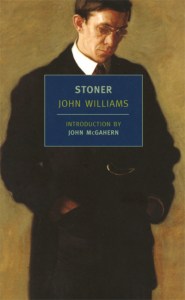
John-Williams-StonerMy thirst for good reads continued in 2015, and among them, two stand out for special praise in providing me with pleasure, insight, and continuing reflection. (I’ve reviewed both more fully elsewhere in Brimmings.)

Fiction:   John Williams. Stoner (New York Review of Books Classics)

My choice is probably subliminal and inevitable, as not since David Copperfield have I identified with a fictional character so fully as with Stoner, having like him, been a professor of English for several decades, thus  familiar with academic intrigue and its pettiness; even more, having, like Stoner, endured a previous incompatible marriage that served neither of us well. But aside from the personal, Stoner has also been the favorite novel of professors across the years, according to a recent article. And why not, since it excels not only for its verisimilitude, but its superlative craft of nuanced, rhythmic sentences replete with stylistic discipline made potent through understatement; in short, easily one of the best written novels I’ve come upon.

Sample Passage:

In his forty-third year William Stoner learned what others, much younger, had learned before him: that is the person one loves at first is not the person one loves at last, and that love is not an end but a process through which one person attempts to know another.

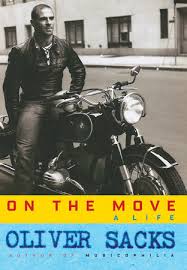
SacksNon-Fiction: Oliver Sacks: On the Move: A Life

Sacks, renowned as both a neurologist on the cutting edge and cogent observer of the eccentric manifestations of the brain’s malfunctionings in his many books, wrote this memoir in the final months of his terminal illness from cancer. As such, it startles with its wisdom and bravery; even more, in its honesty about himself in measuring the successes and shortcomings of his life journey, delivered with verbal beauty uncommonly found among scientists.

Sample Passage:

This gave me a feeling of what seemed wrong with American medicine, that it consisted more and more of specialists. There were fewer and fewer primary care physicians, the base of the pyramid. My father and my two older brothers were all general practitioners, and I found myself feeling not like a super-specialist in migraine but like the general practitioner these patients should have seen to begin with.

__rj

Lexington, KY: Reflections on My Old Kentucky Home

lexingtonI count myself fortunate to live near Lexington, KY. Its assets are many; its liabilities, few.

I like its small town feel—no row housing here; no factories puffing their toxins into the air.

Though ranked 61 among American cities, currently about 311,000, it’s unique in not having freeways threading its thoroughfares, unlike neighboring Louisville and Cincinnati.

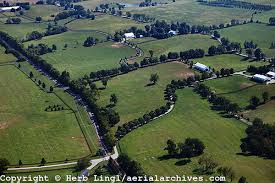
To be sure, Kentucky is often synonymous with poverty, but Lexington defies such stereotypes. Located in the center of the pristine Bluegrass countryside renowned for its grandiose thoroughbred farms, Lexington is not only one of our nation’s most beautiful cities, but also one of its most affluent.

Unlike many cities, Lexington enjoys one of the nation’s steadiest local economies, with unemployment currently a miniscule 3.7%. Forbes Magazine has it as the 4th “Best City” for Business careers. Kipplinger ranks it 6th as a “Best Value City.”

Lexington can rightly boast its being “the horse capital of the world.” A 2014 survey revealed that 67,500 horses populated the Bluegrass, including 24,600 in Lexington!

Another laurel is its 6th place ranking as one of the country’s “most inspiring cities” (worldwidelearn.com), topped only by Boston, San Francisco, New York City, Washington, DC, and Los Angeles.

Lexington is also listed 7th as a “Best City for Quality of Life” (nerdwallet.com).

In spite of these accolades, however, Lexington faces continuing challenges from commercial interests who, left to themselves, potentially pose a threat to the city’s bucolic flavor and, as a family city, the superb ambience of the city and surrounding area.

Take what Lexington did in 1996, demurring to commercial interests, and appropriating 5400 acres from the Rural Service Area for development. If Lexington were to further erode the rural landscape of the Rural Service Area, the legacy might well be to make Lexington just one more American city characterized by urban blight.

Fortunately, the city is currently enjoying a hiatus with the tenure of Jim Gray, its progressive mayor. Under the current Five Year Comprehensive Land Use Plan (2011), set to end next year, the city has held out for wise land stewardship, reaffirming the 40 acre minimum set in 1958 for new residential land and commercial development.

As Gray puts it, “building our brand and our economy means that first we preserve what is special and unique about our Lexington—our bluegrass landscape.”

Concurrently, unbridled development has raised its ugly head within the Urban Service Area with numerous architectural gems of the nineteenth century torn down to make way for an underground garage, office tower, hotel, and retail and restaurant space downtown in what has famously turned into a cavernous hole in the ground since its first shovels in 2008.

Meanwhile, yellow dinosaurs gouge the rich soil of a former 56-acre farm to make room for The Summit, a new mall by a national conglomerate just down the road from gargantuan Fayette Mall, which recently expanded by another 26 acres.

You see, I’m an idealist and would have preferred the city’s opting to purchase the farm for green space along one of the city’s most grid-locked traffic corridors, Nicholasville Road—something on the order of the New Haven Green or Savannah’s The Squares. Or like New York’s Central Park or Philadelphia’s Fairmount Park, offering timeout sanctuary in the very heart of urban bustle.

But what about the cost? Well, before you think me insane, consider that the city council had previously come up with a $354 million plan to renovate Rupp Area, home of the University of Kentucky’s men’s basketball team.  I’d say it’s a simple matter of getting our priorities straight.

While Lexington may seem to enjoy a rich tapestry of parks, some 100, they’re relatively small while large areas of the city haven’t any parks at all.  The city’s special gem is Raven Run, a passive park of 734 acres (no sports facilities, etc.), preserving natural habitat and several well maintained hiking trails.

Lexington needs to pay attention to its tree canopy anyway which has experienced a sharp decline, some of it doubtlessly due to the recent infestation of the emerald ash borer. According to a 2012 study, the city’s tree coverage stands at 27%, with 40% the gold standard.

Lexington currently isn’t a member of the City Park Alliance, and it should be. Its rival city, Louisville, is.  The Alliance offers a mapping technology with demographic data that can be accessed online. The Alliance ranks the 75 largest U.S. cities as to how each of them is meeting its park needs. Lexington ranks 51 (parkscore.tpl.org/rankings-advanced.php).

The upshot of all this is that Lexington, while doing well, can do better and must if it’s to assure preservation of its unique ambience, underpinning its attractiveness as one of America’s best cities to call home.

–rj


Paris Bombings, Public Response, and the New Tribalism

CTyf4XOWUAA3a4JEvil is very real and as we know from the Paris mayhem, universal. ISIS, of course, is its mirror image.

This week, Kurdish Peshmerga troops, retaking the city of Sinjar in northern Iraq, discovered two mass graves just outside the city. One contained the bodies of 78 elderly women shot by ISIS; the other, some 60 men, women and children, presumably Yazidis, executed when ISIS captured the city a year ago.

These past several weeks have, in fact, marked a turn in ISIS strategy, since the free flow of recruits has nose-dived with the tightening of borders adjacent to Syria and Iraq and the entrance of Russia into the Syria conflict.

Accordingly, what’s transpired in France may only be the opening round as ISIS licks its wounds.

In the West, we are rightfully angry and troubled by the Parisian carnage. In Facebook, many of us have changed our profile images to include the French flag or Eiffel Tower to show our solidarity.

Contrast this with our visceral indifference with its ethnocentric moorings to ISIS’s barbarism on Muslims or those we perceive as political adversaries. In fact, Muslims have been its greatest victims.

A Russian commercial jet recently went down in the Sinai, taking 224 lives. Intelligence sources suggest a bomb had been placed aboard and ISIS, as with the Parisian violence, claimed they were behind it.

In Lebanon just one evening removed from the Paris massacre, a Hezbollah neighborhood was bombed, resulting in 43 deaths. Again, ISIS was the perpetrator.

In October, 99 lives were taken in twin bombings in Ankara, Turkey.  Although ISIS hasn’t claimed responsibility, they are believed responsible.

Meanwhile, media are saturated with coverage of the Paris horror, as they should be; yet by the same token, the coverage given to the aforementioned violent episodes have proven miniscule.

I’ve seen this same scenario repeated in natural calamities as well. Recently, earthquakes occurred in Pakistan and Iran. Coverage? Well. There’s always Google.

The Russians we don’t care much about these days, so our interest in the Sinai crash seems more out of curiosity as to its cause and not from compassion.

Last week’s bombings in Beirut: So what? These were Muslims, weren’t they? And I should add, Hezbollah. Israel knows their terrorism first hand, so they get what they deserve. Problem is, the casualties were civilian, many of them women and children.

Turkey? Isn’t that something we’ll be eating soon? Ankara? For many Americans, where the hell is that? For the record, it has a population of nearly 5 million! That’s twice the population of Paris!

Think about this: The greatest humanitarian crisis of our time is that of 4 million Syrian refugees, along with another 8 million dislocated Syrians within their country. Our response: bickering as to whether we should take in 30,000 or 65,000, or any at all as some of the GOP presidential candidates have suggested.

Meanwhile, the Washington Post informs us that American contributions to international causes has declined over the last two years.

I think of Shakespeare’s Shylock in The Merchant of Venice, who nails down the cruelty of indifference to the sufferings of those we see as different from ourselves, taking the liberty to replace Jew with Muslim:

I am a Muslim. Hath not a Muslim eyes? Hath not a Muslim hands, organs, dimensions, senses, affections, passions; fed with the same food, hurt with the same weapons, subject to the same diseases, healed by the same means, warmed and cooled by the same winter and summer as a Christian is? If you prick us do we not bleed? If you tickle us do we not laugh? If you poison us do we not die?

Let’s call our indifference, or xenophobia, what it really is–a return to the tribalism we thought we Westerners had shed long ago.

–rj


A Life-Changing Quotation

Every once in a while, I come across a quotation that really stands out. I like this one, though I don’t recall exactly where, or when or how I came upon it, but thought you might like it too:

Did I offer peace today?

Did I bring a smile to someone’s face?

Did I say words of healing?

Did I let go of my anger and resentment?

Did I love?

–Henri Nowen (1932-1996)*

Nowen*Nowen, priest, theologian, and author, lived the life he preached, loving others, and writing some 39 books, translated into thirty languages. His most famous book: The Return of the Prodigal Son.

–rj


Don’t Be a Phoul: When Neighbors Cut Down Trees

NYC Central Park
NYC Central Park

My daughter has been complaining in her recent emails about a family on her street in Bellevue, WA.

They’ve cut down two lovely Douglas fir trees, the kind that startle Easterners like me not used to arboreal skyscrapers, many of them magisterial in their silent dignity bequeathed by longevity.

Bellevue, a fast growing suburb adjacent to Seattle, still enjoys a fecundity most urban areas in America can only envy. When I was there a few weeks ago, I relished walking myriad needle softened pathways of the city’s several forested trails bisecting an urban landscape. Apparently, however, the area has also attracted a newer influx indifferent to the charms of a bucolic setting.

These neighbors complain that their trees were messy. They tired of the needles falling on their roof and car. Around the corner, another neighbor recently did the same thing for the sake of planting a garden free of shade. In its slovenliness, it appears she’s made things worse, not better.

Meanwhile, the company that’s done the cutting directly goes about soliciting customers door-to-door on a regular basis. One of the cutters bragged to my daughter, obviously relishing her displeasure, that he likes chopping down trees.

Unfortunately, we live in an America that prides itself on a free economy, with consumers having sovereignty over their choices. Sadly, in this case, these individuals opted to buzz-saw these magnificent sentries of public health into oblivion for convenience sake.

It’s the way things work in a mutual exchange between the entrepreneurs of the market place, motivated by money, igniting consumer sentiment often detrimental in its long term consequences; for example, alcohol and cigarettes. George Akerlof and Robert Shiller, Nobel Prize winners, term it a “manipulation of focus” in their insightful new book, Phishing for Phools: The Economcs of Manipulation and Deception (Princeton University Press).

Phishing is their term for business interests that phish (i. e., angle) to get phools (consumers) such as you and me to do their bidding to the detriment of ourselves. Think banks, pharmaceuticals, real estate agents, etc.

There are two kinds of phools: those who fall for the falsity of the phishers’ claims and those, the vast majority of the public, who succumb to their own emotions, prone to making bad decisions simply because they initially feed their emotional wants. You see  this in matters of health where our predominant diseases such as atherosclerosis, diabetes and often cancer arise from faulty lifestyle choices such as the wrong food, overeating, indulging in alcohol, or not exercising.

It’s this way of doing things, in this case, overblown avarice with its bubble effect that led to the colossal recession of 2008.

In sum, what’s been happening in my daughter’s neighborhood, threatening its pristine uniqueness, is a facsimile of the phisher-phool conundrum writ large, neighbors manipulated into opting unwittingly against their long term interests.

Maybe you think this is all nonsense. Property owners have the right to do as they like.

But have they the right to harm the public-interest, given the menace of air pollution and global warming, by cutting down their trees?

And what about the neighborhood aesthetic? Hurrah for neighborhood associations!

We aren’t disconnected beings. Yes, we are our brothers’ keepers.

Bellevue government needs to get itself in gear. Trees are public domain just like telephone poles and street lights. Good government is on to this. Consider New York which just completed planting one million trees or Boston which plans to plant 100,000.

It’s estimated that planting trees in urban areas reduces energy use up to 50%. Just one tree absorbs up to 8 pounds of air pollution annually. Trees increase property value. Studies show people drive slower on tree lined streets. They add beauty and lend character.

Let’s not be phouls!

–rj


The Elephant Factor in Last Night’s Debate

demsGrowing older may not be a disease, but like many diseases, it’s progressive. Not only do we diminish in physical capacity, but in mental acuteness as well, resulting in a lower threshold in processing information.

Aging needn’t be feared per se, however, since scores of elderly enjoy a quality of life many young people can only envy. Take last night’s Democratic debate. Hillary Clinton, who may very well be elected president in the coming year, is 67; her chief rival, Bernie Sanders, 74;  Jim Webb, former Virginia senator, 69.

Personally, I found their performance under conditions of surely immense pressure immensely gratifying. I say this because I live in an America that frequently denigrates its older citizenry with “old” often taking on pejorative connotation approximating the “n-word.” If it’s hideous to discriminate on the basis of color, no less so when it comes to your age.

Psychologically, we need more discussion on the subject of aging. Does it confer strengths, in this case, in leadership acumen? I believe it does.

Consider what animal studies might show us; for example, elephants where it’s the matriarch, or oldest elephant, that often leads the herd to a waterhole only she knows about. In short, age often confers the wisdom of experience.

When it comes to being president of the United States, it’s hardly an on-the-job learning experience. Every decision in our more than ever complex world is fraught with consequences, some of them impacting upon our very survival. We need leaders who can take us to the water hole.

Of course, younger leadership may connote creativity, or initiation of new approaches to problem solving; older leadership, a rigidity, or running in place.

In a dangerous world, however, I prefer stability. Unfortunately, the human proclivity is to select on the basis of looks, or youthfulness, rather than functioning. Implanted by evolution to augment progeny, beauty proves a formula few of us can resist. I suspect the birds and the bees know a thing or two about this.

Interestingly, the issue of candidates having changed their positions over time came up. I like Hillary’s answer: “I think all of us have changed positions.”

In short, we evolve, experience conferring wisdom. I call it “seasoning.” The elephant thing again.

Oh, shucks! Missing from the debate was crusty Joe Biden, 72.

Just imagine!

–rj


On Visiting Bloedel Reserve

If you have a garden and a library you have everthing you need.–Cicero

I’ve been doing a lot of walking in the Seattle area these past several days, while visiting my daughter and family. As a gardener back home in Kentucky, it’s nice to see what cool temperatures and ample moisture can do for making verdant landscapes and, maybe more to the point, motivating green thumbs to spend time outside, free of humidity, high temperatures and, of course, mosquitoes.

Case in point was yesterday’s day long excursion to Bainbridge Island via one of Seattle’s ubiquitous ferries that add to the area’s delights. There we took in the 150 acre Bloedel Reserve with its rich tapestry of Douglas fir forest intersected by well-kept trails, rhododendron and tea garden displays, reflecting pool and sea vistas.

As the Irish poet Yeats might say, “peace comes dropping slow” in a place like this.

I confess to being a Romantic unashamedly, though tempered sufficiently with realism to know nature’s moods. Unfailingly, gardens possess a spirituality for me, moving me out of myself into an awareness of connection with universal rhythms of genesis, maturation, and ending. I am but a leaf of the tree of life. Beauty lies here in the now, not in a speculative destiny.

there, all days, my heart goes
Because there, first, my heart began to know
The glories of the summer and the snow,
The loveliest of harvest and of spring
.  _Edith Nesbit

–rj

Second Thoughts

thSecond Thoughts

If

I could voyage to the stars,
         gaze into infinity,

unshackle earthly anchors,
        tumble freely,

floating on space,
       drift into solar ports

of dark safety,
       discovering bliss–

I’d like that a lot,
       save jettisoning fellows,

imperfect, but weathered
       by earth’s impromptus,

its sun-drenched fissures,
       yet stubborn harvest

of courage, empathy, and love,
       seeded by struggle.

nourished by hope,
       redemptive.

–rj

Dream Rummaging

We dream–it is good we are dreaming–
It would hurt us–were we awake.
Emily Dickinson

Freud in his London office (1939)
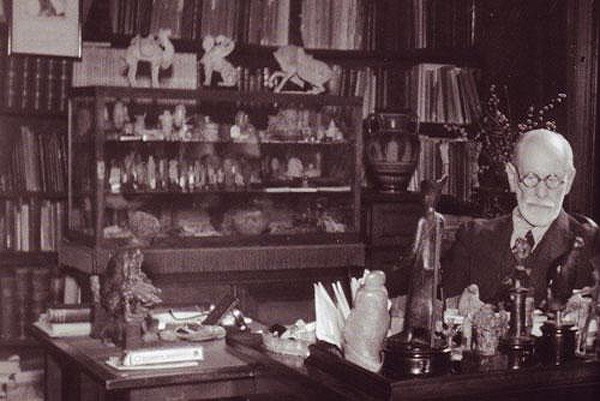
1111_Freuds-Last-Session369887

Do you dream a lot?

I know I do.

Incessantly.

I dream more now that I’ve gotten older, abetted by having to get up in the nights at this juncture.

Should I care about dreams?

Do they have meaning?

Can they help us?

Perhaps show us our real selves?

Make for a better world?

I know I’ve always been interested in them from earliest days.

The catalyst was probably Freud’s massive Interpretation of Dreams, which I confess to reading all the way through.

For Freud, dreams reflected repressed desire, often of libido.

The wish principle always.

But how can that be?

Don’t I often dream my fears?

With Freud, I always sensed a wanna-be novelist at work, ingeniously spinning narratives, howbeit, in the name of science–alas, to confirm an a priori hypothesis without the backup of today’s medical formulae of random testing and cohort studies. But then, how do you quantify something so ethereal as dreams?

But don’t get me wrong.

I think his Civilization and Its Discontents one of the great masterpieces, despite its surprising brevity.

His triad of Id, Ego, and Super Ego continues to spellbind me by virtual of the myriad ways I see it manifest itself in both myself and others.

Auden, as always, said it so well in his “Memory of Sigmund Freud” (1939):

for one who’d lived among enemies so long:
if often he was wrong and, at times, absurd,
to us he is no more a person
now but a whole climate of opinion….

I was surprised to read in neurologist Oliver Sacks’ tell-all memoir, Moving On, published just several months before his death last week, that he was seeing a psychoanalyst for some fifty years–and, remarkably–the same one every week! Sacks kept a notebook on his nightstand, recording his dreams faithfully.

Make no mistake: Sacks is a man I came to love and respect deeply. I just wish I knew why he kept finding psychoanalysis a cornucopia of self-knowledge, apart from crediting it with his rescue from drug addiction acquired from his youthful halcyon California days a la Muscle Beach.

For me, the great influence on how I look at dreams has been Freud’s former disciple, Carl Jung. His notions of anima and animus, often projected in dreams, have proved revelatory personally and hence liberating.

He taught me that so much of living life is finding equilibrium, or the balancing of Ego and Self.  Dreams offer symbols to excesses in ourselves that can be remanded.

He also introduced me to polarity as the essence of mythos truth with its tension of paradox.

If Freud looked to our past as the repository of dream content, Jung saw dreams as projections of possibility and therefore hope.

Jung was more a cultural analyst, or pseudo-anthropologist, finding universality across a wide spectrum of symbolic significance, rummaging what he collectively called archetypes.

In younger days I nearly chose becoming a licensed Jungian therapist and sometimes wonder if I committed one of the great follies in my life in turning down its seduction. Campbell, that ardent Jungian, famously urged we should follow our bliss. That maxim, aside from its latent dangers resident in reductionism, may often prove wise counsel and its rejection the source of substantial human misery.

But to sum up, I think what I’ve liked best in Jung is his acceptance of the banality of evil, Arendt’s phrasing for resident evil in Man. No liberal withering away via socio-economic exegesis, often speciously argued in my view.

Maybe my lifelong fascination with dreams stems from my youthful days drenched in fundamentalist biblical parochialism. There was Joseph, so masterful at dream interpretation that the Pharaoh took him into his confidence, ultimately saving Joseph’s kindred Hebrews.

And of course, there’s Daniel.

For the ancients, dreams gave warning and with it, admonition.

I chose to pursue a Ph. D. in English Literature. Well, you guessed it: Coleridge’s famous Kubla Khan poem, which he explained as the aftermath of an interrupted dream. But that’s just one dream poem. There are scores of other dream poems.

What I’m meaning to say is that there have been so many threads feeding into my dream fixation, not just Freud and Jung who were obviously mesmerized.

Do dreams exhibit patterns?

Do they help us to know ourselves?

I believe they do.

And that’s why I need to go back to exploring my dreams again, now that they seem to occur more frequently.

Like Sacks, I may soon be keeping a notepad on my nightstand.

–rj