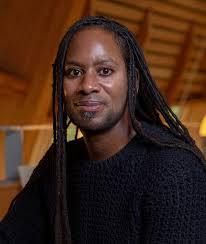
Slender and youthful at 37, with chest-length hair and a gentle, affable demeanor, Dr. Jason Arday was widely popular among students and colleagues when he was appointed Professor of Sociology of Education at the University of Cambridge in March 2023.
His hire made history. The child of Ghanaian immigrants, he was the youngest Black professor in the university’s centuries-old record, holding a prestigious seat alongside a Professorial Fellowship at Jesus College.
Yet, just three years later, Arday abruptly resigned.
Days after stepping down, on August 14, 2026, police found him dead at his Battersea, London residence under non-suspicious circumstances, a tragic end to a meteoric rise brought down by an escalating controversy over his academic credentials and personal backstory.
THE SHELVED INVESTIGATION
The unraveling began long before it reached the public. In September 2025, Jack Grove, a senior reporter for Times Higher Education, alerted by Arday’s extraordinary athletic claims, sent Arday three direct emails requesting a response to alleged instances of plagiarism in his doctoral thesis and journal publications.
Rather than addressing the queries, Arday hired the law firm Carter-Ruck, known for aggressive media litigation, and reported Grove to the Metropolitan Police for criminal harassment.
The Met spent four months investigating the journalist. In February 2026, an officer called Grove, ordering him to cease contacting Arday because the inquiries were impacting Arday’s mental health. Facing legal threats and police intervention, Times Higher Education shelved Grove’s draft article.
THE WHISTLEBLOWER AND THE BLOG POST
The story broke wide open through a different channel. In June 2026, an unnamed Cambridge faculty member, frustrated by what they alleged was an internal administrative cover-up to avoid a public scandal, approached Nathan Cofnas, a former Cambridge philosophy researcher.
Cofnas subsequently ran Arday’s 2015 doctoral dissertation through plagiarism-detection software and, in July 2026, published his findings on Substack, alleging extensive verbatim text duplication.
Cofnas was already a lightning rod for controversy. In February 2024, he had published an essay claiming that Black people possess lower average cognitive ability due to genetic differences, asserting that in a meritocracy the proportion of Black professors at elite institutions like Harvard “would approach zero percent.”
While a Cambridge University investigation concluded that Cofnas’s essay fell within lawful free speech under UK law, Emmanuel College severed ties with him in July 2024, citing the hostile environment created by his public statements.
Cofnas challenged his dismissal in court, but in March 2026, a tribunal ruled that while his philosophical beliefs qualified for legal protection, Emmanuel College acted lawfully in terminating his affiliation due to the disruptive impact and tone of his writings.
Despite Cofnas’s controversial background, his technical analysis of Arday’s text duplication was undeniable. On July 24, 2026, The Times published an explosive front-page exposé documenting passages in Arday’s dissertation that were identical or near-identical to previously published scholarship without attribution. Media scrutiny quickly spread to his published journal papers and his autobiography, which claimed he had remained non-verbal until age 11, illiterate until 18, and had run 30 marathons in 35 days.
RESIGNATION AND AFTERMATH
On August 5, 2026, Arday resigned his Cambridge professorship. In an open letter addressed to colleagues and the public, he maintained his innocence while pointing to the unbearable personal strain:
When I accepted the extraordinary honour of becoming Professor of Sociology at Cambridge, it was, without question, the greatest professional privilege of my life… Sadly, the years since my appointment have also been marked by an unrelenting level of public scrutiny and personal attack… The relentless accusations, speculation and public commentary have taken a profound toll on me and on those I love… This decision should not be interpreted as a loss of faith in scholarship or in the values that first brought me to Cambridge. Nor should it be mistaken for an acceptance of the narratives that have surrounded me.”
Following his death nine days later, his family expressed shock, stating that Arday was a “gentle man” who had been “subjected to a campaign of sustained abuse… by those who would leave no stone unturned in their quest to undermine him.”
AN ACADEMIC EVALUATION
Who bears responsibility for this tragic aftermath? In academia, the appropriation of another scholar’s work is an unpardonable offense. In my view as a former academic, the evidence of Arday’s unacknowledged text duplication and hyperbolic biographical claims is beyond doubt. Multiple passages in his writing trace directly back to uncredited source material, while his personal timeline, progressing from total illiteracy at age 18 to a doctoral dissertation in his twenties without an established paper trail of remedial education, defies statistical reality.
The root of this tragedy lies in an elite university rushing headlong to project progressive credentials. Cambridge was under immense pressure to diversify. According to reporting by The New York Times (August 15, 2026), internal hiring documents reveal that the selection panel bypassed candidates with far stronger scholarly records, brushing aside early warnings regarding Arday’s work as “vile efforts” to discredit a rising Black scholar. In doing so, the university abandoned its primary duty: to act as an impartial arbiter of intellectual truth.
While it is imperative that we confront racism wherever it rears its head, when institutions substitute top-down equity of outcome for equality of opportunity based on individual merit, they do not defeat prejudice: on the contrary, they merely replace rigorous judgment with performance art.
By waiving standard vetting out of ideological panic or political ideology, Cambridge did not elevate Jason Arday; instead, it exposed him, elevating a vulnerable man to a height built on sand, leaving him defenseless when the tide of inevitable scrutiny came in.
This tragedy serves as stark warning for modern higher education. When universities lower the bar to purchase moral virtue on the cheap, the consequences are ubiquitous: real scholarship is devalued, public trust in academia is shattered, and the genuine, unassailable achievements of minority scholars are quietly cast under a shadow of institutional doubt.
Everyone gets a prize—until the bill comes due. Cambridge got its headline, the ideologues got their symbol, and Jason Arday paid with his life.
—rj
Discover more from Brimmings: up from the well
Subscribe to get the latest posts sent to your email.


Michael, he is currently a faculty member of the Department of Philosophy and Moral Sciences at Ghent University in Belgium and continues to publish on censorship issues. His racist views haven’f changed.
LikeLiked by 1 person