A Legacy of Righteous Minds

Existence exerts a randomness in its distribution of fate. The wicked, as Job tells us, often live long, escaping their misdeeds with impunity; the just and talented, curtailed lives amid their greatest promise.

The list of those I deem the “righteous,” those who’ve especially influenced who I am, the values I embrace, and my hopes for a better human future taken from us early, their age at death indicated in parentheses, includes Princeton sage Walter Kaufman (59), biologist Stephen Jay Gould (62), astronomer Carl Sagan (62), science fiction writer Octavia Butler (58), essayist and novelist George Orwell (46), political sage and philosopher John Stewart Mill (66), and, not least, poet Gerard Manley Hopkins (44).

I’m tempted to write a series of extended separate tributes to each of them in Brimmings, but will limit my commentary for now.

I was in my early twenties. a college student just out of the military, when I somehow came upon Walter Kaufmann’s The Faith of a Heretic (1961), which I’m re-reading now. He was the first to admonish me to accept only the empirical in the quest to discern the probable, to find courage to change course, and live daringly: “The question is not whether one has doubts, but whether one is honest about them.”

Evolutionary biologist Stephen Jay Gould impressed me early with his clear cutting, scintillating prose endowed with grace, teaching me that science is not simply pursuing the factual, but a way of thinking that enlarges one’s humanity. Life is by-product of chance and contingency: “Human beings arose, rather, as a consequence of thousands of linked events, none of which foresaw the future.”

Astronomer Carl Sagan demanded the imprimatur of evidence for any accepted belief. Rationality demands we not cloister ourselves in cultural hand downs—that extraordinary beliefs merit skepticism: Compromising truth invites demagoguery and superstition’s advance: “We make our world significant by the courage of our questions and the depth of our answers.”

African-American Octavia Butler has been a remarkable recent read, writing eleven science fiction novel standouts resonating urgency in confronting systemic collapse of ecosystems consequent with climate change. Her Parable of the Sower, a must read, has proven chillingly prescient. Change is life’s inevitability, morally indifferent, demanding adaptability to survive: “Human beings fear difference, and they fear it so deeply that they will not only oppress but destroy what they see as different.”

George Orwell, well known for his clairvoyant 1984, has always impressed me with the clarity of his writing, achieved through disciplined study; his wariness of manipulative despotism and its verbal deceit stratagems such as ’doublespeak,” timely and precise in their warnings of euphemism and abstraction: “Political language… is designed to make lies sound truthful and murder respectable.”

John Stewart Mill, “the saint of rationalism,” remains a seminal influence, ahead of his time, a champion of classical liberalism and its advocacy of the minority’s right to dissent. He taught me about nature’s indifference and logic’s necessity in a world absent of revelation. I return to him repeatedly for wisdom and inspiration: “If all mankind minus one, were of one opinion, and only one person were of the contrary opinion, mankind would be no more justified in silencing that one person, than he, if he had the power, would be justified in silencing mankind.”

Gerard Manley Hopkins has long been my most esteemed poet with his vibrant “sprung rhythm,” latent with emotion, a passion for nature and for those who suffer—so many—life’s inequities. His poetry sings, reenacting experience via the sensory, capturing the essence of all things. As a Jesuit priest, while not resolving the problem of suffering by resorting to a cozy theodicy or relying on sentimentality, he helps render its endurance: ‘I wake and feel the fell of dark, not day.”

I am forever grateful for their stalwart witness to life’s truths. Their lives argue by example rather than system—that meaning isn’t guaranteed by justice, nor extinguished by its absence. Fate distributes arbitrarily; conscience does not.

—rj

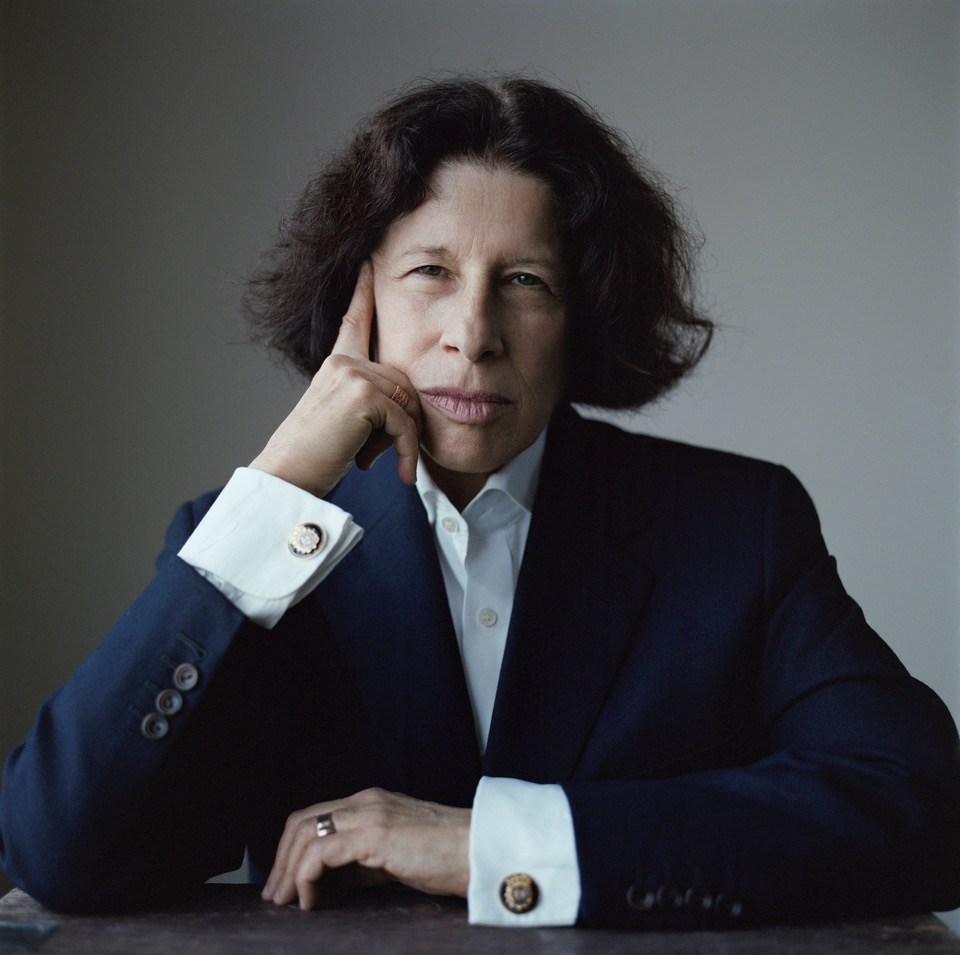
Fran Lebowitz: Just Plain Irresistible

On my morning romp through The Guardian, I bumped into Fran Lebowitz—a new acquaintance for me—and immediately took to her sardonic take on so many of the things, often political, that keep one awake at night.

Now 75, Lebowitz’s essays are well worth reading, even if they sometimes make you wince—saber-toothed witticisms worthy of jotting down. She does not suffer fools gladly, and she’d make a terrific talk-show guest; in fact, she often has.

Her best book, The Lebowitz Reader (1994), remains thoroughly timely, a compendium of sharp observations on our cultural absurdities.

It may surprise you that she never attended college. A self-declared misfit, she spent high school hiding books under her desk, frequently getting caught and suspended.

She has no illusions about the times we live in, the reluctance to resist conformity, and the challenge of being an authentic self. We’d be great friends.

A consummate non-conformist, she owns no computer, no cellphone, not even a typewriter. But she does own 10,000 books and reads deeply—especially Baldwin and Fitzgerald. On Fitzgerald, she says:

“Most of my adult life I’ve been very irritated by the legend of F. Scott Fitzgerald. So every five years, I reread The Great Gatsby, hoping it’s not that good—but unfortunately it is.”

Her political commentary is cutting. She laments the resurgence of book banning—driven largely by one political party that still enjoys the support of nearly half the nation’s voters.

A liberal Democrat, she rejects centrist Democrats who fail to stand up to corporate power. Clinton, she thought, seemed like a Republican. Reagan, to her, proved the prototype of the “dumb president,” and Trump the worst incarnation of incompetence—a “cheap hustler, lazy, but mostly dumb.”

On the indulgence of the wealthy in politics, she is characteristically blunt:

“I object to people who are rich in politics. I don’t think they should be allowed to be in politics. It is bad for everybody but rich people, and rich people don’t need any more help… No one earns a billion dollars. People earn $10 an hour; people steal a billion dollars.”

Her acerbic wit can be genuinely funny. Regarding mountain climbing—an enthusiasm she cannot fathom—she says there’s simply no substitute for a warm shower and a well-cooked meal. “Oh, but the camera views are spectacular!” Plenty of photos already exist for that. She walks extensively in New York, but always to a destination.

Space confines me, as usual, but I think my drift is clear: Lebowitz is a voice worth knowing, irritating, insightful, and just plain irresistible.

—rj

Confronting Our Fears Grants Happiness

This morning I’ve been reading Thich Nhat Hahn’s Fear: Essential Wisdom for Getting Through the Storm. Many of you are familiar with his books, wise in counsel, encouraging mindfulness engaged in the present, not burdened with trauma from the past or worries about the future.

I reached for Hahn, my amygdala working overtime, given the White House maelstrom.

Hahn reminds me that we are linked to an infinity beyond ourselves. We are all connected: sun, water, forest, and sentient animal friends.

That there is no permanence.

That entropy is life’s law.

I venture that our ultimate anxiety concerns our mortality

Peace comes, however, with its acceptance and doing good for others. Our passing doesn’t mean extinction, but rejoining that eternally existing phenomena that gave rise to our being.

Fundamental to Buddhism is that there is neither birth nor death, but continuum only. The Buddha perceived this truth 2500 years ago, confirmed by the Conservation Law of Mass-Energy —that mass is not created ex nihilo, nor destroyed into nothing. It simply changes its manifestation.

A cloud never really dies in becoming rain or snow.

We must confront our fears, not deny them, if we are to find peace, not seek escape in accumulation or media overload.

While I find the history of religion to be no less than a bloodbath, I think of true Buddhism as a way of life rather than a religion. It posits no deity. I completed an impressive course from a Dutch university several years ago that introduced me to its major tenets and, especially, to mindfulness enhanced through meditation.

I’ve been subsequently amazed with brain imaging results that show serious meditators experience neural changes at several levels, including an increase in gray matter density and cortical thickness in the hippocampus, responsible for learning, memory and emotion.

What impresses me most is that amygdala activity, the brain area responsible for our anxiety, is decreased, often after just eight weeks of consistent practice. I’m all for less anxiety.

With this new brain imaging technology now available, science is just catching up with the intuitive truths of Buddhism. I know of a Princeton professor who has dedicated his research to studying the liaison.

Several years ago, I undertook training in Transcendental Meditation. I didn’t really catch on how to do it effectively until last year when I read Yongey Mingyur Ripoche’s The Joy of Living and learned specific techniques. Unfortunately, I have failed to practice it consistently. I need to mend my ways.

The late film director David Lynch did meditation twice daily, busy as he was, never missing, until the end of his life and wrote a book about it, Catching the Big Fish, which I’ve read.

I am grateful for my time out with Thich Nhat Hahn’s book, a refresh on those values than quiet our anxieties and grant us peace.

Wishing all of you well, I trust my affection for all of you vibrates into a day of happiness.

—rj

On My First Reading Cormac McCarthy

Lone windmill on a Texas ranch

Not since Faulkner…

A staggering talent dwarfing rivals.

Flora and fauna. West Texas plain. Nothing missed.

Vernacular of everyday people, wrestling with life, each day’s sameness, yet not without hope of life’s longshot lottery breaking their way.

Sensory, escalating, you-are-there cumulative syntax, landscaping America’s dark soul, foregrounded in cosmic indifference to individual fate of man and beast.

At the very least, Faulkner’s equal:

As he turned to go he heard the train. He stopped and waited for it. He could feel it under his feet. It came boring out of the east like some ribald satellite of the coming sun howling and bellowing in the distance and the long light of the headlamp running through the tangled mesquite brakes and creating out of the night the endless fenceline down the dead straight right of way and sucking it back again wire and post mile on mile into the darkness after where the boilersmoke disbanded slowly along the faint new horizon and the sound came lagging and he stood still holding his hat in his hands in the passing ground-shudder watching it till it was gone (Cormac McCarthy, All the Pretty Horses).

—RJ

We Will Not Have a King! America Says No to Donald Trump

I know I’m preaching to the choir for the most part, but silence is not an option given a White House ogre who would be king, trampling the bounds of our Constitution and violating every norm of moral decency

Not a single day passes without his intrusion. He is everywhere — America’s unprecedented micromanager — overriding the citizenry’s right to dissent and Congress’ constitutional sovereignty over the nation’s purse.

He persecutes critics with vitriol, weaponizes the Department of Justice for revenge and governs, not by law, but by impulse and ego.

It was not enough for him to pave over Jackie Kennedy’s iconic Rose Garden. Now a $200 million, 90,000-square-foot ballroom extravaganza is under construction — an East Wing expansion with bulletproof glass and ostentatious design that mocks the White House’s classical restraint.

Three days ago, during a dinner for corporate behemoths — Amazon, Apple, Meta, Google, Microsoft, T-Mobile, and Comcast among them — he unveiled plans for an American Arc de Triomphe to rise across the Potomac, opposite the Lincoln Memorial. Contributors, he promised, will have their names engraved.

Within the White House he’s installed a “Presidential Walk of Fame” lined with photos of his predecessors, except for former President Joe Biden, represented by an autopen image.

On his orders, massive flagpoles have been installed on the White House south grounds. It appears he wants to emulate France’s Louis XIV and facsimile Versailles.

Meanwhile, our nation suffers as his tariffs induce seismic consequence for world markets, a boomerang policy ensuring economic stress here at home. Consumers already feel the pinch.

Yesterday, the would be King informed visiting Ukrainian president Zelensky he’ll not be getting those coveted tomahawk missiles after all. Russia and Ukraine must stop their war, even if it means Ukraine must surrender much of its land. In coming weeks, he will meet a second time with despot Putin in Budapest to hammer out Ukraine’s fate. He deems himself a peacemaker even as he plots Venezuelan intervention and guns down boats at sea.

Today, media reports Ukraine’s defenses are rapidly buckling; more so, its morale. Trump’s misfire, propelled by egotism, promises to outweigh Russia’s nightly onslaught of missiles and drones, delivering a coup de grâce assuring Ukraine’s doom.

Yesterday, Trump pardoned the notorious George Santos, sentenced to seven years for multifarious deceit. Will Epstein’s collaborator Ghislaine Maxwell be next?

In this time of climate challenge posing a future earth transformed into a version of Mars, Trump has systematically, unhesitatingly, chosen to war on the environment, auctioning off public lands for fossil fuel development, sanctioned logging the nation’s remaining pristine wilderness, suspended curbs on air and water pollution, subsidies for renewable energy technology—electric vehicles, solar and wind—visionary endeavors prodigious with promise.

Ominously, yesterday he sent 80% of our nuclear arsenal guardians home, surely sheer madness in a time of mounting Russian, Chinese, and North Korean intimidation.

Implementing his autocratic reach for fascism are his incompetent lackeys and sycophantic Republican enablers, who conflate loyalty with virtue.

Let him build his Versailles of glass and steel. We choose otherwise, our priority a republic defined by courage and conscience.

March boldly, my fellow warriors for freedom. Let your voices fill every street and square: “We will not have a king!”

–RJ

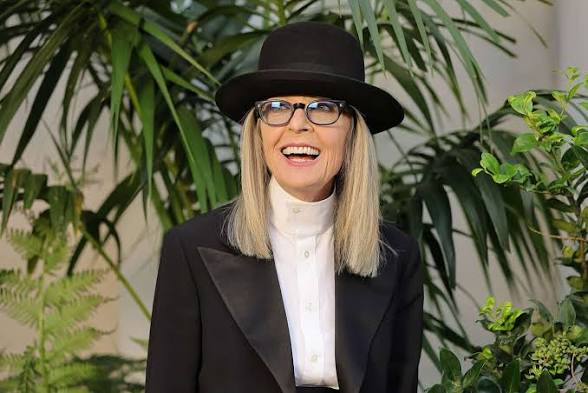
Diane Keaton: Rare and Superb

We’ve just added “Something’s Gotta Give” to our streaming collection—Diane Keaton’s own favorite among the seventy films in which she starred.

I’ve never been much drawn to romantic comedies, but this one—also featuring Jack Nicholson and Keanu Reeves—has held a special place for me.

A compassionate woman, Keaton was more than a Hollywood icon. She gave freely of her time and means to causes close to her heart, including animal welfare. I hadn’t known she refused to eat meat: “I don’t eat meat. I’m a vegetarian, and I’ve been a vegetarian for twenty-five years—and I’ve stopped even eating fish.” Learning this, I admire her all the more.

Art, as Keats reminded us, transcends mortality. We’ve lost you, Diane, but through your movies—and the goodness that shaped you—your legacy endures.
RIP.

A Polarizing Artist: Rudyard Kipling’s Legacy

I remember it well. I was a young graduate student, privileged to study under one of the world’s foremost professors of Victorian literature, a renowned authority on Thomas Hardy.

The course was rigorous. We read the greats of the age—Macaulay, Tennyson, Browning, Dickens, Mill, Newman, Arnold, Morris, Ruskin, the Rossettis, Swinburne, Hopkins, Pater, and of course Hardy. Yet strikingly absent was Rudyard Kipling. Our professor dismissed him as the mere voice of imperialist Britain—an attitude then dominant in the Academy, and one I suspect still lingers on American university campuses.

I had never read Kipling. I had not yet learned to question. I accepted what I was told.

It was only later, during a summer course at Exeter College, Oxford, that I encountered another view: one that esteemed Kipling’s literary brilliance without committing the American folly of conflating his politics with the merits of his artistry.

Kipling’s literary range was astonishing. His verse, endowed with rhythmic command, borders on the hypnotic. He opened poetry to colloquial speech and became a supreme craftsman of the ballad form.

Yes, he gave voice to Empire in works like The White Man’s Burden, Kim, and The Jungle Books. But he also revered Indian culture—its spirituality, wisdom, and sensory richness. Often, with subtle irony, he questioned the very order he seemed to affirm.

Perhaps his greatest achievement lies in the short story. With precision and nuance, he crafted narratives of extraordinary compression, modern in their suggestiveness, wide-ranging in their scope. The Man Who Would Be King remains a masterpiece—its sweep and power undiminished. Kipling’s influence on Conrad, Maugham, Hemingway, Borges, and others is beyond doubt.

He was awarded the Nobel Prize in Literature in 1907—the first English-language writer to receive it—honored for his “power of observation, originality of imagination, virility of ideas, and remarkable talent for narration.”

Kipling’s stories, like all enduring art, probe psychological depths. They are complex, skeptical of conventional wisdom, and riveting in their precision.

In today’s multicultural Britain, he is taught in context: his genius as a storyteller acknowledged, his colonial perspective rejected. Lewis, Tolkien, and Pullman have recognized him as a precursor to modern fantasy.

In India, where he was born and spent his early years, his reception is understandably ambivalent: many readers disdaining his imperial condescension, yet acknowledging his literary craftsmanship. Salman Rushdie has called Kim “one of the greatest novels written about India,.” Other Indian writers continue where Kipling left off, offering vivid vignettes of India, but through an Indian prism.

Controversy about his place in the Western literary canon remains. Vladimir Nabokov, in his Cornell lectures, dismissed Kipling for his moralizing, He deemed his indulgence in exotic adventure stories as juvenile. Great literature, he argued, obeys the aesthetic imperative of narrative neutrality, or distance, as in Flaubert and Joyce.

On the other hand, the late eminent Yale critic Harold Bloom came to Kipling’s defense. In his The Western Canon. Bloom lists Kipling among hundreds of writers deserving inclusion in the canon. Bloom saw Kipling as a myth maker and gifted story teller, especially in his short stories. On the other hand, he found his poetry “scarcely bear reading.”

While I find merit in both Nabokov’s and Bloom’s arguments, I lean towards Bloom’s appraisal as more balanced. I have long resisted either/or equations, particularly as to the political or aesthetic. Over a lifetime, I have frequently found reasoned judgment occupies a middle place. I have given my own arguments earlier in this essay for his belonging in the canon.

Whatever a reader’s verdict, Kipling was a singular voice, very much his own man. In short, authentic. As he said in an interview shortly before his death,

“The individual has always had to struggle to keep from being overwhelmed by the tribe. To be your own man is a hard business. If you try it, you’ll be lonely often, and sometimes frightened. But no price is too high to pay for the privilege of owning yourself” (Qtd. in the Kipling Journal, June 1967).

rj

A Candle Has Gone Out: The Legacy of Jane Goodall

It’s with profound sadness I learned yesterday of primatologist Jane Goodall’s death at age 91.

Blessed with remarkable genes, she lived life with zest up to the very last, tirelessly traveling across international landscapes to raise funds for her Jane Goodall Institute in Tanzania, founded in 1977.

I read her NY Times obituary, but it falls short in evaluating the plenitude of her achievement and its significance for all of us. I learned some time ago that the NYT composes many of its obituaries in advance, ready-to-go like a frozen pizza.

It doesn’t take into account her devotion to the Tanzanians among whom she worked for sixty years, as earnest for their welfare as she was for chimpanzees, humanity’s closest relatives, possessed like us with dual capacity for good and evil.

She gave early warning of climate change as an eyewitness of its exponential ravages in Africa, the front line of its advance.

You can learn much of what she accomplished through reading among her many books The Shadow of Man or A Reason for Hope of her work in Africa, breakthroughs in science, and personal beliefs, some of them controversial such as her advocacy of birth control availability to help African families limit their family size. Tanzania is second among Africa’s 54 nations in population growth. With a present population of 68 million, its projected 2100 population will swell to 283 million, imperiling its subsistence resources.

Goodall had faced an uphill climb in winning acceptance among male scientists, stubbornly suspicious of any woman’s achievement in investigative research. Initially, when setting out for Africa, she had been a waitress and secretary. A wealthy donor, however, recognizing her brilliance, provided the funding for a Ph.D. in ethology at Cambridge University, Goodall one of the rare individuals to directly achieve a Ph. D., not having been an undergraduate.

I confess to a personal attachment to Goodall who, like me, suffered from lifelong prosopagnosia, a neurological disorder inhibiting one’s ability to recognize faces.

Currently the fate of her African investment, employing thousands of Tanzanians, remains under unrelenting threat with population growth, agricultural expansion, deforestation, fragmented forest, habitat loss, logging, and lack of consistent government enforcement of land use laws; not least, the volatility of donor contributions on which the work depends, collectively posing a Sword of Damocles hovering over its future.

There remain just 2300 chimpanzees throughout Tanzania, with an estimated 90 to 100 in Gombe National Park, the site of her research. Those numbers are down from the original 150 as elsewhere in Tanzania, bush meat remains a frequent staple despite its health risks. AIDS had its origin in Africa, consequent with eating chimpanzees harboring the Simian Immunodeficiency Virus (SIV). Goodall was a committed vegan, ardently opposed to factory farming.

Also contributing to their demise is ever expanding human encroachment.

A friend of animals, champion of Mother Earth, always with passion and never without hope, Dr. Goodall is in my pantheon of heroes, her many awards including the Presidential Medal of Freedom (USA), the Steven Hawking Medal of Science for Communication, and designation as Dame Commander of the Order of the British Empire (DBE).

Acknowledging her advanced age, she approached death as her “next great adventure. When you die, there’s either nothing, it’s the end, or there’s something. And things have happened to me in my life that I feel there is something. And if there is, I can’t think of a greater adventure than dying.” 

I wish I lived in a world which lowered its flags in tribute to Dr. Goodall:

”Somehow we might keep hope alive—a hope we can find a way to alleviate poverty, assuage anger, and live in harmony with the environment, with animals, and with each other,” she wrote.

A candle has gone out and I feel lonely and in a dark place.

rj

Music’s Intelligentsia: Great Music. Great Minds

If there’s an area of life I’ve neglected, it’s music. Music, like reading, exercising, learning new skills, nurturing friendships, takes time.

It isn’t that I don’t have time. It’s more that I often squander it, unheeding Thoreau’s maxim, “Time is the stream I go fishing in.”

It wasn’t always this way. When I was young, I took a transistor radio nightly to bed, solaced by music into deep slumber.

Like my daily quest to learn Italian, I want to be more fluent in music’s idiom. I still don’t know how to listen to classical music with understanding.

I’ve been told Brahms helps you relax, sleep better. I need him for when I awake to night’s stillness, the indifferent stars, my mind ablaze with anxious thoughts.

Jazz, with its pulsating, sensual immediacy, its impromptu genius, I like, but don’t listen to enough.

The same with the vast tapestries of other music.

I can’t sum up what I’ve lost through my disconnect.

Musicians themselves can be great company, fellow pilgrims in life’s journey.

Until today, I hadn’t known that the eclectic David Bowie kept a list of his 100 favorite books. I’ve gone over that list. Oh, my god! These books, none of them airport reads, should be on everyone’s lists. They’re now on mine.

There are others like him, musical geniuses who have wrestled with life’s vagaries, the meaning of it all, how to live it fully, its sorrows and its griefs.

There’s Patti Smith, Rimbaud and Baudelaire enthusiast, Gifford Series lecturer at Yale, recipient of France’s Legion d’Honneur.

Joni Mitchell, lover of Yeats, Rilke, and the modernists poets.

Sting, who studied English literature, devotee of Shakespeare, philosophy and political theory.

Bob Dylan, Nobel Prize for Literature.

Maggie Rogers, a new voice for me, her sultry songs guaranteed to shake your hips to their beat. Rogers took time out to learn life’s purpose, enrolling at Harvard Divinity School, earning her master’s. Like Bowie, she keeps a booklist, owns a first edition of Virginia Woolf’s To a Lighthouse—“The best thing I own.”

So many others: Cohen, Morrissey, Mingus, Baez. Others still.

Why should I be surprised? Musicians are artists engaging life; their music, poetry.

Like the psalmist’s harp, it touches the Soul.

rj

Ernest and Eloquent: Kimmel Returns

By any measure, Jimmy Kimmel’s opening monologue last night following several days of suspension from America’s TV screens, gracious and moving, reconciliatory and earnest, may well represent a turning point in returning our nation back to sanity and preserving what distinguishes America from other countries.

We have a constitution, though not always adhered to, that remains the touchstone of our nation, latent with promise of “liberty and justice for all.”

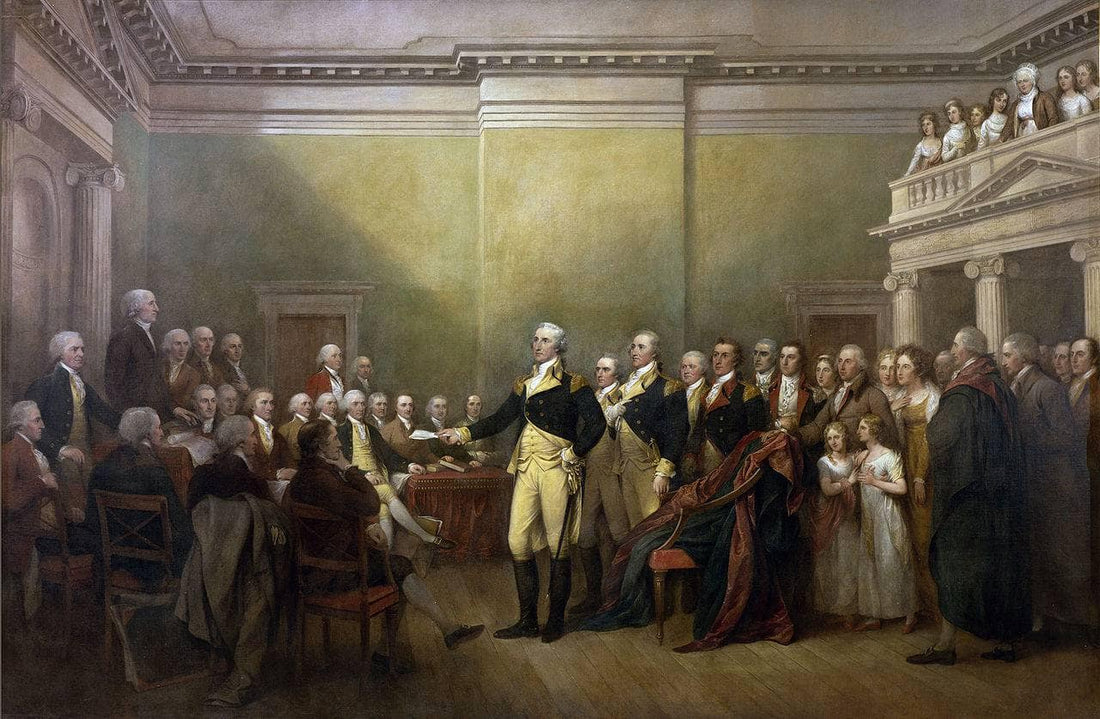
Our Founding Fathers got it right with the Constitution, knowing firsthand the myriad dangers imposed by despotic government, leading to a violent seven year war of confrontation.

Credit them with foresight to intuit the latent dangers of the new nation lapsing into the old tyrannies, designing a Constitution of checks and balances, supplemented by the Bill of Rights that includes the First Amendment, America’s warranty of the citizenry’s right to to be heard.

Kimmel exercised that warranty last night, and we should all be grateful. I had begun to worry we might never see an election in 2028. Kimmel gives me hope.

Engraved on America’s Liberty Bell are these words: “Proclaim Liberty thro’ all the Land to all the Inhabitants thereof.”

Again, Jimmy, our abundant thanks.

rj