When Elections Are Not Enough: Removing Trump From Office

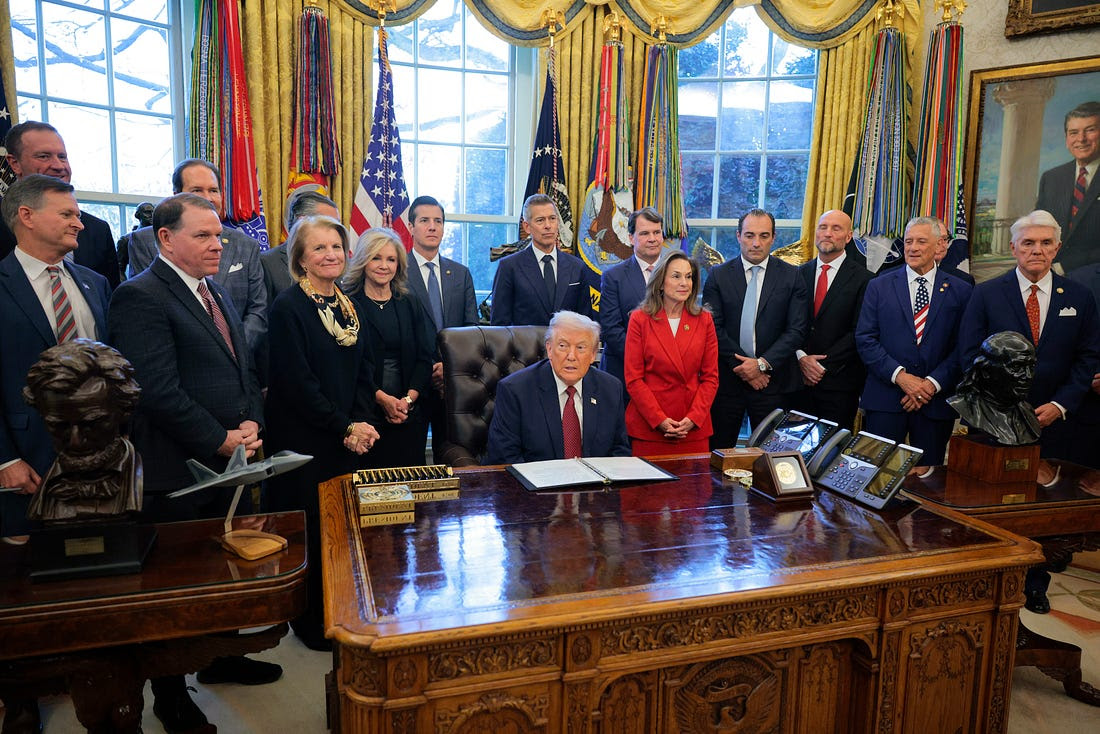
It is now 2026, with the midterm elections approaching in November. My New Year’s wish is straightforward: the impeachment of Donald Trump—assuming Democrats regain a decisive House majority—followed by a Senate trial resulting in his removal from office.

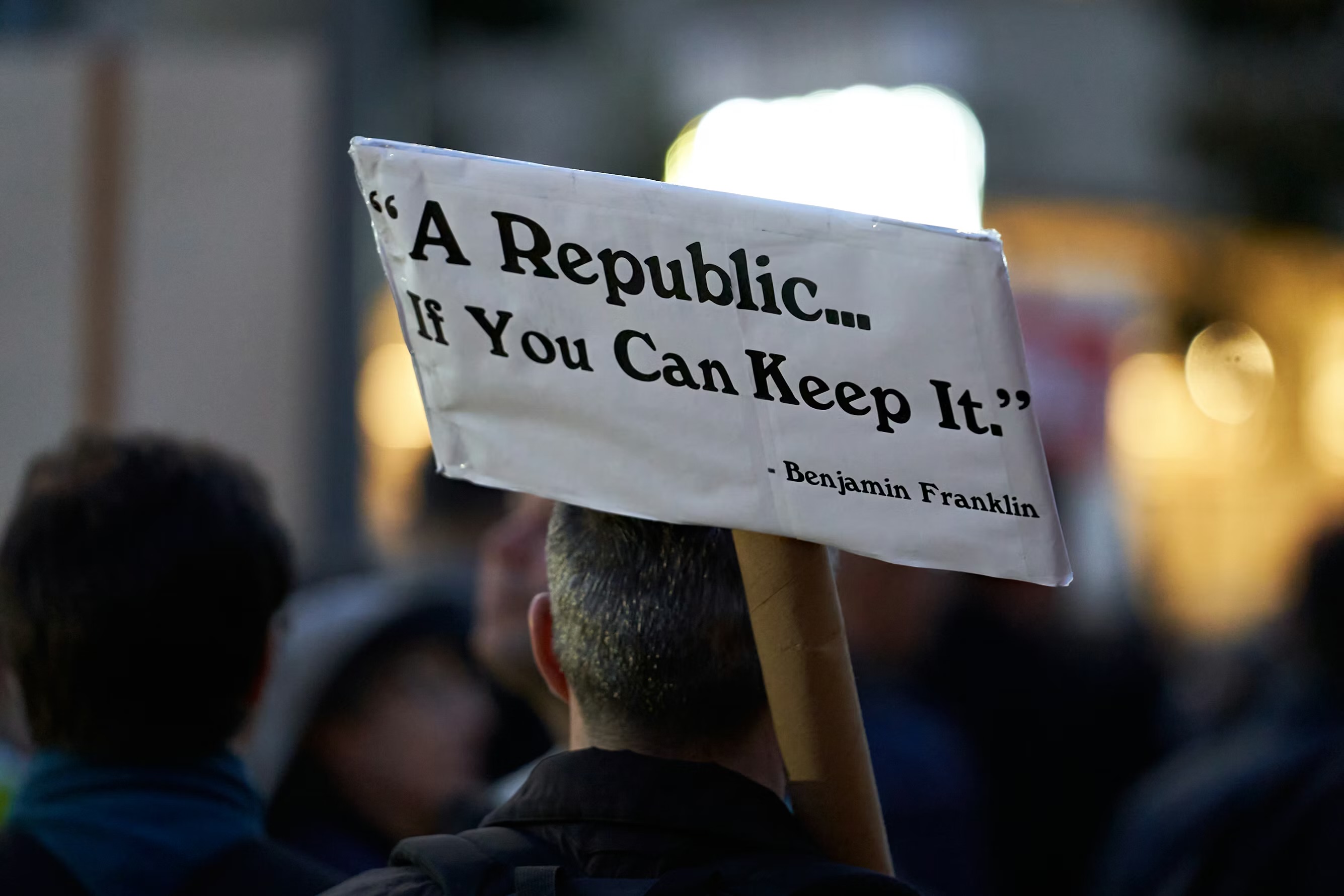
The Framers of the Constitution were not naïve about power. They were steeped in history’s lessons about its corrupting tendencies and had lived, in their own time, under the despotism of a foreign monarch. Their revolution was not merely against a man, but against unchecked executive authority.

Accordingly, the 55 delegates to the Constitutional Convention of 1787 chose to create a president, not a king. Crucially, they did not rely solely on periodic elections as a safeguard. Recognizing that elections alone might prove insufficient in moments of grave danger, they embedded in the Constitution a remedy for removing a corrupt or dangerous chief executive.

Those impeachment provisions are found in Articles I and II. Article I grants the House of Representatives the sole power of impeachment by majority vote and assigns the Senate the sole power to try impeachments, requiring a two-thirds vote of members present for conviction. Article II, Section 4 defines the standard:

“The President, Vice President and all civil Officers of the United States, shall be removed from Office on Impeachment for, and Conviction of, Treason, Bribery, or other high Crimes and Misdemeanors.”

Impeachment, it bears emphasis, is an accusation; removal requires conviction.

Presidential impeachment trials are exceedingly rare. In more than two centuries of constitutional government, only four have occurred:

Andrew Johnson (1868)
Bill Clinton (1999)
Donald Trump (2019 and 2021)

All four trials ended in acquittal. Richard Nixon almost certainly would have been removed, but he resigned before the House could vote on impeachment—the first presidential resignation in American history.

The rarity of impeachment trials reflects not restraint alone, but the gravity of the remedy. As Alexander Hamilton explained, impeachable offenses are those that violate the public trust—abuses of power that strike at the constitutional order itself.

Measured against that standard, there should be little ambiguity regarding Donald Trump’s “high crimes and misdemeanors.” They include conduct that betrays the nation’s best interests and undermines the rule of law: defiance of judicial orders; the use of the Department of Justice to shield allies and punish perceived enemies; and the deployment of violent rhetoric that incites threats against judges and congressional critics, including calls for the execution of former public servants from the military and intelligence communities.

To these may be added the consistent placation of authoritarian foreign leaders and the initiation of military actions—such as attacks on Venezuela and vessels at sea—without clear congressional authorization.

Conviction in the Senate requires 67 votes. Given political realities, Republicans alone are unlikely to supply them. That leaves responsibility where it has always rested in a constitutional democracy: with the electorate.

If the Constitution is to function as intended—if law is to prevail over personal power—then it falls to citizens to vote in numbers sufficient to make accountability possible. The midterms present such a moment.

Whether the nation seizes it will determine not merely the fate of one presidency, but the durability of the constitutional order itself.

–RJ

Not Without Consequences: Trump Rolls Back Biden’s Gasoline Mandate

One of Trump’s ugliest moments as President, and there have been far too many, occurred yesterday when, surrounded by applauding auto executives, he rolled back Biden’s 50 mpg gasoline mandate to 35 mpg by 2031, assuring along with suspension of tax credits, the death of electric vehicles in the U.S.

This can only mean more trucks, more SUVs. And—yes—more carbon discharge, escalating ocean temperatures already soaring, the disruption of marine life, and rising seas as the Alaskan Arctic and Antarctica glaciers continue to melt.

In the meantime, what a boon all of this is to China’s burgeoning EV sales in world markets that includes Europe as well as Africa, Asia and Oceania, some models selling in the $10,000 dollar range. China now is a majority stock holder in Volvo.

But Trump thinks climate change is just a hoax, despite overwhelming scientific evidence to the contrary, declaring on signing the bill into law that climate change is “the greatest scam in American history, the Green New Scam a quest to end the gasoline powered car. This is what they wanted to do even though we have more gasoline than any other country by far.”

What Trump has just done will have its consequences, the best estimates of media and environmental groups informing us that under the earlier standards, gasoline consumption would have been reduced by 14 billion gallons by 2050: Long term, more drought, more forest fires and, ominously, the dissolution of ocean currents fundamental to mammal well-being, which includes ourselves.

Trump’s lackeys argue the president’s bill is a boon to consumers, reducing car prices by a projected $1000, as if that’s going to dent a stagnant auto market, the average vehicle price now $50,000 and faulting on auto loans at a record high.

Mind you, this is just empty rhetoric when it comes to curbing inflation, The truth is the president’s tariffs potentially increase builder costs from $7,500 to $10,000 per home, with every $1,000 increase in the median price of a new home pricing out roughly 106,000 potential buyers, according to the National Home Builders Association.

Along with rising home prices, this president’s hysteria when it comes to renewables is costing you monthly electric bills averaging 12% over those of 2024, all of which means less disposable income, and fated to impact low wage households the most.

But back to CO₂, pollutants from tailpipe emissions like nitrogen oxides (NO), volatile organic compounds (VOC), and particulate matter hasten poor air quality and generate respiratory health issues as well.

Trump gets none of this. He runs government as a business, reaping profits for himself and family members. A derelict president, he’s more absent than present in the Oval Office, this fiscal year thus far, spending $371 million dollars on flights at tax payer expense to play golf at his Florida haven, Mar-a-Lago.

Off message as usual, he used the occasion to assault Minnesota’s Somali community whom, the day before, he called “garbage.” Today, it was “they had “destroyed Minnesota” and “destroyed our country.” The “Somalians should be out of here.”

If I asked you what was the fastest warming area of the U.S. outside of Alaska, would it surprise you that it’s New England, where I was born and raised in my early years? The winters I knew as a child are filled with memories of frequent snow fall, frozen lakes, hockey, sledding, skiing, and maple syrup.

Weather experts report New England “has heated up by 2.5C (4.5F) on average from 1900 to 2024, far in excess of the global average, with the world warming by around 1.3C due to the release of heat-trapping gases from burning fossil fuels” (The Guardian, 4 December 2025).

That’s a shocking increase and may prove a portent of what lies ahead. The UN and climate experts have set a maximum goal of 1.5°C (2.7°F) of warming above pre-industrial levels as the threshold, above which we reach the tipping point of near impossible reversal.

Meanwhile, Trump ignores the coming apocalyptic fallout of unrestrained fossil fuel policy, eco systems destroyed, famine common, forest fires ubiquitous, unbearable heat, polluted air, whales and elephants reduced to children’s picture books.

In sum, the Trump administration’s assault on the environment in the context of exponential climate change exhibits all too well the earmarks of corporate denial in the pursuit of monetary gain, whose consequences none of us will escape.

A nation can survive incompetence; what it cannot survive is deliberate blindness to the world burning at its door.

–RJ

A Heinous Crime That Could Have Been Prevented

It had been the end of a long day when 23 year old Ukrainian refugee Iryna Zartuska boarded Charlotte’s Lynx Blue Line train at 9:46 on August 22, 2025.

Also boarding the train, but evading paying for his ticket, was Decarlos Brown, Jr., a homeless man with fourteen run-ins with the police, awaiting trial for a new offense.

In four minutes, Iryna, who had fled the violence of the Ukraine conflict for a better life in America, would be dead, stabbed three times in the neck while looking at her cellphone by Brown, who sat behind her.

She died almost instantly.

Still wielding a bloody pocket knife, Brown was heard repeatedly shouting, “I got that white girl.”

Video captured the killing.

Brown, 34, has been charged with first degree murder.

In 2014, he was sentenced to prison for armed robbery and released in September, 2020.

In February, 2021, he was arrested for assaulting his sister, leaving her with minor injuries.

A few weeks later, he was arrested for injury to private property and trespassing.

In July 2022, he was arrested for a domestic disturbance.

Shortly after, he was arrested for injury to personal property and trespassing.

Brown’s criminal history is lengthy, reaching back to when he was a minor.

He has a documented history of mental illness. After the armed robbery, his aggressiveness intensified, resulting in his mother having him committed under court order for psychiatric observation—the diagnosis: schizophrenia.

Following his release, his aggressiveness increased still further and his mother ordered him to leave the household.

A few weeks before murdering Zarutzka, police detained Brown for misusing 911.

Despite all of this, he remained free to walk Charlotte’s streets.

Subsequently, Magistrate Teresa Stokes allowed him freedom from incarceration in exchange for his written promise to show up for a later hearing.

In a July 22 continuance hearing on Brown’s 911 misuse, judge Roy Wiggins ordered a forensic evaluation.

Unfortunately, he did not detain Brown in the meantime, a mistake with lethal consequence four weeks later.

As for the evaluation, it never happened.

In the aftermath, some on the Left argued that Brown was as much a victim of a system that failed as was Iryna. In turn, they initiated a GoFundMe account that raised $75,000 dollars to defray his legal expenses as part of the “fight against the racism and bias against our people.”

GoFundMe pulled the account.

Iryna’s murder became politicized, Trump labeling Brown a “lunatic.” Democrats, in turn, accused Trump of exploiting the tragedy for political gain.

Otherwise, Democrats have been largely silent about the murder.

In fairness, North Carolina governor Josh Stein (D) did speak out, denouncing the crime as senseless and calling for a greater police presence.

For many Democrats, however, the story didn’t fit their narrative.

Charlotte mayor Vi Lyles commented that the Charlotte transportation was safe, “by and large,” despite a recent survey reporting just 37% of Charlotte residents consider the Charlotte Area Transit System safe.

It can be argued that Progressives share responsibility for people like Brown being on the streets, abetted by black leadership and liberal media frequently engaging in racial framing that rationalizes black criminality as the offspring of white racism.

Many on the right fault Progressive advocacy of cashless bail, reduced incarceration, expunging felony records; and last, but not least, defunding the police, constitute a litany of liberal efforts more focused on criminals than the law-abiding.

Apart from the Washington Post, liberal news media, by and large, did not report the murder, consequently censoring the public’s right to know through omission, a noticeable detour from its intense coverage of the subway death of Jordan Neely by Daniel Perry, a white man.

Among media not reporting the story,

The New York Times
CNN
NPR
USA Today
Reuters
Axios
ABC News
PBS
MSNBC

(CNN did finally reference the crime, but only after the video’s release on September 5, devoting a two minute blurb to the story in its morning show).

Even Wikipedia has been caught up in the frey, one of its editors calling for the deletion of the posting titled “Killing of Iryna Zarutska.” A box message, later deleted, appeared above the post: “An editor has nominated this article for deletion.”

Wikipedia co-founder Larry Sander believes Wikipedia is now “too left” and “unreliable” (Manhattan Institute).

Brown, obviously mentally ill, should have been removed from the streets long ago in the interest of public safety.


The Brown case is not unprecedented when it comes to the American justice system’s failing the mentally ill, many of them homeless.

As Charlotte council member Edwin Peacock put it,
“If you’re constantly arresting people and they keep coming back out on the streets, what type of message is that sending?”

In 2020, former Democrat governor Roy Cooper, now running for the senate, established the “Task Force for Racial Equity in Criminal Justice,” co-chaired by then Attorney General and current Governor Josh Stein. It recommended “reimagining public safety” to “promote diversion and other alternatives to arrest,” “deemphasize” some felony crimes, prioritize “restorative justice,” and “eliminate cash bail” for many crimes (The Department of Justice (September 9, 2025).

In 2020, Charlotte Mecklenburg Police Chief Johnny Jennings declared  “law enforcement, in general, is based on racism” and their department can “probably slow down” on “discretionary arrests.”

In 2020, Democrat State Senator Mujtaba Mohammed, who represents Charlotte,  declared “independence from rogue police” (DOJ, September 9, 2025).

As I write, the Department of Justice has announced Brown will face federal charges, making him eligible for the death penalty. In a statement, Attorney General Pam Bondi depicted Iryna Zarutska “as a young woman living the American dream. Her horrific murder is a direct result of failed soft-on-crime policies that put criminals before innocent people.”

Ironically, the media is now weighing in. Where have they been? Is it the White House intervention and possibility of the death penalty that motivates this sudden rush to reporting in?

News comes that Paramount has now appointed an ombudsman to review bias at CBS news.

As for our courts, my thoughts drift to the late, gifted satirist Tom Wolfe of “Radical Chic” fame. His acclaimed Bonfire of the Vanities (1987) got it right—America’s highly politicized, often incompetent judicial system, is a sham.

rj

The Epstein Files: The Hoax Within a Hoax

The news media has found its current raison d’être in Trump’s reneging his campaign pledge to release the Jeffrey Epstein files, leading to myriad conspiracy theories.

This happens, of course, whenever a tourniquet gets applied to information sources. My own thinking is that Trump’s pledge was a calculated “hoax” of his own weave in which he’s now entangled.

As Alan Dershowitz, Epstein’s high profile defense lawyer, informs us, “I was Jeffrey Epstein’s lawyer. I know the facts, some of which I can’t disclose because it is privileged or subject to court-imposed sealing orders. But what I can disclose makes several important things clear: that Epstein never created a client list. The FBI interviewed alleged victims who named several ‘clients.’ These names have been redacted. The courts have also sealed negative information about some of the accusers to protect them. Neither the Justice Department nor FBI interviewed alleged victims who named several ‘clients.’ I know who they are. They don’t include any current officeholders. We don’t know whether the accusations are true.”

What remains troubling is that key portions of this testimony—especially the names—were redacted. As a result, we may never learn the identities of the public figures who may have participated in Epstein’s trafficking ring, one of whose victims died by suicide in April.

As for the alleged thousands of extant videos showing public figures engaged in sexual activity, these claims appear to trace back to Attorney General Pam Bondi. She, too, promised to release Epstein-related materials supposedly sitting on her desk. Yet, like Dershowitz, PBS investigators found no evidence such videos exist (AI Overview)

What cannot be easily dismissed is the disturbing nature of Epstein’s death:

His cellmate had been removed shortly beforehand.

Guards did not carry out their cell surveillance rounds.

Two minutes and fifty-three seconds of the cell video were erased (wired, July 15, 2025).

All of this won’t deter the politicians and media from churning their conspiracies. It makes for great political theater. Politics, of course, has never been blameless of gamesmanship, frequently without limits.

House speaker Mike Johnson’s adjourning the House early for a six-week hiatus serves only to thicken the conspiracy broth.

rj

David Lynch: Visionary Filmmaker, Advocate for Inner Peace

Famed director, screenwriter, and actor David Lynch died on Thursday at age 78. Accolades have praised his visionary, surreal contributions to the film industry, featuring productions such as Mulholland Drive and the TV hit series Twin Peaks.

Although no official cause of death has been announced, informed sources suggest he may have been a victim of the LA fires. Forced to evacuate his home, his chronic emphysema reportedly worsened. In November, he said he required oxygen for “walking across the room” (Lynch death). A year earlier, he told sources he was unable to leave his house.

I owe a personal debt to Lynch. A few years ago, I began exploring ways to lessen my daily anxiety. Cognitive behavioral therapy, though offering insights for changing my mindset, hadn’t sufficed. I didn’t want medication with its potential side effects. I wanted to be me.

I turned to meditation, having been impressed by multiple neurological brain imaging studies at Harvard and Massachusetts General Hospital. They showed that meditation conducted on Transcendental Meditation practitioners facilitated anxiety reduction by promoting pacifying beta brain waves.

Looking first for a way to begin, I came across Lynch, who’d begun TM in 1973:

“I started Transcendental Meditation in 1973 and have not missed a single meditation ever since. Twice a day, every day. It has given me effortless access to unlimited reserves of energy, creativity and happiness deep within. This level of life is sometimes called ‘pure consciousness.’ It is a treasury. And this level of life is deep within us all,” he wrote.

Lynch dedicated himself to spreading the word, establishing the David Lynch Foundation for Consciousness Based Education to financially assist adults and children throughout the world to learn TM.

Convinced, I hired a TM instructor and did the training. But it’s important you have the right teacher. I did not.

I couldn’t stop the incessant mental gossip known as “the monkey mind.” That is, until I read Yongey Mingyur Rinpoche’s The Joy of Living. Everything fell into place. You listen to the chatter, returning to your mantra or breath when the mind engages or pursues.

I learned technique, using any of the five senses.

But it was Lynch who did the convincing. As he said, “If you don’t already meditate, take my advice: Start. It will be the best decision you ever make.”

–rj

From Pietas to Relevance: Reflections on the Death of the Classics

Boston Latin School

The ancient classics, once the hallmark of the liberal arts, have increasingly vanished from today’s college campuses.

I remember with fondness my Massachusetts education. In the eighth grade, we read The Odyssey. In high school, I enrolled in what was dubbed the “classical” curriculum, emphasizing languages and the humanities.

In those days, you could major in Latin for four years, culminating in reading not only Cicero and Seneca, but Virgil’s The Aeneid, a work that’s impacted me immensely across the years.

If you’re lucky enough to get into Philips Exeter Academy, not far from where I lived, you’ll find the classics still in full bloom, courses not only in Latin, but Greek, to an advanced level. There’s even a classics club.

In the main, however, exposure to the classics has undergone steep decline.

An early harbinger, the year before I entered the University of North Carolina’s English Ph. D. program, the required Latin reading exam was dropped.

Today, issues of relevancy, racism, changing student interests, and funding have sped up a near universal decline in classics exposure across college campuses.

While Harvard and Princeton still retain courses in the classics, though in English and within a comparative global setting, other colleges have been dropping classics programs altogether, among them, Canisius College, Whitman College, Elmira College, the University of Vermont, Valparaiso University and Howard University, the only historically Black college to feature a classics department.

But back to my New England boyhood days, I remember going “junking” as we called it, ransacking antique stores, among their fare, scores of Latin public school primers, palpable evidence of a discarding of a former ubiquitous cultural presence.

In nearby Boston, there still exists its premium public educational institution, Boston Latin School, America’s first public school, founded in 1635, a year before Harvard College.

In keeping with its traditional Latin emphasis, options in Latin language courses remain, but the trend, as elsewhere, has been to evolve curriculum to service a diverse student body and transition to modern educational priorities.

I accept it’s at least better to retain the classics in English translation where budgets permit than to guillotine them altogether and acknowledge we live in a global village and musn’t exclude its verities of wisdom contributory to fostering a better world.

For nearly thirty years, I taught The Aeneid on a private university campus in a course called Western Classics, the only professor doing so. Its notion of self-discipline over impulsiveness, the obligation to duty (pietas) and mission (fatum) remain integral to civil integrity.

As the late academic Louise Cowan aptly put it, “To lose the classics is to lose a long heritage of wisdom concerning human nature, something not likely to be acquired again. Yet most college curricula now remain sadly untouched by their august presence, or at best make a gesture in their direction with a few samplings for select students. Such neglect is one of the most serious threats our society faces today” (“The Necessity of the Classics,” Modern Age Journal).

–RJ

Trump’s Madison Square Garden Debacle: Is This the End?

Trump’s Madison Square Garden rally last Sunday may very well have alienated Latinos across the country and cost him the election.

The wound was inflicted not by Trump, but by comedian Tony Hinchcliffe, who appeared as a warm-up act before Trump took the stage.

Drawing from a barrage of stereotypes targeting Black, Jewish, Muslim, and Latino communities, Hinchcliffe described Puerto Rico as “a floating isle of garbage,” adding that Latinos “love making babies.”

Welcome to the October surprise!

Although the Republican campaign attempted immediate damage control, the fallout of rage was immediate and widespread.

Pivotal state Pennsylvania has a 427,000 Puerto Rican population. Then there’s North Carolina (115,000), Georgia (101,000), and Arizona (65,000), all of them battleground states essential for a Trump victory.

Nationally, 36 million Latinos are eligible to vote next week, up from 32 million in 2020, according to the Pew Research Center.

Trump’s been on shaky ground from the beginning, many Puerto Ricans still nursing a grudge over the former President’s reluctance to grant islanders $20bn in aid in the aftermath of hurricane Maria in September 2017 in which 3000 died. Puerto Rico went without power for 181 days.

His acting Homeland Security secretary, Elaine Duke, reported to the NYT Trump proposed selling or divesting the entire island of Puerto Rico. following the disaster.

In the meantime, Democrats have made it a priority to grant Puerto Rico statehood, an obvious political maneuver giving them two more senators and, with the probable inclusion of Washington, DC, two more.

As for the Puerto Rico commonwealth, its voters on election day will again be deciding on statehood. The 2024 plebiscite differs, however, the previous six allowing voters the popular option of remaining a commonwealth, exempt from federal taxes. This year’s plebiscite omits that option. It’s simply statehood, independence, or independence with free association, virtually assuring statehood approval.

Critics claim that House Democrats, in collaboration with Puerto Rico’s Popular Democratic Party (PPD), rigged the plebiscite by passing the Puerto Rico Passage Act (2022), which established the current plebiscite with its limited options (Plebiscite).

Meanwhile, Puerto Rican voters on the mainland are not unappreciative of Democrat overtures on their behalf, nationally and in Puerto Rico. “We are not garbage and we are not lazy and we’re all American citizens ready to vote in this election,” said Luis Miranda, founding president of the Hispanic Federation and chairperson of the Latino Victory Fund (Puerto Rican Jokes).

Statehood, nevertheless, remains an uphill climb. To achieve congressional approval of statehood, Democrats will need to control both chambers. Although a simple majority vote is all that’s needed in each, in the way looms the Senate’s filibuster with its sixty vote threshold.

Kamala Harris has pledged to temporally suspend it in any vote to restore Roe v. Wade, a move opponents argue could make the filibuster obsolete.

There have been two attempts on Trump’s life, possibly a third. Fortunately, these efforts failed. However, the fiasco at Madison Square Garden may have dealt a fatal blow to Trump’s chances of returning to office in a close election.

–rj

Julia Thurman: Crafting Worlds with Words

The writers I admire most never use a careless word. Their sentences are unimprovable —Judith Thurman, A Left-Handed Woman.

There exist those books we scarce can put down, riveting us with suspense, prose eloquence, and resonance of human experience.

Others, we struggle with, bored or chagrined by their non-relevance or absurdities. The usual counsel is to jettison them quickly.

Had I done so with Julia Thurman’s A Left-Handed Woman, a book largely focused on fashion couture, playground of wealthy indulgence, I’d have lost out immensely.

Collectively, Thurman’s adroitly articulated 39 essays, gathered mostly from fifty years of writing for The New Yorker, transcend her primary fashion genre, yielding portraitures mostly of heroic women finding autonomy in a patriarchal milieu, leading to my admiration for Thurman, awe at her salient intelligence, fine-tuned to meticulous observation and set-apart brilliance in prose mastery.

As Henry Finder, one of her editors at The New Yorker observes, “She’s not happy with a paragraph until it sings.”

Thurman’s acumen is indisputable, having achieved numerous awards that include a National Book Award for Non-fiction for her biography, Isak Dinesen: The Life of a Writer (1983), inspiring the hit movie, Out of Africa.

Her Secrets of the Flesh: A Life of Colette (1999), earned a finalist National Award for Nonfiction.

She is a recipient of the Ordre des Artes et Lettres by the French government for her contributions to French literature.

A Left-Handed Woman has won PEN’s award for essay excellence .

Nothing surprises me about Thurman. Is there anything she misses in her myriad subject matter teeming with wide-ranging vignettes on not only fashion designers such as Sara Berman, Isabel Toledo, Elsa Schiaparelli , Miuccia Prada Guo Pei and Ann Lowe, but disparate entities like Margaret Fuller, Emily Dickinson, Elena Ferrante, Lee Miller, Eva Zeisel, Amelia Earhart, Isa Genzken, Greta Stern, Alison Bechdel, Laura Elizabeth Ingalls Wilder, Rachel Cusk, Yasmina Reza, Vladimir and Vera Nabokov, and even Helen Gurley Brown and Cleopatra, among still others, their successes and, yes, the not infrequent intrusions of fate cascading fame and fortune to their doom.

While men do appear in her essays, they’re a distinct minority, sometimes perversely objectifying women as ancillaries of male prerogative:

Conversely, she writes of women, “I scoured literature for exceptions, and there were some. But nearly all of them had achieved distinction at a price their male counterparts didn’t have to pay. In that respect, one might say they were all left-handed: they defied the message they were not right.”

My favorite essays come toward the book’s close, featuring Simone de Beauvoir and in a surprising thematic shift, Thurman’s memoir of cave exploration, torch in hand, accompanying renowned French anthropologists at ancient Dordogne cave painting sites, Chauvet and Niaux.

I believe Thurman is right in crediting de Beauvoir with the genesis of the modern feminist movement with her seminal The Second Sex. As for her revels exploring caves and pedaling across French landscape, it’s truly a tour de force.

One last thing: Thurman is a self-taught fluent speaker of two languages beyond her native English that include French and Italian, highly engaged as she is in French and Italian literary and artistic culture.

She also achieved reading fluency in Danish as prerequisite to her research on Isak Dinesen.

Favorite passages:

“What we bring with us—embedded in our flesh and bugging it; embedded in art and animating it—is the mystery of how we become who we are.”

“There’s a hidden cavity in every story, a recess of meaning, and it’s often blocked by the rubble of your own false starts, or by an accretion of received ideas left behind by others. That updraft of freshness is typically an emotion you’ve buried.”

“The transcendence of shame is a prominent theme in the narrative of women’s lives. The shame of violation; the shame of appetite; the shame of anger; the shame of being unloved; the shame of otherness; the shame, perhaps above all, of drive.”

“Most of the time, a piece of prose lies on the page bristling with cleverness, yet inert, until I hit upon the precise sequence of words—the spell, if you like—that brings it to life. At that moment, language recovers its archaic power to free a trapped spirit.”

“She could love and desire intensely, but rarely at the same moment, and she could think and feel deeply, but not often in the same sentence.”

—rjoly

Amazon: Anatomy of a Behemoth

Despite its humble beginnings in a Seattle two car garage in 1994 and web presence in 1995 as a purveyor of books, Amazon has subsequently grown into a behemoth, becoming the world’s largest online retailer with a current market cap of $1.61 trillion.

Founder Jeff Bezos, ever the visionary and e-commerce pioneer, observing that the internet was growing at a rate of 2300% a year, quit his job at a Wall Street firm and moved to Seattle, hoping his venture world payoff in the best and largest online mall.

He initially dubbed his new company Cadabra, Inc, but after his lawyers misheard it as cadaver, he decided on a change. Browsing through a dictionary, the word Amazon for the world’s largest river caught his eye.

It wasn’t long before Amazon moved beyond its foothold of selling books to diversifying in 1999 into selling and auctioning toys, electronics, tools and hardware, and kitchenware.

Sales took off and Amazon hired 20,000 seasonal employees to meet demand.

Today, Amazon continues to be the global leader in e-commerce, providing a refined marketplace which connects buyers with sellers, boasting the largest fulfillment network in the world, and promoting a vibrant culture of innovation and emerging technologies.

The Seattle based company employs more than 90,000 people in the state of Washington, with the actual number of employees exceeding 380,000 worldwide, making Amazon one of the biggest job creators in the last decade. These jobs consist of anything from corporate engineers and marketers to hourly warehouse and customer service representatives. The company operates at a scale unequaled in contemporary business and technology.

Unfortunately, it’s become “a bloody beast,” says one of its critics, swallowing up independent brick and mortar enterprises, commencing with its purchase of Whole Foods in 2017, a $13.7 billion deal.

Now a multifaceted eCommerce platform, it earns its income through arrangements of retail, third-party sellers, subscriptions and,more recently, in servers and other forms of employee data storage.

Innovation has been the hallmark of Amazon’s continuing success. Kindle, for example, proved one of its best, changing the way the public buys its books to the chagrin of physical bookstores.

Currently, Amazon has been investing in drone delivery, which would revolutionize how packages are sent and received worldwide.

Despite Amazon’s critics, the public’s response has been very favorable, with Amazon delivery trucks now a daily sight in residential neighborhoods .

Amazon’s adoption of public reviews of its many goods is a stroke of genius. Readers can see what others think before making a purchase.

Then there’s the convenience of not having to climb into your car, consuming time and gas. The fallout, of course, is huge for local retail.

Amazon is also consumer friendly, offering fast delivery, easy return of goods, and speedy refunds. According to the American Customer Satisfaction Index, Amazon is the #1 company in the US for customer satisfaction. Over 100 million paid subscribers globally have signed up for Amazon Prime, which allows for two day delivery on more than 100 million items, unlimited streaming of movies and TV shows, along with a million songs.

Recently, it purchased audio.books.

Critics have too often ignored its progressive hiring policies. Amazon has ranked in the top three for new job creation in the United States. Its employee headcount has grown from 31,000 in 2008 to 382,400 in 2017, and it is expected to continue growing. Amazon is known for creating jobs that are not temporary or seasonal.

A study done by eHealth found that Amazon ranks first as the most Military Spouse Friendly Employer in the list of the top 50. Additionally, Amazon has fulfilled its pledge to hire 25,000 Veterans and Military Spouses by 2021. Amazon is committed to training and hiring Veterans for the Career Choice Program, which is exclusively for active duty service members and spouses. The program educates and prepares them for job placement at Amazon or any other company. This exclusive program is a win for Veterans who are searching for a new career, as they receive training for a job that is guaranteed to them.

Moreover, Amazon is dedicated to hiring people with disabilities and provides accommodations for over 120 roles. They have expedited the hiring process to as little as 48 hours for those who apply.

Amazon is one of the front runners in hiring ex-offenders and individuals who were recently incarcerated. With the Ban the Box movement gaining momentum, many companies are removing criminal offense questions from their initial job applications.

Amazon has also approached the United States and Canadian Governments for vital roles in public sectors and special clearance jobs that help fund public projects. An example of this is Amazon’s creation of a second headquarters (HQ2), in Arlington, VA, which is expected to create an estimated 50,000 jobs and $5 billion in investments over the next 10-15 years.

Amazon is focused on long-term employment and has been implementing various initiatives to improve job quality and employee benefits. An example of this is the large recruiting and hiring efforts in the state of Wisconsin.

But there remain negative aspects that merit attention; namely with regard to warehouse employees, pressured to take on physically demanding tasks, skip bathroom breaks to maximize targets, penalized for taking sick days or time off, resulting in high turnover.

The extent of Amazon surveillance has led to numerous complaints as workers feel their privacy is being compromised and that they’re being treated like robots. In 2018, warehouse workers reported they were being monitored by GPS tags, with exact details of their location and any rest breaks they take.

Alongside surveillance, there are strict productivity quotas involving a completion rate of tasks within a certain time frame. Failure to do so can lead to warnings and in worse cases, termination of employment.

When it comes to stock units paid to new employees in their third or fourth year, many aren’t around to receive them.

Stress is inherent with any Amazon hire, whether in a warehouse, office, or delivery. Amazon ranks employees against each other and eliminates the bottom 6% annually.

Meanwhile, Amazon has maintained a tough stance against unions, hiring the firm Complete Solution Staffing to inform its employees of the problems with unions.

Amazon has recently been subjected to controversy over its tax policies and their implications. Over the past few years, the corporation has paid very little or no taxes to the government. Contrary to most U.S. based corporations, Amazon paid no federal taxes for the year 2017 and 2018, despite the fact it was a highly profitable company.

Despite this, the company has contributed state taxes that total almost $1.2 billion dollars and has created many jobs that have in turn, increased tax revenue. Amazon defended their tax payment policy in a statement to Business Insider: “Amazon pays all the taxes we are required to pay in the U.S. and every country where we operate, including paying $2.6 billion in corporate tax and reporting $3.4 billion in tax expense over the last three years.”

Critics cite Amazon’s dynamic growth as a detriment to retail business, under selling them and driving them out of existence. Former Amazon chief financial officer Warren Jenson commented that if your business makes a profit, Amazon sees you as the competition and will be coming for you. Currently, it seeks to imitate highly successful Trader Joe’s.

The Federal Trade Commission has recently sued Amazon for being an illegal monopoly, where 40% of online shopping occurs on Amazon.com, creating higher prices for consumers. 

Amazon vigorously disputes the FTC assertion and continues to seek expansion.

—rj

Democracy’s Failure

While democracy has been widely touted as the best form of government, it’s had many detractors in Britain and America, who fearing a working class majority of the uninformed, intellectually unprepared, politically manipulated by partisan interests, proposed education in the liberal arts as a safeguard for assuring an informed, discriminating electorate.

One thinks of Matthew Arnold’s classic Culture and Anarchy and John Henry Newman’s The Idea of a University as examples. The truth is it hasn’t worked to salvage democracy. As Costica Bradatan comments in his insightful book, In Praise of Failure, “Populism and authoritarianism are flourishing today in places with remarkably high educational levels. For all the self-flattering talk about civic-mindedness and political engagement, the citizenry in the West is in no better shape than it was one hundred years ago. And we seem resigned to the situation.”

Derek Bok, former president of Harvard, comments in his Universities in the Marketplace that the arts and sciences faculties “display scant interest in preparing undergraduates to be democratic citizens, a task once regarded as the principal purpose of a liberal education.”

Viewing our current political milieu, I see only the debris of a once heralded idea to make government truly feasible in the best interests of our nation. Alas, not since the Civil War, has America been so fractured in its allegiances.

Alexander Hamilton, suspicious of public sovereignty, supported the idea of the Electoral College. That certainly hasn’t worked.

Back in England, John Stuart Mill proposed a plutocracy of the educated allowed multiple votes. Fortunately, it wasn’t well-received.

As for the prototype Athenian democracy, women couldn’t vote, nor foreigners and slaves.

I confess I don’t know the answer, except to offer that democracy, for all its liabilities, surpasses those protocols previously attempted.

—rj