The Fall of Jason Arday: Institutional Panic, Broken Vetting, and Academic Tragedy

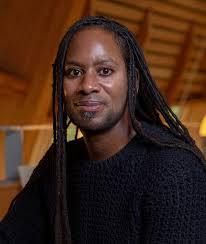
Slender and youthful at 37, with chest-length hair and a gentle, affable demeanor, Dr. Jason Arday was widely popular among students and colleagues when he was appointed Professor of Sociology of Education at the University of Cambridge in March 2023.

His hire made history. The child of Ghanaian immigrants, he was the youngest Black professor in the university’s centuries-old record, holding a prestigious seat alongside a Professorial Fellowship at Jesus College.

Yet, just three years later, Arday abruptly resigned.

Days after stepping down, on August 14, 2026, police found him dead at his Battersea, London residence under non-suspicious circumstances, a tragic end to a meteoric rise brought down by an escalating controversy over his academic credentials and personal backstory.

THE SHELVED INVESTIGATION
The unraveling began long before it reached the public. In September 2025, Jack Grove, a senior reporter for Times Higher Education, alerted by Arday’s extraordinary athletic claims, sent Arday three direct emails requesting a response to alleged instances of plagiarism in his doctoral thesis and journal publications.

Rather than addressing the queries, Arday hired the law firm Carter-Ruck, known for aggressive media litigation, and reported Grove to the Metropolitan Police for criminal harassment.

The Met spent four months investigating the journalist. In February 2026, an officer called Grove, ordering him to cease contacting Arday because the inquiries were impacting Arday’s mental health. Facing legal threats and police intervention, Times Higher Education shelved Grove’s draft article.

THE WHISTLEBLOWER AND THE BLOG POST
The story broke wide open through a different channel. In June 2026, an unnamed Cambridge faculty member, frustrated by what they alleged was an internal administrative cover-up to avoid a public scandal, approached Nathan Cofnas, a former Cambridge philosophy researcher.

Cofnas subsequently ran Arday’s 2015 doctoral dissertation through plagiarism-detection software and, in July 2026, published his findings on Substack, alleging extensive verbatim text duplication.

Cofnas was already a lightning rod for controversy. In February 2024, he had published an essay claiming that Black people possess lower average cognitive ability due to genetic differences, asserting that in a meritocracy the proportion of Black professors at elite institutions like Harvard “would approach zero percent.”

While a Cambridge University investigation concluded that Cofnas’s essay fell within lawful free speech under UK law, Emmanuel College severed ties with him in July 2024, citing the hostile environment created by his public statements.

Cofnas challenged his dismissal in court, but in March 2026, a tribunal ruled that while his philosophical beliefs qualified for legal protection, Emmanuel College acted lawfully in terminating his affiliation due to the disruptive impact and tone of his writings.

Despite Cofnas’s controversial background, his technical analysis of Arday’s text duplication was undeniable. On July 24, 2026, The Times published an explosive front-page exposé documenting passages in Arday’s dissertation that were identical or near-identical to previously published scholarship without attribution. Media scrutiny quickly spread to his published journal papers and his autobiography, which claimed he had remained non-verbal until age 11, illiterate until 18, and had run 30 marathons in 35 days.

RESIGNATION AND AFTERMATH
On August 5, 2026, Arday resigned his Cambridge professorship. In an open letter addressed to colleagues and the public, he maintained his innocence while pointing to the unbearable personal strain:

When I accepted the extraordinary honour of becoming Professor of Sociology at Cambridge, it was, without question, the greatest professional privilege of my life… Sadly, the years since my appointment have also been marked by an unrelenting level of public scrutiny and personal attack… The relentless accusations, speculation and public commentary have taken a profound toll on me and on those I love… This decision should not be interpreted as a loss of faith in scholarship or in the values that first brought me to Cambridge. Nor should it be mistaken for an acceptance of the narratives that have surrounded me.”

Following his death nine days later, his family expressed shock, stating that Arday was a “gentle man” who had been “subjected to a campaign of sustained abuse… by those who would leave no stone unturned in their quest to undermine him.”

AN ACADEMIC EVALUATION
Who bears responsibility for this tragic aftermath? In academia, the appropriation of another scholar’s work is an unpardonable offense. In my view as a former academic, the evidence of Arday’s unacknowledged text duplication and hyperbolic biographical claims is beyond doubt. Multiple passages in his writing trace directly back to uncredited source material, while his personal timeline, progressing from total illiteracy at age 18 to a doctoral dissertation in his twenties without an established paper trail of remedial education, defies statistical reality.

The root of this tragedy lies in an elite university rushing headlong to project progressive credentials. Cambridge was under immense pressure to diversify. According to reporting by The New York Times (August 15, 2026), internal hiring documents reveal that the selection panel bypassed candidates with far stronger scholarly records, brushing aside early warnings regarding Arday’s work as “vile efforts” to discredit a rising Black scholar. In doing so, the university abandoned its primary duty: to act as an impartial arbiter of intellectual truth.

While it is imperative that we confront racism wherever it rears its head, when institutions substitute top-down equity of outcome for equality of opportunity based on individual merit, they do not defeat prejudice: on the contrary, they merely replace rigorous judgment with performance art.

By waiving standard vetting out of ideological panic or political ideology, Cambridge did not elevate Jason Arday; instead, it exposed him, elevating a vulnerable man to a height built on sand, leaving him defenseless when the tide of inevitable scrutiny came in.

This tragedy serves as stark warning for modern higher education. When universities lower the bar to purchase moral virtue on the cheap, the consequences are ubiquitous: real scholarship is devalued, public trust in academia is shattered, and the genuine, unassailable achievements of minority scholars are quietly cast under a shadow of institutional doubt.

Everyone gets a prize—until the bill comes due. Cambridge got its headline, the ideologues got their symbol, and Jason Arday paid with his life.

—rj

The Diminishing Commons of Reading

Upsplash

We live in an age of unprecedented access to information, and yet books themselves are becoming harder to obtain. Prices rise, libraries strain, and even digital access comes with invisible expiration dates. The result is a quiet paradox: the more abundant knowledge becomes, the less equitably it is distributed.

I have long been a fervent devotee of Virginia Woolf, unquestionably among the greatest writers of the twentieth century. For nearly thirty years, Mrs Dalloway and To the Lighthouse were central texts in my modern novel course. Most recently, I read her diary (1918–1941), an extraordinary record of a writer’s inner life and artistic evolution.

I had assumed that we possessed a full collection of Woolf’s extant letters—some 3,100 of them, published in six volumes spanning 1888–1941. Yet recent scholarship has uncovered more than 1,400 additional letters, now published by Edinburgh University Press. The problem, however, is cost: the retail price approaches $255 (£188), and the collection is unavailable in e-book form. What should be a scholarly enrichment becomes, for many readers, an inaccessible luxury.

Even in the digital age, book prices—especially for hardbacks, the staples of libraries, bookstores, and schools—continue to rise. I am fortunate to have a well-stocked independent bookstore nearby, yet like many such stores, it survives as much on gift merchandise and an in-house café as on book sales. Across the country, independent bookstores have declined, leaving some communities without any physical access to books.

School budgets are under comparable strain. In the United States, library funding has remained essentially flat in recent years, even as costs rise. More than half (58%) of school librarians reported restrictions on spending in 2023–24, up from 48% in 2020–21; some report being unable to purchase books (Cockcroft, 2024).

In the United Kingdom, 15% of secondary schools report having no library budget whatsoever, while 69% of those with budgets indicate that funding has remained static or declined, eroding real purchasing power (Reading Cloud, 2023). In England more broadly, school funding fell by 8.5% in real terms between 2009 and 2020, with predictable consequences for library acquisitions (Sibieta, 2021).

An underreported consequence is the strain on public libraries. Approximately 94–96% of public library funding derives from government sources—primarily local governments through property taxes, with supplementary state and federal support, including grants from the Institute of Museum and Library Services. Only 4–6% comes from fines, fees, or philanthropy (Sweeney, 2025). This reliance on local funding creates a structural inequity: communities with weaker tax bases, often those most in need of library services, are least able to support them.

Yet public libraries remain indispensable. Roughly 17,000 public libraries in the United States receive more than 1.3 billion visits annually, exceeding the combined attendance of major professional sports leagues (Sweeney, 2025). They are not luxuries, but essential civic institutions: centers of learning, access, and communal life.

Recent federal policy has compounded these pressures. In March 2025, the administration of Donald Trump mandated reductions to the budget of the Institute of Museum and Library Services, the nation’s only federal agency dedicated to library funding, as part of a broader effort to reduce government spending. A coalition of 21 state attorneys general successfully challenged these cuts in federal court, restoring funds that had amounted to just $266.7 million in 2024—approximately 0.003% of the federal budget, or roughly 75 cents per capita (NPR, 2025).

Meanwhile, the publishing industry has consolidated into five dominant firms—Penguin Random House, HarperCollins, Simon & Schuster, Hachette Book Group, and Macmillan Publishers—three of them foreign-owned. Together, they exert enormous influence over what is published. Such consolidation reduces competition and contributes to rising prices.

Libraries face an additional burden in the form of digital licensing. Unlike consumers, who may purchase an e-book outright, libraries must often pay steep licensing fees; for example, $55 for a popular title that a consumer can buy for $15, and must repurchase access after a limited term, typically two years (Goode, 2024). If a library declines to renew, the title simply disappears from its collection. When high-demand titles—such as The Women by Kristin Hannah—are involved, libraries have little choice but to pay.

Efforts by states to legislate fairer licensing terms have thus far failed in the courts.

At the same time, Amazon dominates the market, controlling roughly 68% of e-book sales—rising to 83% when Kindle Unlimited is included—and an increasingly large share of print sales as well (eReaders Forum, 2024; WordsRated, 2024). Its Kindle Direct Publishing platform has democratized access to publishing, allowing authors to earn up to 70% royalties on certain e-books, but it does so within a system that further concentrates market power.

The result is a feedback loop: as platform dominance reshapes the market, major publishers compensate by raising prices, especially for institutional buyers such as libraries and schools, and by concentrating resources on high-profile authors and guaranteed bestsellers.

In 2017, Barack Obama and Michelle Obama secured a reported $65 million joint publishing deal with Penguin Random House for their memoirs, Becoming and A Promised Land (Weaver, 2017). Such advances reflect market realities but may also crowd out emerging voices.

We have, in other words, not resolved the paradox but deepened it. As prices rise, access narrows, and even our digital abundance proves conditional, knowledge becomes less a shared inheritance than a gated resource. What is at stake is not simply the cost of books, but the principle that they, and the intellectual life they sustain, belong to everyone.

–RJ

REFERENCES

Cockcroft, M. (2024, April 4). School library budgets remain strained. School Library Journal.

Goode, L. (2024). E-book licensing and libraries. GoTech.

Reading Cloud. (2023). UK school library funding report.

Sibieta, L. (2021). School funding trends in England. Institute for Fiscal Studies / Wiley.

Sweeney, P. (2025, September 4). Public library funding in the U.S. Candid.org.

Weaver, H. (2017, March 1). _The Obamas’ publishing deal. Vanity Fair.

NPR. (2025). Court restores IMLS funding.

eReaders Forum. (2024). E-book market share statistics.

WordsRated. (2024). Amazon book market share projections.

From Pietas to Relevance: Reflections on the Death of the Classics

Boston Latin School

The ancient classics, once the hallmark of the liberal arts, have increasingly vanished from today’s college campuses.

I remember with fondness my Massachusetts education. In the eighth grade, we read The Odyssey. In high school, I enrolled in what was dubbed the “classical” curriculum, emphasizing languages and the humanities.

In those days, you could major in Latin for four years, culminating in reading not only Cicero and Seneca, but Virgil’s The Aeneid, a work that’s impacted me immensely across the years.

If you’re lucky enough to get into Philips Exeter Academy, not far from where I lived, you’ll find the classics still in full bloom, courses not only in Latin, but Greek, to an advanced level. There’s even a classics club.

In the main, however, exposure to the classics has undergone steep decline.

An early harbinger, the year before I entered the University of North Carolina’s English Ph. D. program, the required Latin reading exam was dropped.

Today, issues of relevancy, racism, changing student interests, and funding have sped up a near universal decline in classics exposure across college campuses.

While Harvard and Princeton still retain courses in the classics, though in English and within a comparative global setting, other colleges have been dropping classics programs altogether, among them, Canisius College, Whitman College, Elmira College, the University of Vermont, Valparaiso University and Howard University, the only historically Black college to feature a classics department.

But back to my New England boyhood days, I remember going “junking” as we called it, ransacking antique stores, among their fare, scores of Latin public school primers, palpable evidence of a discarding of a former ubiquitous cultural presence.

In nearby Boston, there still exists its premium public educational institution, Boston Latin School, America’s first public school, founded in 1635, a year before Harvard College.

In keeping with its traditional Latin emphasis, options in Latin language courses remain, but the trend, as elsewhere, has been to evolve curriculum to service a diverse student body and transition to modern educational priorities.

I accept it’s at least better to retain the classics in English translation where budgets permit than to guillotine them altogether and acknowledge we live in a global village and musn’t exclude its verities of wisdom contributory to fostering a better world.

For nearly thirty years, I taught The Aeneid on a private university campus in a course called Western Classics, the only professor doing so. Its notion of self-discipline over impulsiveness, the obligation to duty (pietas) and mission (fatum) remain integral to civil integrity.

As the late academic Louise Cowan aptly put it, “To lose the classics is to lose a long heritage of wisdom concerning human nature, something not likely to be acquired again. Yet most college curricula now remain sadly untouched by their august presence, or at best make a gesture in their direction with a few samplings for select students. Such neglect is one of the most serious threats our society faces today” (“The Necessity of the Classics,” Modern Age Journal).

–RJ