
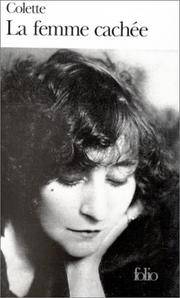
Few twentieth-century writers combine sensual brilliance, personal scandal, and literary influence as completely as the French novelist Colette (1873-1954). Revered in France as one of the great stylists of modern prose, she remains comparatively underread in America. Her life was marked by artistic triumph, erotic independence, moral ambiguity, and deep contradiction, qualities inseparable from the extraordinary vitality of her work.
I hadn’t encountered Colette until I came across reprints of several of her best-known works in the New York Review of Books, including Chéri and The Pure and the Impure. Curious, I decided to begin at the beginning with Claudine at School, the first of her semi-autobiographical Claudine novels, featuring the rebellious schoolgirl whose wit, sensuality, and independence challenged conventional notions of womanhood as passive, domestic, and sexually muted.
The Claudine novels emerged from one of the most exploitative literary marriages of the era. Colette’s husband, the flamboyant Parisian critic and entrepreneur Willy, recognized her talent and pressured her into writing the series, which was initially published entirely under his own name. The books became enormously successful, while Colette remained publicly overshadowed. Her eventual break from Willy marked not only a personal emancipation but the beginning of her emergence as an independent literary figure.
After reading Claudine at School, I turned to Secrets of the Flesh: A Life of Colette by Judith Thurman, a massive and meticulous biography produced from nearly a decade of research in French archives and sources.
Thurman had previously written Isak Dinesen: The Life of a Storyteller, which won the National Book Award for Nonfiction in 1983 and later helped inspire the Academy Award-winning film Out of Africa. She was co-producer.
Her Colette biography became a finalist for both the National Book Award and the Pulitzer Prize, while France honored her with the title of Chevalier of the Order of Arts and Letters in 2016. She has also been one of the longtime staff writers of The New Yorker.
Yet I suspect many Americans remain only vaguely aware of Colette, even if they have seen Gigi, Vincente Minnelli’s celebrated adaptation of her 1944 novella.
In France, however, Colette long ago entered the cultural canon, the first female president of the prestigious Académie Goncourt, and remains a central figure in the French literary curriculum. Her Claudine novels, Chéri, and Gigi continue to be widely read.
Among her admirers were some of the century’s most distinguished literary figures: Marcel Proust, André Gide, Jean Cocteau, and even Jean-Paul Sartre. William Faulkner reportedly kept her photograph on his writing desk, a tribute from one master stylist to another.
Upon her death in 1954, she became the first French woman granted a state funeral, though the Catholic Church denied her religious burial because of her divorces and unconventional private life.
Colette’s writings eventually filled more than eighty volumes: novels, memoirs, journalism, literary criticism, essays on theatre, fashion, cuisine, and animals. During the First World War, she even worked as a war correspondent, visiting battlefields and interviewing soldiers.
Yet one finds little overt political or philosophical argument in her work. What distinguishes Colette is her total immersion in the senses. She does not merely describe experience; she inhabits it, merging the physical world with psychological perception.
One feels physically present in her prose: the ripening of a peach, the texture of a cat’s fur, the shifting power between lovers, the ache of aging, the fierce necessity of independence.
Her evocations of her native Burgundy possess extraordinary sensory delicacy:
“Je redescendais… Le jardin frissonnait encore, les roses étaient froides. J’attendais que le premier rayon de soleil touchât le mur, et alors l’odeur du buis montait comme une prière. Tout était bleu, argenté et nacré. C’était un monde où la rosée n’était pas encore de l’eau, mais une sorte de lait céleste qui adoucissait le monde avant que le jaune cruel du jour ne commence à le brûler.”
Translation:
“I would go down into the garden… The garden was still shivering, the roses were cold. I would wait for the first ray of sun to touch the wall, and then the scent of the boxwood would rise like a prayer. Everything was blue, silver, and nacreous. It was a world where the dew was not yet water, but a kind of celestial milk that softened the world before the harsh yellow of the day began to burn it away.”
She was equally perceptive about aging and female self-awareness:
“Elle regarda son reflet — le cou qui commençait à perdre sa tension, le fin réseau de rides autour des yeux qu’aucune poudre ne pouvait vraiment bannir. Elle ne pleura pas ; elle étudia sa ruine comme un général pourrait étudier la carte d’un territoire perdu. Il y avait une magnificence dans cette défaite. Elle se rendait compte qu’être une femme, c’était être une série de peaux, muées l’une après l’autre, jusqu’à ce qu’enfin, on ne reste qu’avec les os de son propre caractère, qui sont, après tout, les seules choses qui durent vraiment.”
Translation:
“She looked at her reflection—the neck that was beginning to lose its tension, the fine web of lines around the eyes that no amount of powder could truly banish. She did not weep; she studied her ruin as a general might study a map of a lost territory. There was a magnificence in this defeat. She realized that to be a woman was to be a series of skins, shed one after the other, until finally one is left with only the bones of one’s own character, which are, after all, the only things that truly endure.”
She also possessed an uncanny sensitivity toward animals, especially cats:
“Elle restait là, ombre gris-argent, ses yeux comme deux raisins translucides. Elle ne se contentait pas de regarder ; elle humait la chambre. Ses oreilles bougeaient comme de petits radars indépendants, captant le bruit d’une aile de phalène ou le tassement lointain de la maison. Dans son immobilité, il y avait une concentration terrible et belle — l’orgueil d’une créature qui s’appartient tout entière et ne doit aucune explication au monde.”
Translation:
“She lay there, a silver-grey shadow, her eyes like two translucent grapes. She did not merely watch; she inhaled the room. Her ears moved like small, independent radars, catching the sound of a moth’s wing or the distant settling of the house. In her stillness there was a terrible, beautiful concentration—the pride of a creature that belongs entirely to itself and owes no explanation to the world.”
Colette’s private life, however, remains controversial. Her relationships were often transgressive; she had a strained relationship with her daughter, engaged in an affair with her teenage stepson, and continued publishing in journals associated with Vichy France during the Nazi occupation.
Thurman describes Colette’s maternal style as one of “ruthless detachment.” Much of the child-rearing was delegated to a nanny. Mother and daughter frequently quarreled. At one point, returning from boarding school, her daughter reportedly remarked that she wished they were Jewish because Jewish parents seemed more emotionally involved with their children.
Thurman suggests that Colette regarded motherhood as an intrusion upon the artistic life—a conflict that has shadowed many women writers navigating the competing demands of creativity, erotic freedom, and domestic expectation.
Her conduct during the Nazi occupation remains morally ambiguous. Although she used her connections to secure the release of her Jewish husband from internment, she nevertheless continued publishing under the Vichy regime, actions critics still debate. Thurman offers a pragmatic possibility: survival.
In many respects, Colette embodied contradiction, shaped by a conservative provincial upbringing while seeking freedoms historically reserved for men.
Though later embraced by many feminists as a symbol of female independence, Colette often denounced feminism, once remarking that women “deserved the whip and the harem.” In a 1927 interview with Walter Benjamin, she suggested that women wielding power could become “worse than men.” Bisexual and involved in numerous relationships with women, she nevertheless disapproved of her own daughter’s lesbianism, perhaps knowing the difficulties of gay life, Thurman suggests.
And yet, despite these contradictions, Colette helped redefine what modern womanhood could be. She fashioned a public life of artistic independence, sexual autonomy, and professional achievement at a time when few such paths existed openly for women.
French culture has often shown a greater willingness than Anglo-American culture to celebrate women who combine sensual freedom with intellectual authority, as seen in figures such as George Sand and Simone de Beauvoir. Colette belongs within that lineage, though she remains more elusive, less ideological, and ultimately more instinctive than either.
Thurman’s biography succeeds precisely because it resists simplification. She neither canonizes nor condemns Colette, but instead reveals a woman of immense artistic gifts, profound appetites, emotional blind spots, courage, vanity, discipline, selfishness, and brilliance.
Above all, Colette endures because of the precision and sensual richness of her prose. Few writers have rendered nature, animals, desire, aging, and the textures of ordinary experience with such tactile immediacy and lyrical control. Whatever her personal failings, her writing continues to justify the devotion of her readers and her enduring place in French literature.
–RJ
Discover more from Brimmings: up from the well
Subscribe to get the latest posts sent to your email.


Good post.
LikeLike
Thank you. I always appreciate your comments.
LikeLike