BEE Alert

bees2

Recently I posted about the plight of butterflies, especially that aerial tiger, the monarch butterfly. I mentioned that I’m trying to certify our backyard as a way station. But while I’m at it, bees also play a vital role in planning a pollinator garden.

You may be aware that bees have been disappearing over the last several decades. And we haven’t known why–that is, until now.

But let’s go back to 1958, when marine biologist Rachel Carson received a copy of a letter her friend, Olga Huckens, had sent to the Boston Herald, describing the aftermath of mosquito spraying in Duxbury, Massachusetts, the previous summer: the wipeout of songbirds, bees and other helpful insects.  Ironically, the mosquitos returned in full force. Olga asked Rachel if she knew anybody in Washington, DC, with influence who could halt the spraying.

Out of this came Silent Spring, perhaps the greatest American nature classic since Thoreau’s Walden. It would catch the eye of the youthful president, John Kennedy, who would meet Rachel Carson with his team of advisors. Ultimately, her book  would lead to the banning of DDT.

Unfortunately, other countries didn’t join the ban and its use continues abroad. But now there are new, perhaps even more devastating pesticides at work called neonics, sprayed on hundreds of crops you and I eat. Seeds get coated with these pesticides, infesting both soil and pollen, killing off bees, butterflies, and other insect friends.

The good news is that in 2013, the European Union enforced its newly imposed two year ban on some of the leading neontics.

The bad news is that in America, the EPA has been dragging its feet, despite President Obama’s directive to prioritize its review of neonics.

Let me expand on the fallout of neonics, since they threaten not only our insect friends, but you and me.

When you resort to neonics, not only do you kill off bees, for example, but you impair their immune system, making them vulnerable to disease.

But it doesn’t stop there. Neonics linger in the soil, water and plants for many years. As such, they threaten whole ecological systems that include earthworms, amphibians (under severe threat), and birds.

Neonics, according to the European Food Safery Authority, “may affect the developing nervous system” of children.

What may surprise you is that you may be harboring neonics in your own yard when you purchase plants at box stores like Lowes and Home Depot, According to a study launched by Friends of the Earth, on whom I’ve drawn for some of my information, “many of the so-called ‘bee friendly’ plants we grow in our gardens have been pre-treated with bee-toxic neonics at doses up to 220 times higher than those used on farms.”

Unfortunately, we’re facing an uphill fight, with giant petrochemical and seed corporations like Monsanto, Syngenta and Bayer devoting huge sums to divert attention and pedal influence.

The EPA, for example, recently gave the green light to Bayer, based on a study primarily funded by the corporation!

I haven’t even talked about the exponential use of GMO’s used massively in soy and corn production with their built-in resistance to powerful herbicides, thus allowing for their use.

There’s so much more I’d like to say, but let me end with some sobering facts regard lhoney bees:

Pollinators are essential for our crops.  Honey bees (Apis mellifera) are the grand masters, one hive of 50,000 bees capable of cross-pollinating twenty-five million flowers in a single day! No other insect comes close.

Now think about what you maybe had for breakfast: cereal, fruit juice, toast? Maybe you had almonds or berries topping your granola. Hey, honey bees made that possible.

For supper, cukes, zukes, squash?

Or how about that cream in your coffee from clover-foraging cows?

Or maybe your beef?

Bees helped put these foods on your table!

In nature at large, some 250,000 known plant species exist. Of these, three quarters rely on pollinators to reproduce.

Bottom line is that more than 100 crops comprising 90% of our global food supply rely on bees for pollination.

You get where I’m going with this. No bees, no food, unless you like eating bark.

Now I hate to tell you this, but our bee population has declined as much as 70% just in the last several decades.   Given the stress imposed on bee colonies by neonics and GMO’s, we may have reached the tipping point.

While other factors weigh in like electromagnetic radiation–think cell phones—and climate change that encourages pathogens, organic bee colonies aren’t experiencing these huge losses in bees or collapsing colonies. In short, pesticides appear to be the villains.

Rachel Carson not only warned us 45 years ago of a world in which there would be no birds to serenade spring, but of a world in which “there was no pollination and there would be no fruit.”

What can you do?

Beautify your landscape with bee friendly indigenous, organic plants using organic starts or untreated seeds.

Shun products with neonicotinoids. Read labels carefully.

At your grocery and garden centers, opt for organics plants and produce.

Together, each of us doing what we can, we may be able to avert beemeggedon and a fruitless fall.

–rj


Same Sun Here

Neela Vaswani
Neela Vaswani

Dear River,
I cannot tell from your name if you are a boy or girl so I will write to you like you are a human being.

The above comes from a book I’ve been reading for middle grade children, called Same Sun Here, by Silas House and Neela Vaswani.

My wife, a middle school teacher, brought the book home several weeks ago for me to read. She said, “It’s really good and you’ll like it.”

Well, I got hooked. It’s too good to put down. Teeming with prose often approaching poetry and vivid scenarios that can move hearts, it resonates those values that define the better portions of ourselves. I venture it’s one of those books you start missing no sooner you’re done.

Briefly, it’s told through a series of letters exchanged between two 12 year olds: Meena, formerly from India, now living in NYC, and River, who lives in the mountains of Eastern Kentucky.

[Mamaw] says that the everyone used to write letters all the time and it’s a lost art form.

Turns out, these two have a lot in common, despite their differences in background and locale:

Both are close to their grandmothers.

Have fathers with out-of-town jobs.

Share an affection for dogs.

Are fond of mountains. (Mountains were part of Meena’s Indian childhood. River lives in the mountains.)

In New York, the buildings are in someways like mountains, but they are only alive because of the people living in them.

Are sensitive to the beauty and wonder of nature.

I usually walk through the woods instead of taking the driveway because it’s a different world there.

Are outliers. (People make fun of their strong accents and origin.)

Like to read.

I like that library books have secret lives. All those hands that have held them. All those eyes that have read them.

Silas House
Silas House

The Same Sun Here is primarily about the faulty way we perceive others. River had been told that people who looked like Meena were terrorists. Mina, that people in Kentucky were hillbillies.

Mamaw says that people don’t really care about people here because they think we’re a bunch of stupid hillbillies who are looking for handouts.

Hey, if this old guy likes the book, typically self-conscious young adults will like it even more

Having said this, I think some readers won’t like the book for its seeming political preachments. It’s big on environment (mountain top removal) and waxes enthusiastic over Obama’s election victory. (The story is set in 2008.). A book of several strands, it features the powerless and, thus, exploited and how they may still find a voice.

Climate change challenges us as well, menacing not only our quality of life, but our survival. I cringe with every forest leveled, diminishing resources, declining species, sulfur fumes, unrestrained growth, etc.

I like people who lay their cards face up on the table.

I like a book that advocates awareness of a wider humanity and the folly of stereotyping that walls out our fellows.

Too often, bound by cultural mores, we’ve only a corner perspective.

We need a wider view to forestall our prejudices. Achieving empathy, we’ll discover a surprising commonality–that we’re more alike than we thought.

Sometimes you write things in your letters that I thought nobody had ever thought before except me, but then there it is in your letter.

Or as the title nuances, the same sun here.

–rj


Monarch Butterflies: Beleaguered Friends

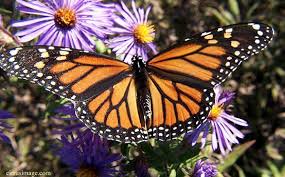
monarchs1Spring is for tidying and trying out new ideas.

This spring I’m bent on turning the back yard into a pollinator’s paradise and bird sanctuary. In particular, I want to get it certified as a waystation for my beleaguered garden companion, the monarch butterfly.

Butterflies, like so many of nature’s creatures, are facing tough times. Unless you and I get involved, these tiger emissaries of beauty won’t be with us much longer.

There are, however, simple things homeowners can do; but first, a few things about the monarch you may not know:

They are a dying species. According to the the Department of Ecology at the University of Iowa, their numbers have declined a startling 81% in the Midwest since 1999.

Their demise has come about largely due to the increasing scarcity of the common milkweed and its several varieties. Development and herbicides have taken a huge toll.

Monarch butterflies use no other source for laying their eggs and feeding their larvae.  Here I am reminded of Rachel Carson’s observation how “in nature, nothing stands alone.”

Each year, however, milkweed increasingly gets bulldozed, poisoned, or pulled. In suburbia, the monarch’s last great hope, millions of us obliterate them every weekend with our mowers and weed eater arsenals fresh from Lowe’s and Home Depot.

Farmers haven’t been much help either in their embrace of GMO soybean and corn production and consequent use of toxic herbicides like glyphosate (a probable cancer carcinogen in most processed foods).

I can’t say I haven’t cut down milkweed myself, seeing I didn’t even know what it looked like until recently.

milkweed

But knowing now the plight of the monarch, I aim to make up for my misdeeds against these aerial delights and daily garden companions.

Monarchs are amazing. These diminutive creatures fly 3000 miles, traveling on thermals at a speed of 12-25 mph, from southern Canada and the eastern U. S. every August through September to overwinter in Mexico, returning in spring to produce a new generation.

They don’t have lungs, breathing instead through tiny vents in the thorax, or abdomen, called spiracles.

Monarchs can perceive colors and assess habitat. They can even detect UV lights, something humans can’t do.

This may surprise you, but monarchs store a poison, which helps protect them from predators like frogs, lizards and birds. (I’ve never ceased marveling at the wonders of evolution.)

Monarchs are unique among all animal species in their regeneration pattern. Every spring and summer, three generations, each living only two to six weeks, are born. Then comes that fourth generation in August and September.

Though biologically the same as the others, this generation is mysteriously programmed to live for some eight months, making winter migration possible. It’s this generation, the great grandchildren, who produce progeny, a miracle that continues to baffle scientists.

Now here are things you and I can do to help them out and to get more of them into our yards:

Create a waystation: This means converting a portion of your yard–doesn’t have to be large–that will provide milkweed and nectar plants for monarchs along with habitat and shelter.

You can get your waystation certified. Just go to MonarchWatch.org and follow the link. In just the past two years, waystations have increased nationally from 36 to 234. In Lexington, KY, where I live, their number has gone from 36 to 60!

You will also enjoy the video available at YouTube.com. Look for the Main Street Monarch Migration video. It’s filmed in Kentucky’s gorgeous Audubon State Park, which observes a butterfly festival each year.

Here are some recommended plants to help you create your pollinator sanctuary, via the kind auspices of Lexington photographer and gardener Betty Hall (http://www.bettyhallphotography.com/blog/wp-content/uploads/2012/02/25-Favorite-Native-Plants.pdf). Many of these plants may be suited for your own locale, but try always for indigenous plants as they’ll fare best.

Be sure you include the crucial milkweed you’ll see in her listing. You’ll have to search your locale a bit, since the majority of nurseries, including the box stores, don’t carry them.

Saving the monarchs has taken an international turn. Did you know that President Obama recently discussed the issue with Mexican president, Enrique Peña Nieto and Canadian prime minister Stephen Harper?

The good news is that Mexico has now set aside some 62 square miles of forest in the Sierra Madres for their preservation. You’ll find it by googling Monarch Butterfly Biosphere Preserve,

I find the challenge of keeping our monarch guests around exciting and hope you will too.

–rj


And Then There Were None: Mountain Gorillas in Imminent Danger

gorillas1

In this central African park.
Desperate refugees crowd park boundaries.
Charcoal producers strip forests.
Then, last summer [2007], someone killed seven of these magnificent creatures in cold blood.
  (National Geographic)


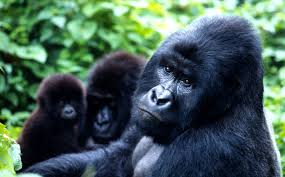
Yet another species, this time one of our closest relatives, faces a grave threat of extinction– mountain apes, of whom only 700-800 remain.

The Democratic Republic of Congo (DRC) reportedly has asked UNESCO to redraw the boundaries of one of Africa’s largest wildlife sanctuaries, Virunga Park, to facilitate oil drilling.

Consisting of 300 square miles, or 7800 square kilometers, the park shelters not only the gorillas, but other wildlife and Lake Edward, a key fishing resource.

In 2010, the DRC signed a contract with British firm, Soco, to begin exploration, despite its designation as a World Heritage Site, in violation of international law.

Such scenarios inevitably occur whenever economic interests are pitted against environmental concerns. In Africa, however, grinding poverty is so widespread that nations like the DRC must prioritize developing income resources.

On the other hand, much of that poverty is rooted in Africa’s post colonial history of chronic civil strife and kleptomaniac leadership.

Properly developed in a context of political stability, the DRC is rich in natural resources that could vastly improve the well being of its people.

In the DRC, the resultant instability and economic fallout has created anarchy, as rival militias composed of M23, Hutus, Tutsis and Congolese Revolutionary Army deserters roam the country, raping, plundering and killing.

Virunga National Park has, unfortunately, turned into a quagmire of lawlessness as a hideaway for militants, who use the Park’s wildlife and forest for subsistence.

Additionally, nearly 100,000 refugees live on the Park’s fringes, leading to deforestation and poaching.

In 2004, 1,500 hectares of prime mountain gorilla habitat were cleared by illegal settlers in Virunga National Park, according to evidence uncovered by the Congolese Institute for the Conservation of Nature.

What we know is that at least 40 mountain gorillas have been killed in the last several years.

As is, only 480 mountain gorillas remain in the Park’s confines, with no place to go.

Now the oil interests have moved in.

It’s a tragedy in the making.

Gorillas are gentle herbivores, who seek isolation.

As you might suspect, they have a lot in common with you and me.

Gestation is 8.5 months, approximating our own.

Births are nearly always singular.

Mating, unlike that of many animals, can take place anytime.

Helpless at birth, gorillas crawl at two months and walk at about nine months.

They are very intelligent and live in organized troops, governed by a dominant male known as a Silverback.

Diseases like ebola and those acquired from proximity to humans increasingly pose an additional threat.

In northern Gabon, for example, the entire protected population of gorillas and chimpanzees succumbed to ebola in 1994.

There’s also the bush meat trade along with lustful trophy seekers.

While international wildlife groups have contributed funding to shore up anti-poaching patrols, there are simply too few rangers, given the park’s vastness. Inadequately equipped, they’re no match for the often superior armed militia factions. Sadly, 140 rangers have lost their lives defending wildlife.

Their great champion, Dian Fossey, the world’s preeminent primatologist, was brutally murdered in 1985.

As a child I’d lie at night, thinking of Africa, teeming with wildlife, vast herds of elephants, rhino, hippopotami, zebras, antelopes, wildebeests, giraffes and, of course, isolated savannas and mountains abundant in gorillas, chimps and monkeys.

But that was a child’s imagining.

The adult vista, on the contrary, confronts us with vanishing wildlife and the likely soon extinction of these gentle creatures, our human cousins,

When I think of today’s Democratic Republic of Congo, flashes of Joseph Conrad’s The Heart of Darkness with its rampant savagery flood my thoughts and of Kurtz’s agonized lament when confronted with human culpability, “The horror! The horror!”

–rj

When Worrying Helps

Bob Marley’s hit song “Everythings Gonna Be Alright,” delivered with hypnotic reggae beat, buoys our spirits when we travel troubled waters:

Don’t worry about a thing
Cause every little thing gonna be all right.

Don’t you just wish it could be so in what poet W. H. Auden famously dubbed “the age of anxiety”?

Let me count some of the worries that trouble many, including myself:

  1. Climate change with its perilous threat to life upon our planet, or at the very least, its incalculable fallout as millions flee flooded homelands, hunger, and economic devastation.
  1. A disease pandemic as the world increasingly shrinks and we’re introduced to new diseases, augmented by exponential germ resistance to last stand antibiotics.
  1. Emergence of a new Frankenstein in the guise of artificial intelligence with the smarts to outwit humans bent on shutting it down. According to Stephen Hawking, it’s not a question of if, but when, and may lead to the end of human life.
  1. Massive technological replacement of human beings in the work force by computers and their robot offspring, performing tasks more quickly and efficiently for fewer bucks.
  1. Continuous rise in human population, especially among the most impoverished, threatening to outstrip resources to feed, shelter and provide economic well-being, increasing the likelihood for conflict. Malthus may have been right all along. He just didn’t get the timing down.
  1. Nuclear proliferation with more nations, some of them rogue, seeking the Bomb, increasing the possibility they might get used.
  1. Fanatics ultimately cajoling us into doing stupid things like opposing vaccines, free trade, immigration reform, fossil fuel addiction, gay rights, a woman’s right to choose, ad infinitum.
  1. Depletion of resources, including not only metals, soils and fertilizers, but flora and fauna essential to human survival.
  1. A natural calamity in which an anomaly intervenes, such as the sun increases its energy variability, or an asteroid hits us, or Yellowstone’s thermal springs go big time again.
  1. World markets collapse and a depression ensues, wiping out every vestige of economic security.

Worries come in temporal wrappings, short and long term.

Those we can do something about and those we can’t.

Our most subtle danger, however, lurks in the human leaning to ignore possibility, despite ample signs that “everythings [Not] gonna be all right.”

When we do this, it’s the Child, not the Adult, within us that speaks: “Please, Daddy, make the pain go away!

It gave us WWII. And in 1962, nearly World War III.

We push aside possibility daily in so many ways, neglecting our health, or overspending, or investing in wrong loves.

We do it on a larger scale when government prefers expediency, refusing to fund social security sufficiently, or confronting global warming, or curbing its addiction to deficit spending, or standing fast against terrorist regimes.

Bottomline, not worrying when we should may pose the most lethal danger of all.

–rj

Snobbery’s Menace

0f42ae99-9c8e-38c1-96bd-8806ca19dd1d

Politics can be a mean way of life, filled with scurrilous attacks on opponents, replete with prevarication, and downright lying. I stay away from it, as much as possible.

Case in point, just the other day former Vermont governor and one time seeker of the Oval Office, Howard Dean, took a shot at Wisconsin governor, Scott Walker, commenting on MSNBC’s Morning Joe: “The issue is, how well-educated is this guy?”

Walker, who may throw his hat into the ring for the Republican nomination in 2016, dropped out of college almost at the finish line in the spring of his senior year to join the Red Cross.

Our Constitution, however, lists only three prerequisites for our nation’s highest office: natural born citizen, at least 35 years old, and a minimum of 14 years lived in the United States.

Maybe Dean and others of his stripe might want to try amending our Constitution to secure their elitist government.

I would contend our government is just too elitist as it is, an oligarchy of power interests distanced from the vast majority of working Americans, three quarters of whom don’t sport a college degree.

I would also question the underlying assumption that a college degree automatically confers knowledgeability on anyone for any job.

I was a prof for 40 years and I can tell you first hand my students learned best, not from books or lecture, but hands-on. That’s what internships are all about, Dean, and you of all people, a medical doctor, should know this, since M. D.’s do a year of internship followed by several years of residency.

I have to confess I made a lot of dumb mistakes as a young prof despite 10 years of college before I was really fit to step into the classroom.

I would like to ask Dean how it was, judging by his own maxim, he was suddenly fit to be governor having trained to be a physician. That’s a huge gap. Maybe Rand Paul can help us out here.

My father had only an elementary school education, dropping out of the public schools like so many of his generation in the pre-World War I years. Like several of my uncles, he worked as a leather tacker for all of his working life in a brutal environment of body-sapping humidity and toxic fumes in one of the most deprived areas of Philly.

But for all his lack of schooling, he was one of the wisest men I’ve known across a life time, intuitive, and possessed of a healthy dose of skepticism whenever the facts didn’t seem to line up.

Not only do I owe my love of baseball to him, but the importance of being aware of what’s going on the world. The TV evening news with John Cameron Swayze or Douglas Edwards was time out and you’d better not be talking while they were on.

Every Sunday morning, he’d send me up the block for the Philadelphia Inquirer, just a dime then (imagine!) and split the newspaper with me on my return, which I’d eagerly devour, sprawled out on the floor. At 10, I was fully aware of a new war in a far off place called Korea, and spell bound by the firing of MacArthur not long after.

I remember his love for Winston Churchill, who had warned the West in the early thirties of the menace of Joseph Stalin.

My father was always slow to swallow the government line, speculating that we might never really know the facts behind that “surprise” attack on Pearl Harbor, a surmise that historian John Toland’s recent book. Infamy: Pearl Harbor and Its Aftermath, lends credence to.

I take offense when the snobs start wagging their tongues, the privileged lording it over the common herd, whether in the political area or anywhere else

Money, celebrity and, unfortunately, education–one of the most rampant bastions of elitism– can become divisive weaponry in putting down others to boost yourself up.

Or to efface those opinions you don’t like. Dummies!

Snobs always want to impress. As Virginia Woolf put it, herself a snob, “The essence of snobbery is that you wish to impress other people.”

I like best how one of my favorite authors, D. H. Lawrence, who came from miner stock, defined it: “[Snobbery] is the desire for what divides men and the inability to value what unites them.”

Ah, let me call to mind just a few names of those from a humble way of life, without college diplomas, who have made a positive mark upon the world. You just may be surprised:

In Science:

Thomas Edison

George Washington Carver

In Business:

Henry Ford

John D. Rockefeller

Steve Jobs

Mark Zuckerberg

In the Arts

Thomas Hardy

Mark Twain

William Faulkner

Vincent Van Gogh

William Shakespeare

In Politics

Andrew Jackson

John Glenn

Winston Churchill

Abraham Lincoln

These are my heroes.

These are my greats!

My favorite people also spring from everyday people I’ve known who never did a mean social thing in their lives like dismissing others for their lack of money, possessions, or the right diploma; or practicing a trade; or for being Black, Asian, Hispanic, Muslim, or gay; or because their political beliefs don’t mesh.

I measure people by a different yardstick: people who inspire with their kindness and compassion, from every walk of life, whose praise comes from the mouths of others and not their own; whose intelligence makes room for them to lead; who, to go back to Lawrence, unite rather than divide.

I like Shaw’s wisdom in his play Pygmalion, where he has Professor Henry Higgins put his finger on what makes for good manners–not whether what you do is in itself good or bad, but that you behave the same way towards everyone.

I must warn, however of another kind of elitism that has taken vogue, of a pride in defiance, or smashing icons for its own sake; a snobbery of rebellion where even norms that have given life grace, and with it, expectancy, are trampled upon in a frenzied allegiance to a vulgarity of self-indulgence of antinomian hue.

Snobbery is a way of life that will always be with us, but you and I, forewarned, needn’t embrace it and, by doing so, gain so much more.

–rj


A Poet Reminisces: Essays After Eighty

ows_141652973541643I have always liked poetry and poets, in particular, because of their sensitivity to human experience.

One poet I like a lot is Donald Hall, a giant among contemporary American poets, although he’s given up the craft, or as he puts it, since “poetry abandoned him.”

Hall is now 85.

Let me assure you, while the tropes may not come as easily as before, his acuity remains vibrant in his newest book, Essays After Eighty, a slim volume of 120 pages, yet filled with reminiscence, keen observation, and sober wisdom.

I first got introduced to Hall by way of his textbook, Writing Well, which I used for a number of years in teaching college composition. The book lived up to its title, emphasizing sentence clarity and how to achieve it, with eloquence added in.

Hall has always been a diligent stylist, whether writing poetry or prose. He confesses that he’s written some individual essay drafts for Essays After Eighty upwards of eighty times to get things said right.

I used to tell my students that the name of the game in all good writing lay in revision, pointing out that scholars have come upon nearly fifty drafts of Yeat’s famed “Second Coming” poem.

I like how Hall says it: “The greatest pleasure in writing is rewriting. My early drafts are always wretched.”

I’ve always held that a good style is etched by its economy, the right words sufficing for empty fillers drowning readers in verbosity; a pleasing rhythm like waves, in and out, upon a sea shore.

Good prose, like poetry, runs lean.

And Hall is the great master.

Let me give you a sampling of Hall’s trademark writing acumen, simple, yet keen with observation, each detail chosen well, verbs especially, accumulating into a verbal, painting, reflecting the ethos of a skilled artisan:

In spring, when the feeder is down, stowed away in the toolshed until October, I watch the fat robins come back, bluejays that harass them, warblers, red-winged blackbirds, thrushes, orioles. Mourning doves crouch in the grass, nibbling seeds. A robin returns each year to refurbish her nest after the wintry ravage. She adds new straw, twigs and lint. Soon enough she lays eggs, sets on them with short excursions for food, then tends to three or four small beaks that open for her scavenging. Before long, the infants stand, spread and clench their wings, peer at their surroundings, and fly away. I cherish them….

Reminiscence weighs heavily upon these essays, not surprising for a writer in his mid-eighties. the ghosts, as it were, looming out of the past–grandparents, Mom and Dad, aunts and uncles, friends;  wife Jane Kenyon, the love of his life and fellow poet, succumbing unexpectedly to cancer at age 47.

Even the northern New Hampshire topography has yielded to change, farms giving way to rebirth of forest as the new generation migrates to the prosperous cities of southern New Hampshire.

As I read this moving collection of personal reflections on sundry topics, I made sure to highlight a number of striking passages, and some of them I’ll share with you.

On writing:

As I work on clauses and commas, I understand that rhythm and cadence have little to do with import, but they should carry the reader on a pleasurable journey.

If the essay doesn’t include contraries, however small they be, the essay fails.

Nine-tenths of the poets who win prizes and praises, who are applauded the most, who are treated everywhere like emperors–or like statues of emperors–will go unread in thirty years.

I count it an honor that in 1975 I gave up lifetime tenure, medical expenses, and a pension in exchange for forty joyous years of freelance writing.

I expect my immortality to expire five minutes after my funeral. Literature is a zero-sum game. One poet revives; another gets deader.

On aging:

When I limped into my eighties, my readings altered, as everything did.

In the past I was advised to live in the moment. Now what else can I do.?

On leisure:

Everyone who concentrates all day, in the evening needs to let the half-wit out for a walk.

On mortality:

It is sensible of me to realize that I will die one of these days. I will not pass away.

At some time in my seventies, death stopped being interesting. I no longer checked out ages in obituaries.

These days most old people die in profit-making dormitories. Their loving sons and daughters are busy and don’t want to forgo the routine of their lives.

Essays After Eighty has been a wonderful read for me with its acerbic wit, cogent wisdom, delivered in a simple, yet elegant, style, proving again that the best art conceals itself.

And yet there’s a melancholy that haunts these excursions into reminiscence, a sense that the best is over and, now, there’s just the waiting. As Hall confesses, “My problem isn’t death, but old age.”

Hall, of course, is addressing physical decline with its imposed limitations and dreaded dependency; but surely his words resonate still more–the sense of ephemerality that mocks our labors and brings to an end all that we love most dearly.

For Hall, “There are no happy endings, because if things are happy, they have not ended.”

Still, this work, perhaps his last, formulates a testimony to a life lived well.

And, very rarely, do you find such honest telling.

–rj

Brian Williams Remembers What He Disremembered

tightrope-niagara

There you go again, Twitter folks!

Turning on the light to bang those damn cockroaches scuddling down the wall.

You can’t do that, people!

Not to NBC News anchor, Brian Williams.

Is everything just fair game to you guys?

Doesn’t show much gratitude to a man who’s spent his life getting at the truth.

And I really resent your making me into a dumb ass just because I like the guy.

But Brian, I know full well someone like you, clean-cut, ageless all-American boy that you are, could never stoop to any kind of falsehood, though I know you’re no George Washington, who never, ever told a lie, even about that cherry tree.

Tell me I ain’t wrong, Brian!

You simply disremembered. That’s it!

I know you said your helicopter came under fire while you were reporting on a news story back in Iraq in 2003.

A really long time ago, huh?

I know it took you a some time to remember again and you needed help from the people who got to the light switch

But now you’ve got the story right.

Anyway, it doesn’t the f–k matter.

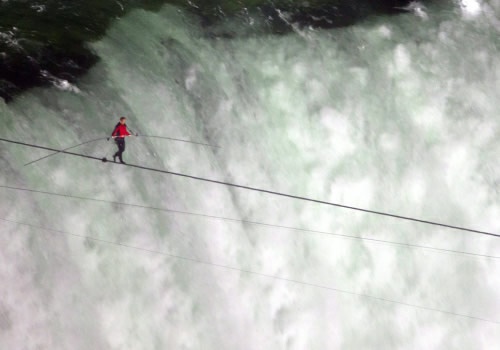
I know you walked a tightrope over Niagara Falls.

I’ve got this photo that proves it. Pictures don’t lie.

And you were in the first wave, hitting Omaha Beach.

I would never have believed it. You look so young.

Like the song says, “They can’t take that away from me.”

I think that was written for you.

What, you wrote it?

I never knew that either.

I really like how you stand-up for yourself.

No, you don’t need to say anything more.

You were just in a mental fog.

We’ve all had days like that.

Months, years?

Hey, what the hell!

Let me say my piece, Twitter people!

Give the guy a break!

You think he should be fired?

Well, I can tell you right now it ain’t happening.

Fortunately, he works at NBC and we know their loyalty to their people.

Take Al Sharpton at sister MSNBC….

He’s got this whole show to himself.

He says the rich should pay more in taxes.

He should know.

After all, he’s rich and is just dying to pay his full share.

Yeah, I know he’s 4 million behind in back taxes.

You gotta give a guy time to remember what he’s disremembered.

He’ll catch-up.

But back to you, Brian.

You’ve got real balls.

No apologies.

And why should you?

I love this in you!

A lot of others like it, too.

Like Al Gore, who invented the Internet.

Especially these guys in politics like Mark Kirk, Richard Blumenthal, and Tom Harkin.

They all disremembered, too, when it came to war.

But the people understood and made damn sure they got elected.

We’ve got your back, Brian.

What, you were with Clinton when he unzipped his fly in the Oval Office?

Wow, and you’ve held back till now?

Yeah, you disremembered this, too, but now you’ve got it right.

Yeah, I can understand why you waited.

You guys were cronies for years.

Hey, Brian, old faithful here can’t wait to see you on the news tonight.

You’re interviewing Armstrong?

Oh, I know Lance finally fessed up to being on dope all those years.

What do you expect a guy to do in a stress event like The Tour de France?

Yeah, it took him a while to remember, but he got it right.

Now he just hit two cars the other day and got so shook up that he disremembered again and thought it was his girlfriend driving.

But he got it right this time much quicker, remembering what he disremembered.

Just like you, Brian!

–rj

Note:  Williams apologized on his newscast last night:  “I made a mistake in recalling events of twelve years ago.”  The facts show he repeated his version on several occasions, the story growing with the telling.  It’s one thing to make a “mistake”; it’s another thing to lie.  I don’t buy into the twelve years ago excuse either.  If it hadn’t been for the military, Williams would still be exploiting the story for personal advantage.  Meanwhile, MSNBC didn’t cover the apology until 10:45 pm.  It’s been my experience that when caught, liars are disingenuous with language.

American Sniper: Anatomy of a Mauling

amsniper

There’s been heavy flak, to say the least, over Clint Eastwood’s blockbuster film, American Sniper.

It started with film director Michael Moore’s take on snipers as “cowards” who shoot people in the back.”

Others soon piled on, like Seth Rogen, who compared the film to Nazi propaganda.

Outspoken Bill Maher went further, condemning real life Chris Kyle, on whom the movie is based, as a psychopathic killer.

Returning blows, Kid Rock hoped Michael Moore would “catch a fist to the mouth soon.”

Surprisingly, Jane Fonda tweeted her appreciation of the film: “Bradley Cooper sensational. Bravo Clint Eastwood.”

Nominated for six academy awards, including Best Movie, the controversy hasn’t gone away and, in all probability, precludes any Oscar possibility.

Anyway, I knew I had to see the film after both my dental hygienist and neighbor, first thing out of their mouths, asked if I’d seen it.

So I dutifully went the very next day to a matinee showing, surprised by the large audience on a weekday.

I was on the edge of my seat throughout, gripped by the film’s graphic, nearly non-stop violence spurting from nearly every Sadr City window, rooftop, or corner.

Not since Platoon had I seen a you-are-there war movie like this, replete with in your face carnage inflicted by a relentless, hidden foe relying on ambush.

Retired marine sniper Jeff Crenshaw says “It’s the most realistic thing I’ve seen since the battlefield.  It shows the true nature of war and how awful it is and the toll it takes on a human being.”

Like Vietnam, not knowing who your foe is, possibly even a mother or child, you had to watch your back, and that’s where Kyle comes in, portrayed as protector, not assassin.

My take is that the film’s been misunderstood by its critics, even deliberately maligned by those with political agendas oriented to the Left. They hated the Iraqi war, thought it a ruse for oil interests. Nourishing grudges, they will neither forget nor forgive.

I found American Sniper neither a glorification of war nor right wing propaganda.

Neither a “Republican movie” nor a film appealing to innately angry audiences of Tea Party stripe.

In fact, it sidesteps politics altogether.

Even the Mahdhi insurgents are shown to be ferocious in defending what they regard as their turf against the invading American forces, superbly equipped with the latest weaponry and technology.

Hardly a psychopathic killer, Kyle is always shown as an interventionist, honing in on his target in the nick-of-time to safeguard his fellow soldiers at risk of a hurled grenade or a shot from a window.

At times he waits hard and long, reluctant to shoot a child who may be carrying an incendiary device towards unsuspecting American troops.

In another scene, he prays that a child struggling with a rocket grenade launcher will drop the weapon. He’s not in Iraq to kill children. Fortunately, the child drops the weapon.

Iraq is a place where you’d best never drop  your guard, since it’s not clear who’s enemy, as we see when Chris and other soldiers get invited to a civilian’s home, which turns out to be a setup for ambush.

Kyle ultimately breaks down, telling his wife he wants to come home, clearly having his fill of war; in fact, four tours.

Clint Eastwood has defended his movie, echoed by Gary Sinise, saying that the movie is really about what happens to our soldiers on their return home, themselves victims of war.

Married and father of two children, he may be physically present, but mentally he’s absent as his troubled wife tells him.

He endures a nagging guilt he needs to be there to protect them.

Implying Kyle was a coward is simply way over the top.

As for Maher, who quotes Kyle’s autobiography in which he denounces his foes as “barbarians” and expresses pleasure in killing them, this is umbrage born of ignorance, not surprising in people who’ve never served a day in uniform or participated in combat, nor seen their fellows blown apart, tortured or shot at.

But let’s leave the verbal broadsides of the critics aside.

The film isn’t really about Kyle.

It’s about the American soldier, or all soldiers for that matter.

Unfortunately, the critics have been engaged in killing off the messenger in failing to distinguish between statement and meaning, which is what artistic irony entails.

Literalists, they can’t fathom ambiguity.

In one scene, the at home veteran nearly kills the family’s pet fog, conflating its play with his young son as aggression.

Kyle clearly isn’t a well man.

The bottom line is that he suffers from post traumatic stress disorder (PTSD), which includes all its pervasive symptoms:

Anxiety

Guilt

Anger and irritability.

Depression

Alienation

Difficulty in relationships

Inability to focus.

I’ve just come off reading Laura Hillenbrand’s Unbroken, her masterful biography of WWII hero Louis Zamperini, who survived 48 days at sea in a rubber raft, only to land in the Japanese occupied Marshall Islands, then subsequently transported to Japan, where he endured near starvation and daily beatings at the hands of a sadistic camp commandant for two years.

Returning home at war’s end, Zamperini’s travail continued with nightmares in which his tormentor appeared, along with alcohol dependency, alienation from his wife and friends, a hatred for his captors, and a determined resolve to return to Japan and kill the man singularly responsible for heinous crimes afflicted on himself and fellow POWs.

In short, Zamperini suffered the classic symptoms of PTSD.

So what if Kyle wrote of his loathing of the enemy, Maher?

This is what inevitably happens whenever critics like Maher launch personal attacks, shallowly judging by symptoms and not rooting out causes, or lifting behavior from context.

Truth is, war often strips us of our humanity.

We say and do things alien to the better angels of ourselves.

PTSD is a wounding of the mind and spirit every bit as real as any physical wound.

Hardly simplistic, I found American Sniper a tell-it-like-it-is movie, replete with ambiguity of the kind integral to tensions formulated whenever humane values conflict with the killing mores of the battlefield.

I salute first lady Michelle Obama, speaking recently before a veteran’s group, who accurately appraised the film as “complex, emotional, and a realistic depiction of a veteran and his family.”

While I know there have been critics, I felt that, more often than not, this film touches on many of the emotions and experiences that I’ve heard firsthand from military families over these past few years.  This movie reflects . . . the complex journeys that our men and women in uniform endure.

That resonates for me, a veteran.

What’s more, it speaks for millions of audience goers as well, from every demographic: red state and blue, gender, race, and ethnicity.

rj


You Aren’t Who You Think You Are!

yoga(1)

Have you ever found yourself so angry, say in an argument, that you’ve yelled, or said mean things, or left the room, or slammed a door, only to feel ashamed later?

Have you ever panicked, ready to pull your hair out, because your fear seemed overwhelming, demanding a quick fix that seemed elusive?

Perhaps it was in getting bad news such as being fired, or being told you have a serious illness, or finding out your spouse wants out.

It’s been said many times you are what you think about. If you’re having happy thoughts, then chances are they’ll carry you through the day, making it a good one.

Conversely, when you’re upset–who knows about what?–you’re apt to put in motion unhappy scenarios throughout your day. Not only that, you may be spreading your viral malcontent to others.

But it’s your unconscious thoughts that may influence you even more, and with greater fall out, since you’re unwitting of the sources behind what you say and do. In short, it goes a lot deeper than just what you think about.

It’s as though you’re living with a stranger usurping your identity. There he is, randomly, unexpectedly, projecting himself upon your conscious world.

Your thoughts, then, seldom come close to mirroring who you really are, though they may try to tell you that you’re either lacking or even very special.

And this is the good news, since your thoughts most likely come short of who you really are.

Your mistake is identifying with them.

This becomes clearer when we resort to linguistics.

In English, we always say things like “I’m angry” or “I’m lucky” or I’m afraid,” when logically this can never be so.

This gets corrected in languages like Spanish, French and German in which we say we have anger, or luck or fear.

Now try this little exercise in predicate adjectives to catch my drift. To

I am, add an adjective that describes you:

I am …

I am happy.

I am sad.

Et cetera.

I call it the name tag game and we all play it.

As such, these tags can never summarize in any moment the totality of who you are in your uniqueness, and thus you err when you identify with them.

Name tags reach back into your childhood as you strive for validation, or self-worth, often by comparing yourself to others.

My mother likes my sister more than me.

I’m smarter than Bill.

I’m not popular.

Unfortunately, such scripts program us; that is, unless you learn to identify the falsity of their self limitations.

By doing so, you free yourself from their tyranny.

You don’t replay them anymore.

Self-acceptance prospers in an environment saturated with love. Too many of us we’re raised, however, by parents who themselves were never accepted for who they were, and thus never fully loved.

Accordingly, their love was, in turn, conditional, or a projection of themselves.

The truth is you’re far more than the stories you’ve come to believe about yourself.

You don’t need to keep modeling yourself on what you think or have been told you are or should be.

You’re worthy now.

Too often you try to compensate for life having dealt you a bad hand:

A broken home replete with violence.

An alcoholic parent.

Bullying at school.

A physical or mental handicap.

Sexual abuse.

A friend’s betrayal.

An insensitive teacher.

And while measured by status and/or accumulation, you may even seem successful to others, you find you’re still battling feelings of inferiority or unworthiness daily.

In a kind of guerrilla war, your anxiety pushes you to flush out the enemy by doing still more.

You hunger for approval, but it’s never enough.

Afraid of disapproval, you retreat from doing new things because you might do it wrong or even fail.

Freeing yourself by identifying the stories you’ve come to falsely believe about yourself is your passport to loving yourself, and with it, finding confidence and joy.

Anxiety about yourself, unfortunately, is an acquired practice.

It follows you must undo the habit.

When you think negatively or act out destructively, catch yourself at it.

This isn’t my true self.

This isn’t me.

And you’re right.

You can help yourself by retrieving your thoughts in a strainer, as it were, by practicing mindfulness,

Breathe deeply through your nose for a count of six seconds, your hand on your belly

Feel your stomach inflate.

Now breathe out for a count of four. feeling your stomach contract.

Visualize happy scenes.

Let your body relax, beginning with your toes, then your feet, legs, back, arms and neck, each in its turn.

Now listen to your thoughts,

Do this without judging them.

If you stray, as we always do, return to deep breathing.

By listening to ourselves, detached from censure, we see objectively, freeing ourselves from anxiety’s tyranny.

We don’t allow our emotions to boss us around anymore.

To this end, I find restorative yoga the most peace-rendering exercise of any I’ve come upon.

Unfortunately, most yoga practice in the West confines itself to bodily exercise, or fitness,

True yoga is much more, or holistic, the “yoking” of mind and body, for they are ultimately one. Yoga mean “to yoke.”

This is where Western medicine so often fails, treating symptoms, not causes.

We are not mere physical creatures.

We possess a spiritual component.

We are sentient beings.

In traditional parlance, we have a Soul.

In modern life, however, we’ve disconnected Body and Soul.

The consequence is that we find ourselves out-of-balance, resulting in stress, fatigue and, ultimately, illness.

Yoga reverses this, restoring health, both physical and mental.

Yoga helps you let go.

Yoga enables you to love yourself and, with it, forgive yourself and others.

I’m sadly limited to a blog, when there’s so much else I’d like to say.

But let me recommend a book that will jump start your reconnecting mind and body. I promise you’ll not want to set it down:

Brad Willis. Warrior Pose:  How Yoga (Literally) Saved My Life.

We listen too much to our head, when we should be living life with our heart.

If you follow my suggestions, hand over my heart, you’ll increasingly gain power over that stranger who’s usurped the premises.

You’ll dislike him so much, you’ll ask him to leave.

The good news is that he will!

–rj

.