Reflections on the Supreme Court’s EPA Rebuff

A-polar-bear-and-her-cubs-007This has been a busy time for America’s highest court, with gargantuan issues–gay marriage, Obama Care, and approval of a controversial capital punishment drug, cases decided by razor thin majorities.

No less important, perhaps the most impacting of all, is the Supreme Court’s decision ultimately affecting climate change; namely its one vote majority ruling against the EPA’s Mercury and Toxic Standards (MATS) provision, designed to reduce mercury and other air pollutants from the nation’s myriad power plants, especially those utilizing coal.

Though MATS wasn’t specifically disavowed, the Court ruled that the EPA must consider the financial burden it imposes. Accordingly, the case goes back to the U.S. Court of Appeals for the District of Columbia to deliberate new guidelines.

I think the decision horrendous in the context of the preeminent threat we and, especially posterity, face in the context of climate change, which the vast weight of environmental science affirms is human induced.

In fact, if we don’t get our act together, we may find ourselves joining the plethora of species we’ve either driven into extinction or endangered.

On the other hand, I laud justice Elena Kagan, who wrote the minority decision in the 5-4 verdict:

Over more than a decade, EPA took costs into account at multiple stages and through multiple means as it set emissions limits for power plants. And when making its initial ‘appropriate and necessary’ finding, EPA knew it would do exactly that — knew it would thoroughly consider the cost-effectiveness of emissions standards later on. That context matters.

While it’s probable the lower court won’t gut the act, but simply mandate that EPA integrate cost factors upfront, not after-the-fact, as it had done, this may sadly take another five years and still be subject to legal scrutiny.

Climate change, in the meanwhile, isn’t about to go into a stall while we continue to rely upon coal as an energy source for many of our power plants.

The corollary is that like a credit card we don’t pay off, our delay will exact cost burdens exceeding mere cash reckonings in hazarding the health of both ourselves and the impinging on the ecological interplay upon which we depend.

Nobody wants to pay more for energy costs any more than we relish replacing a malfunctioning stove or fridge for a newer, more efficient model, at increased cost. Alas, sometimes it is what it is and we move on.

What moved me to write this post as I awoke today to a new dawn outside my window is a news story just out of the BBC, reporting on “Irreversible Change to Sea Life from CO2, compiled by twenty-two experts in the journal Sciencehttp://www.bbc.co.uk/news/science-environment-3336902

Coral reefs, polar bears, many fish–all gone by century end as oceans continue to heat up, lose oxygen, and become more acidic, consequent with our embrace of CO2 energy sources.

And we’ll not be spared either, as the ocean out of which all life came and upon which it substantially depends, not only overwhelms our coast lines, but our ecosystems as well.

This is the true cost of our delay and our neglect, unacknowledged by the Court as in the  public’s greater interest and for the well-being of Mother Earth.

–rj


Happiness that Money Can’t Buy

Edwin Arlington Robinson

I think we’ve all read E. A. Robinson’s masterful “Richard Cory” poem about a wealthy man, much admired, perhaps envied for his living the good life, who commits suicide.

Whenever Richard Cory went down town,
We people on the pavement looked at him:
He was a gentleman from sole to crown,
Clean favored, and imperially slim.

And he was always quietly arrayed,
And he was always human when he talked;
But still he fluttered pulses when he said,
“Good-morning,” and he glittered when he walked.

And he was rich – yes, richer than a king –
And admirably schooled in every grace:
In fine, we thought that he was everything
To make us wish that we were in his place.

So on we worked, and waited for the light,
And went without the meat, and cursed the bread;
And Richard Cory, one calm summer night,
Went home and put a bullet through his head.

In keeping with the poem’s theme, I recently came across a Federal study published in 2002  that showed that rich neighborhoods have higher rates of suicides than less affluent neighborhoods. This finding may come as a surprise to most people who, like those in the poem, equate wealth with contentment.

The obvious question to ask is why money, possessions, fame and power don’t assure us happiness? The answer is that they fall short in the staying power of simpler values, found largely in ourselves, not things subject to life’s vicissitudes and often paid for with daily stress.

Ironically, having money and all it buys may mask an insecurity, or need for validation,  compounding one’s misery.

According to Solberg, Diener, and Robinson, “Why Are Materialists Less Satisfied?” (2004), those values that truly sustain come down to a relative few:

Personal health.

Security.

Having goals.

Enjoying a rich relationship with others.

I’d even contend that the four can be reduced to just one, security. Defining security more specifically, what we want most is freedom from anxiety in a world of flux. As Freud might have told us, we’re all children crying in the night. Let’s face it: As human beings we’re possessed by egos that generate our desires and foster our insecurities.

This, of course, may help explain the increasing popularity of meditation to relieve our stress or, better, our fright.

I think Tolstoy, that most moral of writers, gets at the truth in his short story, How Much Land Does a Man Need?:

I would not change my way of life for yours,” said she [to her well off sister]. “We may live roughly, but at least we are free from anxiety. You live in better style than we do, but though you often earn more than you need, you are very likely to lose all you have. You know the proverb, ‘Loss and gain are brothers twain.’ It often happens that people who are wealthy one day are begging their bread the next. Our way is safer. Though a peasant’s life is not a fat one, it is a long one. We shall never grow rich, but we shall always have enough to eat.

Recently I saw Hardy’s magnificent Far From the Madding Crowd at the movies and reread the classic. Observing the reenactment of an agrarian tapestry of defined roles amid resplendent, on locale filming in Dorset, Somersetshire and Oxfordshire (Hardy’s Wessex), I couldn’t help remembering Hardy’s nostalgia for a fast fading bucolic way of life providing security, communal intimacy, and defined roles.

In our own time, in contrast, one only has to read sociologist George Packer’s The Unwinding: An Inner History of the New America (2013) to see the carnage of our free-fall from those nets of safety intrinsic to daily life.

If you were born around 1960 or afterward, you have spent your adult life in the vertigo of that unwinding. You watched structures that had been in place before your birth collapse like pillars of salt across the vast visible landscape—the farms of the Carolina Piedmont, the factories of the Mahoning Valley, Florida subdivisions, California schools. And other things, harder to see but no less vital in supporting” the order of everyday life, changed beyond recognition (pp. 12-13).

How much better the simpler life, free of complication with its inherent risk of loss, lived honestly, even if frugally, ample in the extraordinary goodness of family and friends and the joy of pursuing one’s passion.

Ok, so I’m a sentimentalist, I still hold that those times, lived in the plentitude of the simple values I enumerated earlier, provided far more in the way of genuine happiness than today’s stressful, materialistic world that increasingly marginalizes each of us and holds our contentment hostage.

–rj

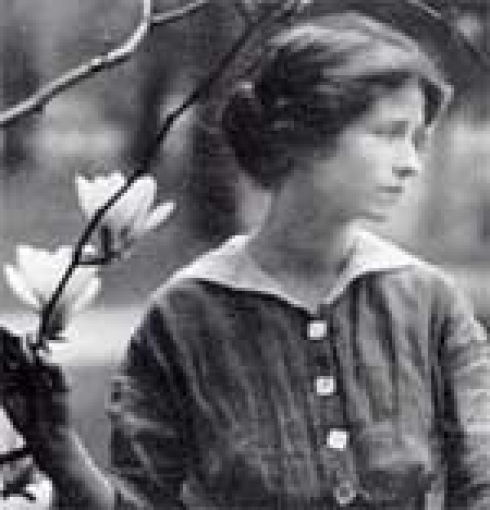
Edna St. Vincent Millay’s “Recuerdo”: A Close Reading

oly13312.edna-st-vinimage                                                   

                              RECUERDO
                               by Edna St. Vincent Millay

We were very tired, we were very merry—
We had gone back and forth all night on the ferry.
It was bare and bright, and smelled like a stable—
But we looked into a fire, we leaned across a table,
We lay on a hill-top underneath the moon;
And the whistles kept blowing, and the dawn came soon.

We were very tired, we were very merry—
We had gone back and forth all night on the ferry;
And you ate an apple, and I ate a pear,
From a dozen of each we had bought somewhere;
And the sky went wan, and the wind came cold,
And the sun rose dripping, a bucketful of gold.

We were very tired, we were very merry,
We had gone back and forth all night on the ferry.
We hailed, “Good morrow, mother!” to a shawl-covered head,
And bought a morning paper, which neither of us read;
And she wept, “God bless you! for the apples and pears,
And we gave all our money but our subway fares.

It seems almost an anomaly to do a close reading of a poem that seems to not withhold anything in its meaning. Millay tells us that the poem entails–its frame if you will–an all night ferry ride, to and fro, of two companions, ending with the two giving away their previously purchased fruit to a woman either on the ferry or on shore at ride end in the early morning, saving for themselves only their subway fare.

Presumably, this is a poem that captures the frenzied excitement of two lovers, for whom time together, even in a humble setting and with little money (they had bought fruit), is what matters. Millay’s lover-friend, Floyd Dell, one of many, tells us in a 1959 letter that Millay had done the ride with Nicaraguan poet Salomón de la Selva, later affirmed that year by Millay’s sister, Norma, who offered the poem’s Spanish title, “Recuerdo” (i.e., “I Remember”), as evidence. (De la Selva is a lover Milford misses in her biography of Millay (Savage Beauty 2001).

Famously, the poem’s initial two lines, “We were very tired, we were very merry,/We had gone back and forth all night on the ferry” repeat themselves at the beginning of each stanza. Intriguingly, we anticipate a “but” to set up the contrast between the states of fatigue and exuberance, but it doesn’t occur, adding complication, perhaps suggesting the fervency of their passion. The omission could also imply a fatigue leading to silliness.

In their repetition, Millay ensures her readers’ focus on the activities themselves, separately depicted in each stanza: looking into a fire, leaning across a table; lying on a hilltop underneath the moon (stanza 1); eating fruit (stanza 2); buying a morning newspaper, hailing a mother, her head “shawl covered,” to whom they give their remaining fruit (stanza 3).

The references to looking into the fire and lying on a hill-top under the moon may initially appear incongruous in a poem supposedly confined to an all night ferry ride. A closer reading, however, implies they had exited the ferry at some point, perhaps to visit a tavern or café, enjoy the warmth of a fire and, later, lie on a hill top and gaze at the stars before reboarding: “And the whistles kept blowing….”

The mother appellation suggests the lovers’ own freedom from the encumbrances of marital. love. As such, this is a poem intrinsic to the Greenwich Village bohemianism of that era.

While the poem is sparing of the usual metaphors, it turns sharply poetic in the exquisite “And the sky went wan and the wind came cold,/And the sun rose dripping, a bucketful of gold.”

As such, it reflects the poem’s latent contrast between their practiced frugality and the plenitude of their love, reinforced at poem end in their giving their fruit away.The poem haunts with its rhythms–hexameter lines replete with feminine and masculine rhymes along with occasional near rhymes, alliteration and assonance, coalescing into a sensuous ambience.

Redolent with the nuances of memory, the poem sparkles with the effulgence of new love and idealization of a day that endures because of it. And like Whitman, the poem sanctifies the individuality of everyday experience. Despite the denigration of Modernists, the poem’s fundamental strength lies in its very simplicity, affording accessibility and enjoyment.

–R Joly


Dickinson Revisits Keats: “I Died for Beauty”

dickinson2I died for Beauty–but was scarce
Adjusted in the Tomb
When One who died for Truth was lain
In an adjoining room

He questioned softly “Why I failed”?
“For beauty”, I replied–
“And I–for truth–Themself are One
We brethren, are”, He said–

 And so, as Kinsmen, met a Night–
We talked between the Rooms–
Until the Moss had reached our lips–
And covered up–Our names–

Emily Dickinson’s favorite poets were John Keats and Robert Browning. Certainly, “Ode on a Grecian Urn” and “I Died for Beauty” are indubitably linked through their exploration of Platonic idealism in regard to Beauty and Truth.

For Keats, Beauty becomes synonymous with Art, or Imagination. When he famously offers near the ode’s end his maxim, “Beauty is truth, truth beauty,” he means that what the imagination perceives as real is both beautiful and true.  Putting it another way, Art is Truth beautifully rendered.

Dickinson, in contrast, exhibits a more modern, complicated sensibility in her latent suspicion of a priori reasoning. Truth and Beauty, undefined in her poem, are relative terms, not verities. Although she may initially appear accepting of their affinity (i.e., “kindred”) a closer reading indicates that their synthesis isn’t a given. Why are the two entities in separate rooms?  Why must they converse “between the rooms”? In short, they’re separate bed fellows.

What does Dickinson connote in the first speaker’s use of “died,” subsequently rendered “failed” by the second speaker?  If the two entities are related, it consists in their earnest pursuit of absolutes, or closure within the context of human experience. Ironically, failure, not success, informs their liaison in death as we’ll see in the poem’s conclusion.

For the Platonist Keats, their proffered unity transcends mortality.  Not so for Dickinson’s poem in which Truth and Beauty, never articulated, nor the context of their demise, metamorphose into indecipherable headstones, swallowed up by the anonymity of death and its oblivion:

We talked…
Until the Moss had reached our lips–
And covered up–Our names.

In sum, death abrogates every human quest, even the most noble.

–rj

BEE Alert

bees2

Recently I posted about the plight of butterflies, especially that aerial tiger, the monarch butterfly. I mentioned that I’m trying to certify our backyard as a way station. But while I’m at it, bees also play a vital role in planning a pollinator garden.

You may be aware that bees have been disappearing over the last several decades. And we haven’t known why–that is, until now.

But let’s go back to 1958, when marine biologist Rachel Carson received a copy of a letter her friend, Olga Huckens, had sent to the Boston Herald, describing the aftermath of mosquito spraying in Duxbury, Massachusetts, the previous summer: the wipeout of songbirds, bees and other helpful insects.  Ironically, the mosquitos returned in full force. Olga asked Rachel if she knew anybody in Washington, DC, with influence who could halt the spraying.

Out of this came Silent Spring, perhaps the greatest American nature classic since Thoreau’s Walden. It would catch the eye of the youthful president, John Kennedy, who would meet Rachel Carson with his team of advisors. Ultimately, her book  would lead to the banning of DDT.

Unfortunately, other countries didn’t join the ban and its use continues abroad. But now there are new, perhaps even more devastating pesticides at work called neonics, sprayed on hundreds of crops you and I eat. Seeds get coated with these pesticides, infesting both soil and pollen, killing off bees, butterflies, and other insect friends.

The good news is that in 2013, the European Union enforced its newly imposed two year ban on some of the leading neontics.

The bad news is that in America, the EPA has been dragging its feet, despite President Obama’s directive to prioritize its review of neonics.

Let me expand on the fallout of neonics, since they threaten not only our insect friends, but you and me.

When you resort to neonics, not only do you kill off bees, for example, but you impair their immune system, making them vulnerable to disease.

But it doesn’t stop there. Neonics linger in the soil, water and plants for many years. As such, they threaten whole ecological systems that include earthworms, amphibians (under severe threat), and birds.

Neonics, according to the European Food Safery Authority, “may affect the developing nervous system” of children.

What may surprise you is that you may be harboring neonics in your own yard when you purchase plants at box stores like Lowes and Home Depot, According to a study launched by Friends of the Earth, on whom I’ve drawn for some of my information, “many of the so-called ‘bee friendly’ plants we grow in our gardens have been pre-treated with bee-toxic neonics at doses up to 220 times higher than those used on farms.”

Unfortunately, we’re facing an uphill fight, with giant petrochemical and seed corporations like Monsanto, Syngenta and Bayer devoting huge sums to divert attention and pedal influence.

The EPA, for example, recently gave the green light to Bayer, based on a study primarily funded by the corporation!

I haven’t even talked about the exponential use of GMO’s used massively in soy and corn production with their built-in resistance to powerful herbicides, thus allowing for their use.

There’s so much more I’d like to say, but let me end with some sobering facts regard lhoney bees:

Pollinators are essential for our crops.  Honey bees (Apis mellifera) are the grand masters, one hive of 50,000 bees capable of cross-pollinating twenty-five million flowers in a single day! No other insect comes close.

Now think about what you maybe had for breakfast: cereal, fruit juice, toast? Maybe you had almonds or berries topping your granola. Hey, honey bees made that possible.

For supper, cukes, zukes, squash?

Or how about that cream in your coffee from clover-foraging cows?

Or maybe your beef?

Bees helped put these foods on your table!

In nature at large, some 250,000 known plant species exist. Of these, three quarters rely on pollinators to reproduce.

Bottom line is that more than 100 crops comprising 90% of our global food supply rely on bees for pollination.

You get where I’m going with this. No bees, no food, unless you like eating bark.

Now I hate to tell you this, but our bee population has declined as much as 70% just in the last several decades.   Given the stress imposed on bee colonies by neonics and GMO’s, we may have reached the tipping point.

While other factors weigh in like electromagnetic radiation–think cell phones—and climate change that encourages pathogens, organic bee colonies aren’t experiencing these huge losses in bees or collapsing colonies. In short, pesticides appear to be the villains.

Rachel Carson not only warned us 45 years ago of a world in which there would be no birds to serenade spring, but of a world in which “there was no pollination and there would be no fruit.”

What can you do?

Beautify your landscape with bee friendly indigenous, organic plants using organic starts or untreated seeds.

Shun products with neonicotinoids. Read labels carefully.

At your grocery and garden centers, opt for organics plants and produce.

Together, each of us doing what we can, we may be able to avert beemeggedon and a fruitless fall.

–rj


Same Sun Here

Neela Vaswani
Neela Vaswani

Dear River,
I cannot tell from your name if you are a boy or girl so I will write to you like you are a human being.

The above comes from a book I’ve been reading for middle grade children, called Same Sun Here, by Silas House and Neela Vaswani.

My wife, a middle school teacher, brought the book home several weeks ago for me to read. She said, “It’s really good and you’ll like it.”

Well, I got hooked. It’s too good to put down. Teeming with prose often approaching poetry and vivid scenarios that can move hearts, it resonates those values that define the better portions of ourselves. I venture it’s one of those books you start missing no sooner you’re done.

Briefly, it’s told through a series of letters exchanged between two 12 year olds: Meena, formerly from India, now living in NYC, and River, who lives in the mountains of Eastern Kentucky.

[Mamaw] says that the everyone used to write letters all the time and it’s a lost art form.

Turns out, these two have a lot in common, despite their differences in background and locale:

Both are close to their grandmothers.

Have fathers with out-of-town jobs.

Share an affection for dogs.

Are fond of mountains. (Mountains were part of Meena’s Indian childhood. River lives in the mountains.)

In New York, the buildings are in someways like mountains, but they are only alive because of the people living in them.

Are sensitive to the beauty and wonder of nature.

I usually walk through the woods instead of taking the driveway because it’s a different world there.

Are outliers. (People make fun of their strong accents and origin.)

Like to read.

I like that library books have secret lives. All those hands that have held them. All those eyes that have read them.

Silas House
Silas House

The Same Sun Here is primarily about the faulty way we perceive others. River had been told that people who looked like Meena were terrorists. Mina, that people in Kentucky were hillbillies.

Mamaw says that people don’t really care about people here because they think we’re a bunch of stupid hillbillies who are looking for handouts.

Hey, if this old guy likes the book, typically self-conscious young adults will like it even more

Having said this, I think some readers won’t like the book for its seeming political preachments. It’s big on environment (mountain top removal) and waxes enthusiastic over Obama’s election victory. (The story is set in 2008.). A book of several strands, it features the powerless and, thus, exploited and how they may still find a voice.

Climate change challenges us as well, menacing not only our quality of life, but our survival. I cringe with every forest leveled, diminishing resources, declining species, sulfur fumes, unrestrained growth, etc.

I like people who lay their cards face up on the table.

I like a book that advocates awareness of a wider humanity and the folly of stereotyping that walls out our fellows.

Too often, bound by cultural mores, we’ve only a corner perspective.

We need a wider view to forestall our prejudices. Achieving empathy, we’ll discover a surprising commonality–that we’re more alike than we thought.

Sometimes you write things in your letters that I thought nobody had ever thought before except me, but then there it is in your letter.

Or as the title nuances, the same sun here.

–rj


Monarch Butterflies: Beleaguered Friends

monarchs1Spring is for tidying and trying out new ideas.

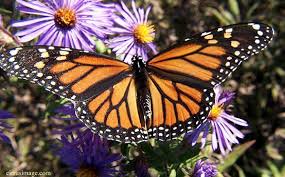
This spring I’m bent on turning the back yard into a pollinator’s paradise and bird sanctuary. In particular, I want to get it certified as a waystation for my beleaguered garden companion, the monarch butterfly.

Butterflies, like so many of nature’s creatures, are facing tough times. Unless you and I get involved, these tiger emissaries of beauty won’t be with us much longer.

There are, however, simple things homeowners can do; but first, a few things about the monarch you may not know:

They are a dying species. According to the the Department of Ecology at the University of Iowa, their numbers have declined a startling 81% in the Midwest since 1999.

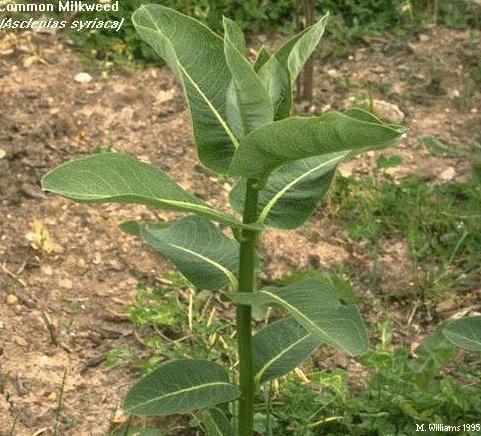
Their demise has come about largely due to the increasing scarcity of the common milkweed and its several varieties. Development and herbicides have taken a huge toll.

Monarch butterflies use no other source for laying their eggs and feeding their larvae.  Here I am reminded of Rachel Carson’s observation how “in nature, nothing stands alone.”

Each year, however, milkweed increasingly gets bulldozed, poisoned, or pulled. In suburbia, the monarch’s last great hope, millions of us obliterate them every weekend with our mowers and weed eater arsenals fresh from Lowe’s and Home Depot.

Farmers haven’t been much help either in their embrace of GMO soybean and corn production and consequent use of toxic herbicides like glyphosate (a probable cancer carcinogen in most processed foods).

I can’t say I haven’t cut down milkweed myself, seeing I didn’t even know what it looked like until recently.

milkweed

But knowing now the plight of the monarch, I aim to make up for my misdeeds against these aerial delights and daily garden companions.

Monarchs are amazing. These diminutive creatures fly 3000 miles, traveling on thermals at a speed of 12-25 mph, from southern Canada and the eastern U. S. every August through September to overwinter in Mexico, returning in spring to produce a new generation.

They don’t have lungs, breathing instead through tiny vents in the thorax, or abdomen, called spiracles.

Monarchs can perceive colors and assess habitat. They can even detect UV lights, something humans can’t do.

This may surprise you, but monarchs store a poison, which helps protect them from predators like frogs, lizards and birds. (I’ve never ceased marveling at the wonders of evolution.)

Monarchs are unique among all animal species in their regeneration pattern. Every spring and summer, three generations, each living only two to six weeks, are born. Then comes that fourth generation in August and September.

Though biologically the same as the others, this generation is mysteriously programmed to live for some eight months, making winter migration possible. It’s this generation, the great grandchildren, who produce progeny, a miracle that continues to baffle scientists.

Now here are things you and I can do to help them out and to get more of them into our yards:

Create a waystation: This means converting a portion of your yard–doesn’t have to be large–that will provide milkweed and nectar plants for monarchs along with habitat and shelter.

You can get your waystation certified. Just go to MonarchWatch.org and follow the link. In just the past two years, waystations have increased nationally from 36 to 234. In Lexington, KY, where I live, their number has gone from 36 to 60!

You will also enjoy the video available at YouTube.com. Look for the Main Street Monarch Migration video. It’s filmed in Kentucky’s gorgeous Audubon State Park, which observes a butterfly festival each year.

Here are some recommended plants to help you create your pollinator sanctuary, via the kind auspices of Lexington photographer and gardener Betty Hall (http://www.bettyhallphotography.com/blog/wp-content/uploads/2012/02/25-Favorite-Native-Plants.pdf). Many of these plants may be suited for your own locale, but try always for indigenous plants as they’ll fare best.

Be sure you include the crucial milkweed you’ll see in her listing. You’ll have to search your locale a bit, since the majority of nurseries, including the box stores, don’t carry them.

Saving the monarchs has taken an international turn. Did you know that President Obama recently discussed the issue with Mexican president, Enrique Peña Nieto and Canadian prime minister Stephen Harper?

The good news is that Mexico has now set aside some 62 square miles of forest in the Sierra Madres for their preservation. You’ll find it by googling Monarch Butterfly Biosphere Preserve,

I find the challenge of keeping our monarch guests around exciting and hope you will too.

–rj


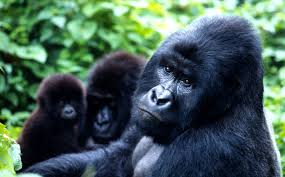
And Then There Were None: Mountain Gorillas in Imminent Danger

gorillas1

In this central African park.
Desperate refugees crowd park boundaries.
Charcoal producers strip forests.
Then, last summer [2007], someone killed seven of these magnificent creatures in cold blood.
  (National Geographic)


Yet another species, this time one of our closest relatives, faces a grave threat of extinction– mountain apes, of whom only 700-800 remain.

The Democratic Republic of Congo (DRC) reportedly has asked UNESCO to redraw the boundaries of one of Africa’s largest wildlife sanctuaries, Virunga Park, to facilitate oil drilling.

Consisting of 300 square miles, or 7800 square kilometers, the park shelters not only the gorillas, but other wildlife and Lake Edward, a key fishing resource.

In 2010, the DRC signed a contract with British firm, Soco, to begin exploration, despite its designation as a World Heritage Site, in violation of international law.

Such scenarios inevitably occur whenever economic interests are pitted against environmental concerns. In Africa, however, grinding poverty is so widespread that nations like the DRC must prioritize developing income resources.

On the other hand, much of that poverty is rooted in Africa’s post colonial history of chronic civil strife and kleptomaniac leadership.

Properly developed in a context of political stability, the DRC is rich in natural resources that could vastly improve the well being of its people.

In the DRC, the resultant instability and economic fallout has created anarchy, as rival militias composed of M23, Hutus, Tutsis and Congolese Revolutionary Army deserters roam the country, raping, plundering and killing.

Virunga National Park has, unfortunately, turned into a quagmire of lawlessness as a hideaway for militants, who use the Park’s wildlife and forest for subsistence.

Additionally, nearly 100,000 refugees live on the Park’s fringes, leading to deforestation and poaching.

In 2004, 1,500 hectares of prime mountain gorilla habitat were cleared by illegal settlers in Virunga National Park, according to evidence uncovered by the Congolese Institute for the Conservation of Nature.

What we know is that at least 40 mountain gorillas have been killed in the last several years.

As is, only 480 mountain gorillas remain in the Park’s confines, with no place to go.

Now the oil interests have moved in.

It’s a tragedy in the making.

Gorillas are gentle herbivores, who seek isolation.

As you might suspect, they have a lot in common with you and me.

Gestation is 8.5 months, approximating our own.

Births are nearly always singular.

Mating, unlike that of many animals, can take place anytime.

Helpless at birth, gorillas crawl at two months and walk at about nine months.

They are very intelligent and live in organized troops, governed by a dominant male known as a Silverback.

Diseases like ebola and those acquired from proximity to humans increasingly pose an additional threat.

In northern Gabon, for example, the entire protected population of gorillas and chimpanzees succumbed to ebola in 1994.

There’s also the bush meat trade along with lustful trophy seekers.

While international wildlife groups have contributed funding to shore up anti-poaching patrols, there are simply too few rangers, given the park’s vastness. Inadequately equipped, they’re no match for the often superior armed militia factions. Sadly, 140 rangers have lost their lives defending wildlife.

Their great champion, Dian Fossey, the world’s preeminent primatologist, was brutally murdered in 1985.

As a child I’d lie at night, thinking of Africa, teeming with wildlife, vast herds of elephants, rhino, hippopotami, zebras, antelopes, wildebeests, giraffes and, of course, isolated savannas and mountains abundant in gorillas, chimps and monkeys.

But that was a child’s imagining.

The adult vista, on the contrary, confronts us with vanishing wildlife and the likely soon extinction of these gentle creatures, our human cousins,

When I think of today’s Democratic Republic of Congo, flashes of Joseph Conrad’s The Heart of Darkness with its rampant savagery flood my thoughts and of Kurtz’s agonized lament when confronted with human culpability, “The horror! The horror!”

–rj

When Worrying Helps

Bob Marley’s hit song “Everythings Gonna Be Alright,” delivered with hypnotic reggae beat, buoys our spirits when we travel troubled waters:

Don’t worry about a thing
Cause every little thing gonna be all right.

Don’t you just wish it could be so in what poet W. H. Auden famously dubbed “the age of anxiety”?

Let me count some of the worries that trouble many, including myself:

  1. Climate change with its perilous threat to life upon our planet, or at the very least, its incalculable fallout as millions flee flooded homelands, hunger, and economic devastation.
  1. A disease pandemic as the world increasingly shrinks and we’re introduced to new diseases, augmented by exponential germ resistance to last stand antibiotics.
  1. Emergence of a new Frankenstein in the guise of artificial intelligence with the smarts to outwit humans bent on shutting it down. According to Stephen Hawking, it’s not a question of if, but when, and may lead to the end of human life.
  1. Massive technological replacement of human beings in the work force by computers and their robot offspring, performing tasks more quickly and efficiently for fewer bucks.
  1. Continuous rise in human population, especially among the most impoverished, threatening to outstrip resources to feed, shelter and provide economic well-being, increasing the likelihood for conflict. Malthus may have been right all along. He just didn’t get the timing down.
  1. Nuclear proliferation with more nations, some of them rogue, seeking the Bomb, increasing the possibility they might get used.
  1. Fanatics ultimately cajoling us into doing stupid things like opposing vaccines, free trade, immigration reform, fossil fuel addiction, gay rights, a woman’s right to choose, ad infinitum.
  1. Depletion of resources, including not only metals, soils and fertilizers, but flora and fauna essential to human survival.
  1. A natural calamity in which an anomaly intervenes, such as the sun increases its energy variability, or an asteroid hits us, or Yellowstone’s thermal springs go big time again.
  1. World markets collapse and a depression ensues, wiping out every vestige of economic security.

Worries come in temporal wrappings, short and long term.

Those we can do something about and those we can’t.

Our most subtle danger, however, lurks in the human leaning to ignore possibility, despite ample signs that “everythings [Not] gonna be all right.”

When we do this, it’s the Child, not the Adult, within us that speaks: “Please, Daddy, make the pain go away!

It gave us WWII. And in 1962, nearly World War III.

We push aside possibility daily in so many ways, neglecting our health, or overspending, or investing in wrong loves.

We do it on a larger scale when government prefers expediency, refusing to fund social security sufficiently, or confronting global warming, or curbing its addiction to deficit spending, or standing fast against terrorist regimes.

Bottomline, not worrying when we should may pose the most lethal danger of all.

–rj

Snobbery’s Menace

0f42ae99-9c8e-38c1-96bd-8806ca19dd1d

Politics can be a mean way of life, filled with scurrilous attacks on opponents, replete with prevarication, and downright lying. I stay away from it, as much as possible.

Case in point, just the other day former Vermont governor and one time seeker of the Oval Office, Howard Dean, took a shot at Wisconsin governor, Scott Walker, commenting on MSNBC’s Morning Joe: “The issue is, how well-educated is this guy?”

Walker, who may throw his hat into the ring for the Republican nomination in 2016, dropped out of college almost at the finish line in the spring of his senior year to join the Red Cross.

Our Constitution, however, lists only three prerequisites for our nation’s highest office: natural born citizen, at least 35 years old, and a minimum of 14 years lived in the United States.

Maybe Dean and others of his stripe might want to try amending our Constitution to secure their elitist government.

I would contend our government is just too elitist as it is, an oligarchy of power interests distanced from the vast majority of working Americans, three quarters of whom don’t sport a college degree.

I would also question the underlying assumption that a college degree automatically confers knowledgeability on anyone for any job.

I was a prof for 40 years and I can tell you first hand my students learned best, not from books or lecture, but hands-on. That’s what internships are all about, Dean, and you of all people, a medical doctor, should know this, since M. D.’s do a year of internship followed by several years of residency.

I have to confess I made a lot of dumb mistakes as a young prof despite 10 years of college before I was really fit to step into the classroom.

I would like to ask Dean how it was, judging by his own maxim, he was suddenly fit to be governor having trained to be a physician. That’s a huge gap. Maybe Rand Paul can help us out here.

My father had only an elementary school education, dropping out of the public schools like so many of his generation in the pre-World War I years. Like several of my uncles, he worked as a leather tacker for all of his working life in a brutal environment of body-sapping humidity and toxic fumes in one of the most deprived areas of Philly.

But for all his lack of schooling, he was one of the wisest men I’ve known across a life time, intuitive, and possessed of a healthy dose of skepticism whenever the facts didn’t seem to line up.

Not only do I owe my love of baseball to him, but the importance of being aware of what’s going on the world. The TV evening news with John Cameron Swayze or Douglas Edwards was time out and you’d better not be talking while they were on.

Every Sunday morning, he’d send me up the block for the Philadelphia Inquirer, just a dime then (imagine!) and split the newspaper with me on my return, which I’d eagerly devour, sprawled out on the floor. At 10, I was fully aware of a new war in a far off place called Korea, and spell bound by the firing of MacArthur not long after.

I remember his love for Winston Churchill, who had warned the West in the early thirties of the menace of Joseph Stalin.

My father was always slow to swallow the government line, speculating that we might never really know the facts behind that “surprise” attack on Pearl Harbor, a surmise that historian John Toland’s recent book. Infamy: Pearl Harbor and Its Aftermath, lends credence to.

I take offense when the snobs start wagging their tongues, the privileged lording it over the common herd, whether in the political area or anywhere else

Money, celebrity and, unfortunately, education–one of the most rampant bastions of elitism– can become divisive weaponry in putting down others to boost yourself up.

Or to efface those opinions you don’t like. Dummies!

Snobs always want to impress. As Virginia Woolf put it, herself a snob, “The essence of snobbery is that you wish to impress other people.”

I like best how one of my favorite authors, D. H. Lawrence, who came from miner stock, defined it: “[Snobbery] is the desire for what divides men and the inability to value what unites them.”

Ah, let me call to mind just a few names of those from a humble way of life, without college diplomas, who have made a positive mark upon the world. You just may be surprised:

In Science:

Thomas Edison

George Washington Carver

In Business:

Henry Ford

John D. Rockefeller

Steve Jobs

Mark Zuckerberg

In the Arts

Thomas Hardy

Mark Twain

William Faulkner

Vincent Van Gogh

William Shakespeare

In Politics

Andrew Jackson

John Glenn

Winston Churchill

Abraham Lincoln

These are my heroes.

These are my greats!

My favorite people also spring from everyday people I’ve known who never did a mean social thing in their lives like dismissing others for their lack of money, possessions, or the right diploma; or practicing a trade; or for being Black, Asian, Hispanic, Muslim, or gay; or because their political beliefs don’t mesh.

I measure people by a different yardstick: people who inspire with their kindness and compassion, from every walk of life, whose praise comes from the mouths of others and not their own; whose intelligence makes room for them to lead; who, to go back to Lawrence, unite rather than divide.

I like Shaw’s wisdom in his play Pygmalion, where he has Professor Henry Higgins put his finger on what makes for good manners–not whether what you do is in itself good or bad, but that you behave the same way towards everyone.

I must warn, however of another kind of elitism that has taken vogue, of a pride in defiance, or smashing icons for its own sake; a snobbery of rebellion where even norms that have given life grace, and with it, expectancy, are trampled upon in a frenzied allegiance to a vulgarity of self-indulgence of antinomian hue.

Snobbery is a way of life that will always be with us, but you and I, forewarned, needn’t embrace it and, by doing so, gain so much more.

–rj