A Heinous Crime That Could Have Been Prevented

It had been the end of a long day when 23 year old Ukrainian refugee Iryna Zartuska boarded Charlotte’s Lynx Blue Line train at 9:46 on August 22, 2025.

Also boarding the train, but evading paying for his ticket, was Decarlos Brown, Jr., a homeless man with fourteen run-ins with the police, awaiting trial for a new offense.

In four minutes, Iryna, who had fled the violence of the Ukraine conflict for a better life in America, would be dead, stabbed three times in the neck while looking at her cellphone by Brown, who sat behind her.

She died almost instantly.

Still wielding a bloody pocket knife, Brown was heard repeatedly shouting, “I got that white girl.”

Video captured the killing.

Brown, 34, has been charged with first degree murder.

In 2014, he was sentenced to prison for armed robbery and released in September, 2020.

In February, 2021, he was arrested for assaulting his sister, leaving her with minor injuries.

A few weeks later, he was arrested for injury to private property and trespassing.

In July 2022, he was arrested for a domestic disturbance.

Shortly after, he was arrested for injury to personal property and trespassing.

Brown’s criminal history is lengthy, reaching back to when he was a minor.

He has a documented history of mental illness. After the armed robbery, his aggressiveness intensified, resulting in his mother having him committed under court order for psychiatric observation—the diagnosis: schizophrenia.

Following his release, his aggressiveness increased still further and his mother ordered him to leave the household.

A few weeks before murdering Zarutzka, police detained Brown for misusing 911.

Despite all of this, he remained free to walk Charlotte’s streets.

Subsequently, Magistrate Teresa Stokes allowed him freedom from incarceration in exchange for his written promise to show up for a later hearing.

In a July 22 continuance hearing on Brown’s 911 misuse, judge Roy Wiggins ordered a forensic evaluation.

Unfortunately, he did not detain Brown in the meantime, a mistake with lethal consequence four weeks later.

As for the evaluation, it never happened.

In the aftermath, some on the Left argued that Brown was as much a victim of a system that failed as was Iryna. In turn, they initiated a GoFundMe account that raised $75,000 dollars to defray his legal expenses as part of the “fight against the racism and bias against our people.”

GoFundMe pulled the account.

Iryna’s murder became politicized, Trump labeling Brown a “lunatic.” Democrats, in turn, accused Trump of exploiting the tragedy for political gain.

Otherwise, Democrats have been largely silent about the murder.

In fairness, North Carolina governor Josh Stein (D) did speak out, denouncing the crime as senseless and calling for a greater police presence.

For many Democrats, however, the story didn’t fit their narrative.

Charlotte mayor Vi Lyles commented that the Charlotte transportation was safe, “by and large,” despite a recent survey reporting just 37% of Charlotte residents consider the Charlotte Area Transit System safe.

It can be argued that Progressives share responsibility for people like Brown being on the streets, abetted by black leadership and liberal media frequently engaging in racial framing that rationalizes black criminality as the offspring of white racism.

Many on the right fault Progressive advocacy of cashless bail, reduced incarceration, expunging felony records; and last, but not least, defunding the police, constitute a litany of liberal efforts more focused on criminals than the law-abiding.

Apart from the Washington Post, liberal news media, by and large, did not report the murder, consequently censoring the public’s right to know through omission, a noticeable detour from its intense coverage of the subway death of Jordan Neely by Daniel Perry, a white man.

Among media not reporting the story,

The New York Times
CNN
NPR
USA Today
Reuters
Axios
ABC News
PBS
MSNBC

(CNN did finally reference the crime, but only after the video’s release on September 5, devoting a two minute blurb to the story in its morning show).

Even Wikipedia has been caught up in the frey, one of its editors calling for the deletion of the posting titled “Killing of Iryna Zarutska.” A box message, later deleted, appeared above the post: “An editor has nominated this article for deletion.”

Wikipedia co-founder Larry Sander believes Wikipedia is now “too left” and “unreliable” (Manhattan Institute).

Brown, obviously mentally ill, should have been removed from the streets long ago in the interest of public safety.


The Brown case is not unprecedented when it comes to the American justice system’s failing the mentally ill, many of them homeless.

As Charlotte council member Edwin Peacock put it,
“If you’re constantly arresting people and they keep coming back out on the streets, what type of message is that sending?”

In 2020, former Democrat governor Roy Cooper, now running for the senate, established the “Task Force for Racial Equity in Criminal Justice,” co-chaired by then Attorney General and current Governor Josh Stein. It recommended “reimagining public safety” to “promote diversion and other alternatives to arrest,” “deemphasize” some felony crimes, prioritize “restorative justice,” and “eliminate cash bail” for many crimes (The Department of Justice (September 9, 2025).

In 2020, Charlotte Mecklenburg Police Chief Johnny Jennings declared  “law enforcement, in general, is based on racism” and their department can “probably slow down” on “discretionary arrests.”

In 2020, Democrat State Senator Mujtaba Mohammed, who represents Charlotte,  declared “independence from rogue police” (DOJ, September 9, 2025).

As I write, the Department of Justice has announced Brown will face federal charges, making him eligible for the death penalty. In a statement, Attorney General Pam Bondi depicted Iryna Zarutska “as a young woman living the American dream. Her horrific murder is a direct result of failed soft-on-crime policies that put criminals before innocent people.”

Ironically, the media is now weighing in. Where have they been? Is it the White House intervention and possibility of the death penalty that motivates this sudden rush to reporting in?

News comes that Paramount has now appointed an ombudsman to review bias at CBS news.

As for our courts, my thoughts drift to the late, gifted satirist Tom Wolfe of “Radical Chic” fame. His acclaimed Bonfire of the Vanities (1987) got it right—America’s highly politicized, often incompetent judicial system, is a sham.

rj

Sorry Emerson: Money is NOT the Prose of Life

Ralph Waldo Emerson ranks high on any list of frequently quoted American sages. He has a special way of rendering human experience palpable.

Among his many essays, I’ve especially liked “Compensation,” which I first read as a young graduate student in an American Lit class.

Undoubtedly a residue of his exploration of Eastern thought, this essay has journeyed a lifetime with me in its karma undertones, buoying me up in its harbinger of moral recompense for life’s myriad inequities.

But on occasion, Emerson fumbled, as when he wrote that “money represents the prose of life, and which is hardly spoken of in parlors without an apology, is, in its effects and laws, as beautiful as roses” (“Nominalist and Realist,” Essays: Second Series, 1844).

Critics were quick to pounce, Marxists in particular seeing it as capitulating to capitalism. Emerson probably meant that the pecuniary is an integral component of the natural order.

Still, it seems a passage one wants to expunge like disturbing phlegm.

I like Saul Bellow’s correction: “Uch! How they love money, thought Wilhelm. They adore money! Holy money! Beautiful money! It was getting so that people were feeble-minded about everything except money. While if you didn’t have it you were a dummy, a dummy! You had to excuse yourself from the face of the earth!” (“Seize the Day”).

But let me also share psychologist and poet Pamela Joyce Shapiro’s response to Emerson’s remark. Her poem speaks for me and perhaps for you:

If money is the prose of life
as beautiful as roses,
poetry it seems must be
the soil and sun of infinity,
without which surely nothing grows.
I see the pleasures each might bring,
when flourishing in abundant spring.
Though stocks and petals tend to fall
in drought or storm or just because,
poetry survives it all.
What losses can define what loss is?
Waning wealth or stolen roses?
Forget the till and till the mind,
plant poetry and praise the sky.

rj


James Dobson Dies: A Legacy of Hate

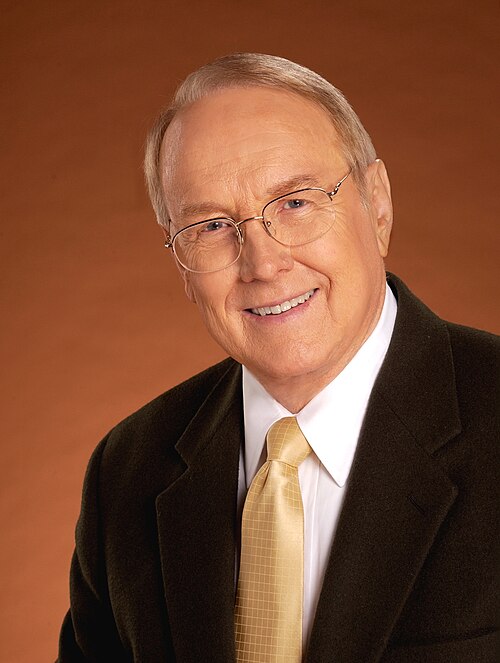
James Dobson, the evangelical founder of Focus on the Family, and advisor to three presidents (Reagan and the Bushes), has died at age 89.

I do not mourn this disseminator of hate—he denounced President Clinton yet supported convicted sexual felon Donald Trump.

He vilified gays, same-sex marriage, and transgender equality, branding the gay rights movement “a particularly evil lie of Satan.”

In 2004, he absurdly warned that legalizing same-sex marriage would open the door to “marriage between a man and his donkey.”

His propagating “conversion therapy” continues to do irreparable harm.

At its peak, his radio broadcasts aired on 1,500 stations, reaching some 500,000 listeners weekly, while his 70 books, many still in print, sold an estimated 50 million copies.

He died a millionaire.

rj

Nature Isn’t All Butterflies

I want to step back from writing about politics, at least for now. We all have our views, and too often—much like professing religious beliefs—we run headlong into barbed-wire intolerance.

Some find distraction, even intoxication, in endless hours of media; others in sports; still others in hobbies that bring both pleasure and mastery—or in the familiar solace of alcohol.

I prefer reading, not just any kind, but what helps me grow and be more aware I’m not alone. Lately, it’s been nature memoirs, especially like H is for Hawk. I want to get back to my beloved Thoreau and not least, Wendell Berry. I miss Tolstoy.

Of course, we shouldn’t extract from nature what really derives from our imposed views such as we find in Wordsworth’s poetry. Nature, as writer James Rebank reminds us, “isn’t all butterflies, sunshine and healing.”

Still, whenever I step outside the human world, there descends this quieting solace, and I think myself made whole again.

rj

America’s 250th Birthday: Reflections

Next year, America will mark its 250th birthday. Unfortunately, this historic milestone is likely to be politicized, with competing narratives of our past reflecting the deep polarization of our present.

But this need not be our path. If we are to bridge rival ideologies and transcend partisanship, we must come together—not in denial of our differences, but in honest recognition of both our shared ideals and our collective shortcomings.

As true patriots, we can celebrate the birth of a free nation while also acknowledging the ways in which we have fallen short of the Declaration’s enduring promise: “that all men are created equal, that they are endowed by their Creator with certain unalienable Rights, that among these are Life, Liberty and the pursuit of Happiness.”

Our nation was forged in both hope and violence. The challenge before us is not only to remember, but to reckon. To share openly what we love about America—and what we do not. And to commit ourselves to remedying the ills that still confront us.

History taught from the periphery, filtered through rigid ideology or simplified into monolithic narratives, is intrinsically dangerous. It rests on a priori assumptions and is too often promulgated with dogmatism. True understanding requires nuance, humility, and courage.

In a very real sense, our genesis as a nation continues. That reality carries both hope and foreboding—hope, if we can get the conversation right; foreboding, if we fail to heed the lessons of our past. As Jefferson warned: “When once a Republic is corrupted, there is no possibility of remedying any of the growing evils but by removing the corruption and restoring its lost principles; every other correction is either useless or a new evil.” Politicians, take heed.

With this in mind, I eagerly await Ken Burns’ six-part PBS documentary on the American Revolution this November. It may be a vital first step in rekindling the national conversation we so urgently need—and in recovering the promise of the American dream.

RJoly

Remembering Edmund White (1940-2025)

I’ve just come off reading Edmund White’s 2005 New Yorker essay, “The Women I Dated as I Tried to go Straight.”

Whatever your sexual orientation, reading Edmund White’s essay is worth your time—the unchecked wit; the metaphoric grace; the vivid, often astonishing anecdotes; the shimmering brilliance that makes experience palpable. Like essayists Orwell, Woolf, or Sontag, he has that rare ability to make you pause, reassess, change course.

Above all, there’s his candor.

This morning I was heartened to see The New York Review of Books commemorating him by featuring six of his essays, written for them over the years.

Just a few weeks ago, June 3, 2025, White slipped into eternity. He had long faced declining health: a heart attack, a stroke, and his decades-long reckoning with HIV. He was 85.

I read somewhere that Vladimir Nobokov, that other preeminent prose prodigy, admired White’s literary acumen, so much like his own. What writer wouldn’t relish Nabokov’s compliment, bestowed upon so few.

White was the high priest of gay literature, writing prolifically on its themes and torments, addressing with fearless clarity the culture’s imposed shackles of shame.

Across five decades, he authored thirty books—novels, memoirs, plays, hundreds of essays, many of them distilling the gay journey into a language of self-acceptance and grace.

A devoted Francophile, he spent nearly twenty years in France, where he would write his erudite The Flâneur and Genet: A Biography.  

In A Boy’s Own Story, a blend of fiction and autobiography, White chronicles the interior landscape of a young gay man confronting the burden of identity.

His 2005 autobiography, My Lives, unflinchingly narrates his first 65 years.

With the essay “The Women I Dated as I Tried to Go Straight,” White reflects on his early sense of same-sex desire, repressed under the weight of cultural condemnation: “In the past, when homosexuality was still considered shameful, I was slow to confess my desires to anyone.”

To atone for those hidden desires, “the fire in the crotch,” White dated women—many drawn to his intellect, good looks, and sensitivity. Empathy pervades his essay as he recalls these women, acknowledging the structural inequities they faced, confronted with a patriarchal hegemony: “I came to think of men as monsters with absolute power, the darlings of the Western world, and of women as their unfortunate victims.…This was what distinguished me from the straight men I knew, who, it seemed, were united in their ability to treat women badly and then laugh it off.”

White’s sympathy undoubtedly owes its genesis to the gay community’s own troubled quest for validation.

I found his retrospective vignettes of women moving, bringing alive each woman’s individuality in vivid, lyrical prose replete with introspective finesse:

Sally was celebrated for her big breasts and her face, which was that of the Apollo Belvedere—bow-shaped lips, a long, straight nose, a wide, domed brow, an ensemble that was classical and noble and oddly mature. She looked like a woman, a grownup woman, not a raddled adolescent. She said little, but she smiled dreamily with veiled eyes. Her smile had a way of lingering two beats too long, after the conversation had moved on to a different mood. Was she lost in her own thoughts and not paying attention? Had someone told her that she was at her best when she smiled? She never guffawed or squealed or made violent movements, though catty classmates told me that when boys weren’t around she was a real sow, rolling on the floor, drinking beer, and giggling with the other girls at obscene speculations about penises they had known or divined through Speedos.

He thinks that had he not been gay, he might have fulfilled their myriad longings: “Unhappy women! How many of them I’ve known. Sniffling or drinking with big reproachful eyes, silent or complaining, violent or depressed—a whole tribe of unhappy women have always surrounded me.”

For most of my life I’ve been a shoulder to cry on, and all of that time I’ve wished I could do more to ease the pain of the women in my life. If I were straight, I could have married one of them. I would have known how to comfort her. I would have worked hard to provide her with the security and even the luxury she required. I would never have run off with another woman. I would have been as sensitive to her needs as a sister, as protective as a father. And I would always have told her where I was going and exactly when I’d be coming home. This was what distinguished me from the straight men I knew, who, it seemed, were united in their ability to treat women badly and then laugh it off.

White remembers falling in love with fellow schoolmate Marilyn Monroe, a recollection tender and adolescent, full of longing and projection:

In the middle of my sophomore year, I was sent to boarding school, at the Cranbrook School for boys, in Bloomfield Hills, Michigan, where I fell in love with Marilyn Monroe. I knew that she was the most beautiful woman in the world, and yet she was in pain, in need. She was unhappy. I believed that I could help her. My fantasies weren’t specific as to what I would actually say to her or do for her. I never got beyond her little smiles of love and recognition, which burned with a brighter and brighter glow.

My favorite daydream was that she’d come with me to my senior prom. All the other guys would be astonished: the toad, Eddie White, was really a prince. I pictured her on my arm, her sequinned gown glittering, her voluptuous body undulating as we entered the dining hall, which had been transformed by crêpe paper into a ballroom. It was like a mermaid’s visitation. The thin boys with their brush cuts and spotty faces, their dinner jackets and burgundy cummerbunds with matching bow ties, would gape at us. No way, man, the biggest dweeb of them all with . . . Marilyn!

Fortunately, not all the women in his life were unhappy. Some lived fulfilled lives outside a dependency on men, easing his guilt:

What I loved about Anne and Marilyn {another Marilyn}, even Alice, Sally, and Gretchen—was that they weren’t unhappy. Marilyn wanted nothing from me but my friendship, and she has it still.

Because she and the others I’ve written about here were the first women I knew who weren’t unhappy, who never once made me feel guilty, they showed me the way to friendship with women. 

White’s essay emerges a paean to women across the years who were there for him in the hard places, lending solace and fostering courage.

I will miss Edmund White keenly, a voice in the wilderness.

—rj


Finding the Virtuous in Troubled Times

Reading the news, we’re likely to despair of finding good people who inspire through example. But they exist—people like John Woolman, Oskar Schindler, Nelson Mandela, Jimmy Carter, the Dalai Lama, and Pope Francis. This morning, I was reminded of this in reading Marcus Aurelius’ observation:

“When you need encouragement, think of the qualities the people around you have: this one’s energy, that one’s modesty, another’s generosity, and so on. Nothing is as encouraging as when virtues are visibly embodied in the people around us, when we’re practically showered with them. It’s good to keep this in mind” (Meditations, Book 6).

As my favorite journalist, Nicholas Kristof, writes in his superb memoir, Chasing Hope, “I’ve interviewed warlords and terrorists, but the people who have left the deepest impression are the saints who give their all to make this a better world”

—rj

Finding Myself and Contentment, Too

Time moves swiftly, and I’m astonished that twenty years have passed since I retired from teaching. On the whole, these years have been rich and fulfilling, offering me the space to rediscover myself, travel widely, and immerse myself in new pursuits—whether delving into meditation, completing a course on the Brazilian basin, or exploring the ever-expanding frontiers of AI. Most recently, I’ve taken up the challenge of learning to read Italian.

I read voraciously across a vast range of subjects, continually captivated by the alchemy of syntax and the resonance of wisdom—each new insight opening doors to deeper understanding, heightened empathy, and more meaningful conversation.

In essence, I’ve spent these years following my own path, embracing the art of self-cultivation, and discovering a quiet, enduring contentment—even in a world often burdened with turmoil.

rj

The Greek Ideal We Need Today

The Greeks called it aretè, a concept I’ve never forgotten since my beloved early professor, Thomas Pappas, introduced me to it.

Often translated as “virtue,” it encompasses far more—not just moral goodness, but the pursuit of excellence in every endeavor. Plato expanded the idea to include wisdom, justice, and self-control.

Aristotle, in turn, emphasized that aretè arises from reason and consistent practice. As he put it, “Moral excellence comes about by cultivating habit. We become just by doing just acts, temperate by doing temperate acts, brave by doing brave acts.”

Examples of aretè abound in classical literature. Take Odysseus, for example, in The Odyssey, undertaking a ten year journey to reach home, overcoming every obstacle thrown his way through intelligence, resilience, courage and leadership.

Antigone provides another example of aretè. Defying King Creon’s decree, denying her brother burial, Antigone exemplifies moral courage in defying the autocratic king.

Does aretè exist today?

Nelson Mandela comes to mind. Imprisoned for 27 years, Mandela opted for reconciliation over bitterness, unity over revenge in post-apartheid South Africa, reflecting aretè in its highest moral and political form.

Aretè isn’t reserved for just the famous; it can be seen in frontline workers, teachers, activists, and individuals who strive for excellence in their fields, steadfast in upholding ethical principles.

In all things, excellence matters, and in these tumultious times, we need areté more than ever.

—rj

When the Shades Are Drawn: The Decline of Literary Reading

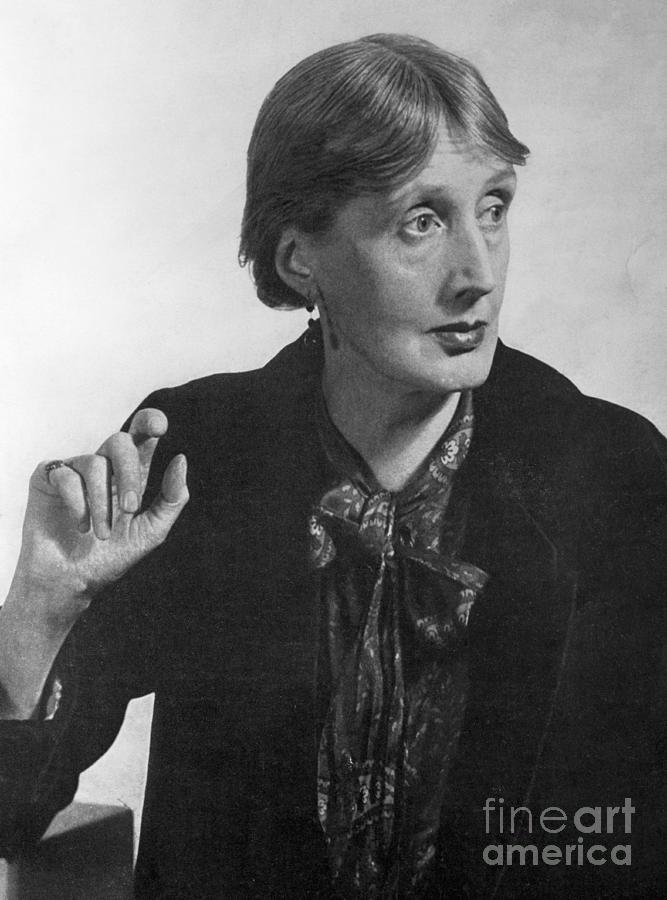
I’ve been an avid reader of cerebral Virginia Woolf for many years, enjoying not only her novels, but her highly polished essays such as “A Room of Her Own.” Thanks to the Yale Review Archives, I’ve just read “How Should One Read a Book?” (September 1, 2026). It was a different world then, absent of electronic media.

Today, reading is in sharp decline. According to the National Assessment of Educational Progress (February 2025), 33% of eighth graders lack basic reading skills, and only 14% of students read daily. Among adults, just 40% read a literary book.

This trend exacts a cost, as literature cultivates empathy and instills humane values. Active readers are more engaged in civic and cultural life. They contribute to their communities. In contrast, electronic media foster shorter attention spans and weaken intellectual skills (National Endowment for the Arts Assessment).

With AI increasingly doing our cognitive heavy lifting, our ability to think critically is further eroding.

If Woolf believed literature offered us a window into the world, today it seems the shades have been drawn.

—rj