Keeping Up With The Greeks

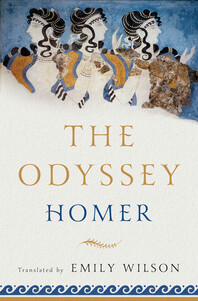
When Christopher Nolan decided to film The Odyssey, he had no shortage of distinguished English translations from which to choose. From among them, he chose Emily Wilson’s, remarkable for its freshness, clarity, and contemporary English while remaining faithful to Homer’s poetry.

Wilson, a classics professor at the University of Pennsylvania, has also translated The Iliad. Unlike some modern “translators,” whose work consists largely of revising earlier English versions, Wilson translates directly from the ancient Greek text. She is equally at home in Latin, a reminder of the extraordinary linguistic preparation classical scholarship once demanded.

That accomplishment is no small feat. Were Homeric Greek taught as a modern foreign language, its highly inflected grammar would make it among the most demanding languages to master, up there with Chinese, Arabic, and Russian.

Wilson also reads classical Greek fluently, the evolved language of Plato, Sophocles, Thucydides, and Aristotle with its unique vocabulary and grammar.

My own acquaintance with the classical languages began in high school, where I studied Latin for two years. The curriculum offered four years, but I opted instead for French and German. Today, my old high school no longer teaches those languages, having replaced them with Spanish.

A few years later, I enrolled in an intensive eight-week Harvard summer course in Koine Greek, the lingua franca of the eastern Mediterranean during the Roman Empire and language of the New Testament. Easier than Homeric or classical Greek, it nevertheless presents formidable challenges.

Our Australian instructor insisted that we learn Greek actively rather than merely decipher it. Instead of translating Greek into English, we were expected to orally translate English into Greek. With only ten students in the room, we couldn’t evade being called upon repeatedly to think, speak, and stumble in the language in real-time. That meant knowing where the accents fell for each word, often very arbitrary, unlike Spanish and Italian.

It was a demanding approach, but by the end of the course I could work through New Testament passages with little more than the aid of a dictionary. Most of that Greek has long since vanished, although I can still read the alphabet, which proved unexpectedly useful years later when I studied Russian, whose Cyrillic alphabet derives in part from Greek.

Impressed with my teacher, I asked him how long he had studied the classical languages. His answer has remained with me ever since: “Thirteen years of Latin; eleven years of Greek.” I was in good hands.

I’ve often regretted not keeping up with Greek, a language renowned for precision in contrast to English, whose richness often lies in words layered with multiple shades of meaning, wonderful for poetry, but often less exact. Reading Greek reveals layers of irony, structural symmetry, and philosophical nuance that disappear in translation.

Growing up in Massachusetts, one could spend a Saturday “junking” through secondhand bookstores and antique shops, coming away with Latin and Greek grammars for a dime apiece, evidence of the former preeminence of classical languages in the curriculum of schools such as Boston Latin School.

Long before my own time, that same New England landscape was shaped by minds saturated in the classics. Ralph Waldo Emerson read Plato in the original Greek, finding in those ancient dialogues the architecture for his own transcendental philosophy. His friend Henry David Thoreau famously carried his Greek text of The Iliad with him to Walden Pond, writing in Walden that true literature must be read in the language in which it was written—the ancient letters “carved out of the breath of life itself.”

Much of that world has faded. Outside a handful of elite institutions like Deerfield Academy, Groton, Phillips Exeter, or in schools like England’s Eton, the sustained study of Latin and Greek has become increasingly rare. Wilson herself began studying both languages at Oxford High School, an independent all-girls school in Oxford before reading Classics (“Greats”) at Balliol College, Oxford, and earning her doctorate at Yale.

I sometimes imagine what it would have been like had I continued with Greek throughout my life: to read Sophocles, Euripides, Plato, and Homer in their own words, perhaps allowing my synapses to mount a quiet resistance to incipient forgetfulness.

I think, too, of modern writers like J.K. Rowling and Toni Morrison, whose formal classical training echoes structurally throughout their work. And yet, the figure who haunts me most is one who had to build her own door to the ancient world: Virginia Woolf.

Denied the university education her brothers received, simply because she was a woman, she taught herself Greek and continued reading it throughout her life. For Woolf, Greek was not an academic ornament, but a living intellectual companion shaping her prose, her essays, and her understanding of literature.

Each year I return to her magnificent essay, “On Not Knowing Greek” (1925), invariably lingering on her summarizing sentence:

“It is to the Greeks that we turn when we are sick of the vagueness, the confusion, the Christianity and its consolations, of our own age.”

—rj
Why Chris Nolan’s The Odyssey Is A Must See

I haven’t been to a movie theater in five years. With inflation, it’s become an extravagance, unnecessary when you can simply wait a few months and rent the film for home viewing.

Having said that, and still believing it, I fully intend to break the habit for Christopher Nolan’s The Odyssey, opening in theaters July 17.

Perhaps I’ve fallen prey to the hype, but I have an almost irresistible urge to see this one on the big screen. I taught Homer’s epic for thirty years, and every time I returned to it I discovered something I had somehow missed before.

If pressed, I would call The Odyssey the greatest saga ever told. Born of an oral tradition nearly three thousand years ago, it remains astonishingly contemporary, its influence reaching through Western literature: Virgil’s The Aeneid, James Joyce’s Ulysses, William Faulkner’s As I Lay Dying, Derek Walcott’s Omeros, Nikos Kazantzakis’s The Odyssey: A Modern Sequel, Margaret Atwood’s The Penelopiad, and countless other works that consciously echo Homer’s enduring voyage.

Joyce called it the most universal of stories, and I think he was right.

Within its pages are some of literature’s most enduring archetypes, recalling Joseph Campbell’s The Power of Myth: the hero’s journey of separation, ordeal, and return; the enchantress and the temptress; the faithful spouse; judgment, homecoming, and restoration.

Then there are the symbols: the sea, the descent into the underworld, Penelope’s shroud, the bow that proves identity, the purifying fire.

Three great themes, however, lend the poem its lasting power.

First, assertion versus passivity. Thoroughly existential long before existentialism, The Odyssey insists that we become ourselves through engagement rather than retreat, through action rather than surrender. The Lotus-Eaters, Calypso, and the luxurious ease of Phaeacia all tempt Odysseus to abandon his purpose.

Second, boundaries. Again and again Homer reminds us that there are limits human beings ignore at their peril: reverence for the sacred, loyalty to family, fidelity to one’s companions, respect for hospitality. Even Scylla and Charybdis embody the necessity of steering between destructive extremes.

Finally, there is cosmic evil. Whether arising from nature’s indifference or human cruelty, evil is real, unmoved by moral persuasion, and must be recognized before it can be confronted. Odysseus’s encounter with the Cyclops remains one of literature’s unforgettable dramatizations of that truth.

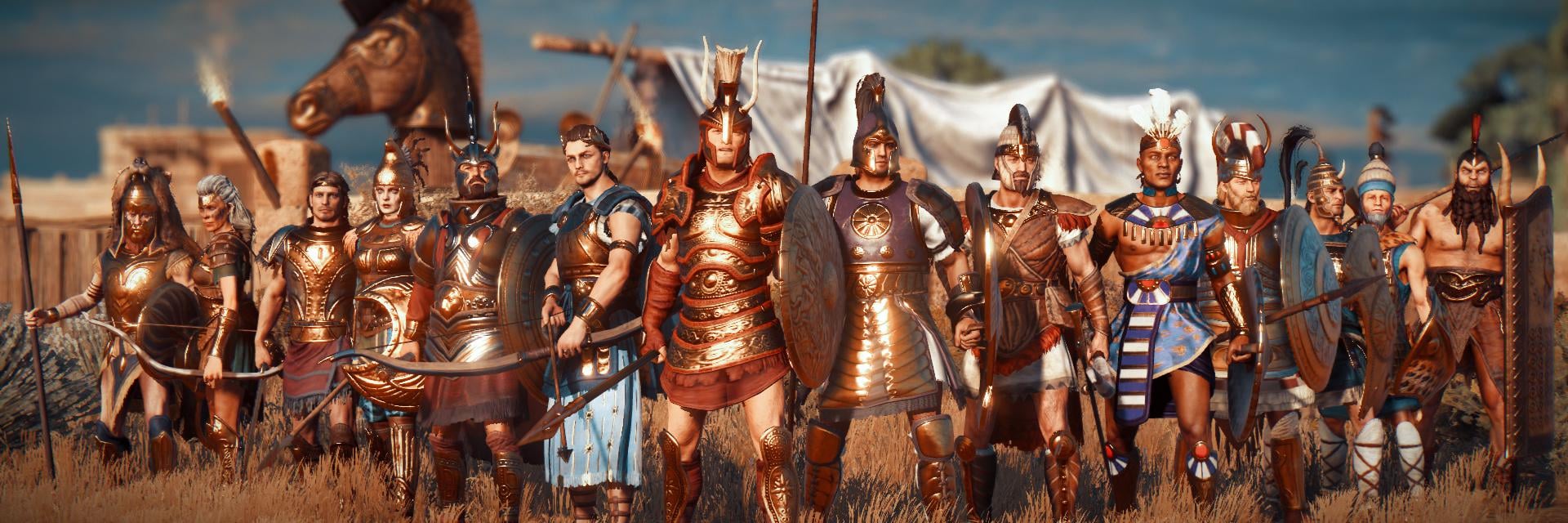
Some critics have faulted Nolan’s film for historical inaccuracy. Matt Damon, they say, doesn’t look Greek. The armor is not archaeologically faithful. Telemachus reportedly calls his father “Daddy.” Most controversially, Nolan casts the Oscar-winning Lupita Nyong’o in a double role as Helen of Troy and Clytemnestra.

None of those objections strikes me as especially important.

Few moviegoers will care whether the armor is perfectly Mycenaean. As for the contemporary dialogue, Nolan appears to have drawn heavily from Emily Wilson’s celebrated translation, whose accessible modern English has introduced Homer to an entirely new generation of readers.

That seems to me a virtue, and not a flaw. The Odyssey deserves as wide an audience as possible, especially among younger readers, upon whom its future ultimately depends.

As for Nyong’o’s casting, Elon Musk condemns it as “groveling” to “woke” expectations. The resultant backlash, unfortunately evident in some 600,000 dislikes of YouTube’s final trailer, says far more about our present moment than it does about Homer.

I find Nyong’o a magnetic presence, and admire Nolan’s willingness to ignore predictable objections. We inhabit a global culture now. Homer belongs to all of us.

Advance sales suggest that plenty of people agree. The film’s 70mm IMAX screenings have been selling out months in advance.

My wife and I already know where we’ll be.
In our seats. And with buttered popcorn, too.

–RJ

The Greek Ideal We Need Today

The Greeks called it aretè, a concept I’ve never forgotten since my beloved early professor, Thomas Pappas, introduced me to it.

Often translated as “virtue,” it encompasses far more—not just moral goodness, but the pursuit of excellence in every endeavor. Plato expanded the idea to include wisdom, justice, and self-control.

Aristotle, in turn, emphasized that aretè arises from reason and consistent practice. As he put it, “Moral excellence comes about by cultivating habit. We become just by doing just acts, temperate by doing temperate acts, brave by doing brave acts.”

Examples of aretè abound in classical literature. Take Odysseus, for example, in The Odyssey, undertaking a ten year journey to reach home, overcoming every obstacle thrown his way through intelligence, resilience, courage and leadership.

Antigone provides another example of aretè. Defying King Creon’s decree, denying her brother burial, Antigone exemplifies moral courage in defying the autocratic king.

Does aretè exist today?

Nelson Mandela comes to mind. Imprisoned for 27 years, Mandela opted for reconciliation over bitterness, unity over revenge in post-apartheid South Africa, reflecting aretè in its highest moral and political form.

Aretè isn’t reserved for just the famous; it can be seen in frontline workers, teachers, activists, and individuals who strive for excellence in their fields, steadfast in upholding ethical principles.

In all things, excellence matters, and in these tumultious times, we need areté more than ever.

—rj