Internet Ghouls Among Us: The Robin Williams Aftermath

williamsI haven’t any doubt that the vast majority of us mourn the tragic death of Robin Williams, who brought laughter into our hearts and with it, wisdom too. And yet there are always a few, the ghouls  I call them, who surface in such tragedies to verbally vandalize our grief with mindless, and often, acerbic commentary.

Recently a bicyclist was killed here in Lexington KY by a speeding motorist, only to have one Facebook reader comment that bicyclists shouldn’t be on the streets. Pray then, where should they ride? On sidewalks?

But it gets worse than such obvious, and silly, over-generalization. We’ve all come across those who practice a calculated meanness in exploiting social media for personal whim. These ghouls cannot tolerate an opinion different from their own, particularly when it comes to religion or politics, subjects notorious for generating heat.

But ghouls also show up in Amazon book reviews, for instance, or even in discussion forums that, more often than not, are dominated by one perspective. Cross the line, and you get personal attack rather than reasoned argument. I saw this recently in a forum perusing the effectiveness of a low carb vs low fat diet. When one reader contended graciously for the low fat approach the forum became a piling on of verbal abuse. I dub this the cascading effect, or the tendency of one negative comment to generate others.

But returning to Robin Williams, his daughter Zelda has just closed her Twitter account. She had been receiving photo shop images of her father’s body along with obscene commentary.

What transforms otherwise ordinary folks we rub elbows with everyday into Internet ghouls?

It goes back to anonymity, or the disconnect effect. When we lose face-to-face contact replete with body language and verbal cues of tone, we drift perilously close to abandoning the etiquette of meaningful communication in losing connection with our readers. Mental short cuts take over and we say dumb things.  We forfeit empathy.

But in all fairness, the disconnect effect isn’t confined to the Internet. I have known this first hand as a English teacher at the college level. It’s the writing act itself that submits us to this danger, whether an email, a letter, or an opinion piece in a newspaper. Accordingly, the fundamental axiom of all effective communication, written or oral, is maintaining awareness of one’s audience, which should spill over into our selecting our words carefully, monitoring our tone, shaping our transitions, being open to a reader’s perspective. Mindfulness is the seasoning of all effective communication.

And yet my counsel hardly proves sufficient to hold off the myriad ghouls who troll the Internet, unleashing their venom abetted by anonymity, or what Stephen King once aptly called “the alligators resident within human nature.” Frustrated with their own lives, envious of others, low in self-esteem, they seek to empower themselves by verbally dismembering others

While the social media can be invaluable in consolidating humanity for good ends, by its very nature, it is not without risk, so best be careful where you tread and cautious in what you reveal about yourself.

The vast majority of Internet users are motivated with good intent; but it takes just a few to spoil things for the many.

–rj

Teach me….

oakTeach me to love all things, big and small; clean and dirty: the burr oak massive with age; the silent worm that threads the earth; my fellow beings, rich or poor, sung or unsung.

Teach me to be patient, learning first to forgive my own infidelities, that I may love others more.

Teach me the wisdom of the past, of hope invested in the future–but best, the gift of this new day.

Teach me to persevere up the mountain, to resist the stitch in my side that urges quitting and with it, forfeiture of the runner’s prize.

Teach me never to love anything so much that I cannot accept its loss; the inevitability of change and ending and, someday too, my own.

Teach me the right of others to discover themselves and walk a road different from my own; to listen that I may hear and not judge.

Teach me what true freedom means: to choose without the weights of culture or tradition; the courage to revoke what inhibits happiness; the right to self-knowledge and to live in accord with it; a resolve to accept the bottom line cost in living free

Teach me to discern between having and being; to know the folly of the former, the ecstasy of the latter.

Teach me courage in a world with dark valleys; boldness to speak for those who grieve, the excluded poor, oppressed minorities, women and children, and the animals too.

Teach me to love our wounded earth, to nourish it wherever I am as though it were my own garden.

–by rj


A lingering malice that kills

To be happy in life comes down to feeling good about yourself. It isn’t about money, popularity, power, or other commonly assumed indicators of success. In fact, these may actually be forms of over compensation, masking our sense of unworthiness or inferiority.

Unfortunately, most of us think we have to earn our self respect by proving ourselves worthy in ways others will approve. Consequently, we allow others to become monitors of ourselves and miss living authentic lives. We are what we think about ourselves.

Where does it all begin, this failing to accept ourselves? Clearly, much of it comes from our childhood experiences, or the voices of the past, as these lay the foundation for self-esteem and the confidence it fosters–our ability to view others as friends, not rivals; colleagues, not conspirators; ourselves as lovable, attractive, and admired; not difficult to like, be around, or embarrassing.

Surprisingly, these voices often find their sources in the “friendly fire” of parents, teachers, siblings, and even playmates, who label us as unworthy through physical abuse, verbal assault, neglect, abandonment, and the social apartheid of cliques.

As a consequence, it’s been estimated that nearly 50% of us suffer from anxiety in its myriad forms–worry, panic, dread, phobias and defensive rituals. Unsure of ourselves, we relive our childhood trauma whenever we encounter people or circumstances echoing the voices of our past, or what we’ve assumed to be true about ourselves. The past colors our perceptions, often resulting in a paranoia that we aren’t liked, are being talked about, even plotted against.

Ironically, our negative attitude may turn our suspicions into reality, driving away the very people whose friendship can reassure us that we have worth. We can’t chance our being rejected yet again.

I’m struck with how many of those who get caught up in violence, frequently mass shootings, are unable to handle perceived rejection and, accordingly, act out. The recent killings of six young people in Santa Barbara by Elliot Rodger, age 22, can be added to a lengthy list. The focus of his anger shows the pattern–he aimed to get even with the women who had rejected him and the men they chose instead.

I’m aware that it can be argued that a good deal of such violent outbursts stems from mental illness. What normal person could possibly do such things? The fact is, they do, and what constitutes mental illness is often shrouded in legal ambiguity with court appointed experts often unable to agree. The vast majority of those with mental illness do not commit such acts anyway, and every day people we often live or work with often do.

Unfortunately, a good many of us are passive-aggressive, hiding our inner turbulence, only to have it spring like a panther into the open, suddenly, surprisingly, and vehemently. “But he seemed so quiet, always said hello, and sometimes offered help.”

By the way, you can find a good deal of what I call “angst poetry” online. Take this poem, for example. Appropriately, it’s titled “Rejection.”

 What are we so afraid of?
Afraid of wanting, but not being wanted
Afraid of feeling, but not being felt
Afraid of asking and being denied

 We all need love–and some of us, because of our childhood ghosts, require it even more.

–rj


Our Survival at Stake: Do We Have a Future?

Sir Francis Bacon
Sir Francis Bacon

As much as we can do it, we should avoid living our lives on assumption that a belief is true simply because we’ve been told it’s so by family, government, religion, politics, economics, or the collective culture in which we’ve been raised.  The only fixed verities are those within the scope of natural law with its defined predictability confirmed by replication.  Our responsibility should be to explore those verities affecting our well-being and allow them fullest scope.  We never escape the inexorable operation of those laws, for whatever we do, there is always a consequence. But sometimes we get to choose.

There is no inherent purpose to life, though many moralists like Tolstoy have implied one in asking, How ought we to live?  Nature works through selection only, reinforcing those causal elements promoting regeneration.  Often it works with infinitesimal numbers, a million seeds to effect a single germination.  It has no ethics.  It is devoid of Mind.

We pride ourselves on our freedom, but we are overwhelmingly conditioned by biology and complex behavioral repertoires sanctioned or extinguished by environment.  It is not the future that shapes us, but what has happened to us that defines what we think and do.  Conversely, this defines our tragedy that may doom us on this earth.

We were not born into a preset regimen other than one genetically imposed, so Locke was right about the tabla rasa, or clean slate, notion of our infancy.  Preconditioning is what happens as we make our journey. It follows that each of us needs to recover that initial state; that what I believe or do should be based on immediate consequences rather than because I am told to do so by law,  government, religion or individuals.  We do need laws in a world of many to ensure equal access to the trough in the context of safety, but there is nothing sacrosanct about any law, belief or opinion that allows it to go unexamined.

One of the inherent drawbacks of the human condition is superimposing belief and practice on others.  History, accordingly, is often bloodied with the cruelties of absolutism forced on others, often in the context of religion or secular ideology.  This week, the Ukraine remembers its 3 million dead, starved to death in 1932-33 by a Stalinist regime bent on enforcing collectivization of that nation’s farmland.

Other than climate change, humanity’s greatest threat comes from Islamic extremists bent on returning to the way of the sword, or Jihad, in imposing their beliefs.  The danger lies in Islam’s not merely being a set of beliefs, but a whole way of life regulating every human behavior, codified ultimately in Sharia mandate.

I alluded earlier to the behavioral quirk in us that may cause our doom.  Conditioned as we are by immediate consequences, we often cede the future for the dividends of the present.  Such is our present circumstance with meeting the exigencies of global warming, declining resources, and burgeoning population. 

In short, unless we can render the future more palpable, allowing us to help shape it for those who come after; indeed, assure its livability with reasonable happiness, then we may be moving into our final chapter.  While altruism is a tenant within humanity and perhaps, in evolutionary vein, promoting survivability (see E. O. Wilson, Sociobiology, 1975), we too often exercise our limited freedom for the immediate.  Like the heroic soldier forfeiting his life on the battlefield to save the lives of his fellows, we need to emulate a consciousness of others that may often conflict with our personal happiness and achievement.

Evolution, paradoxically mindless, has always arbitrated for the future over the present as denominator of survivability and made you and me possible.

The Renaissance philosopher I’ve admired all my life, Francis Bacon, summed it all up in saying, “Nature to be commanded must be obeyed.”  Do not base your life on the beliefs of others.  Live for the world of ideas and sort out those verified by the best science.  Live in the fullest moment of today, but not without regard for the future of your fellows.

–rj

Medicine discovers meditation

stressFunny how the poets I read and taught in college have a way of popping up in my mind, even though I’ve been away from that scene for seven years now.  Take, for instance, the English poet Wordsworth.  He’s famous for his nature poetry and talks about “wise passivity,” by which he meant suspending the thinking part and simply letting the senses imbibe the stillness we often find in nature and arriving at the things that really matter. I’d say he was right on the mark, especially with our modern way of living crowding our space to be ourselves, muffling the intuitive stream that fosters coherence and confers tranquility.

A few days ago I was rummaging through the Tao Te Ching, which I like to do every now and then, since it’s densely packed with wise counsel, and came upon this passage that got me started on this present blog entry:

Act by not acting,
Accomplish by not straining
Understand by not knowing. (63)

 Simple but profound, such counsel promotes understanding and, with it, healing.  We need to teach ourselves to be still that we may intuit the essentials and practice mindfulness, something the East with its contemplative traditions discovered several millennia ago, anticipating poets like Wordsworth and, now, contemporary medicine.  The ancients were right all along about meditation as essential to our best selves.  In a time of ever increasing stress, we need its solace more than ever.  Consider this sober warning in the Harvard Newsletter (March 2011):

Over the years, researchers have . . . gained insight into the long-term effects stress has on physical and psychological health. Over time, repeated activation of the stress response takes a toll on the body. Research suggests that prolonged stress contributes to high blood pressure, promotes the formation of artery-clogging deposits, and causes brain changes that may contribute to anxiety, depression, and addiction. More preliminary research suggests that chronic stress may also contribute to obesity, both through direct mechanisms (causing people to eat more) or indirectly (decreasing sleep and exercise).

With available electroencephalogram testing of alpha brain waves along with pulse rate monitoring and even MRI brain scans focusing on “gray matter” in the brain areas responsible for memory, self-awareness and empathy, we now have empirical data gathered by professionals that can be replicated.  In sum, we know meditation works, which means that it can assuage pain and prevent or heal some of our entrenched ills, whether physical or psychological. The paradigm of medical reliance on medication, surgery, diet and exercise is expanding.  In short, a quiet revolution is underway as medicine discovers the ancient axiom that mind and body are one.

Perhaps its seed was planted most notably in the fascination the Beatles showed for Maharishi Mahesh Yogi, founder of  Transcendental Meditation.  Luminaries such as film director David Lynch; TV notables, Ellen Degeneres and Oprah swear by it.  Hey, George Stephanopoulos is into it too.  TM prides itself on research findings, at this juncture, some 700 plus, allegedly confirming its effectiveness in reducing stress, depression, high blood pressure and cardiac risk.
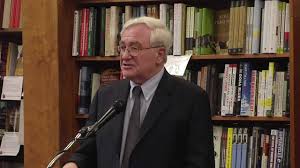
BensonMedicine started to look seriously at a supplementary role for meditation with Harvard’s Herbert Benson putting it to the test via the rigors of refined imaging, using TM volunteers.  As he put it, “Three decades ago it was considered scientific heresy for a Harvard physician and researcher to hypothesize that stress contributed to health problems and to publish studies showing that mental focusing were good for the body.”  Benson opened up medicine to meditation’s possible inclusion with his best selling (four million copies) The Relaxation Response in 1975.  “With meditation alone, the T.M. practitioners brought about striking physiologic change.”

Benson subsequently converted TM into a simple two step approach:  repeat a word or phrase of your own choosing and disregard distracting, every day thoughts by returning to your word or phrase.

Benson’s work was soon popularized in the public world through Norman Cousins, physician Dean Ornish, and a Barbara Walter’s ABC interview.  Still, the medical community for nearly 15 years dismissed Benson’s findings as largely a placebo effect.  That changed as other universities took up their own research, supporting Benson.  Today, Harvard has launched an endowed professorship dedicated to continuing research and treats thousands of clients seeking relief from stress with the Benson method.  Relaxation Response therapy is, in fact, incorporated into specialized programs at Boston’s Harvard linked Beth Israel and Massachusetts General hospitals, with fourteen affiliates nationally.

Today the meditation mainstream seems to be shifting to what’s called “mindfulness meditation,” an adaptation of the Zen approach to medication pioneered by Jon Kabat-Zinn at the University of Massachusetts to treat patients with debilitating diseases and chronic pain.  Like relaxation response meditation, mind-based stress reduction, or MBSR, is science centered, except it differs in how it approaches meditation.  Instead of a word, or mantra, and returning to it when your thoughts wander, you allow your thoughts, noting them, though not analyzing them, returning to focus on your breathing.  The idea is to objectify rather than personalize your thoughts, enabling you to better deal with them.  It’s been shown to activate the gray matter in those areas of the brain responsible for memory, a sense of self and empathy.  It inculcates self acceptance and helps us see that memory belongs to the past and isn’t real.

As such, it works well as a backdrop to the now widespread cognitive approach in counselingYou can actually practicemindfulness” anywhere, or while walking, listening to music, taking in conversation.  Allegedly, it can, with time, help  you become more empathetic through your heightened awareness of your own responses and thus a more diligent listener in social contexts

Whether you use a mantra or mindfulness approach doesn’t really matter since both result in a relaxation effect, though in my very limited experience I find the mantra version easier than mindfulness, which by its very nature can sometimes be distressing.  But there are many kinds of meditation formats, so you may want to search for what makes you most comfortable.  What’s worked especially well for me is known as Restorative Yoga, a derivative of Hatha yoga combining breathing, imaging, muscle relaxation and mild body postures.  I was introduced to it through Nurrie and Rick Stearn’s helpful book, Yoga for Anxiety:  Meditations and Practices for Calming Mind and Body.  Yoga might just be the most integrative of all approaches, administrating to both body and spirit.

I have to be candid: meditation does have its skeptics, some of them arguing that the alleged empirical effects can be attributed to advocate or placebo causes.  Personally, I’ve always found the latter untenable, since if it promotes healing, then the placebo response actually validates the psychosomatic power of the mind, which is ultimately what meditation is all about.

Others argue that random controlled trials (RCT), the gold standard, are lacking, and I’ve found this to have validity; for example, if you turn to the highly regarded Cochrane database, combing scores of medical journals, only one study turns up and it’s equivocal, recommending more randomized testing.

For all the claims that meditation can reduce the risk of heart attack and stroke, the American Heart Association has reserved judgment.  While its definitive report, published in April of this year, does indicate that TM can reduce blood pressure, it urges more research and assigns a lower rating to alternative meditation therapies.  I don’t see a problem here.  Meditation shouldn’t occur in isolation, but in concert with medication when needed, surgery when required, healthier food choices, and regular exercise as constants.

Meditation enthusiasts will rave about its benefits, how it’s made them calmer, more relaxed, better able to deal with both themselves and others, etc., but this is the stuff of anecdote, not science,  Just how do you quantify happiness?  And yet if we see behavioral change such as freedom from drugs; a happier disposition; a gentler, more loving person, we may not be able to measure it, but we know something is going on.

Frankly, I’m impressed with what doctors like Benson and Kabat-Zinn have uncovered.  To be sure, it’s a new science with bumps that need smoothing out, but its future lies in its promise and the empirical base on which it rests.

It seems The American Psychological Association APA) is on board, giving a resounding endorsement to MBSR.  (See Davis and Hayes.  “What are the benefits of mindfulness?” Monitor on Psychology.  July/August2012.  Vol. 43, No. 7.)

Of course, you can resort to SSRIs like Effexor, Zoloft and Lexapro, or quick fixes through benzies like Xanax or Valium, but they come with baggage, or side effects, sometimes worse than any proffered cure.  By the way, research has demonstrated that MBSR is at least half as effective in treating stress as SSRIs.  It’ so effective that the UK’s National Institute for Health and Clinical Excellence has listed MBSR among primary therapies for depression.

As a final caveat, do you remember James Randi, skeptic extraordinaire, debunker of the paranormal?  Though he dismisses TM for its lavish claims that include levitation and psychic prowess to influence social behavior, he nonetheless can accept a relaxation response as ameliorating physical and psychological health, whether through meditation or some other means like music or just plain rest.

That makes sense to me.  After all, isn’t this what meditation comes down to–indulgence in time out?  We all need that.

Teach us to be still.

–rj


Related articles

Memory: Something to be Cherished

Do you ever get something tossing around in your head that seemingly you can’t get rid of no matter how you try?  I get that way when I listen to music, for example, the lyrics wearing down my synapses like “We had it all/ Just like Bogie and Becall/ Starring in our old late, late show/Sailing to Key Largo.”  But sometimes it’s a memory that pops up, crazy like, since there’s no triggering context, maybe reaching way back into early childhood’s opaque alleys.

Sometimes something sticks because we associate it with an event or person that brought us great happiness or, alas, considerable pain.   Maybe we never forget anything really, the mind simply archiving everything that makes us who we are. While time may soften the edges of past experience, its essence remains

Freud built his formidable psychological schema on memory, which he argued was always latent, and thus influential on what we do and say, want and fear.  His former protégée, Carl Jung, contended memory transcended time and individuals, ultimately taking on evolutionary status as archetype, or primordial pattern, shaping both our thinking and behavior.  According to Jung, the repository of memory is defined best in myth, which reenacts the human repertoire of experience.  Its roman a clef  lies in symbols compressing our individual and collective destinies.

On the literary front, some of our foremost fiction writers like Joyce, Proust and Faulkner have made a legacy of memory in works like Ulysses, Remembrance of Things Past, and The Sound and the Fury.  In poetry, the English poet Wordsworth famously defined poetry as “emotion recollected in tranquillity,” building his poetic artifice on reflecting past experiences.  Perhaps the bottom line modus operandi latent in literary creation is to keep memory, or human experience, alive.

Often memory over time embellishes or distorts as we add or subtract.  It’s a good reason to keep journals. Verbal photos I like to call them.  Poor recall is the nemesis in legal matters when witnesses can’t accurately recall what they saw or heard or when witnesses prove contradictory.

Too often we take our ability to remember for granted, when the truth is it begins to decline as we age and increasingly we can’t find those damned keys, or forget what we came to the store for, or that doctor’s appointment.  Nothing to be worried about, save when forgetfulness takes on habit such as:

1 .    We repeat the same questions.

2.    We struggle for common words.

3.    We find it difficult to follow directions

4.    We lose our way in our neighborhood.

5.    We put things in odd places.

6.    We can’t recall something recently learned.

If I lost my sight or hearing, this would be debilitating and surely grievous, yet I think not equal to the loss of recall, condemned to an eternal present and essentially returning me to an infantile state as in dementia and its acute species, Alzheimer’s, that wipes away everything defining my humanity and lending  my life significance.

I don’t know, nor do any of us, what Fate holds, but in the meantime, I choose not to take this gift of memory for granted but to cherish it by nurturing it through learning new things, exercising regularly and vigorously, and eating nutritious foods.

Doctors who specialize in aging increasingly report that dementia may not necessarily happen if we keep our brains healthy by doing the right things.  Dr.  Majid Fotuhi, Chair of the Department of Neurology at Johns Hopkins, informs us that Alzheimer’s has only a limited genetic factor.  It can be delayed and even prevented with lifestyle changes undertaken in midlife.

I choose to run with that hope,

–rj

What Being Centered Really Means

True peace is achieved
By 
centering
And blending with life (Tao 22).

You hear a lot about being centered, but just what is it?

The ancient Greeks advocated “the golden mean,” or middle way.

Roman writer Vergil based his Aeneid on Pietas, or something akin to self-control.

Perhaps drawing on his Hellenic education, St. Paul advised moderation in all things.

Excess is always dangerous in any pursuit, for it forecloses on alternatives that may prove more tempered and thus wiser than those fostered by our passions.

Unfortunately, indulgence, or excess, defines history with its repeated accounts of obsession gone astray for power and possession.  History is narcissism writ large.

At the everyday level, we hear continually of people who have ruined their lives and hurt others simply because they were unable to rule themselves.

Because self-interest especially dominates in politics and religion, I generally am suspicious of them both.  As I write, there’s the rancor in Congress over raising the debt ceiling so government can pay its bills.  Currently, however, a persistent few are willing to shut down government unless they have their way.  As I’ve written  in an earlier blog, political parties lead to narrow partisanship, as President Washington so wisely observed in his Farewell Address.

In religion, we needn’t dial back to the Crusades or Inquisition to access the violence of fanatical fundamentalism.  If you look at a worldwide map, you’ll find religious mayhem abundantly distributed, whether in the Middle East, India, Pakistan, Thailand, Burma, the Philippines, and Indonesia.  As for Africa, there’s last week’s heinous massacre at Nairobi’s West Gate Mall in Kenya by Somali militants, who selectively shot non-Muslims.  Nigeria has its own ongoing debacle with Islamic extremists. These things happen because without centeredness we lack balance and thus forfeit stability and often our humanity, too.

On the other hand, fraudulent centeredness can possess its own rigidity if focused merely on ourselves.  True centeredness serves as a reference point that proffers balance, always its marker, between extremes. Think acoustics. Think harmony.

Centeredness promotes equilibrium, a check on ego, a capacity to not confuse the parts with the whole, enabling us to respond more patiently and thus more wisely.  A state of being, it isn’t found in having.

Centered people aren’t dismayed by the fallout of time or chance.  They see the evolving pattern and not the ephemeral circumstance.  They’re grounded in the Eternal, not the transitory.  Thus change and loss and disappointment don’t throw them off balance.  In touch with themselves, they live in harmony with nature’s artifice. .

Writing from a jail cell and facing imminent execution, St. Paul could cogently advise his friends that they pursue “all that is noble, all that is just and pure, all that is lovable and gracious, whatever is excellent and admirable–fill all your thoughts with these things.”

This is centeredness.  This is harmony.  This is the fabric of Eternity.

–rj

Musings on Freud

kerala

At the beginning of one of Freud’s most perceptive works, Civilization and Its Discontents, Freud discusses what he calls that “oceanic feeling,” or sense of connectedness to something larger than ourselves.  He had borrowed the phrase from his cherished friend, French writer Romain Rolland, who while accepting Freud’s rejection of anthropomorphic religion, still retained a notion of kinship with an enervating source permeating all existence.

Freud hadn’t ever experienced it and derisively equated it with notions of a deity serving as an avatar need for a surrogate father.  In doing so, I think he erred in narrowing its limits.  I’m not religious, but I’ve experienced this sense of  connectedness, and found it both transforming and moving in the mystery of that sudden moment when I am become clairvoyant, my hand on the pulse of all things.

I would use the word mystical, despite its usual religious context, to describe it; that is, an intuitive moment in which one comprehends a reality normally denied to the senses.  Perhaps epiphany gets at it as well, or immediate apprehension of the essence of an experience.  I think this is how James Joyce employed the latter term so central to his notion of artistry as defined in A Portrait of the Artist as a Young Man.

It happened for me many years ago in the Indian state of Kerala, bordering on the Arabian Sea.  A place of velvet green mountains and palmed jungle laced by myriad canals, it smacked of Venice, howbeit, in tropical mode.  I had come to India to give a paper at the University of Delhi, but allotted extra time to see a bit of its wonderfully different culture.  I chose Kerala simply because I had worked with a colleague who came from there and my Lonely Planet guidebook abounded in promises.  Unwittingly, I wandered into a good choice.

One of the things I wanted to do in Kerala was visit a tiger sanctuary in the hill station countryside famed for its sprawling tea and coffee plantations. (This is where the Brits hung out to escape the heat.)  I had been staying in a humble hotel in the port city of Kolchi.  That first evening I hired an Indian lingering at the door, hoping to glean some earnings from tourists and businessmen as a guide.  Since he had a small boat, I asked if he could take me across the bay that evening so that I could take in one of India’s most exotic traditional dances, the Kathakali, in a town on the other shore.  I marvel now how brave I was back then, perhaps governed more by naïveté than any wisdom.  He waited for me after the dance as he had promised.  Otherwise, I don’t know what I’d have done.  As it was, we returned to Kolchi in total darkness–no stars, no compass.

He asked if I had any plans for the next day, so I shared my thoughts about the tiger sanctuary.  He offered to take me there, only we would need to leave before dawn because of the long journey it entailed.

I pulled myself out of bed in the wee hours accordingly and found my waiting friend outside.  Again, we would have to cross the bay before catching a bus into the hill country.  This time, he had a fifteen year old boy with him to help with the oars.  I wish I knew their names still, but no matter.  I see them before me as I write:  the one, a slender man perhaps in his early forties with five children at home; the youth, dark haired, good natured, eager to please.

As we moved across the bay, suddenly we passed long hulled fishing boats, their crews singing rhythmically as they stood, flinging their large nets into the water.  Behind us, the western sky with its tenacious blackness; eastward, the groping soft fingering pinks of dawn.

Here we were: the three of us, specks silhouetted against the early light, one of us a Christian; my guide, a Hindu; our young man, Muslim, and yet we were one, diverse in creed and culture,  linked by the humanity we shared.  In that moment, a peace descended and I was at one with the universe, transcending time and space; a seer granted entrance into that “oceanic feeling,” knowing that we are all parts of a Whole, or like individual leaves upon a tree.

How petty our quarrels, the enmity fostered by individual ego, that annuls our linkage and with it, our duty to each other as finite creatures sharing the same dreams for love and peace and joy in this brief interval of light.

I haven’t experienced any occurrence of oceanic feeling since, but it doesn’t matter, for I have sampled its existence and drunk its wisdom and its peace abides with me still.

–rj

Unlearning our anger

English: Angry woman.
English: Angry woman. (Photo credit: Wikipedia)

I was angry with my friend:
I told my wrath, my wrath did end.
I was angry with my foe.  I told it not, my wrath did grow.

And I watered it in fears,
Night and morning with my tears;
And I sunned it with smiles,
And with soft deceitful wiles.
(from William Blake, “A Poison Tree”)

 I have known people who rise each morning to nourish their anger in resolve never to forget or forgive wrongs done to themselves.

Anger makes them feel alive, that they have significance and sovereignty over their lives.  The truth is that their anger masquerades their inability to set things right again.

The sources of anger are sometimes surprising.  Often we take up arms against family members, friends, and former loves.  As such, anger is many times symptomatic of love’s betrayal in the hands of those we’ve esteemed most through hurtful words, favoritism, or simply their not taking us seriously.

Anger may lead to sabotaging ourselves in acquiring a doomed dependency on others in the very likeness of ghosts that wronged us long ago, often in a childhood deficient in love.

The chronically angry are easily spotted in the sheer volume of their impassioned complaints against lovers and friends, the workplace, and government, surrogates for targets embedded in the past.

Hate stokes the past, unlike love which invests in the future.  Oddly, time may dull our memory of just what the hurt was or who did it, and yet we know we still feel the heat of rage.

To heal ourselves we may seek out love, only to reject it when it appears, fearful of its possibility for new hurt, or our becoming dependent on it, or its ultimate loss.

Anger can assume many shapes, among them a masochism of self-loathing; or a censuring of others; or a passive aggressiveness that denies one’s anger.

Anger has a way of becoming habit, or addiction to bookkeeping life’s liabilities; a kind of cowardice in a reluctance to confront one’s grievances, attempt their solution and, if unsuccessful, assume loss and invest one’s assets in the future.  As such, it’s self-defeating.  The late Merle Shain put it eloquently in her Hearts That We Broke Long Ago:

As long as you blame someone it makes the problem not yours but theirs, and allows you to keep it without taking responsibility for anything but pointing the finger.  Which means you give them responsibility for your life and paralyze yourself in a place you don’t want to be.

The positive side of anger is that it can help us assert ourselves against injustice; but when it entices us into a snare from which we cannot free ourselves, when we live our lives in the narrow confines of resentment, then it makes a wrong turn.  Quagmired in the past, we are unable to step into the future with its promise of new beginning

–rj

Hamlet in the White House: Obama Blinks

obama_2652642b

I had tuned in on Friday to President Obama’s Rose Garden appearance before the media, expecting an updating of data justifying a response to the alleged use of chemical weapons by the Assad regime in Syria.  After all, Secretary of State John Kerry had spoken forcefully to the issue, calling it an act of “thieves and murderers.”  How preternatural it seemed for someone who had so vociferously opposed the Vietnam War, throwing his own medals away, to now be advocating a military strike.  There must be something here.

What I hadn’t counted on was the residue from the UK Parliament rejection of Prime Minister David Cameron’s plea for a military option.  Cameron hadn’t originally planned on asking for Parliament’s permission, only to yield to the reality of low public support in the polls and vociferous objection among even his Labor Party cohorts. He simply wanted to protect his hide, an idea that’s proven to be contagious.

Casting a dark specter over everything was doubtless the protracted war in Iraq, now largely deemed the folly of unreliable intelligence and an understandable passion for taking action following the terrorism of September 11, 2001.  While it’s often been remarked how history repeats itself, it’s not a given that we must repeat its madness.

The psychology in Obama’s turnaround in imitating Cameron fascinates me.  Sometimes we say too much and get ourselves into tight places, with anticipated fall out  locking us into responses our better judgment, tempered by time and reason, tells us are wrong.  From this angle Progressives seem justified in calling Obama’s new mindset courageous.

I see it differently, however, as a failure in will, abetted by a compliant media and a war- weary public.  We have a president who has difficulty making decisions.  For six months he knew the location of Osama bin Laden before taking action.  We’re still awaiting the Keystone decision.  Just the day before, we had heard a horrific litany of the deaths of 1400 civilians, more than 400 of them children, by the Assad regime’s use of chemical agents on its own people.  British, French and Israeli intelligence also corroborate the culpability of the Assad government.

Oddly, the President in his Rose Garden appearance told us he had determined to strike Syria, yet wanted to put it up to the Congress.  I think it unlikely that Congress will approve a strike, perhaps the Senate, but not the Republican House with its contingent of Tea Party isolationists.  This may even play into Obama’s hands, giving him an opportunity to extricate himself, or to climb down the ladder as it were.

But he isn’t going to do so without impunity or a severe loss in credibility.  Even more serious, he’s placed our nation in danger, emboldening aggression abroad by rogue governments.  No one’s talked about it, but the present imbroglio is really about Iran.  His paralysis can only encourage Iran’s efforts to achieve a nuclear arsenal.  If I were the Israelis, I would be deeply troubled.  It’s conceivable that Israel may now see itself as needing to launch a preemptive strike on its own, given the unreliability of the U. S.

Given Obama’s hesitancy towards Syria, what’s the script for Iran?  Do you tip your hand, asking Congress for its permission for a preemptive strike?  Or is it you do nothing, accepting the reality of a nuclear Iran with whom we must learn to live with as we do with North Korea?  Meanwhile, a hostile Iran that sponsors terrorism develops a delivery system potentially targeting Tel Aviv and, ultimately, America.  Let’s face it, as a corollary of the President’s pattern, the odds are that Iran gets its Bomb, despite our stringent embargo.

In the present circumstances, Obama has set a dangerous precedent.  Presidents must be free to act in dealing with contingencies that may arise, and this is what the War Powers Act allows with its 90 day allowance before Congressional oversight kicks-in.  A limited strike on Syria does not violate the Constitution, contrary to what some liberals say.

Mr. Obama is known to admire Lincoln.  But maybe he’s forgotten his history.  Lincoln didn’t ask Congress for permission to war against the eleven successionist states.  In fact, the legality of succession wasn’t allowed to be presented before the Supreme Court.  Lincoln rightly knew he couldn’t win in either the Congress or before the Supreme Court.  My point is, strong presidents lead.

A very good argument can be made that any response now planned would be ineffectual and inflammatory anyway, since the strike is so limited and considerable time has elapsed for Assad to move his military assets into the mountains and his troops into   exempted civilian areas such as schools.  Even more important, the Syrian civil war has now largely turned sectarian, with Sunnis vs Shiites, compounded with the entrance of Hezbollah and al Qaeda insurgents, both of whom target Christians, who comprise 10% of the population.

But this gets us back to square one and our ineffectual president.  Obama created this morass with his dilly-dallying over the last two years, giving extremists time to move in.   His red lines mean nothing, as seen in Assad’s emboldened aggression.  While Syrian dissidents lamented the absence of international outcry following the chemical attack of August 21, Obama was silent for 72 hours.  Later,  he played his usual rhetorical slight of hand, stating the situation defied easy answers.

Mr. President, if we’re reduced to this scenario, then you are its creator, having squandered your options and not acted on your own warnings.  Awful as these deaths from chemical weapons are, they’re minuscule in a sea of 100,000 deaths, most of which could have been prevented had you armed the rebels from the outset.  By the UN’s own estimates, we now have 2 million refugees, 1 million of them children.

Playing Hamlet–to act or not to act–is unbefitting a commander-in-chief and poses grave dangers for America.  As Hisham Melhem, Washington bureau chief of Al Arabiya news channel comments, “He seems unable to make difficult decisions. This will embolden Assad and the opposition jihadis and demoralize the secular, moderate Syrian opposition. Obama is gambling with his reputation at home and abroad.”

With one utterance, Obama has inaugurated a template for disaster, diminishing the powers of the Presidency, making a mockery of American credibility, abandoning Syria’s freedom-fighters, and putting  America and Israel under increased threat from a belligerent Iran ultimately armed with nuclear weaponry.

–rj