Happiness: What it is and How to Find It

happinessI came across this still proverbial Tibetan saying in my pre-meditation reading the other day that I wanted to share with you:

“Seeking happiness outside is like waiting for sunshine in a cave facing north.” In short, our happiness must be found within ourselves and not in events, goods, or even among those we love, for life often doesn’t reciprocate what we want, love, or even deserve.

Happiness can’t be imposed from the outside, since it derives from making peace within ourselves, free from the demons of self-doubt, jealousy, and anger and a critical spirit that can spill over into our daily lives, eroding relationships.

But if happiness is an inner thing, how do we go about having it? The Buddha tells us that our suffering, or unhappiness, derives from our craving. Modern psychologists like Freud and Skinner appear to confirm this, finding that we are creatures of Ego, perpetually seeking gratification.

We find happiness specifically in recognizing the temporality of everything, both of ourselves and of the world to which we belong. When we find it, we no longer react to life’s volatility of event and circumstance.

Accepting change and ourselves as a part of it, we are anchored even in duress.  What happens is that our egos dissolve when we discover the ability to let go through focusing on what really matters in a cosmos of entropy.

Such contentment derives from living mindfully in the moment, celebrating the treasure of being alive, or as Hellen Keller expressed it so wonderfully:

Use your eyes as if tomorrow you would be stricken blind. Hear the music of voices, the song of a bird, the mighty strains of an orchestra, as if you would be stricken deaf tomorrow. Touch each object you want to touch as if tomorrow your tactile sense would fail. Smell the perfume of flowers, taste with relish each morsel, as if tomorrow you could never smell and taste again.

We develop this capacity through practice, or meditation, being kind, not judgmental, about ourselves when our minds wander, as they always do.

Mindfulness meditation, which we can apply to every sphere of experience, disciplines us ultimately into intimate awareness and, with it, a rippling comprehension of not only ourselves, but of others in a wider empathy.

Mindful people find peace not only within themselves, but its enhancement in the outer world through service to others, which psychologists increasingly tell us yields that kind of gratification money, position and power cannot equal.

—rj

Postscript: A book I highly recommend as an amplification of my post is David Michie’s Buddhism for Busy People. I promise that you’ll find it difficult to put down. (While I’m not a Buddhist, I’ve found Buddhism, more a way of life than a religion, offers a redolent wisdom that modern psychotherapy has found worthy of implementation on a universal scale, and validated through empirical research.)

Leap Frogging

frogsI continue to read Shinzen Young (The Science of Enlightenment), and always with the thrill of discovery. No one, and I mean no one, has opened up the insides of mindfulness meditation more for me.

You know you’re keeping good company with a book you can’t stop scribbling in with notes and highlighting. Later, I become this grasshopper–or better–a frog leaping pages, landing on passages, sometimes amphibiously diving beneath, feeding on nuances that the residual of absence makes clearer and often multiplies.

My guru tells me that any experience, even if painful, yields relief when I pin it with concentration rather than avoidance as many of us do.

Doing so, we make a breakthrough, at long last, mining insight into our Self, that vein of subterranean opaqueness affecting so much of our surface life. The frog thing again.

If mindfulness begins with concentration, it succeeds with clarification, simply because it detaches us from the Self or Ego within us, affording us that rare objectivity.

A still further dividend is that our own wrestlings dissolve in a humility energizing our capacity to love each other more fully.

We measure mindfulness’ success in the amelioration it brings to our daily lives in the acceptance of the finiteness within ourselves and others, creatures never standing still, but always becoming.

While mindfulness can lead us to moments of ecstatic release from the shoulder heavy burdens of anxiety, worry, and resentment–even physical pain– it’s not really about that. Physical suffering, for example, may linger, but it no longer pervades.

Successfully done, mindfulness helps us live happier lives. independent of life’s circumstances with their undulations of good and bad:

Ordinary experience, when greeted with concentration, clarity, and equanimity catalyzes a process of insight and purification which culminates in the ability to have complete experiences whenever you want. This theory is quite elegant. It has all the marks of good science….It well deserves the name, “science of enlightenment.”

There’s so much more I !d like to say, but it’s early morning as I lie in bed, prepping for a new day with its granary for both promise and regret; but as Frost insists, “I have promises to keep and miles to go before I sleep.”
–rj

Live Longer Now

Bodybuilder Ernestine Shepard, 78

It’s funny how your mind takes vast jumps, transcending time and space, hurling you into the past or thrusting you into the future. It’s happening to me now.

I remember sitting in my sixth grade class in Florida, fascinated with my teacher’s story of Ponce de Leon’s search for the fountain of youth, motivating him to travel to a new place, which he called Florida.

I think we’re all Ponce de Leons in quest of perpetual youth. We fear ending, the withering of our youth with its exuberance and beauty; the diminishing of resolve motivated by idealism, born of innocence; the advent of entropy and the descent into morbidities presaging that eternal sleep.

We evade our mortality in many guises, obsessing about film icons who seem to have the best of good looks and agelessness.

Advertisers grow rich, pedaling snake oils to mummify us from time’s erosion.

Religion offers consolation; materialism, avoidance; power, the illusion of mastery.

Mortality is the underlying cadence of the arts, arresting time’s flow in capturing the moment’s essence. Think Keats’ Endymion: “A Thing of beauty is a joy forever/Its loveliness increases;/it will never pass into nothingness….”

Medical science isn’t any less pervaded by its own Ponce de Leon quests into unlocking the mysteries of aging, harnessing our genetic codes, refining the regimens of diet and exercise.

A good number of scientists are busy at work, confident that they’ll ultimately win the day. There is Silicon Valley’s California life Company (Calico) for example, determined and well-funded, zealously hiring the foremost scientists on what it deems a moral mission to vastly beat back aging and pre-empt physical demise.

And there are other start-ups, too, like Venter with its ambitious plan to augment Calico’s efforts by creating a gargantuan database of one million human genomes by 2020.

Unfortunately, the landscape of new technologies is littered with bad case scenarios of Frankenstein prototypes unleashing their new horrors on humanity.

I’ve been reading this wonderful book, The Science of Enlightenment by Shinzen Young, an immensely learned Buddhist monk who has made it his mission to reconcile the best of Asian mindfulness practice with contemporary neuroscience.

I happened to come across this passage that set this present blog in motion on how we needn’t concern ourselves with whether science succeeds in its endeavors of extending longevity. We can have it now:

Now imagine that you will live just a normal number of years, but that your experience of each moment will be twice as full as it currently is; that is, the scale at which you live each moment will be doubled. If you only lived each moment twice as fully as the ordinary person lives it, that would be the equivalent of one hundred twenty years of richesse. Not a bad deal.

Hey, I’ll buy into that. I’m 76 and well aware of the math underpinning insurance actuaries. I’m lucky to have gotten this far, and with reasonable health, but it wouldn’t have mattered to me overly if my demise had been at 60.

I’ve lived my life up to the brim with world travel, including third world countries, conversing and making friends; gone from a Philly street urchin, raised by an alcoholic father,  to a professor of English, privileged to share the beauty and wisdom of literature with several thousand students who’ve enriched my life and, I trust, theirs.

I’ve filled my life with passions that have anchored my happiness–a love for reading, nature, languages and writing.

I wake each day, plotting new ventures. As the remarkable Hellen Keller wonderfully put it, “Life is either a great adventure or nothing.”

Not least, there’s been Karen, who entered my life some twenty-five years ago, balancing my introversion with her openness and steady optimism, igniting new vistas with her refusal to foreclose on possibility and stunning ability to rebound from life’s vicissitudes.

Hopefully, the best part of all of this transcends Self in its yield of an encompassing empathy that’s taught me how connected we are to each other and the absolute that we love one another.

For Shinzen Young, longevity is best measured experientially, not chronologically, when we live mindfully in the present. “Meditation is the key to this kind of non-mythical life extension,” he writes. “By developing an extraordinary degree of focus and presence, it allows you to live your life two or three hundred percent ‘bigger.'”

I couldn’t agree more.
–rj

Dream Rummaging

We dream–it is good we are dreaming–
It would hurt us–were we awake.
Emily Dickinson

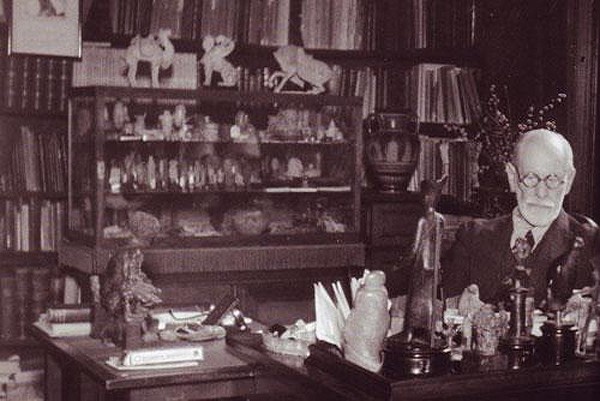
Freud in his London office (1939)

1111_Freuds-Last-Session369887

Do you dream a lot?

I know I do.

Incessantly.

I dream more now that I’ve gotten older, abetted by having to get up in the nights at this juncture.

Should I care about dreams?

Do they have meaning?

Can they help us?

Perhaps show us our real selves?

Make for a better world?

I know I’ve always been interested in them from earliest days.

The catalyst was probably Freud’s massive Interpretation of Dreams, which I confess to reading all the way through.

For Freud, dreams reflected repressed desire, often of libido.

The wish principle always.

But how can that be?

Don’t I often dream my fears?

With Freud, I always sensed a wanna-be novelist at work, ingeniously spinning narratives, howbeit, in the name of science–alas, to confirm an a priori hypothesis without the backup of today’s medical formulae of random testing and cohort studies. But then, how do you quantify something so ethereal as dreams?

But don’t get me wrong.

I think his Civilization and Its Discontents one of the great masterpieces, despite its surprising brevity.

His triad of Id, Ego, and Super Ego continues to spellbind me by virtual of the myriad ways I see it manifest itself in both myself and others.

Auden, as always, said it so well in his “Memory of Sigmund Freud” (1939):

for one who’d lived among enemies so long:
if often he was wrong and, at times, absurd,
to us he is no more a person
now but a whole climate of opinion….

I was surprised to read in neurologist Oliver Sacks’ tell-all memoir, Moving On, published just several months before his death last week, that he was seeing a psychoanalyst for some fifty years–and, remarkably–the same one every week! Sacks kept a notebook on his nightstand, recording his dreams faithfully.

Make no mistake: Sacks is a man I came to love and respect deeply. I just wish I knew why he kept finding psychoanalysis a cornucopia of self-knowledge, apart from crediting it with his rescue from drug addiction acquired from his youthful halcyon California days a la Muscle Beach.

For me, the great influence on how I look at dreams has been Freud’s former disciple, Carl Jung. His notions of anima and animus, often projected in dreams, have proved revelatory personally and hence liberating.

He taught me that so much of living life is finding equilibrium, or the balancing of Ego and Self.  Dreams offer symbols to excesses in ourselves that can be remanded.

He also introduced me to polarity as the essence of mythos truth with its tension of paradox.

If Freud looked to our past as the repository of dream content, Jung saw dreams as projections of possibility and therefore hope.

Jung was more a cultural analyst, or pseudo-anthropologist, finding universality across a wide spectrum of symbolic significance, rummaging what he collectively called archetypes.

In younger days I nearly chose becoming a licensed Jungian therapist and sometimes wonder if I committed one of the great follies in my life in turning down its seduction. Campbell, that ardent Jungian, famously urged we should follow our bliss. That maxim, aside from its latent dangers resident in reductionism, may often prove wise counsel and its rejection the source of substantial human misery.

But to sum up, I think what I’ve liked best in Jung is his acceptance of the banality of evil, Arendt’s phrasing for resident evil in Man. No liberal withering away via socio-economic exegesis, often speciously argued in my view.

Maybe my lifelong fascination with dreams stems from my youthful days drenched in fundamentalist biblical parochialism. There was Joseph, so masterful at dream interpretation that the Pharaoh took him into his confidence, ultimately saving Joseph’s kindred Hebrews.

And of course, there’s Daniel.

For the ancients, dreams gave warning and with it, admonition.

I chose to pursue a Ph. D. in English Literature. Well, you guessed it: Coleridge’s famous Kubla Khan poem, which he explained as the aftermath of an interrupted dream. But that’s just one dream poem. There are scores of other dream poems.

What I’m meaning to say is that there have been so many threads feeding into my dream fixation, not just Freud and Jung who were obviously mesmerized.

Do dreams exhibit patterns?

Do they help us to know ourselves?

I believe they do.

And that’s why I need to go back to exploring my dreams again, now that they seem to occur more frequently.

Like Sacks, I may soon be keeping a notepad on my nightstand.

–rj

When Worrying Helps

Bob Marley’s hit song “Everythings Gonna Be Alright,” delivered with hypnotic reggae beat, buoys our spirits when we travel troubled waters:

Don’t worry about a thing
Cause every little thing gonna be all right.

Don’t you just wish it could be so in what poet W. H. Auden famously dubbed “the age of anxiety”?

Let me count some of the worries that trouble many, including myself:

  1. Climate change with its perilous threat to life upon our planet, or at the very least, its incalculable fallout as millions flee flooded homelands, hunger, and economic devastation.
  1. A disease pandemic as the world increasingly shrinks and we’re introduced to new diseases, augmented by exponential germ resistance to last stand antibiotics.
  1. Emergence of a new Frankenstein in the guise of artificial intelligence with the smarts to outwit humans bent on shutting it down. According to Stephen Hawking, it’s not a question of if, but when, and may lead to the end of human life.
  1. Massive technological replacement of human beings in the work force by computers and their robot offspring, performing tasks more quickly and efficiently for fewer bucks.
  1. Continuous rise in human population, especially among the most impoverished, threatening to outstrip resources to feed, shelter and provide economic well-being, increasing the likelihood for conflict. Malthus may have been right all along. He just didn’t get the timing down.
  1. Nuclear proliferation with more nations, some of them rogue, seeking the Bomb, increasing the possibility they might get used.
  1. Fanatics ultimately cajoling us into doing stupid things like opposing vaccines, free trade, immigration reform, fossil fuel addiction, gay rights, a woman’s right to choose, ad infinitum.
  1. Depletion of resources, including not only metals, soils and fertilizers, but flora and fauna essential to human survival.
  1. A natural calamity in which an anomaly intervenes, such as the sun increases its energy variability, or an asteroid hits us, or Yellowstone’s thermal springs go big time again.
  1. World markets collapse and a depression ensues, wiping out every vestige of economic security.

Worries come in temporal wrappings, short and long term.

Those we can do something about and those we can’t.

Our most subtle danger, however, lurks in the human leaning to ignore possibility, despite ample signs that “everythings [Not] gonna be all right.”

When we do this, it’s the Child, not the Adult, within us that speaks: “Please, Daddy, make the pain go away!

It gave us WWII. And in 1962, nearly World War III.

We push aside possibility daily in so many ways, neglecting our health, or overspending, or investing in wrong loves.

We do it on a larger scale when government prefers expediency, refusing to fund social security sufficiently, or confronting global warming, or curbing its addiction to deficit spending, or standing fast against terrorist regimes.

Bottomline, not worrying when we should may pose the most lethal danger of all.

–rj

You Aren’t Who You Think You Are!

yoga(1)

Have you ever found yourself so angry, say in an argument, that you’ve yelled, or said mean things, or left the room, or slammed a door, only to feel ashamed later?

Have you ever panicked, ready to pull your hair out, because your fear seemed overwhelming, demanding a quick fix that seemed elusive?

Perhaps it was in getting bad news such as being fired, or being told you have a serious illness, or finding out your spouse wants out.

It’s been said many times you are what you think about. If you’re having happy thoughts, then chances are they’ll carry you through the day, making it a good one.

Conversely, when you’re upset–who knows about what?–you’re apt to put in motion unhappy scenarios throughout your day. Not only that, you may be spreading your viral malcontent to others.

But it’s your unconscious thoughts that may influence you even more, and with greater fall out, since you’re unwitting of the sources behind what you say and do. In short, it goes a lot deeper than just what you think about.

It’s as though you’re living with a stranger usurping your identity. There he is, randomly, unexpectedly, projecting himself upon your conscious world.

Your thoughts, then, seldom come close to mirroring who you really are, though they may try to tell you that you’re either lacking or even very special.

And this is the good news, since your thoughts most likely come short of who you really are.

Your mistake is identifying with them.

This becomes clearer when we resort to linguistics.

In English, we always say things like “I’m angry” or “I’m lucky” or I’m afraid,” when logically this can never be so.

This gets corrected in languages like Spanish, French and German in which we say we have anger, or luck or fear.

Now try this little exercise in predicate adjectives to catch my drift. To

I am, add an adjective that describes you:

I am …

I am happy.

I am sad.

Et cetera.

I call it the name tag game and we all play it.

As such, these tags can never summarize in any moment the totality of who you are in your uniqueness, and thus you err when you identify with them.

Name tags reach back into your childhood as you strive for validation, or self-worth, often by comparing yourself to others.

My mother likes my sister more than me.

I’m smarter than Bill.

I’m not popular.

Unfortunately, such scripts program us; that is, unless you learn to identify the falsity of their self limitations.

By doing so, you free yourself from their tyranny.

You don’t replay them anymore.

Self-acceptance prospers in an environment saturated with love. Too many of us we’re raised, however, by parents who themselves were never accepted for who they were, and thus never fully loved.

Accordingly, their love was, in turn, conditional, or a projection of themselves.

The truth is you’re far more than the stories you’ve come to believe about yourself.

You don’t need to keep modeling yourself on what you think or have been told you are or should be.

You’re worthy now.

Too often you try to compensate for life having dealt you a bad hand:

A broken home replete with violence.

An alcoholic parent.

Bullying at school.

A physical or mental handicap.

Sexual abuse.

A friend’s betrayal.

An insensitive teacher.

And while measured by status and/or accumulation, you may even seem successful to others, you find you’re still battling feelings of inferiority or unworthiness daily.

In a kind of guerrilla war, your anxiety pushes you to flush out the enemy by doing still more.

You hunger for approval, but it’s never enough.

Afraid of disapproval, you retreat from doing new things because you might do it wrong or even fail.

Freeing yourself by identifying the stories you’ve come to falsely believe about yourself is your passport to loving yourself, and with it, finding confidence and joy.

Anxiety about yourself, unfortunately, is an acquired practice.

It follows you must undo the habit.

When you think negatively or act out destructively, catch yourself at it.

This isn’t my true self.

This isn’t me.

And you’re right.

You can help yourself by retrieving your thoughts in a strainer, as it were, by practicing mindfulness,

Breathe deeply through your nose for a count of six seconds, your hand on your belly

Feel your stomach inflate.

Now breathe out for a count of four. feeling your stomach contract.

Visualize happy scenes.

Let your body relax, beginning with your toes, then your feet, legs, back, arms and neck, each in its turn.

Now listen to your thoughts,

Do this without judging them.

If you stray, as we always do, return to deep breathing.

By listening to ourselves, detached from censure, we see objectively, freeing ourselves from anxiety’s tyranny.

We don’t allow our emotions to boss us around anymore.

To this end, I find restorative yoga the most peace-rendering exercise of any I’ve come upon.

Unfortunately, most yoga practice in the West confines itself to bodily exercise, or fitness,

True yoga is much more, or holistic, the “yoking” of mind and body, for they are ultimately one. Yoga mean “to yoke.”

This is where Western medicine so often fails, treating symptoms, not causes.

We are not mere physical creatures.

We possess a spiritual component.

We are sentient beings.

In traditional parlance, we have a Soul.

In modern life, however, we’ve disconnected Body and Soul.

The consequence is that we find ourselves out-of-balance, resulting in stress, fatigue and, ultimately, illness.

Yoga reverses this, restoring health, both physical and mental.

Yoga helps you let go.

Yoga enables you to love yourself and, with it, forgive yourself and others.

I’m sadly limited to a blog, when there’s so much else I’d like to say.

But let me recommend a book that will jump start your reconnecting mind and body. I promise you’ll not want to set it down:

Brad Willis. Warrior Pose:  How Yoga (Literally) Saved My Life.

We listen too much to our head, when we should be living life with our heart.

If you follow my suggestions, hand over my heart, you’ll increasingly gain power over that stranger who’s usurped the premises.

You’ll dislike him so much, you’ll ask him to leave.

The good news is that he will!

–rj

.

Winter Discontent: Dickinson’s “There’s a certain Slant of light”

dickinsonI’m sitting here in our sunroom, looking out this afternoon on our backyard, smothered with frost. We had our first snow cover a week ago, which came early to Kentucky.

I’m a warm weather lover, and while those around me complain about heat, I say, more is better.

You’d think coming from New England, I’d be more tolerant of snow and ice and lashing wind, but I can tell you that over time I’m liking old man winter much less.

But neither am I some isolated crank in finding winter oppressive.

Take fellow New Englander, Emily Dickinson, for example, that fervent champion of spring and summer, and with them, birds, flowers and even snakes populating her many poems, emissaries of nature’s cornucopia and the inherent goodness of its plentitude.

Understandably, she didn’t soften her distain toward winter in a poem I’ve memorized, “There’s a certain Slant of light.”

I’ve always admired this poem, like so many others she wrote, cerebral, observant, brief, but dependably engaging, centered in detail, redolent in ambience.

Here’s the poem, followed with my commentary:

There’s a certain Slant of light,
Winter Afternoons –
That oppresses, like the Heft
Of Cathedral Tunes –

 Heavenly Hurt, it gives us –
We can find no scar,
But internal difference,
Where the Meanings, are –

 None may teach it – Any –
‘Tis the Seal Despair –
An imperial affliction
Sent us of the Air –

When it comes, the Landscape listens –
Shadows – hold their breath –
When it goes, ‘tis like the Distance
On the look of Death.

 Like so many of Dickinson’s poems, this one deals with death, as ultimately revealed in its closing line. Keenly aware of the temporal, she always dreaded saying good bye to not only visiting friends, but the passage of the temperate seasons.

Appropriately, the poem’s ambience is foregrounded in emerging darkness on a winter afternoon, signified in the angular, or slanted, solstice light. While “Slant” suggests not only a way of seeing things, it more likely connotes a cosmic knife that wounds, amplified in the second stanza’s “hurt” and “scar” allusions.

In the first, stanza, however, this visual image of a slanting light evolves into one of sound, the light being like the “Heft” of Cathedral Tunes, heft denoting heaviness, or the solemnity of perhaps tolling bells or funeral music.

The speaker’s reference here to cathedrals plainly suggests the poem exceeds depiction of a gloomy New England winter’s day, entering into metaphysical concerns embracing religion, God, and mortality.

Dickinson, after all, was not only a rebel in writing non-traditional verse, both formally and thematically, but in her strident skepticism when it came to the assurances of Christianity.

In stanzas two and three, the persona traces the cosmic sources of the day’s oppressive gloom to Deity (1.e., “heavenly hurt,” “an imperial affliction /Sent us of the air”).

As to the specific nature of the transient day’s mood, it is rightfully left ambiguous (“None may teach it–Any–“), underscoring the persona’s angst in a cosmos ruled at best by a silent deity, who allows death’s intrusion into every aspect of nature.

The speaker can only offer analogies in attempting to articulate her resulting emotional dissonance in response to the waning light, since words often prove ineffectual in rendering matters of our psyche:  “We can find no scar,/But internal difference/Where the Meanings are.”

The persona’s allusion to the Book of Revelation with its apocryphal judgments, “T’is the Seal Despair,” underscores the angst of this “imperial affliction” in its psychological reign.

In the concluding stanza, two additional analogies appear, the first employing personification:  “When it comes’ the Landscape listens–/Shadows hold their breath–”

The pronoun “it” brings us back to the slanted light of the initial stanza, reminding us again that we are at the moment when the winter sun is about to slip below the horizon. With anxious anticipation, afternoon shadows stand at attention like sentries.

In the final analogy, the speaker breaks through with simile to the source of her angst in the sun’s passage:  “When it goes, ’tis like the Distance/On the look of Death–”

Or like viewing a corpse, distanced from every human concern.

In the poem’s absence of any proffered reunion or resurrection, Dickinson’s deep vein of skepticism is readily apparent, despite her Puritan forbears and living in a culture still permeated with conservative Christian belief.

But it didn’t come easily to Dickinson, earning my admiration for her candid questioning of cherished communal beliefs. In an early letter, she would confess to “an aching void in my heart which I am convinced the world cannot fill.”

Though often thought of as eccentric, preferring solitude to company, the truth is Dickinson relished her family, had close friends as her extensive correspondence confirms, and received occasional visitors.

Separation from those she loved was always acutely stressful.

And death, of course, which came early and often in her time, was the ultimate ransacker of human bonds. In a three year period she would lose some forty-six friends and relatives.

I share her sensibility when it comes to winter. I miss Nature’s teeming sights, sounds, and smells: my flowers in variegated hues blooming proudly, attended to by murmuring bees; the smell of Spring lilacs; the taste of fresh berries; chickadees in their yellow jackets at the bird feeder, impervious to the wind.

Looking out my window at a checkered landscape of grays and whites on yet another eclipsed day of light on a winter afternoon, I grieve their absence and share the sense of pervasive temporality that so haunted Dickinson.

And thus, like her, I relish the return of every spring, enjoying what I can, while I’m able, and with what light remains.

–rj


What myth can teach us about grief

orpheusI have always liked myths. Even more so when Jung helped me see their inner life and I learned that, far from being just stories spun by human fantasy, they are windows into the psyche, reflecting all the perambulations of experience that define us such as love and hate, courage and fear, loyalty and betrayal, exploration and boundary.

We have this notion of myth, however, as synonymous with what’s untrue; entertaining, but nothing more. But this is to misunderstand, for the story is but the shell. At the heart lies the kernel of truth.

One of my favorite myths is that of Orpheus and Eurydice. You may remember that it tells of the death of Eurydice and of Orpheus’ fervent love for her that brings him into the Underworld, or dwelling place of the dead, seeking her return.

To secure her return, he must observe Hades’ one condition: in leading Eurydice out of death’s realm, he mustn’t look back or he’ll lose her forever.

But of course this is just what Orpheus does, nullifying any possibility for her to resume life.

Not looking back, or what you and I might call second guessing, is inherent in myth. We see it even in the Old Testament when Yahweh enjoins Lot and his wife not to look back at Sodom as they exit its destruction. Lot’s wife disobeys and becomes a pillar of salt.

For me, the myth of Orpheus and Eurydice teaches us that living in the past, or looking back, is self-defeating, for the dead can never return to us, given Nature’s unalterable laws. Orpheus’s backward glance is simply a story artifice to undergird that sober truth.

At another level, Orpheus’s motivating loneliness demonstrates the frailty of the human condition when it comes to losing those we dearly love–a lingering emptiness, the sense of shock that sets in, perhaps anger at what appears unjust, the seeming shallowness of well meaning comforters.

The insightful British writer, Julian Barnes, in writing of his own languishing grief in Levels of Life (2013) following the loss of his wife of more than thirty years, quotes H. L. Mencken:

It is a literal fact that I still think of Sara every day of my life and almost every hour of the day. Whenever I see anything she would have liked, I find myself saying I’ll buy it and take it to her, and I am always thinking of things to tell her.

Time’s gift, however, is that it can soften death’s contours, enabling us to move with life’s currents into new venues, with abiding memory becoming a gift of solace.

Perhaps the heaviest grief falls upon those who have never found someone to love.

To have found love, on the other hand, is the greatest privilege of all, and knowing this gives promise of our healing.

–rj


.


Human Evil and Its Genesis: ISIS

   All man’s troubles arise from the fact
  That we do not know what we are
 And do not agree on what we want to be
               –Vercours (You Shall Know Them)

 ISIS (1)

Like all of you, I’ve been reading and viewing with horror the crimes of IS (Islamic State). Recently, for example, there was the video of captured Iraqi soldiers being herded in crouched chain formation, later ordered to get down in a shallow ditch, hands tied behind their backs, then shot. Human Rights Watch estimates between 560 and 770 were executed, though IS boasts it executed nearly 1700 soldiers after overrunning Camp Speicher near the city of Tikrit in Northern Iraq.

And then there have been the two recent IS videos showing the beheadings of American journalists, James Foley and Steven Sotloff. In the latter, the video ends with displaying Sotloff’s severed head lying beside his body.

IS has also been killing minority Christians and Yadzidis who refuse to convert along with Shiite Muslims, whom they regard as heretics. In one instance, 500 Yadzidis were buried alive.

IS atrocities are not isolated phenomena in the long list of “crimes against humanity” (International Criminal Court) in recent decades. Consider, for example, Rwanda in 1994 with the Hutu majority’s massacre of 800,000 Tutsis in just 100 days. Or Cambodia with its 2,500,000 dead at the hands of the communist Khmer Rouge regime in the late 70s.

But what makes for the forfeiture of humanity in atrocities such as those I’ve noted here? How is it that we can lose every sense of identity with our fellows? Is aggression, singular or collective, something innate, a legacy of evolutionary genetics compelling us to eliminate any perceived threat? Are we any better than warrior ants, the most warlike of any known insect group, who instinctively pursue extinction or enslavement of rival insect communities, are territorial, have a caste system, and are often suicidal in their assaults?

Here I turn to sociobiology, with its emphasis on biology as the catalyst in shaping social behavior among all organisms, including humans.

To begin with, things are not all bad about ourselves, genetically speaking. Yes, we seem to have genes that dispose us towards altruism, and we see such behavior demonstrated repeatedly in daily life right down to the motorist who allows you into his lane. At its most acute level, we see it played out on the battlefield when a soldier falls on a hand grenade, for example, to save the lives of his fellows.

The problem with genetic altruism is that self sacrifice would seem to run contrary to the notion of natural determinism, or the survival of the fittest, ensuring the likelihood of offspring, or evolution’s ultimate purpose. Surely, culture also intervenes here and refines genetic disposition as well.

Overall, however, altruism among social organisms is primarily carried out through “kin selection,” including ourselves. The net result is that the group, or family, survives. In short, even altruism can have its selfish component. Altruism, then, isn’t necessarily the angelic side of ourselves. But at least it’s a better option.

As for there being genes that prescribe aggression, as with altruism, none are known to exist . Behaviorally, however, genes confer a capability to develop a repertoire of aggressive responses, given stressed environments. Otherwise, aggression isn’t likely.   For instance. the social history of the Hopi Indians, an agricultural tribe, exhibits minimal aggressive behavior, In fact, hopi means “peaceful.” On the other hand, the Apaches were often given to battle to protect their land and buffalo herds from intruders.

Similarly, I surmise that genetic disposition, or capability, might help explain the high incidence of crime among some marginalized, or disadvantaged, groups in a given society.

While culture can modify genetic attenuation, it cannot eliminate it. Evolution ultimately imposes limits on malleability of behavior.

The diabolic, however, breaks loose when a fanatical few entice the many to exact violence in contexts of societal duress such as in Nazi Germany and Stalinist Russia following upon the end of the Great War.

In the hands of ideologues, often in political or religious guise, all bets are off when it comes to humane resolution of social tensions, given–not genes as such–but their genetic disposition for either peace or war. Set loose, humans are capable of every vile act conceivable.

And so with IS and the danger it poses for all of us.

–rj


Jung, Archetypes, and A Parrot: The Legacy of Nature’s Genius

Dr. Joanna Burger
Dr. Joanna Burger

I’ve just finished Joanna Burger’s The Parrot That Owns Me: The Story of a Relationship. Funny, I had this book sitting on my shelf, unread, for twelve years. Looking for something to read while eating my breakfast, I pulled it down and started what turned out to be a fun read.

I also learned a great deal about birds and, especially about parrots, surely one of the most intelligent of animal species, though we normally think of primates (gorillas, chimps, orangutans, etc.), dolphins, elephants and pigs as honorary Mensa candidates among our animal kin.

Burger, one of the world’s leading ornithologists and Rutgers University prof with over twenty books to her credit, tells how Tiko, her Red-lored Amazon, practices a repertoire of tonal warnings to distinguish varied predators, most notably, hawks, cats, and snakes.

She writes that “when Tiko gave his hawk call, Mike (her husband) and I would invariably spot a Red-tailed, Sharp-shinned, or Cooper’s Hawk flying overhead or perched in a nearby tree. Tiko’s response was so consistent that there was no question that he recognized hawkdom” (167).

Likewise, Tiko doesn’t like snakes, one of which Burger kept for a while, much to Tiko’s dismay. Only when the snake went into hibernation could he be content in the same room.

But how does Tiko pull this off?   After all, he seems to possess a genetic memory of jungle predators, even though he’s been totally reared in captivity and has never had any interaction with hawks or snakes?

Years ago I had started reading Jung, who has impressed me more than Freud as being on the mark when its comes to the seminal sources lurking behind human behavior. Jung proposed the theory of archetypes, or “primordial images” (Man and his Symbols, 67), reflecting instinctual urges of unknown origins. They can arise in our consciousness suddenly and anywhere apart from cultural influence or personal experience. Often they take shape in our consciousness through fantasy, symbol, or situational pattern.

And so with Tiko as well as ourselves, the instinctual responses perpetuating survival have become wired in the brains of sentient creatures. Untaught, they’re automatic.

Today, science overwhelmingly confirms the accuracy of Jung’s prescience. Take, for example, the eminent biologist Edward O. Wilson, who attests that monkeys “raised in the laboratory without previous exposure to snakes show the same response to them as those brought in from the wild, though in weaker form (In Search of Nature, 19).

The explanation, of course, lies in evolution’s conferring differential survival value through natural selection. Those who learn to respond to fear quickly simply pass on more of their offspring with their response mechanisms.

Wilson goes further, arguing that human culture itself is considerably biological in origin, or genetically prescribed, supported by analytical models (123-24).

A Jungian at heart, I found Tiko’s innate capacity to respond to elements of danger another in a long line of evidence supporting Jung’s pioneering perspective; on this occasion, by way of one of the world’s most astute animal behaviorists, Joanna Burger.

Nature never ceases to amaze me!

–rj