In moments of political outrage, we often hear that some “moral compact” has been broken between the government and the people, as though public life rests on an understood promise of honesty and good faith. It is a comforting idea. It’s also, I think, a naïve one.
The record we inherit suggests otherwise. Bill Clinton misled the public under oath. John F. Kennedy and Lyndon B. Johnson deepened American involvement in the Vietnam War under a widening credibility gap. Franklin D. Roosevelt withheld the full truth of his condition from the electorate. These are not anomalies. They are reminders.
None of this excuses Donald Trump, whose conduct stands as an extreme case in its brazenness. But it does suggest that the deeper problem is not the breaking of a compact, but our belief that such a compact has ever governed political life in more than name.
Niccolò Machiavelli understood that those who govern must often act against truth while preserving its appearance. Thomas Hobbes argued that we submit to authority not because it is virtuous, but because it is necessary. Between them, the so-called compact begins to look less like a foundation than a useful fiction, one that steadies public faith even as it obscures political reality.
If that is so, then the question is not how to restore a moral politics, but how much of our moral life we should ever have entrusted to politics in the first place.
Here Henry David Thoreau offers a necessary restraint: that government is best which governs least, not because it is especially good, but because it is always liable to be otherwise.
And Wendell Berry reminds us, more quietly, that the work of responsibility does not belong first to governments at all, but to persons, living within limits, bound to places, accountable to one another in ways no distant authority can finally secure.
We have asked too much of politics, and in doing so, we have misunderstood it.
Power does not keep faith; it manages necessity. It persuades, it conceals, it endures. It cannot bear the weight of the moral order we would like to rest upon it.
That burden remains where it has always been—closer to home.
Not in the abstractions of the state, nor in the promises of those who govern, but in the small, stubborn practices of truthfulness and care: in what we say, what we refuse to say, what we permit, and what we will not.
If there is any compact worth defending, it is not the one we imagine between ourselves and power. It is the one we keep, or fail to keep, with one another.
On February 28, 2026, the United States and Israel launched coordinated aerial strikes on Iran, ostensibly to induce regime change and secure stability in the Middle East.
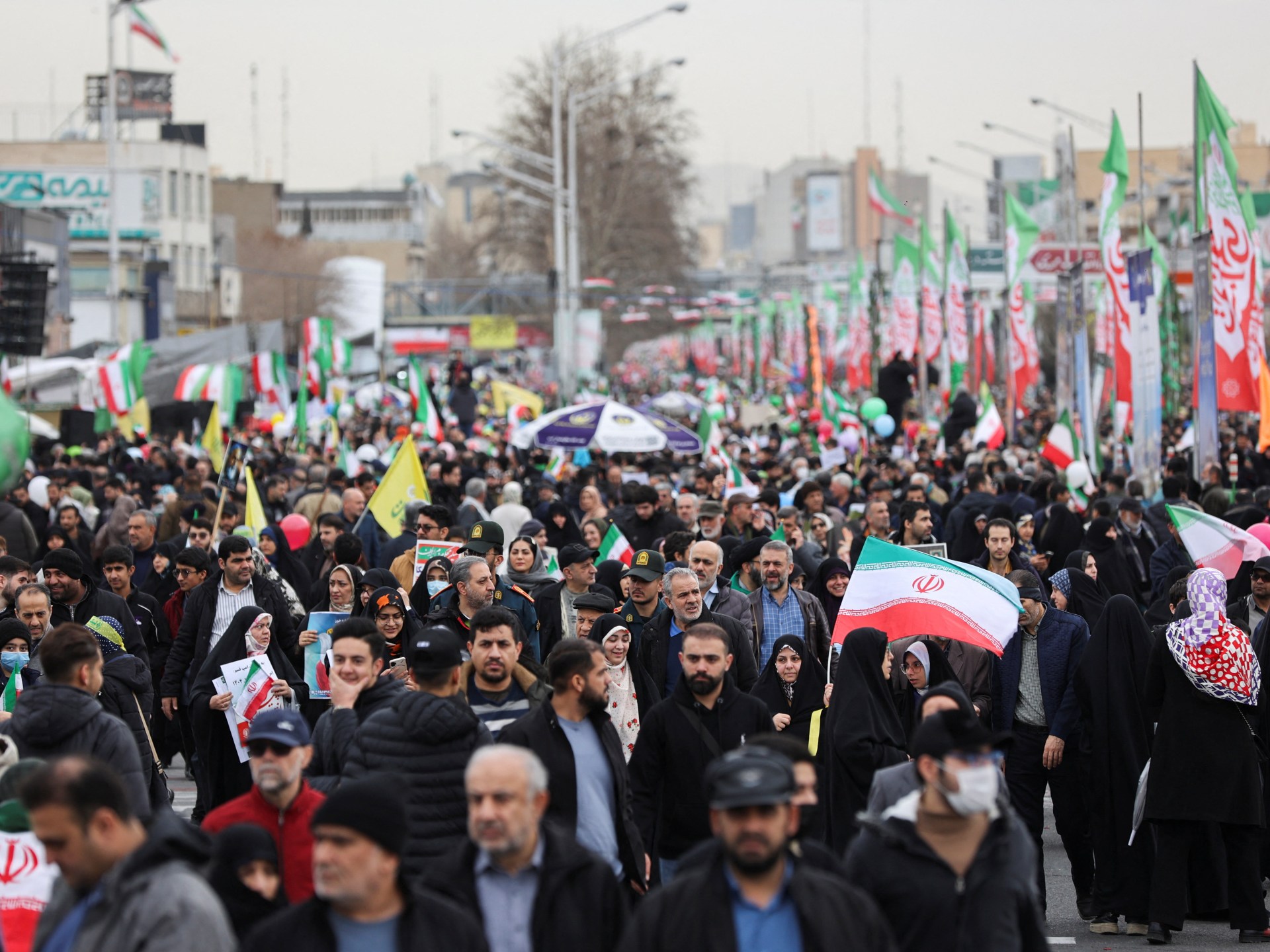
Central to this strategy was the expectation of a mass popular uprising—something glimpsed in January 2026, when tens of thousands of unarmed civilians took to the streets and were met with lethal force. Estimates suggest as many as 30,000 were killed, 7000 independently confirmed. The regime they opposed—a repressive Islamic theocracy entrenched since 1979—remains intact.
This is a war America is unlikely to win.
Despite the destruction of command centers, arsenals, and the targeted killing of senior leadership, including Supreme Leader Ayatollah Ali Khamenei, Iran has demonstrated a capacity for resilience that was either underestimated or ignored.
Its response has been asymmetric and expansive: ballistic missiles and drone strikes aimed not only at Israel but at a widening circle of nations hosting American bases—Qatar, the United Arab Emirates, Kuwait, Jordan, and Saudi Arabia. Recent launches have extended even farther, toward Crete, Turkey, and the joint UK–U.S. base on Diego Garcia in the Indian Ocean, 2400 miles distant.
At such range, the perimeter of vulnerability shifts. Southeastern Europe comes into view; with further technological refinement, even cities such as Rome or Berlin may not remain beyond reach; in a decade, the United States.
As this conflict widens, its economic consequences are already apparent. Iran’s disruption of the Strait of Hormuz, through which roughly one-fifth of the world’s oil supply passes, has driven prices upward, with projections rising sharply. The leverage is stark: Iran need not defeat the United States militarily to impose severe costs. It need only prolong the conflict.
The political implications are equally stark. Domestic opposition is mounting here at home, shaped less by geopolitics than by inflation, felt daily in grocery bills and at the gas pump. A war that amplifies those pressures becomes difficult to sustain, regardless of its stated aims.
Even proposed escalations such as a seizure of Kharg Island, which handles a significant portion of Iran’s oil exports, risk becoming symbolic victories at disproportionate cost.
The comparison to Iwo Jima is not misplaced: a tactical gain unlikely to alter the strategic reality. Much of Iran’s missile infrastructure remains embedded and protected, beyond the reach of conventional assault.
Recent Trump statements suggesting that U.S. objectives have largely been met already signal a search for an exit. Yet an off-ramp may not be readily available. Iran’s advantage lies in time. By sustaining pressure, economic as much as military, it can compel concessions without decisive confrontation.
There was another path.
Rather than precipitating war, a strategy of containment through sanctions and patience might have allowed the regime to atrophy under the weight of its own contradictions. Iran faces converging crises: acute water scarcity, environmental degradation, declining agricultural productivity, economic duress, and deep internal dissent. A large portion of its population—diverse, young, and increasingly disillusioned—has already demonstrated a willingness to demand change at great personal risk.
That internal pressure, not external force, may have proven the more decisive agent of transformation.
Talks between the United States and Iran continue this week in Geneva.
When desperate Iranians poured into the streets demanding regime change, President Trump pledged that help was on the way, only to retreat. In the aftermath, credible human rights organizations report that thousands of protesters were killed and many more arrested in a sweeping crackdown designed to extinguish dissent.
Now it appears the administration has chosen to defer confrontation in favor of negotiation. The pattern is familiar: pressure followed by pursuit of a deal. As in Venezuela, where engagement and economic overtures failed to dislodge a repressive regime despite widely disputed elections, the governing apparatus endured.
Tehran understands the language of leverage and Trump’s susceptibility to profitable business deals. It has reportedly floated the prospect of lucrative energy, mining, and aircraft agreements in exchange for relief from punitive economic sanctions. Yet the offer comes with a critical caveat: Iran would modify, but not relinquish, its uranium enrichment and leave untouched its ballistic missile programs.
Such an arrangement would not dismantle the regime’s capacity for repression at home or projection of force abroad. It would instead stabilize a government that has spent nearly half a century suppressing its people and destabilizing the Middle East, while edging ever closer to nuclear weapons capability and refining the missiles to deliver it.
Yes, help may indeed be on the way, but not for Iran’s beleaguered citizens if sanctions are lifted without fundamental change. It will be relief for the very regime that has kept them in chains.
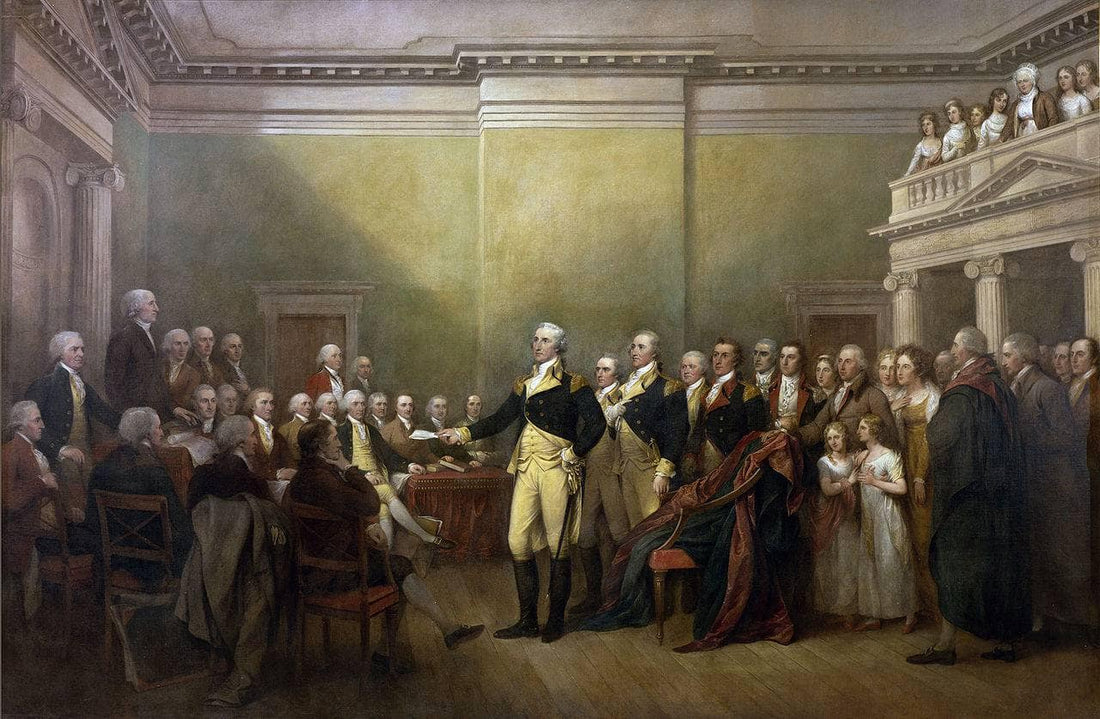
Painting: John Trumbull. George Washington resigns as Commander-in-Chief, Continental Army.
I grew up in an America that celebrated George Washington’s February 22 birthday as a national holiday, signed into law by President Rutherford B. Hayes in 1879 as a federal workers’ holiday, then extended nationally in 1885.
Things changed in 1968 when Congress passed the Uniform Monday Holiday Act, providing longer weekends and consolidating observances. Washington’s Birthday was reassigned to the third Monday in February, still legally designated as his birthday, though some congressional members proposed including Lincoln’s February 12 birthday under the broader aegis of Presidents’ Day.
That broader title caught on. Retailers and state governments increasingly adopted “Presidents’ Day.” Like so many holidays, it became a corporate sales opportunity.
Accordingly, the first item in my email this morning was a Presidents’ Day furniture sale—the first of what will no doubt be a barrage as the third Monday approaches.
Historian Jonathan Horn finds it absurd that we no longer distinctly celebrate Washington’s Birthday, given that it was observed in the young nation even before the framers of the Constitution met in 1787 (“Just Call It Washington’s Birthday,” Free Press, Feb. 11, 2026).
We owe much to this exemplary leader. Ken Burns credits Washington as “the glue that held it all together” in his PBS documentary TheAmericanRevolution. Facing superior, disciplined British forces, Washington understood that victory would require patience: knowing when to retreat, striking unexpectedly, and prolonging the war.
After defeats in New York, expiring enlistments, and desertions, matters reached their nadir during the winter encampment at Valley Forge outside British-occupied Philadelphia in 1777. Starvation loomed. Smallpox ravaged the ranks. Soldiers were unpaid, underfed, and poorly clothed.
With sagacity, Washington enlisted the Prussian officer Baron von Steuben, who molded the army into a disciplined fighting force. Recruits followed in greater numbers.
After General Gates’ victory at Saratoga, Washington was able to engage French support, working through liaison with the Marquis de Lafayette.
The decisive blow came when French naval forces blocked Cornwallis’s escape at Yorktown. Washington had deceived Cornwallis into believing New York was his objective while covertly moving his troops south. The British capitulated, leading ultimately to peace in 1783.
Washington had endured criticism without vindictiveness, even surviving a mutiny threat by disgruntled, unpaid officers.
For Burns, Washington’s greatest moment was not Yorktown or Trenton, but his resignation of his commission in Annapolis in 1783. As Burns tells it, he “knew how to defer to Congress, knew how to inspire ordinary people in the dead of night, knew how to pick subordinate talent—just had a kind of presence to him that, without him, we don’t have a country” (Chadwick Moore, New York Post, Nov. 11, 2025).
He did something similar in refusing a third presidential term. His 1796 Farewell Address remains prescient in its warnings against partisanship, permanent foreign alliances, sectionalism, and constitutional usurpation: “Let there be no change by usurpation; for though this, in one instance, may be the instrument of good, it is the customary weapon by which free governments are destroyed.”
Yet Washington has come under fierce attack, criticized for slave holding and judged by contemporary moral standards. Some view him primarily as a symbol of racial oppression and seek removal of his name and likeness from public spaces.
In the aftermath of George Floyd’s killing in 2020 and the ensuing unrest, efforts accelerated to eliminate reminders of racial injustice, including monuments to Washington, Jefferson, Lincoln, Theodore Roosevelt, and Woodrow Wilson. Streets, buildings, and schools were renamed; statues toppled or defaced.
In Portland in 2020, protesters toppled and defaced a statue of Washington in a public park.
At the University of Washington, protesters called for removal of his statue.
In 2020, a statue of Washington at George Washington University was beheaded.
In 2021, the San Francisco Board of Education voted to rename a school honoring Washington, later reversing course after public scrutiny.
A Washington, D.C. working group, commissioned amid racial justice protests, recommended reviewing public names and monuments, suggesting federal sites be reconsidered for contextualization or renaming.
While some of this fury can be understood as anger over longstanding injustice, historian Howard Zinn argues in A People’s History of the United States that Washington’s mythic stature obscures his slaveholding and his violent campaigns against Indigenous peoples. Jill Lepore, in These Truths, likewise underscores the inseparability of his leadership from slavery.
It is painful to read, but much rings true.
Burns recounts Washington’s 1779 campaign against the Iroquois, ordering the destruction of settlements in retaliation for their alliance with the British: “Lay waste all the settlements around… that the country may not be merely overrun, but destroyed.” Towns and crops were burned. Many perished in the ensuing winter from famine and disease.
America was founded on a compromise that would lead to civil war and immense loss of life. Our history is marked by both courage and cruelty, liberty and bondage. We diminish ourselves if we pretend otherwise.
But we also diminish ourselves if we forget the magnitude of what was achieved: a fragile republic wrested from empire, sustained not by perfection but by discipline, restraint, and the voluntary surrender of power.
We are a nation still struggling to reconcile our ideals with our conduct. The work of ordered liberty, of constitutional self-government, of moral reckoning without erasure, remains unfinished.
The Revolution continues—not in the toppling of statues or canceling history, but by whether we can tell the truth about our past without losing the capacity to honor it.
On winter mornings, before the day has decided what it will become, the fields hold a stillness that feels provisional—frost clinging to the grass, fence lines darkened with damp, the land waiting without impatience. It is a good hour for reading slowly, for choosing words that do not hurry ahead of their meanings.
I have begun the year reading Wendell Berry. Now in his ninety-second year, he continues—more slowly, more deliberately—to farm and to write, unchanged in his fidelity to limits: the authority of place over abstraction, the moral claims of the local over the corporate, tradition understood not as nostalgia but as knowledge earned through use and endurance.
I read him most mornings. His work steadies the day. It does not offer solutions so much as orientation—toward what is given, what is sufficient, and what must be borne. Berry has always made room for joy, but never without sorrow, nor for hope without the acknowledgment of failure, including one’s own.
Some of his most influential prose appeared early, when his voice was still finding its public footing. The Long-Legged House and The Unsettling of America argued, quietly and insistently, that culture and agriculture are inseparable, and that when land is treated as commodity rather than community, both soil and people are diminished.
I return often to his poetry, especially A Timbered Choir: The Sabbath Poems. Written on Sundays and largely free of polemic, these poems are acts of attention. They move patiently through the stages of a human life—birth, labor, love, diminishment—offering a sacramental vision of ordinary days lived close to the ground. Among them is Berry’s most widely known poem, “The Peace of Wild Things,” whose calm acceptance of life’s ephemerality offers not escape from anxiety, but release from the burden of false mastery:
“I come into the peace of wild things who do not tax their lives with forethought of grief.”
The peace the poem offers is not consolation so much as proportion. Its discipline lies in relinquishing the anxious reach into the future and reentering creaturely time—where life is finite, local, and sufficient.
That same discipline governs Berry’s essay “Why I Am Not Going to Buy a Computer,” first published in 1987 and often misread as a rejection of technology itself. It is instead a meditation on the moral weight of tools. Berry does not deny their usefulness; he questions their claims. Certain technologies, he suggests, quietly privilege speed over deliberation and convenience over care, reshaping habits of attention until efficiency becomes an unquestioned good.
The good life, in Berry’s accounting, is not optimized. It is inhabited. To live well requires learning the difference between what is necessary and what merely promises ease.
Barbara Kingsolver, another Kentuckian, names this work plainly when she writes:
“I consider it no small part of my daily work to sort out the differences between want and need. I’m helped along the way by my friend Wendell, without his ever knowing it. He advises me to ask, in the first place, whether I wish to purchase a solution to a problem I don’t have.”
Berry’s essay is not finally about computers at all. It is about scale and consequence. It asks not simply what a tool can do, but what it may undo—what forms of patience, responsibility, and mutual care it quietly displaces. It asks how our choices shape our relationships to family, to community, and to the land that sustains both.
Berry still writes with pencil on a yellow legal pad. He still farms, though within the limits age imposes. He still publishes—new poems, even a recent novel. The persistence itself feels instructive.
In a culture bent on expansion and acceleration, Berry’s life suggests another measure of success: fidelity to place, restraint in use, and the long patience required to learn what is enough.
I’ve been absent from Brimmings for nearly a week, recovering from a serious bout with the flu—the fever lingering for ten days. A chronic cough remains my daily companion.
That hasn’t stopped me from reading—slowly, attentively—six books already this year.
As I’ve previously shared, alongside my annual eclectic reading list, I’ve committed to a topical approach to reading as a way of resisting intellectual grazing and cultivating sustained attention (Topical Reading). I’ve begun with Kentucky sage Wendell Berry, now in his ninety-second year.
I didn’t want to one day come upon his obituary and feel the guilt pangs of having neglected an agrarian pacifist, a champion of the local, often described, without much exaggeration, as America’s “moral conscience.”
Berry has farmed a 125-acre hilly tract adjacent to the Ohio River at Port Royal in Henry County, Kentucky, for more than forty years. Farming, for him, is not metaphor but moral practice. As he writes, “The care of the Earth is our most ancient and most worthy, and after all our most pleasing responsibility.”
Academically, Berry is no lightweight: a BA and MA in English from the University of Kentucky, a Stegner Fellowship at Stanford, and a Guggenheim that took him to Italy, he taught briefly at New York University before returning—against the counsel of colleagues who believed he was jettisoning a promising academic career—to rural Kentucky and the family farm.
They were wrong.
Berry has since written more than fifty books spanning essays, novels, and poetry. His great theme is stewardship—not management or control, but reverent care. “The idea that people have a right to an economy that destroys nature is a contradiction,” he writes, insisting that economic life must answer to ecological reality.
For the farmer Berry, stewardship begins with the soil: an antipathy to chemicals, a reverencing of the biosphere, and a life lived according to natural rhythms. He is deeply opposed to industrial agriculture, which he regards as a cultural as well as ecological calamity: “Industrial agriculture is not just bad for farmers; it is bad for land, for rural communities, and ultimately for culture.”
Among American environmental writings, the two most salient works I’ve encountered are Thoreau’s Walden (1854) and Rachel Carson’s Silent Spring (1962). Thoreau’s aphoristic brilliance lends itself to endless quotation: “Our life is frittered away by detail… Simplify, simplify,” while Carson’s prose approaches poetry. Her opening paragraphs of SilentSpring remain, to my mind, the finest in environmental literature, exposing the arrogance behind what she called “the control of nature, a phrase conceived in arrogance, born of the Neanderthal age of biology and philosophy.”
I’m only in the early stages of getting acquainted with Berry, but he keeps distinguished company with Thoreau and Carson in his passion for preserving nature’s bounty and the pulchritude of a simplified life lived in fidelity to place and community.
In this sense, Berry reaches back to Thomas Jefferson, whom he quotes more than any other figure: “In my own politics and economics I am Jeffersonian.” Jefferson believed liberty was best secured in small, decentralized communities of independent producers, warning that distant power—whether governmental or economic—inevitably corrodes responsibility and freedom.
Though Berry was an activist who vehemently opposed the Vietnam War and has voted Democratic, his politics resist easy classification. He has lamented that America’s two major parties have grown increasingly to resemble one another.
There may appear, at first glance, to be overlap with libertarianism—his opposition to big government, military expansion, and imperial intervention—but the resemblance is superficial. Libertarianism exalts the autonomous individual; Berry emphasizes communal obligation. “We do not have to sacrifice our economic well-being in order to act responsibly toward our land and our neighbors,” he writes. “Rather, we must do so in order to preserve our economic well-being.”
Berry has his critics. His suspicion of technology strikes some as untenable in a hungry, overpopulated world. Can an aggregate of small family farms feed a wired and burgeoning global population, particularly in parts of Africa?
I find myself grappling with his apparent parochialism. Only a tiny fraction of Americans now farm. What of the rest of us who earn our livelihoods elsewhere? And in an interconnected age, can the local truly stand apart from the global?
Berry would respond that the issue is not technology itself, but dependence. “There is a difference between being technologically advanced and being technologically dependent,” he reminds us—a distinction too often elided in contemporary debates.
Ironically, Berry would fit comfortably in an Amish community. He still plows with horses. He owns no computer, television, or mobile phone, and has no internet access. He writes first in pencil, then types. He uses electricity sparingly, supplemented by solar panels, and his writing studio is without electricity. He walks the talk, living a life rooted—quite literally—in the land. Thoreau would have approved.
An iconoclast, Berry remains well worth reading. Growth, he reminds us, is not synonymous with the earth’s welfare. Economies, like soils, can be exhausted. Big government and industrial systems, he argues, erode local responsibility, foster dependency, and inflame military and international tensions. Rural poverty in places like Appalachia persists, in his view, because urban prosperity has been purchased by the plundering of these regions.
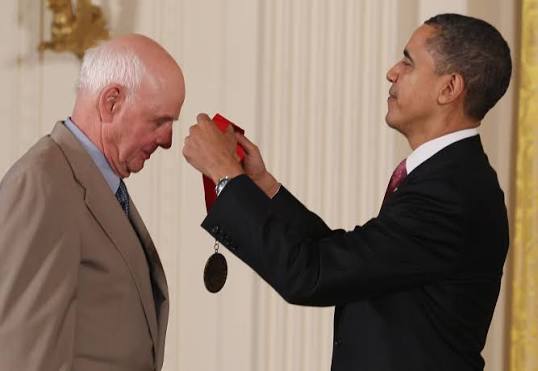
In 2013, President Barack Obama awarded Berry the National Humanities Medal.
In 2015, he became the first living writer inducted into the Kentucky Writers Hall of Fame.
That same year, the Library of America published a boxed set of his work—an honor accorded to only two living American writers at the time.
Berry may be impractical. He may be impossible to scale. But he leaves us with an uncomfortable and necessary reminder: care, once abandoned, is not easily restored—and neither are the land, the culture, nor the communities that depend upon it.
Did you know that the average CEO compensation at large U.S. public companies now stands at roughly 280 times the pay of a frontline worker?
That represents a staggering shift from the 1960s, when CEOs earned 20 to 30 times what their workers made. Since the 1970s, the CEO-to-worker pay ratio has increased by over 1,000 percent.
This divergence did not occur by accident. One pivotal change came in the late 1970s, when American corporations moved away from a model centered on growth, stability, and shared prosperity toward one focused on maximizing shareholder value. Executive pay was increasingly tied to stock price rather than the long-term health of the firm.
With the rise of stock options and equity grants, CEOs could reap enormous rewards without raising wages, expanding productivity, or strengthening the workforce. Compensation ballooned even when companies stagnated.
Tax policy amplified the effect. In the 1950s and 1960s, top marginal income tax rates exceeded 70 to 90 percent, effectively discouraging runaway executive pay. That restraint largely disappeared in the 1980s, as marginal tax rates fell sharply, making extreme compensation both legal and cheap.
At the same time, labor power collapsed. Union membership declined, offshoring and automation accelerated, and job security eroded. Productivity rose; worker wages did not. Executive compensation absorbed the gains.
Business leaders defend this system by claiming that outsized pay is necessary to attract top talent. In practice, this has produced a self-perpetuating escalation, as boards benchmark CEO pay against ever-rising peer averages. In a globalized economy, profits flow upward, not outward.
Yet America’s extreme CEO-worker wage gap is not an inevitable feature of advanced capitalism.
Consider international comparisons:
Typical CEO-to-worker pay ratios (large firms):
United States: ~250–350:1
Western Europe: ~40–90:1
Japan: ~15–40:1
In much of Europe, workers sit on corporate boards, restraining excess. In Japan, adopting the American compensation model would be seen as collective irresponsibility, not enlightened management.
Public anger is justified—especially amid persistent inflation and decades of wage stagnation. Can the old restraints return?
There are tentative steps. The Tax Excessive CEO Pay Act of 2025, introduced by Rep. Rashida Tlaib and Sen. Bernie Sanders among others, would raise corporate tax rates on companies whose CEO pay exceeds worker pay by extreme margins, beginning at 50-to-1. But meaningful reform would require broad coalitions and a substantial shift in Congress. Change, if it comes, will be slow—and uncertain.
Transparency may be the public’s strongest immediate tool.
What has happened in America is not merely an economic evolution; it is a moral shift. Accumulation has replaced public responsibility as the dominant ethic, not only in corporate life but across society. Its most vivid emblem is the twice-elected billionaire president, Donald Trump, whose politics celebrate wealth while dismantling social safeguards.
Since 1990, the number of U.S. billionaires has grown from 66 to more than 800, while the median hourly wage has increased by only about 20 percent.
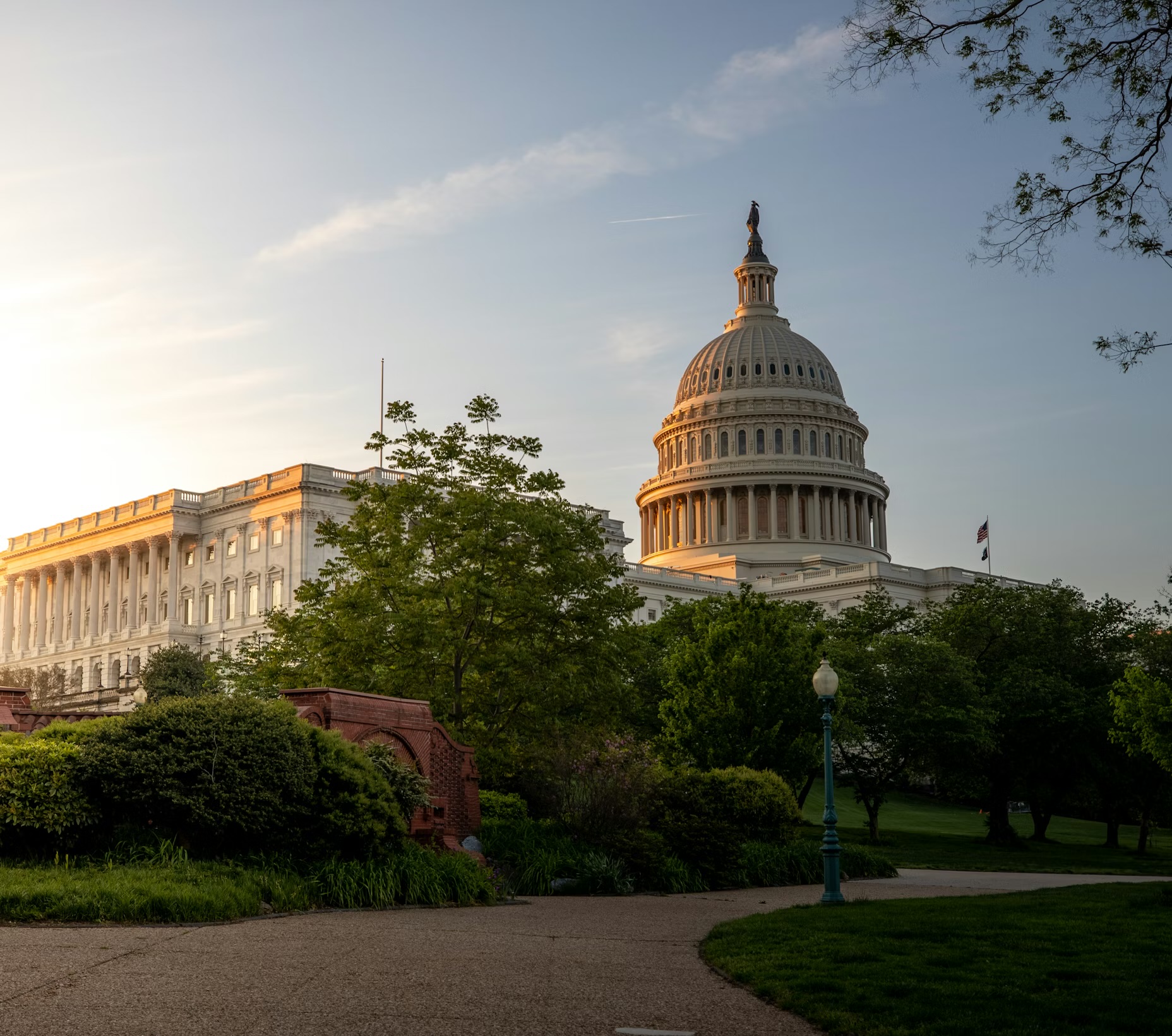
It is now 2026, with the midterm elections approaching in November. My New Year’s wish is straightforward: the impeachment of Donald Trump—assuming Democrats regain a decisive House majority—followed by a Senate trial resulting in his removal from office.
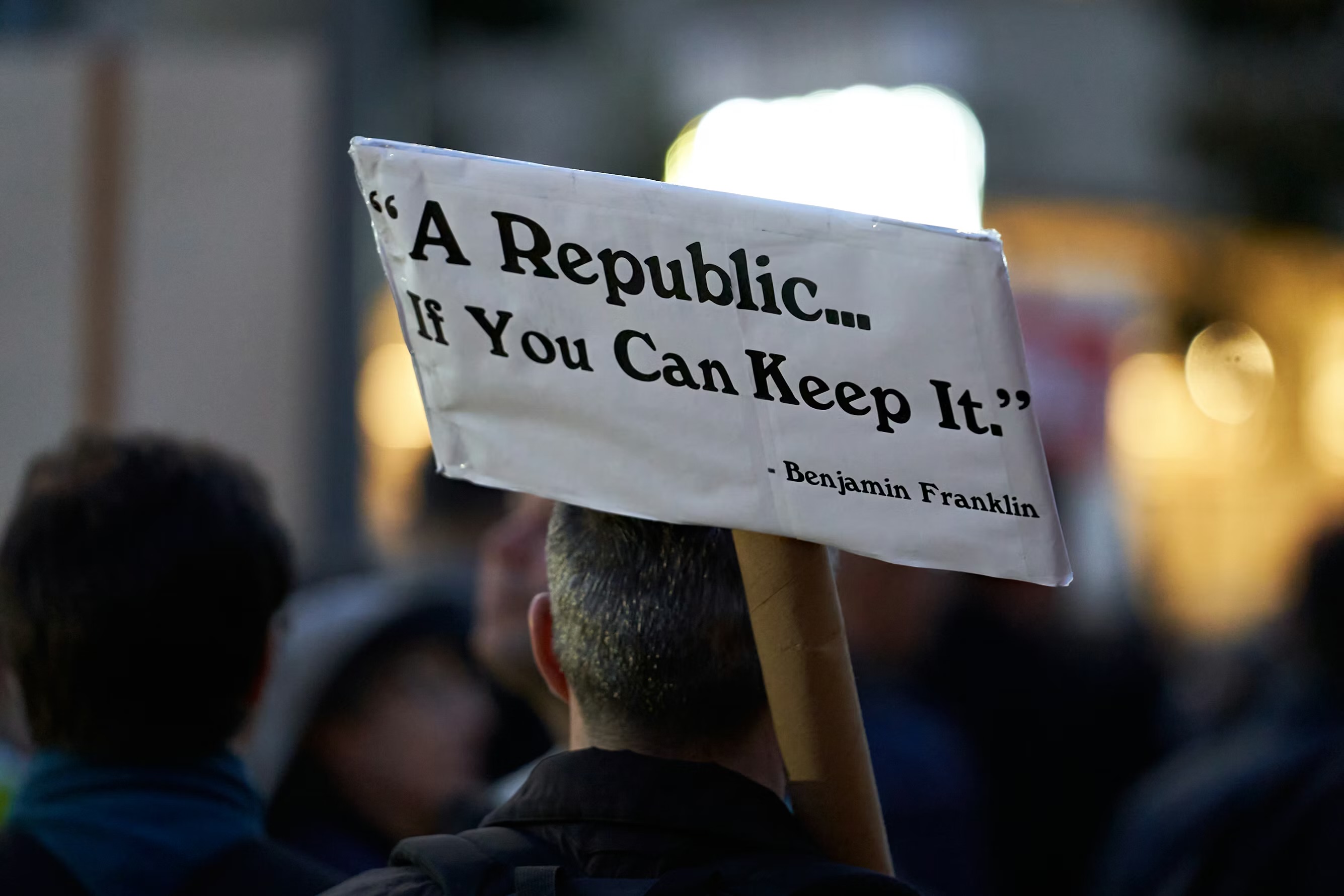
The Framers of the Constitution were not naïve about power. They were steeped in history’s lessons about its corrupting tendencies and had lived, in their own time, under the despotism of a foreign monarch. Their revolution was not merely against a man, but against unchecked executive authority.
Accordingly, the 55 delegates to the Constitutional Convention of 1787 chose to create a president, not a king. Crucially, they did not rely solely on periodic elections as a safeguard. Recognizing that elections alone might prove insufficient in moments of grave danger, they embedded in the Constitution a remedy for removing a corrupt or dangerous chief executive.
Those impeachment provisions are found in Articles I and II. Article I grants the House of Representatives the sole power of impeachment by majority vote and assigns the Senate the sole power to try impeachments, requiring a two-thirds vote of members present for conviction. Article II, Section 4 defines the standard:
“The President, Vice President and all civil Officers of the United States, shall be removed from Office on Impeachment for, and Conviction of, Treason, Bribery, or other high Crimes and Misdemeanors.”
Impeachment, it bears emphasis, is an accusation; removal requires conviction.
Presidential impeachment trials are exceedingly rare. In more than two centuries of constitutional government, only four have occurred:
Andrew Johnson (1868) Bill Clinton (1999) Donald Trump (2019 and 2021)
All four trials ended in acquittal. Richard Nixon almost certainly would have been removed, but he resigned before the House could vote on impeachment—the first presidential resignation in American history.
The rarity of impeachment trials reflects not restraint alone, but the gravity of the remedy. As Alexander Hamilton explained, impeachable offenses are those that violate the public trust—abuses of power that strike at the constitutional order itself.
Measured against that standard, there should be little ambiguity regarding Donald Trump’s “high crimes and misdemeanors.” They include conduct that betrays the nation’s best interests and undermines the rule of law: defiance of judicial orders; the use of the Department of Justice to shield allies and punish perceived enemies; and the deployment of violent rhetoric that incites threats against judges and congressional critics, including calls for the execution of former public servants from the military and intelligence communities.
To these may be added the consistent placation of authoritarian foreign leaders and the initiation of military actions—such as attacks on Venezuela and vessels at sea—without clear congressional authorization.
Conviction in the Senate requires 67 votes. Given political realities, Republicans alone are unlikely to supply them. That leaves responsibility where it has always rested in a constitutional democracy: with the electorate.
If the Constitution is to function as intended—if law is to prevail over personal power—then it falls to citizens to vote in numbers sufficient to make accountability possible. The midterms present such a moment.
Whether the nation seizes it will determine not merely the fate of one presidency, but the durability of the constitutional order itself.
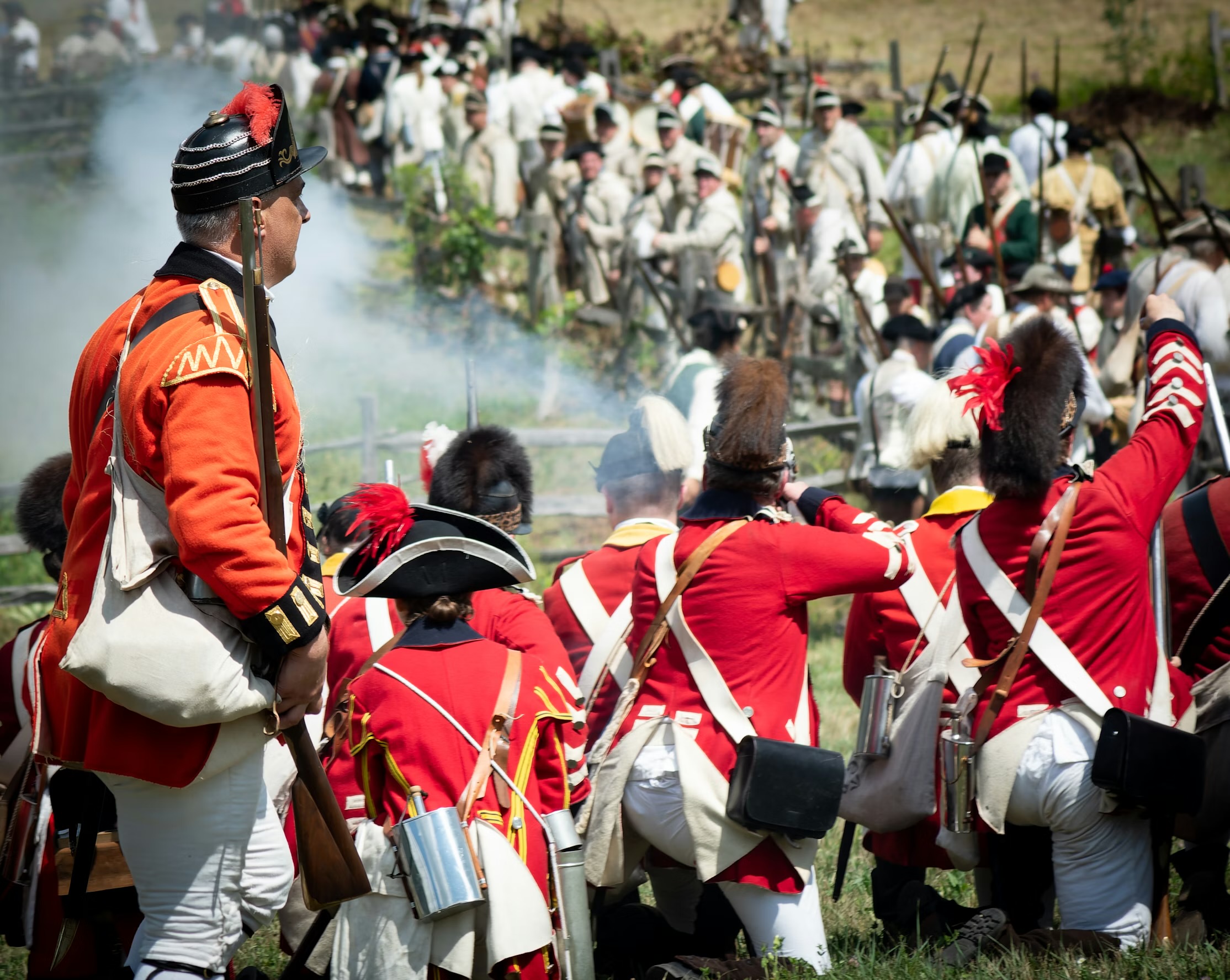
I’ve finished watching Ken Burns’ six part series, The American Revolution, and I think it brilliant, reproducing through letters, paintings, actual locale, staged reenactment, and historian insight a reasonable, balanced portraiture of the genesis of a new nation.
In watching it, I’ve found myself unlearning the version of American history I absorbed in school—one that portrayed the country as born purely of promise, while minimizing its foundations in slavery and the seizure of Indigenous lands.
I hadn’t realized, for instance, that the Revolution was in effect America’s first civil war: nearly 20 percent of the population sided with Britain as Loyalists. Atrocities occurred on both sides—burned homesteads, pillage, and widespread rape.
George Washington emerges as essential to the colonies’ improbable victory over seasoned British troops, often intuitive, and when necessary, boldly improvisational—especially in his surprise attack on the Hessian garrison at Trenton.
He also also fought with chronically scarce resources, including men and weapons. Smallpox devastated his ranks until ever practical Washington ordered mandatory inoculation for the entire Continental Army. For this, and much more, he merits the accolade, “the father of our country.”
The second sentence of the Declaration of Independence remains, for me, among the greatest ever written: “We hold these truths to be self-evident, that all men are created equal, that they are endowed by their Creator with certain unalienable Rights, that among these are Life, Liberty and the pursuit of Happiness.”
It’s also, as historian Jill Lepore points out in These Truths, proved an instrument of exclusion, its author Thomas Jefferson—like Washington—owning hundreds of enslaved people and enjoying immense wealth.
The Declaration is a document of soaring ideals and deep compromises, and we live with those contradictions still—half of America’s wealth held by one percent of the population, and inequities woven through our social and economic life.
The American Revolution, then, is best understood as a work in progress. It inspires hope that we can do better—and in some respects, we have—though much remains unfinished.
While the Revolution’s principal architects—Jefferson, Adams, Franklin—were men of the Enlightenment who trusted reason to guide human flourishing, the war itself was largely fought by working-class coalitions, many lured by the promise of 100 acres of land taken from Indigenous nations.
Burns isn’t receptive to the argument advanced by the 1619 Project—that American history truly begins with the arrival of enslaved Africans in 1619, and that the Revolution was in part propelled by Southern fears that Britain would eventually abolish slavery.
We do see, however, that the Dunmore Proclamation (1775)—offering freedom to enslaved people who joined the British cause—galvanized Southern resistance. Yet Britain itself, as Burns points out, was hardly on the brink of abolition, its Caribbean wealth built on massive slave labor. Simply a political ploy, Dunmore owned many slaves, and slavery would endure in the Empire for another sixty years.
France entered the conflict in 1777, driven not by idealism but by a desire to avenge its humiliation at Britain’s hands and to reclaim lost influence. Without French military and financial support, the colonies almost certainly would have remained British dominions. By this point, the Revolution had become a global conflict, fought on many fronts.
Part V turns to Valley Forge, outside Philadelphia—the de facto capital of the newly united colonies. There the Revolution reached its nadir: troops half-starved, poorly clothed, ill-housed, and undersupplied as a brutal winter descended, the Congress unable for months to pay the troops. Many died. Many deserted.
With Spring, the French presence is felt, dividing British resources. By 1781, the British suffer massive defeat at Yorktown through a combined force of American troops and the French fleet, blocking British escape. A peace treaty, however, would not ensue until 1783.
The war left the new nation weak and divided, its economy wracked with inflation, huge national debt, and resentful farmers who bore much of the burden, leading to the insurrection in western Massachusetts of 1000 farmers before it was put down by militia. The nation’s weakness would lead, however, to the Constitutional Convention of 1787 defining American governance with its checks and balances under The Constitution.
Women and slaves were, nonetheless, still omitted from the democratic franchise; indigenousness lands seized with violent alacrity.
Washington emerges the series hero, not only innovative on the battlefield with few resources, but committing to democratic rule in resigning his military commission at war’s end.
The series’ central insight is that while the Revolution promised a nation unlike any other, that promise survives only through continual reengagement.
It merits wide viewing: a masterpiece deserving of the highest praise.
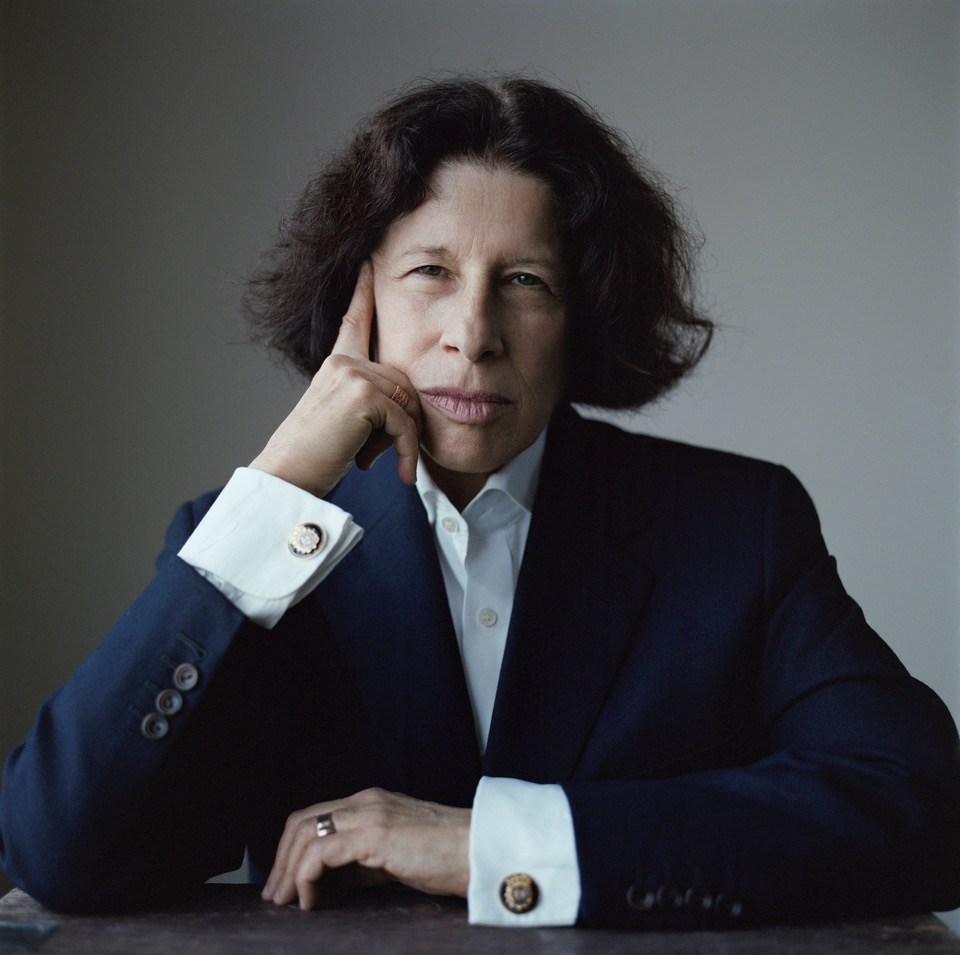
On my morning romp through TheGuardian, I bumped into Fran Lebowitz—a new acquaintance for me—and immediately took to her sardonic take on so many of the things, often political, that keep one awake at night.
Now 75, Lebowitz’s essays are well worth reading, even if they sometimes make you wince—saber-toothed witticisms worthy of jotting down. She does not suffer fools gladly, and she’d make a terrific talk-show guest; in fact, she often has.
Her best book, TheLebowitzReader (1994), remains thoroughly timely, a compendium of sharp observations on our cultural absurdities.
It may surprise you that she never attended college. A self-declared misfit, she spent high school hiding books under her desk, frequently getting caught and suspended.
She has no illusions about the times we live in, the reluctance to resist conformity, and the challenge of being an authentic self. We’d be great friends.
A consummate non-conformist, she owns no computer, no cellphone, not even a typewriter. But she does own 10,000 books and reads deeply—especially Baldwin and Fitzgerald. On Fitzgerald, she says:
“Most of my adult life I’ve been very irritated by the legend of F. Scott Fitzgerald. So every five years, I reread TheGreatGatsby, hoping it’s not that good—but unfortunately it is.”
Her political commentary is cutting. She laments the resurgence of book banning—driven largely by one political party that still enjoys the support of nearly half the nation’s voters.
A liberal Democrat, she rejects centrist Democrats who fail to stand up to corporate power. Clinton, she thought, seemed like a Republican. Reagan, to her, proved the prototype of the “dumb president,” and Trump the worst incarnation of incompetence—a “cheap hustler, lazy, but mostly dumb.”
On the indulgence of the wealthy in politics, she is characteristically blunt:
“I object to people who are rich in politics. I don’t think they should be allowed to be in politics. It is bad for everybody but rich people, and rich people don’t need any more help… No one earns a billion dollars. People earn $10 an hour; people steal a billion dollars.”
Her acerbic wit can be genuinely funny. Regarding mountain climbing—an enthusiasm she cannot fathom—she says there’s simply no substitute for a warm shower and a well-cooked meal. “Oh, but the camera views are spectacular!” Plenty of photos already exist for that. She walks extensively in New York, but always to a destination.
Space confines me, as usual, but I think my drift is clear: Lebowitz is a voice worth knowing, irritating, insightful, and just plain irresistible.



 Brimmings: up from the well