A favorite poem: William Carlos Williams’ “Spring and All”

By the road to the contagious hospital
under the surge of the blue
mottled clouds driven from the
northeast–a cold wind.  Beyond, the
waste of broad, muddy fields
brown with dried weeds, standing and fallen.

patches of standing water
the scattering of tall trees

All along the road the reddish
purplish, forked, upstanding, twiggy
stuff of bushes and small trees
with dead, brown leaves under them
leaflets vines–

Lifeless in appearance, sluggish
dazed spring approaches–

They enter the new world naked
cold, uncertain of all
save that they enter.  All about them
the cold, familiar wind–

Now the grass, tomorrow
the stiff curls of wildcdarrot leaf
One by one objects are defined–
It quickens:  clarity, outline of leaf

But now the stark dignity of
entrance–Still, the profound change
has come upon them: rooted, they
grip down and begin to awaken.

I’ve always liked the poetry of William Carlos Williams.  I like how he doesn’t put on airs, uses everyday vernacular, is strident for justice and filled with compassion.

Is he a romantic.  I can’t answer that.   Wallace Stevens said he was.  Williams, however, said no.

I do know that I cherish his imagistic prowess and his maxim, “No ideas, but in things.”  Accordingly, his poems sparkle with the presence of everyday objects like even a red wheelbarrow unlikely to attract our attention.

Reticent in symbolism, his poems nonetheless are latent with nuance and ultimately translate the local into the universal.

I haven’t  done a post on poetry in recent days, but it’s springtime now, bringing with it thoughts of one of my favorite Williams’ poems:  “Spring and All.”

It belongs to a genre  tracing back to the 13th century called “Reverie,” or poetry  celebrating spring.

I think of spring as the moodiest season of the year, sometimes stormy; other times, gentle.  Often it takes its time to make an appearance, stubborn, cross, and perverse.  Were it a psychological client, one might suspect borderline personality disorder.

Williams takes all of this in quite well when he likens a landscape adjacent to a road that leads to a “contagious hospital” (a facility for diseases  like tuberculosis) as analogous to the hospital, or replete with putrefaction and contagion, hinting at malady and death:  trees and bushes splotchy with red and purplish hue.

It’s Williams’ ingenuity, however, to undermine our usual negative take on “contagion” into just its opposite:  if there is contagion, then it’s not that of mortality, despite the ” dead, brown leaves under them/leaflets vines–”

In short, the small buds of reddish hue tell of spring’s incipient quickening of landscape as it makes its “sluggish,” “dazed” approach.

In essence,  William draws on the archetype of rebirth and restoration.  Spring emerges, inexorably, reversing winter’s tenacious sovereignty of the poem’s initial three stanzas.

They enter (i.e., the red buds) the new world naked,
cold, uncertain of all
save that they enter.   All around them
the cold familiar wind–

Now the grass, tomorrow,
the stiff curls of wildcdarrot leaf
One by one objects are defined–
It quickens: clarity, outline of leaf.

Williams’ poem isn’t simply a listing poem of quick observations.   If you look carefully, you’ll find it’s carefully structured as dialectic, or into an antithesis of life and death, with the former achieving the new synthesis.

Dialectic informs the very imagery in its couplings of stillness vs. motion and of sky with earth in the initial stanza.

Appearance with its mortality nuances gets routed by spring’s  slow, dazed, but inevitable entrance.

…now the stark dignity of
entrance–Still, the profound change
has come upon them: rooted, they
grip down and begin to awaken.

Addressing the human context, which Williams never neglects in any of this poems, the poem mirrors the continuity of life and hints of human resolve in spite of the ambience of mortality as a universal tenet.

I read somewhere, I think in the New York Times, that many critics regard “Spring and All” as one the last century’s greatest poems. You’ll get no argument from me.

–rj


On finding a new booklist quarry

Aaron Hicklin
Aaron Hicklin

I confess I’m addicted to booklists. No sooner do I finish one book, but I’m into another.

What surprises me is that I can’t remember anyone in my family serving as a role model when I was a child, either reading to me or picking-up a book for themselves, with the exception of the late intervention of my eldest brother, David, recently discharged from the army after WWII and anticipating college under the newly inaugurated GI Bill.

One night before David left for the University of Miami, he gave me my first book, Huckleberry Finn. I still remember the occasion–eight years old, sprawled out on the floor of our Philly tenement, absorbed so fully in this really good book that it muffled the adjacent Front Street el with its interminable trains, dutifully groaning past our rattling windows every fifteen minutes.

Soon I discovered the Montgomery County Library. I didn’t mind walking the two miles, knowing what lay up ahead. It was  one of those supreme pleasures like feasting on a well-stacked hoagie or downing a cold strawberry ice cream soda on humid summer Philly nights; maybe I even liked it as much as playing stick ball every day against the factory facades lining our streets.

Books gave me refuge in a home torn apart by alcohol. I became aware of a larger world, where good really did exist, and people could be kind and often courageous. I found heroes like Lincoln, Gandhi, and Gehrig that would become staples in my life.  Books transported me to far away places—Australia, New Zealand, the South Pacific.

Nearly as important as the library was a humble bookstore on Girard Avenue that I often passed on my way home from Chandler Elementary, filled with used paperbacks. What got my attention were two cardboard boxes piled high with comic books. I gravitated to the one filled with Classic Comics with their graphic renditions and abridged texts of literary fare.  The price, five cents, sealed the bargain!  I’d “picture” my way through, say, Les Miserables or Treasure Island, then pick-up the hardback version at the library. By the time I was 13, I had read many of the classics, including War and Peace, Moby Dick, and Silas Marner.

As for the many booklists I’ve ransacked through the years to feed my addiction, I’ll just say my favorite has been Brain Pickings, whose cerebral fiber fences it off from the traffic lane of your typical booklist..

For the most part, I shun the New York Times best seller lists, annoyed by their often fad offerings of dubious value other than to entertain or tell how you, too, can cash in and grow healthy, wealthy and wise.  A few weeks later, I’d find these books either gone awol or sunk to near oblivion.

Before the Internet opened up our information corridors, I’d reminisce earlier times venturing into a library, losing myself in its stacks, often looking for one book, but emerging with another. Call it serendipity, but the chance encounters I’ve had with library books have often proved fortuitous with surprising consequences.

Take, for instance, one chance venture when I pulled a book off the shelf by an author I’d never heard of. Lucky draw, it turned out to be Thomas Wolfe and his Look Homeward Angel. I was 17 at the time, a homesick GI in Korea resorting to the humble base library to annul slow time. Hooked, in subsequent years I rampaged all of his novels, ultimately enrolling at the University of North Carolina at Chapel Hill, the Pulpit Hill of Look Homeward Angel.

Books often haunt my mind, ghosts of delightful company with motley heroes, or of vistas spinning new threads of excitement, belief, and desire in conspiracy against the old.

But I’ve found that even the Internet can surprise me. Several days ago, for example, I stumbled upon an extended New York Times Style Magazine series, “My 10 Favorite Books,” edited by Aaron Hicklin.

Hicklin edits a magazine called Out and recently opened up a bookstore called One Grand Books in Narrowsburg, NY. In a clever ploy to attract readers, he’s come up with the idea of asking well-regarded people from various walks of life what ten books they’d want to have with them were they marooned on a desert island. Each listing would feature annotated entries explaining their choices or how these books came to shape their lives.

Hicklin doesn’t want just another bookshop, a dubious business venture in this age of online behemoths like Amazon and Barnes & Noble, but a resource for discriminating readers to find books of substance readily.

As I write, contributors to “My 10 Favorite Books” include, among many others,

 Allan Hollinghurst

 Edmund White

 John Irving

 Ta-Nehesi Coates

 Gloria Steinem

 Gia Coppola

Michael Pollan

Erica Jong

What’s nifty here is how when you select a contributor you get a cascading menu of ten annotated preferences.  In short, each menu constitutes a sub-booklist in the series.  Amazingly, very little overlap occurs among contributor choices, yet each listing is profoundly discriminating.

Absent from the list are two writers I’m unfamiliar who intrigue me for their choices, since they complement my own interests–artist Terence Koh and author, Brett Easton Ellis–the former for his love of Eastern thought with its subdued nuances in a sound byte world; the latter, in sharing tastebuds with me for writers like Tolstoy and Flaubert.

Hicklin, by the way, keeps an online blog, onegrandbooks, that provides you with an archive of previous contributors and a weekly focus on a current contributor, sparing you the cumbersome difficulty of finding each series individually online. You can even sign-up for his weekly newsletter and have your purchased item shipped conveniently to your doorstep.

I hope Hicklin’s venture succeeds. It’s a brave new world out there

Meanwhile, I’m on safari, exploring panoramas of infinite sweep_better because unanticipated, by way of my new booklist quarry.

–rj


Brimmings: Five Years and Counting

journalingI’ve been keeping my blog, Brimmings, for five years now, never realizing when I began that I would pursue it for so long, initially undertaking it to assuage my wrestlings with serious illness at the time, or as diversion from anxious self-preoccupation, for liberating reflection of a wider scope. When we let loose our moorings, we sail into discovery.
I suppose I shouldn’t be surprised I’ve persisted beyond that troubled time, now seemingly in remission, enjoying new strength, gathered insight and, undoubtedly, an incipient awareness of life’s essentials in foraging out its meaning.

There has been the joy of Nowness, enriched by moments of solitude, yielding an increased awareness of how interconnected all of us are, bundled in impermanence, and more: of a wider empathy gleaned from that solitude affordng reflection, assuring me that it isn’t how long we live, but how well.

As for the writing, like music and painting, there exists that longevity beyond ourselves that with good fortune we may share with others in another time and place, perhaps bringing not only sobered reflection, but comfort and healing as well.

It doesn’t matter to me how many read Brimmings.  If nothing else, it has taken on the hue of an inner dialogue, often between mind and heart, with no clear winner.

And so I continue.

Peace.

–rj


Macdonald’s H is for Hawks: Finding Passage

The archaeology of grief is not ordered. It is more like earth under a spade turning up things you had forgotten, surprising things come to light: not simply memories, but states of mind, emotions, older ways of seeing the world.
–Helen Macdonald, H is for Hawk

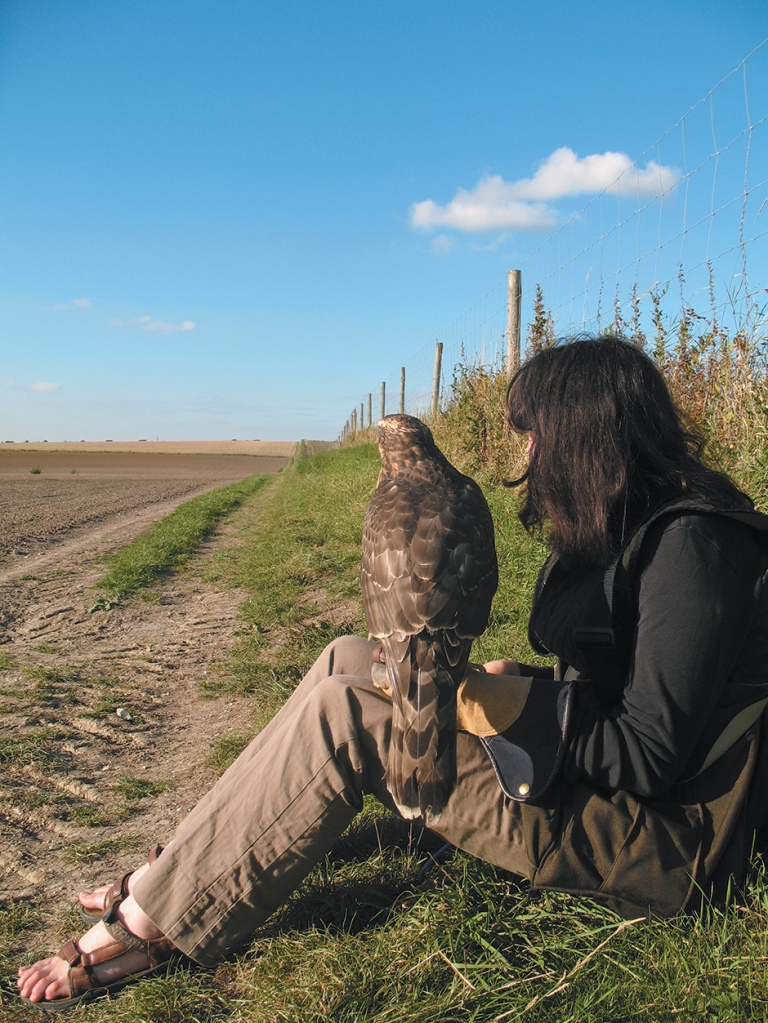
Helen Macdonald with her goshawk, Mabel, near Cambridge, England, 2007

I’ve finished reading Helen Macdonald’s H is for Hawk and want to weigh in on it like someone who’s just dined gourmet and relishing the deed, must boast his good fortune.

I was attracted to Macdonald’s memoir because of its critical esteem in those bastions of literary prowess like The New Yorker and The New York Review of Books, which often ration praise and, even then, not without censure.

H is for Hawk has won two prestigious book awards as well: The Samuel Johnson Prize for non-fiction and Costa Book Award for best book in any genre.

This is Macdonald’s fifth book.

She teaches and does research at Cambridge University.   Her interests include not only falconry, but history and poetry (3 published collections).

Macdonald’s memoir tells the story of her depression following the unexpected death of her father, Alistair MacDonald (2007), a longtime photographer and  journalist for the Daily Mirror, and her resorting to falconry to relieve her grief.

Macdonald’s goshawk, Mabel

This isn’t the first occasion we’ve seen a book testifying to the ability of animals to uplift troubled humans, but may well be among the best. In venturing into the first several pages, I knew immediately I’d be keeping company with a masterpiece.

Macdonald’s training of a goshawk provided a means of continuity with her father, an ardent plane spotter and bird enthusiast, who also taught her patience, a primary motif contributing to her healing and integral to harvesting nature’s plenitude::

My father’s talk of patience had held within it all the magic that is waiting and looking up at the moving sky.

But Macdonald’s memoir is not your romp into a Wordsworthian nature, benevolent and moral.  Mabel kills her prey, suddenly and savagely, or like those artifacts of the human world, airplanes, which link the human and the natural; and yet, even then, there is a vital difference separating the two, with the balance favoring nature:

In my time with Mabel I’ve learned how you feel more human once you have known, even in your imagination, what it is like to be not. And I have learned, too, the danger that comes in mistaking the wildness we give a thing for the wildness that animates it.  Goshawks are things of death and blood and gore, but they are not excuses for atrocities.  Their inhumanity is to be treasured because what they do has nothing to do with us at all.

The writing itself is magnificent in its artfully composed sentences resonant with observation and chiseled detail of landscape and of her travails in training her goshawk, Mabel,  and, most of all, in its poignant psychological journey of retreat from the human community and, ultimately, return to its renewed embrace.

Her memoir is also interlaced with T. H. White’s works, renowned for their Arthurian themes and with his The Goshawk (1951) in particular.

White, who lacked experience, had earlier attempted to train a goshawk, only to fail.  Macdonald, however, didn’t suddenly take up the hobby or, more precisely, being an austringer (i.e., a hawk trainer), having previously trained peregrines, merlins, and kestrels:

While the steps were familiar, the person taking them was not. I was in ruins. Some deep part of me was trying to rebuild itself, and its model was right there on my fist. The hawk was everything I wanted to be: solitary, self-possessed, free from grief and numb to the hurts of human life.

Although MacDonald identifies in many ways with White, who becomes a projection and touchstone of her own anguished struggle to evade life’s seemingly malevolent caprice, she fortunately finds her way past his psychological morass.

As I grew happier his presence receded, his world more and more distant from mine.

Like White I wanted to cut loose from the world, and shared, too, his desire to escape to the wild, a desire that can rip away all human softness and leave you stranded in a world of savage, courteous despair.

Unlike White, she learns that “hands are for other human hands to hold. The wild is not a panacea for the human soul. Too much in the air can corrode it to nothing.”

–rj


My Best Reads for 2015

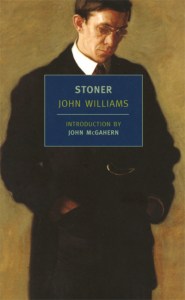
John-Williams-StonerMy thirst for good reads continued in 2015, and among them, two stand out for special praise in providing me with pleasure, insight, and continuing reflection. (I’ve reviewed both more fully elsewhere in Brimmings.)
Fiction:   John Williams. Stoner (New York Review of Books Classics)

My choice is probably subliminal and inevitable, as not since David Copperfield have I identified with a fictional character so fully as with Stoner, having like him, been a professor of English for several decades, thus  familiar with academic intrigue and its pettiness; even more, having, like Stoner, endured a previous incompatible marriage that served neither of us well. But aside from the personal, Stoner has also been the favorite novel of professors across the years, according to a recent article. And why not, since it excels not only for its verisimilitude, but its superlative craft of nuanced, rhythmic sentences replete with stylistic discipline made potent through understatement; in short, easily one of the best written novels I’ve come upon.

Sample Passage:

In his forty-third year William Stoner learned what others, much younger, had learned before him: that is the person one loves at first is not the person one loves at last, and that love is not an end but a process through which one person attempts to know another.

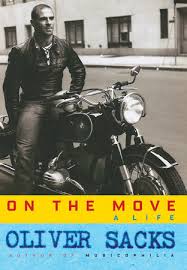
SacksNon-Fiction: Oliver Sacks: On the Move: A Life

Sacks, renowned as both a neurologist on the cutting edge and cogent observer of the eccentric manifestations of the brain’s malfunctionings in his many books, wrote this memoir in the final months of his terminal illness from cancer. As such, it startles with its wisdom and bravery; even more, in its honesty about himself in measuring the successes and shortcomings of his life journey, delivered with verbal beauty uncommonly found among scientists.

Sample Passage:

This gave me a feeling of what seemed wrong with American medicine, that it consisted more and more of specialists. There were fewer and fewer primary care physicians, the base of the pyramid. My father and my two older brothers were all general practitioners, and I found myself feeling not like a super-specialist in migraine but like the general practitioner these patients should have seen to begin with.

__rj

A Life-Changing Quotation

Every once in a while, I come across a quotation that really stands out. I like this one, though I don’t recall exactly where, or when or how I came upon it, but thought you might like it too:

Did I offer peace today?

Did I bring a smile to someone’s face?

Did I say words of healing?

Did I let go of my anger and resentment?

Did I love?

–Henri Nowen (1932-1996)*

Nowen*Nowen, priest, theologian, and author, lived the life he preached, loving others, and writing some 39 books, translated into thirty languages. His most famous book: The Return of the Prodigal Son.

–rj


Second Thoughts

thSecond Thoughts

If

I could voyage to the stars,
         gaze into infinity,

unshackle earthly anchors,
        tumble freely,

floating on space,
       drift into solar ports

of dark safety,
       discovering bliss–

I’d like that a lot,
       save jettisoning fellows,

imperfect, but weathered
       by earth’s impromptus,

its sun-drenched fissures,
       yet stubborn harvest

of courage, empathy, and love,
       seeded by struggle.

nourished by hope,
       redemptive.

–rj

Oliver Sacks: Medicine’s Laureate

I find every patient I see, everywhere, vividly alive,
interesting and rewarding; I have never seen a patient
who didn’t teach me something new.  Or stir in me new
feelings and new trains of thought.
–Oliver Sacks

SacksI’ve just finished Oliver Sack’s recently published autobiography, On the Move: a Life. Better, I devoured it.

Medicine has always interested me, and I read a lot of its literature on an almost daily basis. Still, while I know some things about how the body works, I’m largely ignorant when it comes to how the brain functions, its capacity for life enhancement and, conversely, its potential for horrendous suffering, physical and mental, when failing to function properly, either through genetics, injury, disease, or simply aging.

In reading Sack’s book, I’ve made a dent into the immensity of what I’ve missed. After all, Sacks is a neurologist, and a gifted one at that–a doctor fond of research with an extraordinary compulsion for not only writing down his observations of more than fifty years, but in an idiom we laymen can understand.

He’s written eleven books, published in hundreds of medical journals, and with a rare propensity for uniting science and art, has regularly contributed to the likes of The New York Review of Books and my favorite, The New Yorker. The New York Times has appropriately dubbed him “the poet laureate of medicine.”

Do you remember the riveting movie, Awakenings, starring a young Robin Williams and Robert De Niro, with its moving depiction of postencephalitic patients hospitalized for some forty years, initially responding to a bold and controversial therapeutic approach that gave them a brief window of normality, only to relapse? It came from Dr. Sacks’ book of the same title.

You may also know of his popular collection of brain vagary anecdotes published as The Man Who Mistook His Wife For a Hat.

What I find most compelling in Sacks is his innate compassion for his patients, a doctor who sees them as individuals possessing a context integral to their healing and thus worth knowing, a practitioner who conveys to his patients that they matter deeply.

Up there too is his refreshing approach of reaching past the compensational paradigm of contemporary medicine to root out the origins of our morbidities and facilitate their cure.

And no corner thing, there’s his open honesty about his earlier drug addiction.

Likewise, he writes movingly of being gay and about his several loves.

At the personal level, Sacks is a natural draw for me in his love for both science and literature, lifelong zeal for motorbikes and  weight lifting, his introversion, a brother with schizophrenia (which is true of my son), his outspokenness about entrenched medical prejudice with its jealousies and frequent resistance to innovation.  All of these, and more, find their way into On the Move.

I was surprised to learn that Aubrey “Abba” Eden, Israeli diplomat, who always impressed me with his Cambridge accent and articulate English, was a first cousin; likewise, Al Capp, formerly loved for his Little Abner cartoons until his sexual downfall.

Sacks, towards the end of his autobiography, writes of his declining health, without mentioning his now, terminal metastatic melanoma (he’s now 82). I take this omission as his not wanting reader pity to enter into play in judging his autobiography.

The reality, of course, is that Sacks is a very brave man who has lived in death’s neighborhood for many years, both as a physician and in his personal life.  Thus I wasn’t surprised  in the least in his openness and acceptance of his terminal illness elsewhere.  See http://www.nytimes.com/2015/02/19/opinion/oliver-sacks-on-learning-he-has-terminal-cancer.html?_r=0

Below I’ve given you my chosen book highlights, hoping they’ll entice you to read this supremely humane work.  As I write, On the Move has made the Best Seller List of the New York Times:

On being gay:

“You are an abomination,” she said. “I wish you had never been born.”

My mother, so open and supportive in many ways, was harsh and inflexible in this area.

Her words haunted me for much of my life and played a major part in inhibiting and injecting with guilt what should have been a free and joyous expression of sexuality.

On taking tests:

I am very bad at factual exams, yes-or-no questions, but I can spread my wings with essays.

On his brother’s schizophrenia:

…what sort of world Michael lived in, none of us knew. And yet he was very intelligent; he read continually: had a prodigious memory, and seemed to turn to books rather than “reality” to get his knowledge of the world.

On the poet Thom Gunn:

I’m not sure what Thom saw in me at this point, but I found in him great personal warmth and geniality and warmth mixed with fierce intellectual activity. He was incapable of indirection or deceit, but his directness was always accompanied, I thought, by a sort of tenderness, too.

On Robin Williams (who, portrayed Sacks in the film version of Awakenings):

Over the next twenty-five years, Robin and I became good friends, and I grew to appreciate–no less than the brilliance of his wit and his sudden, explosive improvisations–his wide reading, the depth of his intelligence, and his humane concerns.

On medicine:

This gave me a feeling of what was wrong with American medicine, that it consisted more and more of specialists.

…unconscious motives may sometimes ally themselves to physiological propensities. One cannot abstract an illness from the whole pattern, the context, the economy of someone’s life.

On Awakenings:

The postencephalectics had been in a state of suspension for decades–suspension of memory, perception, and consciousness. They were coming back to life, to full consciousness, and mobility. Would they find themselves like Rip Van Winkle, anachronisms in a world that had moved on?

When I gave L-dopa to these patients, their “awakenings” were not only physical, but intellectual.

American Medical Association response to “Awakenings” experiment:

In the summer of 1970 then, in a letter to JAMA, I reported my findings, detailing the total findings of L-dopa in sixty patients whom I had maintained on it for a year. JAMA published my letter, but while I had got plenty of positive responses to my letter in The Lancet, my letter in JMLA was greeted by a strange, rather frightening silence.

The silence was broken a few months later, when the entire letters section in one JMLA was devoted to highly critical and sometimes angry responses from various colleagues.

I thought it was improper of JMLA to publish these attacks without giving me an opportunity to respond to them in the same issue.

I knew that I had something important to say, but I had no way of saying it, of being faithful to my experiences without forfeiting medical “publishibility” or acceptance among my colleagues.

On the death of his mother:

My mother’s death was the most devastating loss of my life–the loss of the deepest and perhaps, in some sense, the realest relation of my life.

On W. H. Auden:

He was …critically important to me during the writing of Awakenings, especially when he said to me, “you’re going to have to go beyond the critical…Be metaphorical, be mystical, be whatever you need.”

I wept after I received Auden’s letter [following publication of Awakenings]. Here was a great writer, not given to facile or flattering words, judging my book a “masterpiece.”

On nursing homes:

In some of these places …I saw the complete subjugation of the human to medical arrogance and technology. In some cases the neglect was willful and criminal–patients left unattended for hours or even abused physically or mentally….I worked in other nursing homes where there was no negligence but nothing beyond basic medical care. That those who entered such nursing homes needed meaning–a life, an identity, dignity, self-respect, a degree of autonomy–was ignored or bypassed; “care” was purely mechanical and physical.

On himself:

I am shy in ordinary social contexts; I am not able to “chat” with any ease. I have difficulty recognizing people (this is lifelong, though worse now my eyesight is impaired). I have little knowledge of and little interest in current affairs, whether political, social, or sexual. Now, additionally, I am hard of hearing, a polite term for deepening deafness. Given all this, I tend to retreat into a corner, to look invisible, to hope I am passed over.

On writing:

The act of writing, when it goes well, gives me a pleasure, a joy unlike any other. It takes me to a place–irrespective of my subject–where I am totally absorbed and oblivious to distracting thoughts, worries, preoccupations, or indeed the passage of time.

__rj


Happiness that Money Can’t Buy

Edwin Arlington Robinson

I think we’ve all read E. A. Robinson’s masterful “Richard Cory” poem about a wealthy man, much admired, perhaps envied for his living the good life, who commits suicide.

Whenever Richard Cory went down town,
We people on the pavement looked at him:
He was a gentleman from sole to crown,
Clean favored, and imperially slim.

And he was always quietly arrayed,
And he was always human when he talked;
But still he fluttered pulses when he said,
“Good-morning,” and he glittered when he walked.

And he was rich – yes, richer than a king –
And admirably schooled in every grace:
In fine, we thought that he was everything
To make us wish that we were in his place.

So on we worked, and waited for the light,
And went without the meat, and cursed the bread;
And Richard Cory, one calm summer night,
Went home and put a bullet through his head.

In keeping with the poem’s theme, I recently came across a Federal study published in 2002  that showed that rich neighborhoods have higher rates of suicides than less affluent neighborhoods. This finding may come as a surprise to most people who, like those in the poem, equate wealth with contentment.

The obvious question to ask is why money, possessions, fame and power don’t assure us happiness? The answer is that they fall short in the staying power of simpler values, found largely in ourselves, not things subject to life’s vicissitudes and often paid for with daily stress.

Ironically, having money and all it buys may mask an insecurity, or need for validation,  compounding one’s misery.

According to Solberg, Diener, and Robinson, “Why Are Materialists Less Satisfied?” (2004), those values that truly sustain come down to a relative few:

Personal health.

Security.

Having goals.

Enjoying a rich relationship with others.

I’d even contend that the four can be reduced to just one, security. Defining security more specifically, what we want most is freedom from anxiety in a world of flux. As Freud might have told us, we’re all children crying in the night. Let’s face it: As human beings we’re possessed by egos that generate our desires and foster our insecurities.

This, of course, may help explain the increasing popularity of meditation to relieve our stress or, better, our fright.

I think Tolstoy, that most moral of writers, gets at the truth in his short story, How Much Land Does a Man Need?:

I would not change my way of life for yours,” said she [to her well off sister]. “We may live roughly, but at least we are free from anxiety. You live in better style than we do, but though you often earn more than you need, you are very likely to lose all you have. You know the proverb, ‘Loss and gain are brothers twain.’ It often happens that people who are wealthy one day are begging their bread the next. Our way is safer. Though a peasant’s life is not a fat one, it is a long one. We shall never grow rich, but we shall always have enough to eat.

Recently I saw Hardy’s magnificent Far From the Madding Crowd at the movies and reread the classic. Observing the reenactment of an agrarian tapestry of defined roles amid resplendent, on locale filming in Dorset, Somersetshire and Oxfordshire (Hardy’s Wessex), I couldn’t help remembering Hardy’s nostalgia for a fast fading bucolic way of life providing security, communal intimacy, and defined roles.

In our own time, in contrast, one only has to read sociologist George Packer’s The Unwinding: An Inner History of the New America (2013) to see the carnage of our free-fall from those nets of safety intrinsic to daily life.

If you were born around 1960 or afterward, you have spent your adult life in the vertigo of that unwinding. You watched structures that had been in place before your birth collapse like pillars of salt across the vast visible landscape—the farms of the Carolina Piedmont, the factories of the Mahoning Valley, Florida subdivisions, California schools. And other things, harder to see but no less vital in supporting” the order of everyday life, changed beyond recognition (pp. 12-13).

How much better the simpler life, free of complication with its inherent risk of loss, lived honestly, even if frugally, ample in the extraordinary goodness of family and friends and the joy of pursuing one’s passion.

Ok, so I’m a sentimentalist, I still hold that those times, lived in the plentitude of the simple values I enumerated earlier, provided far more in the way of genuine happiness than today’s stressful, materialistic world that increasingly marginalizes each of us and holds our contentment hostage.

–rj

Same Sun Here

Neela Vaswani
Neela Vaswani

Dear River,
I cannot tell from your name if you are a boy or girl so I will write to you like you are a human being.

The above comes from a book I’ve been reading for middle grade children, called Same Sun Here, by Silas House and Neela Vaswani.

My wife, a middle school teacher, brought the book home several weeks ago for me to read. She said, “It’s really good and you’ll like it.”

Well, I got hooked. It’s too good to put down. Teeming with prose often approaching poetry and vivid scenarios that can move hearts, it resonates those values that define the better portions of ourselves. I venture it’s one of those books you start missing no sooner you’re done.

Briefly, it’s told through a series of letters exchanged between two 12 year olds: Meena, formerly from India, now living in NYC, and River, who lives in the mountains of Eastern Kentucky.

[Mamaw] says that the everyone used to write letters all the time and it’s a lost art form.

Turns out, these two have a lot in common, despite their differences in background and locale:

Both are close to their grandmothers.

Have fathers with out-of-town jobs.

Share an affection for dogs.

Are fond of mountains. (Mountains were part of Meena’s Indian childhood. River lives in the mountains.)

In New York, the buildings are in someways like mountains, but they are only alive because of the people living in them.

Are sensitive to the beauty and wonder of nature.

I usually walk through the woods instead of taking the driveway because it’s a different world there.

Are outliers. (People make fun of their strong accents and origin.)

Like to read.

I like that library books have secret lives. All those hands that have held them. All those eyes that have read them.

Silas House
Silas House

The Same Sun Here is primarily about the faulty way we perceive others. River had been told that people who looked like Meena were terrorists. Mina, that people in Kentucky were hillbillies.

Mamaw says that people don’t really care about people here because they think we’re a bunch of stupid hillbillies who are looking for handouts.

Hey, if this old guy likes the book, typically self-conscious young adults will like it even more

Having said this, I think some readers won’t like the book for its seeming political preachments. It’s big on environment (mountain top removal) and waxes enthusiastic over Obama’s election victory. (The story is set in 2008.). A book of several strands, it features the powerless and, thus, exploited and how they may still find a voice.

Climate change challenges us as well, menacing not only our quality of life, but our survival. I cringe with every forest leveled, diminishing resources, declining species, sulfur fumes, unrestrained growth, etc.

I like people who lay their cards face up on the table.

I like a book that advocates awareness of a wider humanity and the folly of stereotyping that walls out our fellows.

Too often, bound by cultural mores, we’ve only a corner perspective.

We need a wider view to forestall our prejudices. Achieving empathy, we’ll discover a surprising commonality–that we’re more alike than we thought.

Sometimes you write things in your letters that I thought nobody had ever thought before except me, but then there it is in your letter.

Or as the title nuances, the same sun here.

–rj