Thoughts After Reading Virginia Woolf’s Diary

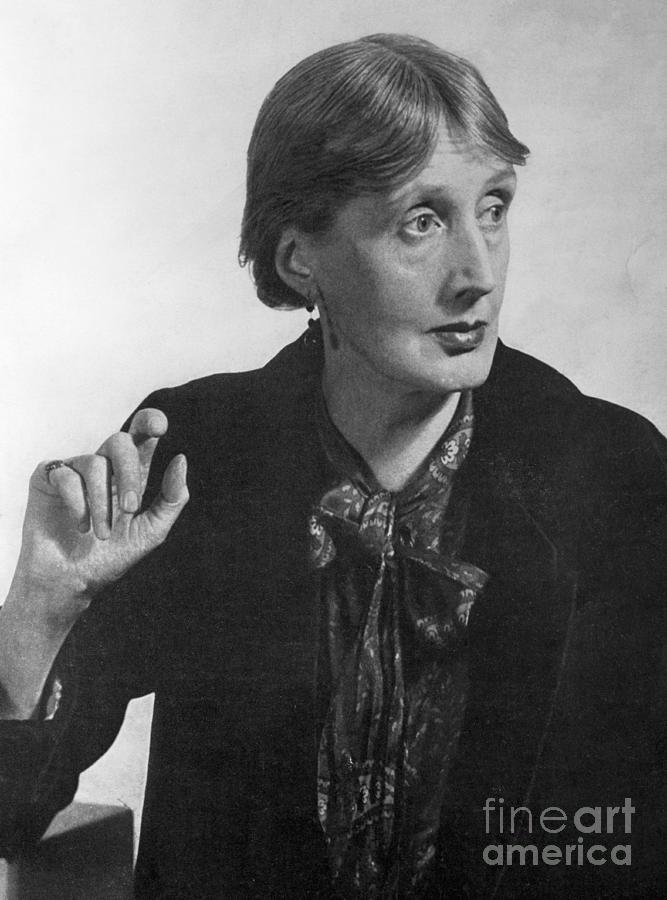
I’m almost done reading Virginia’s Woolf’s Diary, 1918-1941. She means much to me ever since Howard Harper, a Woolf authority at UNC, introduced her to me.

Such a scintillating intellect. Writing didn’t come easily to her, frequented with anxiety, sensitivity to criticism, writer’s block, and bouts of depression. Without husband Leonard, I doubt she’d have pulled off her prodigious achievement.

The Diary serves largely as her workbook of creative struggle—getting things right, the interplay of new formulations, the unleashing of her interiority.

The Diary catalogues books she’s reading and plans to read. It teems with recall of literary and artist luminaries she knew intimately, many associated with the Bloomsbury Group to which she belonged—Strachey, Forster, Keynes, and her sister Vanessa Bell among them. Henry James, George Meredith and T. S. Eliot were frequent household guests.

She’s opinionated about several of her rivals, Joyce for instance. She adored Proust: “My great adventure is really Proust. Well—what remains to be written after that? You can’t go further than that.” And, of course, there were Shakespeare, Dostoevsky, Tolstoy, and not least, Dante, to whom she turned often.

She read Homer, Plato, Aristotle, Sophocles, and Euripides in the original Greek and continued so throughout her life. I have her essay, “On Not Knowing Greek.”

Woolf spoke French fluently and read Proust, Gide, Flaubert and Maupassant in French. I hadn’t known until reading the Diary that she read Dante’s The Divine Comedy in Italian.

Largely self-educated apart from courses in the classics taken at the Women’s Department of King’s College (Women were excluded from Oxford and Cambridge), her intellectual achievements are extraordinary.

I introduced my students in Modern Novel to her “A Room of Their Own,” a feminist classic elaborating the interiority of female consciousness and exposing the barriers silencing women’s voices. And then, there was Mrs. Dalloway and To a Light House, now canon staples of English literature.

Nonetheless, in reading the Diary I found myriad passages that grieve me. She could be elitist, contemptuous of the working class; condescending towards blacks; antisemitic: “I do not like the Jewish voice: I do not like the Jewish laugh”; she felt uncomfortable in the company of the disabled.

In many ways, her views were not atypical of the mindset of the snobbish British upper class in the days of Empire.

Despite these faults, I try always to separate the artistry from the life; otherwise, there would be few artists to pursue, given the human proclivity to misbehave.

And so, over the years, I keep coming back to Woolf—her ability to recreate the inner life, to make universal the world of the quotidian; the beauty of her lyrical prose, her experimentations with narrative, her wrestlings with life’s frequent inequities.

On the Other Hand: Reminiscence of Charlie Kirk

We’ve been hearing a great deal about Charlie Kirk in the aftermath of his assassination, much of it pejorative in public media—and in some cases, disturbingly celebratory—even from a few of my own friends on Facebook.

Whatever one’s politics, Kirk consistently embraced conversation across divides, something rare in today’s climate of weaponized rhetoric on both right and left—rhetoric that too often spills over into violence.

I’m reminded of my own university experience decades ago at the University of North Carolina at Chapel Hill, when state police were brought in after radicals seized several buildings. Over lunch one day, a friend who later became a professor at UC Davis told me bluntly, “blood was needed to prevail.”

Kirk, however controversial his views, waded into the near-universal tide of leftist polemic across university campuses. He did so not with violence but with debate—introducing new lanes of conversation and allowing dissident voices to be heard.

Journalist and bestselling author Michael Easter (The Comfort Crisis), himself a staunch liberal, shared this reflection on his encounter with Kirk:

A years ago, I got a message from Charlie Kirk. He wanted me to come on his podcast.

All I knew about him then was that he was a right-wing political commentator.

I don’t publicly discuss politics because my books cover health and the human experience, which is universal. So I asked my publicist—who is extremely progressive—if I should go on.

“Do it,” she said. “If politics comes up, steer it back to health.”

Charlie didn’t ask me a single political question. He was exceptionally kind and genuinely curious about my work. He had a better reading of my book than nearly any other interviewer, and he drew out faith-based parallels I’d never considered. That actually deepened my own understanding of my work. He mentioned my book far more than he had to.

I’ve been on big podcasts with meditation and self-help gurus who weren’t a fraction as present, kind, and curious as Charlie Kirk.

Our conversation changed how I see public figures. The 20-second clips and 280-character hot takes we see in our media ecosystem don’t capture the full breadth, depth, and humanity of a person. I now have no hesitations talking to anyone.

I respect Charlie as a curious thinker and fellow human. I respect his devotion to his faith and family. His willingness to talk with anyone was inspiring, unique, and beneficial. I’m sad he’s gone (Substack, September 13, 2025).

Easter’s words remind me of John Stuart Mill’s enduring warning against censorship:

The peculiar evil of silencing the expression of an opinion is that it is robbing the human race; if the opinion is right, they are deprived of the opportunity of exchanging error for truth; and if wrong, they lose what is almost as great a benefit, the clearer perception and livelier impression of truth, produced by its collision with error (On Liberty).

rj


Remembering Edmund White (1940-2025)

I’ve just come off reading Edmund White’s 2005 New Yorker essay, “The Women I Dated as I Tried to go Straight.”

Whatever your sexual orientation, reading Edmund White’s essay is worth your time—the unchecked wit; the metaphoric grace; the vivid, often astonishing anecdotes; the shimmering brilliance that makes experience palpable. Like essayists Orwell, Woolf, or Sontag, he has that rare ability to make you pause, reassess, change course.

Above all, there’s his candor.

This morning I was heartened to see The New York Review of Books commemorating him by featuring six of his essays, written for them over the years.

Just a few weeks ago, June 3, 2025, White slipped into eternity. He had long faced declining health: a heart attack, a stroke, and his decades-long reckoning with HIV. He was 85.

I read somewhere that Vladimir Nobokov, that other preeminent prose prodigy, admired White’s literary acumen, so much like his own. What writer wouldn’t relish Nabokov’s compliment, bestowed upon so few.

White was the high priest of gay literature, writing prolifically on its themes and torments, addressing with fearless clarity the culture’s imposed shackles of shame.

Across five decades, he authored thirty books—novels, memoirs, plays, hundreds of essays, many of them distilling the gay journey into a language of self-acceptance and grace.

A devoted Francophile, he spent nearly twenty years in France, where he would write his erudite The Flâneur and Genet: A Biography.  

In A Boy’s Own Story, a blend of fiction and autobiography, White chronicles the interior landscape of a young gay man confronting the burden of identity.

His 2005 autobiography, My Lives, unflinchingly narrates his first 65 years.

With the essay “The Women I Dated as I Tried to Go Straight,” White reflects on his early sense of same-sex desire, repressed under the weight of cultural condemnation: “In the past, when homosexuality was still considered shameful, I was slow to confess my desires to anyone.”

To atone for those hidden desires, “the fire in the crotch,” White dated women—many drawn to his intellect, good looks, and sensitivity. Empathy pervades his essay as he recalls these women, acknowledging the structural inequities they faced, confronted with a patriarchal hegemony: “I came to think of men as monsters with absolute power, the darlings of the Western world, and of women as their unfortunate victims.…This was what distinguished me from the straight men I knew, who, it seemed, were united in their ability to treat women badly and then laugh it off.”

White’s sympathy undoubtedly owes its genesis to the gay community’s own troubled quest for validation.

I found his retrospective vignettes of women moving, bringing alive each woman’s individuality in vivid, lyrical prose replete with introspective finesse:

Sally was celebrated for her big breasts and her face, which was that of the Apollo Belvedere—bow-shaped lips, a long, straight nose, a wide, domed brow, an ensemble that was classical and noble and oddly mature. She looked like a woman, a grownup woman, not a raddled adolescent. She said little, but she smiled dreamily with veiled eyes. Her smile had a way of lingering two beats too long, after the conversation had moved on to a different mood. Was she lost in her own thoughts and not paying attention? Had someone told her that she was at her best when she smiled? She never guffawed or squealed or made violent movements, though catty classmates told me that when boys weren’t around she was a real sow, rolling on the floor, drinking beer, and giggling with the other girls at obscene speculations about penises they had known or divined through Speedos.

He thinks that had he not been gay, he might have fulfilled their myriad longings: “Unhappy women! How many of them I’ve known. Sniffling or drinking with big reproachful eyes, silent or complaining, violent or depressed—a whole tribe of unhappy women have always surrounded me.”

For most of my life I’ve been a shoulder to cry on, and all of that time I’ve wished I could do more to ease the pain of the women in my life. If I were straight, I could have married one of them. I would have known how to comfort her. I would have worked hard to provide her with the security and even the luxury she required. I would never have run off with another woman. I would have been as sensitive to her needs as a sister, as protective as a father. And I would always have told her where I was going and exactly when I’d be coming home. This was what distinguished me from the straight men I knew, who, it seemed, were united in their ability to treat women badly and then laugh it off.

White remembers falling in love with fellow schoolmate Marilyn Monroe, a recollection tender and adolescent, full of longing and projection:

In the middle of my sophomore year, I was sent to boarding school, at the Cranbrook School for boys, in Bloomfield Hills, Michigan, where I fell in love with Marilyn Monroe. I knew that she was the most beautiful woman in the world, and yet she was in pain, in need. She was unhappy. I believed that I could help her. My fantasies weren’t specific as to what I would actually say to her or do for her. I never got beyond her little smiles of love and recognition, which burned with a brighter and brighter glow.

My favorite daydream was that she’d come with me to my senior prom. All the other guys would be astonished: the toad, Eddie White, was really a prince. I pictured her on my arm, her sequinned gown glittering, her voluptuous body undulating as we entered the dining hall, which had been transformed by crêpe paper into a ballroom. It was like a mermaid’s visitation. The thin boys with their brush cuts and spotty faces, their dinner jackets and burgundy cummerbunds with matching bow ties, would gape at us. No way, man, the biggest dweeb of them all with . . . Marilyn!

Fortunately, not all the women in his life were unhappy. Some lived fulfilled lives outside a dependency on men, easing his guilt:

What I loved about Anne and Marilyn {another Marilyn}, even Alice, Sally, and Gretchen—was that they weren’t unhappy. Marilyn wanted nothing from me but my friendship, and she has it still.

Because she and the others I’ve written about here were the first women I knew who weren’t unhappy, who never once made me feel guilty, they showed me the way to friendship with women. 

White’s essay emerges a paean to women across the years who were there for him in the hard places, lending solace and fostering courage.

I will miss Edmund White keenly, a voice in the wilderness.

—rj
 

Jane Goodall: My Hero

Every now and then, I like to honor in Brimmings those I cherish as heroes. They stand apart in their daring, accomplishments and, above all, in their goodness. Jane Goodall comes to mind.

She’s 87 now, passionate as ever about the fate of our beleaguered planet, spending much of her time these days lecturing widely across Europe, North America, and Asia, to raise funds for her beloved chimpanzees of Tanzania’s Gombe National Park and the subsistence farmers who crowd its borders, encouraging her audiences to find ways in their daily life to heal the earth and the consequences if they don’t.

As a child, her love for animals came early, on one occasion as a 4-year old, taking earthworms to bed. At age 11, she came upon the Tarzan books and it changed everything. “I decided that when I grew up, I would go to Africa, live with animals and write books about them.”

But women didn’t do things like that. They belonged in the home, taking care of their men.

Besides, her family lacked the resources to send her to university.

Not to be deterred, she saved up her money from her secretary job in London and in 1957, at age 23, set out for Kenya to stay with a friend. Soon she was working as a secretary in Nairobi, heard about famed archaeologist and palaeontologist Lewis Leakey, and paid him a visit. Impressed with her knowledge of animals, Leakey hired her as his assistant and soon she was digging for fossils in Olduvai Gorge on the Serengeti Plains.

Then came the day Leakey asked if she’d like to research chimpanzees in Gombe National Park, and she said yes.

The problem remained that she was a woman, didn’t have a degree, and lacked funding. A year later, a wealthy American businessman supplied the funding, telling Leakey, “OK, here’s money for six months, we’ll see how this young lady does.”

It would begin a sojourn of 60 years among the chimpanzees, and still counting. She discovered they can use tools and have a defined social structure: “I am amazed to know how chimpanzees are very much like humans. Biologically, the DNA of chimps and humans differs by only just over 1 per cent. The blood of a chimpanzee is so like ours that you could have a blood transfusion if you matched the blood group. Chimpanzees can learn American Sign Language (ASL). They can learn about 400 of the signs of ASL, and they can use them to communicate with each other – although they prefer to use their own postures and gestures.”

I used to think of chimps as peaceful creatures, munching bananas as the day is long. Alas, as Goodall discovered, they’re like us in their tribalism, attacking other chimp communities. Keen predators, they aren’t hesitant to feast on bonobo monkeys, small antelopes, and wild hogs:

“It was a shock to me when I first realized that chimpanzees, like us, had a dark side to their nature; in interactions between neighbouring groups and communities in particular, there can be violent behaviour. Groups of males patrolling the boundary of their territory may give chase if they see strangers from a neighbouring group, and they may attack, leaving victims to die of wounds inflicted. But we can take comfort from the fact that they also show love and compassion. They can show true altruism.“

Sadly, these creatures, so much like ourselves, with intellect, distinct personalities, and emotions, are becoming extinct: “They’re disappearing because of the destruction of their habitat and ever-growing human populations. They’re disappearing because they are being hunted for food – not to feed hungry people, but because of the commercial hunting of wild animals, which is facilitated by the intrusion of new roads created by logging companies.”

Realizing that something must be done to lessen the human footprint, she and others founded Roots and Shoots to involve third world communities in the environment’s preservation, enhancing their economies and welfare with jobs, schools, medical clinics, and teaching crop rotation.

While poorer populations can destroy a habitat through intrusion in a desperate attempt to find new land for food production, slashing and burning their way through primeval forest, the bulk of environmental destruction comes from the materialism of rich nations, eating more meat, dependency on fossil fuels, factory farming with its consequent pollution, misuse of water resources, planes and cars spewing CO2 into the atmosphere, warming the seas, melting the glaciers, raising the tides.

I like it that Goodall is keen on limiting population growth to lessen the ubiquitous human footprint that threatens wildlife and is largely responsible for species decline and extinction, unlike other environmental and organizations such as the Sierra Club, reluctant to take up the issue because of its potential racial overtones.

We hear a lot about poaching, but exploding population growth in Africa poses devastating consequences, not only for indigenous fauna and flora, but for humans as well in the context of climate change and diminished resources. A UN study, for example, projects Nigeria’s current population of 200 million will double to 401 million just by 2050 and 721 million by century end.

Tanzania, home of Gombe National Park and Goodall’s research, has a current population of 68 million. By 2100, its population will swell to a projected 283 million: Goodall knows this: “We cannot hide away from human population growth, because it underlies so many of the other problems. All these things we talk about wouldn’t be a problem if the world was the size of the population that there was 500 years ago.”

I admire her boldness, whether addressing population growth, human aggression, meat eating, habitat loss, and climate change. There’s something alluring about those like Goodall who don’t mince words, daring what our anxieties disallow.

Goodall, nevertheless, remains optimistic: “Every one of us makes a difference every day. And if we would just spend a little bit of time thinking about the consequences of the choices we make each day – what we buy, what we wear, what we eat – there is so much we can do. Collectively, that will start to make bigger changes as more people understand that their own life does make a difference.”

While Goodall is renowned for her decades-long study of chimpanzees, I would contend her greatest contribution lies with her inclusion of the needs of local populations in minimizing habitat loss and species decline, revolutionizing conservation.

Dr. Goodall, a pioneering woman defying cultural boundaries, is my hero, brave, determined, assertive, living alone in the jungle for 60 years, a friend of animals, a champion of Mother Earth, always with passion and never without hope.

–rj

John Muir: Nature’s Gifted Scribe

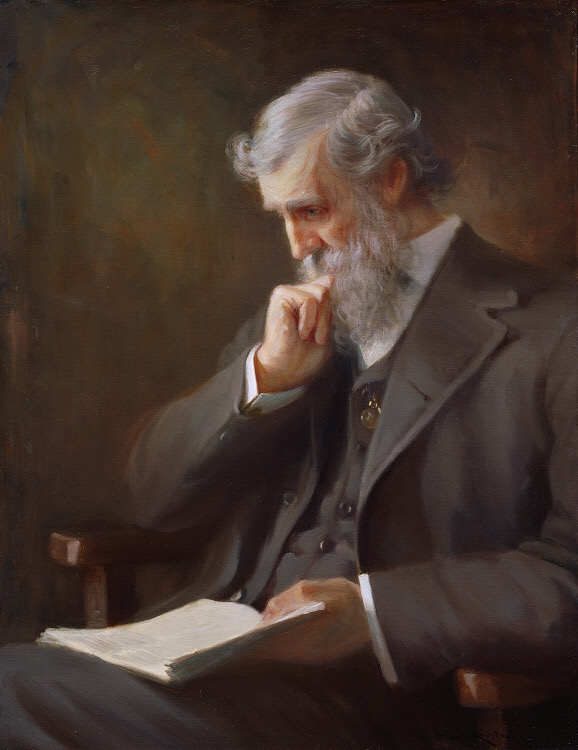
Sierra Club founder John Muir was extraordinary, not only for his devotion to preserving nature’s wilderness, but for his eloquence in articulating its grandeur. An example:

Wonderful how completely everything in wild nature fits into us, as if truly part and parent of us. The sun shines not on us but in us. The rivers flow not past, but through us, thrilling, tingling, vibrating every fiber and cell of the substance of our bodies, making them glide and sing. The trees wave and the flowers bloom in our bodies as well as our souls, and every bird song, wind song, and tremendous storm song of the rocks in the heart of the mountains is our song, our very own, and sings our love. The Song of God, sounding on forever (from John of the Mountains: The Unpublished Journals of John Muir).

All told, he would publish 300 articles and 10 major books, not bad for someone who nearly lost his sight in a work accident.

One of his closest friends was President Theodore Roosevelt. In 1903, they would hike wilderness terrain together for two months. Inspired by Muir, Roosevelt designated 230 million acres of public land, including Yosemite and four other national parks and 18 national monuments, for preservation.

Earlier, in 1867, at age 29, Muir walked 1000 miles from Indiana to Florida, taking along only sugar and bread, buttressed by wild berries. (Muir never weighed more than 148 pounds. ) You can read an account of his journey: A Thousand Mile Walk to the Gulf (1916). Excerpt:

Though alligators and snakes naturally repel us, they are no mysterious evils. They dwell happily in these flowery wilds, are part of God’s family, unfallen, un-depraved and cared for with the same species of tenderness and love as is bestowed on angels in heaven or saints on earth.

John Muir was one of those rare people that cross our pathway in life’s journey, keenly sentient of life’s best values and eager to share. Of all the nature writers I’ve imbibed, I’ve not found his equal for rendering nature’s transcendent allure with lyrical cadence that informs, moves, and underscores its mystery and  moods, culminating in an elixir for healing both body and soul.

All good nature writing may well begin with Muir.

—rj


A Profound Influence: My Debt to Tolstoy

I’ve had this fever to devour books since I was a child.
It began when my brother, David, returned from the army and gave me Huckleberry Finn to read. I was eight.

There was this small news store on Philadelphia’s busy Girard Avenue in Fishtown. I don’t remember how I discovered it, but I’d often stop there on the way back from elementary school or in summer time, when I roamed the city as a street urchin, sometimes poking my nose where it didn’t belong.

They had this big box filled with what were called Classics Illustrated, which featured comic-style adaptations of literary classics. Founded by the Kanter family in 1941, Classic Illustrated made it into the 21st century.

I’d fish out comics featuring works like Swiss Family Robinson, Moby Dick, Kidnapped, Mutiny on the Bounty, Oliver Twist. They went for no more than a nickel and there were lots of them.

I enjoyed them so much, I didn’t want them to end. This led me to the Montgomery Street library, where I would read their originals. By age 12, I had read scores of literary works. By the way, that library still exists.

Of all the writers I’ve read over the years, Tolstoy stands out head and shoulders above all others, influencing me profoundly. By age 13, I had read War and Peace and at 15, Anna Karenina.

Tolstoy taught me empathy for the poor, disavowal of violence, restraint from eating meat, to live simply and love my fellows.

Tolstoy’s great quest was to resolve life’s riddle: How should we live?

His quest became mine,

I loved his parabolic short stories. I think of The Death of Ivan Ilyich as among the most profound short stories I’ve ever read and taught it for many years.

Tolstoy’s writing creeps up on you. Though simply written, for Tolstoy shunned affectation, it’s the pulsating nuance generated by a passionate insistence that holds you to the end. Make no mistake. He aims to convert you.

Then there is his last novel, Resurrection, moving and powerful, a panorama of Russian life at the end of the nineteenth century. On the attack, he assails the injustices of a repressive, oligarchic society and the hypocrisy of its bulwark, the Russian Orthodox Church.

I wanted to read him in the original, so I studied Russian.

As a college prof, I taught seminars in Russian classics.

In 2001, I went to Russia and visited his lifelong residence at Yasnaya Polyana near Tula, 125 miles southeast of Moscow. I stood in silent tribute at his grave.


If there’s a Tolstoy book you should read sooner than later, my recommendation is The Kingdom of God is Within You.

Mahatma Gandhi, on reading it, exclaimed that he felt “overwhelmed”: “All the books given me … seemed to pale into insignificance.”

Tolstoy and Gandhi exchanged letters till Tolstoy’s death in 1910. Gandhi had also read Tolstoy’s hand-circulated “A Letter to a Hindu,” with its advocacy of love, not force, as the means to freeing India from British rule. We know the rest of the story.

I’m not interested in hagiography. Tolstoy had feet of clay. There existed his stormy marriage to Sofia and his moral intensity in combat with carnal appetites. He endowed his protagonist Anna Karenina with liabilities he despised in himself, annulling her quest for self-realization. In the novel, it’s Levin who Tolstoy aspires to be.

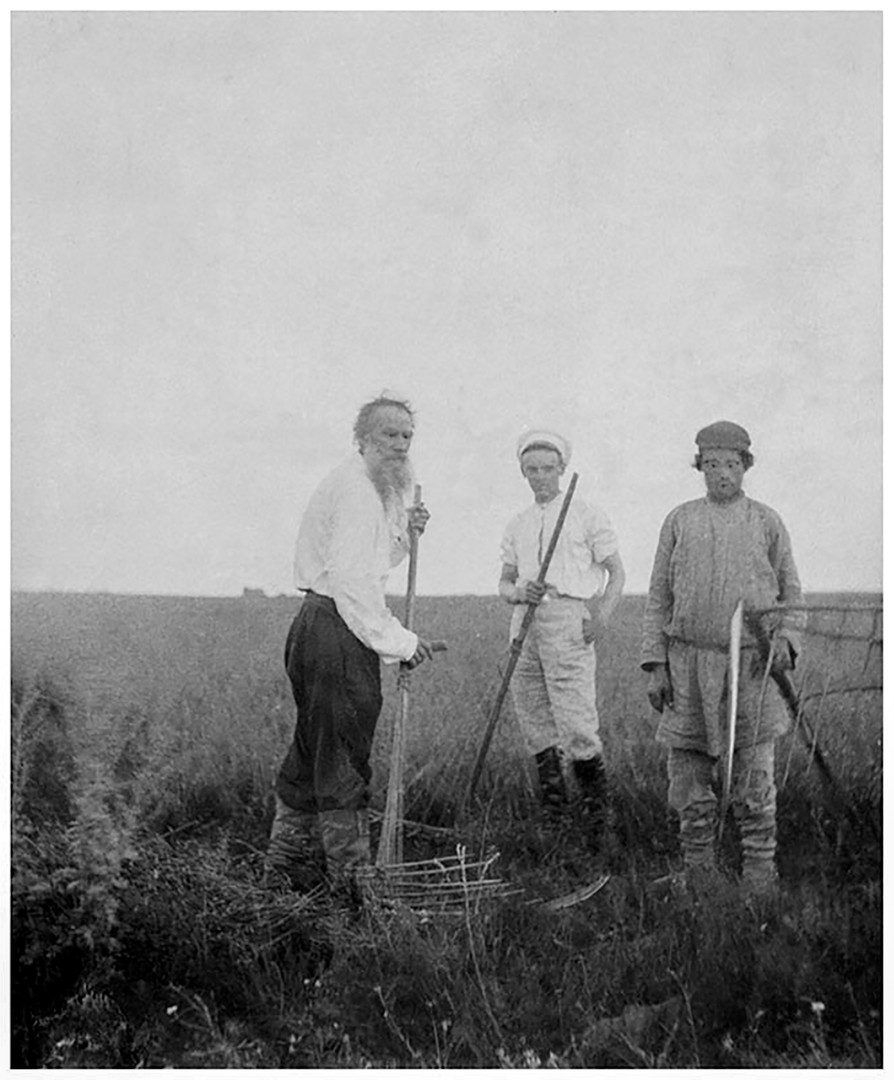
When the Bolshevik revolutionaries violently seized power in 1917, the five year Russian Civil War began. The Bolsheviks, coming upon the Yasnaya Polyana estate, did not blaze it to non-existence as was their wanton elsewhere. Tolstoy had freed his serfs long before the Czar. Dressing in peasant garb, he labored among them, and distributed his wealth.

When German troops approached the estate in their invasion of Russia, the Soviets loaded Tolstoy’s furnishings and manuscripts on a train into the Urals, safe-guarding them for posterity.

Today, Russia continues to revere Tolstoy, for he’s the Russian soul writ large. I never understood the deep spirituality of the Russian psyche until I was on Russian soil. You see it in their art: Bryullov, Kandinski, Aivazovsky. You hear it in their music: Tchaikovsky. Rimsky-Korsakov, Rachmaninov. You imbibe it not only through Tolstoy, but in Pushkin, Dostoevsky, and Chekhov. In Russia, poets are celebrities.

Russia is neither European nor Asian. It is itself.

Embraced by the universal human condition, Tolstoy nonetheless intensely sought to free himself from its shackles in pursuit of love, social equity, and non-violence: “The sole meaning of life is to serve humanity.”

I take him with me everyday.

–rj

Chris Hedges: Truthsayer


I’m always on the lookout for writers of unique talent with mastery of syntax, keen intellect, the ability to change minds, prose abounding in both beauty and resonance. They linger with you. They plant a seed.

Chris Hedges is one of these. Formerly with the New York Times (1990-2005), he currently writes a column for the ScheerPost, known for its thoughtful reporting and in-depth analysis.

Hedges was a 2002 recipient of a Pulitzer Prize for Explanatory Reporting, profiling the threat of the global terrorism network in the aftermath of 9/11.

He’s also served as a battlefield correspondent during the Bosnian and Kuwait interventions. It was Hedges who revealed the Srebrenica massacre in 1995.

This morning I read his extended piece “Ukraine: The War That Went Wrong”
(January 29, 2023). Sobering, it should serve as a cautionary warning to an escalating conflict that shows signs of getting out-of-hand.

What I like is his even handedness. Non-partisan, he tells it as he sees it. Both Democrats and Republicans have much to answer for. America has been, sadly, an imperialist power, provoking conflicts with no resolution. Like once formidable Britain, its dominance continues to wane.

Hedges graduated as an English major from Colgate University, where he helped found a LGBT group, though a heterosexual. What motivates him is social justice for the marginalized.

Walking the talk, while a ministerial student at Harvard Divinity School, he chose to live in Boston’s inner city, Roxbury, pastoring a small church.

He took a leave of absence from his studies one year before graduating to learn Spanish in Bolivia. To widen his outreach, he turned to journalism, honing his craft by studying George Orwell’s political writings, subsequently writing freelance pieces for the Washington Post.

He graduated from Harvard Divinity School in 1983.

Reporting from Iraq during the Shiite uprising, he was taken prisoner, before being released a week later. Meanwhile, Saddam Hussein offered a bounty to anyone killing him. Hedges was an eye-witness of Hussein’s massacre of several thousand Iraqi Kurds.

Hedges was awarded the Amnesty International Global Award for Human Rights Journalism in 2002.

Hedges has suffered for his beliefs. He vehemently opposed the U.S. intervention in Iraq, leading to a NYT formal reprimand for “public remarks that could undermine public trust in the paper’s impartiality.” Being the man he is, Hedges resigned: “…I have maintained what is most valuable to me, which is my integrity and my voice.”

Ordained a Presbyterian minister in 2014, he’s been teaching classes sponsored by Rutgers and Princeton in New Jersey prisons for ten years in addition to his journalism commitments.

He has authored six books.

Recently, I read his thoughtful piece on Marcel Proust, whom I regard as among our greatest literary talents. Hedges is no nerd. He loves the humanities and is a polished reader in Latin and Greek. Here’s a sample from his essay:

Art – literature, poetry, dance, theater, music, architecture, painting, sculpture – give the fragments of our lives coherence. Art gives expression to the intangible, nonrational forces of love, beauty, grief, mortality and the search for meaning. Without art, without imagination, our collective and individual pasts are disparate, devoid of context. Art opens us to awe and mystery. It wrestles with the transcendent.

Get all you can of Chris Hughes, a truly good man.

–rj

Unlearning Mt. Rushmore: Legacy of Injustice

I just downloaded the late Howard Zinn’s masterful A People’s History of the United States. You might say I’m divesting myself of the whitewash of American history handed down to me by a white culture.

As I write, Trump plans to visit Mt. Rushmore today, July 3, replete with flyover and fireworks, 7500 lottery selected attendees not observing social distancing, few wearing masks.  It sits upon sacred land, 1200 acres, stolen from the Lakota in violation of the Ft. Laramie Treaty (1868) following the discovery of gold in the Black Hills.

We know about Washington, Jefferson and Teddy. I didn’t know Lincoln ordered the hanging of 38 Dakota in Mankato, Minnesota in 1862, the largest mass execution in American history, following their uprising. In the aftermath, the Dakota were expelled, their lands seized. Subsequently, the bodies of the executed, buried in a mass grave, were exhumed and used for cadavers.

The sculptor, Gutzon Borglum, held racist sentiments and was previously known for his earlier contribution to Stone Mountain (he was dismissed from the project for his competing interest in Rushmore) near Atlanta with its gargantuan effigies of Lee, Stonewall Jackson, and Jefferson Davis.

While not a member of the Ku Klux Klan, he supported their views. In one of his letters, he complained of a “mongrel horde” contaminating the “Nordic purity” of the West. In another, he wrote of his successor at Stone Mountain, “They got themselves a Jew.”

–RJoly

A Brief Life Lived Well: Kevyn Alcoin’s Testament to Beauty

You probably never heard of Kevyn Aucoin. I hadn’t either till just recently. How many good people we miss in the stream of life, despite the myriad strands of humanity linking all of us.

Kevyn became famous as a celebrity makeup artist to scores of celebrity women like Cher, Madonna, Whitney Houston, and Liza Minnelli. As an artisan, for that’s what he really was, he sought not to hide blemishes, but to put women in touch with their inner beauty, empowering them. As he put it, “Beauty is about perception, not about makeup. I think the beginning of all beauty is knowing and liking oneself. You can’t put on makeup, or dress yourself, or do your hair with any sort of fun or joy if you’re doing it from a position of correction.”

The journey was never easy for Kevyn, who discovered he was gay at age six. Viewed as different by classmates, he was often bullied and sometimes beaten.

In those days, not really so long ago, women felt uncomfortable having a man do their makeup. Ultimately, as happens frequently, his talent made room for him and he became legendary. He would write several salient, greatly in-demand books on makeup, do TV interviews, and make cameo appearances in several TV shows.

Kevyn persevered daily, though suffering chronic back pain from earliest days, and was later diagnosed with a rare pituitary tumor. While the surgery removing the tumor proved successful, Kevyn’s acute pain continued. In 2002, age 40, he passed away, succumbing to liver and kidney failure from acetaminophen toxicity.

You may like viewing a nearly two hour video documentary, Larger Than Life: The Kevyn Alcoin Story or reading Kerry Diamond’s memorial biography, Kevyn Alcoin a Beautiful Life: The Success, Struggles and Beauty Secrets of a Legendary Makeup Artist.

I wanted to share Kevyn with you, as I found him inspiring in his courage and tenacity, often against all odds, and I think you will too. I leave you with his memorable words for living life in every circumstance:

“Today I choose life. Every morning when I wake up I can choose joy, happiness, negativity, pain… To feel the freedom that comes from being able to continue to make mistakes and choices – today I choose to feel life, not to deny my humanity but embrace it.”

–rj

And a Child Shall Lead Them

Image result for greta thunberg

Today, May 24, was another walk-out-of-school day for thousands of children in 110 countries, urging their governments to take quick and meaningful action to avert environmental catastrophe. If only the politicians, and us, for that matter, would listen.

It’s certainly, if nothing else, gotten the climate crisis considerable media attention. Of course, it’s 16-year old Greta Thunberg of Sweden who started it all and is featured on the cover of TIME’s current issue as one of the most influential young people in the world. Just nine months ago, Greta stood alone outside the Swedish Parliament, carrying a sign proclaiming SKOLSTREIK FOR KLIMATET (School Strike for Climate).

Seemingly a brave, but naive and futile gesture of a teenager, it’s become a planted seed grown into a world-wide groundswell of young people taking climate change seriously. And why shouldn’t they, since their generation and their children will be affected most?

I like the way she articulates our crisis: “I believe that once we start behaving as if we were in an existential crisis, then we can avoid a climate and ecological breakdown. But the opportunity to do so will not last for long. We have to start today.”

In March, Greta’s singular protest kindled an estimated 1.6 million young people turnout, encompassing some 133 countries.

Seems she’s even converted her own parents. Both have followed her into veganism as a way of contributing less CO2 and methane into the atmosphere. Greta’s mother, an opera singer, now travels by train rather than by air. Greta would probably love speaking in America, but since there’s no train track across the Atlantic, guess she’d have to resort to a freighter; that is, just so long as it wasn’t carrying oil barrels.

Imagine my surprise that not everyone admires this green movement Joan of Arc, one commentator dubbing her a “millenarian weirdo”:

It actually makes sense that Ms Thunberg – a wildly celebrated 16-year-old Swede who founded the climate-strike movement for schoolkids – should sound cultish. Because climate-change alarmism is becoming ever stranger, borderline religious, obsessed with doomsday prophecies (Brian O’Neill, wattsupwiththat.com).

I should point out that O’Neill writes for a smart aleck anti-climate change blog, so I can’t take him seriously, given the estimated 97% of scientists who embrace the reality of climate change and the humans factor for its origin.

Others use Greta’s Asperger’s Syndrome against her in myriad personal attacks, mocking her monotone delivery and fixed stare. I like Greta’s nimble response: “Being different is a gift.”

My heart pounds for you, Greta! I have friends who exalt in nature, yet never join that needed protest to universalize our climate crisis into action that saves both nature and ourselves.

You’ve been nominated for the Nobel Peace Prize. Is there anybody more deserving?

–r. joly