
Trophy Hunting Looms for Grizzly Bears

Averaging 800 pounds, powerful and fast moving, voracious defenders of their young, grizzly bears are a North American treasure deserving of our awe and worthy of preservation.

Native Americans held them sacred and embedded them in their legends, dances and paintings. Although they hunted them for food, clothing, and jewelry, they saw them as avatars of strength and courage conferring protection as the physical embodiment of spirit helpers. Wearing a bear claw necklace proffered security and good health.

At the turn of the twentieth century, an estimated 50,000 grizzlies roamed Alaska, Canada, and the American West. Unfortunately, by 1975, just 150 grizzlies remained in the lower U. S., most of them confined to the Greater Yellowstone Eco System.

Today, their numbers have increased to an estimated 1900 in the lower U. S. and their range by fifty percent, thanks to the Endangered Species Act. Some 150-200 grizzlies reside in Yellowstone National Park and another 500-600 within the Greater Yellowstone Eco System.

Yellowstone National Park attracts four million visitors annually, with tourists as eager to glimpse grizzlies as they do the Park’s thermal features.

Unfortunately, this great success story is now being used to justify revival of trophy hunting in Wyoming, sparked by Interior Secretary Ryan Zinke’s announced plan (June 22, 2017) to remove the Greater Yellowstone grizzlies from the Endangered Species Act. Management of the bears would be handed-over to Idaho, Wyoming, and Montana.

Despite receiving some 500,000 protests, the Fish and Wildlife Service (USWF) is going ahead with its implementation, pending final determination by the courts.

Wyoming state wildlife officials are relishing this move and want to allow a twenty-four bear kill this fall, including 14-females.

Trophy hunters would be allowed to kill any bears that stray from Yellowstone National Park.

More than forty years have been invested in bringing back these noble creatures, indigenous to North America, from the brink of extinction. Killing a pregnant bear would obviously eliminate their cubs.

Some fear that bait may be used to make them easier prey.

Ironically, the Wyoming proposal would not allow them to be hunted within one quarter-mile of a highway.

Hunters would pay $600 per bear.

Conservationists fear that actual killing limits would be exceeded.

Doubtless, monetary-minded game officials in Idaho and Montana will want in on the “ harvesting.”

The USWF’s Matt Hogan, former lobbyist for the Safari Club International, the world’s largest trophy hunting organization, has been the leading delisting proponent. Meanwhile, Zinke has announced plans to reallow importing of elephant and lion trophies into the U. S.

Oil and gas interests may also have pressured the delisting, which would open up public lands, i.e, grizzly habitat, for drilling. Hogan was appointed to the task, apparently not disclosing his ties to Anadarko Petroleum and Gas.

Native Americans were never consulted, despite the pleas of many Congress members, including Cory Booker and Bernie Sanders. Consequently, 125 Canadian and American tribes have signed a treaty calling for continuing protection of grizzlies and all animals sacred to tribal communities.

We, of course, know what happened in North Dakota with Trump issuing two memoranda encouraging resumption of the Dakota Access Pipeline just days after taking office, despite vigorous Standing Rock Sioux protests.

As is, an estimated one-hundred grizzlies are killed annually as roadkill, or by confusion with black bears during the hunting season, or by disgruntled ranchers who view grizzlies as livestock predators, and by poachers.

All of this comes even as grizzlies face declining primary food sources such as white bark pine nuts and cutthroat trout, forcing them to seek new habitat and increasing their risk for conflict with humans.

Environment encroachment remains an ongoing challenge along with the long term impacting of climate change on food resources. As Erik Movar of the Western Watershed Projects points out, “The Yellowstone region is one of the last places where grizzly bear still occupies its natural place as the king of the mountains. But the livestock industry continues to push sheep and cattle deep into the mountains, causing conflicts with grizzly bears and other native wildlife in their natural habitats. Turning grizzly bear management over to trigger-happy state agencies without guarantees that the bears will be protected turns back the clock to the dark days when predator killing was the rule and grizzly bear populations were eliminated.”

We know too well that wherever the human footprint establishes itself, wildlife is diminished. Bears shouldn’t have to coexist with humans. It’s the other way around.

—rj
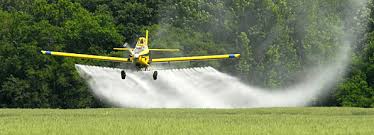
You have every right to be afraid!

cropsprayingMany of us rightfully fear a Trump presidency for what it may mean for the welfare of our citizenry and nation.

Will Affordable Health Care (AHC) and Medicare be on the chopping block?

If you’re an undocumented immigrant, will Trump carry out his often repeated pledge to deport illegals and build a wall on the border with Mexico?

Will he foreclose on refugees, many of them Muslims?

On the the world stage, will he roll back Obama’s executive order that has restored relations with Cuba?

Will he undo the nuclear treaty with Iran?

While all of these concerns are legitimate, I’d argue that they pale up against the incipient threat posed by climate change, an issue virtually missing from the presidential debates, despite the earth’s very survival being at stake.

Alarmingly, in his October 100-day preview, Trump, who has repeatedly declared global warming a hoax, pledged he’d repeal the Clean Power Plan, withdraw from the historic Paris agreement (signed by 120 nations, setting targets for carbon), and lift restrictions on oil and gas development on public lands.

He’s also told us he’ll revive Keystone XL.

In recent days, the press has been focused on his potential choice for the important Secretary of State position. Nobody’s talking, however, about whom he’ll appoint as Secretary of the Interior.

At the moment, the scenario for environmental disaster looms large in Trump’s choice of Myron Ebell to oversee the transition of the Environmental Protection Agency, ironically founded by Richard Nixon. Ebell doesn’t believe in climate change either.

He’s also associated with the Competitive Enterprise Institute (http://SafeChemicalPolicy.org), which underplays the environmental and health consequences of industrial chemicals.

Ebell could also be Trump’s choice to head the EPA. For the record, Ebell opposes government efforts to curb global warming and the Paris Agreement.

As I write, it isn’t far-fetched that Trump might give the nod to Forrest Lucas for Secretary of the Interior. Lukas has contributed mega-bucks to Trump and Pence’s campaigns. An oil executive, he’d be in charge of our national parks and public lands. Native Americans–think North Dakota pipeline–might raise their eyebrows, given that one of the Department’s tasks is to monitor programs relating to Native Americans.

We haven’t heard yet on who’ll fill the Department of Energy either, but if Ebell doesn’t get the EPA or Interior nomination, he’d likely fill this vacancy. This, again, is a pivotal cabinet post, affecting environment in the Department’s mission to research, regulate, and develop energy technology and resources.

In the meantime, climate change isn’t when, but now. Lamentably, we learned just last week that due to the summer melting of Arctic ice, warm waters have swept over the South Pacific, killing coral, and substantially damaging the famed Great Barrier Reef off Australia’s coast.

We ‘re getting more droughts and flooding than the norm..

2016 will go down as our hottest year since we began keeping track of temperatures.

Scientists tell us we’re on pace, despite December’s Paris agreement, for an increase in earth’s average temperature of 3.5 Celsius, if not more, by 2100.

What this means to our children is that coastal cities like NewYork, Míami, and New Orleans will be mere abstracts of memory, or like the Atlantis of ancient myth, lost beneath the sea.

–rj

Introducing my hummingbird friends…

hummingbird-at-a-feeder-1They return every April to our Kentucky backyard, survivors of a 3000 journey from Central America, which includes a non-stop 500 mile flight across the Gulf of Mexico. It’s a journey my hummingbird friends will repeat again, returning in fall to their winter feeding grounds.
Knowing of their imminent arrival, I had faithfully set out our bright red hummingbird feeder in mid-April. For some reason, they prefer red and orange colors. Every spring, I’d be either sitting in the sunroom or outside, prepping the flower beds, when I would first spot or hear a solitary aerial scout probing, like some overhead helicopter, the landscape below. First of a coming vanguard, this sole wayfarer heralded spring’s rebirth, despite frequent rain, temperature dips, and clouds that frustrate the sun.

Always, as though set on a timer, my guests start their return journey the first week of October. I last saw them here on October 3, busily waging war with each other for first rights to their sugar drink. I know what this is about. It’s important for them to increase their body fat by half to fuel their arduous journey. I’m glad to provide a way station.

I’ve learned enough about hummingbirds to know this remnant flew-in from other haunts this fall, perhaps even from lower Canada, seeking to refuel. If I hadn’t seen any hummingbirds since early August, it was because my regular clientele were already embarked on their long journey. Hummingbirds begin their return migration as early as the waning weeks of July, extending through the second week of September, depending on the locus of their summer habitat.

The next day, they had vanished, nature stamping fall’s passport while signaling my own need to prepare our yard for winter’s long sleep.

Still, I keep the feeder out just in case there’s a straggler about. It happened one year. I had seen this seemingly forlorn hummingbird on our woodpile out back, which is quite unusual, since hummingbirds can’t walk or hop like other birds, given their tiny feet. That’s why their feeders lack perches.

Moving cautiously, I was able to get near enough to cup him in my hands and place him in an old shoebox, uncovered, for a quick trip to our vet. Along the way, Karen and I kept thinking anxious scenarios of what to do if he got loose in the car. But it never happened, thank goodness.

The vet, a bird specialist, shrewdly put sugar solution into a nose dropper and he started drinking–hey, a good sign. Then, suddenly, here he was, zooming around the exam room. Well, we got him back, cradled him into his box again, this time with aerated cover, and took him home.

Releasing him in the backyard, we watched our friend fly eagerly to a high pine branch, rest momentarily, before soaring out of sight, perhaps ready to resume his journey over land and sea.

I’d like to think he did well, but the final fate of migratory birds is an uncertain one at best. Their worst enemies are storms and loss of habitat through human intrusion. An estimated one third don’t make it. That’s why it’s incumbent you and I who have backyards do all we can to lend a helping hand to our aerial friends.

After all, they help us maintain the ecological balance on which life depends, including our own.

Postscript: Fun Facts about Hummingbirds:

  • Of 320 species in America’s, only 8 of them breed in the U.S., among the most notable, the ruby-throated hummingbird. Hummingbirds are found only in the Americas.
  • They live about 3-5 years.
  • Each species makes a different humming sound, determined by wing beats per second.
  • Their wings beat between 50 and 200 flaps per second.
  • Their tiny hearts beat 1200 times a minute.
  • They take 250 breaths per minute at rest, which isn’t often.
  • They can straight fly at 30 mph, dive at 60 mph.
  • Among bird species, they’re your ninja warriors, known to attack jays, crows, and even hawks.
  • In size, some species are so small they’re consumed by other insects such as praying mantis and dragonflies.
  • They’re the only birds that can fly backwards and sometimes upside down.
  • Hummingbirds must eat twice their body weight daily, and to do this, they visit hundreds of flowers, primarily feeding on nectar. (I make a sugar substitute formula for them, changing it every 3 or 4 days to avoid mold.)
  • Unlike other migratory birds, each hummingbird makes a solitary journey, and not as part of a flock. (Hard to imagine, even for a human, crossing the Gulf of Mexico by yourself, without map and compass. But these 3 inch creatures are nature’s miracle. Even more spectacular, young birds travel to a homeland they’ve never seen, depending solely on instinctual navigational skills.)


Macdonald’s H is for Hawks: Finding Passage

The archaeology of grief is not ordered. It is more like earth under a spade turning up things you had forgotten, surprising things come to light: not simply memories, but states of mind, emotions, older ways of seeing the world.
–Helen Macdonald, H is for Hawk

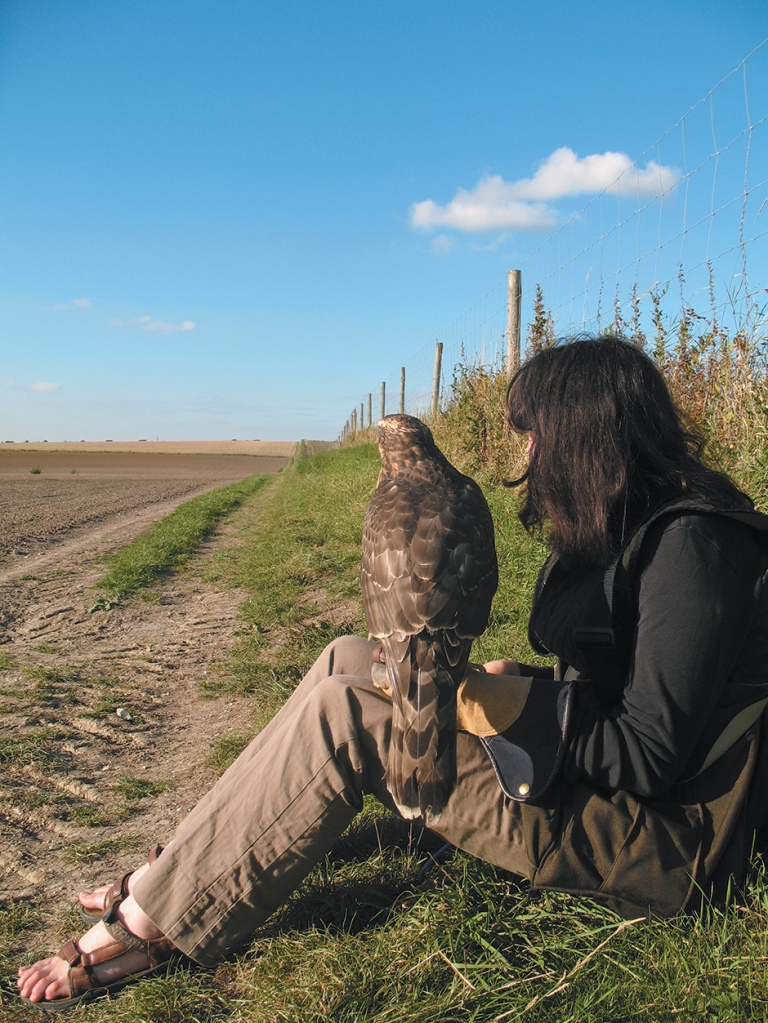
Helen Macdonald with her goshawk, Mabel, near Cambridge, England, 2007

I’ve finished reading Helen Macdonald’s H is for Hawk and want to weigh in on it like someone who’s just dined gourmet and relishing the deed, must boast his good fortune.

I was attracted to Macdonald’s memoir because of its critical esteem in those bastions of literary prowess like The New Yorker and The New York Review of Books, which often ration praise and, even then, not without censure.

H is for Hawk has won two prestigious book awards as well: The Samuel Johnson Prize for non-fiction and Costa Book Award for best book in any genre.

This is Macdonald’s fifth book.

She teaches and does research at Cambridge University.   Her interests include not only falconry, but history and poetry (3 published collections).

Macdonald’s memoir tells the story of her depression following the unexpected death of her father, Alistair MacDonald (2007), a longtime photographer and  journalist for the Daily Mirror, and her resorting to falconry to relieve her grief.

Macdonald’s goshawk, Mabel

This isn’t the first occasion we’ve seen a book testifying to the ability of animals to uplift troubled humans, but may well be among the best. In venturing into the first several pages, I knew immediately I’d be keeping company with a masterpiece.

Macdonald’s training of a goshawk provided a means of continuity with her father, an ardent plane spotter and bird enthusiast, who also taught her patience, a primary motif contributing to her healing and integral to harvesting nature’s plenitude::

My father’s talk of patience had held within it all the magic that is waiting and looking up at the moving sky.

But Macdonald’s memoir is not your romp into a Wordsworthian nature, benevolent and moral.  Mabel kills her prey, suddenly and savagely, or like those artifacts of the human world, airplanes, which link the human and the natural; and yet, even then, there is a vital difference separating the two, with the balance favoring nature:

In my time with Mabel I’ve learned how you feel more human once you have known, even in your imagination, what it is like to be not. And I have learned, too, the danger that comes in mistaking the wildness we give a thing for the wildness that animates it.  Goshawks are things of death and blood and gore, but they are not excuses for atrocities.  Their inhumanity is to be treasured because what they do has nothing to do with us at all.

The writing itself is magnificent in its artfully composed sentences resonant with observation and chiseled detail of landscape and of her travails in training her goshawk, Mabel,  and, most of all, in its poignant psychological journey of retreat from the human community and, ultimately, return to its renewed embrace.

Her memoir is also interlaced with T. H. White’s works, renowned for their Arthurian themes and with his The Goshawk (1951) in particular.

White, who lacked experience, had earlier attempted to train a goshawk, only to fail.  Macdonald, however, didn’t suddenly take up the hobby or, more precisely, being an austringer (i.e., a hawk trainer), having previously trained peregrines, merlins, and kestrels:

While the steps were familiar, the person taking them was not. I was in ruins. Some deep part of me was trying to rebuild itself, and its model was right there on my fist. The hawk was everything I wanted to be: solitary, self-possessed, free from grief and numb to the hurts of human life.

Although MacDonald identifies in many ways with White, who becomes a projection and touchstone of her own anguished struggle to evade life’s seemingly malevolent caprice, she fortunately finds her way past his psychological morass.

As I grew happier his presence receded, his world more and more distant from mine.

Like White I wanted to cut loose from the world, and shared, too, his desire to escape to the wild, a desire that can rip away all human softness and leave you stranded in a world of savage, courteous despair.

Unlike White, she learns that “hands are for other human hands to hold. The wild is not a panacea for the human soul. Too much in the air can corrode it to nothing.”

–rj


Saving Spring’s Envoys: Our Vanishing Birds

migratorybirdsWe take for granted that birds in the millions returning from their winter feeding grounds in Central and South America will make it back to nest and mate in our yards each spring.

The rude reality, however, paints a scenario of thinning numbers as their habitat continues to give way to human incursion; wetlands get drained; toxic sprays are employed; and GMO agriculture reduces the insects on which many birds feed. Lamentably, up to 4 billion birds are killed by outdoor cats annually. (No typo here.)

And then there’s climate change.

If this scenario continues, we may well see a world devoid of birds and with their disappearance, our own.

Birds do a lot for us:

  1. pollinate plants
  2. disperse seed
  3. consume carrion
  4. recycle nutrients
  5. control insect numbers

Birds do all of this and more, along with providing many of us city folk with a rare contact with nature.

Sadly, fewer of them are completing their already perilous journey, often of several thousand miles, transversing oceans and mountains, to keep company with us every spring.

In one of nature’s greatest marvels, birds don’t require a compass to make their way to where they were born or to their winter habitat.

Guided by the stars, they know North from South. Alert to the sun’s position in daylight, they can discern East from West.

They also intuit the distance they must fly.

Appropriately, migratory birds fly mostly at night, keeping their bodies cool, since their tiny hearts, beating 500 times per minute, generate heat.

Regrettably, their indwelling “magnetic compass” doesn’t always serve them well in a modern world with its tapestry of burgeoning cities filled with light that produces a celestial jamming resulting in their disorientation, exhaustion and death as they unwittingly fly into multi-story buildings, leaving a deadly debris come morning.

With urban sprawl come media towers, like buildings, illuminated nightly to pre-empt airplane collisions. Each year, some 6.8 million birds perish in collision with cell and radio towers and their guy lines.

In a recent summation of studies, researchers found that 63% of bird casualties in the U. S. and Canada are small birds of 156 species, some on the endangered list.

If this isn’t enough, our bird friends face other ominous threats to their survival from our newer technologies such as wind turbines and solar panels integral to our need for renewable, clean energy resources.

This led to the Obama administration, normally on cue with environmental priorities, initiating a federal “permission slip” allowing for wind farms to kill up to 30 bald and golden eagles annually under 30-year permits, despite it’s being against existing law protecting these species, one of which is our national icon.

As I write, I’m happy to learn that our government’s connivance didn’t sit well in a California court, which demanded an impact study. Two weeks ago, the Fish and Wildlife Service dropped its appeal to reinstate the policy.

How bad can wind farms be for birds? A recent California study estimated that up to 573,000 birds and 888,000 bats are killed annually in thar state alone!

Wind turbines now account for 5% of our energy and continue to proliferate, with more than 15,000 presently in service. The death toll must be staggering!

But solar farms also pose another lethal threat to birds, singing, crippling and killing them. Unfortunately, birds often mistake reflective panels for water bodies. Some of these solar farms can be gargantuan in their expanse, with one solar farm in Riverside County, California occupying 4400 acres.

We’re unsure just how many birds solar farms kill, but we believe it to be a considerable number. In a recent investigation, the National Fish and Wildlife Forensics Laboratory recovered 233 birds from three California desert facilities. Many birds literally catch fire on contact with solar panels.

The problem is complex with the need to find new energy sources that don’t pollute and are renewable and yet protect our birds. But we can do more to assure their well-being by demanding impact studies before wind turbines and solar panels come on line.

We can also advocate they not be located in migratory pathways.

We can power down our city lights. A lighted New York City skyline may be spectacular viewing late at night, but it’s a death threat to birds. Cities like Toronto, one of North America’s most progressive cities, supported by the public, has been doing so for years.

We can support preservation of bird habitat such as wetlands and creation of new ones.

I like how Peter Dunne, the director of the Cape May Bird Observatory, has put it: “Without birds, nature would lose its most engaging envoys,” to which I would add that their demise would seal not only their fate, but ours.

–rj


Good News for Elephants!

ele542106059-1024x683CNN reported yesterday that Hong Kong, the world’s largest retail market for ivory, will phase out ivory sales over the next eighteen months and impose severe penalties on those engaging in smuggling and trading of endangered species.
Certainly this is good news! Chinese demand for ivory has long been the primary stimulus to the slaughtering of African elephants, presently an estimated 30,000 annually.

It’s so bad that poaching even outstrips the numbers of elephants being born, which if it continues over the next several decades, will result in these intelligent and emotional creatures vanishing forever.

As just one example, in 1970 Kenya counted 70,000 elephants. That number has dwindled to 38,000.

In 2013, 20,000 elephants were killed across Africa, either through poaching or trophy enthusiasts.

Exacerbating the crisis threatening not only elephants but other exotic wildlife that includes lions and rhinos has been the rise of warlords and terrorists such as the Lord’s Resistance Army and Boku Haram who wantonly prey upon wildlife to finance still more weapon purchases with which to terrorize their fellow Africans.

In all of of this, America is not without blame. The truth is that we are up to our neck in the ivory trade, or second to China in ivory imports, abetted by U.S. law that allows ivory into the country for non-commercial use.

Big game hunters like the dentist who killed Cecil, the Zimbabwe lion, receive fervent support from the powerful NRA, which constitutes one of Washington’s most powerful lobbies. The NRA also backs the large trade in guns with ivory-inlaid stocks.

If the United States along with China, including Hong Kong, were to shut their doors to ivory imports, then our elephant friends would indeed face much better odds.

To bring this about, you and I must never give-up the struggle, converting words into deeds such as liaising with members of Congress, writing op-eds, encouraging corporate giving, and not least, opening up our wallets as well as our hearts to donating what we can to support those frontline organizations (e.g., African Wildlife Foundation and World Wildlife Federation) attempting to bring this cruel carnage to its rightful end.

–rj

Lexington, KY: Reflections on My Old Kentucky Home

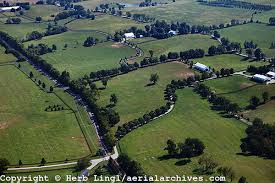
lexingtonI count myself fortunate to live near Lexington, KY. Its assets are many; its liabilities, few.

I like its small town feel—no row housing here; no factories puffing their toxins into the air.

Though ranked 61 among American cities, currently about 311,000, it’s unique in not having freeways threading its thoroughfares, unlike neighboring Louisville and Cincinnati.

To be sure, Kentucky is often synonymous with poverty, but Lexington defies such stereotypes. Located in the center of the pristine Bluegrass countryside renowned for its grandiose thoroughbred farms, Lexington is not only one of our nation’s most beautiful cities, but also one of its most affluent.

Unlike many cities, Lexington enjoys one of the nation’s steadiest local economies, with unemployment currently a miniscule 3.7%. Forbes Magazine has it as the 4th “Best City” for Business careers. Kipplinger ranks it 6th as a “Best Value City.”

Lexington can rightly boast its being “the horse capital of the world.” A 2014 survey revealed that 67,500 horses populated the Bluegrass, including 24,600 in Lexington!

Another laurel is its 6th place ranking as one of the country’s “most inspiring cities” (worldwidelearn.com), topped only by Boston, San Francisco, New York City, Washington, DC, and Los Angeles.

Lexington is also listed 7th as a “Best City for Quality of Life” (nerdwallet.com).

In spite of these accolades, however, Lexington faces continuing challenges from commercial interests who, left to themselves, potentially pose a threat to the city’s bucolic flavor and, as a family city, the superb ambience of the city and surrounding area.

Take what Lexington did in 1996, demurring to commercial interests, and appropriating 5400 acres from the Rural Service Area for development. If Lexington were to further erode the rural landscape of the Rural Service Area, the legacy might well be to make Lexington just one more American city characterized by urban blight.

Fortunately, the city is currently enjoying a hiatus with the tenure of Jim Gray, its progressive mayor. Under the current Five Year Comprehensive Land Use Plan (2011), set to end next year, the city has held out for wise land stewardship, reaffirming the 40 acre minimum set in 1958 for new residential land and commercial development.

As Gray puts it, “building our brand and our economy means that first we preserve what is special and unique about our Lexington—our bluegrass landscape.”

Concurrently, unbridled development has raised its ugly head within the Urban Service Area with numerous architectural gems of the nineteenth century torn down to make way for an underground garage, office tower, hotel, and retail and restaurant space downtown in what has famously turned into a cavernous hole in the ground since its first shovels in 2008.

Meanwhile, yellow dinosaurs gouge the rich soil of a former 56-acre farm to make room for The Summit, a new mall by a national conglomerate just down the road from gargantuan Fayette Mall, which recently expanded by another 26 acres.

You see, I’m an idealist and would have preferred the city’s opting to purchase the farm for green space along one of the city’s most grid-locked traffic corridors, Nicholasville Road—something on the order of the New Haven Green or Savannah’s The Squares. Or like New York’s Central Park or Philadelphia’s Fairmount Park, offering timeout sanctuary in the very heart of urban bustle.

But what about the cost? Well, before you think me insane, consider that the city council had previously come up with a $354 million plan to renovate Rupp Area, home of the University of Kentucky’s men’s basketball team.  I’d say it’s a simple matter of getting our priorities straight.

While Lexington may seem to enjoy a rich tapestry of parks, some 100, they’re relatively small while large areas of the city haven’t any parks at all.  The city’s special gem is Raven Run, a passive park of 734 acres (no sports facilities, etc.), preserving natural habitat and several well maintained hiking trails.

Lexington needs to pay attention to its tree canopy anyway which has experienced a sharp decline, some of it doubtlessly due to the recent infestation of the emerald ash borer. According to a 2012 study, the city’s tree coverage stands at 27%, with 40% the gold standard.

Lexington currently isn’t a member of the City Park Alliance, and it should be. Its rival city, Louisville, is.  The Alliance offers a mapping technology with demographic data that can be accessed online. The Alliance ranks the 75 largest U.S. cities as to how each of them is meeting its park needs. Lexington ranks 51 (parkscore.tpl.org/rankings-advanced.php).

The upshot of all this is that Lexington, while doing well, can do better and must if it’s to assure preservation of its unique ambience, underpinning its attractiveness as one of America’s best cities to call home.

–rj


Don’t Be a Phoul: When Neighbors Cut Down Trees

NYC Central Park
NYC Central Park

My daughter has been complaining in her recent emails about a family on her street in Bellevue, WA.

They’ve cut down two lovely Douglas fir trees, the kind that startle Easterners like me not used to arboreal skyscrapers, many of them magisterial in their silent dignity bequeathed by longevity.

Bellevue, a fast growing suburb adjacent to Seattle, still enjoys a fecundity most urban areas in America can only envy. When I was there a few weeks ago, I relished walking myriad needle softened pathways of the city’s several forested trails bisecting an urban landscape. Apparently, however, the area has also attracted a newer influx indifferent to the charms of a bucolic setting.

These neighbors complain that their trees were messy. They tired of the needles falling on their roof and car. Around the corner, another neighbor recently did the same thing for the sake of planting a garden free of shade. In its slovenliness, it appears she’s made things worse, not better.

Meanwhile, the company that’s done the cutting directly goes about soliciting customers door-to-door on a regular basis. One of the cutters bragged to my daughter, obviously relishing her displeasure, that he likes chopping down trees.

Unfortunately, we live in an America that prides itself on a free economy, with consumers having sovereignty over their choices. Sadly, in this case, these individuals opted to buzz-saw these magnificent sentries of public health into oblivion for convenience sake.

It’s the way things work in a mutual exchange between the entrepreneurs of the market place, motivated by money, igniting consumer sentiment often detrimental in its long term consequences; for example, alcohol and cigarettes. George Akerlof and Robert Shiller, Nobel Prize winners, term it a “manipulation of focus” in their insightful new book, Phishing for Phools: The Economcs of Manipulation and Deception (Princeton University Press).

Phishing is their term for business interests that phish (i. e., angle) to get phools (consumers) such as you and me to do their bidding to the detriment of ourselves. Think banks, pharmaceuticals, real estate agents, etc.

There are two kinds of phools: those who fall for the falsity of the phishers’ claims and those, the vast majority of the public, who succumb to their own emotions, prone to making bad decisions simply because they initially feed their emotional wants. You see  this in matters of health where our predominant diseases such as atherosclerosis, diabetes and often cancer arise from faulty lifestyle choices such as the wrong food, overeating, indulging in alcohol, or not exercising.

It’s this way of doing things, in this case, overblown avarice with its bubble effect that led to the colossal recession of 2008.

In sum, what’s been happening in my daughter’s neighborhood, threatening its pristine uniqueness, is a facsimile of the phisher-phool conundrum writ large, neighbors manipulated into opting unwittingly against their long term interests.

Maybe you think this is all nonsense. Property owners have the right to do as they like.

But have they the right to harm the public-interest, given the menace of air pollution and global warming, by cutting down their trees?

And what about the neighborhood aesthetic? Hurrah for neighborhood associations!

We aren’t disconnected beings. Yes, we are our brothers’ keepers.

Bellevue government needs to get itself in gear. Trees are public domain just like telephone poles and street lights. Good government is on to this. Consider New York which just completed planting one million trees or Boston which plans to plant 100,000.

It’s estimated that planting trees in urban areas reduces energy use up to 50%. Just one tree absorbs up to 8 pounds of air pollution annually. Trees increase property value. Studies show people drive slower on tree lined streets. They add beauty and lend character.

Let’s not be phouls!

–rj


On Visiting Bloedel Reserve

If you have a garden and a library you have everthing you need.–Cicero

I’ve been doing a lot of walking in the Seattle area these past several days, while visiting my daughter and family. As a gardener back home in Kentucky, it’s nice to see what cool temperatures and ample moisture can do for making verdant landscapes and, maybe more to the point, motivating green thumbs to spend time outside, free of humidity, high temperatures and, of course, mosquitoes.

Case in point was yesterday’s day long excursion to Bainbridge Island via one of Seattle’s ubiquitous ferries that add to the area’s delights. There we took in the 150 acre Bloedel Reserve with its rich tapestry of Douglas fir forest intersected by well-kept trails, rhododendron and tea garden displays, reflecting pool and sea vistas.

As the Irish poet Yeats might say, “peace comes dropping slow” in a place like this.

I confess to being a Romantic unashamedly, though tempered sufficiently with realism to know nature’s moods. Unfailingly, gardens possess a spirituality for me, moving me out of myself into an awareness of connection with universal rhythms of genesis, maturation, and ending. I am but a leaf of the tree of life. Beauty lies here in the now, not in a speculative destiny.

there, all days, my heart goes
Because there, first, my heart began to know
The glories of the summer and the snow,
The loveliest of harvest and of spring
.  _Edith Nesbit

–rj

Why We Mourn a Lion’s Death

Cecil at Hwange National Paark (2010)

In the aftermath of Cecil’s killing. you may have seen the op piece to the NYT by Goodwell Nzou, a Zimbabwe graduate student at Wake Forest University.

Supposedly, he provides contextual balance, giving us the other side of the story, at least for the average Zimbabwean. For the many of us world wide, however, his version unwittingly says more about the sorry state of conservation in Africa generally and of a latent hostility towards Americans for their hypocrisy and subliminal attack on Zimbabwe culture:

Did all those Americans signing petitions understand that lions actually kill people? That all the talk about Cecil being “beloved” or a “local favorite” was media hype? Did Jimmy Kimmel choke up because Cecil was murdered or because he confused him with Simba from “The Lion King”?

Further:

The American tendency to romanticize animals that have been given actual names and to jump onto a hashtag train has turned an ordinary situation — there were 800 lions legally killed over a decade by well-heeled foreigners who shelled out serious money to prove their prowess — into what seems to my Zimbabwean eyes an absurdist circus.

We Zimbabweans are left shaking our heads, wondering why Americans care more about African animals than about African people.

Don’t tell us what to do with our animals when you allowed your own mountain lions to be hunted to near extinction in the eastern United States. Don’t bemoan the clear-cutting of our forests when you turned yours into concrete jungles.

And please, don’t offer me condolences about Cecil unless you’re also willing to offer me condolences for villagers killed or left hungry by his brethren, by political violence, or by hunger.

Now there’s truth to some of what Nzou says. How would you and I feel about living in a rural landscape where incursions, sometimes with deadly consequences, are happenstance: crops trampled, cattle killed, humans mauled? Additionally, Zimbabweans must face menacing poverty daily. Losing your crop or cattle is no small thing.

And we certainly need to own up to our sorry carnage of animal resources, whether the eastern mountain lion, passenger pigeon, Eastern elk, sea mink, or Carolina parakeet. We almost succeeded in delivering the same fate to both the buffalo and our national icon, the bald eagle.

But these sad deeds belong to a past redundant in stupidity and cruelty. We pillaged Native American lands, employed slave labor, denied women the vote. It’s simply wrong to impose a modern mindset on a cultural past we’ve shed long ago.

His inference that Americans care more about African wildlife than about Africans, however, is surely a stretch:

We Zimbabweans are left shaking our heads, wondering why Americans care more about African animals than about African people.

In 2012, American aid to Africa came to nearly $12 billion. Presently, the U. S. contributes aid to 47 African nations and operates 27 missions on the continent. Americans were on the front line in the recent Ebola crisis, contributing massive medical assistance that included medical personnel and army troops. Over the previous decade, we’ve contributed $50 billion under PEPAR, the President’s Emergency Plan for AIDS relief to test and treat africans for HIV. We’ve taken in thousands of African asylum seekers, etc.

On the other hand, when it comes to caring for their own people, it looks to me like educated Zimbabweans are voting with their feet to leave their country when given opportunity. I wonder if Nzou, who’s been in this country for five years, plans to return and help his people with the skills he acquired in America, presumably through American financial resources.  Last year, American universities shelled out $4.7 million for Zimbabwean scholarships.

But returning to the threat of wildlife to rural villages, my understanding through wide reading about Africa indicates that humans, not animals, are the trespassers, with ever increasing numbers encroaching on wilderness areas.

What’s more, Nzou conveniently circumvents the way in which Cecil was killed. He didn’t stalk or stray into any village. On the contrary, he was lured from Hwange National Park, a game sanctuary, by unscrupulous big game interests. Cecil was also wearing a monitoring collar.

Cecil didn’t threaten any villager.

His death was hideous. Wounded by a high powered crossbow, the twelve year old lion bled slowly for forty hours with an embedded arrow in his side, before being tracked, shot, skinned and beheaded.

A park icon, he delighted tourists, thus offering a boost to Zimbabwe’s strapped economy. While he may not have figured in Zimbabwe’s consciousness, he was certainly loved by park visitors from abroad. No media hype here!

Yes, Nzou is right when he says “in Zimbabwe we don’t cry for lions.” That’s because they don’t give a damn about their wildlife generally, whether in Zimbabwe or the rest of Africa, save for a few exceptions. This helps explain the 800 lions killed by Westerners over the last eight years in Zimbabwe alone.

That’s a truly atrocious figure when you learn that this is out of a population of just 1,690 lions in the country to begin with (lionaid.org).

The truth is that Zimbabwe is riddled with corruption and hunting quotas often exceeded. Meanwhile, its wildlife treasure has been not only decimated, but faces extinction.

In this calumny lies the real hypocrisy and telling shame.

Across Africa, the lion population is in deep trouble just like the continent’s beleaguered elephants, experiencing a 42% decline over the last two decades, according to Scientific American.

Now I don’t want to be simplistic like Nzou, who cherry-picks his arguments, nor a teary-eyed romantic.  Properly  managed hunting can actually help shore-up lion numbers, if done in a context of enforced rules.  But in Africa, that’s a big if and, meantime, trophy hunters largely operate with impunity and pose a serious threat to remaining wildlife.

As Cecil’s killing demonstrates, not even the national parks are off limits.

The major threat, however, comes with the ever advancing pastoral creep in African countries, reducing wildlife habitat.

Nzou would have done better to listen to President Robert Mugabe’s own observation on all of this:  “Cecil the lion was yours and you failed to protect him.”

And so we in the West mourn Cecil’s death, and not without reason.

–rj