Of Paradise Lost: W. S. Merwin’s “After the Dragonflies”


“After the Dragonflies” by W. S. Merwin

Dragonflies were as common as sunlight
hovering in their own days
backward forward and sideways
as though they were memory
now there are grown-ups hurrying
who never saw one
and do not know what they
are not seeing
the veins in a dragonfly’s wings
were made of light
the veins in the leaves knew them
and the flowing rivers
the dragonflies came out of the color of water
knowing their own way
when we appeared in their eyes
we were strangers
they took their light with them when they went
there will be no one to remember us

When I lived in Kentucky and kept up a flower garden, I’d hear every now and then a whizzing sound above my head, look up, and see a dragonfly moving swiftly to snag its mid-air prey between its long legs. I never thought much about them as such. They were simply there.

I regret that now and am unlearning my indifference. Dragonflies, like many other insects, are disappearing, a reality Merwin hints at in this melancholic poem, treating mutability and, with it, loss; a nature tapestry vanishing before our very eyes.

The journal Biological Conservation informs us that 40% of insect species, and that’s in the millions, are in serious decline. “If we don’t stop it, entire ecosystems will collapse due to starvation,” says University of Sydney researcher Francisco Sánchez-Bayo.  Our fate will be to perish with them.

Lamentably, dragonflies, these bejeweled aerial acrobats, are among those insects suffering decline. Fundamental inhabitants of freshwater ecosystems, their loss would have immeasurable consequence.  Along with climate change, habitat encroachment and degradation have contributed to their falling numbers.

Folklore has it that dragonflies are emissaries of good fortune. And so it seemed for some 300 million years. Members of the phylum Arthropoda, they comprise some 5,000 species in varied sizes and hues.

Merwin’s poem, abjuring punctuation to simulate conversational flow, employs a temporal schema of past, present, and future to depict the incipient fate of dragonflies and, by implication, of other fated creatures, once of prodigious number, now facing not only decline, but future extinction. Contrast looms large in the poem’s time’s sequences.

The poem opens with the persona’s conjecturing past aeons before Man, when dragonflies “were as common as sunlight,”the double use of “were” in the opening lines contrasting their present decline. The simile associating their once prodigious numbers to the sun’s plentitude dazzles in its originality.

Employing kinetic imagery, the persona visualizes a former halcyon indulgence of lingering dragonflies amid time’s seeming suspension: “hovering in their own days/backward forward and sideways.”

Or like the varied probings of memory: “as though they were memory.” And, I might add, like the poem in its past, present and future interweave.

The jarring “now” in its emphatic positioning at the beginning of the fourth line transitions readers fully into the present with its glaring contrast.

Despite the miraculous artistry wrought by evolutionary mechanisms over vast stretches of time, there exist “grown-ups” who, suffering a disconnect with nature and “hurrying” to other pursuits, have never seen a dragonfly

That “they do not know what they/ are not seeing,” harbors the poem’s concluding warning. Not only does the present suffer a nature deficit, but future generations may never know dragonflies existed.

Exiled in the present, humans lack cognizance of that primordial garden, if not Edenic paradise, of teeming dragonflies, diaphanous creatures born of water, instinctual, spontaneous, integral eco entities not knowing Man:

the veins in a dragonfly’s wings
were made of light
the veins in the leaves knew them
and the flowing rivers
the dragonflies came out of the color of water
knowing their own way

The alienation motif follows with Man’s trespass. In time’s vast unfolding, the dragonflies had not known us: “when we appeared in their eyes/we were strangers.”

Unable to live in a human world, it’s as though they took flight, with consequential, if not incalculable loss for mankind. This is our future and the penultimate line stuns: “they took their light with them when they went.”

Creatures of a once thriving abundance, the dragonflies are extinct! We have come full circle, the sun’s plentitude of the opening line gone dark.

On a scientific note, dragonflies are often depicted as translucent creatures associated with the sun. Merwin, a mindful observer of nature and diligent keeper of a garden, was aware of this: “the veins in a dragonfly’s wings/were made of light.”

Biologically, we know they possess a variety of opsin genes that encode light sensors  (science.com

The poem’s last line serves as warning: “there will be no one to remember us,” signifying our own ultimate demise, both as individuals and as species, as our survival cannot be severed from nature’s fate. 

It also returns us to the “After” of the title, perhaps initially problematic. Now we know its why. In the immediate of a world devoid of dragonflies, we will have suffered a grievous loss beyond boundary. Merwin’s gift lies in making us feel that loss.

If nature’s eclipse emerges as seemingly ineluctable in this eco-poem, its melancholy consequence lies with Man as its implied source.

Merwin wrote this poem in 2016 when in his late eighties, going  blind, and just three years before his death.  If you look at the poem’s dictional element closely, you’ll notice its many verbal seeing and light allusions, beginning with the sun simile of the poem’s opening. The poem’s imagery is consistently visual.

Dragonflies are often described in biology depictions as translucent, their heads virtually a gigantic eye.  

–rj

Everything’s on Fire: Devastation in Argentina’s Paraná River Delta

We’ve been hearing a lot about recent fires rampaging California, the “new normal” as they now call it. But the new normal is actually worldwide.

Just now, only because I read in Spanish daily, did I become aware of the widespread fires sweeping vast areas in South America that dwarf what’s been happening in California.

While most of you know about the Amazon fires in Brazil, I’ll venture only a few of you know about the vast Paraná delta wetlands of Argentina. In fact, I hadn’t previously heard of the Paraná, South America’s second longest river after the Amazon and eighth longest in the world.

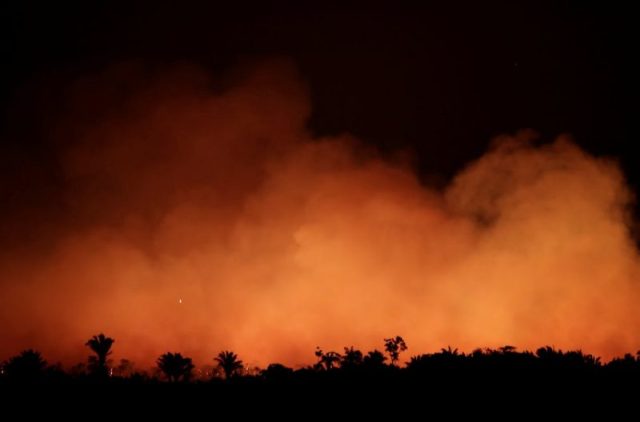
As I write, multiple fires that began seven months ago continue to ravage this eco-sensitive marshland landscape, home to unique plant and animal life, with the smoke so intense it threatens the health of population centers like Rosario and Buenas Aires

Sadly, farmers and ranchers in the river’s Brazil basin have contributed to the fire menace and made things worse, lighting fires to clear land.

In Argentina, ganaderos, or ranchers, follow their example, annually igniting fires to regenerate grazing land and, so far, there isn’t any law to stop them in this country of heavy meat consumption and export.

Some have speculated arson by real estate speculators may be a contributory cause for this year’s fires. The land can be sold for real estate once the trees are gone. Two men have been charged with arson so far.

When rain does comes, it’s only in brief showers unable to penetrate the hardened, parched earth. While Environment Minister Juan Cabandié has openly accused ranchers of causing the fires, they deny it, arguing it isn’t in their interest and blaming the government for neglect instead.

As is, some 11,000 fires detected this year have razed an estimated 540 square kilometers of marshland, or three times the size of Buenas Aires.

Concurrently, the Argentine government is sponsoring a wetlands protection bill to protect the delta, but it must be approved by the Congress. As is, it lacks teeth. It doesn’t prohibit ranchers and farmers from their yearly ritual of burning grazing land.

Long term weather projections show little rain likely to occur. Meanwhile, some 750 unique animal species of the delta, already diminished by both climate change and humans, face imminent extinction.

–rj


Strokes of Havoc: The Felling of Trees

Mary Oliver wrote appealing nature poems, several of them featuring trees.  Take her opening lines of “When I am among the trees,” for example, crafted in simplicity, yet resonant of the capacity of trees to yield serenity:

When I am among the trees,
especially the willows and the honey locust,
equally the beech, the oaks, and the pines,
they give off such hints of gladness.
I would almost say that they save me, and daily.

Trees, however, are in trouble these days, whether from disease, climate change, or human over-reach. Sentries of earth’s welfare, trees sequester carbon and discharge oxygen, mitigate heat stress, conserve water, preserve soil, anchor landscape and shelter animals. They are also a human resource for many of our needs, be it housing, furniture, fuel, or even boxes and paper.

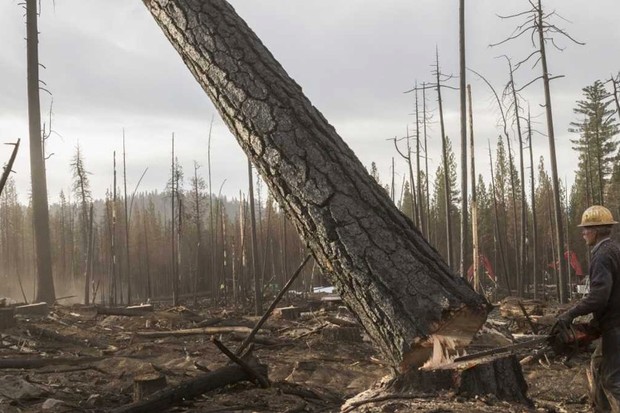
It’s when seen as a commodity that the primary danger looms. Before the coming of Europeans to North America, vast virgin forests covered half the continent’s land area. In the three centuries that followed, settlers cut down trees for farms and pasture at a rapid pace, removing half of that native forest.

With the eclipse of farming as a primary means of subsistence in the 20th century, American deforestation has largely stalemated, with abandoned farms reverting to forest, government implementing federal and state safeguards, and private lumber interests investing in replanting.

Nonetheless, our forests remain under threat, the U. S. experiencing a 3% decline consequent with urban growth since 1997. There are big bucks to be made with logging. America happens to be the world’s fourth largest consumer of wood despite being just 6% of the world’s population. Unfortunately, it’s been the intrinsic legacy of capitalism to prioritize profit over social and environmental welfare.

As is, the old growth forest is virtually gone and with it, a once abundant wildlife. Remaining forest, often reduced to isolated tracts, may not offer sufficient habitat for animal survival. Meanwhile, illegal logging also continues.

It gets worse in third world countries like Indonesia and Brazil where forests are plundered daily both for profit and to make room for cattle ranches and palm oil plantations.

Indonesia has lost some 50% of its forest and at its present pace the lowland forests of Borneo and Sumatra will be gone in the next two years. Transparency International reported in 2019 that illegal logging had occurred in 37 of 41 of Indonesia’s national parks, abetted by political corruption .

I’ll not touch on other third world nations, Mexico, Ethiopia, the Democratic Republic of Congo, for example.

All of this fuels climate change with its devastating fallout: rising temperatures, depleted rainfall, long-term drought, burning forests, flora and fauna extinction; in turn, promoting abject poverty, hunger and disease, exacerbating refugee masses desperate for new homelands.

Each year, world forest removal equals the size of Greece, with consequential climate change hastening the doom of what remains.

If humans were wise, less given to comfort and custom, they could mitigate this unfolding scenario of disaster by consuming less meat, a primary instigator of deforestation and climate change:.

As a recent New Republic article points out,

The livestock industry directly produces more greenhouse gas than the ocean of petroleum burnt to power all the world’s planes, cars, ships, trains, and trucks. Abolishing the livestock industry and replacing it with vast new forests could achieve more than electrifying the entire transport sector, and it would be easier and quicker to accomplish because it requires no new technologies or dramatic infrastructural change.

To do so requires behavioral change, no easy thing. It needs to begin with the wealthy nations who consume the most meat.

With the third world poor, we must think long-term and invest in strategies that grow sustainability and encourage less dependence on livestock. As is, Africa, for example, contributes only 3.8% of emissions contributing to global warming, yet remains extremely vulnerable in its agricultural dependence on rainfall, now projected to decrease up to 50% in the next decade.

In actuality, some 1.3 billion people globally, directly or indirectly, support an estimated 600 million poor smallholder farmers in third world nations, with livestock one of the fastest growing agricultural sub-sectors in developing countries.

Given the exponential consequences of climate change, this poses apocalyptical consequences in coming decades. The burden must rest upon affluent nations in the meantime as developed nations transition to a new economic paradigm.

The need for brevity curtails my wanting to write more fully on a complicated subject with no simple, reductionist solutions. Forgive my seeming digression from the matter of trees, whose fate remains inexorably linked to our own.

–rj

Business as Usual: Lockdown Unenforced

Protestors in Texas

As experts have warned and a rogue president, prioritizing reelection, has ignored, recharging the economy when Covid-19 continues to ravage has exacted a surge in the pandemic’s victims, with a new wave anticipated this fall.

But Americans are its lead cause, a spoiled populace ignoring the laws governing exit from the crisis, wearing a mask in public, practicing social distancing, limiting unnecessary activity. Fifty states, each with its own governance, unequal to enforcing these mandates of public safety, subservient to economic interests, fuel our crisis. Shamefully, we lead the world in the pandemic’s victims.

Meanwhile, climate change exacts its continuing world toll. We tied the record in May for the highest monthly average on record; investment in renewable energy has plummeted; in the next five years, five-hundred species will disappear as humanity continues its assault on Nature, despoiling fauna and flora in a greedy rush for profit. Worse is the meat industry, a virus hotspot, progenitor of the pandemic, not just now, but historically in its previously related strains.

As I write, the Amazon forest continues to burn to make room for cattle ranches, environmentalists have been killed or discredited, indigenous tribes decimated. In Croatia, yesterday, 50 million bees died, suspected victims of pesticides. You think it only happens abroad? It’s happening here. Last year in Texas, someone deliberately set fire to beehives, killing 500,000 bees. Almonds, a prime contributor to California’s agricultural sector, may soon devolve into memory.

Where do we go from here? For the sake of the present we are ravaging our children’s future. I think anew of poet Robinson Jeffers’ credo of “inhumanism,” a summons to abandon a plethora of mass murder and commodification, to simplify our lives, to embrace with stoic discipline those values that both uplift and secure our children’s destiny.

—rjoly

The Fate of our Animal Friends in Pandemic Times

The untold suffering of our animal friends, victims of collapsing slaughter houses in the wake of mass worker viral infections, is so manifest it shouldn’t be ignored. It isn’t just Asian wet markets that need closing, though China bristles in denial, but industrial farming here at home, latent with cruelty, harbinger of disease, pervasive in despoiling the earth and advancing climate change. We rightly become angry at those who selfishly resist public safeguards like wearing masks and practicing social distancing yet, hypocritically, continue to crave meat that perpetuates such wrongs. I’m not asking you to become vegan, but at least reduce your intake of meat. Let’s get rid of this institutionalized mass cruelty. There are better ways.
This morning’s Guardian informs us that “at least two million animals have already reportedly been culled on farms, and that number is expected to rise. Approved methods for slaughtering poultry include slow suffocation by covering them with foam, or by shutting off the ventilation into the barns.” I’ll not even tell you about the plight of pigs, those most remarkably sentient animals.

Peter Singer, the world’s renowned ethicist, makes good sense to me and, hopefully, to you:

“It is tragic that countries such as China and India, as they become more prosperous, are copying western methods and putting animals in huge industrial farms. If this continues, the result will be animal suffering on an even greater scale than now exists in the west, as well as more environmental damage and a rise in heart disease and cancers of the digestive system. It will also be grossly inefficient. As consumers, we have the power – and the moral obligation – to refuse to support farming methods that are cruel to animals and bad for us.”

—rj

Is Anybody Listening? Voter Apathy on Climate Change

American media should be ashamed! Here we are, facing an unparalleled survival crisis, yet the absence of climate change from Thursday’s Democrat debate. (No opportunity for discussing the Green New Deal.) Then there is the apathy of many Americans. Three recent state voter surveys sadly show the absence of climate change as a top five issue for prospective voters. Meanwhile, the Trump assault on environment continues, with the Arctic opened this week to new oil exploitation, even as the world burns and the Arctic melts. I leave you this recent op-ed excerpt from Naomi Klein, one of our foremost writers on the subject: rj
“Wherever in the world they live, this generation has something in common: they are the first for whom climate disruption on a planetary scale is not a future threat, but a lived reality. Oceans are warming 40% faster than the United Nations predicted five years ago. And a sweeping study on the state of the Arctic, published in April 2019 in Environmental Research Letters and led by the renowned glaciologist Jason Box, found that ice in various forms is melting so rapidly that the ‘Arctic biophysical system is now clearly trending away from its 20th-century state and into an unprecedented state, with implications not only within but also beyond the Arctic.’ In May 2019, the United Nations’ Intergovernmental Science-Policy Platform on Biodiversity and Ecosystem Services published a report about the startling loss of wildlife around the world, warning that a million species of animals and plants are at risk of extinction. ‘The health of ecosystems on which we and all other species depend is deteriorating more rapidly than ever,’ said the chair, Robert Watson. ‘We are eroding the very foundations of economies, livelihoods, food security, health and quality of life worldwide. We have lost time. We must act now.´”

–rj

Setting an Example: Berkeley Outlaws Natural Gas

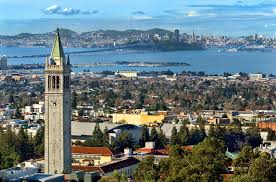
The Berkeley City Council has unanimously voted to ban natural gas in all new construction, a move critics say imposes higher utility costs on the poor.

Beginning January 1, 2020, new homes, townhouses and small apartment buildings will be without hookups for stoves, hot water, laundry and heating. The ban ultimately includes large commercial structures and apartment dwellings. Electricity is the name of the game.

There are those who object to all of this. Natural gas, after all, typically runs at half the cost of electricity, heats our homes faster, and is there for us when the lights go out.

What’s more, most of California’s electricity grid is generated by dirty coal from other states. So much for going green!

But I disagree.

I commend Berkeley for its courageous, innovative move as America’s first city to impose a ban on natural gas. You may have heard that natural gas is not only a cheaper alternative fossil fuel, but runs cleaner than coal and oil. That’s not true. In fact it’s worse, with methane leakage at 3%.

As for the increasingly utilized gas extraction technology known as fracking, its emission rate of methane leakage exceeds that of conventional natural gas by 30%, according to an exhaustive Cornell study. It’s also a dirty, wasteful process with huge toxic effects.

Methane is an especially heat-trapping gas, exceeding carbon dioxide by 34%. Moreover, whether it derives from conventional or fracking sources, natural gas competes with transitioning to renewable clean energy sources such as wind and solar, pivotal to limiting climate change and fostering the well-being of our children. It’s the very basis of the Council’s move. In a world winding down, later comes too late.

Sometimes considered a “bridge” fuel, the reality is that every fracking gas source comes on line with a life expectancy of 30-50 years, justifying a return on investor capital in the billions. This comes at a time when according to many climatologists, we’ve only twelve years to move the needle and mitigate catastrophic consequences for all life on earth.

Since we’re also talking about the cost to the poor, the dreadful reality is that POC are already paying a grievous price, often living near pollution sources. As the NAACP rightly points out, “race – even more than class – is the number one indicator for the placement of toxic facilities in this country. And communities of color and low income communities are often the hardest hit by climate change.”

I can’t go into the logistics in a brief post, but I believe it’s imperative we alter our GDP addiction with its “growth is good” mentality to a paradigm of social justice and economic parity that a green economy potentially fosters and without it cannot succeed. Why should 1 % own half the nation’s wealth?

We’re talking about saving life on earth! That’s you and me and the other guy, too! It begins with what we do now and the sincerity that tests our commitment. Yes, it’s going to hurt us, not only in the pocket book, but in our very lifestyles, eliminating those options we took for granted as piecemeal to the good life.

Let’s me put it this way: If you needed medical intervention, would you really opt for the less reliable, local guy over the more costly, but skilled and seasoned Mayo surgeon if it came down to saving your life? Can you put a price tag on survival?

But here’s some good news: A study by Energy+Environmental Economics found that transitioning to clean electricity-powered appliances in new construction would allow developers to build more affordable homes more quickly, resulting in considerable consumer savings. (No natural gas connection or internal plumbing.)

Berkeley knows the score. Twenty-five percent of California’s climate pollution comes from homes and buildings using fossil fuels. It comprises 27% of Berkeley’s greenhouse gas emissions. They chose a fossil fuel free future.

As for ourselves, we moved to Santa Fe, NM last summer and found natural gas pervasive in the community, with our house part of the grid. I’ve always been afraid of natural gas with its potential for leaks and explosions. I lost two family members from carbon monoxide. In a previous Minnesota home, I thought I smelled gas and called the gas company. I was right.

When they did the house inspection here in Santa Fe, I learned that the previous owner’s newly installed gas stove leaked carbon monoxide when you turned on the oven, common to high altitude country like New Mexico.

That was enough for us, yet shopping at the local Home Depot, we found only gas ranges and had to order our electric one. As for our washer and dryer, they’re now on electric, too.

Yes, we shoveled out some dough, but we go to bed each night with a pretty good chance of seeing daylight. Count me in on the safety factor!

In California, fossil fueled buildings and homes contribute to 25% of the state’s climate pollution as well as considerable financial outlays for asthma victims, many of them children and the poor.

Now, some fifty or more American cities, including San Francisco, are studying Berkeley’s move.

Thank you, Berkeley!

–rj

Ithaca, NY: A Best City

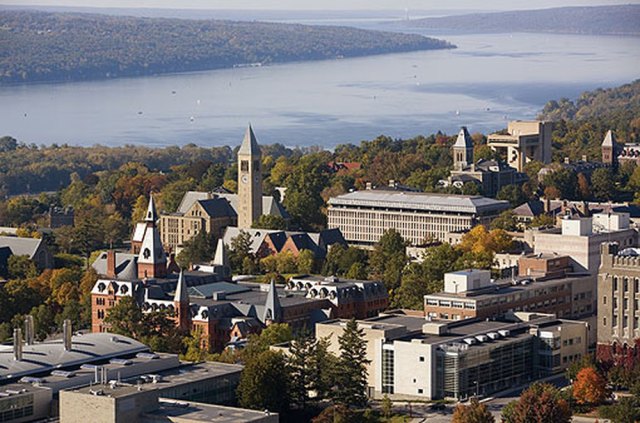
Ithaca, New York, at the southern end of Cayuga Lake, is a progressive town of about 30,000 people and hub to one of the state´s prettiest areas of undulating rural greenery, consisting of vineyards, apple orchards, pastoral farms and scattered water bodies known as the Finger Lakes.

I´ve never been to Ithaca, but it´s one place I wish I had. Everything I read about it tells me it’s a very broad minded place known for its demographic diversity and liberal cultural milieu, anchored by Ivy League Cornell University and Ithaca College. Like Chapel Hill where I went to grad school, it stands out as a blue dot, defiant and steadfast, surrounded by a sea of political red.

Ithaca has been consistently rated as one of America’s most livable college cities. Vegan and gay friendly, it’s home to the legendary Moosewood Cafe, made famous by its cookbooks. In 1997, Utne Reader deemed it “America’s most enlightened city.”

Alex Haley (Roots, The Biography of Malcolm X) was born here. Among its most famous residents was Vladimir Nabokov (Lolita).

I got interested in the place years ago when I found out that Carl Sagan taught at Cornell for many years and Diane Ackerman, one of my favorite essayists whose books on nature read like poetry, lives there.

A hilly city beautified by its gorges and waterfalls and must see Cornell Botanic Gardens sprawling over 4000 acres, Ithaca happens to be blessed with a vibrant environment ethic. Nearby, three state parks offer multiple hiking trails, camping and scenic vistas.

Every fall, its population swells with the influx of young people, yet Ithaca attracts retirees as well, despite its snowy winters.

I´m proud of Ithaca for standing tall to corporate gas interests (Millennium Pipeline and others), who a few years ago wanted to bring fracking to the area, stirring up a hornet’s nest.

A gateway Cornell study (2011) had revealed hydraulic fracking to be considerably more dangerous than even coal and oil in contributing to climate change in its inevitable association with methane leakage. As biochemist Robert Howarth pointed out in the study, methane poses a warming potential eighty-six times greater than that of carbon dioxide.

In short, natural gas isn’t the clean alternative touted by its supporters. Mostly methane, even small leaks are significant. Shale gas, which involves fracking, can emit an average 8% methane leakage over the life of a shale well.

Although it was Governor Cuomo who ultimately imposed a state-wide ban on hydraulic fracking in 2014, it came only after Cornell’s monumental study along with the efforts of the Ithaca-based Park Foundation and concerned townsfolk that brought the issue into public gaze.

Credit is also due to renowned Ithaca College biologist and author Sandra Steingraber with her expertise on the link between toxic chemicals and cancer (Living Downstream: An Ecologist’s Personal Investigation of Cancer and the Environment).

As a teenager, I used to go to summer camp at nearby Lake Canandaigua and remember its bucolic beauty to this day. Thankfully, it remains..

–rj

And a Child Shall Lead Them

Image result for greta thunberg

Today, May 24, was another walk-out-of-school day for thousands of children in 110 countries, urging their governments to take quick and meaningful action to avert environmental catastrophe. If only the politicians, and us, for that matter, would listen.

It’s certainly, if nothing else, gotten the climate crisis considerable media attention. Of course, it’s 16-year old Greta Thunberg of Sweden who started it all and is featured on the cover of TIME’s current issue as one of the most influential young people in the world. Just nine months ago, Greta stood alone outside the Swedish Parliament, carrying a sign proclaiming SKOLSTREIK FOR KLIMATET (School Strike for Climate).

Seemingly a brave, but naive and futile gesture of a teenager, it’s become a planted seed grown into a world-wide groundswell of young people taking climate change seriously. And why shouldn’t they, since their generation and their children will be affected most?

I like the way she articulates our crisis: “I believe that once we start behaving as if we were in an existential crisis, then we can avoid a climate and ecological breakdown. But the opportunity to do so will not last for long. We have to start today.”

In March, Greta’s singular protest kindled an estimated 1.6 million young people turnout, encompassing some 133 countries.

Seems she’s even converted her own parents. Both have followed her into veganism as a way of contributing less CO2 and methane into the atmosphere. Greta’s mother, an opera singer, now travels by train rather than by air. Greta would probably love speaking in America, but since there’s no train track across the Atlantic, guess she’d have to resort to a freighter; that is, just so long as it wasn’t carrying oil barrels.

Imagine my surprise that not everyone admires this green movement Joan of Arc, one commentator dubbing her a “millenarian weirdo”:

It actually makes sense that Ms Thunberg – a wildly celebrated 16-year-old Swede who founded the climate-strike movement for schoolkids – should sound cultish. Because climate-change alarmism is becoming ever stranger, borderline religious, obsessed with doomsday prophecies (Brian O’Neill, wattsupwiththat.com).

I should point out that O’Neill writes for a smart aleck anti-climate change blog, so I can’t take him seriously, given the estimated 97% of scientists who embrace the reality of climate change and the humans factor for its origin.

Others use Greta’s Asperger’s Syndrome against her in myriad personal attacks, mocking her monotone delivery and fixed stare. I like Greta’s nimble response: “Being different is a gift.”

My heart pounds for you, Greta! I have friends who exalt in nature, yet never join that needed protest to universalize our climate crisis into action that saves both nature and ourselves.

You’ve been nominated for the Nobel Peace Prize. Is there anybody more deserving?

–r. joly

Coming to Our Senses

Image result for amphibiansindangerDo you remember any of those asteroid disaster movies? Depending on how you do the counting, there were at least seven of these goosebump films, assuring you nightly bouts with insomnia. One of my favorites has to be Meteor (1979), staring Sean Connery. That ominous prelude:

Its power is greater than all hydrogen bombs. Its speed is higher than any rocket ever conceived. Its force can shatter continents. Its mass can level mountain ranges. It cannot think. It cannot reason. IT CANNOT CHANGE ITS COURSE.

In the movie, the danger was sufficient that both the United States and Soviet Union suspended their cold war animosity to mutually merge efforts to ward off an impending doomsday scenario.

Today, Earth faces an apocalyptic fate all too real, fostered not by a fast approaching asteroid straight out of science fiction, but largely of our own making in real time: climate change.

It’s difficult to believe that there are skeptics about something seemingly so obvious and menacing like climate change. A bit like believing the earth is flat. Several months ago, I actually had my barber tell me the earth was flat and I nearly fell out of the chair!

Between May 23 and May 26, or just a few days from now, elections for the European Parliament will take place. As a prelude, the German populist party, Alternative für Deutschland (AfD), hopes to augment its appeal by stridently dismissing human caused climate change as Klimawandelpanik (climate change panic). They are backed by the European Institute of Climate and Energy (EICK), a consortium of conservative scientists, with links to their counterparts in the United States.

In America, we of course have Donald Trump leading the anti-climate change brigade. Additionally, there are entities like the Committee for a Constructive Tomorrow and the Heartland Institute, the latter funded by fossil fuel interests.

They argue that human induced climate change is simply an unsettled matter, with no definitive science resolving the issue. To buttress their claims they like to draw on the The Petition Project that presents 31,000 signatories from the science community, supporting the conclusion that “there is no convincing scientific evidence that human release of carbon dioxide will, in the foreseeable future, cause catastrophic heating of the Earth´s atmosphere” (Petition Project).

In rebuttal, co-authored consensus studies of climate change by seven eminent scientists averaged a 97% probability of human causation (John Cook, et al). I should point out that far more than seven scientists have underscored the human factor. What happens is that when research establishes probability, scientists move on. Why belabor the obvious?

And then there’s the science of climatology, which exceeds meteorology, the latter fairly reliable for short term forecasts we’re accustomed to getting daily on our TVs or smart phones. Climatologists, in contrast to meterologists, can pickup likely long term weather patterns; let’s say, for example, fifty years into the future through applied physics, computer models, and statistical analysis. Overwhelmingly, given the current projections of rising atmospheric temperatures, the future weather landscape poses survival implications for a vastly changed earth.

Even when we humans accept climate change as a reality (very true these days in Europe), we’re wired through evolution to take stock of palpable, more immediate threats such as job loss, divorce, a declining economy, or possible physical danger such as a street mugging, not abstract, long-range scenarios. It doesn’t affect me now, so why bother?

We judge weather short-term through memory and emotion, not seeing developing long term patterns. Climate change thus poses a peculiar, subtle kind of threat, silent, ubiquitous, insidious, and unrelenting.

In the meantime, we know that climate change is accelerating with devastating consequences and that we are its seminal source. We’ve had several recent United Nation reports on the imperiled status of the Earth, but now comes its sobering May 6, 2019 findings:

1. One million of some 8 million plant and animal species are on the verge of extinction. Flora and fauna that form vital components of an ecological complex vital to our survival should be as imperative a priority as climate change. 66% of marine life and 75% of land environments have been “severely altered,” according to the report. Ten percent of insects, 40% of amphibians, 33% of marine mammals, and a third of reef-forming corals face extinction.

2. The impact of human population growth with its fossil fuel dependence,, urban growth, deforestation, expanding agriculture, excessive meat eating, ruthless plundering of exotic species, along with pollution, drives climate change and species extinction.

Meanwhile, Donald Trump has taken America out of the Paris Treaty, which at least attempted to set goals for diminishing carbon release into the atmosphere, and surrounded himself with lackeys denying climate change.

Concurrently, the Arctic and Antarctica continue their meltdown, the seas keep rising, and submerged coasts proliferate. Our oceans, covering 71% of the earth’s surface, grow polluted with human contaminants, much of it plastics. Alarmingly, water temperatures are rising, imperiling the Gulf Stream and Humboldt current on which much of Europe and the United States depend as moderating influences on climate.

Forest fires and drought have become common calendar features, not only in California, but globally. Heat waves scorch Siberia, while record floods inundate Midwest farmlands and hurricanes intensify and become more frequent.

Unfortunately, the seeds of our demise are primarily fueled by market economies with their dependency on growth, leading to still further decimation, not only of Nature, but from the economic inequity that results. Oxfam tells us that in 2016 the wealthiest 62 people owned half as much as the world’s poorest people.

Desperate people worry about their immediate needs, not nature. They farm animal sanctuaries, log and burn forest to expand grazing and plant palm plantations, fish the seas to exhaustion, poach elephants, rhinos and other game.

Alarmingly, a current 2019 Pew Research Center poll shows climate change hovering next to last place as a bottom priority with the economy, health care costs, and education taking the top tiers ([https://www.people-press.org/2019/01/24/publics-2019-priorities-economy-health-care-education-and-security-all-near-top-of-list/]

In America, some twenty Democrats have announced their candidacy for the presidency, yet only two as of this writing have a defined strategy for combating climate change! The leading candidate, Joe Biden, still finds a place for coal, natural gas, and nuclear energy. He seems not to have heard of the Green New Deal (GND), our best shot yet at slowing both climate change and eliminating the income disparity emanating from an exploitive economy dependent on fossil fuels.

I worry about my grandchildren. What kind of a world are we about to bequeath them?

If we can’t come to our senses, give-up our selfish behavior, change our priorities, persist in denying the seriousness of climate change and our complicity, then we are indeed in trouble, the quality of life itself profoundly diminished, if not imperiled.

As Mark Twain memorably put it, “Better to build dams than wait for a flood to come to its senses.”

–R. Joly