A Legacy of Righteous Minds

Existence exerts a randomness in its distribution of fate. The wicked, as Job tells us, often live long, escaping their misdeeds with impunity; the just and talented, curtailed lives amid their greatest promise.

The list of those I deem the “righteous,” those who’ve especially influenced who I am, the values I embrace, and my hopes for a better human future taken from us early, their age at death indicated in parentheses, includes Princeton sage Walter Kaufman (59), biologist Stephen Jay Gould (62), astronomer Carl Sagan (62), science fiction writer Octavia Butler (58), essayist and novelist George Orwell (46), political sage and philosopher John Stewart Mill (66), and, not least, poet Gerard Manley Hopkins (44).

I’m tempted to write a series of extended separate tributes to each of them in Brimmings, but will limit my commentary for now.

I was in my early twenties. a college student just out of the military, when I somehow came upon Walter Kaufmann’s The Faith of a Heretic (1961), which I’m re-reading now. He was the first to admonish me to accept only the empirical in the quest to discern the probable, to find courage to change course, and live daringly: “The question is not whether one has doubts, but whether one is honest about them.”

Evolutionary biologist Stephen Jay Gould impressed me early with his clear cutting, scintillating prose endowed with grace, teaching me that science is not simply pursuing the factual, but a way of thinking that enlarges one’s humanity. Life is by-product of chance and contingency: “Human beings arose, rather, as a consequence of thousands of linked events, none of which foresaw the future.”

Astronomer Carl Sagan demanded the imprimatur of evidence for any accepted belief. Rationality demands we not cloister ourselves in cultural hand downs—that extraordinary beliefs merit skepticism: Compromising truth invites demagoguery and superstition’s advance: “We make our world significant by the courage of our questions and the depth of our answers.”

African-American Octavia Butler has been a remarkable recent read, writing eleven science fiction novel standouts resonating urgency in confronting systemic collapse of ecosystems consequent with climate change. Her Parable of the Sower, a must read, has proven chillingly prescient. Change is life’s inevitability, morally indifferent, demanding adaptability to survive: “Human beings fear difference, and they fear it so deeply that they will not only oppress but destroy what they see as different.”

George Orwell, well known for his clairvoyant 1984, has always impressed me with the clarity of his writing, achieved through disciplined study; his wariness of manipulative despotism and its verbal deceit stratagems such as ’doublespeak,” timely and precise in their warnings of euphemism and abstraction: “Political language… is designed to make lies sound truthful and murder respectable.”

John Stewart Mill, “the saint of rationalism,” remains a seminal influence, ahead of his time, a champion of classical liberalism and its advocacy of the minority’s right to dissent. He taught me about nature’s indifference and logic’s necessity in a world absent of revelation. I return to him repeatedly for wisdom and inspiration: “If all mankind minus one, were of one opinion, and only one person were of the contrary opinion, mankind would be no more justified in silencing that one person, than he, if he had the power, would be justified in silencing mankind.”

Gerard Manley Hopkins has long been my most esteemed poet with his vibrant “sprung rhythm,” latent with emotion, a passion for nature and for those who suffer—so many—life’s inequities. His poetry sings, reenacting experience via the sensory, capturing the essence of all things. As a Jesuit priest, while not resolving the problem of suffering by resorting to a cozy theodicy or relying on sentimentality, he helps render its endurance: ‘I wake and feel the fell of dark, not day.”

I am forever grateful for their stalwart witness to life’s truths. Their lives argue by example rather than system—that meaning isn’t guaranteed by justice, nor extinguished by its absence. Fate distributes arbitrarily; conscience does not.

—rj

On Reading Cormac McCarthy’s All the Pretty Horses

I have now read Cormac McCarthy’s All the Pretty Horses, remarkable in its stark, yet lyrical beauty reminiscent of Hemingway and Faulkner, intense in its palpable confrontation of goodness with evil; an elegy for a lost way of life; a saga of idealism’s betrayal; of mythic passage from innocence into knowledge offering no redemption, apart from the grace of endurance and a refusal to forfeit honor.

The traditional rancher spreads of west Texas have fallen on hard times, threatening a way of life. The novel opens appropriately with the death of central protagonist John Grady Cole’s grandfather, a former baron among ranch owners. The ranch, grown to 18,000 acres in 1871, has been sold, an inheritance lost. Working with horses is the only life Grady knows:

The Grady name was buried with that old man the day the norther blew the lawnchairs over the dead cemetery grass. The boy’s name was Cole. John Grady Cole.

The first of a three novels known as the Border Trilogy, All the Pretty Horses underscores the death of the Western frontier, once ripe with promise of plenitude—fortunes to be made and dreams fulfilled.

Foregrounded in historical fact, a pastoral, unfenced way of life has fallen prey to change—the dividing of holdings among family, increased taxation, a drift of young people to the cities, mechanization, the invasion of industry, government’s encroachment, relentless droughts—above all, the railroad’s ubiquity, all of which McCarthy turns into metaphor for an agrarian culture bound by hard labor and a code of honor irretrievably lost. Metaphor becomes elegy.

All the Pretty Horses  narrates the journey of cowboys John Grady and his friend Lacey Rawlins from West Texas into Mexico, joined later by a mysterious youth, Jimmy Blevins, who owns a gun and rides an elegant bay mare, foreshadowing trouble ahead.

The novel abounds in resounding passages, poetic in resonance, like this one of stellar vastness, a cosmos indifferent to Man and of a fusion with nature and of a connection now severed:

He lay on his back in his blankets and looked out where the quartermoon lay cocked over the heel of the mountains. In that false blue dawn the Pleiades seemed to be rising up into the darkness above the world and dragging all the stars away, the great diamond of Orion and Cepella and the signature of Cassiopeia all rising up through the phosphorous dark like a sea-net. He lay a long time listening to the others breathing in their sleep while he contemplated the wildness about him, the wildness within.

Acquaintance with archetype helps readers tap more easily into the novel’s multiple levels of meaning—the hero archetype of initiation, trial, and return; the paradisiacal garden of northern Mexico’s La Purisima with its grassland abundance, grazing cattle of upwards of a thousand head, and 400 horses, attended by valeros, finding fulfillment in their labor; a siren temptress, Alejandra, the forbidden fruit, daughter of wealthy hacendado Don Héctor:

She passed five feet away and turned her fineboned face and looked full at him. She had blue eyes and she nodded or perhaps she only lowered her head.

The hero’s mentor appears, Dueña Alfonsa, great aunt of Alejandra, delivering stern warning from experience, that fate often annuls human wish and that economic and social determinism govern universally. Unlike traditional mentors, she’s unhelpful, even sinister, serving as forewarner and enforcer of social codes.

Not unexpectantly, trespass —Grady and Alejandra have become lovers—makes inevitable Grady’s expulsion from paradise, commencing an ordeal with uncertain outcome in a world where idealism is often judged as weakness and evil corrupts honor with impunity.

Unjustly imprisoned, Grady and Rawlins undergo brutal imprisonment for a crime they never committed. Blevins has  been executed earlier by a rogue officer. We have reached the novel’s nadir, a replay of mythic hell. A Mexican prison, governed by bribery and savagery, tests their courage and capacity to endure.

Dueña Alfonso buys their freedom, under condition he not return to La Purisima, only to have Grady resist and encounter Alejandra’s rejection.  Rawlings has returned to Texas.

Throughout, the novel remains faithful to its hero archetype—the hero, wiser now, returns to exact justice, wounded not only by a rifle’s bullets, but a pervasive knowledge of human capacity for caprice and injustice. Grady’s loss of his horses is inextricably linked to his identity. He returns to reclaim them, necessitating violence.

Restoration of wrong occurs, but not without a tarnished innocence and a sadness that knowledge brings.

Symbolism abounds, particularly through the horses of the narrative that give rise to the novel’s title. Virtual characters, they symbolize a dying way of life and nature’s nobility.

Grady’s affinity with horses affirms a vestige of traditional human communion with nature, once vibrant, but now vulnerable to a modern world in disconnect.

I have only one criticism, and that concerns its last fifty pages in which the prose splendor slackens and we arrive at a conclusion seemingly hurried and simplistic, anticlimactic in contrast to the mesmerizing narrative of its preceding pages that sustain a reader’s interest.

But make no mistake. McCarthy succeeds in writing an extraordinary novel, and I am embarrassed to have not caught-up with him sooner.

He passed from us in 2023 at age 89, having written twelve novels, several plays and short stories. Several of his books became movies.

He was his own person, disdaining celebrity status, living much of his life in poverty. Like Grady, he persevered. Recognition came late, beginning with All the Pretty Horses, which won the National Book Award, our nation’s highest literary award. He was 59 and now famous.

I intend to continue with his trilogy, then on to Blood Meridian, which many critics regard as his opus magnum.

Transcending time and geography, McCarthy rivals Faulkner as our greatest American author.

–rj


Noted Author Revisits The Brothers Karamazov

Dostoevsky’s desk

Ove Knausgaard, of My Struggle fame, has often spoken of his admiration for Dostoevsky, who with Proust and Joyce, comprise for him literature’s olympian triad.

While Dostoevsky has always had his admirers that include philosophers Wittgenstein, Heidegger and Camus, he has also had a principal detractor in Vladimir Nabokov who, in his Cornell lectures, dismissed him as a “claptrap journalist and a slapdash comedian, suffering from a fundamental “lack of taste,” manipulating readers through pathos.

In his recent New Yorker essay, “The Light of the Brothers Karamazov” (October 21, 2025), Knausgaard offers readers an informative social, cultural, and authorial milieu, helpful in deriving the novel’s meaning.

Knausgaard sees the novel as a chorus of perspectives, resistant to a gradient analysis. In short, the novel is open-ended.

There isn’t anything new about this view, which emanates from Russian critic Mikhail Bakhtin’s Theory of Polyphony and Dialogism, “a plurality of independent and unmerged voices and consciousnesses, a genuine polyphony of fully valid voices.” 

Some will find Knausgaard’s approach the easy exit from the ambiguity that stalks this classic, each character virtually constructed apropos of a rubric.

Dimitri, immensely proud and of a violent temper, it is the military; for the middle one, Ivan, who is rational, cold, and analytical, it is the university; while for the youngest, Alyosha, who is warm, considerate, always accepting, it is the church. In addition, there is the servant Smerdyakov, presumed to be the illegitimate child of Fyodor and the intellectually disabled Lizaveta, nicknamed Stinking Lizaveta.

There exists the more traditional reading of the novel as a theological and cultural debate between Western and Slavic ways of life; of rationalism pitted against Russian spirituality, as represented in the Russian Orthodox Church.

In this view, Alyosha’s spiritual maturation and advocacy of active love constitutes the antithesis of his brother Ivan’s intellectualism, and clarifies the novel’s intended resolve, one latent with tension as to life’s purpose in the context of omnivorous suffering and evil. As Alyosha remonstrates in conversation with Ivan, “Love life more than its meaning.”

The Brother’s Karamazov is principally a wrestling with the problem of evil, the nemesis of theological belief.

In getting down to the roots of an author’s likely intent, a cultural or historical perspective is invaluable in keeping readers from superimposing their opinion on a text. Knausgaard is exemplary in providing this background,

Shortly before undertaking the novel, Dostoevsky’s epileptic son, nearly three years old, died following a three hour seizure. Filled with grief and guilt—his son had inherited his epilepsy— Dostoevsky began The Brothers Karamazov, his eleventh and final novel. The novel’s Alyosha bears the name of his son. Heeding his wife’s counsel, he sought the Church’s comfort, visiting the Optina Pustyn monastery and conversing with the monastery’s elder, Ambrose. Alyosha does the same.

Like the later Solzhenitsyn, and many Russians still, Dostoevsky was deeply devoted to the Russian Orthodox Church, and his Ivan incarnates the antithesis of Russian spirituality—Western in its secular rationalism, ultimately devoid of moral boundary. Dostoevsky is decisively slavophile.

I have been to Russia, visited Dostoevsky’s confining, upstairs apartment in St. Petersburg, where he penned his masterpiece; attended a crowded orthodox mass, where worshippers stood, movingly singing their hymns, a capella

I came away from Russia, convinced that Russia is different—neither Western nor Asian—a repository of spirituality reflected in its literature, music and art. Russia cannot be fully comprehended apart from this awareness.

Ivan in his direct assault on Christ via The Grand Inquisitor tale, read in the context of Russia’s rampant human suffering, seems, nonetheless, to have the upper hand, reviving the oft-played notion of John Milton’s being of the devil ‘s party in writing Paradise Lost. 

That the novel is best understood as polyphonous, a disparate coterie of life perspectives, undifferentiated in significance, does injustice to the novel’s complex subtlety that underpins its greatness. 

The novel has its imperfections, as Nabokov noted. Like many readers, I find Alyosha insufficient as a counterweight to Ivan. When we leave off the novel, it is Ivan, not Alyosha, we remember.

Knausgaard informs us that unlike Tolstoy and Turgenev, Dostoevsky labored in poverty to support his family and suffered continuous stress to meet serial deadlines.

In her biography of her husband, his widow Anna indicated he lamented with each novel his inability to find time for revision.

Four months after the novel’s completion, Dostoevsky was dead.

Any final interpretation proves more elusive still in the aftermath of the prolonged stench of the corpse of the saintly monk Zosima, in whom Alyosha had confided. No expectant miracle occurs in liaison with his death.

What lies behind this intentional addition?

Perhaps, it represents Dostoevsky’s understandable lingering doubt, even amidst faith, or as Tennyson put it, “there is more faith in honest doubt than in half the creeds.”

Knausgaard seems to give ground to the notion of Alyosha’s centrality toward essay end:

…there is no doubt that Alyosha represents an ideal for Dostoyevsky—he bears the name of his dead son, Alexei Fyodorovich, and is the character who, in thought and in action, is most closely associated with the novel’s consistent notion of the good. But in comparison with the presence of Dmitri and Ivan—perhaps that of Dmitri in particular—he pales.

I agree with Knausgaard on the overpowering logic of Ivan’s assault on God’s inadequate justice, but then the problem of evil never evades those of genuine religious sensibility and the novel faithfully reflects this inner, cognitive dissonance.

Knausgaard undervalues the novel’s theistic thrust in embracing divergent narrator purviews, qualitatively equal.  The Brother’s Karamazov, on the contrary, emerges a vigorous theodicy, defending faith in a world replete with anguish.

I am sympathetic with Albert Camus appraisal of the novel as existential, humanity granted freedom to make choices. I agree with his conclusion that the novel, in its final chapters, reaches for a religious conclusion, confirmed by Ivan’s descent into madness. Camus’ view bears semblance to Dostoevsky’s religious sensibility, however troubled.

Others argue that Dostoevsky deliberately destabilized his text, offering no firm resolution to the quandary of faith in a world of evil.

The novel’s resultant ambiguity is its strength, positing the need for repeated reading and, with it, new understanding. And for believers, sober challenge to the veracity of faith.

I like Knausgaard’s close, seemingly coming to terms with the novel’s complexity:

I write this in the certainty that this interpretation, too, will dissolve as soon as you open the book and begin to read it anew. This is what makes “The Brothers Karamazov” a great novel. It is never at rest. 

—rj

On My First Reading Cormac McCarthy

Lone windmill on a Texas ranch

Not since Faulkner…

A staggering talent dwarfing rivals.

Flora and fauna. West Texas plain. Nothing missed.

Vernacular of everyday people, wrestling with life, each day’s sameness, yet not without hope of life’s longshot lottery breaking their way.

Sensory, escalating, you-are-there cumulative syntax, landscaping America’s dark soul, foregrounded in cosmic indifference to individual fate of man and beast.

At the very least, Faulkner’s equal:

As he turned to go he heard the train. He stopped and waited for it. He could feel it under his feet. It came boring out of the east like some ribald satellite of the coming sun howling and bellowing in the distance and the long light of the headlamp running through the tangled mesquite brakes and creating out of the night the endless fenceline down the dead straight right of way and sucking it back again wire and post mile on mile into the darkness after where the boilersmoke disbanded slowly along the faint new horizon and the sound came lagging and he stood still holding his hat in his hands in the passing ground-shudder watching it till it was gone (Cormac McCarthy, All the Pretty Horses).

—RJ

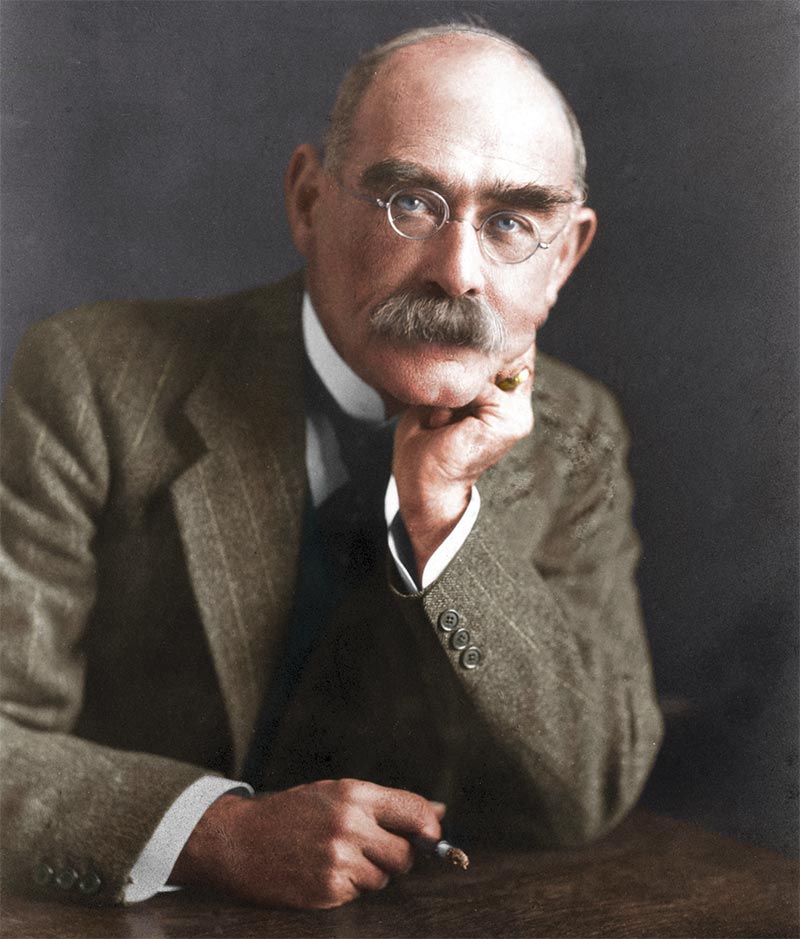
A Polarizing Artist: Rudyard Kipling’s Legacy

I remember it well. I was a young graduate student, privileged to study under one of the world’s foremost professors of Victorian literature, a renowned authority on Thomas Hardy.

The course was rigorous. We read the greats of the age—Macaulay, Tennyson, Browning, Dickens, Mill, Newman, Arnold, Morris, Ruskin, the Rossettis, Swinburne, Hopkins, Pater, and of course Hardy. Yet strikingly absent was Rudyard Kipling. Our professor dismissed him as the mere voice of imperialist Britain—an attitude then dominant in the Academy, and one I suspect still lingers on American university campuses.

I had never read Kipling. I had not yet learned to question. I accepted what I was told.

It was only later, during a summer course at Exeter College, Oxford, that I encountered another view: one that esteemed Kipling’s literary brilliance without committing the American folly of conflating his politics with the merits of his artistry.

Kipling’s literary range was astonishing. His verse, endowed with rhythmic command, borders on the hypnotic. He opened poetry to colloquial speech and became a supreme craftsman of the ballad form.

Yes, he gave voice to Empire in works like The White Man’s Burden, Kim, and The Jungle Books. But he also revered Indian culture—its spirituality, wisdom, and sensory richness. Often, with subtle irony, he questioned the very order he seemed to affirm.

Perhaps his greatest achievement lies in the short story. With precision and nuance, he crafted narratives of extraordinary compression, modern in their suggestiveness, wide-ranging in their scope. The Man Who Would Be King remains a masterpiece—its sweep and power undiminished. Kipling’s influence on Conrad, Maugham, Hemingway, Borges, and others is beyond doubt.

He was awarded the Nobel Prize in Literature in 1907—the first English-language writer to receive it—honored for his “power of observation, originality of imagination, virility of ideas, and remarkable talent for narration.”

Kipling’s stories, like all enduring art, probe psychological depths. They are complex, skeptical of conventional wisdom, and riveting in their precision.

In today’s multicultural Britain, he is taught in context: his genius as a storyteller acknowledged, his colonial perspective rejected. Lewis, Tolkien, and Pullman have recognized him as a precursor to modern fantasy.

In India, where he was born and spent his early years, his reception is understandably ambivalent: many readers disdaining his imperial condescension, yet acknowledging his literary craftsmanship. Salman Rushdie has called Kim “one of the greatest novels written about India,.” Other Indian writers continue where Kipling left off, offering vivid vignettes of India, but through an Indian prism.

Controversy about his place in the Western literary canon remains. Vladimir Nabokov, in his Cornell lectures, dismissed Kipling for his moralizing, He deemed his indulgence in exotic adventure stories as juvenile. Great literature, he argued, obeys the aesthetic imperative of narrative neutrality, or distance, as in Flaubert and Joyce.

On the other hand, the late eminent Yale critic Harold Bloom came to Kipling’s defense. In his The Western Canon. Bloom lists Kipling among hundreds of writers deserving inclusion in the canon. Bloom saw Kipling as a myth maker and gifted story teller, especially in his short stories. On the other hand, he found his poetry “scarcely bear reading.”

While I find merit in both Nabokov’s and Bloom’s arguments, I lean towards Bloom’s appraisal as more balanced. I have long resisted either/or equations, particularly as to the political or aesthetic. Over a lifetime, I have frequently found reasoned judgment occupies a middle place. I have given my own arguments earlier in this essay for his belonging in the canon.

Whatever a reader’s verdict, Kipling was a singular voice, very much his own man. In short, authentic. As he said in an interview shortly before his death,

“The individual has always had to struggle to keep from being overwhelmed by the tribe. To be your own man is a hard business. If you try it, you’ll be lonely often, and sometimes frightened. But no price is too high to pay for the privilege of owning yourself” (Qtd. in the Kipling Journal, June 1967).

rj

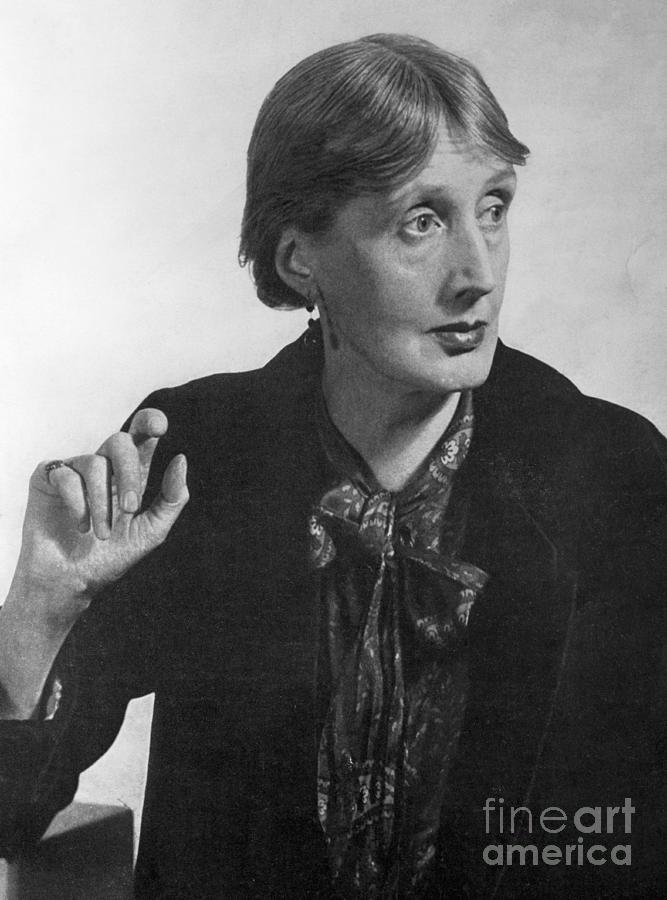
Thoughts After Reading Virginia Woolf’s Diary

I’m almost done reading Virginia’s Woolf’s Diary, 1918-1941. She means much to me ever since Howard Harper, a Woolf authority at UNC, introduced her to me.

Such a scintillating intellect. Writing didn’t come easily to her, frequented with anxiety, sensitivity to criticism, writer’s block, and bouts of depression. Without husband Leonard, I doubt she’d have pulled off her prodigious achievement.

The Diary serves largely as her workbook of creative struggle—getting things right, the interplay of new formulations, the unleashing of her interiority.

The Diary catalogues books she’s reading and plans to read. It teems with recall of literary and artist luminaries she knew intimately, many associated with the Bloomsbury Group to which she belonged—Strachey, Forster, Keynes, and her sister Vanessa Bell among them. Henry James, George Meredith and T. S. Eliot were frequent household guests.

She’s opinionated about several of her rivals, Joyce for instance. She adored Proust: “My great adventure is really Proust. Well—what remains to be written after that? You can’t go further than that.” And, of course, there were Shakespeare, Dostoevsky, Tolstoy, and not least, Dante, to whom she turned often.

She read Homer, Plato, Aristotle, Sophocles, and Euripides in the original Greek and continued so throughout her life. I have her essay, “On Not Knowing Greek.”

Woolf spoke French fluently and read Proust, Gide, Flaubert and Maupassant in French. I hadn’t known until reading the Diary that she read Dante’s The Divine Comedy in Italian.

Largely self-educated apart from courses in the classics taken at the Women’s Department of King’s College (Women were excluded from Oxford and Cambridge), her intellectual achievements are extraordinary.

I introduced my students in Modern Novel to her “A Room of Their Own,” a feminist classic elaborating the interiority of female consciousness and exposing the barriers silencing women’s voices. And then, there was Mrs. Dalloway and To a Light House, now canon staples of English literature.

Nonetheless, in reading the Diary I found myriad passages that grieve me. She could be elitist, contemptuous of the working class; condescending towards blacks; antisemitic: “I do not like the Jewish voice: I do not like the Jewish laugh”; she felt uncomfortable in the company of the disabled.

In many ways, her views were not atypical of the mindset of the snobbish British upper class in the days of Empire.

Despite these faults, I try always to separate the artistry from the life; otherwise, there would be few artists to pursue, given the human proclivity to misbehave.

And so, over the years, I keep coming back to Woolf—her ability to recreate the inner life, to make universal the world of the quotidian; the beauty of her lyrical prose, her experimentations with narrative, her wrestlings with life’s frequent inequities.

Elegy for Iris: A Review

“We can only learn to love by loving.” —Iris Murdoch

I’ve just read John Bayley’s Elegy for Iris, his moving memoir of his wife, renowned British novelist Iris Murdoch—26 novels in addition to nonfiction—who succumbed to Alzheimer’s in 1999 at 79.

How does something like this happen? We’re told that we may ward off Alzheimer’s scourge by exercising our brains via mental pursuits like puzzles, word games, picking-up a language, trolling in math, yet here’s this woman of scintillating brilliance, winner of the Booker Prize, working omnivorously at her craft, yet ultimately pummeled by this dread disease. The truth is that the cards were virtually stacked against her, given her mother’s earlier Alzheimer’s.

Lasting forty-three years, their marriage was unconventional. Iris was bi-sexual and had liaisons throughout their marriage. Age or gender didn’t matter. She was attracted to robust intellectuals, not least, her distinguished husband highly regarded for his literary criticism and as an academic at St. Catherine’s College, Oxford.

But does it matter anyway? That eccentricity often goes hand-in-glove with artistry is a given. Besides, an author’s sexual life ranks in the lower tier when it comes to our reading choices. Think Dickens, George Eliot, Sartre, and others.

For some of us, however, we retain curiosity about the life behind the work when it comes to those who seemingly “hook” us with their artistry. In this, we’re probably no different from those devotees of Hollywood celebs, rampaging People magazine and the like in fervent quest for intimacy. We even have our dedicated websites.

My own practice when I come upon an established writer that I really like is one of saturation.   Generally, I’ll read maybe three novels and two biographies. This helps me see writers in context and provides a ground-base for properly appreciating their work. I had just read Murdoch’s Booker Award novel, The Sea, O the Sea (1984).

Bayley received sharp criticism in some quarters for publishing his memoir in 1998. Iris was still alive, yet Bayley proved unsparing in disclosing Murdoch’s private life without her consent or ability for rebuttal. Muriel Spark described the elegy as “sordid.”

On the contrary, Bayley felt that the Elegy honored Iris and the vast majority of readers seem to agree. We learn something about marriage, in this case, an anomaly that worked for Iris and John as opposed to the traditional axiom of not taking your partner for granted. For John and Iris, taking each other for granted took on a quotidian staple, emerging as a refrain in the Elegy.

By this, the couple meant not clinging to one’s partner or controlling, but allowing them independence to embrace the effulgence of their identity: “Apartness in marriage is a state of love and not a function of difference or preference or practicality,” Bayley writes.

As columnist Graeme Archer perceptively observes in the Telegraph (2015), “Only when you know without question that you are wanted, no matter how you behave, no matter what you say; that you’ll be together till death, etc – this is when you know it’s love.”

The Elegy tells of their early romance, their shared living habits, common interests, and writing practices. What sets the book apart is its honest wrestlings in living with someone you love, in this instance, a woman of cerebral brilliance now unable to remember her friends, achievements, and their life experiences as a couple, reduced to minimal articulation, daily angst, and ubiquitous dependence by chronic illness. Bayley fed, clothed, and “hosed her down.”

A forthright narrator, Bayley castigates himself for his sometimes loss of patience and scolding, the Elegy emerging as a testimony of love’s transcendence over the vagaries that time with its contingencies imposes on us mortal creatures, fallible in our humanity, yet graced with the capacity to not merely endure, but to overcome and love steadfastly.

An international best seller, it would provide along with Bayley’s subsequent book, Iris and her friends, the basis for the 2001 film, Iris, garnering three academy award nominations.

Writing in the Providence Sunday Observer, critic Tom D’Evelyn wrote, “Elegy for Iris has already become a classic memoir and a remedy for modern love. Read it and, if you dare, give, it to someone you love.”

—rj

On finding a new booklist quarry

Aaron Hicklin
Aaron Hicklin

I confess I’m addicted to booklists. No sooner do I finish one book, but I’m into another.

What surprises me is that I can’t remember anyone in my family serving as a role model when I was a child, either reading to me or picking-up a book for themselves, with the exception of the late intervention of my eldest brother, David, recently discharged from the army after WWII and anticipating college under the newly inaugurated GI Bill.

One night before David left for the University of Miami, he gave me my first book, Huckleberry Finn. I still remember the occasion–eight years old, sprawled out on the floor of our Philly tenement, absorbed so fully in this really good book that it muffled the adjacent Front Street el with its interminable trains, dutifully groaning past our rattling windows every fifteen minutes.

Soon I discovered the Montgomery County Library. I didn’t mind walking the two miles, knowing what lay up ahead. It was  one of those supreme pleasures like feasting on a well-stacked hoagie or downing a cold strawberry ice cream soda on humid summer Philly nights; maybe I even liked it as much as playing stick ball every day against the factory facades lining our streets.

Books gave me refuge in a home torn apart by alcohol. I became aware of a larger world, where good really did exist, and people could be kind and often courageous. I found heroes like Lincoln, Gandhi, and Gehrig that would become staples in my life.  Books transported me to far away places—Australia, New Zealand, the South Pacific.

Nearly as important as the library was a humble bookstore on Girard Avenue that I often passed on my way home from Chandler Elementary, filled with used paperbacks. What got my attention were two cardboard boxes piled high with comic books. I gravitated to the one filled with Classic Comics with their graphic renditions and abridged texts of literary fare.  The price, five cents, sealed the bargain!  I’d “picture” my way through, say, Les Miserables or Treasure Island, then pick-up the hardback version at the library. By the time I was 13, I had read many of the classics, including War and Peace, Moby Dick, and Silas Marner.

As for the many booklists I’ve ransacked through the years to feed my addiction, I’ll just say my favorite has been Brain Pickings, whose cerebral fiber fences it off from the traffic lane of your typical booklist..

For the most part, I shun the New York Times best seller lists, annoyed by their often fad offerings of dubious value other than to entertain or tell how you, too, can cash in and grow healthy, wealthy and wise.  A few weeks later, I’d find these books either gone awol or sunk to near oblivion.

Before the Internet opened up our information corridors, I’d reminisce earlier times venturing into a library, losing myself in its stacks, often looking for one book, but emerging with another. Call it serendipity, but the chance encounters I’ve had with library books have often proved fortuitous with surprising consequences.

Take, for instance, one chance venture when I pulled a book off the shelf by an author I’d never heard of. Lucky draw, it turned out to be Thomas Wolfe and his Look Homeward Angel. I was 17 at the time, a homesick GI in Korea resorting to the humble base library to annul slow time. Hooked, in subsequent years I rampaged all of his novels, ultimately enrolling at the University of North Carolina at Chapel Hill, the Pulpit Hill of Look Homeward Angel.

Books often haunt my mind, ghosts of delightful company with motley heroes, or of vistas spinning new threads of excitement, belief, and desire in conspiracy against the old.

But I’ve found that even the Internet can surprise me. Several days ago, for example, I stumbled upon an extended New York Times Style Magazine series, “My 10 Favorite Books,” edited by Aaron Hicklin.

Hicklin edits a magazine called Out and recently opened up a bookstore called One Grand Books in Narrowsburg, NY. In a clever ploy to attract readers, he’s come up with the idea of asking well-regarded people from various walks of life what ten books they’d want to have with them were they marooned on a desert island. Each listing would feature annotated entries explaining their choices or how these books came to shape their lives.

Hicklin doesn’t want just another bookshop, a dubious business venture in this age of online behemoths like Amazon and Barnes & Noble, but a resource for discriminating readers to find books of substance readily.

As I write, contributors to “My 10 Favorite Books” include, among many others,

 Allan Hollinghurst

 Edmund White

 John Irving

 Ta-Nehesi Coates

 Gloria Steinem

 Gia Coppola

Michael Pollan

Erica Jong

What’s nifty here is how when you select a contributor you get a cascading menu of ten annotated preferences.  In short, each menu constitutes a sub-booklist in the series.  Amazingly, very little overlap occurs among contributor choices, yet each listing is profoundly discriminating.

Absent from the list are two writers I’m unfamiliar who intrigue me for their choices, since they complement my own interests–artist Terence Koh and author, Brett Easton Ellis–the former for his love of Eastern thought with its subdued nuances in a sound byte world; the latter, in sharing tastebuds with me for writers like Tolstoy and Flaubert.

Hicklin, by the way, keeps an online blog, onegrandbooks, that provides you with an archive of previous contributors and a weekly focus on a current contributor, sparing you the cumbersome difficulty of finding each series individually online. You can even sign-up for his weekly newsletter and have your purchased item shipped conveniently to your doorstep.

I hope Hicklin’s venture succeeds. It’s a brave new world out there

Meanwhile, I’m on safari, exploring panoramas of infinite sweep_better because unanticipated, by way of my new booklist quarry.

–rj


My Best Reads for 2015

John-Williams-StonerMy thirst for good reads continued in 2015, and among them, two stand out for special praise in providing me with pleasure, insight, and continuing reflection. (I’ve reviewed both more fully elsewhere in Brimmings.)
Fiction:   John Williams. Stoner (New York Review of Books Classics)

My choice is probably subliminal and inevitable, as not since David Copperfield have I identified with a fictional character so fully as with Stoner, having like him, been a professor of English for several decades, thus  familiar with academic intrigue and its pettiness; even more, having, like Stoner, endured a previous incompatible marriage that served neither of us well. But aside from the personal, Stoner has also been the favorite novel of professors across the years, according to a recent article. And why not, since it excels not only for its verisimilitude, but its superlative craft of nuanced, rhythmic sentences replete with stylistic discipline made potent through understatement; in short, easily one of the best written novels I’ve come upon.

Sample Passage:

In his forty-third year William Stoner learned what others, much younger, had learned before him: that is the person one loves at first is not the person one loves at last, and that love is not an end but a process through which one person attempts to know another.

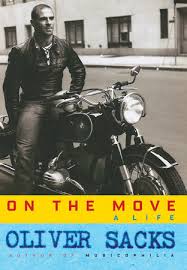
SacksNon-Fiction: Oliver Sacks: On the Move: A Life

Sacks, renowned as both a neurologist on the cutting edge and cogent observer of the eccentric manifestations of the brain’s malfunctionings in his many books, wrote this memoir in the final months of his terminal illness from cancer. As such, it startles with its wisdom and bravery; even more, in its honesty about himself in measuring the successes and shortcomings of his life journey, delivered with verbal beauty uncommonly found among scientists.

Sample Passage:

This gave me a feeling of what seemed wrong with American medicine, that it consisted more and more of specialists. There were fewer and fewer primary care physicians, the base of the pyramid. My father and my two older brothers were all general practitioners, and I found myself feeling not like a super-specialist in migraine but like the general practitioner these patients should have seen to begin with.

__rj

Same Sun Here

Neela Vaswani
Neela Vaswani

Dear River,
I cannot tell from your name if you are a boy or girl so I will write to you like you are a human being.

The above comes from a book I’ve been reading for middle grade children, called Same Sun Here, by Silas House and Neela Vaswani.

My wife, a middle school teacher, brought the book home several weeks ago for me to read. She said, “It’s really good and you’ll like it.”

Well, I got hooked. It’s too good to put down. Teeming with prose often approaching poetry and vivid scenarios that can move hearts, it resonates those values that define the better portions of ourselves. I venture it’s one of those books you start missing no sooner you’re done.

Briefly, it’s told through a series of letters exchanged between two 12 year olds: Meena, formerly from India, now living in NYC, and River, who lives in the mountains of Eastern Kentucky.

[Mamaw] says that the everyone used to write letters all the time and it’s a lost art form.

Turns out, these two have a lot in common, despite their differences in background and locale:

Both are close to their grandmothers.

Have fathers with out-of-town jobs.

Share an affection for dogs.

Are fond of mountains. (Mountains were part of Meena’s Indian childhood. River lives in the mountains.)

In New York, the buildings are in someways like mountains, but they are only alive because of the people living in them.

Are sensitive to the beauty and wonder of nature.

I usually walk through the woods instead of taking the driveway because it’s a different world there.

Are outliers. (People make fun of their strong accents and origin.)

Like to read.

I like that library books have secret lives. All those hands that have held them. All those eyes that have read them.

Silas House
Silas House

The Same Sun Here is primarily about the faulty way we perceive others. River had been told that people who looked like Meena were terrorists. Mina, that people in Kentucky were hillbillies.

Mamaw says that people don’t really care about people here because they think we’re a bunch of stupid hillbillies who are looking for handouts.

Hey, if this old guy likes the book, typically self-conscious young adults will like it even more

Having said this, I think some readers won’t like the book for its seeming political preachments. It’s big on environment (mountain top removal) and waxes enthusiastic over Obama’s election victory. (The story is set in 2008.). A book of several strands, it features the powerless and, thus, exploited and how they may still find a voice.

Climate change challenges us as well, menacing not only our quality of life, but our survival. I cringe with every forest leveled, diminishing resources, declining species, sulfur fumes, unrestrained growth, etc.

I like people who lay their cards face up on the table.

I like a book that advocates awareness of a wider humanity and the folly of stereotyping that walls out our fellows.

Too often, bound by cultural mores, we’ve only a corner perspective.

We need a wider view to forestall our prejudices. Achieving empathy, we’ll discover a surprising commonality–that we’re more alike than we thought.

Sometimes you write things in your letters that I thought nobody had ever thought before except me, but then there it is in your letter.

Or as the title nuances, the same sun here.

–rj