Trump Environmental Rollbacks: Travesty in the Making

The Trump administration is accelerating its broad assault on environmental protections and climate change mitigation, putting both public health and the planet at risk. It began with the U.S. withdrawal from the Paris Climate Agreement, a pact signed by 200 nations.

Dismantling Biden’s Inflation Reduction Act, Trump has rolled back roughly 125 environmental policies in just two months, issuing executive orders to expand oil and gas drilling on public lands and increase logging in national forests.

Meanwhile, 1,600 workers have been cut from the National Oceanic and Atmospheric Administration (NOAA), undermining critical weather forecasting and public safety.

Aid to developing countries for green initiatives, once provided through the International Partners Group, has been halted.

FEMA, responsible for disaster relief, is under review.

The Environmental Protection Agency (EPA)—established by Richard Nixon in response to Rachel Carson’s Silent Spring—has pivoted to pro-fossil fuel advocacy. Forget about EVs, charging stations, or clean energy incentives.

It doesn’t stop there. Reuters reports today that the Department of Energy is considering slashing millions in funding for two major carbon capture projects in Louisiana and Texas. These projects, once fully operational, could remove an estimated two million metric tons of carbon annually.

Long standing congressional mandated legislation such as the Clean Air Act, the National Environmental Policy Act, the Clean Air Act, the Endangered Species Act, the Noise Reduction Act, and the Endangered Species Act face Trump’s bludgeoning. The courts must act to stop the carnage.

All of this comes as the world falls short of its pledge to limit warming to 3.6°F (1.5°C) above pre-industrial levels.

Trump, of course, remains unbothered. He has long dismissed climate change as a “hoax.”

Unfortunately, we will all pay an incalculable price for electing a renegade despot, mindlessly sabotaging the public’s welfare and our children’s future.

—rj

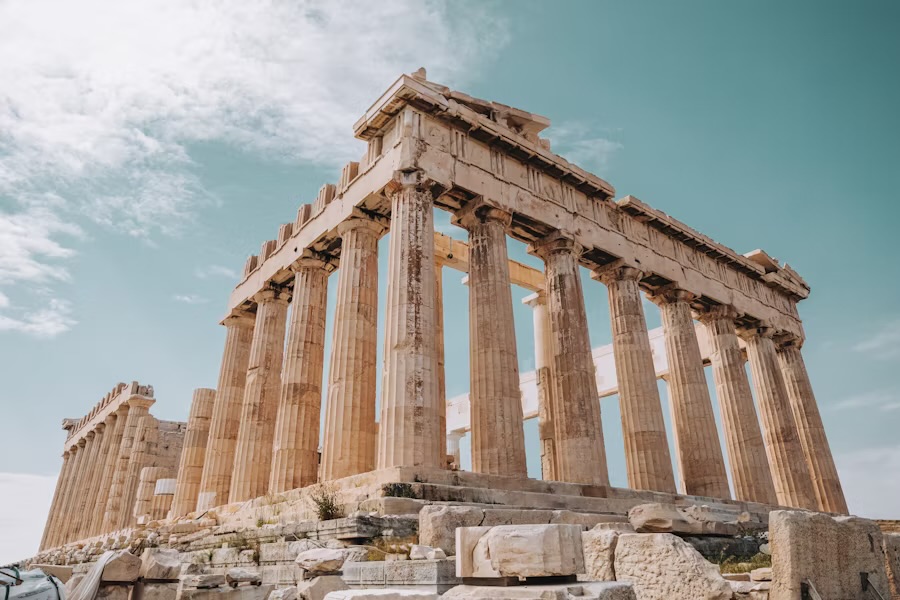
The Greek Ideal We Need Today

The Greeks called it aretè, a concept I’ve never forgotten since my beloved early professor, Thomas Pappas, introduced me to it.

Often translated as “virtue,” it encompasses far more—not just moral goodness, but the pursuit of excellence in every endeavor. Plato expanded the idea to include wisdom, justice, and self-control.

Aristotle, in turn, emphasized that aretè arises from reason and consistent practice. As he put it, “Moral excellence comes about by cultivating habit. We become just by doing just acts, temperate by doing temperate acts, brave by doing brave acts.”

Examples of aretè abound in classical literature. Take Odysseus, for example, in The Odyssey, undertaking a ten year journey to reach home, overcoming every obstacle thrown his way through intelligence, resilience, courage and leadership.

Antigone provides another example of aretè. Defying King Creon’s decree, denying her brother burial, Antigone exemplifies moral courage in defying the autocratic king.

Does aretè exist today?

Nelson Mandela comes to mind. Imprisoned for 27 years, Mandela opted for reconciliation over bitterness, unity over revenge in post-apartheid South Africa, reflecting aretè in its highest moral and political form.

Aretè isn’t reserved for just the famous; it can be seen in frontline workers, teachers, activists, and individuals who strive for excellence in their fields, steadfast in upholding ethical principles.

In all things, excellence matters, and in these tumultious times, we need areté more than ever.

—rj

A President Unhinged: Menace To All


The stock market went crashing yesterday, precipitated by Trump’s glibly informing press that a recession may well happen.

Apparently, he’s blown it with the Ayatollah as well, urging renewed negotiations to limit Iran’s march to a nuclear arsenal or face a military response, resulting in the Ayatollah’s rebuff that Iran won’t negotiate with bullies.

Ignoring the consensus of the science community, he’s branded environmentalists as “lunatics,” caring more about “a half inch sea rise” than the threat of nuclear war. It seems a favorite term of his, used previously on Democrats critical of DOGE.

He’s even got Israel rattled, calling Hamas leaders with whom he’s been negotiating, “really nice guys.”

His most shameful moment, however, was declaring Ukraine’s valiant Zelensky a “dictator,” resonating Putin’s lies.

My wife, an ardent Trump resistor, who’s joined protest marches and calls the White House daily, tells me Trump suffers from “diarrhea of the mouth,” reviving a once widely used phrase of unknown origin for political loudmouths drawn to impulsive, insensitive utterance. It deserves reviving.

And yet it doesn’t go far enough.

What we have on our hands is a full-blown case of diplomatic dysentery, and America left cleaning up the mess.

Trump’s words are as reckless as his policies, grenades lobbed into the world order, heedless of the consequences.

Mind you, Trump’s dangerous—no less a menace than Putin, Xi, or Kim Yong-Un.

In just a week, he’s managed to offend Israel, embolden Iran, undermine Ukraine, tank markets, and insult allies, in keeping with his penchant for blurting out half-formed nonsense in the syntax of a child.

If political lunacy exists, and it does, Americans increasingly know where to find it.

No Other Land: A Story That Must Be Told

The Academy Awards take place tonight, but I may not watch.

I have misgivings, particularly about the industry’s apparent exclusion of films that highlight the Palestinian plight in Israel.

Like many others, I don’t miss theaters. It’s nice just lounging in an easy chair, scrolling through endless streaming choices on a big-screen TV, microwaved popcorn at hand. Traditional studios have taken the hint, shifting their priorities toward digital platforms.

A few times, I’ve ve been tempted to return to the theater to see films like Top Gun: Maverick for its effects, or Oppenheimer, for its brilliant portrayal of a conflicted scientist. But I always hold off, knowing that within months, I can rent or buy the film and avoid the steep ticket prices.

Now comes another film, a documentary No Other Land, winner of the Berlin International Film Festival and the Gotham Award for Best Documentary, now an Oscar nominee.

Yet no American studio dares to sponsor it.

Jointly directed by Palestinian and Israeli filmmakers, No Other Land lays bare the struggles of Masafer Yatta, a West Bank community facing near-daily assaults from Israeli Defense Forces and encroaching settlers who want them gone, the latter, an updated version of the Ku Klux Klan. The IDF claims it needs the land for a military training base.

Two weeks before the film’s Oscar nomination, masked settlers stormed Masafer Yatta, destroying homes. In one instance, caught on film, a resident was shot in the stomach. The filmmakers themselves have been harassed, even shot at, over five years of production.

Palestinian director Basel Adra, a Masafer Yatta resident, has been targeted multiple times. Yet he refuses to leave the land where his family has lived for generations.

His Israeli co-director, Yuval Abraham, told The New York Times:
“I look at Basel, who’s living a much more difficult life than myself, and as long as he’s continuing, I feel like I also have to continue. Even if reality is only changing for the worse, it’s not as if we know what would happen if there is no documentation.”

So far, the film has reached just 23 American theaters. Still, the directors hope for broader exposure to awaken audiences to Israel’s deepening colonization of the West Bank and shift public perception.

But in America, supporting Palestinian rights often invites accusations of antisemitism. Trump has proposed deporting Palestinian student protesters. As for Gaza, he advocates expelling its 2 million inhabitants without a right of return.

Ta-Nehisi Coates’ new book, The Message, devotes half its pages to his time in the West Bank. Some criticize him for omitting Hamas’ attack on Israel and its atrocities. Daniel Berner of The Atlantic calls Coates’s analysis simplistic. Yet liberal Israelis, though a minority, may find his perspective compelling.

Coates focuses on the West Bank, not Gaza. In an interview with New York Magazine, he remarked: “I don’t think I ever, in my life, felt the glare of racism burn stranger and more intense than in Israel.”

As expected, some have labeled him antisemitic. The New Republic sees it differently, calling the backlash a massive media failing: “Coates is not antisemitic to defend Palestinian human rights” (Shiner, October 2, 2024).

If No Other Land makes it to my local theater, I’ll give up my easy chair, venture out to the theater, pay the ticket price, not only to witness a remarkable documentary, undertaken at great risk, but to lend my support to a story centered in truths that must be told.

RJoly

Putin’s Aggression, Trump’s Betrayal, and Europe’s Challenge

  • Photo by Ukraine.ua on September 07, 2023.

You may not have heard of Tim Snyder, but he’s worth knowing. A Yale professor of Eastern European history and authority on the Holocaust, his vitae includes sixteen books and many academic awards. A Brown and Oxford graduate, he speaks five European languages and reads in ten.

I mention him because of his ardent defense of a free Ukraine, whose fate now lies in jeopardy. This month he’s been in Ukraine, a participant in a dedication of a new underground school for children a mere twenty miles from the front and within twenty second reach of Russian cruise missiles.

Today marks the end of three years of Ukraine’s brave resistance to its Russian invaders, who now occupy twenty percent of its land. The school has to be underground, as Russian targets include schools as well as hospitals, civilian housing, energy infrastructure, and even shopping malls.

Now Ukraine confronts its most insidious danger—Trump’s abandonment of Ukraine. Snyder reminds us that Trump cares little about Europe. What matters is making deals in exchange for profit as seen in his demand Ukraine grant rights to fifty percent of its minerals. Like Gaza, Greenland, and the Panama Canal, it’s about adding real estate to his portfolio.

Ukraine’s destiny now lies in European hands, but their commitment isn’t assured. Rewarding Kremlin aggression makes more aggression likely, particularly involving the Baltic nations of Estonia, Latvia, and Lithuania, each with a considerable Russian minority similar to that of Ukraine.

There are ways you can help Ukrainians. Snyder sponsors Documenting Ukraine, which affords Ukrainians a voice. There is also Come Back Arrive, supporting Ukrainian soldiers; RAZOM assisting civilians; and United 24, the Ukrainian government’s site for donations.

Few will read my lengthy post, but for those who do, donate, if you can—and while at it, join the resistance. You know what I mean.

—RJoly

Reaping What We Sowed

Like many of you, I shudder at each day’s news. I ask, what have we done to ourselves, electing a convicted felon, rapist, and con srtist, wielding bluff, vengeance, and ridicule to smother dissent—a man nefarious in his acumen for malice, his syntax simplistic, governing by impulse and running the country by the seat of his pants; impulsive and isolationist, bent on walling out the interweave of the world’s nations and reviving imperialism.

Devoid of any empathy, he deigns to displace two million Palestinians from their homeland, negotiate Ukraine’s fate on Putin’s terms, bully allies Canada and Mexico, cut off aid to those in need, disenfranchise America’s working class, while deepening racial divides and fueling the oligarchy of greed.

Denying climate change despite accelerating consequences, he imperils evolution’s age wrought marvels and forfeits our children’s future.

Alas, we will reap what we have sowed; harvest tares and not wheat. —rj

A Seat at the Table: Why Economic Rights Must Transcend Identity Politics

In a recent Brimmings post, I cautioned Democrats to avoid identity politics: “While minority rights matter, they musn’t be set against the economic rights of all Americans to a fair share. Otherwise, we reap continuing resentment, social fissure, and exploitation.”

To blame working class white males for Harris’ defeat isn’t where it’s at. Truth is America’s working class transcends race and ethnicity. 15% of Blacks voted for Trump; 41% of Hispanic voters did the same. Collectively, they provided the margin of victory in the battleground states.

Perceiving themselves as marginalized while others jumped the queue, they voted their resentment. Trump masterfully exploited that resentment, focusing on unchecked immigration (8 million) at the southern border under four years of Biden.

America’s healing lies in addressing their grievances; if not, we’ll continue to be prey to demagoguery and its selfish interests.

Everyone needs to feel they’ve a place at the table, regardless of race, origin, or background.

—rj

Trump’s Madison Square Garden Debacle: Is This the End?

Trump’s Madison Square Garden rally last Sunday may very well have alienated Latinos across the country and cost him the election.

The wound was inflicted not by Trump, but by comedian Tony Hinchcliffe, who appeared as a warm-up act before Trump took the stage.

Drawing from a barrage of stereotypes targeting Black, Jewish, Muslim, and Latino communities, Hinchcliffe described Puerto Rico as “a floating isle of garbage,” adding that Latinos “love making babies.”

Welcome to the October surprise!

Although the Republican campaign attempted immediate damage control, the fallout of rage was immediate and widespread.

Pivotal state Pennsylvania has a 427,000 Puerto Rican population. Then there’s North Carolina (115,000), Georgia (101,000), and Arizona (65,000), all of them battleground states essential for a Trump victory.

Nationally, 36 million Latinos are eligible to vote next week, up from 32 million in 2020, according to the Pew Research Center.

Trump’s been on shaky ground from the beginning, many Puerto Ricans still nursing a grudge over the former President’s reluctance to grant islanders $20bn in aid in the aftermath of hurricane Maria in September 2017 in which 3000 died. Puerto Rico went without power for 181 days.

His acting Homeland Security secretary, Elaine Duke, reported to the NYT Trump proposed selling or divesting the entire island of Puerto Rico. following the disaster.

In the meantime, Democrats have made it a priority to grant Puerto Rico statehood, an obvious political maneuver giving them two more senators and, with the probable inclusion of Washington, DC, two more.

As for the Puerto Rico commonwealth, its voters on election day will again be deciding on statehood. The 2024 plebiscite differs, however, the previous six allowing voters the popular option of remaining a commonwealth, exempt from federal taxes. This year’s plebiscite omits that option. It’s simply statehood, independence, or independence with free association, virtually assuring statehood approval.

Critics claim that House Democrats, in collaboration with Puerto Rico’s Popular Democratic Party (PPD), rigged the plebiscite by passing the Puerto Rico Passage Act (2022), which established the current plebiscite with its limited options (Plebiscite).

Meanwhile, Puerto Rican voters on the mainland are not unappreciative of Democrat overtures on their behalf, nationally and in Puerto Rico. “We are not garbage and we are not lazy and we’re all American citizens ready to vote in this election,” said Luis Miranda, founding president of the Hispanic Federation and chairperson of the Latino Victory Fund (Puerto Rican Jokes).

Statehood, nevertheless, remains an uphill climb. To achieve congressional approval of statehood, Democrats will need to control both chambers. Although a simple majority vote is all that’s needed in each, in the way looms the Senate’s filibuster with its sixty vote threshold.

Kamala Harris has pledged to temporally suspend it in any vote to restore Roe v. Wade, a move opponents argue could make the filibuster obsolete.

There have been two attempts on Trump’s life, possibly a third. Fortunately, these efforts failed. However, the fiasco at Madison Square Garden may have dealt a fatal blow to Trump’s chances of returning to office in a close election.

–rj

Beyond Identity Politics: The Case for Economic Unity

Two weeks to go until America decides!

I’m with those who believe Kamala Harris will win. Even so, America will remain deeply divided, unless the grievances of America’s working class, transcending race and ethnicity, are addressed.

Healing lies in abandoning the separation of the political and the economic.

While minority rights matter, they musn’t be set against the economic rights of all Americans to a fair share. Otherwise, we reap continuing resentment, social fissure, and exploitation.

What matters isn’t who you are, or where you’re from, but what you believe. Identity politics conversely promote discord.

Unions have shown us the way, promoting shared economic interests transcending identity factions of Left and Right.

Achieving class unity, America secures a vibrant future, true to its promise of shared equality in the pursuit of happiness.

As distinguished economist Robert Reich rightly observes, unless the new administration enlarges the economic franchise, “future demagogues like Vance will almost surely exploit the same bitterness for their own selfish ends.”

“The strongest defense we have against a future of Trumpist fascism is a large and growing middle class comprised of people who, although they may have supported Trump, come to feel they have a stake in America.”

—rj

Sending the Wrong Signal: The Obamas

We have an economy that is out of balance. It’s one in which most of the people in this room have benefited enormously over the last decade — and I include myself in that group. But it is an economy that has left millions of Americans behind” (Obama, political.com).

It’s the DNC, August 20, 2024: A crestfallen Michelle Obama, dressed in a belted, sleeveless, navy blue pant suit costing $3000 plus, shares lessons she’s learned from her family legacy, her audience, mesmerized and adoring:

…they were suspicious of folks who took more than they needed. They understood that it wasn’t enough for their kids to thrive if everyone else wanted around us was drowning.

Her words trigger flashback, a former president, his trademark poise and eloquence, exhorting the wealthy to give back.

As she speaks, millions of Americans struggle daily with making ends meet. Thirty-eight percent of Gen Zers, born since 1997, think themselves less secure than their parents at the same point, their living expenses ceasingly escalating (cnbc.com)—groceries, housing, transportation, clothing, their jobs tentative or inadequately remunerated. Even with a college degree, obtained at considerable debt, the American dream eludes their quest.

In a CNN poll conducted earlier this year, 71% of Americans rated the economy “poor”; another 38%, “very poor.”

Millennials (born 1981-1996), find themselves burdened with crushing debt, subjecting them to losing it all if another financial crisis occurs like that of 2008.

Since 2022, house prices alone have mushroomed 20 to 30% and interest rates jumped from 3% to nearly 8%. It’s become cheaper to rent than own.

Having children is a luxury (“What Broke the American Dream,” CNN, 2024).

The tab for childcare at a day care center runs an average $800-$900 monthly per child (care.com).

A family’s outlay for a health insurance policy reimbursing 70% of medical expenses averages $3,682 as of August, 2024 (kff.org).

While Michelle speaks, 132,232 homeless seek nightly shelter in NYC, 45, 745 of them children (June, 2024; coalition forthehomeless.com).

They’re the lucky ones. Thousands more sleep in subways, in parks, on the streets, or in cars.

Across America, you see them on city street corners with their cardboard signs, begging help.

As for racial demographics, 52% of heads of households in NYC shelters are disproportionately black; 32% hispanic (coalition for the homeless).

In 2021, an estimated 300,000 of all races and ethnicities in NY state lived doubled up with relatives and friends.

HUD reports an estimated 653,100 people across America are homeless, up 12% since 2022. Their numbers include not only the mentally ill and drug addicts, but the unemployed and underemployed.

Those numbers include 200,000 veterans, suffering post-traumatic stress from conflicts in Iraq and Afghanistan, sleeping nightly on city streets (National Coalition for Homeless Veterans).

All too often, we’ve this tendency to compartmentalize: it’s them, not us.

Truth be told, millions of Americans are separated from homelessness by a thin thread of tentative circumstance in a market economy where jobs can vanish in an inkling amid economic flux.

Meanwhile, the Obamas have financially estranged themselves from the the middle class they claim ro champion, their estimated net worth between $70 and $135 million, and climbing (NY Post, September 26, 2024).

Why shouldn’t the Obamas, having decried greed on many occasions, not be scrutinized, their feet held to the fire?

Let’s take a closer look.

After leaving the White House, the Obamas purchased a home in D. C.’s plush Kalorama neighborhood of diplomats, the wealthy, and the famous, for $8.1 million (2017). At 8,200 sq. feet, it features 8 bedrooms and 9 1/2 bathrooms. They’ve since made extensive revisions, adding a pool and a brick wall surrounding the property. Parking is available for ten cars.

Not long after (2020), they purchased a 29.3 acre property on exclusive Martha’s Vineyard with pristine water views and a dedicated pathway to the ocean beach. At 6,892 sq. feet, it has 7 bedrooms and 8 bathrooms and special design features. Cost: $11.5 million.

In 2000, the Obamas purchased a residence in Kenwood, a suburb adjacent to Chicago, featuring six bedrooms and six baths for a modest $1.65 million. They lived there from 2004-2008, or until Barack Obama became president. Frequented by tourists and blocked off, the Obamas are seldom there.

In 2015 Obama’s close friend, financier Marty Nesbitt, purchased a three acre Oahu property for the Obamas in a proxy deal for $8.7 million. Its $15 million dollar mansion, formerly home to Magnum PI TV series, has been leveled to accommodate something more grandiose, a compound consisting of three homes, one of them presumably for Secret Service. 

It hasn’t hasn’t been without controversy. Despite state and county laws protecting the coastal environment against the intrusion of sea walls, believed to inhibit beach migration inward, loopholes were exploited and exemptions granted to build a 70 foot seawall.

Obama, the environmental president, is keeping silent, deferring any comments to Nesbitt’s office.

Setting the record straight, the Ivy League Obamas have never been absent from privilege, victims of white bias or corporate exclusion—or bluntly, unemployed.

While a Senator, Barack and Michelle collectively earned $1.6 million.

As President, he made $400,000 along with a $50,000 expense account, a $100,000 tax free travel account, and $19,000 entertainment account (afrotech.com).

In retirement, former presidents receive $1 million in travel expenses yearly; their spouses, $500,000 (ntu.org).

There’s also a generous allowance for office space and staff.

According to Business Insider, Obama garnered $15.6 million in book royalties from 2005-2016.

He presently receives a $246,424 pension, indexed to inflation (National Tax Union Foundation).

With more than five years in Federal office, medical care at the nation’s best hospitals, is free, unlike for millions of retired Americans paying up to $200 monthly for Medicare that excludes vision, hearing and dental benefits and makes it necessary for seniors to fill in the gaps for deductibles and copays with supplemental insurance and a drug plan.

Their social security is likely to be taxed.

Longterm care for a dehabilitating illness or injury is out-of-reach for most middle class Americans, averaging $35,000 to $108,000 annually (National Council on Aging).

Since leaving the White House, Obama reportedly received $850,000 for two speeches and $2 million for three talks in 2017.

In 2018, the Obamas entered into an estimated $50 million production deal with Netflix.

Business Insider estimates the Obamas will ultimately earn $250 million in post White House earnings for books, speeches, tours, and movie productions.

As for Michelle, last year saw her walk away with $750,000 for a one hour speech in Germany before the Bits and Pretzels forum in Munich associated with the annual Oktoberfest (NY Post, September 26, 2024).

Her normal speaking fee starts at $200,000. Barack commands a minimal $400,000, matching Joe Biden’s annual presidential salary in every speech.

For her memoir, Becoming (2018), Michelle received a $65 million advance.

In Becoming, Michelle wrote, “When you’re president of the United States, words matter.” They do, but doing matters more.

Exemplary leadership seeks not its own gain, but the welfare of the many. It sets precedent for a new politics that eschews platitude, the ethereal, and the partisan. Centering on doing, it knows its limits. Simplicity and restraint govern its personal conduct in daily life. In its moral construct, it sets an example that inspires and achieves a democratic altruism transcending the factional.

On the other hand, economic advisor and Huffington columnist Zachary Carter writes, “Obama isn’t running for office again, but his sellout sends even uglier signals to the electorate.”

As for the Democratic Party, dominated by managers, venture capitalists, Hollywood and media celebs, it can no longer boast being the party of Franklin D. Roosevelt: “The test of our progress is not whether we add to the abundance of those who have much; it is whether we provide enough for those who have so little.”

–rj