I Altered My Routine Last Week


I altered my routine last week, signing up for an eight week edX course, The Living Amazon: Science, Cultures and Sustainability in Practice.

It’s all that I could hope for, an intense, but well-informed analysis of the Amazon’s plight, with 21% of its forest already harvested to make room for cattle ranches, mining and lumber interests.

The fallout for its 1 million indigenous, suddenly brought into contact with an entrenched, and growing profit-motive corporate presence, has been disastrous, violence not uncommon, indigenous lands degraded or appropriated, and cultures eroded.

Not only does the Amazon, so vital to mitigating climate change, need saving, but social justice must prevail.

The course, hosted by distinguished earth system scientist Carlos Nobre, is conducted in Portuguese, but subtitled in Spanish, and English.

Despite the Amazon’s plight, Nobre doesn’t lose hope that remedies can be found to halt the carnage while simultaneously offering a prosperous economic future, founded on eco-safeguards and beneficial for its indigenous peoples.

Frankly, if we don’t achieve solutions, the consequences will prove apocalyptic for all of us. As is, we’re nearing the tipping point of no return in the existential challenge of climate change.

In actuality, the Amazon transcends Brazil, the Amazon basin embracing portions of nine countries, housing the largest tropical forest on earth and, with its river system, 7 million square kilometers, or about 40% of South America.

50 diverse Andean-Amazonian ecosystems are within its traverse, collectively comprising 13% of the world’s biodiversity. 34% of the world’s birds and 20% of its mammals are endemic to the basin.

The Amazon biome functions as an important carbon sink, helping
to reduce the global heating rate. Unfortunately, its effect seems to be weakening, the basin experiencing diminished rainfall and forest fire occurrence.

I’m excited about this course and trust that informed, I can do my part in helping sustain the Amazon’s crucial contribution to earth’s welfare.

rj

America’s Fossil Fuel Addiction: A Call for Change

As another storm, Milton, churns its way in the Gulf toward FL, Americans continue their love affair with fossil fuels, reluctant to embrace habit change and the inconvenience it imposes. One of our candidates for the nation’s highest office, with PA in mind, now preaches fracking; the other wants to roll back all climate change regulation.

China puts us to shame, last year installing 57% of all new solar plants around the world.

Likewise, Singapore, its people on board, plans to be zero emissions free by 2050.

As is, expect more storms, more heat, more fires, more drought, more ecosystems on which our survival depends, compromised or destroyed. A recent Lancet Countdown analysis (2023) reports that 80% of the 86 governments assessed were subsidizing fossil fuels, providing a collective $400bn in 2019.

We are addicted, myopic about the myriad consequences of fossil fuel dependency we relegate to a remote future.

Presently, there’s not a single Earth System that doesn’t face collapse.

We need to be on a war footing, the environment our highest priority, if we’re to avoid apocalyptic scenarios like that of Appalachia emerging a salient headline of our daily lives.

If we stubbornly resist taking action to mitigate the situation, the ecological balance — a product of millions of years of evolution that sustains life on Earth — may soon collapse, leading to our eventual extinction.

—rjoly

The Lights Are Flashing Red

Famed entomologist E. O. Wilson passed into infinity in December, 2021.
He was 92.

I came upon him late in my life, but not too late for him to have left me with a reverence for his boundless intellect, inveterate inquisitiveness, and fervent championing of our fellow creatures, mostly outside human ken, myriad species vital to Man’s survival, yet victims of humanity’s arrogant trespass.

Recently, an extended research project, launched by the World Wildlife Fund, revealed that of the 32,000 species it analyzed, 69% of them are in decline. Shockingly, 2.5% of mammals, fish, reptiles, birds and amphibians have gone extinct just since 1970 (World Wildlife Report).

While species extinction surely is an integral fact of our 4.5 billion old planet’s history, the salient evidence of natural selection favoring those able to adapt to largely inveterate climate distillations, several near-Earth object (NEOs) visitations, volcanic acidification of oceans and acid rain, impacting land chemistry, their repetition has become marginalized by evolution’s new arbiter of destiny, homo sapiens.

“The message is clear and the lights are flashing red,” says WWF International’s Director General Marco Lambertini, one of the report’s authors.

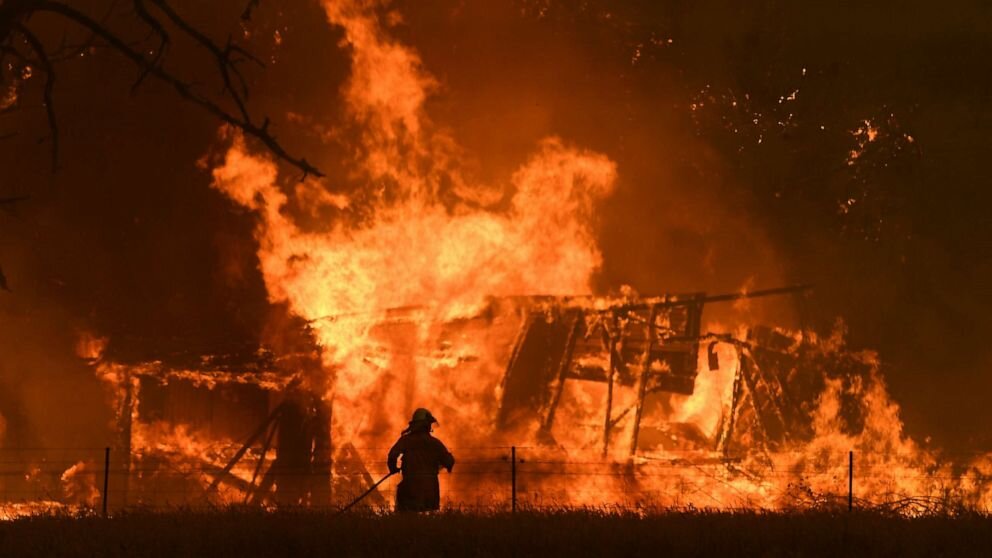
Climate change threatens the next massive die-off, witnessed in every day record breaking temperatures, accelerating violent storms, rising sea levels, droughts, and massive fires.

Meanwhile, we continue to pour heat-trapping gases like carbon dioxide and methane into the atmosphere. All of this affects habitat, destroying the intricate ecological web that sustains us.

It doesn’t make for breaking news headlines, but should, that the Arctic
is warming four times faster than the rest of our planet, threatening the demise of the jet stream, resulting in still more climate instability.

We live our lives addicted to trivia, fingers in our ears, indifferent to the existential challenge that poses our extinction. It seems a human predilection to forfeit the future for indulgence in the ephemeral present. Rome burns while Nero plays his fiddle.

Thus far, efforts to mitigate climate change and restore balance have failed to achieve their targets. We even have a candidate running for the presidency who’s pledged to roll back environmental regulations.

Not to be outdone, we have President Biden’s recent approval of the Willow Project (March 1923), allowing ConocoPhillip’s massive oil drilling rights on Alaska’s North Slope in the National Petroleum Reserve, despite his campaign promise he’d prohibit drilling on public lands (The Willow Project).

We knew where Trump stood, but we trusted Biden, whose administration has also approved the auctioning off of 73 million acres of waters in the Gulf of Mexico to offshore oil and gas drilling interests, encompassing an area twice the size of the Willow Project (Common Dreams).

Universal human-induced loss of forest, wetlands, and ecosystems hastens the trajectory of apocalyptic consequence for future generations.

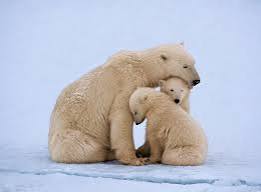
Meanwhile, beleaguered polar bears attempt to adapt, but aren’t succeeding. Given the melting ice, they cannot access their traditional foods, resulting in their numbers declining 30% since 1980 (Polar bear decline).

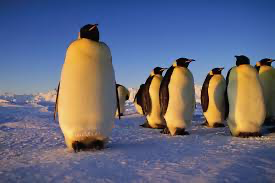
Penguins haven’t fared any better, their numbers declining up to 10% (Penguins declining).

Truth be known, we’re approaching a tipping point at which the ecosystem collapses.

E. O. Wilson rightly faulted humans for earth’s crisis: “Deeming ourselves rulers of the biosphere and its supreme achievement, we believe ourselves entitled to do anything to the rest of life we wish. Here on Earth our name is Power” (Half-Earth: our Planet’s Fight for Life).

Each species is its own miracle. By the century’s end, most of today’s faltering species will be gone:

No birdsong to greet the new day,
No crickets rubbing their wings;
An absence of croaking frogs at the pond,
Zinging dragonflies but memory.
Amid parched landscape, a wounding silence.

–rjoly

Antigua’s Chinese Enclave: What it Means

ANTIGUA: TOURIST PARADISE:

A mere 264 miles from US shores lies the sovereign Caribbean island nation of Antigua and Barbuda, a tourist’s paradise blessed with stable, year round temperatures; several hundred pristine beaches; lush lagoons; and hideaway natural harbors. It has mountains, too, offering scenic views of a vast mangrove forest. 80% of Antigua’s GDP derives from tourism.

But Antigua, like other island nations, faces immense challenges in the maelstrom of climate change: increase in hurricane intensity and frequency, rising sea levels, erosion, salt water intrusion, and ground water depletion.

2017 saw Antigua devastated by Category 5 Irma, destroying 97% of
Barbuda’s infrastructure, rendering it nearly uninhabitable.

Often dubbed “the Switzerland of the Caribbean,” Antigua finds itself lacking the financial resources to sustain its economic viability in the context of climate change and yielded to Chinese overtures: a 2 percent interest loan, with a 5-year moratorium on repayment.

Antigua’s prime minister, Gaston Browne, views China as a friend: “I see China, though, as a country that stands on truth, and a country that, you know, at least has some level of empathy for small states, and generally for poor and dispossessed persons globally” (Newsweek. May 5, 2024).

ENVIRONMENTAL THREATS POSED BY CHINA IN ANTIGUA:

Newsweek’s recent study of leaked documents indicates 1000 acres of forest will be razed to accommodate a Chinese Economic Free Zone juggernaut, ultimately consuming 2000 acres for housing and businesses. It includes an airport, up to seven resorts, a shipping port, and Antigua’s first four lane highway. Construction has begun.

Bearing all the earmarks of a Chinese enclave, the completed project confers independent immigration and customs formalities for the enclave and a license to issue passports. It will not pay income taxes, unlike native Antiguans, sales taxes, or import duties. Anyone investing $400,000 or more will be eligible for Antiguan citizenship

Browne touts his Chinese venture as an investment in the future, creating hundreds of jobs.

Browne sweetens the deal by promising environmentalists a 70 acre mangrove reserve and a 60 acre nursery for growing 100,000 trees.

This hasn’t pacified the island’s environmentalists, however, who contend the free zone transverses the island’s largest marine reserve, under legal protection since 2005, and destroys most of its mangrove forests, a haven for migrating birds.

They point out the area’s “nesting ground for critically endangered sea turtles, the threatened West Indian whistling duck and the Antiguan racer, once dubbed the world’s rarest snake, brought back from the brink of extinction by efforts from local environmentalists” (Newsweek).

Browne angrily brands his critics “ecoterrorists.”

AIR AND WATER POLLUTION:

China has a history of contributing to pollution through industrial production and waste processing. Enforcement of environmental protections is often ignored when it comes to garbage, water, atmospheric, and excrement pollution, undermining economic development and investment.

Opponents insist the Antiguan government adequately address these issues, which could have deleterious effects on soil ecology, agricultural production, and water supply.

Antigua’s first environmental report by the government’s environmental management authority, issued in 1992, proved alarming in terms of pollution, waste disposal, deforestation, and entrepreneurial nonchalance.

As for the accommodation sector, the study noted that the water supply for the bankrupt Grand Royal Hotel was found inadequate, singling out Chinese businesses for dumping.

OVERFISHING AND MARINE ECOSYSTEM DEGRADATION:

Chinese nationals also have a legacy of illegal and unregulated logging of parrotfish in the coral reefs, which are important to the marine environment of Antigua’s Marina Bay. As such, not only are the food chain and the environment in peril as acres of mangroves fall to chainsaws, but its fisheries as well

China’s relentless pursuit of high-quality fish (apex predators in the ocean communities), and the destruction of the ecosystems that consistently produce these creatures, have been implicated as the main culprits in extensive ecosystem degradation when applied at galactic scales to Africa, the American Pacific coast, and now the Eastern Caribbean.

Buying seafood from China, which will be allowed to operate a fish farm, has negative consequences for both the environment and Antiguan fishers. Chinese vessel owners profit greatly from buying or leasing fishing rights from over 60 countries, including Antigua and Barbuda. While this provides a trillion meals per year, it causes damage to the ocean.

HISTORY OF CHINESE CARIBBEAN INVESTMENT:

The major Chinese enterprises in Antigua mainly involve construction, infrastructure, real estate, and hotels. The total value of China’s FDI in the seven countries of the Organization of Eastern Caribbean States (OECS) was estimated at almost 300 million US at the end of 2011. Chinese financing came in the form of concessional loans. In the Eastern Caribbean, it funded the construction of the national stadium, the American University of Antigua, and the Lyndhurst Road Development Project. China has also engaged in a number of technical cooperation projects in capacity building and training and granted subsidies to the Tropical Storm Grant Program.

The bottom line is that China’s growing influence on Antigua’s politics and economy comes at a cost, primarily to the environment and the United States. Air and water pollution in Antigua are predominantly caused by Chinese firms.

The challenges deriving from air pollution and inadequate addressing of such concerns leave open the question of whether a distinction should be made in Antigua between government policies attracting investment contributing to the economy while exacerbating the country’s environmental problems and those policies that mitigate polluting.

Antigua’s economic growth in the last decade has been due to investments and loans from China, which reflect China’s strategic objective in the Caribbean. Smaller island nations have been overly enthusiastic in embracing China’s support since they have been relegated, as well as stigmatized, by powerful global financial institutions in times of crisis. The Chinese have presented their assistance with no condition of policy or regime change, thus undermining the frequent dictates of the Washington Consensus.

China has been exploiting the vulnerability of developing nations. If Beijing can increase its investments in countries that are dependent on tourism and other single export industries, it can anticipate predictable returns. Focusing on countries that rely on imports, not on natural resources, China is now the second largest trading partner with some Caribbean countries.

POTENTIAL FOR ESPIONAGE AND CYBERSECURITY RISK:

Given its proximity to US shores, Antigua obviously has strategic significance.

On August 17th, 2020, former Trump administration Chief of Staff Mick Mulvaney warned that China’s post-crisis economic policy, including investment in impoverished Caribbean nations like Antigua and Barbuda, jeopardizes US security.

Historically, the Monroe Doctrine (1823), was strictly enforced to keep foreign interests from interference in the Americas. Among its provisions, further colonizations in the Americas would be viewed as threatening US interests.

In 1861, France attempted creating an empire in Mexico, encountering protest.

In 1962, Russian missile intrusion in Cuba nearly launched WWIII.

In 1983, President Reagan committed troops to expel Cuban military from pro-Soviet Union Granada.

Will Antigua become an espionage base like Cuba?

While the U.S. military’s Southern Command (SOUTHCOM) has issued concerns about China’s growing presence in Antigua and the Caribbean region, the Biden administration has been silent.

–rj

Dr. Henry Marsh’s And Finally: Matters of Life and Death


Am reading Henry Marsh’s And Finally: Matters of Life and Death. Marsh is a retired brain surgeon, who recently was diagnosed (2021) with advanced prostate cancer, presently in remission, but with a 75% chance of reoccurrence.

His previous books include Do No Harm and Admissions: Life as a Brain Surgeon, both well received. Professionally, he has published 179 papers in peer reviewed journals and performed 50,000 surgeries over a 40-year span.

In his fulsome writing, Marsh reminds me of the late neurosurgeon Oliver Sacks, gifted in eloquence, humble, and unfailingly compassionate.

Perhaps I’m stereotyping, but he’s unlike many in the medical sciences, consumed by professional interests and profit motive, insensitive or ignorant of the arts and, professionally, objectifying their patients rather than seeing them as individuals, each with gradients of need and longing.

One of his cherished accomplishments is the creation of two balcony gardens for neurological patients at St. George’s hospital

Impressively, he’s been working pro bonum with colleagues in Ukraine since 1992. Neither cancer nor the Russian 2022 invasion of Ukraine has deterred the good doctor visiting the country regularly to consult and advise colleagues.

At home, Marsh is an assisted dying activist.

Of his previous Do No Harm, now translated into 37 languages, The Economist wrote that it’s “so elegantly written it is little wonder some say that in Mr Marsh neurosurgery has found its Boswell.”

Marsh reads widely, owns several thousand books, keeps a garden, raises bees, and enjoys woodcrafting.

I’m early in my reading of And Finally, so I’ll delay full commentary for another post when fully read. But let me share a passage I read this morning that amplifies Marsh’s writing talent infused with observation and an affinity for nature, under assault by climate change:

The {COVID} lockdown coincided with perfect spring weather – so fine, prolonged and warm that it spoke of climate change. The bushes in the little paradise of my back garden almost all burst into flower all at once, and the trees went from being bare winter skeletons to towers of spreading green leaves in a matter of days. The bees came rushing out of their hive in front of my workshop and shot up into the sunlight, rejoicing in vertical zigzags. And the lockdown brought complete peace and quiet. The air felt as fresh as if you were in the countryside and the sky was a clear and deep blue. The only sounds were of birds singing, children playing and the wind in the trees. And at night, at first there was a full moon, looking down kindly on the suddenly silent city, and you could see the stars. It was a vision of heaven, here in London, SW19. Time had stopped. Eternity is not the infinite prolongation of time but instead its abolition.

The silence and clear air, and the return of birdsong, reminded us of what we have already lost with cars, pollution and the changing climate, and the unnaturally fine weather told us that Nature is out of joint, and that there is much, much worse to come.

I feel it in my bones. This is going to be a great read.

—rj


We Are Losing Earth on Our Watch: The Unfolding Crisis of a Warming Planet


I wanted to walk my two miles this morning, but stepping outside, blasted by the double whammy of humidity and a temperature already at 83 F and rising fast, I thought better of it.

It’s like this virtually everywhere these days. Our children, vacationing in Palm Desert, CA, relayed it reached 118 F there yesterday.

2016 was the hottest year on record. This year is likely to be hotter still.

Some suffer grievously. There’s Phoenix, AZ, with its 27 straight days of 110 F plus temperatures, its denizens reliant on air conditioning to get them through. I ponder the city’s fate were the electric grid to give way. Fifteen percent of Phoenix’s population lives in poverty, many on the streets, exacerbating the heat’s impact. Last year’s heat waves killed 425 residents of Maricopa County, 56 percent of them homeless.

Duluth, MN, looks better everyday. It doesn’t surprise me that a growing number of families, sensing what’s likely to get a lot worse, are moving to this Lake Superior city known for its cool days even as the Twin Cities, to the South, bake. North Dakota, anyone?

Along with record-breaking heat, come the inevitable forest fires. Everyone’s holding their breath in California, despite its recent heavy downpours and filling of depleted reservoirs, as soaring temperatures eclipse records.

Canada has fared badly, many fires still burning as plumes of toxic fumes drift southward to the US. 4200 fires, a record number, have occurred this year in Canada.

You’ve heard about the raging heat and accompanying fires in Italy, Greece, Algeria, and Crete fueled by spiraling heat waves, with many killed, thousands displaced, livelihoods gone, and animal habitats decimated.

It’s so much worse among developing countries, climate change not only bringing higher temperatures, but change in rainfall patterns, resulting in widespread famine and malnutrition as crops wilt in parched fields and cattle perish for lack of feed and water. This is especially true of Africa’s Central Sahel (Burkina Faso, Mali, and Niger), where temperatures are rising 1.5 faster than in the rest of the world. Privileged Western nations in their addiction to fossil fuels bear heavy responsibility for their plight. Unless we mend our ways, their desperation may be tomorrow’s world for our children, our spiraling heat waves and droughts the preface of things to come.


All of this isn’t unanticipated, as our sophisticated attribution science has consistently confirmed the likelihood of a warming world. It’s just that it’s happening sooner and with greater intensity than projected.

But let’s not simply blame this year’s El Niño, which does make for hotter weather. We humans have been engaged in a reckless plundering of our planet’s resources since the beginning of the industrial revolution in the late 18th century, accompanied by increasing reliance on fossil fuels, the consequence that we’re now 1.2 C warmer than in pre-industrial times.

75 percent of global greenhouse gases and 90 percent of carbon dioxide emissions come from burning fossil fuels. They trap heat and with their exponential increase now pose humanity’s greatest challenge in their dire consequences for life on earth.

Under the 2015, Paris Agreement, we’ve pledged a concerted effort to hold at 1.5 C.

That’s unlikely. The World Meteorological Organization (WMO) forecasts its breach as early as 2027, despite climatologists’ warning that any rise above that level would unleash irreversible catastrophic consequences.

Meanwhile, the fossil industry yesterday released its 2022 earnings report, announcing $200b in profits, surely an obscenity, given their primary contribution to the existential crisis that confronts us.

Shell says it will issue $3b to stock investors over the next three years through stock buybacks.

ExxonMobil, BP, and Shell not only boasted record profits, but gleefully announced they’ll be rolling back earlier plans to invest in low emissions ventures. It’s follow-the-money.

Concurrently, GOP congressional members lie-in-wait to ambush existing climate change mitigation efforts, should Trump—God help us—be reelected.

It’s urgent that Biden declare a climate emergency, joining the UK, New Zealand, and Japan. There’s much we could do under such a declaration to halt the fossil industry tycoons who prioritize profit over the welfare of the human community and our beleaguered earth, but don’t bet on it.

Unfortunately, he’s initiated policies contrary to his campaign pledge to fight fossil fuel emissions, pushing new pipelines, lifting taxes on gasoline and half-emptying the Strategic Petroleum Reserve to cushion consumers at the pump, removed sanctions on American involvement in Venezuelan oil, obsequiously begged the Saudis to increase oil production, opened northern Alaska wilderness to massive oil drilling, sold oil and gas leases in the Gulf of Mexico. All of this from a candidate pursuing the presidency, pledging to young people, “no more drilling on federal lands, period, period!”

Climate expert Peter Kalmus sums up our dilemma bluntly: “Mark my words: it’s all still just getting started. So long as we burn fossil fuels, far, far worse is on the way; and I take zero satisfaction in knowing that this will be proven right, too, with a certainty as non-negotiable and merciless as the physics behind fossil-fueled global heating. Instead, I only feel fury at those in power, and bottomless grief for all that I love. We are losing Earth on our watch. The Amazon rainforest may already be past its tipping point. Coral reefs as we know them will be gone from our planet by mid-century, and possibly much earlier given this surge in sea-surface temperatures. These are cosmic losses. And as a father, I grieve for my children.”

And I, along with many of you, grieve with him.

—rj

Heroes do Exist: Environment Champion, Bob Brown

Australian Bob Brown is a humble man who’s accomplished extraordinary things, not for himself, but for his fellow earthlings. His goodness makes the heart glad, inspires, and assures: that each of us, where we are, doing what we’re able, can foster needed change.

Brown had been a physician for twelve years, moving from the Sydney area to Tasmania out of love for wilderness. There, he would become active in the state’s environmental movement, subsequently founding The Wilderness Society and serving as its director for five years, a commitment leading to his giving up his medical practice.

Such dedication characterizes Brown, unstinting in his endeavors to promote a global democracy and green economy, single payer healthcare, human rights, and environmental welfare.

In 1982-3, The Wilderness Society helped organize resistance to the construction of a hydroelectric dam on the Franklin River in a large area of wilderness. 1500 showed up to blockade bulldozers. 600 were arrested, including Brown. He would spend nineteen days in prison. The good part: the day after his release, he was elected into Tasmania’s parliament.

Parliament, however, proved an unfriendly place, with only two other members voting to halt dam construction, despite 20,000 protestors on the streets of Hobart, the capital. In 1983, the issue moved to the Australian High Court, which ruled to halt the construction in a 4-3 vote.

Today, the wild river area attracts 200,000 visitors annually and has created thousands of jobs. The assertive protest efforts confirmed Brown’s belief that small, individual efforts at reform aren’t sufficient. Mass, collective protest is necessary to ward off powerful pecuniary interests.

In 1986, Brown was shot at and assaulted for protesting logging at Tasmania’s Farm House Creek.

In 1995, he was imprisoned twice for protesting logging in Tasmania’s Tarkine Wilderness.

In 2006, as a member of Tasmania’s Parliament, he initiated legal action to protect Tasmania’s Wielangta forest.

Additionally, he has authored bills advocating Death with Dignity, a nuclear free Tasmania, gay law reform, and lowering parliamentary salaries.

With the help of fellow Green members of Parliament (he was one of the Australia Green Party founders), the size of Tasmania’s Wilderness World Heritage Area has doubled to 1.4 million hectares.

In 2011, as the elected leader of the Greens, first in the world legislation was passed, mandating the reduction of greenhouse gas emission and the adoption of renewable energy resources.

In June 2912, Brown resigned from the Senate to found the Bob Brown Organization, a non-profit fund to assist Australian environmental campaigns and activists (bobbrown.org.au).

Now approaching 79, Brown is sanguine about his mortality: “I am an optimist. I’m also an opsimath. I learn as I get older. And I have never been happier in my life. Hurtling to death, I am alive and loving being Green.”

May Brown’s successful efforts kindle a fire in all of us to vehemently contest, whenever and wherever, those egocentric forces of greed that impede social equity, poverty’s elimination, a peaceful earth, and an abiding wilderness in which species achieve their destiny.

–rj

Wade Davis Defends the Indigenous

b1ca14e2-5ab5-4999-8ed8-4226ad6b373b

I’m a big fan of history, authentic history that’s unshackled from bias. I like knowing what really happened, when and how, and the lessons we can draw from history, lest we repeat its follies. Sometimes, though, history is like lining up for my morning cod liver oil as a child, good for me, but awful tasting stuff I want desperately to spit out, especially when learning of our continuing abuse of indigenous people, not only in America, but worldwide.

In North America, where I live, our crimes against native peoples comprise an unparalleled holocaust even by WWII’s blood-curdling horror show of 10 million Jews, Slavs, and Roma slaughtered in Nazi death camps. It began even before the notorious Indian Removal Act (1830), ordering Indians east of the Mississippi to move westward. Jefferson’s Declaration of Independence decries the Indians as “savages.”

Just how many indigenous people lived in North America, not including Mexico and Central America, prior to 1492, is a calculated estimate at best. The consensus, however, led by scholars Russell Thornton and David Stannard, poses a reasonable estimate of 7 million, with 75 million in the Western Hemisphere at large (see Russell Thornton, American Indian Holocaust and Survival: A Population History since 1492, Norman: University of Oklahoma Press, 1987; David E. Stannard, American Holocaust: The Conquest of the New World, (New York: Oxford University Press, 1992). 

Thornton thinks that of some 5 million indigenous peoples within today’s continental United States, the vast majority were decimated by disease, starvation, forced labor, relocation, alcoholism, declining birthrates, and genocide. By 1900, that number had dwindled to 250,000. Of the 75 million indigenous in the Western Hemisphere, an estimated 70 million have perished consequent with European colonization since 1492.

Anthropologist explorer and advocate of indigenous interests, Wade Davis, wrote a definitive account of their plight, worldwide, in his 2001 book, Light at the Edge of the World: a Journey Through the Realm of Vanishing Cultures. It navigates, in particular, the pressures of modern civilization on ancient ways of life, harboring unique wisdom acquired over thousands of years of living in close contact with the natural world.

Wade explores several cultures, among them, Borneo’s Penan, northern Kenya’s pastoral nomads, and, tragically, the fate of Tibet and the coerced extinction of an ancient way of life. His book concludes with a model of hope in Canada’s designated vast homeland for the Inuit, Nunavut.

Passionate and eloquent, Wade delivers a salient polemic for doing everything we can to preserve these ancient cultures with their unique ways of imagining the human experience.

In our ethnocentrism, we may dismiss these cultures devoid of modern amenities as anachronisms, their loss of no consequence, perhaps even desirable: cessation of inter-tribal violence, improved health, social equity, education and employment options, etc.

Wade argues persuasively that when these unique societies fade, their former constituents most frequently find themselves adrift, subject to discrimination and poverty. He gives many examples such as the sad aftermath of the 1956 evangelical missionary intrusion of the Waorani, or Auca, habitat in remote Ecuador, its culture vanquished and displaced tribespeople reduced to menial labor in a modern landscape.

Space is crucial in positing who we are. When lost or compromised, we become adrift, flotsam in a larger current, severed from what conferred identity. This has also been the fate of Native Americans at large.

Spatial encroachment seems everywhere now, accelerated by corporate interests, technology, and human indifference. 98.9% of historical indigenous lands in North America have been lost since 1492 (environment.yale.edu). It continues unabated worldwide: Central America, the Amazon forest, Africa, where logging, mining, dam construction, oil drilling, pipe line installation and agribusiness, the foremost instigator, exact their toll upon historically indigenous land.

An estimated 370 million indigenous live in 90 countries and are notoriously abused. They exist as 5,000 distinct peoples, speaking 4,000 languages. 70% percent of the indigenous live in Asia.

Did you know that indigenous life expectancy is 20 years less than the rest of us? Or that comprising five percent of the world’s population, they’re 15% of the world’s impoverished?

We do a lot of talking about climate change, but how many of us realize the environment’s greatest defenders are the indigenous?

Occupying 25% of the world’s surface, they are guardians of “80% of its remaining biodiversity and 40 per cent of all terrestrial protected areas and ecologically intact landscapes” (Amnesty International).

20% of the world’s tropical carbon forest is stored in indigenous lands: the Amazon, Central America, Indonesia, the Democratic Republic of Congo (worldbank.org).

What’s more, their demise poses a visceral loss to all of us in the forfeiture of a unique diversity, reducing the world to a “monochromatic world of monotony,” Wade writes.

Tragically, in the last fifty years we have witnessed not only the loss of 1 million species of inestimable value to the biosphere upon which our existence depends, but the uniqueness and wisdom of cultures from which we can learn much to ameliorate our own. The parallel fate of these cultures, despite the UN’s passage of the Indigenous Bill of Rights, poses one of the urgent issues of our time.

Worldwide, some 300 million people, roughly 5 per cent of the global population, still retain a strong identity as members of an indigenous culture, rooted in history and language, attached by myth an memory to a particular place on the planet. Though their populations are small, these cultures account for 60 per cent of the world’s languages and collectively represent over half of the intellectual legacy of humanity. Yet, increasingly, their voices are being silenced, their unique visions of life itself lost in a whirlwind of change and conflict.

Wade argues that the loss of language diversity, in particular, underscores the accelerating demise of ethnosphere diversity through loss of habitat, acculturation and assimilation:

Of the more than two thousand languages in New Guinea, five hundred are each spoken by fewer than five hundred people. Of the 175 Native languages still alive in the United States, 55 are spoken by fewer than ten individuals.

….each language is, in itself, an entire ecosystem of ideas. and intuitions, a watershed of thought, an old-growth forest of the mind. Each is a window into a world, a monument to the culture that gave it birth, and whose spirit it expresses.

I’m very receptive to Wade. I’ve long been a student of culture. Wade’s book continues that interest and I recommend it, and all his books, as a collective, informed defense of the right of indigenous communities to a way of life, often superior to our own; the interplay of gathered insight through intimacy with Nature in its many vicissitudes.

I believe strongly in the gifts diversity confers, every culture a contributing chapter in the human narrative. Any diminishment of the ethnosphere consequent with cultural leveling alarms me. I believe it constitutes cultural genocide, whether by intent or omission.

Climate change is today’s most ardent threat to indigenous peoples, their ecosystems, upon which they depend for subsistence, vanishing rapidly as increasing temperatures; a greater suspectability to illness via vector borne and water borne diseases; drought; forest fires; and desertification exponentially occur.

In Northern climes, the Inuit, for example, are now facing a potential hunger crisis consequent with melting glaciers, rising seas, and diminished wildlife; on tropical islands, storms of increasing velocity occurrence and rising seas menace as never before.

The UN High Commissioner for Refugees informs us that there presently exist 37 million climate refugees, a disproportionate 15% of whom are indigenous peoples.

I find this an unfolding tragedy. Indigenous tribes have been stalwart stewards of the biosphere from whom we can learn, but conversely set upon by agriculture expansion, logging, and mining interests. Activists have been murdered, most recently, journalist Dom Philips and indigenous advocate, Bruno Pereira in Brazil. Pereira had been investigating criminal activity within the Amazonian indigenous reserve of the Javari Valley. Philips was there to document.

In 2020, Frontline Defenders reported that at least 331 human rights activists, mostly in Central and South America were murdered, 69% of whom were defending indigenous lands. Between 2017 and 2020, 25% of those murdered were indigenous, who comprise only 5% of the world’s population. In 2021, a known 33 indigenous people were killed.

As I write, photos of many of indigenous victims lie before me, a good number of them women along with their children. I can give you country by country analysis of the continuing bloodbath, with governments such as Brazil’s Bolsonaro indifferent to the crisis and the perpetrators remaining free.

Unfortunately, the indigenous often live in areas most vulnerable to climate change: the Arctic’s Inuit, Scandinavia’s Swami, the Amazon’s Yanomami, for example. Thus, their ardent defense of their diminishing environment made worse by exploiters.

Their demise poses an incalculable loss for all of us. Wade, with his typical acuity, summarizes its meaning well:

The ultimate tragedy is not that archaic societies are disappearing but rather that vibrant, dynamic, living cultures and languages are being forced out of existence. At risk is a vast archive of knowledge and expertise, a catalogue of the imagination, an oral and written literature composed of the memories of countless elders and healers, warriors, farmers, fishermen, midwives, poets and saints. In short, the artistic, intellectual and spiritual expression of the full complexity and diversity of the human experience.

Indigenous People’s Day will be observed October 10, 2022 in the U.S. in 26 states as part of a growing movement to replace the traditional Columbus Day.  For me, it’s everyday I remember them, Earth’s guardians, beleaguered and increasingly vanishing along with their sacred habitat. They need your help.

—rj

One Mistake at a Time: Our War on Nature

The  only biodiversity we’re going to have left is Coke versus Pepsi. We’re landscaping the whole world one stupid mistake at a time. —Chuck Palahnuk, Lullaby

The year is 2060. You are gone, but your grandchild reads to her children from a book filled with drawings of creatures once abundant and a source of wonder, now the stuff of children’s story books, only not of some fearsome Tyrannosaurus Rex, Megalodon, or Woolly Mammoth, but of elephants, giraffes, lions, tigers, rhinos, whales and monarch butterflies, now vanquished, never to grace our earth again.

Distressingly, largely due to the exponential increase in the human footprint, this is our grandchildren’s bleak future. No more condors, manatees; no more of our closest relatives, chimpanzees, orangutans, and mountain gorillas, natural selection’s vast repertoire of unique, splendid entities reaching back several million years, thoughtlessly extinguished by Homo sapiens.

Apart from the scientific community, the public appears largely unaware, perhaps even indifferent, to this unprecedented threat to species loss and the risks it imposes for its own welfare. This extends to climate change, largely human induced. A current PEW poll reveals only 41% of Americans regard it as a priority issue.

As to how many species exist, whether flora or fauna, we don’t really know. New species are continually being discovered, while others have recently become extinct or face extinction. What we do know is that many species have gone extinct even before their discovery. An estimated million others are likely to go extinct in the next several decades.

This leaves us in a quandary: do we attempt to preserve existing species for future generations or do we simply resort to preserving those serving immediate human interests? Unfortunately, our present trending indicates the latter with species everywhere in free fall.

A useful acronym for the specifics governing this decline is HIPPO: habitat loss, invasive species, pollution, population growth, over exploitation:

Habitat: Three quarters of the earth’s terrestrial environment has been altered by human activity; 66% of the marine environment.

Invasive species: Since 1970, invasive, alien species have increased 70% across 21 countries.

Pollution: 300-400 million tons of heavy metals, solvents, toxic sludge among other wastes from industrial facilities have been dumped into the world’s waters.

Population growth: The world’s population averaged an annual 1.7 increase between 1950 (2.5 billion) and 2010 (6.9 billion). In 2022, world population has reached 7. 6 billion. (Pew Research). While the growth rate has generally been plummeting, not so in Africa, averaging an annual 2.54 increase. By 2050, Nigeria will overtake the U.S. in population (The Economist); 800 million by 2300 (qz.com).

Over-exploitation: In 1930, an estimated 10 million elephants roamed Africa. Currently, that number has dwindled to 416,000, largely due to poaching and conflict (World Wildlife Federation). On the high seas, factory ships are removing fish faster than they can be replenished. Japan continues to hunt whales. Sharks are killed in the thousands for their fins (fin soup a Chinese delicacy), their carcasses thrown into the sea. Chimpanzees, our closest relatives, hunted for meat and increasingly suffering habitat loss, are now a threatened species.

Climate change needs to be added, giving us HIPPCO. It ranks second to habitat loss in imperiling biodiversity. Largely due to climate change, we are losing our polar bears, just 31,000 remaining; coral reefs with their independent ecosystem, nourishing myriad aquatic life, are dying as the sea warms and storm intensity and frequency increase. The speed of heat increase due to reliance on fossil fuels over the last 100 years now exceeds that of the previous 10,000 years.

Extinction isn’t new to earth’s history. Geologists have noted five principal occurrences, the most famous that of 65 million years ago, when a 12 kilometer wide asteroid crashed into the Yucatan, leaving a crater 10 kilometers deep and 180 kilometers wide, killing 70% of the earth species, including the dinosaurs, ending the Mesozoic Era, or Age of Reptiles, and ushering in the Cenozoic Era and the rise of mammals after 10 million years of evolution.

Humans came late on the scene. In the 1980s, aquatic biologist Eugene Stoermer coined the term Anthropocene to depict a new epoch, human dominated. In this epoch, the Earth faces a new menace, wrought not by an asteroid, but by Man. The massive extinction of this human-centered epoch has been popularized as the Sixth Extinction.

The fundamental source of our dilemma is our disconnect from nature. We have fostered Nature as something apart from ourselves. It exists, but it’s outside ourselves, an entity to be exploited for human needs.

The truth is we exist as constituents of a vast biosphere complex of interrelated life forms dependent on one another for well-being. Remove an element of this web and you potentially unleash a house of cards scenario of collapse.

Take, for example, the chestnut tree dominating the forests of Eastern North America before European settlement. Tall, fast growing, numbering an estimated four billion, their canopy housed millions of birds and their nuts provided food for many birds, insects and mammals. Then came the Asian pathogen fungus Cryphonectria parasitica of the early 20th century. With the loss of these magnificent trees came the demise of caterpillars metamorphosing into moth pollinators, along with the plunge into oblivion of the once prodigious passenger pigeon.

116D5F72-3B99-4C13-B7D8-FA23C1DD77E8

In our earth’s nearly 4 billion year history, we estimate that of the 4 billion species evolved by nature, 99% are extinct. But such extinctions resulted from natural antecedents apart from human causation. Increasingly, Man has become the arbiter of species decline, not evolution or cyclic climate change, or asteroid collision. In the last 500 years, 900 species have gone extinct and the pace quickens.

Currently, 35,000 species face extinction risk, according to the International Union for Conservation of Nature’s Red List of Threatened Species:

Among these, 1 in 7 bird species.

A quarter of the world’s mammals

40% of amphibians

34% of conifers

37% of sharks and rays

21% of reptiles

33% of reef corals

It gets worse than that. The latest UN IPBES Global Assessment report (2019) forecasts more than a million species are likely to go extinct in coming decades.

The biosphere, which includes ourselves, is Nature’s survival gift, complex and delicate, requiring balance of its constituents.  Safe-guarding it is crucial and its benefits not to be taken for granted. Healthy Plants convert the sun’s energy, making it available for other life forms. Bacteria and other living organisms convert organic matter into nutrients enriching the soil. Pollinators are essential to food production. Plants and oceans act as major carbon sinks.  Did you know that of the 50,000 known medicinal plants, up to a fifth face extinction from deforestation? Or that approximately 120 drugs derived from rainforest plants are used to treat cancer, leukaemia malaria, heart diseases, bronchitis, rheumatism, diabetes, arthritis or tuberculosis? 

As the late eminent biologist E. O. Wilson pleads in his compelling Half Earth,

The biosphere does not belong to us; we belong to it. The organisms that surround us in such beautiful profusion are the product of 3.8 billion years of evolution by natural selection. We are one of its present-day products, having arrived as a fortunate species of Old World primates. And it happened only a geological eyeblink ago. Our physiology and our minds are adapted for life in the biosphere, which we have only begun to understand. We are now able to protect the rest of life, but instead we remain recklessly prone to destroy and replace a large part of it.

Our Earth has taken ill and we are its cause. Paradoxically, we must be its healer.

—rj


Everything’s on Fire: Devastation in Argentina’s Paraná River Delta

We’ve been hearing a lot about recent fires rampaging California, the “new normal” as they now call it. But the new normal is actually worldwide.

Just now, only because I read in Spanish daily, did I become aware of the widespread fires sweeping vast areas in South America that dwarf what’s been happening in California.

While most of you know about the Amazon fires in Brazil, I’ll venture only a few of you know about the vast Paraná delta wetlands of Argentina. In fact, I hadn’t previously heard of the Paraná, South America’s second longest river after the Amazon and eighth longest in the world.

As I write, multiple fires that began seven months ago continue to ravage this eco-sensitive marshland landscape, home to unique plant and animal life, with the smoke so intense it threatens the health of population centers like Rosario and Buenas Aires

Sadly, farmers and ranchers in the river’s Brazil basin have contributed to the fire menace and made things worse, lighting fires to clear land.

In Argentina, ganaderos, or ranchers, follow their example, annually igniting fires to regenerate grazing land and, so far, there isn’t any law to stop them in this country of heavy meat consumption and export.

Some have speculated arson by real estate speculators may be a contributory cause for this year’s fires. The land can be sold for real estate once the trees are gone. Two men have been charged with arson so far.

When rain does comes, it’s only in brief showers unable to penetrate the hardened, parched earth. While Environment Minister Juan Cabandié has openly accused ranchers of causing the fires, they deny it, arguing it isn’t in their interest and blaming the government for neglect instead.

As is, some 11,000 fires detected this year have razed an estimated 540 square kilometers of marshland, or three times the size of Buenas Aires.

Concurrently, the Argentine government is sponsoring a wetlands protection bill to protect the delta, but it must be approved by the Congress. As is, it lacks teeth. It doesn’t prohibit ranchers and farmers from their yearly ritual of burning grazing land.

Long term weather projections show little rain likely to occur. Meanwhile, some 750 unique animal species of the delta, already diminished by both climate change and humans, face imminent extinction.

–rj