On Reading Rebecca Mead’s My Life in Middlemarch

rebecca-mead-my-life-in-middlemarchAll of us have a favorite book we wouldn’t mind reading again. For me, it’s David Copperfield, simply because I identify with much of what happens in it. The same holds true for Rebecca Mead in her bibliomemoir, My Life in Middlemarch, which explores Eliot’s masterpiece as a personal game changer.

I’ve always liked Eliot immensely as well (see Brimmings, 8/17/16), especially for her bottom line, “the truth of fellow feeling,” as she aptly phrased it in Adam Bede. As Eliot put it later,  “The only effect I ardently long to produce by my writings, is that those who read them should be better able to imagine and to feel the pains and the joys of those who differ from themselves in everything but the broad fact of being struggling erring human creatures.”

She had been raised in a fiercely Calvinist home, sharing its piety, until she began reading German “higher criticism,” which read the Bible as a human rather than divine construct. Rejecting Christian theology, she retained its ethic core of human sympathy, or what today we term empathy, i.e., the putting of yourself in another’s shoes.

Put into practice, we’d wake to a better world.

Although I had read Middlemarch way back in grad school and made Eliot a centerpiece in my later teaching of Victorian lit classes, the years had taken their toll, so I wanted to pursue Eliot’s classic again as backdrop for Mead’s book, and I’m glad I did.

Mead skillfully assembles the nuances of both Middlemarch and Eliot’s life that have resonated for her over the years, underscored through subsequent re-reads; for example, Eliot’s rural upbringing, her several loves until finding in her middle years a sustaining relationship with a fellow writer, her delineation of love’s growth and the empowerment of women—or lack thereof.

But some readers may think Mead lapses into narcissism, reading herself into Middlemarch. Mead devotes, for example, considerable space to Eliot and her companion, George Lewes and his three children, drawing a parallel to her own commitment to a man with three children: “…a few years later [following a failed relationship] I met a man who had three sons, not very different in age than were the Lewes boys when George Eliot met George Lewes.”

At another juncture, she reflects at length on Eliot’s maternal relationship with her stepson “Thornie,” and her own role as a step-mother.

She later notes that Eliot and Lewes lived, though briefly, in her Dorset town of Radipole, now incorporated into Weymouth.

Eliot prefaced each of her many chapters with an epigrammatic quotation. Mead extrapolates several of these for her own chapter headings, rendering them congruous with events and discoveries in her personal life.

Ironically, Eliot had written an early article for the Westminster Review decrying readers who overly identify with a character, as Mead acknowledges.

In her defense, while the analogies do pile-up, it’s a minus only if we leave things there. It’s not the analogies, but their lessons that matter. Besides, we’ve all come across books delivering a right uppercut that staggers us into questioning our assumptions and grants us new vistas and resulting options.

Some books not only make us wise, but better people for having spent time in their company.  If we lose ourselves in such books, might we not also find ourselves there as well?  Thus, I fully enter into her meaning when she writes that “there are books that seem to comprehend us just as much as we understand them, or even more. There are books that grow with the reader, as the reader grows, like a graft to a tree.”

If Mead strays, it may be she admires Eliot to excess, sometimes appearing defensive when finding Eliot in real life not quite the paragon of moral virtue given off in her novels. She could sometimes prove harsh, if not cruel, in her patronizing and judgmental strictures. So George Eliot was no St. Teresa of Avila. I rejoice!

Perhaps what Mead appreciates most in Middlemarch is Eliot’s psychological acuity as the first novelist to dwell on the interior life of her characters, fraught with tensions delivering them from stereotype. Governed by every human emotion and vicissitude of mood, affected by both choice and chance, they become ourselves and enter into our experience. Mead quotes D. H. Lawrence pioneer observation, “It was she who started putting all the action inside.”

As a former international correspondent and, currently, a staff writer for the New Yorker, the ability to discern the unspoken when interviewing would obviously appeal to Mead:
“…being a journalist for all these years had taught me a few things: how to ask questions, how to use my eyes, how to investigate a subject, how to look at something familiar from an unfamiliar angle.”

It may seem incredulous, but in deftly applying these skills it’s as though Mead just pulled off a live interview with her subject, intuited the unspoken, enabling both biography and memoir; thus my earlier term, bibliomemoir, or a book about a life of reading.

I think of other salient bibliomemoirs, notably Phyllis Rose’s A Year of Reading Proust: A Memoir in Real Time and William Deresciewicz’s A Jane Austen Education: How Six Novels Taught Me About Love, Friendship and the Things That Really Matter. There is also Helen Macdonald’s Hawk, winner of the Samuel Johnson Prize, that I recently read and esteem greatly. Reading My Life in Middlemarch has opened up a new portal of discovery for me via this sub-genre.

In many ways, Middlemarch’s supreme ambience is one of melancholy in its depiction of the changing fortunes of its principal characters as they experience the dissonance between desire and result; and yet the novel rebounds with achieved happiness for several of its characters, including its heroine, Dorothea, whose initial disillusionment yields to a discerning maturation.

As Mead observes in quoting Eliot, “We cannot give the young our experience. They will not take it. There must be the actual friction of life, the individual contact with sorrow, to discipline the character.”

Paradoxically, however, Eliot does a whole lot of that in her thumping moral asides, awkwardly delivered in convoluted prose, throughout her novels. Jane Austen. on the other hand, succeeded without the editorializing often repugnant to contemporary readers.

In reading Middlemarch again, I remembered my own lugubrious involvement with a chosen author–in my case, James Joyce–the tracing of a life, traveling, papers, interviews, contact with manuscripts and, yes, myriad readings of authorities on one’s subject.

Mead proves scrupulous and unsparing, eloquent and moving, in exploring authorial events possibly shaping the novel’s characters, commanding a prose that often approximates poetry. That said, In her scholarship, she owes a considerable debt, among others, to Rosemary Ashton’s 142 Strand: A Radical Address in Victorian London.

If you read Middlemarch, whether for the first time or anew, I highly recommend you try out Mead’s testament of affection as a sequel to this greatest of Victorian novels.
I did, and for all my reading of Middlemarch and study of George Eliot over the years, Mead made me wiser and more sensitive to Eliot’s resonance in my own life and for
our own time.

–rj
Before Surgery Reading: Herriot’s All Creatures Great and Small

I’ve always loved animals. I can’t say where it comes from, but maybe it’s in the genes. Both my nieces exhibit the same trait. Currently, I’ve been reading James Herriot’s All Creatures Great and Small. If you’re old enough, you may have seen the BBC rendition back in the late 70s and into the 80s, ninety episodes in all. It’s good reading for me, given the sciatica pain that’s turned me into virtually an invalid replete with cane these past five weeks. Now comes surgery at dawn tomorrow.

Herriot’s work is much more about human eccentricity than animals and delivers dependable relief beyond medication to me in its rich mix of humor and humility garnered from thirty years as a 24/7 veterinary surgeon in the hollows of England’s remote Yorkshire country, regionally fictionalized, like Hardy and Faulkner, as Darrowby.

I had missed out on the BBC series, but came upon Herriot’s work providentially with a chance to download his works in one sweet bundle at just $2.99.

By the way, James Herriot is a pseudonym for James Wight (1916-1995). A devoted fan of soccer, he took the name from a soccer goalie named Jim Herriot.  At the time, tooting  your own horn in professions like law and medicine was considered bad form.

I hadn’t realized Wight was a prolific writer of animal stories for children as well, although a good many of his adult stories can be read that way.

I love the outdoors and sorely miss being out in my garden, hoe or weedeater in hand, accompanied by the fellowship of fauna and flora busy in their pursuit of life. Herriot reminds me of my lost bliss and kindles my enthusiasm to get it back.

I’ve found no one commenting on Herriot’s keen writing skills and the focused observations he brings to his narratives, earmarking him as one our better nature writers. Take this passage, for example, describing the artistry of a night wind in shaping morning’s wintry landscape:

But as always, even in my disappointment, I looked with wonder at the shapes the wind had sculpted in the night; the flowing folds of the most perfect smoothness tapering to the finest of points, deep hollows with knife-edged rims, soaring cliffs with overhanging margins almost transparent in their delicacy.

Busy in his profession, we’re fortunate Herriot got down to writing at all, beginning at age 50 and, initially, not garnering any attention until we Americans put him on the map.

I wish I could have met the man, first rate not only as a writer but, more importantly, as a sensitive man of science endowed with empathy for all creatures great and small.

–rj

On finding a new booklist quarry

Aaron Hicklin
Aaron Hicklin

I confess I’m addicted to booklists. No sooner do I finish one book, but I’m into another.

What surprises me is that I can’t remember anyone in my family serving as a role model when I was a child, either reading to me or picking-up a book for themselves, with the exception of the late intervention of my eldest brother, David, recently discharged from the army after WWII and anticipating college under the newly inaugurated GI Bill.

One night before David left for the University of Miami, he gave me my first book, Huckleberry Finn. I still remember the occasion–eight years old, sprawled out on the floor of our Philly tenement, absorbed so fully in this really good book that it muffled the adjacent Front Street el with its interminable trains, dutifully groaning past our rattling windows every fifteen minutes.

Soon I discovered the Montgomery County Library. I didn’t mind walking the two miles, knowing what lay up ahead. It was  one of those supreme pleasures like feasting on a well-stacked hoagie or downing a cold strawberry ice cream soda on humid summer Philly nights; maybe I even liked it as much as playing stick ball every day against the factory facades lining our streets.

Books gave me refuge in a home torn apart by alcohol. I became aware of a larger world, where good really did exist, and people could be kind and often courageous. I found heroes like Lincoln, Gandhi, and Gehrig that would become staples in my life.  Books transported me to far away places—Australia, New Zealand, the South Pacific.

Nearly as important as the library was a humble bookstore on Girard Avenue that I often passed on my way home from Chandler Elementary, filled with used paperbacks. What got my attention were two cardboard boxes piled high with comic books. I gravitated to the one filled with Classic Comics with their graphic renditions and abridged texts of literary fare.  The price, five cents, sealed the bargain!  I’d “picture” my way through, say, Les Miserables or Treasure Island, then pick-up the hardback version at the library. By the time I was 13, I had read many of the classics, including War and Peace, Moby Dick, and Silas Marner.

As for the many booklists I’ve ransacked through the years to feed my addiction, I’ll just say my favorite has been Brain Pickings, whose cerebral fiber fences it off from the traffic lane of your typical booklist..

For the most part, I shun the New York Times best seller lists, annoyed by their often fad offerings of dubious value other than to entertain or tell how you, too, can cash in and grow healthy, wealthy and wise.  A few weeks later, I’d find these books either gone awol or sunk to near oblivion.

Before the Internet opened up our information corridors, I’d reminisce earlier times venturing into a library, losing myself in its stacks, often looking for one book, but emerging with another. Call it serendipity, but the chance encounters I’ve had with library books have often proved fortuitous with surprising consequences.

Take, for instance, one chance venture when I pulled a book off the shelf by an author I’d never heard of. Lucky draw, it turned out to be Thomas Wolfe and his Look Homeward Angel. I was 17 at the time, a homesick GI in Korea resorting to the humble base library to annul slow time. Hooked, in subsequent years I rampaged all of his novels, ultimately enrolling at the University of North Carolina at Chapel Hill, the Pulpit Hill of Look Homeward Angel.

Books often haunt my mind, ghosts of delightful company with motley heroes, or of vistas spinning new threads of excitement, belief, and desire in conspiracy against the old.

But I’ve found that even the Internet can surprise me. Several days ago, for example, I stumbled upon an extended New York Times Style Magazine series, “My 10 Favorite Books,” edited by Aaron Hicklin.

Hicklin edits a magazine called Out and recently opened up a bookstore called One Grand Books in Narrowsburg, NY. In a clever ploy to attract readers, he’s come up with the idea of asking well-regarded people from various walks of life what ten books they’d want to have with them were they marooned on a desert island. Each listing would feature annotated entries explaining their choices or how these books came to shape their lives.

Hicklin doesn’t want just another bookshop, a dubious business venture in this age of online behemoths like Amazon and Barnes & Noble, but a resource for discriminating readers to find books of substance readily.

As I write, contributors to “My 10 Favorite Books” include, among many others,

 Allan Hollinghurst

 Edmund White

 John Irving

 Ta-Nehesi Coates

 Gloria Steinem

 Gia Coppola

Michael Pollan

Erica Jong

What’s nifty here is how when you select a contributor you get a cascading menu of ten annotated preferences.  In short, each menu constitutes a sub-booklist in the series.  Amazingly, very little overlap occurs among contributor choices, yet each listing is profoundly discriminating.

Absent from the list are two writers I’m unfamiliar who intrigue me for their choices, since they complement my own interests–artist Terence Koh and author, Brett Easton Ellis–the former for his love of Eastern thought with its subdued nuances in a sound byte world; the latter, in sharing tastebuds with me for writers like Tolstoy and Flaubert.

Hicklin, by the way, keeps an online blog, onegrandbooks, that provides you with an archive of previous contributors and a weekly focus on a current contributor, sparing you the cumbersome difficulty of finding each series individually online. You can even sign-up for his weekly newsletter and have your purchased item shipped conveniently to your doorstep.

I hope Hicklin’s venture succeeds. It’s a brave new world out there

Meanwhile, I’m on safari, exploring panoramas of infinite sweep_better because unanticipated, by way of my new booklist quarry.

–rj


My Best Reads for 2015

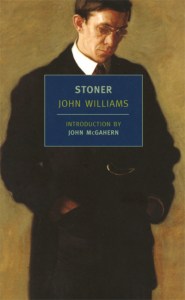
John-Williams-StonerMy thirst for good reads continued in 2015, and among them, two stand out for special praise in providing me with pleasure, insight, and continuing reflection. (I’ve reviewed both more fully elsewhere in Brimmings.)
Fiction:   John Williams. Stoner (New York Review of Books Classics)

My choice is probably subliminal and inevitable, as not since David Copperfield have I identified with a fictional character so fully as with Stoner, having like him, been a professor of English for several decades, thus  familiar with academic intrigue and its pettiness; even more, having, like Stoner, endured a previous incompatible marriage that served neither of us well. But aside from the personal, Stoner has also been the favorite novel of professors across the years, according to a recent article. And why not, since it excels not only for its verisimilitude, but its superlative craft of nuanced, rhythmic sentences replete with stylistic discipline made potent through understatement; in short, easily one of the best written novels I’ve come upon.

Sample Passage:

In his forty-third year William Stoner learned what others, much younger, had learned before him: that is the person one loves at first is not the person one loves at last, and that love is not an end but a process through which one person attempts to know another.

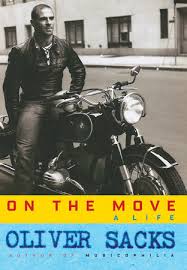
SacksNon-Fiction: Oliver Sacks: On the Move: A Life

Sacks, renowned as both a neurologist on the cutting edge and cogent observer of the eccentric manifestations of the brain’s malfunctionings in his many books, wrote this memoir in the final months of his terminal illness from cancer. As such, it startles with its wisdom and bravery; even more, in its honesty about himself in measuring the successes and shortcomings of his life journey, delivered with verbal beauty uncommonly found among scientists.

Sample Passage:

This gave me a feeling of what seemed wrong with American medicine, that it consisted more and more of specialists. There were fewer and fewer primary care physicians, the base of the pyramid. My father and my two older brothers were all general practitioners, and I found myself feeling not like a super-specialist in migraine but like the general practitioner these patients should have seen to begin with.

__rj

Oliver Sacks: Medicine’s Laureate

I find every patient I see, everywhere, vividly alive,
interesting and rewarding; I have never seen a patient
who didn’t teach me something new.  Or stir in me new
feelings and new trains of thought.
–Oliver Sacks

SacksI’ve just finished Oliver Sack’s recently published autobiography, On the Move: a Life. Better, I devoured it.

Medicine has always interested me, and I read a lot of its literature on an almost daily basis. Still, while I know some things about how the body works, I’m largely ignorant when it comes to how the brain functions, its capacity for life enhancement and, conversely, its potential for horrendous suffering, physical and mental, when failing to function properly, either through genetics, injury, disease, or simply aging.

In reading Sack’s book, I’ve made a dent into the immensity of what I’ve missed. After all, Sacks is a neurologist, and a gifted one at that–a doctor fond of research with an extraordinary compulsion for not only writing down his observations of more than fifty years, but in an idiom we laymen can understand.

He’s written eleven books, published in hundreds of medical journals, and with a rare propensity for uniting science and art, has regularly contributed to the likes of The New York Review of Books and my favorite, The New Yorker. The New York Times has appropriately dubbed him “the poet laureate of medicine.”

Do you remember the riveting movie, Awakenings, starring a young Robin Williams and Robert De Niro, with its moving depiction of postencephalitic patients hospitalized for some forty years, initially responding to a bold and controversial therapeutic approach that gave them a brief window of normality, only to relapse? It came from Dr. Sacks’ book of the same title.

You may also know of his popular collection of brain vagary anecdotes published as The Man Who Mistook His Wife For a Hat.

What I find most compelling in Sacks is his innate compassion for his patients, a doctor who sees them as individuals possessing a context integral to their healing and thus worth knowing, a practitioner who conveys to his patients that they matter deeply.

Up there too is his refreshing approach of reaching past the compensational paradigm of contemporary medicine to root out the origins of our morbidities and facilitate their cure.

And no corner thing, there’s his open honesty about his earlier drug addiction.

Likewise, he writes movingly of being gay and about his several loves.

At the personal level, Sacks is a natural draw for me in his love for both science and literature, lifelong zeal for motorbikes and  weight lifting, his introversion, a brother with schizophrenia (which is true of my son), his outspokenness about entrenched medical prejudice with its jealousies and frequent resistance to innovation.  All of these, and more, find their way into On the Move.

I was surprised to learn that Aubrey “Abba” Eden, Israeli diplomat, who always impressed me with his Cambridge accent and articulate English, was a first cousin; likewise, Al Capp, formerly loved for his Little Abner cartoons until his sexual downfall.

Sacks, towards the end of his autobiography, writes of his declining health, without mentioning his now, terminal metastatic melanoma (he’s now 82). I take this omission as his not wanting reader pity to enter into play in judging his autobiography.

The reality, of course, is that Sacks is a very brave man who has lived in death’s neighborhood for many years, both as a physician and in his personal life.  Thus I wasn’t surprised  in the least in his openness and acceptance of his terminal illness elsewhere.  See http://www.nytimes.com/2015/02/19/opinion/oliver-sacks-on-learning-he-has-terminal-cancer.html?_r=0

Below I’ve given you my chosen book highlights, hoping they’ll entice you to read this supremely humane work.  As I write, On the Move has made the Best Seller List of the New York Times:

On being gay:

“You are an abomination,” she said. “I wish you had never been born.”

My mother, so open and supportive in many ways, was harsh and inflexible in this area.

Her words haunted me for much of my life and played a major part in inhibiting and injecting with guilt what should have been a free and joyous expression of sexuality.

On taking tests:

I am very bad at factual exams, yes-or-no questions, but I can spread my wings with essays.

On his brother’s schizophrenia:

…what sort of world Michael lived in, none of us knew. And yet he was very intelligent; he read continually: had a prodigious memory, and seemed to turn to books rather than “reality” to get his knowledge of the world.

On the poet Thom Gunn:

I’m not sure what Thom saw in me at this point, but I found in him great personal warmth and geniality and warmth mixed with fierce intellectual activity. He was incapable of indirection or deceit, but his directness was always accompanied, I thought, by a sort of tenderness, too.

On Robin Williams (who, portrayed Sacks in the film version of Awakenings):

Over the next twenty-five years, Robin and I became good friends, and I grew to appreciate–no less than the brilliance of his wit and his sudden, explosive improvisations–his wide reading, the depth of his intelligence, and his humane concerns.

On medicine:

This gave me a feeling of what was wrong with American medicine, that it consisted more and more of specialists.

…unconscious motives may sometimes ally themselves to physiological propensities. One cannot abstract an illness from the whole pattern, the context, the economy of someone’s life.

On Awakenings:

The postencephalectics had been in a state of suspension for decades–suspension of memory, perception, and consciousness. They were coming back to life, to full consciousness, and mobility. Would they find themselves like Rip Van Winkle, anachronisms in a world that had moved on?

When I gave L-dopa to these patients, their “awakenings” were not only physical, but intellectual.

American Medical Association response to “Awakenings” experiment:

In the summer of 1970 then, in a letter to JAMA, I reported my findings, detailing the total findings of L-dopa in sixty patients whom I had maintained on it for a year. JAMA published my letter, but while I had got plenty of positive responses to my letter in The Lancet, my letter in JMLA was greeted by a strange, rather frightening silence.

The silence was broken a few months later, when the entire letters section in one JMLA was devoted to highly critical and sometimes angry responses from various colleagues.

I thought it was improper of JMLA to publish these attacks without giving me an opportunity to respond to them in the same issue.

I knew that I had something important to say, but I had no way of saying it, of being faithful to my experiences without forfeiting medical “publishibility” or acceptance among my colleagues.

On the death of his mother:

My mother’s death was the most devastating loss of my life–the loss of the deepest and perhaps, in some sense, the realest relation of my life.

On W. H. Auden:

He was …critically important to me during the writing of Awakenings, especially when he said to me, “you’re going to have to go beyond the critical…Be metaphorical, be mystical, be whatever you need.”

I wept after I received Auden’s letter [following publication of Awakenings]. Here was a great writer, not given to facile or flattering words, judging my book a “masterpiece.”

On nursing homes:

In some of these places …I saw the complete subjugation of the human to medical arrogance and technology. In some cases the neglect was willful and criminal–patients left unattended for hours or even abused physically or mentally….I worked in other nursing homes where there was no negligence but nothing beyond basic medical care. That those who entered such nursing homes needed meaning–a life, an identity, dignity, self-respect, a degree of autonomy–was ignored or bypassed; “care” was purely mechanical and physical.

On himself:

I am shy in ordinary social contexts; I am not able to “chat” with any ease. I have difficulty recognizing people (this is lifelong, though worse now my eyesight is impaired). I have little knowledge of and little interest in current affairs, whether political, social, or sexual. Now, additionally, I am hard of hearing, a polite term for deepening deafness. Given all this, I tend to retreat into a corner, to look invisible, to hope I am passed over.

On writing:

The act of writing, when it goes well, gives me a pleasure, a joy unlike any other. It takes me to a place–irrespective of my subject–where I am totally absorbed and oblivious to distracting thoughts, worries, preoccupations, or indeed the passage of time.

__rj


Same Sun Here

Neela Vaswani
Neela Vaswani

Dear River,
I cannot tell from your name if you are a boy or girl so I will write to you like you are a human being.

The above comes from a book I’ve been reading for middle grade children, called Same Sun Here, by Silas House and Neela Vaswani.

My wife, a middle school teacher, brought the book home several weeks ago for me to read. She said, “It’s really good and you’ll like it.”

Well, I got hooked. It’s too good to put down. Teeming with prose often approaching poetry and vivid scenarios that can move hearts, it resonates those values that define the better portions of ourselves. I venture it’s one of those books you start missing no sooner you’re done.

Briefly, it’s told through a series of letters exchanged between two 12 year olds: Meena, formerly from India, now living in NYC, and River, who lives in the mountains of Eastern Kentucky.

[Mamaw] says that the everyone used to write letters all the time and it’s a lost art form.

Turns out, these two have a lot in common, despite their differences in background and locale:

Both are close to their grandmothers.

Have fathers with out-of-town jobs.

Share an affection for dogs.

Are fond of mountains. (Mountains were part of Meena’s Indian childhood. River lives in the mountains.)

In New York, the buildings are in someways like mountains, but they are only alive because of the people living in them.

Are sensitive to the beauty and wonder of nature.

I usually walk through the woods instead of taking the driveway because it’s a different world there.

Are outliers. (People make fun of their strong accents and origin.)

Like to read.

I like that library books have secret lives. All those hands that have held them. All those eyes that have read them.

Silas House
Silas House

The Same Sun Here is primarily about the faulty way we perceive others. River had been told that people who looked like Meena were terrorists. Mina, that people in Kentucky were hillbillies.

Mamaw says that people don’t really care about people here because they think we’re a bunch of stupid hillbillies who are looking for handouts.

Hey, if this old guy likes the book, typically self-conscious young adults will like it even more

Having said this, I think some readers won’t like the book for its seeming political preachments. It’s big on environment (mountain top removal) and waxes enthusiastic over Obama’s election victory. (The story is set in 2008.). A book of several strands, it features the powerless and, thus, exploited and how they may still find a voice.

Climate change challenges us as well, menacing not only our quality of life, but our survival. I cringe with every forest leveled, diminishing resources, declining species, sulfur fumes, unrestrained growth, etc.

I like people who lay their cards face up on the table.

I like a book that advocates awareness of a wider humanity and the folly of stereotyping that walls out our fellows.

Too often, bound by cultural mores, we’ve only a corner perspective.

We need a wider view to forestall our prejudices. Achieving empathy, we’ll discover a surprising commonality–that we’re more alike than we thought.

Sometimes you write things in your letters that I thought nobody had ever thought before except me, but then there it is in your letter.

Or as the title nuances, the same sun here.

–rj


A Poet Reminisces: Essays After Eighty

ows_141652973541643I have always liked poetry and poets, in particular, because of their sensitivity to human experience.

One poet I like a lot is Donald Hall, a giant among contemporary American poets, although he’s given up the craft, or as he puts it, since “poetry abandoned him.”

Hall is now 85.

Let me assure you, while the tropes may not come as easily as before, his acuity remains vibrant in his newest book, Essays After Eighty, a slim volume of 120 pages, yet filled with reminiscence, keen observation, and sober wisdom.

I first got introduced to Hall by way of his textbook, Writing Well, which I used for a number of years in teaching college composition. The book lived up to its title, emphasizing sentence clarity and how to achieve it, with eloquence added in.

Hall has always been a diligent stylist, whether writing poetry or prose. He confesses that he’s written some individual essay drafts for Essays After Eighty upwards of eighty times to get things said right.

I used to tell my students that the name of the game in all good writing lay in revision, pointing out that scholars have come upon nearly fifty drafts of Yeat’s famed “Second Coming” poem.

I like how Hall says it: “The greatest pleasure in writing is rewriting. My early drafts are always wretched.”

I’ve always held that a good style is etched by its economy, the right words sufficing for empty fillers drowning readers in verbosity; a pleasing rhythm like waves, in and out, upon a sea shore.

Good prose, like poetry, runs lean.

And Hall is the great master.

Let me give you a sampling of Hall’s trademark writing acumen, simple, yet keen with observation, each detail chosen well, verbs especially, accumulating into a verbal, painting, reflecting the ethos of a skilled artisan:

In spring, when the feeder is down, stowed away in the toolshed until October, I watch the fat robins come back, bluejays that harass them, warblers, red-winged blackbirds, thrushes, orioles. Mourning doves crouch in the grass, nibbling seeds. A robin returns each year to refurbish her nest after the wintry ravage. She adds new straw, twigs and lint. Soon enough she lays eggs, sets on them with short excursions for food, then tends to three or four small beaks that open for her scavenging. Before long, the infants stand, spread and clench their wings, peer at their surroundings, and fly away. I cherish them….

Reminiscence weighs heavily upon these essays, not surprising for a writer in his mid-eighties. the ghosts, as it were, looming out of the past–grandparents, Mom and Dad, aunts and uncles, friends;  wife Jane Kenyon, the love of his life and fellow poet, succumbing unexpectedly to cancer at age 47.

Even the northern New Hampshire topography has yielded to change, farms giving way to rebirth of forest as the new generation migrates to the prosperous cities of southern New Hampshire.

As I read this moving collection of personal reflections on sundry topics, I made sure to highlight a number of striking passages, and some of them I’ll share with you.

On writing:

As I work on clauses and commas, I understand that rhythm and cadence have little to do with import, but they should carry the reader on a pleasurable journey.

If the essay doesn’t include contraries, however small they be, the essay fails.

Nine-tenths of the poets who win prizes and praises, who are applauded the most, who are treated everywhere like emperors–or like statues of emperors–will go unread in thirty years.

I count it an honor that in 1975 I gave up lifetime tenure, medical expenses, and a pension in exchange for forty joyous years of freelance writing.

I expect my immortality to expire five minutes after my funeral. Literature is a zero-sum game. One poet revives; another gets deader.

On aging:

When I limped into my eighties, my readings altered, as everything did.

In the past I was advised to live in the moment. Now what else can I do.?

On leisure:

Everyone who concentrates all day, in the evening needs to let the half-wit out for a walk.

On mortality:

It is sensible of me to realize that I will die one of these days. I will not pass away.

At some time in my seventies, death stopped being interesting. I no longer checked out ages in obituaries.

These days most old people die in profit-making dormitories. Their loving sons and daughters are busy and don’t want to forgo the routine of their lives.

Essays After Eighty has been a wonderful read for me with its acerbic wit, cogent wisdom, delivered in a simple, yet elegant, style, proving again that the best art conceals itself.

And yet there’s a melancholy that haunts these excursions into reminiscence, a sense that the best is over and, now, there’s just the waiting. As Hall confesses, “My problem isn’t death, but old age.”

Hall, of course, is addressing physical decline with its imposed limitations and dreaded dependency; but surely his words resonate still more–the sense of ephemerality that mocks our labors and brings to an end all that we love most dearly.

For Hall, “There are no happy endings, because if things are happy, they have not ended.”

Still, this work, perhaps his last, formulates a testimony to a life lived well.

And, very rarely, do you find such honest telling.

–rj

On Reading E. O. Wilson’s The Meaning of Human Existence

wilsonI finished reading E. O. Wilson’s remarkable book, The Meaning of Human Existence, two weeks ago and am now finally getting to tell others why I like it so much.

For one thing, I admire its author, an eminent, cerebral champion of eco diversity given to candor that may arch the backs of some. Years ago, a member of the Marxist oriented Progressive Labor Party poured a pitcher of water on him for advocating the genetic origin of human behavior, a surely unpopular stance with today’s still entrenched view of social conditioning as the compelling factor in the ongoing nature vs. nurture debate.

The controversy once got so heated that it spilled over in 2001 into the front pages of the New York Times and Time Magazine, with some members of the science community dismissing Wilson as a misogynist and racist.

Of course, I learned long ago that scientists, just like the rest of us, are hardly free from biases that can prejudice challenges to accepted axioms rooted more in assumption–and sometimes, pecuniary interests–than objective research or the empirical.

And always there are the social ameliorists, who can be downright bullying in their evangelical intensity.

For me, Wilson makes a lot of sense. If we can take evolution into our own hands and genetically induce behavioral as well as physiological outcomes in animals such as canines, why would this not be true of evolution as a mechanism at large?

But Wilson has survived the controversy and, you name it, he’s won virtually every academic and journalism award, including two Pulitzers.

The novelist Ian McEwan aptly described Wilson as “an intellectual hero,” and that he didn’t “know of another working scientist whose prose [was] better than his. He can be witty, scathing and inspirational by turns. He is a superb celebrator of science in all its manifestations, as well as being a scourge of bogus, post-modernist, relativist pseudo-science, and so-called New Age thinking” (qtd. in The Guardian, 16 February, 2001).

This most recent book, in many ways a summation of his copious research across several decades, has been nominated for the National Book Award.

It’s far more than a tome on science, however. Replete with wisdom and concern for a diminishing biodiversity on which our survival depends, it ultimately addresses the human condition marred by tribalism, redundant in self-interest, and often (think today)   exhibiting a religious and political mindset:

The great religions are…tragically, sources of ceaseless and unnecessary suffering. Their exquisitely human flaw is tribalism. It is tribalism, not the moral tenets and humanitarian thought of pure religion, which makes good people do bad things.

In more secular societies, faith tends to be transmuted into religion-like political ideologies. Sometimes the two great categories are combined.

The Meaning of Human Existence pleads for the convergence of science and the humanities to not only confront human behavior but pursue its origin that we might remedy it.

The self-contained world of the humanities describes the human condition–but not why it is the one thing and not another. The scientific worldview is vastly larger. It encompasses the meaning of human existence–the general principles of the human condition, where the species fits in the Universe, and why it exists in the first place.

With resounding pathos, not unexpected in a man who loves Nature so fervently, Wilson   also laments our intransigent myopia that unwittingly plants the seeds of our own demise and, hence, betrays our future:

Too paralyzed with self-absorption to protect the rest of life, we continue to tear down the natural environment, our species’ irreplaceable and most precious heritage. And it is still taboo to bring up population policies aiming for an optimum population density, geographic distribution and age distribution.

I think Wilson is spot on. While the humanities can teach us how to behave, they cannot rid us of the conflicting dynamics of individualism versus altruism implanted by evolution.

And that is our tragedy. We must learn to conceive ourselves as unique offspring possessed of divided sensibilities, the finale of vast eons of time, that we might weave a more rational way of living.

Though it’s folly to suppose we can annul our fissure, we can do better. We do not have the gods to blame, nor a devil to curse. And if this frees us from a good deal of our tribalism, then so much the better.

It pains me to think this may be Wilson’s last book, since he will turn 86 next June. As is, he’s lost none of his mettle in provoking us to examine our assumptions and liberate ourselves.

In doing so, he reminds me of those Old Testament prophets that would, at great risk, prognosticate the calamitous fallout of an unheeded warning.

–rj

Being Mortal

gawandeI’ve just finished reading Being Mortal: What Matters in the End by Dr. Atul Gawande.

I had read his previous Complications about life as a surgeon several years ago, greatly impressed.

Both books have been highly praised, with the present book listed by the New York Times as among must reads of 2014.

As a surgeon at Massachusetts General Hospital, Gawande knows what he’s writing about.

And he writes well, often movingly, in layman’s language, of death scenarios with their accompanying challenges that need to be individualized, since we’re all different.

I suspect many readers will opt to avoid a seemingly morbid subject, but that’s a mistake, for   mortality knows no exceptions and our best approach is one that, through knowledge, provides us with options.

And Gawande, a writer for the prestigious New Yorker as well as a physician, delivers–deftly, compassionately, and always with eloquence, on a difficult subject.

Moreover, his book preeminently addresses the medical community, often committed to treatment paradigms that work against the patient’s welfare.

Physicians are trained to see themselves as enhancers of health and survival. They are not taught how to handle lingering illness devoid of remedy:

…within a few years, when I came to experience surgical training and practice, I encountered patients forced to confront the realities of decline and mortality, and it did not take long to realize how unready I was to help them (3).

If your problem is fixable, we know just what to do.  But if it’s not? The fact that we have had no adequate answers to this question is troubling and has caused callousness, inhumanity, and extraordinary suffering (8).

What’s the point, anyway, of continuing chemotherapy, radiation, and surgery in terminal cases when such methodologies may involve great risk and, often, increase duress?

When, in short, should doctors, not just patients, let go?

Patients cling to hope and doctors knowingly feed into this, when frequently no regimen can procure that miracle of restoring health and dignity.

Or as Gawande vividly makes clear in his allusion to Tolstoy’s powerful tale, The Death of Ivan Ilyitch:

What tormented Ivan Ilyitch most was the deception, the lie, which for some reason they all accepted, that he was not dying but was simply ill, and he only need keep quiet and undergo a treatment and then something very good would result (2).

The ultimate challenge for physicians is to accept the restraints of biology and assist their patients to come to terms when that moment arrives

Otherwise, they can inflict considerable, even barbaric, suffering.

Doctors need to be patient-centered, addressing the patient’s best interests, and sometimes the greatest kindness entails being candid..

Ultimately, it’s about providing patients with options that preserve dignity, lessen suffering, and are in accord with the patient’s priorities.

We’ve made some progress in the now universal acceptance of Advanced Directives, though initially contested. But what about options for the terminal patient, still conscious, who lingers, often in great pain, and with perhaps even greater to come?

Gawande says that there are two dominating physician protocols: the one patronizing (this is what you should do); the other, informative (here are your scenarios).

Doctors do better when they ask the right questions of their patients in such contexts:

Whenever serious sickness or injury strikes and your body breaks down, the vital questions are the same: What is your understanding of the situation and its potential outcomes? What are your fears and what are your hopes? What are the trade-offs you are willing to make or not willing to make? And what is the course of action that best serves this understanding? (259)

Palliative care, for example, may well be a better option to further surgery, chemotherapy and radiation when the outcome may make matters worse.

On the other hand, indulging patient fantasy may invoke “a prolonged and terrible death” (4).

Gawande carries out what he advocates. For me, his account of his father’s lingering passage into mortality is deeply moving, which I think many of us can identify with in our own wrestlings with the demise of those we love.

In addition to all of you, I wish every medical practitioner would read this book.

Death isn’t an enemy, but the natural order of things.

How much better it would be in our final moments to have someone like Gawande attending–a physician, with compassion, listening and helping us discern those best options that enhance our dignity and lessen our suffering.

–rj


Why some writers succeed and others don’t

I’ve learned that people will forget what you said, people will forget what you do, but people will never forget how you made them feel (Maya Angelou).

 Writing

I like to read and I read omnivorously, whether fiction or non-fiction. I marvel at the talent and effort that lies behind all good writing, the courage of writers to pursue their craft, given the minuscule few who get published, or receive pecuniary recompense, or the public’s accolades.

I marvel at their discipline in fending off that great tempter, procrastination, for writing well doesn’t come easily and what’s tedious we most always avoid.

And then there is the ephemerality of all success that mocks their efforts, that no matter how well crafted, compelling, or discerning, that best part of a writer’s self, succumbs, inevitably, to a world busy with its own pursuits, forgotten, no longer in print, to be given away, or tossed out.

I was reminded of this when I downloaded a Gutenberg ebook freebie from more than fifty years ago with its reading recommendations of many authors I’d never heard of, though I have graduate degrees in English and taught for forty years at the college level. The list of recommended classics in our schools today is, likewise, considerably different from those I pursued, studied and taught across the years. Taste changes, fame fades, and life moves on.

Writers, nonetheless, pursue their craft against all odds and sucking sweets elsewhere for varied reasons, foremost to find acceptance and, in that best of all possible worlds, the convergence, like two mighty streams, of avocation and vocation.

Whatever, successful fiction writers must be good at seduction, alluring us with suspense, well-crafted plot embedded with conflict, intriguing characters, good dialog, an accessible style; nonfiction writers must also prove themselves good at seduction, appealing to reader interests, their quest for information and know-how, their need to feel smart. Writing is all about closing the deal. Giving readers what they want.

As readers, we like cosying up. We like being wooed.

Successful writers know this!

–rj