
My Journey Through Books: From Childhood to Lifelong Learning

I’ve been a reading addict since childhood, when as a young boy I’d walk a mile—sometimes more—just to lose myself in a library’s cool hush, seated at a table, surrounded by shelf-lined books inviting adventure.

My love for animals found early confirmation in the Dr. Doolittle books I devoured. I read every one. Years later, that same fascination with the speech of creatures led me to Jane Goodall’s revelatory studies of chimpanzees—proof that empathy can grow into insight.

Another passion took root in the dusty bleachers of Shibe Park—later Connie Mack Stadium—in Philadelphia. I loved baseball with an intensity only children know, lingering outside the gates, hungry for autographs as players boarded their buses. I read passionately about my idols—Ruth, Gehrig, immortals who remain with me.

Travel books, too, called out to me. Mutiny on the Bounty and its aftermath on Pitcairn’s Island transported me to the South Seas, where I imaginatively romped through Tahiti, New Zealand, and Australia. In later years, that early enchantment led me to consider emigrating to New Zealand. I was, in fact, approved.

Languages fascinated me. One day, at ten, I brought home books in Russian from Philadelphia’s Free Library, expecting the Cyrillic script to magically transform itself into English. That early infatuation would one day carry me across the world to Russia and the homesteads of Tolstoy, Dostoevsky, and Chekhov.

I call myself an autodidact, though I’ve graduated from several reputable universities. I started behind most students, having fled a troubled home at seventeen, enlisting in the Air Force, which sent me to Korea. Our base library was a single room, yet its shelves were somehow populated with a few classics. One off-duty evening, I pulled down a book called Look Homeward, Angel. It changed my life.

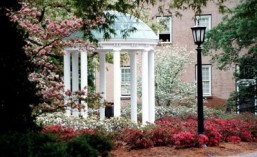
After Korea, I read everything Thomas Wolfe wrote, visited his home in Asheville, eventually enrolling as a Ph.D. student at his alma mater—the University of North Carolina at Chapel Hill, “Pulpit Hill” in Wolfe’s novel. On my first campus day, waiting to register for classes, I bumped into a retired professor, who asked what brought me to Chapel Hill. “Thomas Wolfe,” I said without hesitation.

A serendipity moment, that professor had known Wolfe. Becoming lifelong friends, they traveled together to prewar Germany, where Wolfe witnessed the Nazi persecution of Jews, which he would later feature in You Can’t Go Home Again. He shared anecdotes about Wolfe, who stood six feet, six inches. His hands too wide to use a typewriter, Wolfe wrote standing up, a refrigerator top serving for a desk.

Despite the scores of books I’ve read, there remain gaps I want to fill. The books I’ve read have been my faithful companions along life’s road, shaping who I am.

Were I granted another life, I think I’d come back as a librarian. No other choice comes close.

Solitude’s Recompense

More than eight billion souls rise each morning to breathe another day—many of them lonely. While others seem to rollick in life’s plentitude, they feel left out.

Loneliness has many strands. Ultimately, it’s feeling you’re disconnected. Or like the world’s hung up on you.

Loss is loneliness’ common denominator. It comes in many currencies: loved ones who’ve died or drifted away, a romance gone sour, schoolmates reduced to memory, a job that vanished overnight, aging, the slow erosion of health

According to a Gallup/Meta survey, 25% of people in 140 countries experience loneliness “very or fairly often.” In the USA, 1 in 3.

Loneliness can be grievous. Even fatal. There seems to be a herd instinct governing human behavior. We like togetherness. Like cows in a pasture, we like facing in the same direction.

And yet the paradox: you can feel most alone in a crowd, the noise of others drowning out your pulse. For introverts like me, solitude grants restoration, not exile. My happiest moments have often come in silence: in a garden, along a woodland path, or beside a pounding shore.

A few days ago, I wrote of three places I’ve been that have sustained me, each of them granting solitude—a chance to reflect, to locate myself, to fish in life’s stream, that rare chance to glimpse Eternity.

Recently, I’ve found someone, Scott Stillman, who shares my love for solitude, writing eight splendid books on this theme. He has a way of putting things:

you are not broken for needing stillness

you are not flawed for shrinking from noise

your mind is simply attuned to something different

something more aligned with the quiet current

that flows beneath all of existence

Finding New Ways to Choose Books I Want to Read

Every New Year’s Day for the past six years I’ve posted on Brimmings my annotated recommendations for the finest fiction and nonfiction reads. I spend hours culling my lists from authoritative sources. I give emphasis to canonical works, both domestic and international—books intellectually stimulating, challenging, and broadening, the kind that will still be read generations hence. Often one of my criteria has been to fill gaps in my own reading, those books I should have read long ago, but somehow missed.

But lately I’ve been musing on a new way of choosing books—more personal than public, more in keeping with my desire to read systematically, to fill in the areas I don’t know well but should.

While my published lists have value, they fall short of providing full acquaintance with an author through a single recommendation. A fragmented forest, bisected by a highway or development, comes to mind—isolated stands of trees cut off from the territorial expanse essential for their flourishing.

It used to be that when I encountered a great writer for the first time, I would read five books: two about the author (often biographies), and three by the author. It worked well—Tolstoy, for example.

But now I want to do better still.

Perhaps I could read not only by author but by theme—a focus on, say, the environment, doing a minimal five books, maybe beginning with the late E. O. Wilson, who never disappoints, or the sagacious Carl Sagan. Reading only The Great Gatsby hardly gives one the fullest sweep of Fitzgerald’s range and mastery. It’s like movie buffs: if you admire Tom Hanks, you don’t stop at one film.

To really round out my education, I should read chronologically, starting with the classics. I’ve read and taught Euripides’ Medea, but it’s only one play—nineteen of his tragedies survive.

So yes, I can focus on an author or a theme—or read chronologically across disciplines.

Here’s another approach: why not read geographically, and I mean largely internationally? I know so little of Chinese literature, philosophy, and culture—the same for India and Japan.

Or I could venture a European country that most readers overlook—Finland, for example, a nation whose people are addicted to both writing and reading, dark interminable Arctic nights surely contributing. I already have Finland on my list.

I’ll still publish my annual New Year’s list, but when push comes to shove, know that privately I’ll be trekking the road not taken.

–rj

Out of Nowhere: Gaza in Poetry

I’m about to eat breakfast, but I feel guilty for the good life I wake to daily when so much of the world, removed from our shores, knows only war, destruction, death, and incalculable grief: Sudan, the Democratic Republic of the Congo, Ukraine and Gaza. Still others.

I am moved by Palestinian-American poet and physician Fady Joudah’s recent poem about Gaza. The death toll, vastly civilian, now approaches 70,000.

Joudah has lost 100 members of his Gaza family. He has served as a volunteer with Doctors Without Borders.

Since his poem is under copyright, I can only share an excerpt:

“And out of nowhere…”

And out of nowhere a girl receives an ovation
from her rescuers, all men on their knees and bellies
clearing the man-made rubble with their bare hands, disfigured by dust into ghosts.
All disasters are natural including this one, because humans are natural.
The rescuers tell her she’s incredible, powerful,
and for a split second, before the weight of her family’s disappearance sinks her, she smiles,
like a child who lived for seven years above ground receiving praise.

PostScript:
Joudah is a winner of The Yale Series of Younger Poets Competition and long listed for the National Book Award for Poetry (2024).

—rj

What I Read and How I Choose

I am committed to reading the best that has been thought and said. Escapism and the utilitarian have never been my guides to what I read. In our age of competing stimuli, we’ve imperiled our ability to reflect, to think hard about life’s meaning and live it well.

Stillness is prerequisite for reflection that enlargens our thinking, renders us more humane, the finding time for the right read that nurtures the goodness that lies within us.

I am dismayed about contemporary classrooms, vastly different from those of my New England childhood that lent emphasis to the reads that expand awareness and humane endeavor.

Classicist Michael S. Rose sums up for me what today’s classrooms have lost with their inability to distinguish the wheat from the tares:

“The great catastrophe of our time is not that children fail to learn, but that they have never been taught what is worth knowing. The tragedy that unfolds daily in classrooms across the land is the presence of amnesia, a colossal forgetting of our inheritance. The inheritance of human genius and beauty—from Athens and Jerusalem, through Rome and the Renaissance, to Shakespeare’s London and Lincoln’s prairie—is what now stands in peril. It has not been violently seized; that would require too much effort and too much awareness of what was being lost. Rather, it has been carelessly misplaced, forgotten among the dazzling distractions of modernity” (Substack, Oct. 9, 2025).

—rj

Three Places I Remember Most: Reveries in Stillness


There are three places I’ve been that I’ve loved the most, but not in the way most travelers recount their memories.

Each remains a palpable memory, not because they yielded an Eiffel Tower, Cancun beach, or haute cuisine New York restaurant; but on the contrary, a stunning silence, sweeping me out of myself and a landscape weighted with human duplicity.

In those moments I floated, unmoored from gravity, a wanderer among the stars —part of everything that has been or ever will be, glimpsing eternity beneath all mortal breath, my entrance into epiphany.

It happened first for me years ago at Arlington National Cemetery, the white rows glimmering in the rays of early morning sun.

The second at Kitty Hawk, where the Wright brothers’ fragile dream first lifted from the earth. I stood alone, wombed in stillness, as if the air itself remembered that first exultant rise.

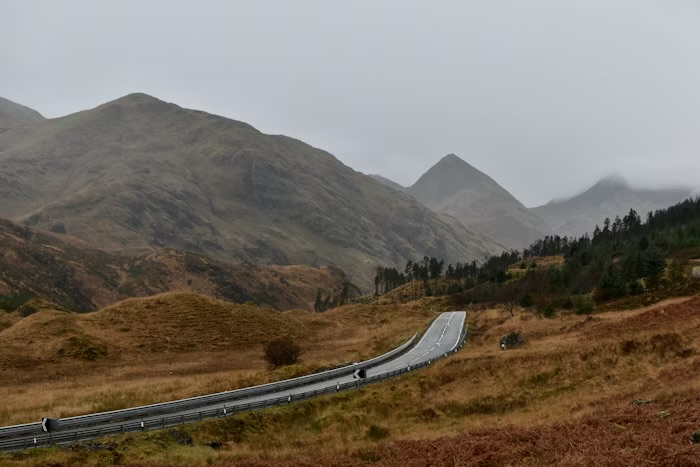
Most memorable of all, traveling eastward from Edinburgh, and suddenly they unfurled, the Highlands, spectacular in their rolling verdure. I stepped from the car into a silence so immense it seemed alive.

In its haunting stillness, I understood Emily Brontë’s fierce passion for the Yorkshire moors, resounding in her poetry and prose:

“you are not broken for needing stillness
you are not flawed for shrinking from noise
your mind is simply attuned to something different
something more aligned with the quiet current
that flows beneath all of existence.”

Like Emily, I exalt in that stillness, shaking hands with Eternity.

A Polarizing Artist: Rudyard Kipling’s Legacy

I remember it well. I was a young graduate student, privileged to study under one of the world’s foremost professors of Victorian literature, a renowned authority on Thomas Hardy.

The course was rigorous. We read the greats of the age—Macaulay, Tennyson, Browning, Dickens, Mill, Newman, Arnold, Morris, Ruskin, the Rossettis, Swinburne, Hopkins, Pater, and of course Hardy. Yet strikingly absent was Rudyard Kipling. Our professor dismissed him as the mere voice of imperialist Britain—an attitude then dominant in the Academy, and one I suspect still lingers on American university campuses.

I had never read Kipling. I had not yet learned to question. I accepted what I was told.

It was only later, during a summer course at Exeter College, Oxford, that I encountered another view: one that esteemed Kipling’s literary brilliance without committing the American folly of conflating his politics with the merits of his artistry.

Kipling’s literary range was astonishing. His verse, endowed with rhythmic command, borders on the hypnotic. He opened poetry to colloquial speech and became a supreme craftsman of the ballad form.

Yes, he gave voice to Empire in works like The White Man’s Burden, Kim, and The Jungle Books. But he also revered Indian culture—its spirituality, wisdom, and sensory richness. Often, with subtle irony, he questioned the very order he seemed to affirm.

Perhaps his greatest achievement lies in the short story. With precision and nuance, he crafted narratives of extraordinary compression, modern in their suggestiveness, wide-ranging in their scope. The Man Who Would Be King remains a masterpiece—its sweep and power undiminished. Kipling’s influence on Conrad, Maugham, Hemingway, Borges, and others is beyond doubt.

He was awarded the Nobel Prize in Literature in 1907—the first English-language writer to receive it—honored for his “power of observation, originality of imagination, virility of ideas, and remarkable talent for narration.”

Kipling’s stories, like all enduring art, probe psychological depths. They are complex, skeptical of conventional wisdom, and riveting in their precision.

In today’s multicultural Britain, he is taught in context: his genius as a storyteller acknowledged, his colonial perspective rejected. Lewis, Tolkien, and Pullman have recognized him as a precursor to modern fantasy.

In India, where he was born and spent his early years, his reception is understandably ambivalent: many readers disdaining his imperial condescension, yet acknowledging his literary craftsmanship. Salman Rushdie has called Kim “one of the greatest novels written about India,.” Other Indian writers continue where Kipling left off, offering vivid vignettes of India, but through an Indian prism.

Controversy about his place in the Western literary canon remains. Vladimir Nabokov, in his Cornell lectures, dismissed Kipling for his moralizing, He deemed his indulgence in exotic adventure stories as juvenile. Great literature, he argued, obeys the aesthetic imperative of narrative neutrality, or distance, as in Flaubert and Joyce.

On the other hand, the late eminent Yale critic Harold Bloom came to Kipling’s defense. In his The Western Canon. Bloom lists Kipling among hundreds of writers deserving inclusion in the canon. Bloom saw Kipling as a myth maker and gifted story teller, especially in his short stories. On the other hand, he found his poetry “scarcely bear reading.”

While I find merit in both Nabokov’s and Bloom’s arguments, I lean towards Bloom’s appraisal as more balanced. I have long resisted either/or equations, particularly as to the political or aesthetic. Over a lifetime, I have frequently found reasoned judgment occupies a middle place. I have given my own arguments earlier in this essay for his belonging in the canon.

Whatever a reader’s verdict, Kipling was a singular voice, very much his own man. In short, authentic. As he said in an interview shortly before his death,

“The individual has always had to struggle to keep from being overwhelmed by the tribe. To be your own man is a hard business. If you try it, you’ll be lonely often, and sometimes frightened. But no price is too high to pay for the privilege of owning yourself” (Qtd. in the Kipling Journal, June 1967).

rj

A Candle Has Gone Out: The Legacy of Jane Goodall

It’s with profound sadness I learned yesterday of primatologist Jane Goodall’s death at age 91.

Blessed with remarkable genes, she lived life with zest up to the very last, tirelessly traveling across international landscapes to raise funds for her Jane Goodall Institute in Tanzania, founded in 1977.

I read her NY Times obituary, but it falls short in evaluating the plenitude of her achievement and its significance for all of us. I learned some time ago that the NYT composes many of its obituaries in advance, ready-to-go like a frozen pizza.

It doesn’t take into account her devotion to the Tanzanians among whom she worked for sixty years, as earnest for their welfare as she was for chimpanzees, humanity’s closest relatives, possessed like us with dual capacity for good and evil.

She gave early warning of climate change as an eyewitness of its exponential ravages in Africa, the front line of its advance.

You can learn much of what she accomplished through reading among her many books The Shadow of Man or A Reason for Hope of her work in Africa, breakthroughs in science, and personal beliefs, some of them controversial such as her advocacy of birth control availability to help African families limit their family size. Tanzania is second among Africa’s 54 nations in population growth. With a present population of 68 million, its projected 2100 population will swell to 283 million, imperiling its subsistence resources.

Goodall had faced an uphill climb in winning acceptance among male scientists, stubbornly suspicious of any woman’s achievement in investigative research. Initially, when setting out for Africa, she had been a waitress and secretary. A wealthy donor, however, recognizing her brilliance, provided the funding for a Ph.D. in ethology at Cambridge University, Goodall one of the rare individuals to directly achieve a Ph. D., not having been an undergraduate.

I confess to a personal attachment to Goodall who, like me, suffered from lifelong prosopagnosia, a neurological disorder inhibiting one’s ability to recognize faces.

Currently the fate of her African investment, employing thousands of Tanzanians, remains under unrelenting threat with population growth, agricultural expansion, deforestation, fragmented forest, habitat loss, logging, and lack of consistent government enforcement of land use laws; not least, the volatility of donor contributions on which the work depends, collectively posing a Sword of Damocles hovering over its future.

There remain just 2300 chimpanzees throughout Tanzania, with an estimated 90 to 100 in Gombe National Park, the site of her research. Those numbers are down from the original 150 as elsewhere in Tanzania, bush meat remains a frequent staple despite its health risks. AIDS had its origin in Africa, consequent with eating chimpanzees harboring the Simian Immunodeficiency Virus (SIV). Goodall was a committed vegan, ardently opposed to factory farming.

Also contributing to their demise is ever expanding human encroachment.

A friend of animals, champion of Mother Earth, always with passion and never without hope, Dr. Goodall is in my pantheon of heroes, her many awards including the Presidential Medal of Freedom (USA), the Steven Hawking Medal of Science for Communication, and designation as Dame Commander of the Order of the British Empire (DBE).

Acknowledging her advanced age, she approached death as her “next great adventure. When you die, there’s either nothing, it’s the end, or there’s something. And things have happened to me in my life that I feel there is something. And if there is, I can’t think of a greater adventure than dying.” 

I wish I lived in a world which lowered its flags in tribute to Dr. Goodall:

”Somehow we might keep hope alive—a hope we can find a way to alleviate poverty, assuage anger, and live in harmony with the environment, with animals, and with each other,” she wrote.

A candle has gone out and I feel lonely and in a dark place.

rj

Music’s Intelligentsia: Great Music. Great Minds

If there’s an area of life I’ve neglected, it’s music. Music, like reading, exercising, learning new skills, nurturing friendships, takes time.

It isn’t that I don’t have time. It’s more that I often squander it, unheeding Thoreau’s maxim, “Time is the stream I go fishing in.”

It wasn’t always this way. When I was young, I took a transistor radio nightly to bed, solaced by music into deep slumber.

Like my daily quest to learn Italian, I want to be more fluent in music’s idiom. I still don’t know how to listen to classical music with understanding.

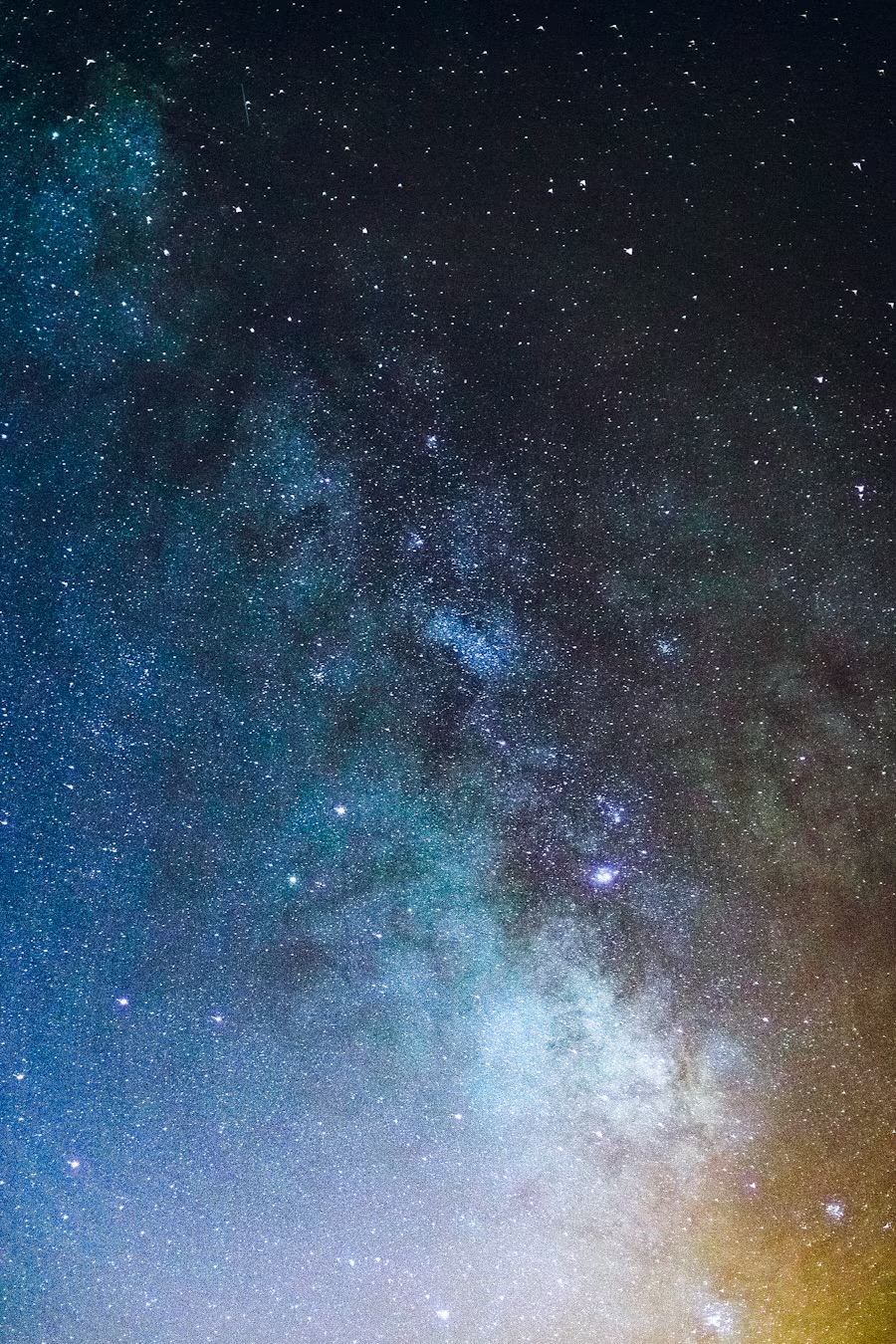
I’ve been told Brahms helps you relax, sleep better. I need him for when I awake to night’s stillness, the indifferent stars, my mind ablaze with anxious thoughts.

Jazz, with its pulsating, sensual immediacy, its impromptu genius, I like, but don’t listen to enough.

The same with the vast tapestries of other music.

I can’t sum up what I’ve lost through my disconnect.

Musicians themselves can be great company, fellow pilgrims in life’s journey.

Until today, I hadn’t known that the eclectic David Bowie kept a list of his 100 favorite books. I’ve gone over that list. Oh, my god! These books, none of them airport reads, should be on everyone’s lists. They’re now on mine.

There are others like him, musical geniuses who have wrestled with life’s vagaries, the meaning of it all, how to live it fully, its sorrows and its griefs.

There’s Patti Smith, Rimbaud and Baudelaire enthusiast, Gifford Series lecturer at Yale, recipient of France’s Legion d’Honneur.

Joni Mitchell, lover of Yeats, Rilke, and the modernists poets.

Sting, who studied English literature, devotee of Shakespeare, philosophy and political theory.

Bob Dylan, Nobel Prize for Literature.

Maggie Rogers, a new voice for me, her sultry songs guaranteed to shake your hips to their beat. Rogers took time out to learn life’s purpose, enrolling at Harvard Divinity School, earning her master’s. Like Bowie, she keeps a booklist, owns a first edition of Virginia Woolf’s To a Lighthouse—“The best thing I own.”

So many others: Cohen, Morrissey, Mingus, Baez. Others still.

Why should I be surprised? Musicians are artists engaging life; their music, poetry.

Like the psalmist’s harp, it touches the Soul.

rj

Ernest and Eloquent: Kimmel Returns

By any measure, Jimmy Kimmel’s opening monologue last night following several days of suspension from America’s TV screens, gracious and moving, reconciliatory and earnest, may well represent a turning point in returning our nation back to sanity and preserving what distinguishes America from other countries.

We have a constitution, though not always adhered to, that remains the touchstone of our nation, latent with promise of “liberty and justice for all.”

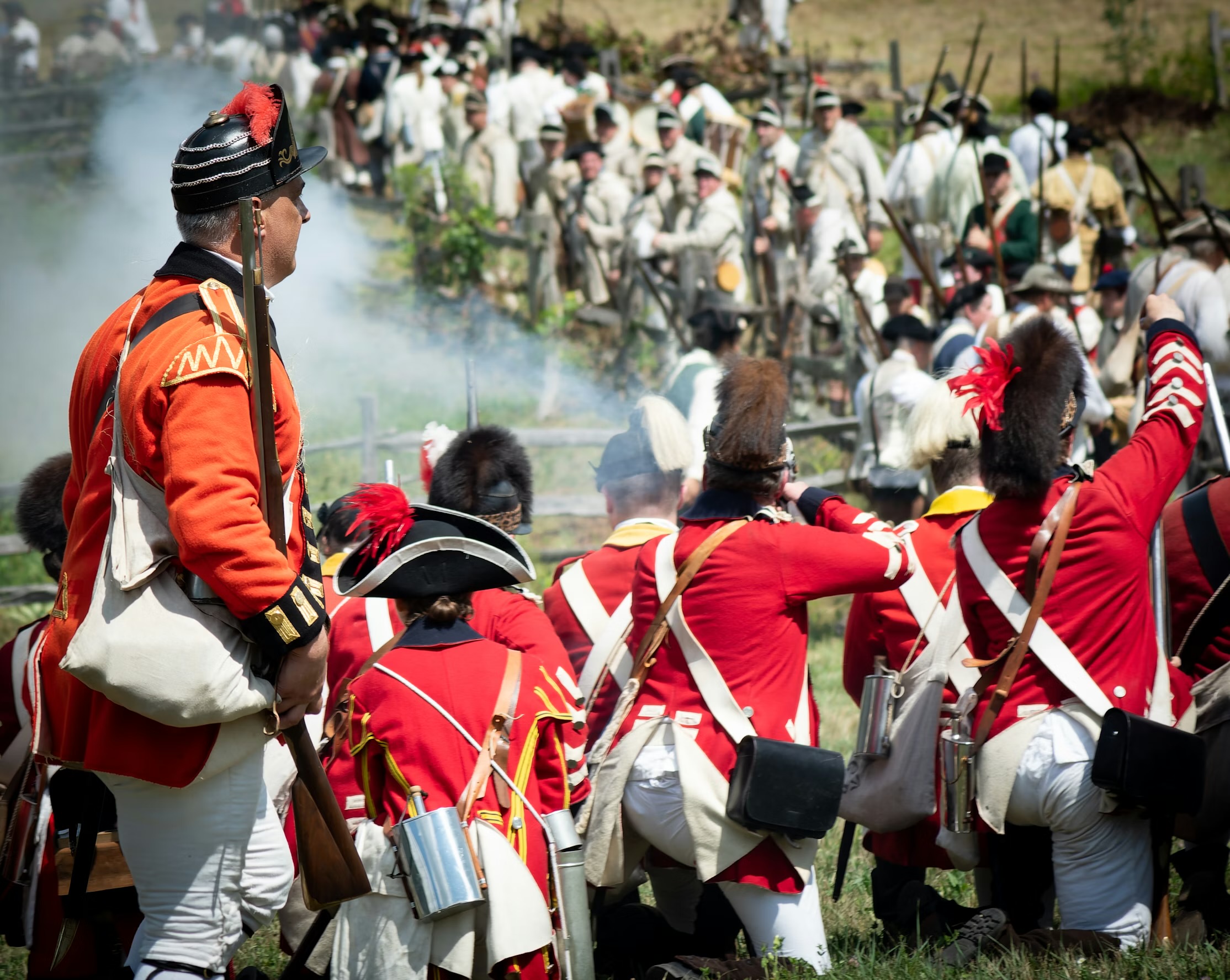
Our Founding Fathers got it right with the Constitution, knowing firsthand the myriad dangers imposed by despotic government, leading to a violent seven year war of confrontation.

Credit them with foresight to intuit the latent dangers of the new nation lapsing into the old tyrannies, designing a Constitution of checks and balances, supplemented by the Bill of Rights that includes the First Amendment, America’s warranty of the citizenry’s right to to be heard.

Kimmel exercised that warranty last night, and we should all be grateful. I had begun to worry we might never see an election in 2028. Kimmel gives me hope.

Engraved on America’s Liberty Bell are these words: “Proclaim Liberty thro’ all the Land to all the Inhabitants thereof.”

Again, Jimmy, our abundant thanks.

rj