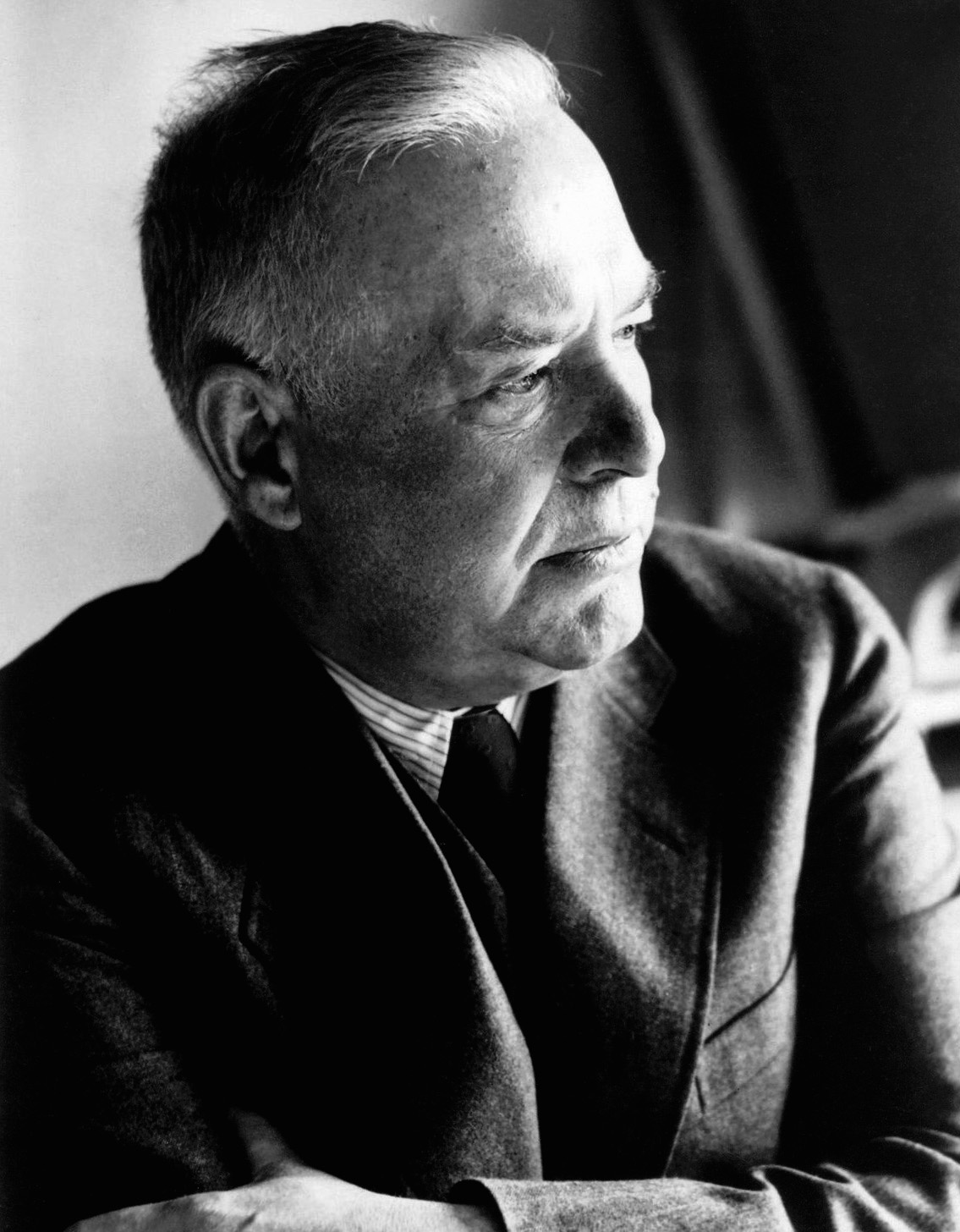
Recently I posted my personal reading of Wallace Steven’s “Sunday Morning,” exploring what might replace religious transcendence once belief dissolves. Stevens’ answer is not despair but immanence, the sufficiency of the natural world, apprehended through the shaping power of imagination.
Yet it is not only religion that now shows signs of erosion. Embedded cultures, those dense inheritances that confer identity through their singularity, are likewise under strain.
In an increasingly global village, accelerated by digital transmission, the world assumes a more monocultural cast, often shaped by the diffuse reach of corporate and algorithmic influence. Against this drift, UNESCO convenes its Intergovernmental Committee each year to review additions to its Intangible Cultural Heritage lists.
Among these is the Urgent Safeguarding List, devoted to imperiled dialects, ritual songs, oral epics, and traditional crafts, forms of life whose disappearance would constitute not mere loss, but erasure.
We are inclined to think of culture as something we visit: a museum, a concert hall, a staged performance. But culture, more fundamentally, is not exhibition but enactment, a way of life sustained through repetition. When cultural memory vanishes, what is lost is not simply artifact but identity itself, as irreplaceable in its domain as the disappearance of elephants, lions, or polar bears from the natural world.
Meaning, then, is not merely conceived; it is made. It inheres in what a people does repeatedly, across time. Imagination, Stevens’ great theme, does not operate in abstraction alone; it is embedded in language, craft, music, and ritual. Culture is the accumulated expression of that imaginative labor.
I am no anthropologist, nor a specialist in indigenous societies; yet it is difficult to ignore the accelerating pressures placed upon such cultures, systems of knowledge refined over centuries of intimacy with specific environments, often encompassing ecological and medicinal understanding that modern systems only belatedly recognize.
Missionary activity, whatever its intentions, has frequently contributed to cultural leveling, supplanting local cosmologies with imported belief systems. Likewise, the expansion of agribusiness, mining, and deforestation, whether in the Amazon Basin or regions such as Papua New Guinea, has disrupted not only ecosystems, but the cultural worlds entwined with them.
The history of the Waorani in Ecuador offers a particularly stark instance. In 1956, a group of missionaries, including Jim Elliot, made contact with a people then labeled “Auca,” a Quechua term meaning “savage.” The encounter ended in violence, an event long framed as martyrdom but more plausibly understood as the defense of a bounded world.
Subsequent missionary and governmental incursions encouraged the Waorani to settle in centralized villages, disrupting their semi-nomadic, kin-based lifeways. The introduction of Christianity and Western norms altered not only belief, but social organization itself.
These transformations deepened with the discovery of oil. Companies such as Texaco, along with the state firm Petroecuador, initiated exploration and drilling across Waorani territory. Roads penetrated previously isolated tribal habitat, bringing loggers, settlers, and a cash economy. Environmental degradation followed: oil spills, polluted waterways, and the decline of flora and fauna, some unique to the region.
Cultural consequences were no less profound. Native language use diminished; oral traditions weakened; customary practices eroded. Some Waorani communities entered agreements with oil interests, while others resisted. Still others, the Tagaeri and Taromenane, remain in voluntary isolation, defending their autonomy with increasing difficulty.
In effect, a territory once lived as its own world has been recast as resource. Missionaries sought to save souls; governments and corporations sought to extract value. The result has been not only cultural change, but a destabilization of the very conditions under which meaning is made.
To read the Waorani encounter alongside Wallace Stevens and UNESCO is to see more clearly the stakes of each. Stevens imagines that, in the absence of transcendence, meaning may be remade through attentive presence to the world.
UNESCO seeks, more cautiously, to preserve the practices that make such meaning possible. The Waorani experience, however, reveals that these practices are neither secure nor easily restored. They can be fractured by missionization, by development, by the redefinition of land itself.
What follows is not silence, but improvisation. Meaning persists, though not intact: a continual effort to live coherently amid altered circumstances.
If Stevens offers a philosophy of immanence and UNESCO a strategy of cultural continuity, the Waorani expose their shared vulnerability, as meaning clings precipitously to practices that can be weakened, displaced, or undone.
For indigenous cultures like that of the Waorani, what is at stake is existential: the vanishing of a way of life, uniquely intelligible to those who inhabit it.”
It was at Exeter College, Oxford, in 1979, while doing a course in modern poetry, that I first heard of Philip Larkin, featured among the poets we studied..
Many critics consider him Britain’s best poet since WWII. Later, I would make him a staple of my own university courses in modern poetry. One Larkin poem that impressed me tremendously was “Church Going,” with its somber reflection on Christianity’s demise and, by extension, religion in contemporary life. Larkin, a librarian at the University of Hull, was slated to visit our tutorial, only to cancel for whatever reason at the last minute. He died a few years later.
While “Church Going” remains my favorite Larkin poem, it had its thematic precedent, however, in modernist American poet Wallace Steven’s “Sunday Morning,” published in 1915 and revised in 1923. Like Larkin, Stevens takes up the embers of a once vibrant faith.
It’s not an easy read, Stevens perhaps with Eliot the most erudite of modernists poets. I’ve been thinking a lot of Stevens and this particular poem as Easter approaches. The resurrection, whether mythic or historical, is the poem’s underlying centripetal force that energizes this magnificent poem.
I.
Complacencies of the peignoir, and late Coffee and oranges in a sunny chair, And the green freedom of a cockatoo Upon a rug mingle to dissipate The holy hush of ancient sacrifice. She dreams a little, and she feels the dark Encroachment of that old catastrophe, As a calm darkens among water-lights. The pungent oranges and bright, green wings Seem things in some procession of the dead, Winding across wide water, without sound. The day is like wide water, without sound, Stilled for the passing of her dreaming feet Over the seas, to silent Palestine, Dominion of the blood and sepulchre.
Commentary:
The poem commences on a Sunday morning, moving intermittently from the palpable, sensory present—an anonymous woman in nightgown, lounging on a couch, enjoying her coffee and oranges, a green parrot resting on her rug.
An interlocutor voice intrudes with philosophic reflection, setting up dialectic tension: nature’s plenitude versus a “silent Palestine/Dominion of the blood and sepulchre,” vague and distant.
II.
Why should she give her bounty to the dead? What is divinity if it can come Only in silent shadows and in dreams? Shall she not find in comforts of the sun, In pungent fruit and bright, green wings, or else In any balm or beauty of the earth, Things to be cherished like the thought of heaven? Divinity must live within herself: Passions of rain, or moods in falling snow; Grievings in loneliness, or unsubdued Elations when the forest blooms; gusty Emotions on wet roads on autumn nights; All pleasures and all pains, remembering The bough of summer and the winter branch. These are the measures destined for her soul.
Commentary:
The idea of paradise distant and abstract, vividly contrasts with the pungency of the physical world, sufficient in both “grievings” and “elations.”
III.
Jove in the clouds had his inhuman birth. No mother suckled him, no sweet land gave Large-mannered motions to his mythy mind. He moved among us, as a muttering king, Magnificent, would move among his hinds, Until our blood, commingling, virginal, With heaven, brought such requital to desire The very hinds discerned it, in a star. Shall our blood fail? Or shall it come to be The blood of paradise? And shall the earth Seem all of paradise that we shall know? The sky will be much friendlier then than now, A part of labor and a part of pain, And next in glory to enduring love, Not this dividing and indifferent blue.
Commentary:
The ancient myth of Jove, the Roman sky-father, and his non-human birth yields a deity absent of human experience, a monarch remote from sensory, earthly life, suggestive of Jesus born of a virgin (“virginal,” “star”). Blood, “commingling…With heaven” implies the Incarnation. “Muttering”suggests incomprehensibility, a divine speech not relevant to human need, an indicting of the traditional transcendent god, absent from daily life. The several symbols — Jove, blood, the Virgin, the star, the hinds (female deer)—suggest their man-made origins. Humans project on the universe their need for the palpable (i.e., “blood) to meet what fulfills their longing for a deity who co-mingles among them (“requital to desire”). Requital means reciprocation, a satisfying of longing. Several pivotal questions are raised toward the stanza’s end:
“Shall our blood fail?” — Will human desire for the divine simply die out?
“Or shall it come to be the blood of paradise?” — Or will we succeed in sacralizing earthly life itself?
“Shall it give back all that it has absorbed?” — Will heaven (the sky, the idea of transcendence) return what it has taken from us — our energy, our desire, our consolation?
“Or shall men gather and make hymns to what / Is left of paradise?” Or shall they celebrate / The sky, the sun, the earth?”
In sum, the human-wrought Incarnation is needless, for Earth functions sufficiently as our sole paradise (i.e., heaven): “A part of labor and a part of pain.” Nature, woven into our experiential world, yields a friendlier, knowable cosmos, the stuff of human experience.
IV.
She says, “I am content when wakened birds, Before they fly, test the reality Of misty fields, by their sweet questionings; But when the birds are gone, and their warm fields Return no more, where, then, is paradise?” There is not any haunt of prophecy, Nor any old chimera of the grave, Neither the golden underground, nor isle Melodious, where spirits gat them home, Nor visionary south, nor cloudy palm Remote on heaven’s hill, that has endured As April’s green endures; or will endure Like her remembrance of awakened birds, Or her desire for June and evening, tipped By the consummation of the swallow’s wings.
Commentary:
Here, Stevens address the poem’s pervasive anxiety, the longing for immortality. The woman worries that the beauty of the earth—the “green of April” or the “plum on the golden plate”—is too ephemeral to satisfy the human soul’s longing for something eternal. In rebuttal, the voice argues the insufficiency of vague, mythic afterlife narratives, the “chimera of the grave,/Neither the golden underground, nor isle/Melodious, where spirits gat them home,” to cyclic nature’s sustaining cornucopia of delight.
V.
She says, “But in contentment I still feel The need of some imperishable bliss.” Death is the mother of beauty; hence from her, Alone, shall come fulfilment to our dreams And our desires. Although she strews the leaves Of sure obliteration on our paths, The path sick sorrow took, the many paths Where triumph rang its brassy phrase, or love Whispered a little out of tenderness, She makes the willow shiver in the sun For maidens who were wont to sit and gaze Upon the grass, relinquished to their feet. She causes boys to pile new plums and pears On disregarded plate. The maidens taste And stray impassioned in the littering leaves.
Commentary:
The woman longs for assurance of a heaven with its bliss in the conflict between rejecting religion and persistent emotional need. Mortality, the voice argues, heightens our awareness of present beauty resplendent in human event.
VI.
Is there no change of death in paradise? Does ripe fruit never fall? Or do the boughs Hang always heavy in that perfect sky, Unchanging, yet so like our perishing earth, With rivers like our own that seek for seas They never find, the same receding shores That never touch with inarticulate pang? Why set the pear upon those river-banks Or spice the shores with odors of the plum? Alas, that they should wear our colors there, The silken weavings of our afternoons, And pick the strings of our insipid lutes! Death is the mother of beauty, mystical, Within whose burning bosom we devise Our earthly mothers waiting, sleeplessly.
Commentary:
The interlocutor’s musing as to the nature of heaven. Is it a place of unchanging sameness, absent of ending ,where “fruit never falls” and the “boughs hang always in that perfect sky”? Is it a place, like earth, of continuing longing, “With rivers like our own that seek for seas They never find…?” Mortality intensifies an awareness of life’s intrinsic value.
VII.
Supple and turbulent, a ring of men Shall chant in orgy on a summer morn Their boisterous devotion to the sun, Not as a god, but as a god might be, Naked among them, like a savage source. Their chant shall be a chant of paradise, Out of their blood, returning to the sky; And in their chant shall enter, voice by voice, The windy lake wherein their lord delights, The trees, like serafin, and echoing hills, That choir among themselves long afterward. They shall know well the heavenly fellowship Of men that perish and of summer morn. And whence they came and whither they shall go The dew upon their feet shall manifest.
Commentary:
The poem’s climax opens with an extended auditory image of a naturalistic celebration of life—“a chant of paradise”!—cognitive of mortality, enhancing acceptance of its ending: “They shall know well “the heavenly fellowship Of men that perish and of summer morn.”
VIII.
She hears, upon that water without sound, A voice that cries, “The tomb in Palestine Is not the porch of spirits lingering. It is the grave of Jesus, where he lay.” We live in an old chaos of the sun, Or old dependency of day and night, Or island solitude, unsponsored, free, Of that wide water, inescapable. Deer walk upon our mountains, and the quail Whistle about us their spontaneous cries; Sweet berries ripen in the wilderness; And, in the isolation of the sky, At evening, casual flocks of pigeons make Ambiguous undulations as they sink, Downward to darkness, on extended wings.
Commentary:
The concluding stanza commences with the speaker’s rejection of the Resurrection:
“The tomb in Palestine Is not the porch of spirits lingering. It is the grave of Jesus, where he lay.”
Independent of a transcendent deity, we are granted autonomy (“freedom”), our lives governed by ancient, impersonal physical laws (the “dependency of day and night”) rather than a moral or spiritual prerequisite.
The stanza concludes with the image of an evening flock of pigeons making “Ambiguous undulations as they sink, Downward to darkness, on extended wings.”
“Ambiguous undulations” suggests impermanence, the inevitable intrusion of change as life transitions from beauty to death. We, like these birds, glide gracefully (“extended wings”), “sinking” inevitably toward the “darkness” of extinction.
REFLECTIONS:
Previous to my retirement, I had taught this poem for some twenty years as part of my course in Modern Poetry, unceasingly admiring its resonant Keats and Wordsworth innuendos.
Paradoxically modern in its delivery, cerebral and image focused, the poem is rooted in English Romanticism, celebrating the imagination’s witness to our fated passage into a parenthesis of light suspended between spheres of darkness.
Like much of Romantic poetry, again that of Wordsworth in its blank verse of unrhymed pentameter, melancholic disposition, rich symbolism, and lofty diction, its voluptuous fantasy, reminiscent of Keats, it supremely celebrates nature.
While there is an insistent tension through much of the poem between nature’s plenitude and the woman’s expressed need for something more, it’s crucial to Stevens’ purpose of philosophical debate.
The final stanza proffers epiphany, the woman’s possible acceptance of a cosmos devoid of divine certitude—“the old chaos of the sun,” a realm of “ambiguous undulations,” where no promise of resurrection intrudes upon the flux of being. We cannot be sure the woman is even present here. Critic Frank Kermode points out Stevens preference for open endings. He sees the poem’s final stanza as process, not conclusion.
Distinguished critic Helen Vender reads the poem as a movement toward a “natural supernaturalism”—a vision in which transcendence is reabsorbed into nature. The final stanza’s birds and “ambiguous undulations” affirm process, not permanence.
Stevens’ masterpiece, a secular hymn, grants solace not in transcendence but in the acceptance—and even the aesthetic affirmation—of metaphysical ambiguity: the freedom to choose, to become arbiters of all that we define as beautiful, grounded wholly within a mortal world.