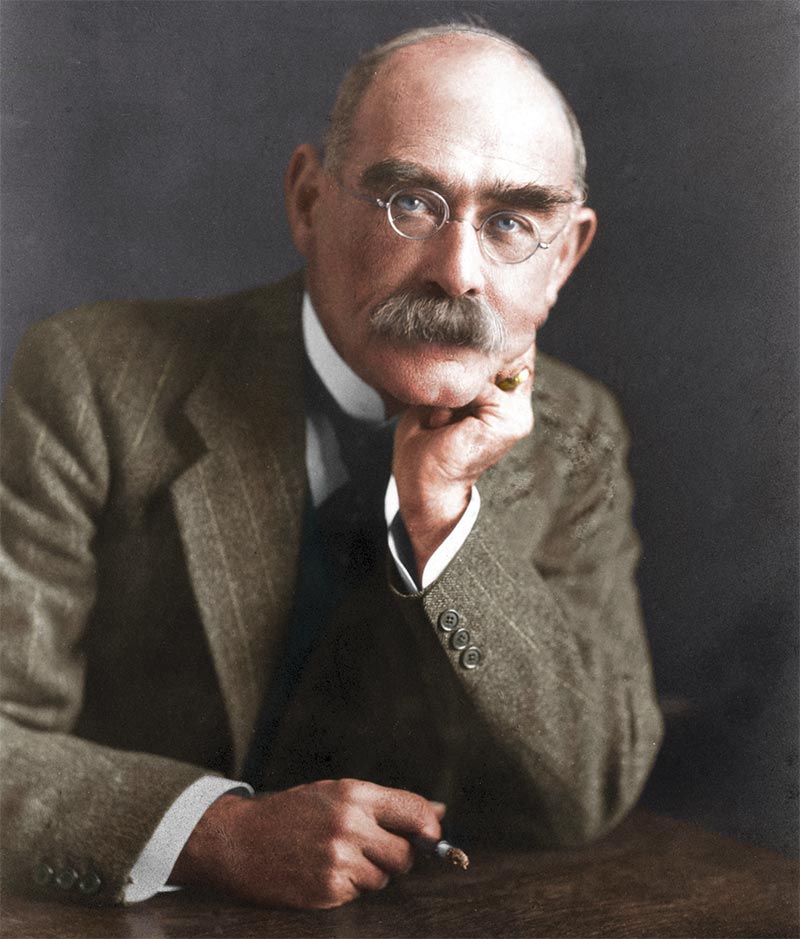
A Polarizing Artist: Rudyard Kipling’s Legacy

I remember it well. I was a young graduate student, privileged to study under one of the world’s foremost professors of Victorian literature, a renowned authority on Thomas Hardy.

The course was rigorous. We read the greats of the age—Macaulay, Tennyson, Browning, Dickens, Mill, Newman, Arnold, Morris, Ruskin, the Rossettis, Swinburne, Hopkins, Pater, and of course Hardy. Yet strikingly absent was Rudyard Kipling. Our professor dismissed him as the mere voice of imperialist Britain—an attitude then dominant in the Academy, and one I suspect still lingers on American university campuses.

I had never read Kipling. I had not yet learned to question. I accepted what I was told.

It was only later, during a summer course at Exeter College, Oxford, that I encountered another view: one that esteemed Kipling’s literary brilliance without committing the American folly of conflating his politics with the merits of his artistry.

Kipling’s literary range was astonishing. His verse, endowed with rhythmic command, borders on the hypnotic. He opened poetry to colloquial speech and became a supreme craftsman of the ballad form.

Yes, he gave voice to Empire in works like The White Man’s Burden, Kim, and The Jungle Books. But he also revered Indian culture—its spirituality, wisdom, and sensory richness. Often, with subtle irony, he questioned the very order he seemed to affirm.

Perhaps his greatest achievement lies in the short story. With precision and nuance, he crafted narratives of extraordinary compression, modern in their suggestiveness, wide-ranging in their scope. The Man Who Would Be King remains a masterpiece—its sweep and power undiminished. Kipling’s influence on Conrad, Maugham, Hemingway, Borges, and others is beyond doubt.

He was awarded the Nobel Prize in Literature in 1907—the first English-language writer to receive it—honored for his “power of observation, originality of imagination, virility of ideas, and remarkable talent for narration.”

Kipling’s stories, like all enduring art, probe psychological depths. They are complex, skeptical of conventional wisdom, and riveting in their precision.

In today’s multicultural Britain, he is taught in context: his genius as a storyteller acknowledged, his colonial perspective rejected. Lewis, Tolkien, and Pullman have recognized him as a precursor to modern fantasy.

In India, where he was born and spent his early years, his reception is understandably ambivalent: many readers disdaining his imperial condescension, yet acknowledging his literary craftsmanship. Salman Rushdie has called Kim “one of the greatest novels written about India,.” Other Indian writers continue where Kipling left off, offering vivid vignettes of India, but through an Indian prism.

Controversy about his place in the Western literary canon remains. Vladimir Nabokov, in his Cornell lectures, dismissed Kipling for his moralizing, He deemed his indulgence in exotic adventure stories as juvenile. Great literature, he argued, obeys the aesthetic imperative of narrative neutrality, or distance, as in Flaubert and Joyce.

On the other hand, the late eminent Yale critic Harold Bloom came to Kipling’s defense. In his The Western Canon. Bloom lists Kipling among hundreds of writers deserving inclusion in the canon. Bloom saw Kipling as a myth maker and gifted story teller, especially in his short stories. On the other hand, he found his poetry “scarcely bear reading.”

While I find merit in both Nabokov’s and Bloom’s arguments, I lean towards Bloom’s appraisal as more balanced. I have long resisted either/or equations, particularly as to the political or aesthetic. Over a lifetime, I have frequently found reasoned judgment occupies a middle place. I have given my own arguments earlier in this essay for his belonging in the canon.

Whatever a reader’s verdict, Kipling was a singular voice, very much his own man. In short, authentic. As he said in an interview shortly before his death,

“The individual has always had to struggle to keep from being overwhelmed by the tribe. To be your own man is a hard business. If you try it, you’ll be lonely often, and sometimes frightened. But no price is too high to pay for the privilege of owning yourself” (Qtd. in the Kipling Journal, June 1967).

rj

A Candle Has Gone Out: The Legacy of Jane Goodall

It’s with profound sadness I learned yesterday of primatologist Jane Goodall’s death at age 91.

Blessed with remarkable genes, she lived life with zest up to the very last, tirelessly traveling across international landscapes to raise funds for her Jane Goodall Institute in Tanzania, founded in 1977.

I read her NY Times obituary, but it falls short in evaluating the plenitude of her achievement and its significance for all of us. I learned some time ago that the NYT composes many of its obituaries in advance, ready-to-go like a frozen pizza.

It doesn’t take into account her devotion to the Tanzanians among whom she worked for sixty years, as earnest for their welfare as she was for chimpanzees, humanity’s closest relatives, possessed like us with dual capacity for good and evil.

She gave early warning of climate change as an eyewitness of its exponential ravages in Africa, the front line of its advance.

You can learn much of what she accomplished through reading among her many books The Shadow of Man or A Reason for Hope of her work in Africa, breakthroughs in science, and personal beliefs, some of them controversial such as her advocacy of birth control availability to help African families limit their family size. Tanzania is second among Africa’s 54 nations in population growth. With a present population of 68 million, its projected 2100 population will swell to 283 million, imperiling its subsistence resources.

Goodall had faced an uphill climb in winning acceptance among male scientists, stubbornly suspicious of any woman’s achievement in investigative research. Initially, when setting out for Africa, she had been a waitress and secretary. A wealthy donor, however, recognizing her brilliance, provided the funding for a Ph.D. in ethology at Cambridge University, Goodall one of the rare individuals to directly achieve a Ph. D., not having been an undergraduate.

I confess to a personal attachment to Goodall who, like me, suffered from lifelong prosopagnosia, a neurological disorder inhibiting one’s ability to recognize faces.

Currently the fate of her African investment, employing thousands of Tanzanians, remains under unrelenting threat with population growth, agricultural expansion, deforestation, fragmented forest, habitat loss, logging, and lack of consistent government enforcement of land use laws; not least, the volatility of donor contributions on which the work depends, collectively posing a Sword of Damocles hovering over its future.

There remain just 2300 chimpanzees throughout Tanzania, with an estimated 90 to 100 in Gombe National Park, the site of her research. Those numbers are down from the original 150 as elsewhere in Tanzania, bush meat remains a frequent staple despite its health risks. AIDS had its origin in Africa, consequent with eating chimpanzees harboring the Simian Immunodeficiency Virus (SIV). Goodall was a committed vegan, ardently opposed to factory farming.

Also contributing to their demise is ever expanding human encroachment.

A friend of animals, champion of Mother Earth, always with passion and never without hope, Dr. Goodall is in my pantheon of heroes, her many awards including the Presidential Medal of Freedom (USA), the Steven Hawking Medal of Science for Communication, and designation as Dame Commander of the Order of the British Empire (DBE).

Acknowledging her advanced age, she approached death as her “next great adventure. When you die, there’s either nothing, it’s the end, or there’s something. And things have happened to me in my life that I feel there is something. And if there is, I can’t think of a greater adventure than dying.” 

I wish I lived in a world which lowered its flags in tribute to Dr. Goodall:

”Somehow we might keep hope alive—a hope we can find a way to alleviate poverty, assuage anger, and live in harmony with the environment, with animals, and with each other,” she wrote.

A candle has gone out and I feel lonely and in a dark place.

rj

Music’s Intelligentsia: Great Music. Great Minds

If there’s an area of life I’ve neglected, it’s music. Music, like reading, exercising, learning new skills, nurturing friendships, takes time.

It isn’t that I don’t have time. It’s more that I often squander it, unheeding Thoreau’s maxim, “Time is the stream I go fishing in.”

It wasn’t always this way. When I was young, I took a transistor radio nightly to bed, solaced by music into deep slumber.

Like my daily quest to learn Italian, I want to be more fluent in music’s idiom. I still don’t know how to listen to classical music with understanding.

I’ve been told Brahms helps you relax, sleep better. I need him for when I awake to night’s stillness, the indifferent stars, my mind ablaze with anxious thoughts.

Jazz, with its pulsating, sensual immediacy, its impromptu genius, I like, but don’t listen to enough.

The same with the vast tapestries of other music.

I can’t sum up what I’ve lost through my disconnect.

Musicians themselves can be great company, fellow pilgrims in life’s journey.

Until today, I hadn’t known that the eclectic David Bowie kept a list of his 100 favorite books. I’ve gone over that list. Oh, my god! These books, none of them airport reads, should be on everyone’s lists. They’re now on mine.

There are others like him, musical geniuses who have wrestled with life’s vagaries, the meaning of it all, how to live it fully, its sorrows and its griefs.

There’s Patti Smith, Rimbaud and Baudelaire enthusiast, Gifford Series lecturer at Yale, recipient of France’s Legion d’Honneur.

Joni Mitchell, lover of Yeats, Rilke, and the modernists poets.

Sting, who studied English literature, devotee of Shakespeare, philosophy and political theory.

Bob Dylan, Nobel Prize for Literature.

Maggie Rogers, a new voice for me, her sultry songs guaranteed to shake your hips to their beat. Rogers took time out to learn life’s purpose, enrolling at Harvard Divinity School, earning her master’s. Like Bowie, she keeps a booklist, owns a first edition of Virginia Woolf’s To a Lighthouse—“The best thing I own.”

So many others: Cohen, Morrissey, Mingus, Baez. Others still.

Why should I be surprised? Musicians are artists engaging life; their music, poetry.

Like the psalmist’s harp, it touches the Soul.

rj

Ernest and Eloquent: Kimmel Returns

By any measure, Jimmy Kimmel’s opening monologue last night following several days of suspension from America’s TV screens, gracious and moving, reconciliatory and earnest, may well represent a turning point in returning our nation back to sanity and preserving what distinguishes America from other countries.

We have a constitution, though not always adhered to, that remains the touchstone of our nation, latent with promise of “liberty and justice for all.”

Our Founding Fathers got it right with the Constitution, knowing firsthand the myriad dangers imposed by despotic government, leading to a violent seven year war of confrontation.

Credit them with foresight to intuit the latent dangers of the new nation lapsing into the old tyrannies, designing a Constitution of checks and balances, supplemented by the Bill of Rights that includes the First Amendment, America’s warranty of the citizenry’s right to to be heard.

Kimmel exercised that warranty last night, and we should all be grateful. I had begun to worry we might never see an election in 2028. Kimmel gives me hope.

Engraved on America’s Liberty Bell are these words: “Proclaim Liberty thro’ all the Land to all the Inhabitants thereof.”

Again, Jimmy, our abundant thanks.

rj

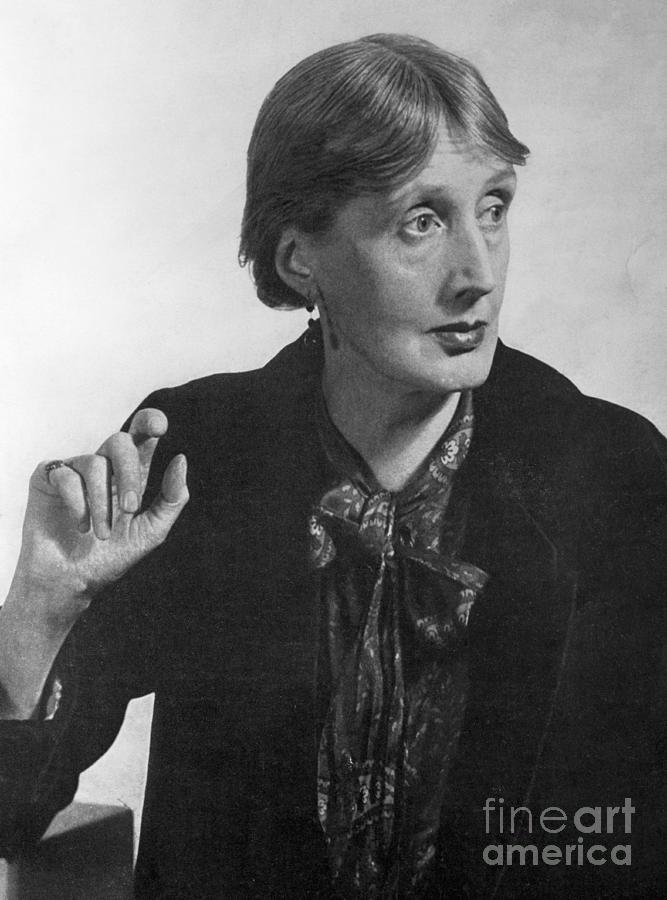
Thoughts After Reading Virginia Woolf’s Diary

I’m almost done reading Virginia’s Woolf’s Diary, 1918-1941. She means much to me ever since Howard Harper, a Woolf authority at UNC, introduced her to me.

Such a scintillating intellect. Writing didn’t come easily to her, frequented with anxiety, sensitivity to criticism, writer’s block, and bouts of depression. Without husband Leonard, I doubt she’d have pulled off her prodigious achievement.

The Diary serves largely as her workbook of creative struggle—getting things right, the interplay of new formulations, the unleashing of her interiority.

The Diary catalogues books she’s reading and plans to read. It teems with recall of literary and artist luminaries she knew intimately, many associated with the Bloomsbury Group to which she belonged—Strachey, Forster, Keynes, and her sister Vanessa Bell among them. Henry James, George Meredith and T. S. Eliot were frequent household guests.

She’s opinionated about several of her rivals, Joyce for instance. She adored Proust: “My great adventure is really Proust. Well—what remains to be written after that? You can’t go further than that.” And, of course, there were Shakespeare, Dostoevsky, Tolstoy, and not least, Dante, to whom she turned often.

She read Homer, Plato, Aristotle, Sophocles, and Euripides in the original Greek and continued so throughout her life. I have her essay, “On Not Knowing Greek.”

Woolf spoke French fluently and read Proust, Gide, Flaubert and Maupassant in French. I hadn’t known until reading the Diary that she read Dante’s The Divine Comedy in Italian.

Largely self-educated apart from courses in the classics taken at the Women’s Department of King’s College (Women were excluded from Oxford and Cambridge), her intellectual achievements are extraordinary.

I introduced my students in Modern Novel to her “A Room of Their Own,” a feminist classic elaborating the interiority of female consciousness and exposing the barriers silencing women’s voices. And then, there was Mrs. Dalloway and To a Light House, now canon staples of English literature.

Nonetheless, in reading the Diary I found myriad passages that grieve me. She could be elitist, contemptuous of the working class; condescending towards blacks; antisemitic: “I do not like the Jewish voice: I do not like the Jewish laugh”; she felt uncomfortable in the company of the disabled.

In many ways, her views were not atypical of the mindset of the snobbish British upper class in the days of Empire.

Despite these faults, I try always to separate the artistry from the life; otherwise, there would be few artists to pursue, given the human proclivity to misbehave.

And so, over the years, I keep coming back to Woolf—her ability to recreate the inner life, to make universal the world of the quotidian; the beauty of her lyrical prose, her experimentations with narrative, her wrestlings with life’s frequent inequities.

On the Other Hand: Reminiscence of Charlie Kirk

We’ve been hearing a great deal about Charlie Kirk in the aftermath of his assassination, much of it pejorative in public media—and in some cases, disturbingly celebratory—even from a few of my own friends on Facebook.

Whatever one’s politics, Kirk consistently embraced conversation across divides, something rare in today’s climate of weaponized rhetoric on both right and left—rhetoric that too often spills over into violence.

I’m reminded of my own university experience decades ago at the University of North Carolina at Chapel Hill, when state police were brought in after radicals seized several buildings. Over lunch one day, a friend who later became a professor at UC Davis told me bluntly, “blood was needed to prevail.”

Kirk, however controversial his views, waded into the near-universal tide of leftist polemic across university campuses. He did so not with violence but with debate—introducing new lanes of conversation and allowing dissident voices to be heard.

Journalist and bestselling author Michael Easter (The Comfort Crisis), himself a staunch liberal, shared this reflection on his encounter with Kirk:

A years ago, I got a message from Charlie Kirk. He wanted me to come on his podcast.

All I knew about him then was that he was a right-wing political commentator.

I don’t publicly discuss politics because my books cover health and the human experience, which is universal. So I asked my publicist—who is extremely progressive—if I should go on.

“Do it,” she said. “If politics comes up, steer it back to health.”

Charlie didn’t ask me a single political question. He was exceptionally kind and genuinely curious about my work. He had a better reading of my book than nearly any other interviewer, and he drew out faith-based parallels I’d never considered. That actually deepened my own understanding of my work. He mentioned my book far more than he had to.

I’ve been on big podcasts with meditation and self-help gurus who weren’t a fraction as present, kind, and curious as Charlie Kirk.

Our conversation changed how I see public figures. The 20-second clips and 280-character hot takes we see in our media ecosystem don’t capture the full breadth, depth, and humanity of a person. I now have no hesitations talking to anyone.

I respect Charlie as a curious thinker and fellow human. I respect his devotion to his faith and family. His willingness to talk with anyone was inspiring, unique, and beneficial. I’m sad he’s gone (Substack, September 13, 2025).

Easter’s words remind me of John Stuart Mill’s enduring warning against censorship:

The peculiar evil of silencing the expression of an opinion is that it is robbing the human race; if the opinion is right, they are deprived of the opportunity of exchanging error for truth; and if wrong, they lose what is almost as great a benefit, the clearer perception and livelier impression of truth, produced by its collision with error (On Liberty).

rj


Remembering Edmund White (1940-2025)

I’ve just come off reading Edmund White’s 2005 New Yorker essay, “The Women I Dated as I Tried to go Straight.”

Whatever your sexual orientation, reading Edmund White’s essay is worth your time—the unchecked wit; the metaphoric grace; the vivid, often astonishing anecdotes; the shimmering brilliance that makes experience palpable. Like essayists Orwell, Woolf, or Sontag, he has that rare ability to make you pause, reassess, change course.

Above all, there’s his candor.

This morning I was heartened to see The New York Review of Books commemorating him by featuring six of his essays, written for them over the years.

Just a few weeks ago, June 3, 2025, White slipped into eternity. He had long faced declining health: a heart attack, a stroke, and his decades-long reckoning with HIV. He was 85.

I read somewhere that Vladimir Nobokov, that other preeminent prose prodigy, admired White’s literary acumen, so much like his own. What writer wouldn’t relish Nabokov’s compliment, bestowed upon so few.

White was the high priest of gay literature, writing prolifically on its themes and torments, addressing with fearless clarity the culture’s imposed shackles of shame.

Across five decades, he authored thirty books—novels, memoirs, plays, hundreds of essays, many of them distilling the gay journey into a language of self-acceptance and grace.

A devoted Francophile, he spent nearly twenty years in France, where he would write his erudite The Flâneur and Genet: A Biography.  

In A Boy’s Own Story, a blend of fiction and autobiography, White chronicles the interior landscape of a young gay man confronting the burden of identity.

His 2005 autobiography, My Lives, unflinchingly narrates his first 65 years.

With the essay “The Women I Dated as I Tried to Go Straight,” White reflects on his early sense of same-sex desire, repressed under the weight of cultural condemnation: “In the past, when homosexuality was still considered shameful, I was slow to confess my desires to anyone.”

To atone for those hidden desires, “the fire in the crotch,” White dated women—many drawn to his intellect, good looks, and sensitivity. Empathy pervades his essay as he recalls these women, acknowledging the structural inequities they faced, confronted with a patriarchal hegemony: “I came to think of men as monsters with absolute power, the darlings of the Western world, and of women as their unfortunate victims.…This was what distinguished me from the straight men I knew, who, it seemed, were united in their ability to treat women badly and then laugh it off.”

White’s sympathy undoubtedly owes its genesis to the gay community’s own troubled quest for validation.

I found his retrospective vignettes of women moving, bringing alive each woman’s individuality in vivid, lyrical prose replete with introspective finesse:

Sally was celebrated for her big breasts and her face, which was that of the Apollo Belvedere—bow-shaped lips, a long, straight nose, a wide, domed brow, an ensemble that was classical and noble and oddly mature. She looked like a woman, a grownup woman, not a raddled adolescent. She said little, but she smiled dreamily with veiled eyes. Her smile had a way of lingering two beats too long, after the conversation had moved on to a different mood. Was she lost in her own thoughts and not paying attention? Had someone told her that she was at her best when she smiled? She never guffawed or squealed or made violent movements, though catty classmates told me that when boys weren’t around she was a real sow, rolling on the floor, drinking beer, and giggling with the other girls at obscene speculations about penises they had known or divined through Speedos.

He thinks that had he not been gay, he might have fulfilled their myriad longings: “Unhappy women! How many of them I’ve known. Sniffling or drinking with big reproachful eyes, silent or complaining, violent or depressed—a whole tribe of unhappy women have always surrounded me.”

For most of my life I’ve been a shoulder to cry on, and all of that time I’ve wished I could do more to ease the pain of the women in my life. If I were straight, I could have married one of them. I would have known how to comfort her. I would have worked hard to provide her with the security and even the luxury she required. I would never have run off with another woman. I would have been as sensitive to her needs as a sister, as protective as a father. And I would always have told her where I was going and exactly when I’d be coming home. This was what distinguished me from the straight men I knew, who, it seemed, were united in their ability to treat women badly and then laugh it off.

White remembers falling in love with fellow schoolmate Marilyn Monroe, a recollection tender and adolescent, full of longing and projection:

In the middle of my sophomore year, I was sent to boarding school, at the Cranbrook School for boys, in Bloomfield Hills, Michigan, where I fell in love with Marilyn Monroe. I knew that she was the most beautiful woman in the world, and yet she was in pain, in need. She was unhappy. I believed that I could help her. My fantasies weren’t specific as to what I would actually say to her or do for her. I never got beyond her little smiles of love and recognition, which burned with a brighter and brighter glow.

My favorite daydream was that she’d come with me to my senior prom. All the other guys would be astonished: the toad, Eddie White, was really a prince. I pictured her on my arm, her sequinned gown glittering, her voluptuous body undulating as we entered the dining hall, which had been transformed by crêpe paper into a ballroom. It was like a mermaid’s visitation. The thin boys with their brush cuts and spotty faces, their dinner jackets and burgundy cummerbunds with matching bow ties, would gape at us. No way, man, the biggest dweeb of them all with . . . Marilyn!

Fortunately, not all the women in his life were unhappy. Some lived fulfilled lives outside a dependency on men, easing his guilt:

What I loved about Anne and Marilyn {another Marilyn}, even Alice, Sally, and Gretchen—was that they weren’t unhappy. Marilyn wanted nothing from me but my friendship, and she has it still.

Because she and the others I’ve written about here were the first women I knew who weren’t unhappy, who never once made me feel guilty, they showed me the way to friendship with women. 

White’s essay emerges a paean to women across the years who were there for him in the hard places, lending solace and fostering courage.

I will miss Edmund White keenly, a voice in the wilderness.

—rj


Jane Goodall: My Hero

Every now and then, I like to honor in Brimmings those I cherish as heroes. They stand apart in their daring, accomplishments and, above all, in their goodness. Jane Goodall comes to mind.

She’s 87 now, passionate as ever about the fate of our beleaguered planet, spending much of her time these days lecturing widely across Europe, North America, and Asia, to raise funds for her beloved chimpanzees of Tanzania’s Gombe National Park and the subsistence farmers who crowd its borders, encouraging her audiences to find ways in their daily life to heal the earth and the consequences if they don’t.

As a child, her love for animals came early, on one occasion as a 4-year old, taking earthworms to bed. At age 11, she came upon the Tarzan books and it changed everything. “I decided that when I grew up, I would go to Africa, live with animals and write books about them.”

But women didn’t do things like that. They belonged in the home, taking care of their men.

Besides, her family lacked the resources to send her to university.

Not to be deterred, she saved up her money from her secretary job in London and in 1957, at age 23, set out for Kenya to stay with a friend. Soon she was working as a secretary in Nairobi, heard about famed archaeologist and palaeontologist Lewis Leakey, and paid him a visit. Impressed with her knowledge of animals, Leakey hired her as his assistant and soon she was digging for fossils in Olduvai Gorge on the Serengeti Plains.

Then came the day Leakey asked if she’d like to research chimpanzees in Gombe National Park, and she said yes.

The problem remained that she was a woman, didn’t have a degree, and lacked funding. A year later, a wealthy American businessman supplied the funding, telling Leakey, “OK, here’s money for six months, we’ll see how this young lady does.”

It would begin a sojourn of 60 years among the chimpanzees, and still counting. She discovered they can use tools and have a defined social structure: “I am amazed to know how chimpanzees are very much like humans. Biologically, the DNA of chimps and humans differs by only just over 1 per cent. The blood of a chimpanzee is so like ours that you could have a blood transfusion if you matched the blood group. Chimpanzees can learn American Sign Language (ASL). They can learn about 400 of the signs of ASL, and they can use them to communicate with each other – although they prefer to use their own postures and gestures.”

I used to think of chimps as peaceful creatures, munching bananas as the day is long. Alas, as Goodall discovered, they’re like us in their tribalism, attacking other chimp communities. Keen predators, they aren’t hesitant to feast on bonobo monkeys, small antelopes, and wild hogs:

“It was a shock to me when I first realized that chimpanzees, like us, had a dark side to their nature; in interactions between neighbouring groups and communities in particular, there can be violent behaviour. Groups of males patrolling the boundary of their territory may give chase if they see strangers from a neighbouring group, and they may attack, leaving victims to die of wounds inflicted. But we can take comfort from the fact that they also show love and compassion. They can show true altruism.“

Sadly, these creatures, so much like ourselves, with intellect, distinct personalities, and emotions, are becoming extinct: “They’re disappearing because of the destruction of their habitat and ever-growing human populations. They’re disappearing because they are being hunted for food – not to feed hungry people, but because of the commercial hunting of wild animals, which is facilitated by the intrusion of new roads created by logging companies.”

Realizing that something must be done to lessen the human footprint, she and others founded Roots and Shoots to involve third world communities in the environment’s preservation, enhancing their economies and welfare with jobs, schools, medical clinics, and teaching crop rotation.

While poorer populations can destroy a habitat through intrusion in a desperate attempt to find new land for food production, slashing and burning their way through primeval forest, the bulk of environmental destruction comes from the materialism of rich nations, eating more meat, dependency on fossil fuels, factory farming with its consequent pollution, misuse of water resources, planes and cars spewing CO2 into the atmosphere, warming the seas, melting the glaciers, raising the tides.

I like it that Goodall is keen on limiting population growth to lessen the ubiquitous human footprint that threatens wildlife and is largely responsible for species decline and extinction, unlike other environmental and organizations such as the Sierra Club, reluctant to take up the issue because of its potential racial overtones.

We hear a lot about poaching, but exploding population growth in Africa poses devastating consequences, not only for indigenous fauna and flora, but for humans as well in the context of climate change and diminished resources. A UN study, for example, projects Nigeria’s current population of 200 million will double to 401 million just by 2050 and 721 million by century end.

Tanzania, home of Gombe National Park and Goodall’s research, has a current population of 68 million. By 2100, its population will swell to a projected 283 million: Goodall knows this: “We cannot hide away from human population growth, because it underlies so many of the other problems. All these things we talk about wouldn’t be a problem if the world was the size of the population that there was 500 years ago.”

I admire her boldness, whether addressing population growth, human aggression, meat eating, habitat loss, and climate change. There’s something alluring about those like Goodall who don’t mince words, daring what our anxieties disallow.

Goodall, nevertheless, remains optimistic: “Every one of us makes a difference every day. And if we would just spend a little bit of time thinking about the consequences of the choices we make each day – what we buy, what we wear, what we eat – there is so much we can do. Collectively, that will start to make bigger changes as more people understand that their own life does make a difference.”

While Goodall is renowned for her decades-long study of chimpanzees, I would contend her greatest contribution lies with her inclusion of the needs of local populations in minimizing habitat loss and species decline, revolutionizing conservation.

Dr. Goodall, a pioneering woman defying cultural boundaries, is my hero, brave, determined, assertive, living alone in the jungle for 60 years, a friend of animals, a champion of Mother Earth, always with passion and never without hope.

–rj

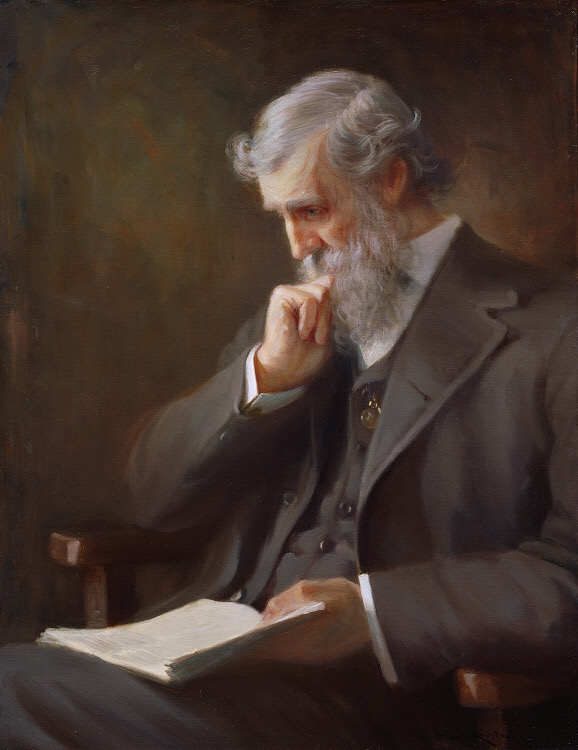
John Muir: Nature’s Gifted Scribe

Sierra Club founder John Muir was extraordinary, not only for his devotion to preserving nature’s wilderness, but for his eloquence in articulating its grandeur. An example:

Wonderful how completely everything in wild nature fits into us, as if truly part and parent of us. The sun shines not on us but in us. The rivers flow not past, but through us, thrilling, tingling, vibrating every fiber and cell of the substance of our bodies, making them glide and sing. The trees wave and the flowers bloom in our bodies as well as our souls, and every bird song, wind song, and tremendous storm song of the rocks in the heart of the mountains is our song, our very own, and sings our love. The Song of God, sounding on forever (from John of the Mountains: The Unpublished Journals of John Muir).

All told, he would publish 300 articles and 10 major books, not bad for someone who nearly lost his sight in a work accident.

One of his closest friends was President Theodore Roosevelt. In 1903, they would hike wilderness terrain together for two months. Inspired by Muir, Roosevelt designated 230 million acres of public land, including Yosemite and four other national parks and 18 national monuments, for preservation.

Earlier, in 1867, at age 29, Muir walked 1000 miles from Indiana to Florida, taking along only sugar and bread, buttressed by wild berries. (Muir never weighed more than 148 pounds. ) You can read an account of his journey: A Thousand Mile Walk to the Gulf (1916). Excerpt:

Though alligators and snakes naturally repel us, they are no mysterious evils. They dwell happily in these flowery wilds, are part of God’s family, unfallen, un-depraved and cared for with the same species of tenderness and love as is bestowed on angels in heaven or saints on earth.

John Muir was one of those rare people that cross our pathway in life’s journey, keenly sentient of life’s best values and eager to share. Of all the nature writers I’ve imbibed, I’ve not found his equal for rendering nature’s transcendent allure with lyrical cadence that informs, moves, and underscores its mystery and  moods, culminating in an elixir for healing both body and soul.

All good nature writing may well begin with Muir.

—rj


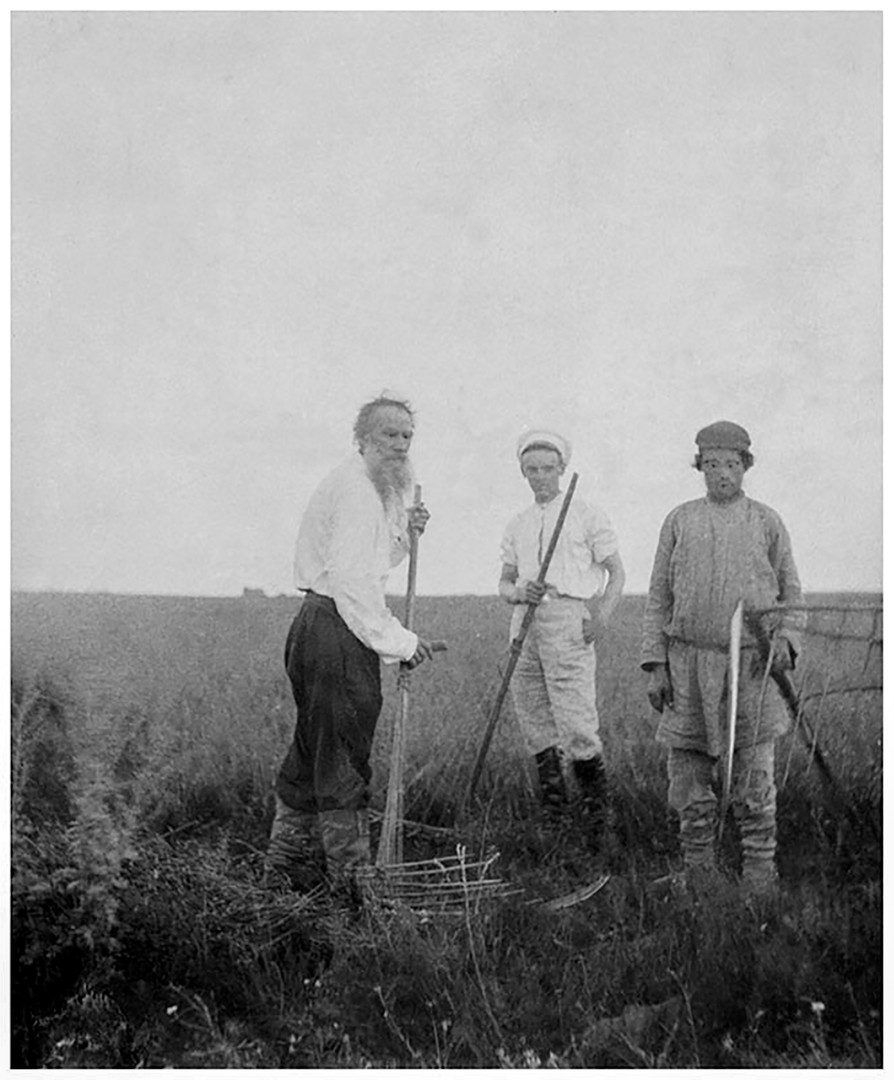
A Profound Influence: My Debt to Tolstoy

I’ve had this fever to devour books since I was a child.
It began when my brother, David, returned from the army and gave me Huckleberry Finn to read. I was eight.

There was this small news store on Philadelphia’s busy Girard Avenue in Fishtown. I don’t remember how I discovered it, but I’d often stop there on the way back from elementary school or in summer time, when I roamed the city as a street urchin, sometimes poking my nose where it didn’t belong.

They had this big box filled with what were called Classics Illustrated, which featured comic-style adaptations of literary classics. Founded by the Kanter family in 1941, Classic Illustrated made it into the 21st century.

I’d fish out comics featuring works like Swiss Family Robinson, Moby Dick, Kidnapped, Mutiny on the Bounty, Oliver Twist. They went for no more than a nickel and there were lots of them.

I enjoyed them so much, I didn’t want them to end. This led me to the Montgomery Street library, where I would read their originals. By age 12, I had read scores of literary works. By the way, that library still exists.

Of all the writers I’ve read over the years, Tolstoy stands out head and shoulders above all others, influencing me profoundly. By age 13, I had read War and Peace and at 15, Anna Karenina.

Tolstoy taught me empathy for the poor, disavowal of violence, restraint from eating meat, to live simply and love my fellows.

Tolstoy’s great quest was to resolve life’s riddle: How should we live?

His quest became mine,

I loved his parabolic short stories. I think of The Death of Ivan Ilyich as among the most profound short stories I’ve ever read and taught it for many years.

Tolstoy’s writing creeps up on you. Though simply written, for Tolstoy shunned affectation, it’s the pulsating nuance generated by a passionate insistence that holds you to the end. Make no mistake. He aims to convert you.

Then there is his last novel, Resurrection, moving and powerful, a panorama of Russian life at the end of the nineteenth century. On the attack, he assails the injustices of a repressive, oligarchic society and the hypocrisy of its bulwark, the Russian Orthodox Church.

I wanted to read him in the original, so I studied Russian.

As a college prof, I taught seminars in Russian classics.

In 2001, I went to Russia and visited his lifelong residence at Yasnaya Polyana near Tula, 125 miles southeast of Moscow. I stood in silent tribute at his grave.


If there’s a Tolstoy book you should read sooner than later, my recommendation is The Kingdom of God is Within You.

Mahatma Gandhi, on reading it, exclaimed that he felt “overwhelmed”: “All the books given me … seemed to pale into insignificance.”

Tolstoy and Gandhi exchanged letters till Tolstoy’s death in 1910. Gandhi had also read Tolstoy’s hand-circulated “A Letter to a Hindu,” with its advocacy of love, not force, as the means to freeing India from British rule. We know the rest of the story.

I’m not interested in hagiography. Tolstoy had feet of clay. There existed his stormy marriage to Sofia and his moral intensity in combat with carnal appetites. He endowed his protagonist Anna Karenina with liabilities he despised in himself, annulling her quest for self-realization. In the novel, it’s Levin who Tolstoy aspires to be.

When the Bolshevik revolutionaries violently seized power in 1917, the five year Russian Civil War began. The Bolsheviks, coming upon the Yasnaya Polyana estate, did not blaze it to non-existence as was their wanton elsewhere. Tolstoy had freed his serfs long before the Czar. Dressing in peasant garb, he labored among them, and distributed his wealth.

When German troops approached the estate in their invasion of Russia, the Soviets loaded Tolstoy’s furnishings and manuscripts on a train into the Urals, safe-guarding them for posterity.

Today, Russia continues to revere Tolstoy, for he’s the Russian soul writ large. I never understood the deep spirituality of the Russian psyche until I was on Russian soil. You see it in their art: Bryullov, Kandinski, Aivazovsky. You hear it in their music: Tchaikovsky. Rimsky-Korsakov, Rachmaninov. You imbibe it not only through Tolstoy, but in Pushkin, Dostoevsky, and Chekhov. In Russia, poets are celebrities.

Russia is neither European nor Asian. It is itself.

Embraced by the universal human condition, Tolstoy nonetheless intensely sought to free himself from its shackles in pursuit of love, social equity, and non-violence: “The sole meaning of life is to serve humanity.”

I take him with me everyday.

–rj