You have every right to be afraid!

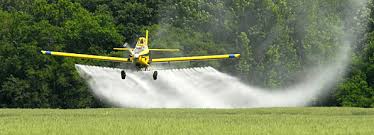
cropsprayingMany of us rightfully fear a Trump presidency for what it may mean for the welfare of our citizenry and nation.

Will Affordable Health Care (AHC) and Medicare be on the chopping block?

If you’re an undocumented immigrant, will Trump carry out his often repeated pledge to deport illegals and build a wall on the border with Mexico?

Will he foreclose on refugees, many of them Muslims?

On the the world stage, will he roll back Obama’s executive order that has restored relations with Cuba?

Will he undo the nuclear treaty with Iran?

While all of these concerns are legitimate, I’d argue that they pale up against the incipient threat posed by climate change, an issue virtually missing from the presidential debates, despite the earth’s very survival being at stake.

Alarmingly, in his October 100-day preview, Trump, who has repeatedly declared global warming a hoax, pledged he’d repeal the Clean Power Plan, withdraw from the historic Paris agreement (signed by 120 nations, setting targets for carbon), and lift restrictions on oil and gas development on public lands.

He’s also told us he’ll revive Keystone XL.

In recent days, the press has been focused on his potential choice for the important Secretary of State position. Nobody’s talking, however, about whom he’ll appoint as Secretary of the Interior.

At the moment, the scenario for environmental disaster looms large in Trump’s choice of Myron Ebell to oversee the transition of the Environmental Protection Agency, ironically founded by Richard Nixon. Ebell doesn’t believe in climate change either.

He’s also associated with the Competitive Enterprise Institute (http://SafeChemicalPolicy.org), which underplays the environmental and health consequences of industrial chemicals.

Ebell could also be Trump’s choice to head the EPA. For the record, Ebell opposes government efforts to curb global warming and the Paris Agreement.

As I write, it isn’t far-fetched that Trump might give the nod to Forrest Lucas for Secretary of the Interior. Lukas has contributed mega-bucks to Trump and Pence’s campaigns. An oil executive, he’d be in charge of our national parks and public lands. Native Americans–think North Dakota pipeline–might raise their eyebrows, given that one of the Department’s tasks is to monitor programs relating to Native Americans.

We haven’t heard yet on who’ll fill the Department of Energy either, but if Ebell doesn’t get the EPA or Interior nomination, he’d likely fill this vacancy. This, again, is a pivotal cabinet post, affecting environment in the Department’s mission to research, regulate, and develop energy technology and resources.

In the meantime, climate change isn’t when, but now. Lamentably, we learned just last week that due to the summer melting of Arctic ice, warm waters have swept over the South Pacific, killing coral, and substantially damaging the famed Great Barrier Reef off Australia’s coast.

We ‘re getting more droughts and flooding than the norm..

2016 will go down as our hottest year since we began keeping track of temperatures.

Scientists tell us we’re on pace, despite December’s Paris agreement, for an increase in earth’s average temperature of 3.5 Celsius, if not more, by 2100.

What this means to our children is that coastal cities like NewYork, Míami, and New Orleans will be mere abstracts of memory, or like the Atlantis of ancient myth, lost beneath the sea.

–rj

Open the door and come right in….

o-mindfulness-practice-facebookMindfulness is everywhere these days. I was at our local Kroger store yesterday, sampling its magazine section and, sure enough, there were two mindfulness magazines. Go to Whole Foods, it’s the same.

Mindfulness has taken off in the medical community as well, where it’s become increasingly a centerpiece in psychological therapy, helping patients cope with stress, anxiety and depression. (For a sample listing of leading medical schools offering mindfulness curricula, see Medical schools.)

It’s also proven a boon to helping cancer patients live with their pain and the stress of chemotherapy.

Last week, I completed an online course, housed at Leiden University in Holland, called “Demystifying Mindfulness.” According to the university’s figures, some 8000 students have now taken the course, which introduces you to mindfulness and its origins and contemporary applications–psychological, cultural, and political, with a look at its future.

You also get right down to practicing it, listening to guided MP3
sessions, generally 30-40 minutes.

To me, that’s the hard part, finding a time for practice removed from the distractions of daily life, compounded by living in a digital age. Of this, I’m well aware, so I try to get at it right out of bed in the early morning.

Mindfulness practice can take on a myriad of formats, as it teaches you to focus, and you soon discover you can focus on just about anything. But it isn’t easy.

Our minds are wanton wanderers. Buddhists call it the “monkey mind,” where your thoughts just seem to jump randomly, or like a monkey, from tree to tree.

I’m okay with that.

The trick is concentrating on some sensory aspect, i.e, taste, sight, smell, etc., and when the chatter comes, as it surely will, getting back on track. You do this by returning to a focus on your breathing, no mantra or chant needed as in most meditation.

Ultimately, mindfulness helps you live more fully in the present, unburdening yourself from the past with its nostalgia, self-pity, regret, and perhaps anger; likewise, helping you toss your worrying about the future.

Mindfulness teaches you how to get on with life, even in the hard places.

You can practice it in so many ways, like focusing on a candy in your mouth, or intently listening to a loved one, or even while walking or listening to music.

If I were to sum up mindfulness, I’d say it primarily aims, not merely at increasing your awareness, but helping you become more insightful as its reward. In turn, you’ll respond more positively to those around you.

Properly done and practiced daily, mindfulness increases your capacity for empathy, or compassion, for others. After all, when you become more mindful of others, that is, when you really start listening to them, you begin to see yourself as kindred in life’s journey.

As my instructor at Leiden put it, the evidence of your having effectively done mindfulness ultimately exhibits itself in an ethical response to your fellows, along with an effort to ameliorate their life contexts, often imposed by seemingly inherent cultural injustice.

Think about it: Just maybe if we’d all get down to mindfulness we could ultimately bring about a world of fraternity. The revolution I’m talking about doesn’t derive from armed struggle, but the collective, incremental empowerment of reconciliation fostered by a salient awareness of the human kinship that bonds us.

Mindfulness even features exercises that have a direct bearing on helping you achieve greater empathy, or what I like to call emotional intelligence (EQ).

An example of this comes from Dr. Ronald Siegel, a mindfulness therapist at Harvard Medical School:

Cross your hands over your heart.

Think of someone you love, or even of someone who’s brought stress into your life.

Visualize them and say the following:

May you be happy.
May you be peaceful.
May you be free from suffering.

Do this several times.

But keep this caveat in mind: You can’t really love others fully without
self-esteem, resulting in your needing others to validate yourself.

Now say to yourself,

May I be happy.
May I be peaceful.
May I be free from suffering.

While mindfulness won’t cure all of life’s ills, it helps you cope with them, making you aware we’re all in this together.

Discovering yourself and becoming more mindful of others leads to that reciprocal joy Judy Collins famously sings about, and–yes–it can be yours:

Open the door and come right in
I’m so glad to see you my friend
You’re like a rainbow coming around the bend
And when I see you smilie’
Well, it sets my heart free
I’d like to be as good a friend to you
As you are to me.

–rj

Introducing my hummingbird friends…

hummingbird-at-a-feeder-1They return every April to our Kentucky backyard, survivors of a 3000 journey from Central America, which includes a non-stop 500 mile flight across the Gulf of Mexico. It’s a journey my hummingbird friends will repeat again, returning in fall to their winter feeding grounds.

Knowing of their imminent arrival, I had faithfully set out our bright red hummingbird feeder in mid-April. For some reason, they prefer red and orange colors. Every spring, I’d be either sitting in the sunroom or outside, prepping the flower beds, when I would first spot or hear a solitary aerial scout probing, like some overhead helicopter, the landscape below. First of a coming vanguard, this sole wayfarer heralded spring’s rebirth, despite frequent rain, temperature dips, and clouds that frustrate the sun.

Always, as though set on a timer, my guests start their return journey the first week of October. I last saw them here on October 3, busily waging war with each other for first rights to their sugar drink. I know what this is about. It’s important for them to increase their body fat by half to fuel their arduous journey. I’m glad to provide a way station.

I’ve learned enough about hummingbirds to know this remnant flew-in from other haunts this fall, perhaps even from lower Canada, seeking to refuel. If I hadn’t seen any hummingbirds since early August, it was because my regular clientele were already embarked on their long journey. Hummingbirds begin their return migration as early as the waning weeks of July, extending through the second week of September, depending on the locus of their summer habitat.

The next day, they had vanished, nature stamping fall’s passport while signaling my own need to prepare our yard for winter’s long sleep.

Still, I keep the feeder out just in case there’s a straggler about. It happened one year. I had seen this seemingly forlorn hummingbird on our woodpile out back, which is quite unusual, since hummingbirds can’t walk or hop like other birds, given their tiny feet. That’s why their feeders lack perches.

Moving cautiously, I was able to get near enough to cup him in my hands and place him in an old shoebox, uncovered, for a quick trip to our vet. Along the way, Karen and I kept thinking anxious scenarios of what to do if he got loose in the car. But it never happened, thank goodness.

The vet, a bird specialist, shrewdly put sugar solution into a nose dropper and he started drinking–hey, a good sign. Then, suddenly, here he was, zooming around the exam room. Well, we got him back, cradled him into his box again, this time with aerated cover, and took him home.

Releasing him in the backyard, we watched our friend fly eagerly to a high pine branch, rest momentarily, before soaring out of sight, perhaps ready to resume his journey over land and sea.

I’d like to think he did well, but the final fate of migratory birds is an uncertain one at best. Their worst enemies are storms and loss of habitat through human intrusion. An estimated one third don’t make it. That’s why it’s incumbent you and I who have backyards do all we can to lend a helping hand to our aerial friends.

After all, they help us maintain the ecological balance on which life depends, including our own.

Postscript: Fun Facts about Hummingbirds:

  • Of 320 species in America’s, only 8 of them breed in the U.S., among the most notable, the ruby-throated hummingbird. Hummingbirds are found only in the Americas.
  • They live about 3-5 years.
  • Each species makes a different humming sound, determined by wing beats per second.
  • Their wings beat between 50 and 200 flaps per second.
  • Their tiny hearts beat 1200 times a minute.
  • They take 250 breaths per minute at rest, which isn’t often.
  • They can straight fly at 30 mph, dive at 60 mph.
  • Among bird species, they’re your ninja warriors, known to attack jays, crows, and even hawks.
  • In size, some species are so small they’re consumed by other insects such as praying mantis and dragonflies.
  • They’re the only birds that can fly backwards and sometimes upside down.
  • Hummingbirds must eat twice their body weight daily, and to do this, they visit hundreds of flowers, primarily feeding on nectar. (I make a sugar substitute formula for them, changing it every 3 or 4 days to avoid mold.)
  • Unlike other migratory birds, each hummingbird makes a solitary journey, and not as part of a flock. (Hard to imagine, even for a human, crossing the Gulf of Mexico by yourself, without map and compass. But these 3 inch creatures are nature’s miracle. Even more spectacular, young birds travel to a homeland they’ve never seen, depending solely on instinctual navigational skills.)


Leap Frogging

frogsI continue to read Shinzen Young (The Science of Enlightenment), and always with the thrill of discovery. No one, and I mean no one, has opened up the insides of mindfulness meditation more for me.

You know you’re keeping good company with a book you can’t stop scribbling in with notes and highlighting. Later, I become this grasshopper–or better–a frog leaping pages, landing on passages, sometimes amphibiously diving beneath, feeding on nuances that the residual of absence makes clearer and often multiplies.

My guru tells me that any experience, even if painful, yields relief when I pin it with concentration rather than avoidance as many of us do.

Doing so, we make a breakthrough, at long last, mining insight into our Self, that vein of subterranean opaqueness affecting so much of our surface life. The frog thing again.

If mindfulness begins with concentration, it succeeds with clarification, simply because it detaches us from the Self or Ego within us, affording us that rare objectivity.

A still further dividend is that our own wrestlings dissolve in a humility energizing our capacity to love each other more fully.

We measure mindfulness’ success in the amelioration it brings to our daily lives in the acceptance of the finiteness within ourselves and others, creatures never standing still, but always becoming.

While mindfulness can lead us to moments of ecstatic release from the shoulder heavy burdens of anxiety, worry, and resentment–even physical pain– it’s not really about that. Physical suffering, for example, may linger, but it no longer pervades.

Successfully done, mindfulness helps us live happier lives. independent of life’s circumstances with their undulations of good and bad:

Ordinary experience, when greeted with concentration, clarity, and equanimity catalyzes a process of insight and purification which culminates in the ability to have complete experiences whenever you want. This theory is quite elegant. It has all the marks of good science….It well deserves the name, “science of enlightenment.”

There’s so much more I !d like to say, but it’s early morning as I lie in bed, prepping for a new day with its granary for both promise and regret; but as Frost insists, “I have promises to keep and miles to go before I sleep.”
–rj

Live Longer Now

Bodybuilder Ernestine Shepard, 78

It’s funny how your mind takes vast jumps, transcending time and space, hurling you into the past or thrusting you into the future. It’s happening to me now.

I remember sitting in my sixth grade class in Florida, fascinated with my teacher’s story of Ponce de Leon’s search for the fountain of youth, motivating him to travel to a new place, which he called Florida.

I think we’re all Ponce de Leons in quest of perpetual youth. We fear ending, the withering of our youth with its exuberance and beauty; the diminishing of resolve motivated by idealism, born of innocence; the advent of entropy and the descent into morbidities presaging that eternal sleep.

We evade our mortality in many guises, obsessing about film icons who seem to have the best of good looks and agelessness.

Advertisers grow rich, pedaling snake oils to mummify us from time’s erosion.

Religion offers consolation; materialism, avoidance; power, the illusion of mastery.

Mortality is the underlying cadence of the arts, arresting time’s flow in capturing the moment’s essence. Think Keats’ Endymion: “A Thing of beauty is a joy forever/Its loveliness increases;/it will never pass into nothingness….”

Medical science isn’t any less pervaded by its own Ponce de Leon quests into unlocking the mysteries of aging, harnessing our genetic codes, refining the regimens of diet and exercise.

A good number of scientists are busy at work, confident that they’ll ultimately win the day. There is Silicon Valley’s California life Company (Calico) for example, determined and well-funded, zealously hiring the foremost scientists on what it deems a moral mission to vastly beat back aging and pre-empt physical demise.

And there are other start-ups, too, like Venter with its ambitious plan to augment Calico’s efforts by creating a gargantuan database of one million human genomes by 2020.

Unfortunately, the landscape of new technologies is littered with bad case scenarios of Frankenstein prototypes unleashing their new horrors on humanity.

I’ve been reading this wonderful book, The Science of Enlightenment by Shinzen Young, an immensely learned Buddhist monk who has made it his mission to reconcile the best of Asian mindfulness practice with contemporary neuroscience.

I happened to come across this passage that set this present blog in motion on how we needn’t concern ourselves with whether science succeeds in its endeavors of extending longevity. We can have it now:

Now imagine that you will live just a normal number of years, but that your experience of each moment will be twice as full as it currently is; that is, the scale at which you live each moment will be doubled. If you only lived each moment twice as fully as the ordinary person lives it, that would be the equivalent of one hundred twenty years of richesse. Not a bad deal.

Hey, I’ll buy into that. I’m 76 and well aware of the math underpinning insurance actuaries. I’m lucky to have gotten this far, and with reasonable health, but it wouldn’t have mattered to me overly if my demise had been at 60.

I’ve lived my life up to the brim with world travel, including third world countries, conversing and making friends; gone from a Philly street urchin, raised by an alcoholic father,  to a professor of English, privileged to share the beauty and wisdom of literature with several thousand students who’ve enriched my life and, I trust, theirs.

I’ve filled my life with passions that have anchored my happiness–a love for reading, nature, languages and writing.

I wake each day, plotting new ventures. As the remarkable Hellen Keller wonderfully put it, “Life is either a great adventure or nothing.”

Not least, there’s been Karen, who entered my life some twenty-five years ago, balancing my introversion with her openness and steady optimism, igniting new vistas with her refusal to foreclose on possibility and stunning ability to rebound from life’s vicissitudes.

Hopefully, the best part of all of this transcends Self in its yield of an encompassing empathy that’s taught me how connected we are to each other and the absolute that we love one another.

For Shinzen Young, longevity is best measured experientially, not chronologically, when we live mindfully in the present. “Meditation is the key to this kind of non-mythical life extension,” he writes. “By developing an extraordinary degree of focus and presence, it allows you to live your life two or three hundred percent ‘bigger.'”

I couldn’t agree more.
–rj

On Reading Rebecca Mead’s My Life in Middlemarch

rebecca-mead-my-life-in-middlemarchAll of us have a favorite book we wouldn’t mind reading again. For me, it’s David Copperfield, simply because I identify with much of what happens in it. The same holds true for Rebecca Mead in her bibliomemoir, My Life in Middlemarch, which explores Eliot’s masterpiece as a personal game changer.

I’ve always liked Eliot immensely as well (see Brimmings, 8/17/16), especially for her bottom line, “the truth of fellow feeling,” as she aptly phrased it in Adam Bede. As Eliot put it later,  “The only effect I ardently long to produce by my writings, is that those who read them should be better able to imagine and to feel the pains and the joys of those who differ from themselves in everything but the broad fact of being struggling erring human creatures.”

She had been raised in a fiercely Calvinist home, sharing its piety, until she began reading German “higher criticism,” which read the Bible as a human rather than divine construct. Rejecting Christian theology, she retained its ethic core of human sympathy, or what today we term empathy, i.e., the putting of yourself in another’s shoes.

Put into practice, we’d wake to a better world.

Although I had read Middlemarch way back in grad school and made Eliot a centerpiece in my later teaching of Victorian lit classes, the years had taken their toll, so I wanted to pursue Eliot’s classic again as backdrop for Mead’s book, and I’m glad I did.

Mead skillfully assembles the nuances of both Middlemarch and Eliot’s life that have resonated for her over the years, underscored through subsequent re-reads; for example, Eliot’s rural upbringing, her several loves until finding in her middle years a sustaining relationship with a fellow writer, her delineation of love’s growth and the empowerment of women—or lack thereof.

But some readers may think Mead lapses into narcissism, reading herself into Middlemarch. Mead devotes, for example, considerable space to Eliot and her companion, George Lewes and his three children, drawing a parallel to her own commitment to a man with three children: “…a few years later [following a failed relationship] I met a man who had three sons, not very different in age than were the Lewes boys when George Eliot met George Lewes.”

At another juncture, she reflects at length on Eliot’s maternal relationship with her stepson “Thornie,” and her own role as a step-mother.

She later notes that Eliot and Lewes lived, though briefly, in her Dorset town of Radipole, now incorporated into Weymouth.

Eliot prefaced each of her many chapters with an epigrammatic quotation. Mead extrapolates several of these for her own chapter headings, rendering them congruous with events and discoveries in her personal life.

Ironically, Eliot had written an early article for the Westminster Review decrying readers who overly identify with a character, as Mead acknowledges.

In her defense, while the analogies do pile-up, it’s a minus only if we leave things there. It’s not the analogies, but their lessons that matter. Besides, we’ve all come across books delivering a right uppercut that staggers us into questioning our assumptions and grants us new vistas and resulting options.

Some books not only make us wise, but better people for having spent time in their company.  If we lose ourselves in such books, might we not also find ourselves there as well?  Thus, I fully enter into her meaning when she writes that “there are books that seem to comprehend us just as much as we understand them, or even more. There are books that grow with the reader, as the reader grows, like a graft to a tree.”

If Mead strays, it may be she admires Eliot to excess, sometimes appearing defensive when finding Eliot in real life not quite the paragon of moral virtue given off in her novels. She could sometimes prove harsh, if not cruel, in her patronizing and judgmental strictures. So George Eliot was no St. Teresa of Avila. I rejoice!

Perhaps what Mead appreciates most in Middlemarch is Eliot’s psychological acuity as the first novelist to dwell on the interior life of her characters, fraught with tensions delivering them from stereotype. Governed by every human emotion and vicissitude of mood, affected by both choice and chance, they become ourselves and enter into our experience. Mead quotes D. H. Lawrence pioneer observation, “It was she who started putting all the action inside.”

As a former international correspondent and, currently, a staff writer for the New Yorker, the ability to discern the unspoken when interviewing would obviously appeal to Mead:
“…being a journalist for all these years had taught me a few things: how to ask questions, how to use my eyes, how to investigate a subject, how to look at something familiar from an unfamiliar angle.”

It may seem incredulous, but in deftly applying these skills it’s as though Mead just pulled off a live interview with her subject, intuited the unspoken, enabling both biography and memoir; thus my earlier term, bibliomemoir, or a book about a life of reading.

I think of other salient bibliomemoirs, notably Phyllis Rose’s A Year of Reading Proust: A Memoir in Real Time and William Deresciewicz’s A Jane Austen Education: How Six Novels Taught Me About Love, Friendship and the Things That Really Matter. There is also Helen Macdonald’s Hawk, winner of the Samuel Johnson Prize, that I recently read and esteem greatly. Reading My Life in Middlemarch has opened up a new portal of discovery for me via this sub-genre.

In many ways, Middlemarch’s supreme ambience is one of melancholy in its depiction of the changing fortunes of its principal characters as they experience the dissonance between desire and result; and yet the novel rebounds with achieved happiness for several of its characters, including its heroine, Dorothea, whose initial disillusionment yields to a discerning maturation.

As Mead observes in quoting Eliot, “We cannot give the young our experience. They will not take it. There must be the actual friction of life, the individual contact with sorrow, to discipline the character.”

Paradoxically, however, Eliot does a whole lot of that in her thumping moral asides, awkwardly delivered in convoluted prose, throughout her novels. Jane Austen. on the other hand, succeeded without the editorializing often repugnant to contemporary readers.

In reading Middlemarch again, I remembered my own lugubrious involvement with a chosen author–in my case, James Joyce–the tracing of a life, traveling, papers, interviews, contact with manuscripts and, yes, myriad readings of authorities on one’s subject.

Mead proves scrupulous and unsparing, eloquent and moving, in exploring authorial events possibly shaping the novel’s characters, commanding a prose that often approximates poetry. That said, In her scholarship, she owes a considerable debt, among others, to Rosemary Ashton’s 142 Strand: A Radical Address in Victorian London.

If you read Middlemarch, whether for the first time or anew, I highly recommend you try out Mead’s testament of affection as a sequel to this greatest of Victorian novels.
I did, and for all my reading of Middlemarch and study of George Eliot over the years, Mead made me wiser and more sensitive to Eliot’s resonance in my own life and for
our own time.

–rj
Revisiting George Eliot’s Middlemarch

MiddlemarchJust finished reading George Eliot’s Middlemarch a few minutes ago. I actually had read it in grad school, but since that was several decades back, much of it had become a tabula rasa for me in rereading it.
What got me started was New Yorker staff writer Rebecca Mead’s recent memoir, My Life In Middlemarch, that intriguingly offers parallels to Middlemarch gleaned from her own life.

Rereading this novel of 900 pages came easily to me, since I’ve always admired Eliot deeply for her keen mind and “truth of fellow feeling,” expressed movingly in her earlier Adam Bede. I also identify with her painful transition from evangelical piety to fervent humanism. It will be interesting to see if Mead finds affinity with this aspect.

No other writer, apart from John Stuart Mill has influenced me more.

Unfortunately, I suspect Eliot isn’t much read by people today apart from English majors, but that’s a pity since Eliot never fails to deliver on those fundamental truths promoting understanding and tolerance and, consequently, a greater happiness, despite all hell breaking loose around her.

Set in 1832, the novel’s action occurs against the backdrop of Britain’s political turbulence in the guise of the First Reform Bill addressing social inequity and the first serous environmental impacting of the Industrial Revolution with the coming of the railroad.   Thus, Middlemarch offers parallels with our own times and lessons to be learned.

Virginal Woolf famously commented that Middlemarch was “one of few English novels written for grown-up people” (Times Literary Supplement, November 1919).

Eliot, surprisingly for someone writing before the nascence of modern psychology, exhibits a profoundly intuitive grasp of the inner origins of human conduct. Middlemarch is ultimately a novel about wrong choices and their consequences, or of great aspirations and colossal blunders. Freud might have found it demonstrative of the psychical conflict between Id (idealization) and the Super Ego (reality) with its polarity of indulgence vs restraint.

Middlemarch also exhibits a Darwinian flavor: those who adapt, survive; those who can’t, perish, a pervasive thread prescient of the incipient rise of naturalists like Zola, Hardy, Dreiser, Crane and Norris, who would convert determinism into literary art.

At the same time, Eliot exhibits a heightened sympathy for her characters caught in the web of human weakness, however well-meaning. Take the idealists Lydgate and Dorothea, for example. Both want to promote the public good. Both tragically make wrong marriages, blinded by youthful idealization, frustrating their ameliorative quests. Both live with the anguish of narrowed options as a result.

Lydgate emerges a nearly Hamlet figure, knowing what he must do to save his marriage to the narcissist, spendthrift Rosamond, yet unable to muster the necessary resolve. Ironically, his innate sensitivity proscribes his hurting someone he loves, impinging not only on his happiness, but potential to shift the paradigm of traditional medical practice to one rooted in modern science and innovation.

Then there’s the quixotic Dorothea, marrying a man thirty years older than herself, believing it will amend her cultural shortcomings and lead to achieving a social good by helping her pedantic husband, Casaubon, succeed in his massive, never ending study, The Key to All Mythologies, only to find him a repressive, paranoid, vindictive spouse indifferent to her selfhood and social idealism. As with Lydgate, Eliot holds nothing back in her graphic depiction of Dorothea’s descent into an emotional maelstrom.

In many ways, Middlemarch is our first feminist novel, replete in its championing the right of women to self-realization in a patriarchal society.   Consider Lydgate’s sexist notion of the ideal woman:

An accomplished creature who venerated his high musings and momentous labors and would never interfere with them; who would create order in the home and accounts with still magic, yet keep her fingers ready to touch the lute and transform life into romance at any moment; who was instructed to the true womanly limit and not a hair’s breadth beyond–docile, therefore, and ready to carry out behests which came from beyond that limit.

Eliot also succeeds brilliantly in taking the pulse of small town life dominated by its xenophobia, unyielding mores, and proclivity for gossip. Appropriately, Eliot’s sub-title, A of Provincial Life, hints that a principal theme of her story embraces the quest for emancipation from the tyranny of one’s small-minded fellows.

Middlemarch isn’t by any means a perfect novel, as Virginal Woolf noted in her essay, among its weaknesses a fondness for using two sentences when one would suffice.

Some Eliot readers find her editorializing intrusive, as though she can’t risk readers missing her point or foregoing an opportunity to superimpose her worldview; but I don’t mind this at all, for her rummaging through the morass of conflicting emotions in her characters and expansive reflections work to heighten my sensibility to the novel’s nuances and, best, expose me to Eliot’s spacious mind and resonant empathy sufficient to encompass even the hypocritical banker Nicholas Bulstrode, cloaking himself in religious piety. Her empathy enlarges my own.

The Guardian in its ranking of the 100 best novels written in English, ranks Middlemarch at 27th, and deems it the greatest of Victorian novels, no mean compliment in an era of Dickens, Trollope, Hardy and Thackeray. There are others, however, and not a few, who rank it first among the myriad novels written in English. Noted critic Harold Bloom thinks Middlemarch is among the greatest novels written in any language (Western Literature, 1994).

I always like to end any book review I write with resonant passages that may entice readers. While there are many in Middlemarch. I like this one best, coming at its close:

But the effect of her [Dorothea] being on those around her was incalculably diffusive: for the growing good of the world is partly dependent on unhistoric acts; and that things are not so ill with you and me as they might have been is half owing to the number who lived faithfully a hidden life, and rest in unvisited tombs.

Great books deserve re-readings, as by their very nature, they never fail to enlarge our awareness, advance our human sympathy, and promote optimism for, if not a better world, at the very least, a life lived in reconciliation with our fellows.

–rj


New England Memories

York Beach, Maine
York Beach, Maine

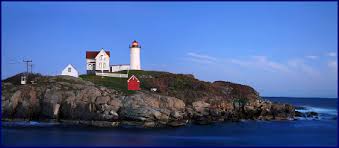
Sometimes a long delay gives you better perspective. I hadn’t been back home to New England in eleven years until our recent trip. Thinking of Thomas Wolfe’s dictum, “You can’t go home again,” I didn’t really know if my previous enthusiasm about the place could withstand a revisit after being away so long.

But it did:

There was exciting Boston with its history, culture, and trail-blazing architecture. And being a retired prof, I salivated thinking of those 100-plus colleges and universities within its 4.5 million metropolitan area. Unfortunately, we could only spend one night there, but at least Karen and I got over to Fenway for a night game to watch our beloved Red Sox. Yeah, they lost; in fact, got routed, but we were compensated big time exploring the Prudential Center’s seemingly endless mall with its myriad shops and culinary haunts.

Then Rowley, founded in 1639, where I lived several years. My cousin, Susan, more like a sister than a cousin, still lives there. Sharing memories was just the right brew amid the town’s quiet ambience with its 5000 population, though only 35-miles north of Boston. It had 1500 people back in 1957 when I left, yet retains its delightful small town feel. Like so much of New England’s sleepy rural towns nestled in bucolic splendor, time hasn’t played its heavy hand.

And then our visit for a week to Maine with its inviting beaches at York Beach and Ogunquit, “lobsta,” “chowda,” freshly caught fish and fried clams. As a child I had loved the nearby sea, whether living in Rowley or visiting New Hampshire or going ” down” to Maine as New Englanders like to put it.

The same crescendoes of waves hurling themselves against the rocky shore echoing the tidal poundings that I could hear sometimes from my bed at night in Rowley just six miles away from the Massachusetts shore..

No, we didn’t get to my favorite part of Maine reaching up to Boothbay, Camden, Bar Harbor and resplendent Acadia National Park. I’ve yet to see jagged Mt. Katahdin with its spectacular hiking trails and grand vistas, or the many forest secluded lakes that comprise northern Maine’s landscape that fascinated Thoreau; but it’s all there to be drawn upon for future visits, perhaps more often because I’m frankly running low on time.

Places yet to renew my spirit in an increasingly savage world of human abode, New England with its mountains, lakes, thundering seas, white steepled churches, long history where time gets honored over newness; sailing ventures to Martha’s Vineyard and Nantucket; 4th of July bonfires and the Boston Pops along the Charles; Harvard Square teeming with bookstores; nature’s autumnal artistry transforming foliage into flaming hues of red and flamboyant orange; jazz festivals in Newport and on Yale’s green; and, yes, the fall of snow bringing hush to a busy world.

After so long absence, I’ve been like a lover returning home, renewed in spirit, “surprised by joy” as Wordsworth put it. Somethings remain stubborn against time’s ceaseless push and you really do find you can go home again.

–rj


Memorial Day: “Neither shall they learn war any more”

th2Tomorrow once again commemorates Memorial Day, when we fittingly honor those who forfeited their lives for our country. I think of the Civil War with its estimated 600,000 deaths and World War II with another calamitous toll of 400,000. And then there are the recent 6,000 deaths in the Iraq-Afghanistan conflicts. Altogether, some 1,300,000 of our men and women have died in our conflicts from the Revolutionary War through the present.

Wars, regardless of why they’re fought, are troubling in what they say about the human condition and consummate surrender of our humanity. We can boast of our scientific advances all we want, but the truth is we’re as primitive as ever in our troubling aggression, capacity for anger, and acting out our malice, often over quarrels that a century hence will nullify their significance.

Today marks another memorial of catastrophic horror that makes our Gettysburg with its 3-day violence and 75,000 dead and wounded, pale in comparison. One hundred years ago today, French and German forces engaged one another in what became a 10 month stalemated trench conflict, resulting in 800,000 deaths, until German withdrawal and forfeiture of just five square miles of ground.

I could tell you about other conflicts as well such as the Thirty Years War (1618-1648) in which an estimated thirty percent of the German civilian population perished from famine and disease, or more recently, of the deaths of 7 million Soviet citizens in WWII.

Voltaire had it right about the scourge of war when he remarked that “men appear to prefer ruining one another’s fortunes, and cutting each other’s throats about a few paltry villages, to extending the grand means of human happiness.”

The greatest thing you and I can do to honor our war dead is to be peacemakers, shunning those who preach violence, often for political ends, appealing to our fears rather than our capacity for love, empathy and compromise in promoting “human happiness.”

In a park across from the UN in New York you can find what’s called “the Isaiah wall” with the message of that Old Testament prophet epitomizing that so far allusive quest: “They shall beat their swords into plowshares, and their spears into pruning hooks; nation shall not lift up sword against nation. Neither shall they learn war any more.”

That journey begins right now, this Memorial Day, with you and me.

–rj

Before Surgery Reading: Herriot’s All Creatures Great and Small

I’ve always loved animals. I can’t say where it comes from, but maybe it’s in the genes. Both my nieces exhibit the same trait. Currently, I’ve been reading James Herriot’s All Creatures Great and Small. If you’re old enough, you may have seen the BBC rendition back in the late 70s and into the 80s, ninety episodes in all. It’s good reading for me, given the sciatica pain that’s turned me into virtually an invalid replete with cane these past five weeks. Now comes surgery at dawn tomorrow.

Herriot’s work is much more about human eccentricity than animals and delivers dependable relief beyond medication to me in its rich mix of humor and humility garnered from thirty years as a 24/7 veterinary surgeon in the hollows of England’s remote Yorkshire country, regionally fictionalized, like Hardy and Faulkner, as Darrowby.

I had missed out on the BBC series, but came upon Herriot’s work providentially with a chance to download his works in one sweet bundle at just $2.99.

By the way, James Herriot is a pseudonym for James Wight (1916-1995). A devoted fan of soccer, he took the name from a soccer goalie named Jim Herriot.  At the time, tooting  your own horn in professions like law and medicine was considered bad form.

I hadn’t realized Wight was a prolific writer of animal stories for children as well, although a good many of his adult stories can be read that way.

I love the outdoors and sorely miss being out in my garden, hoe or weedeater in hand, accompanied by the fellowship of fauna and flora busy in their pursuit of life. Herriot reminds me of my lost bliss and kindles my enthusiasm to get it back.

I’ve found no one commenting on Herriot’s keen writing skills and the focused observations he brings to his narratives, earmarking him as one our better nature writers. Take this passage, for example, describing the artistry of a night wind in shaping morning’s wintry landscape:

But as always, even in my disappointment, I looked with wonder at the shapes the wind had sculpted in the night; the flowing folds of the most perfect smoothness tapering to the finest of points, deep hollows with knife-edged rims, soaring cliffs with overhanging margins almost transparent in their delicacy.

Busy in his profession, we’re fortunate Herriot got down to writing at all, beginning at age 50 and, initially, not garnering any attention until we Americans put him on the map.

I wish I could have met the man, first rate not only as a writer but, more importantly, as a sensitive man of science endowed with empathy for all creatures great and small.

–rj