Saving Spring’s Envoys: Our Vanishing Birds

migratorybirdsWe take for granted that birds in the millions returning from their winter feeding grounds in Central and South America will make it back to nest and mate in our yards each spring.

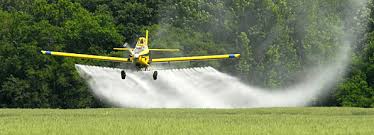
The rude reality, however, paints a scenario of thinning numbers as their habitat continues to give way to human incursion; wetlands get drained; toxic sprays are employed; and GMO agriculture reduces the insects on which many birds feed. Lamentably, up to 4 billion birds are killed by outdoor cats annually. (No typo here.)

And then there’s climate change.

If this scenario continues, we may well see a world devoid of birds and with their disappearance, our own.

Birds do a lot for us:

  1. pollinate plants
  2. disperse seed
  3. consume carrion
  4. recycle nutrients
  5. control insect numbers

Birds do all of this and more, along with providing many of us city folk with a rare contact with nature.

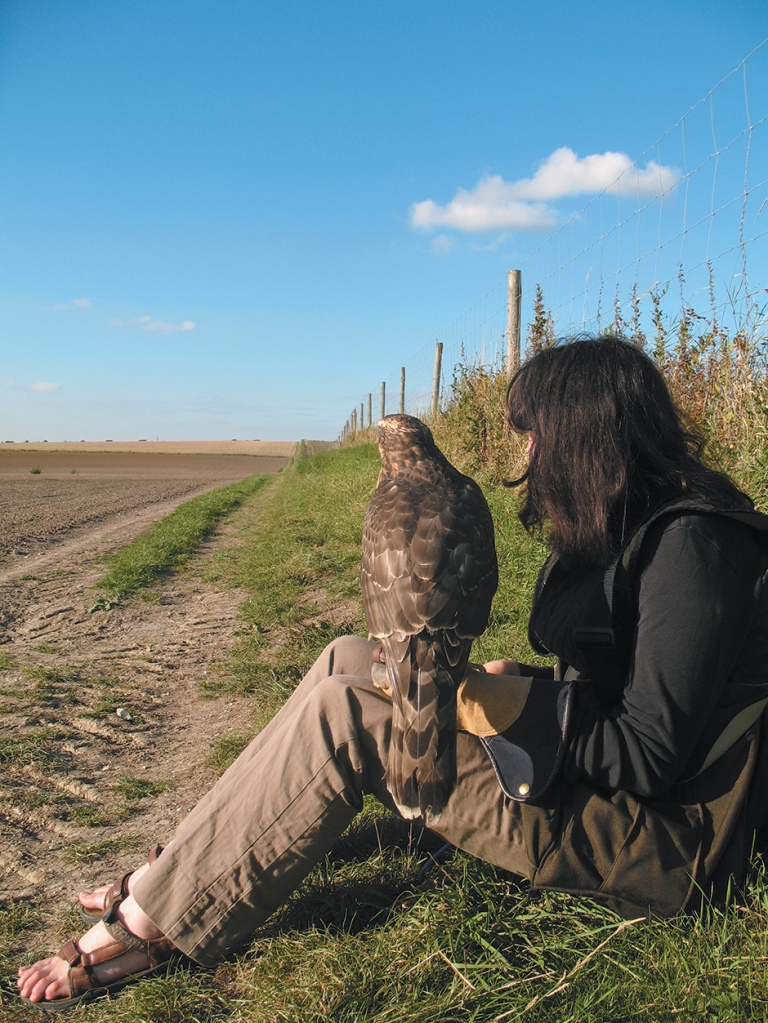
Sadly, fewer of them are completing their already perilous journey, often of several thousand miles, transversing oceans and mountains, to keep company with us every spring.

In one of nature’s greatest marvels, birds don’t require a compass to make their way to where they were born or to their winter habitat.

Guided by the stars, they know North from South. Alert to the sun’s position in daylight, they can discern East from West.

They also intuit the distance they must fly.

Appropriately, migratory birds fly mostly at night, keeping their bodies cool, since their tiny hearts, beating 500 times per minute, generate heat.

Regrettably, their indwelling “magnetic compass” doesn’t always serve them well in a modern world with its tapestry of burgeoning cities filled with light that produces a celestial jamming resulting in their disorientation, exhaustion and death as they unwittingly fly into multi-story buildings, leaving a deadly debris come morning.

With urban sprawl come media towers, like buildings, illuminated nightly to pre-empt airplane collisions. Each year, some 6.8 million birds perish in collision with cell and radio towers and their guy lines.

In a recent summation of studies, researchers found that 63% of bird casualties in the U. S. and Canada are small birds of 156 species, some on the endangered list.

If this isn’t enough, our bird friends face other ominous threats to their survival from our newer technologies such as wind turbines and solar panels integral to our need for renewable, clean energy resources.

This led to the Obama administration, normally on cue with environmental priorities, initiating a federal “permission slip” allowing for wind farms to kill up to 30 bald and golden eagles annually under 30-year permits, despite it’s being against existing law protecting these species, one of which is our national icon.

As I write, I’m happy to learn that our government’s connivance didn’t sit well in a California court, which demanded an impact study. Two weeks ago, the Fish and Wildlife Service dropped its appeal to reinstate the policy.

How bad can wind farms be for birds? A recent California study estimated that up to 573,000 birds and 888,000 bats are killed annually in thar state alone!

Wind turbines now account for 5% of our energy and continue to proliferate, with more than 15,000 presently in service. The death toll must be staggering!

But solar farms also pose another lethal threat to birds, singing, crippling and killing them. Unfortunately, birds often mistake reflective panels for water bodies. Some of these solar farms can be gargantuan in their expanse, with one solar farm in Riverside County, California occupying 4400 acres.

We’re unsure just how many birds solar farms kill, but we believe it to be a considerable number. In a recent investigation, the National Fish and Wildlife Forensics Laboratory recovered 233 birds from three California desert facilities. Many birds literally catch fire on contact with solar panels.

The problem is complex with the need to find new energy sources that don’t pollute and are renewable and yet protect our birds. But we can do more to assure their well-being by demanding impact studies before wind turbines and solar panels come on line.

We can also advocate they not be located in migratory pathways.

We can power down our city lights. A lighted New York City skyline may be spectacular viewing late at night, but it’s a death threat to birds. Cities like Toronto, one of North America’s most progressive cities, supported by the public, has been doing so for years.

We can support preservation of bird habitat such as wetlands and creation of new ones.

I like how Peter Dunne, the director of the Cape May Bird Observatory, has put it: “Without birds, nature would lose its most engaging envoys,” to which I would add that their demise would seal not only their fate, but ours.

–rj


Lexington, KY: Reflections on My Old Kentucky Home

lexingtonI count myself fortunate to live near Lexington, KY. Its assets are many; its liabilities, few.

I like its small town feel—no row housing here; no factories puffing their toxins into the air.

Though ranked 61 among American cities, currently about 311,000, it’s unique in not having freeways threading its thoroughfares, unlike neighboring Louisville and Cincinnati.

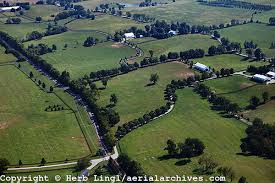
To be sure, Kentucky is often synonymous with poverty, but Lexington defies such stereotypes. Located in the center of the pristine Bluegrass countryside renowned for its grandiose thoroughbred farms, Lexington is not only one of our nation’s most beautiful cities, but also one of its most affluent.

Unlike many cities, Lexington enjoys one of the nation’s steadiest local economies, with unemployment currently a miniscule 3.7%. Forbes Magazine has it as the 4th “Best City” for Business careers. Kipplinger ranks it 6th as a “Best Value City.”

Lexington can rightly boast its being “the horse capital of the world.” A 2014 survey revealed that 67,500 horses populated the Bluegrass, including 24,600 in Lexington!

Another laurel is its 6th place ranking as one of the country’s “most inspiring cities” (worldwidelearn.com), topped only by Boston, San Francisco, New York City, Washington, DC, and Los Angeles.

Lexington is also listed 7th as a “Best City for Quality of Life” (nerdwallet.com).

In spite of these accolades, however, Lexington faces continuing challenges from commercial interests who, left to themselves, potentially pose a threat to the city’s bucolic flavor and, as a family city, the superb ambience of the city and surrounding area.

Take what Lexington did in 1996, demurring to commercial interests, and appropriating 5400 acres from the Rural Service Area for development. If Lexington were to further erode the rural landscape of the Rural Service Area, the legacy might well be to make Lexington just one more American city characterized by urban blight.

Fortunately, the city is currently enjoying a hiatus with the tenure of Jim Gray, its progressive mayor. Under the current Five Year Comprehensive Land Use Plan (2011), set to end next year, the city has held out for wise land stewardship, reaffirming the 40 acre minimum set in 1958 for new residential land and commercial development.

As Gray puts it, “building our brand and our economy means that first we preserve what is special and unique about our Lexington—our bluegrass landscape.”

Concurrently, unbridled development has raised its ugly head within the Urban Service Area with numerous architectural gems of the nineteenth century torn down to make way for an underground garage, office tower, hotel, and retail and restaurant space downtown in what has famously turned into a cavernous hole in the ground since its first shovels in 2008.

Meanwhile, yellow dinosaurs gouge the rich soil of a former 56-acre farm to make room for The Summit, a new mall by a national conglomerate just down the road from gargantuan Fayette Mall, which recently expanded by another 26 acres.

You see, I’m an idealist and would have preferred the city’s opting to purchase the farm for green space along one of the city’s most grid-locked traffic corridors, Nicholasville Road—something on the order of the New Haven Green or Savannah’s The Squares. Or like New York’s Central Park or Philadelphia’s Fairmount Park, offering timeout sanctuary in the very heart of urban bustle.

But what about the cost? Well, before you think me insane, consider that the city council had previously come up with a $354 million plan to renovate Rupp Area, home of the University of Kentucky’s men’s basketball team.  I’d say it’s a simple matter of getting our priorities straight.

While Lexington may seem to enjoy a rich tapestry of parks, some 100, they’re relatively small while large areas of the city haven’t any parks at all.  The city’s special gem is Raven Run, a passive park of 734 acres (no sports facilities, etc.), preserving natural habitat and several well maintained hiking trails.

Lexington needs to pay attention to its tree canopy anyway which has experienced a sharp decline, some of it doubtlessly due to the recent infestation of the emerald ash borer. According to a 2012 study, the city’s tree coverage stands at 27%, with 40% the gold standard.

Lexington currently isn’t a member of the City Park Alliance, and it should be. Its rival city, Louisville, is.  The Alliance offers a mapping technology with demographic data that can be accessed online. The Alliance ranks the 75 largest U.S. cities as to how each of them is meeting its park needs. Lexington ranks 51 (parkscore.tpl.org/rankings-advanced.php).

The upshot of all this is that Lexington, while doing well, can do better and must if it’s to assure preservation of its unique ambience, underpinning its attractiveness as one of America’s best cities to call home.

–rj


Reflections on the Supreme Court’s EPA Rebuff

A-polar-bear-and-her-cubs-007This has been a busy time for America’s highest court, with gargantuan issues–gay marriage, Obama Care, and approval of a controversial capital punishment drug, cases decided by razor thin majorities.

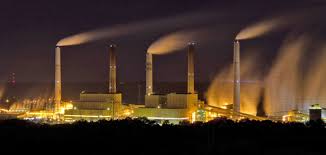
No less important, perhaps the most impacting of all, is the Supreme Court’s decision ultimately affecting climate change; namely its one vote majority ruling against the EPA’s Mercury and Toxic Standards (MATS) provision, designed to reduce mercury and other air pollutants from the nation’s myriad power plants, especially those utilizing coal.

Though MATS wasn’t specifically disavowed, the Court ruled that the EPA must consider the financial burden it imposes. Accordingly, the case goes back to the U.S. Court of Appeals for the District of Columbia to deliberate new guidelines.

I think the decision horrendous in the context of the preeminent threat we and, especially posterity, face in the context of climate change, which the vast weight of environmental science affirms is human induced.

In fact, if we don’t get our act together, we may find ourselves joining the plethora of species we’ve either driven into extinction or endangered.

On the other hand, I laud justice Elena Kagan, who wrote the minority decision in the 5-4 verdict:

Over more than a decade, EPA took costs into account at multiple stages and through multiple means as it set emissions limits for power plants. And when making its initial ‘appropriate and necessary’ finding, EPA knew it would do exactly that — knew it would thoroughly consider the cost-effectiveness of emissions standards later on. That context matters.

While it’s probable the lower court won’t gut the act, but simply mandate that EPA integrate cost factors upfront, not after-the-fact, as it had done, this may sadly take another five years and still be subject to legal scrutiny.

Climate change, in the meanwhile, isn’t about to go into a stall while we continue to rely upon coal as an energy source for many of our power plants.

The corollary is that like a credit card we don’t pay off, our delay will exact cost burdens exceeding mere cash reckonings in hazarding the health of both ourselves and the impinging on the ecological interplay upon which we depend.

Nobody wants to pay more for energy costs any more than we relish replacing a malfunctioning stove or fridge for a newer, more efficient model, at increased cost. Alas, sometimes it is what it is and we move on.

What moved me to write this post as I awoke today to a new dawn outside my window is a news story just out of the BBC, reporting on “Irreversible Change to Sea Life from CO2, compiled by twenty-two experts in the journal Sciencehttp://www.bbc.co.uk/news/science-environment-3336902

Coral reefs, polar bears, many fish–all gone by century end as oceans continue to heat up, lose oxygen, and become more acidic, consequent with our embrace of CO2 energy sources.

And we’ll not be spared either, as the ocean out of which all life came and upon which it substantially depends, not only overwhelms our coast lines, but our ecosystems as well.

This is the true cost of our delay and our neglect, unacknowledged by the Court as in the  public’s greater interest and for the well-being of Mother Earth.

–rj


BEE Alert

bees2

Recently I posted about the plight of butterflies, especially that aerial tiger, the monarch butterfly. I mentioned that I’m trying to certify our backyard as a way station. But while I’m at it, bees also play a vital role in planning a pollinator garden.

You may be aware that bees have been disappearing over the last several decades. And we haven’t known why–that is, until now.

But let’s go back to 1958, when marine biologist Rachel Carson received a copy of a letter her friend, Olga Huckens, had sent to the Boston Herald, describing the aftermath of mosquito spraying in Duxbury, Massachusetts, the previous summer: the wipeout of songbirds, bees and other helpful insects.  Ironically, the mosquitos returned in full force. Olga asked Rachel if she knew anybody in Washington, DC, with influence who could halt the spraying.

Out of this came Silent Spring, perhaps the greatest American nature classic since Thoreau’s Walden. It would catch the eye of the youthful president, John Kennedy, who would meet Rachel Carson with his team of advisors. Ultimately, her book  would lead to the banning of DDT.

Unfortunately, other countries didn’t join the ban and its use continues abroad. But now there are new, perhaps even more devastating pesticides at work called neonics, sprayed on hundreds of crops you and I eat. Seeds get coated with these pesticides, infesting both soil and pollen, killing off bees, butterflies, and other insect friends.

The good news is that in 2013, the European Union enforced its newly imposed two year ban on some of the leading neontics.

The bad news is that in America, the EPA has been dragging its feet, despite President Obama’s directive to prioritize its review of neonics.

Let me expand on the fallout of neonics, since they threaten not only our insect friends, but you and me.

When you resort to neonics, not only do you kill off bees, for example, but you impair their immune system, making them vulnerable to disease.

But it doesn’t stop there. Neonics linger in the soil, water and plants for many years. As such, they threaten whole ecological systems that include earthworms, amphibians (under severe threat), and birds.

Neonics, according to the European Food Safery Authority, “may affect the developing nervous system” of children.

What may surprise you is that you may be harboring neonics in your own yard when you purchase plants at box stores like Lowes and Home Depot, According to a study launched by Friends of the Earth, on whom I’ve drawn for some of my information, “many of the so-called ‘bee friendly’ plants we grow in our gardens have been pre-treated with bee-toxic neonics at doses up to 220 times higher than those used on farms.”

Unfortunately, we’re facing an uphill fight, with giant petrochemical and seed corporations like Monsanto, Syngenta and Bayer devoting huge sums to divert attention and pedal influence.

The EPA, for example, recently gave the green light to Bayer, based on a study primarily funded by the corporation!

I haven’t even talked about the exponential use of GMO’s used massively in soy and corn production with their built-in resistance to powerful herbicides, thus allowing for their use.

There’s so much more I’d like to say, but let me end with some sobering facts regard lhoney bees:

Pollinators are essential for our crops.  Honey bees (Apis mellifera) are the grand masters, one hive of 50,000 bees capable of cross-pollinating twenty-five million flowers in a single day! No other insect comes close.

Now think about what you maybe had for breakfast: cereal, fruit juice, toast? Maybe you had almonds or berries topping your granola. Hey, honey bees made that possible.

For supper, cukes, zukes, squash?

Or how about that cream in your coffee from clover-foraging cows?

Or maybe your beef?

Bees helped put these foods on your table!

In nature at large, some 250,000 known plant species exist. Of these, three quarters rely on pollinators to reproduce.

Bottom line is that more than 100 crops comprising 90% of our global food supply rely on bees for pollination.

You get where I’m going with this. No bees, no food, unless you like eating bark.

Now I hate to tell you this, but our bee population has declined as much as 70% just in the last several decades.   Given the stress imposed on bee colonies by neonics and GMO’s, we may have reached the tipping point.

While other factors weigh in like electromagnetic radiation–think cell phones—and climate change that encourages pathogens, organic bee colonies aren’t experiencing these huge losses in bees or collapsing colonies. In short, pesticides appear to be the villains.

Rachel Carson not only warned us 45 years ago of a world in which there would be no birds to serenade spring, but of a world in which “there was no pollination and there would be no fruit.”

What can you do?

Beautify your landscape with bee friendly indigenous, organic plants using organic starts or untreated seeds.

Shun products with neonicotinoids. Read labels carefully.

At your grocery and garden centers, opt for organics plants and produce.

Together, each of us doing what we can, we may be able to avert beemeggedon and a fruitless fall.

–rj



On Reading E. O. Wilson’s The Meaning of Human Existence

wilsonI finished reading E. O. Wilson’s remarkable book, The Meaning of Human Existence, two weeks ago and am now finally getting to tell others why I like it so much.

For one thing, I admire its author, an eminent, cerebral champion of eco diversity given to candor that may arch the backs of some. Years ago, a member of the Marxist oriented Progressive Labor Party poured a pitcher of water on him for advocating the genetic origin of human behavior, a surely unpopular stance with today’s still entrenched view of social conditioning as the compelling factor in the ongoing nature vs. nurture debate.

The controversy once got so heated that it spilled over in 2001 into the front pages of the New York Times and Time Magazine, with some members of the science community dismissing Wilson as a misogynist and racist.

Of course, I learned long ago that scientists, just like the rest of us, are hardly free from biases that can prejudice challenges to accepted axioms rooted more in assumption–and sometimes, pecuniary interests–than objective research or the empirical.

And always there are the social ameliorists, who can be downright bullying in their evangelical intensity.

For me, Wilson makes a lot of sense. If we can take evolution into our own hands and genetically induce behavioral as well as physiological outcomes in animals such as canines, why would this not be true of evolution as a mechanism at large?

But Wilson has survived the controversy and, you name it, he’s won virtually every academic and journalism award, including two Pulitzers.

The novelist Ian McEwan aptly described Wilson as “an intellectual hero,” and that he didn’t “know of another working scientist whose prose [was] better than his. He can be witty, scathing and inspirational by turns. He is a superb celebrator of science in all its manifestations, as well as being a scourge of bogus, post-modernist, relativist pseudo-science, and so-called New Age thinking” (qtd. in The Guardian, 16 February, 2001).

This most recent book, in many ways a summation of his copious research across several decades, has been nominated for the National Book Award.

It’s far more than a tome on science, however. Replete with wisdom and concern for a diminishing biodiversity on which our survival depends, it ultimately addresses the human condition marred by tribalism, redundant in self-interest, and often (think today)   exhibiting a religious and political mindset:

The great religions are…tragically, sources of ceaseless and unnecessary suffering. Their exquisitely human flaw is tribalism. It is tribalism, not the moral tenets and humanitarian thought of pure religion, which makes good people do bad things.

In more secular societies, faith tends to be transmuted into religion-like political ideologies. Sometimes the two great categories are combined.

The Meaning of Human Existence pleads for the convergence of science and the humanities to not only confront human behavior but pursue its origin that we might remedy it.

The self-contained world of the humanities describes the human condition–but not why it is the one thing and not another. The scientific worldview is vastly larger. It encompasses the meaning of human existence–the general principles of the human condition, where the species fits in the Universe, and why it exists in the first place.

With resounding pathos, not unexpected in a man who loves Nature so fervently, Wilson   also laments our intransigent myopia that unwittingly plants the seeds of our own demise and, hence, betrays our future:

Too paralyzed with self-absorption to protect the rest of life, we continue to tear down the natural environment, our species’ irreplaceable and most precious heritage. And it is still taboo to bring up population policies aiming for an optimum population density, geographic distribution and age distribution.

I think Wilson is spot on. While the humanities can teach us how to behave, they cannot rid us of the conflicting dynamics of individualism versus altruism implanted by evolution.

And that is our tragedy. We must learn to conceive ourselves as unique offspring possessed of divided sensibilities, the finale of vast eons of time, that we might weave a more rational way of living.

Though it’s folly to suppose we can annul our fissure, we can do better. We do not have the gods to blame, nor a devil to curse. And if this frees us from a good deal of our tribalism, then so much the better.

It pains me to think this may be Wilson’s last book, since he will turn 86 next June. As is, he’s lost none of his mettle in provoking us to examine our assumptions and liberate ourselves.

In doing so, he reminds me of those Old Testament prophets that would, at great risk, prognosticate the calamitous fallout of an unheeded warning.

–rj

Expanding the energy portfolio: Utilities awaken

coalEvery month our local power cooperstive, Blue Grass Energy, sends us its superbly put together magazine, Kentucky Living, filled with helpful tips on home maintenance, gardening, recipes, recommended books, regional activities, events, etc.

With all its feel good staples, it’s easy to lose sight of its primary purpose as a public relations gimmick to elicit the public’s support. Your power company is on your side, helping you enjoy the good life, offering some of the lowest energy costs in the nation, largely through the state’s substantial coal reserves.

Its editorials, however, consistently make clear that this good life is under a black cloud via the EPA’s increasingly heavy hand, encouraged by Obama’s executive decisions restricting power plant emissions at heavy local cost and marginalization of its coal resources. In its use of coal as their primary energy source, states like Kentucky, not wealthy by any yardstick, will bear a larger cost burden than other states, which they simply can’t afford, the utilities say.

Tuesday is election day and according to the latest polls, Mitch McConnell. is poised to be reelected to yet another term and possibly become senate majority leader, meaning still more congressional gridlock.

Mitch says, “I strongly oppose the EPA’s efforts to shut down Kentucky’s coal industry. I will fight to ensure the future of existing coal-fired power plants.”

He has announced that one his priorities will be to defund the EPA.

His main opponent, Alison Lundergan Grimes, touted as the Democrats’ best shot at ending McConnell’s perennial reign, has simply been a mirror to McConnell on coal issues and climate change. She has even resorted to ludicrously painting McConnell as unfriendly to the state’s coal industry, including miners, even though they’ve repeatedly come to his defense.

As for Libertarian candidate, David Patterson, he tells us that “CO2 is not a pollutant in the quantities seen today.”

Fortunately, aside from the usual debacle of politics, Kentucky utilities are starting to get the message, with movement underway to harvest clean, alternative technologies. The East Kentucky Power Cooperative, for example (which affects our household) has invested $1.7 billion to help clean-up carbon emissions at its coal-fired power plants.

With the hand-writing on the wall, Kentucky’s utilities are pursuing a diverse energy grid, including not only natural gas, but solar, wind, hydro and landfill gas.

All of this will impose increased costs, but the alternative in the context of the exponential menace of climate change makes these efforts of acquiring a diverse energy portfolio least costly in the long term.

–rj


After we Murder Nature, then What?

environment

After we murder Nature, then what? I know some of you may think this a dubious assumption as to possibility, and I would be among you–that is, until recently.

As is, Nature has atrophied and we live increasingly in asphalt environments, with Nature relegated to a few urban parks and, even then, they tend not to be passive parks given over to Nature, but to ball fields, children’s playgrounds, etc.

As evidence of our increasing sequestering of Nature, consider that more of us in the USA and Canada visit local zoos than attend professional sports events combined!

The pity is that Man is himself the evolutionary outcome of millions of years of a once teeming biodiversity. The question then follows as to what happens to us when we marginalize the very sources of our being and our future.

I’ve seen science estimates of the number of species of existing plants and animals as somewhere between 5 and 100 million. We know that invertebrates vastly outnumber vertebrates like ourselves, perhaps some 10 million, of which only a million have been identified.

Zoologist Edward O. Wilson tells us that if humans were to suddenly disappear, all would still be well on earth; conversely, were the invertebrates to disappear, life would soon revert to its initial state a billion years ago of myriad algae, bacteria, and a few multi-celled organisms (In Search of Nature, 153).

In short, we are intertwined with nature right down to the tiniest organism.

Our mistake is to think that even the smallest entities of Nature, so staggering in numbers, cannot be vulnerable to human excesses:

When a valley in Peru or an island in the Pacific is stripped of the last of its vegetation, the result is likely to be the extinction of several kinds of birds and some dozens of plant species. Whereas we are painfully aware of that tragedy, we fail to perceive that hundreds of vertebrates will also vanish (Wilson, 145).

 As is, humans from their earliest beginnings up to the last century had already wiped out an estimated 10% of flora and fauna species. Alarmingly, bird population is declining rapidly, with a drop of 25% in bird species. Presently, the drop-off in all species, not only birds, is occurring 100 to 1000 times higher than in pre-human times.

Consider the continuing decimation of the Amazonian rainforest, the world’s foremost repository of biodiversity with huge implications for pharmaceuticals, agriculture and oil substitutes and, of course, climate change. Each year, we lose to chainsaws an area approximating half the size of Florida!

Unfortunately, we’ve inherited a primordial disposition that prioritizes personal safety, followed by family, tribe, then outsiders ((Wilson 186), a selfishness that unless it gives way to altruism expressed in environmental regard, is likely to doom us.

Today, we’re hearing a lot about climate change, and it certainly can’t be minimized, since we are largely responsible for it. But it’s not just a matter of carbon, but our burgeoning numbers, with corresponding exponential demands on limited resources. The more population increases, the more decimation, with habitats reduced and species extinguished, many of unknown importance to our survival. Consider Nigeria with its present population of 175 million (2013). PEW research estimates it will reach 440 million by 2050, exceeding the USA population.

Although population rates are declining, the world’s population will be just under 10 billion by 2050, with sub-Saharan Africa experiencing explosive growth, an area already confronted by widespread poverty, disease, and ethnic conflict. Unfortunately, in many places, cultural traditions and religious beliefs continue to dominate.

We can still save the day, but it’s unlikely that we care enough to act meaningfully and quickly.

Take where I live, Kentucky, where we have two senate candidates, Democrat and Republican, trying to shout down each other in denouncing President Obama’s policies affecting environment, especially coal. Accordingly, reducing the powers of the EPA is a foremost goal for both.

Unfortunately, evolution gave homo sapiens a well-developed brain, but pulled up short in maximizing a moral prowess vital to its long term survival.

–rj


Climate Change: Can we win the fight?

divest395581_155622104590737_1008694978_n

We just celebrated Earth Day on April 22, an annual fête of huge importance for those of us wanting to increase the public’s awareness of the challenge of climate change, and our substantial human contribution to it, and ways we might fight it.

It’s an important time for us in another way, too, as this yearly outpouring of Green advocacy transcending borders buoys up our enthusiasm, telling us we’re not alone in our caring. After all, sometimes it seems that we’re on this great big mountain we impulsively thought we could climb; so rituals of solidarity like Earth Day give us pause to catch our breath, reassess, and press on to our worthy goal of a humanity in harmony with nature as one species among others, each necessary to all. Just maybe we can pull this thing off. Anyway, good to dream big rather than live small.

The truth is that so much more needs to be done and that we’ve been moving at a snail’s pace in making climate change a palpable issue for the public. I saw this demonstrated all too clearly in the presidential debates in 2012, or just 18 months ago, with not a single question directed to environmental matters raised by debate moderators.

If the press can seemingly have no feel for the greatest issue ever to menace us with its destructive pay-load should we evade addressing it, then how much less can we expect the public to grasp what’s at stake? As is, individual lifestyle changes like driving less, getting rid of plastic, cutting back on electricity in our homes aren’t going to do the trick. We need more than bandages to treat the Earth’s hemorrhaging.

Now consider that a recent poll suggests that 37% of Americans don’t even believe in climate change. There exist also a good many, perhaps even more, who look at climate change as simply cyclic and that, just maybe, it might even right itself. Of course that view gets us off the hook and we can conduct business as usual.

Just recently the United Nations released the findings of its Intergovernmental Panel on Climate Change, a careful study by credentialed scientists encompassing some 40 volumes. Insiders say they toned down some of their language and projections so as not to unduly frighten, though their findings still emerge as deeply sobering, with none of us escaping vulnerability to what surely are predictions on an apocalyptic scale. In all honesty, I haven’t noticed any work-up by media or any concerted effort by members of Congress to hold hearings on the report and what we might do to save the day. Like many of you, I grow weary–and wary–of their feckless accommodations to corporate interests.

What’s vital is that we impact the political process, as happened with the Vietnam War, ultimately culminating in LBJ’s decision not to pursue reelection. It started with just a few protesters, then took hold and proved unstoppable. Unfortunately, I don’t see anything like this breaking out. I think this is because many of our projections for climate change impacting us lie still in the future, whereas flag covered body bags coming into Dover AFB were a daily, tangible occurrence, which the media ultimately caught up with when it perceived a muscular protest movement, packing a punch, that wasn’t going to go away.

On the other hand, if we haven’t been able to muster cadres of protestors against our Iraq and Afghanistan incursions with their costly toll in life and wounded for a dubious cause, how much less likely for an environmental movement devoid of blood and gore? And that’s what makes climate warming so horrendously insidious, or like some invisible killer we know is out there, but don’t know where he is, or when he’ll strike, or how.

Perhaps our young people will again show us the way as they did with Vietnam by way of their fossil fuel divestment sit-ins sweeping our college campuses, some 300 as I write, with several success stories, including Harvard with its $32 billion endowment. If it’s wrong to destroy our planet, it follows we shouldn’t be seeking to profit from those who do.   I wrote earlier of the Vietnam days when students rallied to make a difference. All of us: unions, retirees, teachers, tech workers, etc., might do well to follow their lead in choosing our retirement portfolios more discriminately.

But divestment has its limitations, too. While it was practiced widely in the 70’s and 80’s to pressure South Africa’s apartheid regime, the invariable result was that other investors stepped in. It’s true value lay in shaping public discourse, and I venture this holds true with this present endeavor.

Still, I question the wisdom of painting with a broad brush the fossil fuel industry as some kind of axis of evil. We need energy. Are our students willing to follow through and divest themselves of their cars and their electricity and take on an Amish likeness? We would do better to focus on the coal sector, our greatest polluter.

I still like our president–articulate in his efforts to assure health care access, social and economic equality, tax, immigration and drug sentencing reform. So far, he’s championed alternative energy efforts, sought restrictions on coal burning power plants, held out against the Keystone XL project, endorsed alternative energy efforts.

As for Keystone, he needs our support even as we must sustain, and grow our protests, to keep a fire under his feet. When I think of Keystone and the big money behind it–think Koch brothers–I get nauseous: the obscenity of it, given the perils of climate change; the stench of it, given its association with pet coke; the callowness of it, given its destruction of farmland, water aquifers, and wildlife habitat.

The President will presumably make his decision after this fall’s elections, but faces immense pressure, even in his own party. It isn’t a given he’ll opt for courage over pragmatism. In the end, it’s important we all get to the polls and endorse environmentally friendly candidates such as the courageous Gary Peters (D-MI), who hopes to succeed retiring senator Carl Levin (D-MI).   Peters has come out against Keystone, provoking the Koch brothers to contribute substantially to his Republican opponent, who now leads in campaign funding. Peters is our leading spokesperson on pet coke. (By the way, you can access online the Sierra Club’s political endorsements, which include Peters.)

If it came down to, say, an errant asteroid making its way to befuddle our planet as once happened, plunging the world into a rebirth of its pre-evolutionary darkness, then you can bet your life we’d all get off our bottoms and fight the good fight. Well, think of that asteroid as climate change.

–rj


Peter Matthiessen: Homegoing

matthiessen

We lost a great writer, Peter Matthiessen, this past weekend. A co-founder of the renowned Paris Review and author of thirty-three books, both fiction and non-fiction, his supreme subject was Nature and, sadly, Man’s pervasive impact upon it:

Species appear, and left behind by a changing earth, they disappear forever, and there is a certain solace in the inexorable. But until man, the highest predator, evolved, the process of extinction was a slow one. No species but man, so far as is known, unaided by circumstance or climactic change, has ever extinguished another. (Wilderness in America [1959]).

Along with other environmentalists, I mourn his loss since his death silences a powerful voice of advocacy for what remains.

I think of the great writers of Nature who have borne sensitive witness to the fragile cocoon of Nature that includes ourselves that I have read across the years, works both of poetry and prose that have refined my sensitivity, shaped my priorities, and taught me awareness of the transience of all living things. All of them have been my teachers.

In poetry, I think of Wordsworth, Shelley, Keats, Hopkins, Dickinson, Frost, Jeffers, for example; as for prose–Thoreau, followed by Muir, Carson, Wilson, Dillard, McKibben and, of course, the most prodigious–Matthiessen.

Of all the books Matthiessen wrote, two stand out to me in particular as robust reads: Shadow Country, a novel featuring a desperado gunned down by his own neighbors in the lawless Everglades wilderness of the nineteenth century; the other, Snow Leopard, a non-fictional account of Matthiessen’s search for the elusive snow leopard in the Himalayas. More than a travel adventure, it depicts the author’s spiritual journey. As stimulating as it is beautiful, lucid in its prose and stunning in its imagery, it may just be one of the finest books to treat both Nature and the Soul ever written and deserves many re-readings.

Both Shadow Country and Snow Leopard won National Book Awards, our country’s most prestigious literary prize. (Matthiessen is the only writer to receive multiple National Book Awards.)

Matthiessen was not your ordinary person. A former CIA spy, son of a well-to-do family, initially conservative in his politics, he ultimately moved to the Left, championing American Indians, Cesar Chavez and exploited migrants, opposed the Vietnam War (bravely refusing to pay taxes) and, of course, became a committed environmentalist.

A deeply spiritual man, he embraced Buddhism following the death of his second wife in 1972, ultimately becoming a Buddhist priest. Snow Leopard reflects a Zen ambience throughout and its acceptance of the Now as the only true consolation we have in a transitory cosmos.

Though he fought ardently for conserving nature, he was troubled by the exponential excesses wrought by anthropocentric interests. As he would lament, “I can hardly point to a victory that we ever won as conservationists that hasn’t been overturned.”

Not all was lost, however:

 …we won some, too — there were long-lasting victories. And if nothing else, we stalled — stalled them off, the developers and exploiters.

All of us Greens will miss him, and yet there remains the fervent advocacy of his many books championing justice; respect for other species and their habitat; the simple life lived mindfully, free from material desire; the valuing of each other.

There couldn’t have been a finer man.

–rj


The UN Panel Report on Global Warming: Is anyone Listening?

Credit: ReutersStringer

If you’ve been keeping up with news about the environment, you’re perhaps aware of this week’s biggest news event, not the elusive search for Malaysia Airlines Flight MH370, or the status quo of Ukraine, or the achieved pinnacle of 7 million enrollees under the Affordable Health Care Act, but the dismal impact studies just completed of the United Nations’ Intergovernmental Panel on Climate Change.  At least this is as it should be, though you’d never know it, given the paucity of TV coverage of the Panel’s exhaustive findings (32 volumes summarized in 49 pages).

Turns out that yesterday’s coverage of the Panel’s released findings by news cable giants CNN, MSNBC, and Fox News was virtually absent, according to media monitoring service, TV Eyes, scanning Monday’s coverage between 6 a.m. and noon: CNN, 40 seconds; MSNBC, 20 seconds; and no surprise, Fox News’s total silence.

Only new comer Al Jazeera America zeroed in on the report, featuring an in depth analysis of the substantial effects of global warming on Bangladesh, which has been battling rising sea levels.

One of the Panel’s projections deals with emerging migrant hoards seeking refuge in other countries.  I didn’t see Al Jazeera’s footage, but I’m aware that India is feverishly building a wall to stem the influx of Bangladesh refugees. (By the way, if you like your news unbiased, al Jazeera is your best bet.)

This sad scenario of media indifference mirrors the largely disturbing absence of the American public’s concern with the issue of global warming, humanity’s greatest threat to its survival since its inauguration into the nuclear age in 1945 and the subsequent threat of nuclear proliferation.

For many, it comes down to jobs vs. environment, or the prioritizing of entitlement interests when the fact is that poverty is likely to grow, not diminish, and affect even the richer nations as global warming’s exponential effects take hold in the guise of drought, record heat waves, forest fires, fierce storms, reduced food production, disease and social violence. Global warming’s incipient effects are already impacting plants and animals and acidifying the oceans with deadly consequences for marine life.

Humans are the primary instigators of global warming, with carbon emissions continuing to rise, and China, the U. S., and India leading the way. Here in my state of Kentucky with its coal slave mentality, the state government has just cut annual coal mine inspections down from 6 to 4.  Sadly, I live in a state where many cars sport specialized plates, bearing “Friends of Coal,” and power companies wage incessant scare propaganda equating coal reduction with rising energy costs and job reduction instead of implementing focused research on clean coal technology.  As I write, a Kentucky coal ash plant has been caught by hidden camera dumping coal ash into the Ohio River and is being sued by the Sierra Club and Land Justice.

Again, Kentucky isn’t alone, but part of a mind-sweep that embraces America. For example, initiatives to promote recycling by outlawing plastic bags are continually defeated even in more friendly environmental places like Seattle.  (I have to confess I feel conspicuous, a seemingly rare upstart, when carrying my cloth bags into Krogers.)

In drought plagued California, swimming pools still adorn Malibu, ball parks sport well manicured grass, and golf courses like Pebble Beach and Cypress Point Club nurture their resplendent greens, even as farmers curtail their crops and California’s biggest cash crop of almond and walnut groves lie in dusty peril.

Golf interests say water consumption amounts to only 1% of California’s total, but omit a plethora of other environmental burdens like fertilizers, pesticides, herbicides, and fungicides, which contribute to contamination of groundwater aquifers and surface waters.

This may seem off the subject, but there’s a new movie in town, Noah, that’s been drawing crowds, grossing $42 million in its initial weekend viewing. I bring it up because in my youthful days of religiosity I remember it took the biblical Noah a year to build the ark and round up the selected progeny of animals (although it escapes me as to what happened to the plants, since there’s no clear indication of their inclusion, though all the animals taken in were herbivores).

Anyway, the guy must have seemed some kind of crazy.  After all, the earth, nourished by mist, hadn’t ever experienced rain before. The gospel of Luke (17:25-27, KJV) makes analogy to Noah and his time, saying

As it was in the days of Noah, so shall it be also in the days of the son of man. They did eat, they drank, they married wives, they were given in marriage, until the day Noah entered into the ark, and the flood came, and destroyed them all.

Looks like Hollywood missed a golden opportunity of transforming an ancient saga of environmental survival into a film of contemporary relevance.

–rj