My fierce love for books has its ancient beginnings as a seven year old, sprawled on a Philly tenement floor, enthralled with a Christmas gift, Twain’s HuckleberryFinn.
Moments ago I rediscovered this passage from France’s Michel Houellebecq, who has this special capacity to rattle the cages of accepted opinion—daring, provocative, forthright—writing novels you simply don’t walk away from.
I had read his Submission several years ago, an initial novel that launched his fame. His take on literature, a dying indulgence in a digital age, is poignant with meaning for me, for literature has surely been among life’s greatest gifts to me:
“…the special thing about literature, the major art form of a Western civilization now ending before our very eyes, is not hard to define. Like literature, music can overwhelm you with sudden emotion, can move you to absolute sorrow or ecstasy; like literature, painting has the power to astonish, and to make you see the world through fresh eyes. But only literature can put you in touch with another human spirit, as a whole, with all its weaknesses and grandeurs, its limitations, its pettinesses, its obsessions, its beliefs; with whatever it finds moving, interesting, exciting, or repugnant. Only literature can grant you access to a spirit from beyond the grave—a more direct, more complete, deeper access than you’d have in conversation with a friend” (Submission).
I have not found a more eloquent articulation of my own passion for literature and think often of what I would have missed had I not been introduced to literary reads—above all, to see past the literal text and be transported into a galaxy of resonance where words could mean beyond themselves, open new vistas, shaping life, capable of numinosity, a sense that life exceeds appearances, infinite in its labyrinthian corridors, a non-ending conversation with what is, has been, and will endure.
I’ve been reading A. S. Byatt’s Possession, published in 1990 and now hailed as a contemporary masterpiece.
Each year, I compile a carefully chosen list of books I hope to read. Possession was among them, though I can’t quite recall how I first came upon Byatt.
It has turned out to be an inspired choice—a rare literary mystery centered on a scholarly quest to uncover a suspected love affair, pieced together from newly discovered letters between the Victorian poet Randolph Henry Ash, modeled on the married Robert Browning, and poet Christabel LaMotte, inspired by Christina Rossetti.
If such a relationship can be proven, it would mark a major coup for the novel’s modern-day protagonists, Roland and Maud, who join forces to solve this academic puzzle.
I won’t be a spoiler; I’m still reading, mesmerized by Byatt’s creative brilliance. Drawing on her vast knowledge of Victorian literature, she invents letters, diaries, and poems that feel astonishingly authentic—plausible echoes of Browning and Rossetti themselves.
There’s also a compelling counterpoint: as Roland and Maud pursue their literary investigation, they, too, seem to fall in love. And the suspense deepens with rival scholars competing to uncover the same secret.
Possession won the Booker Prize and became an international favorite, translated into more than thirty languages. A film version followed—all of which amazes me, as I wouldn’t have expected a novel so steeped in academia to achieve bestseller status.
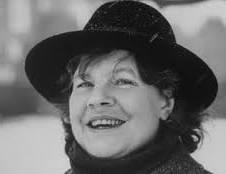
Byatt, an academic for many years and fluent in several languages, left teaching in 1983 to write full time. Gifted with formidable imagination, she could also be intimidating in her intellectual precision and resistance to literary fashion. Critic, novelist, short-story writer, and essayist, she produced twenty-five books and, in 1999, was made a Dame Commander of the Order of the British Empire (DBE) for her services to literature.
Her prose is detailed, introspective, and resonant—at times, poetic. More than any writer I’ve read, she possessed an extraordinary gift for mimicry, able to write convincingly in many voices.
I’ve especially liked this passage, though there are many others:
It is a dangerous business, reading of the passions of the dead. We try on their feelings, like garments, and for a moment we seem to stand in their light — and yet, as we close the book, we find ourselves once again alone in our own darkness, aware that our borrowed flame is only memory’s trick.
She is the writer’s writer.
As Jay Parini wrote in his 1990 New York Times review, “Possession is a tour de force that opens every narrative device of English fiction to inspection without, for a moment, ceasing to delight.”
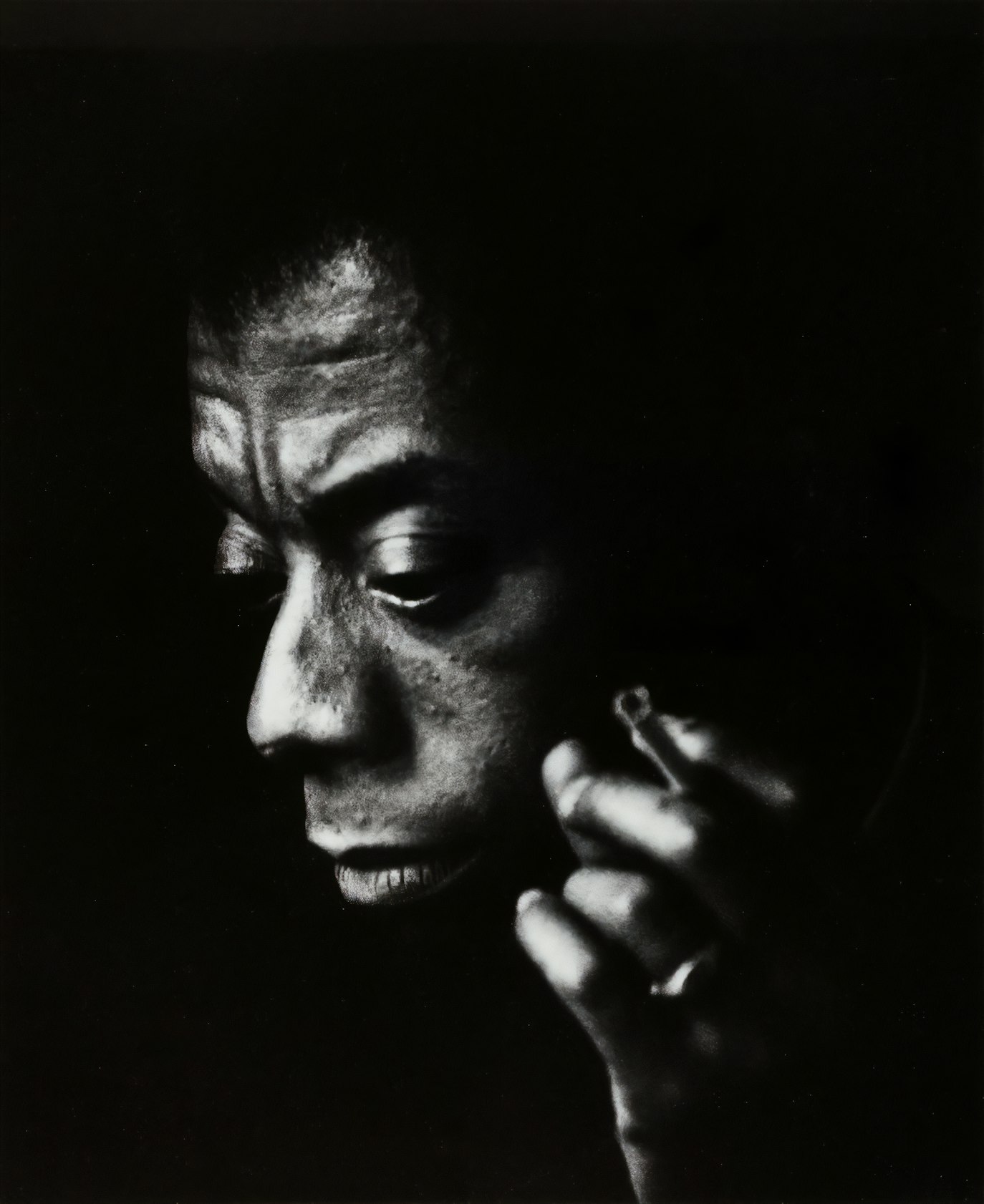
There are many excellent Black writers, deserving of their fame, but it’s James Baldwin I keep returning to for his wisdom, sensitivity, and eloquence.
Whenever I read him, I find cleansing—a washing away of grievances, the soothing salve of empathy for those visited by life’s unfairness, the unanticipated gifts of seeing with new eyes and walking in another’s shoes.
Reading Baldwin, I find connection. Suffering is never isolated; it is universal:
“You think your pain and your heartbreak are unprecedented in the history of the world, but then you read. It was Dostoevsky and Dickens who taught me that the things that tormented me most were the very things that connected me with all the people who were alive, or who ever had been alive. Only if we face these open wounds in ourselves can we understand them in other people” (The Price of a Ticket, 1985).
I have now read Cormac McCarthy’s All the Pretty Horses, remarkable in its stark, yet lyrical beauty reminiscent of Hemingway and Faulkner, intense in its palpable confrontation of goodness with evil; an elegy for a lost way of life; a saga of idealism’s betrayal; of mythic passage from innocence into knowledge offering no redemption, apart from the grace of endurance and a refusal to forfeit honor.
The traditional rancher spreads of west Texas have fallen on hard times, threatening a way of life. The novel opens appropriately with the death of central protagonist John Grady Cole’s grandfather, a former baron among ranch owners. The ranch, grown to 18,000 acres in 1871, has been sold, an inheritance lost. Working with horses is the only life Grady knows:
The Grady name was buried with that old man the day the norther blew the lawnchairs over the dead cemetery grass. The boy’s name was Cole. John Grady Cole.
The first of a three novels known as the Border Trilogy,All the Pretty Horses underscores the death of the Western frontier, once ripe with promise of plenitude—fortunes to be made and dreams fulfilled.
Foregrounded in historical fact, a pastoral, unfenced way of life has fallen prey to change—the dividing of holdings among family, increased taxation, a drift of young people to the cities, mechanization, the invasion of industry, government’s encroachment, relentless droughts—above all, the railroad’s ubiquity, all of which McCarthy turns into metaphor for an agrarian culture bound by hard labor and a code of honor irretrievably lost. Metaphor becomes elegy.
All the Pretty Horses narrates the journey of cowboys John Grady and his friend Lacey Rawlins from West Texas into Mexico, joined later by a mysterious youth, Jimmy Blevins, who owns a gun and rides an elegant bay mare, foreshadowing trouble ahead.
The novel abounds in resounding passages, poetic in resonance, like this one of stellar vastness, a cosmos indifferent to Man and of a fusion with nature and of a connection now severed:
He lay on his back in his blankets and looked out where the quartermoon lay cocked over the heel of the mountains. In that false blue dawn the Pleiades seemed to be rising up into the darkness above the world and dragging all the stars away, the great diamond of Orion and Cepella and the signature of Cassiopeia all rising up through the phosphorous dark like a sea-net. He lay a long time listening to the others breathing in their sleep while he contemplated the wildness about him, the wildness within.
Acquaintance with archetype helps readers tap more easily into the novel’s multiple levels of meaning—the hero archetype of initiation, trial, and return; the paradisiacal garden of northern Mexico’s La Purisima with its grassland abundance, grazing cattle of upwards of a thousand head, and 400 horses, attended by valeros, finding fulfillment in their labor; a siren temptress, Alejandra, the forbidden fruit, daughter of wealthy hacendado Don Héctor:
She passed five feet away and turned her fineboned face and looked full at him. She had blue eyes and she nodded or perhaps she only lowered her head.
The hero’s mentor appears, Dueña Alfonsa, great aunt of Alejandra, delivering stern warning from experience, that fate often annuls human wish and that economic and social determinism govern universally. Unlike traditional mentors, she’s unhelpful, even sinister, serving as forewarner and enforcer of social codes.
Not unexpectantly, trespass —Grady and Alejandra have become lovers—makes inevitable Grady’s expulsion from paradise, commencing an ordeal with uncertain outcome in a world where idealism is often judged as weakness and evil corrupts honor with impunity.
Unjustly imprisoned, Grady and Rawlins undergo brutal imprisonment for a crime they never committed. Blevins has been executed earlier by a rogue officer. We have reached the novel’s nadir, a replay of mythic hell. A Mexican prison, governed by bribery and savagery, tests their courage and capacity to endure.
Dueña Alfonso buys their freedom, under condition he not return to La Purisima, only to have Grady resist and encounter Alejandra’s rejection. Rawlings has returned to Texas.
Throughout, the novel remains faithful to its hero archetype—the hero, wiser now, returns to exact justice, wounded not only by a rifle’s bullets, but a pervasive knowledge of human capacity for caprice and injustice. Grady’s loss of his horses is inextricably linked to his identity. He returns to reclaim them, necessitating violence.
Restoration of wrong occurs, but not without a tarnished innocence and a sadness that knowledge brings.
Symbolism abounds, particularly through the horses of the narrative that give rise to the novel’s title. Virtual characters, they symbolize a dying way of life and nature’s nobility.
Grady’s affinity with horses affirms a vestige of traditional human communion with nature, once vibrant, but now vulnerable to a modern world in disconnect.
I have only one criticism, and that concerns its last fifty pages in which the prose splendor slackens and we arrive at a conclusion seemingly hurried and simplistic, anticlimactic in contrast to the mesmerizing narrative of its preceding pages that sustain a reader’s interest.
But make no mistake. McCarthy succeeds in writing an extraordinary novel, and I am embarrassed to have not caught-up with him sooner.
He passed from us in 2023 at age 89, having written twelve novels, several plays and short stories. Several of his books became movies.
He was his own person, disdaining celebrity status, living much of his life in poverty. Like Grady, he persevered. Recognition came late, beginning with Allthe Pretty Horses, which won the National Book Award, our nation’s highest literary award. He was 59 and now famous.
I intend to continue with his trilogy, then on to Blood Meridian, which many critics regard as his opus magnum.
Transcending time and geography, McCarthy rivals Faulkner as our greatest American author.
Ove Knausgaard, of My Struggle fame, has often spoken of his admiration for Dostoevsky, who with Proust and Joyce, comprise for him literature’s olympian triad.
While Dostoevsky has always had his admirers that include philosophers Wittgenstein, Heidegger and Camus, he has also had a principal detractor in Vladimir Nabokov who, in his Cornell lectures, dismissed him as a “claptrap journalist and a slapdash comedian, suffering from a fundamental “lack of taste,” manipulating readers through pathos.
In his recent New Yorker essay, “The Light of the Brothers Karamazov” (October 21, 2025), Knausgaard offers readers an informative social, cultural, and authorial milieu, helpful in deriving the novel’s meaning.
Knausgaard sees the novel as a chorus of perspectives, resistant to a gradient analysis. In short, the novel is open-ended.
There isn’t anything new about this view, which emanates from Russian critic Mikhail Bakhtin’s Theory of Polyphony and Dialogism, “a plurality of independent and unmerged voices and consciousnesses, a genuine polyphony of fully valid voices.”
Some will find Knausgaard’s approach the easy exit from the ambiguity that stalks this classic, each character virtually constructed apropos of a rubric.
Dimitri, immensely proud and of a violent temper, it is the military; for the middle one, Ivan, who is rational, cold, and analytical, it is the university; while for the youngest, Alyosha, who is warm, considerate, always accepting, it is the church. In addition, there is the servant Smerdyakov, presumed to be the illegitimate child of Fyodor and the intellectually disabled Lizaveta, nicknamed Stinking Lizaveta.
There exists the more traditional reading of the novel as a theological and cultural debate between Western and Slavic ways of life; of rationalism pitted against Russian spirituality, as represented in the Russian Orthodox Church.
In this view, Alyosha’s spiritual maturation and advocacy of active love constitutes the antithesis of his brother Ivan’s intellectualism, and clarifies the novel’s intended resolve, one latent with tension as to life’s purpose in the context of omnivorous suffering and evil. As Alyosha remonstrates in conversation with Ivan, “Love life more than its meaning.”
The Brother’s Karamazov is principally a wrestling with the problem of evil, the nemesis of theological belief.
In getting down to the roots of an author’s likely intent, a cultural or historical perspective is invaluable in keeping readers from superimposing their opinion on a text. Knausgaard is exemplary in providing this background,
Shortly before undertaking the novel, Dostoevsky’s epileptic son, nearly three years old, died following a three hour seizure. Filled with grief and guilt—his son had inherited his epilepsy— Dostoevsky began The Brothers Karamazov, his eleventh and final novel. The novel’s Alyosha bears the name of his son. Heeding his wife’s counsel, he sought the Church’s comfort, visiting the Optina Pustyn monastery and conversing with the monastery’s elder, Ambrose. Alyosha does the same.
Like the later Solzhenitsyn, and many Russians still, Dostoevsky was deeply devoted to the Russian Orthodox Church, and his Ivan incarnates the antithesis of Russian spirituality—Western in its secular rationalism, ultimately devoid of moral boundary. Dostoevsky is decisively slavophile.
I have been to Russia, visited Dostoevsky’s confining, upstairs apartment in St. Petersburg, where he penned his masterpiece; attended a crowded orthodox mass, where worshippers stood, movingly singing their hymns, a capella.
I came away from Russia, convinced that Russia is different—neither Western nor Asian—a repository of spirituality reflected in its literature, music and art. Russia cannot be fully comprehended apart from this awareness.
Ivan in his direct assault on Christ via The Grand Inquisitor tale, read in the context of Russia’s rampant human suffering, seems, nonetheless, to have the upper hand, reviving the oft-played notion of John Milton’s being of the devil ‘s party in writing Paradise Lost.
That the novel is best understood as polyphonous, a disparate coterie of life perspectives, undifferentiated in significance, does injustice to the novel’s complex subtlety that underpins its greatness.
The novel has its imperfections, as Nabokov noted. Like many readers, I find Alyosha insufficient as a counterweight to Ivan. When we leave off the novel, it is Ivan, not Alyosha, we remember.
Knausgaard informs us that unlike Tolstoy and Turgenev, Dostoevsky labored in poverty to support his family and suffered continuous stress to meet serial deadlines.
In her biography of her husband, his widow Anna indicated he lamented with each novel his inability to find time for revision.
Four months after the novel’s completion, Dostoevsky was dead.
Any final interpretation proves more elusive still in the aftermath of the prolonged stench of the corpse of the saintly monk Zosima, in whom Alyosha had confided. No expectant miracle occurs in liaison with his death.
What lies behind this intentional addition?
Perhaps, it represents Dostoevsky’s understandable lingering doubt, even amidst faith, or as Tennyson put it, “there is more faith in honest doubt than in half the creeds.”
Knausgaard seems to give ground to the notion of Alyosha’s centrality toward essay end:
…there is no doubt that Alyosha represents an ideal for Dostoyevsky—he bears the name of his dead son, Alexei Fyodorovich, and is the character who, in thought and in action, is most closely associated with the novel’s consistent notion of the good. But in comparison with the presence of Dmitri and Ivan—perhaps that of Dmitri in particular—he pales.
I agree with Knausgaard on the overpowering logic of Ivan’s assault on God’s inadequate justice, but then the problem of evil never evades those of genuine religious sensibility and the novel faithfully reflects this inner, cognitive dissonance.
Knausgaard undervalues the novel’s theistic thrust in embracing divergent narrator purviews, qualitatively equal. The Brother’s Karamazov, on the contrary, emerges a vigorous theodicy, defending faith in a world replete with anguish.
I am sympathetic with Albert Camus appraisal of the novel as existential, humanity granted freedom to make choices. I agree with his conclusion that the novel, in its final chapters, reaches for a religious conclusion, confirmed by Ivan’s descent into madness. Camus’ view bears semblance to Dostoevsky’s religious sensibility, however troubled.
Others argue that Dostoevsky deliberately destabilized his text, offering no firm resolution to the quandary of faith in a world of evil.
The novel’s resultant ambiguity is its strength, positing the need for repeated reading and, with it, new understanding. And for believers, sober challenge to the veracity of faith.
I like Knausgaard’s close, seemingly coming to terms with the novel’s complexity:
I write this in the certainty that this interpretation, too, will dissolve as soon as you open the book and begin to read it anew. This is what makes “The Brothers Karamazov” a great novel. It is never at rest.
Childhood should be our Eden, a time for innocence before the shadows come and we lament its loss.
This morning I’m enjoying my romp in Joy Sullivan’s Instructions for Traveling West Poems, a collection of her prose poems, reminiscent in many ways of beloved Mary Oliver’s peace-conferring verse. Sullivan lived her childhood in Africa, the daughter of medical missionaries.
In one poem that means much to me, she shares her memory of untainted innocence that helps us recover our own dormant memories of a garden world we cannot enter again:
“Growing Up”
All I could think about was filling these cups and staining these lips and being some new kind of loveable. All the while, my mama in her quiet, weary way: one day, you’ll wish for this time without worry. No one can really ever warn you how the world is a thick leather boot. A midnight car slowing down. An oil spill. A matchstick.
I miss the girl my mother still could see— unadorned, untired. The one, at dusk, who followed the dog into the woods unafraid.
This morning I’ve been reading Thich Nhat Hahn’s Fear: Essential Wisdom for Getting Through the Storm. Many of you are familiar with his books, wise in counsel, encouraging mindfulness engaged in the present, not burdened with trauma from the past or worries about the future.
I reached for Hahn, my amygdala working overtime, given the White House maelstrom.
Hahn reminds me that we are linked to an infinity beyond ourselves. We are all connected: sun, water, forest, and sentient animal friends.
That there is no permanence.
That entropy is life’s law.
I venture that our ultimate anxiety concerns our mortality
Peace comes, however, with its acceptance and doing good for others. Our passing doesn’t mean extinction, but rejoining that eternally existing phenomena that gave rise to our being.
Fundamental to Buddhism is that there is neither birth nor death, but continuum only. The Buddha perceived this truth 2500 years ago, confirmed by the Conservation Law of Mass-Energy —that mass is not created ex nihilo, nor destroyed into nothing. It simply changes its manifestation.
A cloud never really dies in becoming rain or snow.
We must confront our fears, not deny them, if we are to find peace, not seek escape in accumulation or media overload.
While I find the history of religion to be no less than a bloodbath, I think of true Buddhism as a way of life rather than a religion. It posits no deity. I completed an impressive course from a Dutch university several years ago that introduced me to its major tenets and, especially, to mindfulness enhanced through meditation.
I’ve been subsequently amazed with brain imaging results that show serious meditators experience neural changes at several levels, including an increase in gray matter density and cortical thickness in the hippocampus, responsible for learning, memory and emotion.
What impresses me most is that amygdala activity, the brain area responsible for our anxiety, is decreased, often after just eight weeks of consistent practice. I’m all for less anxiety.
With this new brain imaging technology now available, science is just catching up with the intuitive truths of Buddhism. I know of a Princeton professor who has dedicated his research to studying the liaison.
Several years ago, I undertook training in Transcendental Meditation. I didn’t really catch on how to do it effectively until last year when I read Yongey Mingyur Ripoche’s The Joy of Living and learned specific techniques. Unfortunately, I have failed to practice it consistently. I need to mend my ways.
The late film director David Lynch did meditation twice daily, busy as he was, never missing, until the end of his life and wrote a book about it, Catching the Big Fish, which I’ve read.
I am grateful for my time out with Thich Nhat Hahn’s book, a refresh on those values than quiet our anxieties and grant us peace.
Wishing all of you well, I trust my affection for all of you vibrates into a day of happiness.
I’ve been a reading addict since childhood, when as a young boy I’d walk a mile—sometimes more—just to lose myself in a library’s cool hush, seated at a table, surrounded by shelf-lined books inviting adventure.
My love for animals found early confirmation in the Dr. Doolittle books I devoured. I read every one. Years later, that same fascination with the speech of creatures led me to Jane Goodall’s revelatory studies of chimpanzees—proof that empathy can grow into insight.
Another passion took root in the dusty bleachers of Shibe Park—later Connie Mack Stadium—in Philadelphia. I loved baseball with an intensity only children know, lingering outside the gates, hungry for autographs as players boarded their buses. I read passionately about my idols—Ruth, Gehrig, immortals who remain with me.
Travel books, too, called out to me. Mutiny on the Bounty and its aftermath on Pitcairn’s Island transported me to the South Seas, where I imaginatively romped through Tahiti, New Zealand, and Australia. In later years, that early enchantment led me to consider emigrating to New Zealand. I was, in fact, approved.
Languages fascinated me. One day, at ten, I brought home books in Russian from Philadelphia’s Free Library, expecting the Cyrillic script to magically transform itself into English. That early infatuation would one day carry me across the world to Russia and the homesteads of Tolstoy, Dostoevsky, and Chekhov.
I call myself an autodidact, though I’ve graduated from several reputable universities. I started behind most students, having fled a troubled home at seventeen, enlisting in the Air Force, which sent me to Korea. Our base library was a single room, yet its shelves were somehow populated with a few classics. One off-duty evening, I pulled down a book called Look Homeward, Angel. It changed my life.
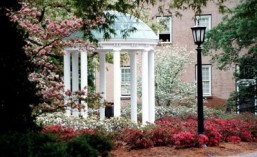
After Korea, I read everything Thomas Wolfe wrote, visited his home in Asheville, eventually enrolling as a Ph.D. student at his alma mater—the University of North Carolina at Chapel Hill, “Pulpit Hill” in Wolfe’s novel. On my first campus day, waiting to register for classes, I bumped into a retired professor, who asked what brought me to Chapel Hill. “Thomas Wolfe,” I said without hesitation.
A serendipity moment, that professor had known Wolfe. Becoming lifelong friends, they traveled together to prewar Germany, where Wolfe witnessed the Nazi persecution of Jews, which he would later feature in You Can’t Go Home Again. He shared anecdotes about Wolfe, who stood six feet, six inches. His hands too wide to use a typewriter, Wolfe wrote standing up, a refrigerator top serving for a desk.
Despite the scores of books I’ve read, there remain gaps I want to fill. The books I’ve read have been my faithful companions along life’s road, shaping who I am.
Were I granted another life, I think I’d come back as a librarian. No other choice comes close.
Every New Year’s Day for the past six years I’ve posted on Brimmings my annotated recommendations for the finest fiction and nonfiction reads. I spend hours culling my lists from authoritative sources. I give emphasis to canonical works, both domestic and international—books intellectually stimulating, challenging, and broadening, the kind that will still be read generations hence. Often one of my criteria has been to fill gaps in my own reading, those books I should have read long ago, but somehow missed.
But lately I’ve been musing on a new way of choosing books—more personal than public, more in keeping with my desire to read systematically, to fill in the areas I don’t know well but should.
While my published lists have value, they fall short of providing full acquaintance with an author through a single recommendation. A fragmented forest, bisected by a highway or development, comes to mind—isolated stands of trees cut off from the territorial expanse essential for their flourishing.
It used to be that when I encountered a great writer for the first time, I would read five books: two about the author (often biographies), and three by the author. It worked well—Tolstoy, for example.
But now I want to do better still.
Perhaps I could read not only by author but by theme—a focus on, say, the environment, doing a minimal five books, maybe beginning with the late E. O. Wilson, who never disappoints, or the sagacious Carl Sagan. Reading only The Great Gatsby hardly gives one the fullest sweep of Fitzgerald’s range and mastery. It’s like movie buffs: if you admire Tom Hanks, you don’t stop at one film.
To really round out my education, I should read chronologically, starting with the classics. I’ve read and taught Euripides’ Medea, but it’s only one play—nineteen of his tragedies survive.
So yes, I can focus on an author or a theme—or read chronologically across disciplines.
Here’s another approach: why not read geographically, and I mean largely internationally? I know so little of Chinese literature, philosophy, and culture—the same for India and Japan.
Or I could venture a European country that most readers overlook—Finland, for example, a nation whose people are addicted to both writing and reading, dark interminable Arctic nights surely contributing. I already have Finland on my list.
I’ll still publish my annual New Year’s list, but when push comes to shove, know that privately I’ll be trekking the road not taken.
I am committed to reading the best that has been thought and said. Escapism and the utilitarian have never been my guides to what I read. In our age of competing stimuli, we’ve imperiled our ability to reflect, to think hard about life’s meaning and live it well.
Stillness is prerequisite for reflection that enlargens our thinking, renders us more humane, the finding time for the right read that nurtures the goodness that lies within us.
I am dismayed about contemporary classrooms, vastly different from those of my New England childhood that lent emphasis to the reads that expand awareness and humane endeavor.
Classicist Michael S. Rose sums up for me what today’s classrooms have lost with their inability to distinguish the wheat from the tares:
“The great catastrophe of our time is not that children fail to learn, but that they have never been taught what is worth knowing. The tragedy that unfolds daily in classrooms across the land is the presence of amnesia, a colossal forgetting of our inheritance. The inheritance of human genius and beauty—from Athens and Jerusalem, through Rome and the Renaissance, to Shakespeare’s London and Lincoln’s prairie—is what now stands in peril. It has not been violently seized; that would require too much effort and too much awareness of what was being lost. Rather, it has been carelessly misplaced, forgotten among the dazzling distractions of modernity” (Substack, Oct. 9, 2025).





 Brimmings: up from the well