An Owl’s Story: Carl Safina’s Alfie and Me

There exist those books you wish wouldn’t end. Carl Safina’s Alfie and Me: What Owls Know and Humans Think was that kind of book for me.

I had read Safina’s excellent View from Lazy Point several years ago, impressed with its detailed oberservations of wildlife and an arctic indigenous community across four seasons. That same concern for indigenous well-being and the plight of animals in a changing world continue with Alfie and Me.

Safina, a widely published ecological author and Endowed Professor of Nature and Humanity at Stony Brook University, is an expert in marine biology and recipient of many honors, including a MacArthur Fellowship, sometimes dubbed “the genius grant.”

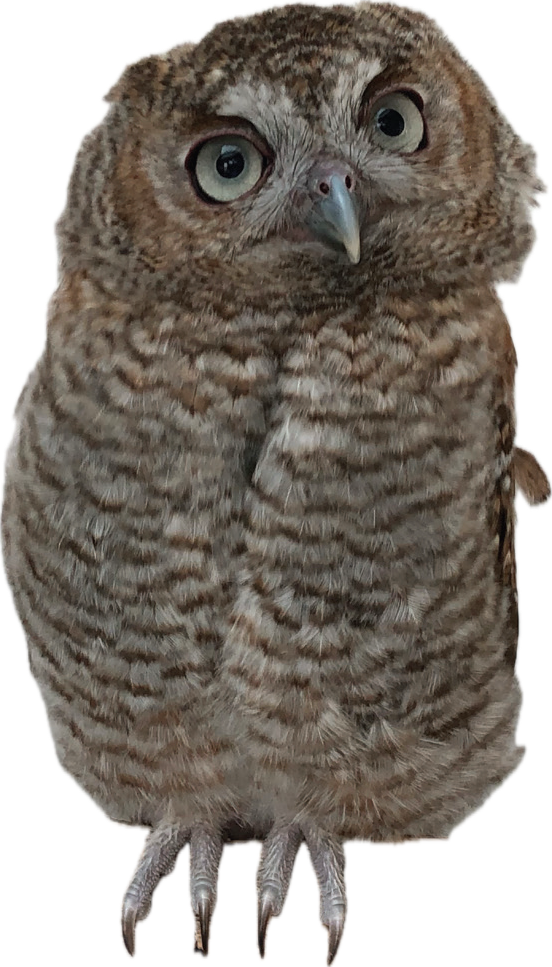
In all his writings, Safina’s focus is on how humans relate to nature, a theme manifestly central to Alfie and Me, chronicling the story of an orphaned Eastern screech owl found in Safina’s Long Island backyard in 2018. Over the course of eighteen months, Safina and his wife, Patricia, nurtured the owl—whom they named Alfie—until her eventual release, creating a rare, intimate portrait of interspecies connection and nature’s resilience.

Safina becomes nearly a helicopter parent, monitoring Alfie’s daily development, torn between fostering her independence and protecting her from the harsh realities of the wild: “… I knew—as she did not—the relative meaninglessness of a life without risks.” An estimated two thirds of young screech hours die shortly after leaving their parents’s nest.

I found myself anxious for Alfie’s survival. Would she learn to fly, to hunt, to mate? Could she survive storms, drought, and the many predators that lurk in her world?

Species survival today depends not only on healthy ecosystems, but increasingly on humans recognizing their relationship with nature as essential to mutual survival.

Safina criticizes Western philosophy for severing this connection, beginning with Plato’s split between the material and spiritual worlds—deeming the material inferior and ultimately fueling nature’s exploitation: “Plato and his followers were perhaps the first people to feel revulsion toward the world. By forever separating our material world from the realm of perfection, Plato propounded a stark dualist doctrine,” Safina says.

For Safina, “This might be the most consequential idea in the history of human thought, its implications almost literally Earth-shattering. Most fundamentally, we are left with: an existence at odds with itself.”

Descartes and Bacon subsequently embodied a modern mechanistic view of nature, oblivious to nature’s sanctity and evolutionary intelligence, leading to its objectification. “The great blindness of the West is to grope the world as inventory,” Safina writes.

In contrast, Safina draws richly from Eastern traditions, which emphasize the unity of all life and the reverence owed to the source from which we came. Although his book is replete with references to Hindu, Buddhist, and Taoist thought, he finds Confucianism especially compelling for its focus on relationships.

Safina also turns to Indigenous cultures as contemporary models of living in harmony with nature. Their ways often involve mindful observation and sustainable stewardship rooted in mutual respect: “For most of human history, Native peoples, more intimate with their existence than we with ours, perceived that Life and the cosmos are mainly relational,” Safina says.

Reading Alfie and Me, I couldn’t help but think of the estimated one billion birds projected to die globally in 2025. According to the Audubon Society, North America alone has lost 25% of its bird population since 1970—about 3 billion birds. Contributing factors include climate change, deforestation, pesticides, habitat destruction, urban structures, insect decline, and free-roaming cats.

Safina’s book appeared in 2023, or before the current avian flu outbreak, which over the past 18 months has led to the confirmed deaths of millions of wild birds in North America—many of them common backyard visitors. The virus has now reached poultry as well, despite the culling of over 166 million birds. A future in which birds no longer sing at sunrise, once unthinkable, now feels disturbingly plausible.

This avian decline is largely human-made, driven by an economy that prioritizes profit over preservation

Why write about birds, some might ask. Shouldn’t human needs come first?

Safina answers with the words of Catholic monk Thomas Merton: “Someone will say you worry about birds: why not worry about people? I worry about both birds and people. … It is all part of the same sickness, and it all hangs together.”

Alfie and Me is not only a poignant narrative about an orphaned owl, but also a powerful meditation on our shared existence, affirming Safina’s truth: “that no isolated separation is possible. We are participant members in one existence—of life, of the cosmos, of time.”

–rj

No Easy Fix: Climate Change is Coming for You!


I’ve always liked environment activist Bill McKibben, longtime prof at Middlebury College and prolific writer, though sometimes I disagree.

For example, he recently parried a reader’s hint that just maybe overpopulation poses our greatest challenge in mitigating the exponential fallout of climate change by saying he didn’t think so, given that where population is rising most, Africa, there’s little contribution to carbon discharge .

While that may presently hold true, the reason for this is Africa’s falling short on Western amenities that along with their comfort and convenience, foster carbon discharge.

The fact is Africa is incipiently engaged in catching-up to the follies of more advanced economies in adopting technologies promoting carbon discharge, especially with regard to excavating industries in places like the Democratic Republic of Congo.

As Africa’s clamor for meat likewise grows with surging population, more deforestation is occurring, and we know that spells diminished carbon sinks, fostering destabilization of weather patterns.

As I write, prolonged drought plagues Africa, creating a vast risk of starvation and malnutrition. What it doesn’t need are more mouths to feed.

In game refuges, elephants and even rhinos, seen as competitors for flora and landscape, are being slaughtered to feed a growing population in Angola, Zimbabwe and, yes, in Bechuanaland, Africa’s last great elephant sanctuary.

McKibben entangles himself similarly in joining the chorus advocating more wind turbines, despite emerging evidence of their dire consequences, at least for seabirds and whales, according to the recent 600 page report from the Bureau of Ocean Energy Management (BOEM).

On the other hand, he’s right about so much of our climate morass.

This year was the hottest on record, with next year unpromising. Phoenix, our fastest America growth city, endured 31 days of 110F temperatures, its emergency rooms overflowing with the burned and dying.

And he’s right—there’s no safe place to move. Vermont, where he lives, sheltered by its mountains, suffered an atmospheric river this past summer, resulting in unprecedented downpours inflicting catastrophic flooding.

Last night, I learned of America’s new housing crisis, this one weather related. It seems 30-year mortgages can’t withstand climate change, natural disasters occurring not only more frequently, but with accelerating violence.

Take Florida, for example, where home insurers are pulling out. Where they remain, and I mean across the nation, annual premiums increases are eroding many homeowners’ ability to pay.

Currently, 9% of the world’s population, or 600 million of us, lives outside what’s known as “the climate niche,” meaning safety zone. By century’s end, an estimated one third of us will fall into this doughnut hole.

Now comes the orange hair threat assuming office, January 20, 2025. Denying climate change as a hoax, he pledges “drill, baby, drill.”

Fasten your seatbelts everyone. Turbulence ahead!

–rj

Introducing my hummingbird friends…

hummingbird-at-a-feeder-1They return every April to our Kentucky backyard, survivors of a 3000 journey from Central America, which includes a non-stop 500 mile flight across the Gulf of Mexico. It’s a journey my hummingbird friends will repeat again, returning in fall to their winter feeding grounds.
Knowing of their imminent arrival, I had faithfully set out our bright red hummingbird feeder in mid-April. For some reason, they prefer red and orange colors. Every spring, I’d be either sitting in the sunroom or outside, prepping the flower beds, when I would first spot or hear a solitary aerial scout probing, like some overhead helicopter, the landscape below. First of a coming vanguard, this sole wayfarer heralded spring’s rebirth, despite frequent rain, temperature dips, and clouds that frustrate the sun.

Always, as though set on a timer, my guests start their return journey the first week of October. I last saw them here on October 3, busily waging war with each other for first rights to their sugar drink. I know what this is about. It’s important for them to increase their body fat by half to fuel their arduous journey. I’m glad to provide a way station.

I’ve learned enough about hummingbirds to know this remnant flew-in from other haunts this fall, perhaps even from lower Canada, seeking to refuel. If I hadn’t seen any hummingbirds since early August, it was because my regular clientele were already embarked on their long journey. Hummingbirds begin their return migration as early as the waning weeks of July, extending through the second week of September, depending on the locus of their summer habitat.

The next day, they had vanished, nature stamping fall’s passport while signaling my own need to prepare our yard for winter’s long sleep.

Still, I keep the feeder out just in case there’s a straggler about. It happened one year. I had seen this seemingly forlorn hummingbird on our woodpile out back, which is quite unusual, since hummingbirds can’t walk or hop like other birds, given their tiny feet. That’s why their feeders lack perches.

Moving cautiously, I was able to get near enough to cup him in my hands and place him in an old shoebox, uncovered, for a quick trip to our vet. Along the way, Karen and I kept thinking anxious scenarios of what to do if he got loose in the car. But it never happened, thank goodness.

The vet, a bird specialist, shrewdly put sugar solution into a nose dropper and he started drinking–hey, a good sign. Then, suddenly, here he was, zooming around the exam room. Well, we got him back, cradled him into his box again, this time with aerated cover, and took him home.

Releasing him in the backyard, we watched our friend fly eagerly to a high pine branch, rest momentarily, before soaring out of sight, perhaps ready to resume his journey over land and sea.

I’d like to think he did well, but the final fate of migratory birds is an uncertain one at best. Their worst enemies are storms and loss of habitat through human intrusion. An estimated one third don’t make it. That’s why it’s incumbent you and I who have backyards do all we can to lend a helping hand to our aerial friends.

After all, they help us maintain the ecological balance on which life depends, including our own.

Postscript: Fun Facts about Hummingbirds:

  • Of 320 species in America’s, only 8 of them breed in the U.S., among the most notable, the ruby-throated hummingbird. Hummingbirds are found only in the Americas.
  • They live about 3-5 years.
  • Each species makes a different humming sound, determined by wing beats per second.
  • Their wings beat between 50 and 200 flaps per second.
  • Their tiny hearts beat 1200 times a minute.
  • They take 250 breaths per minute at rest, which isn’t often.
  • They can straight fly at 30 mph, dive at 60 mph.
  • Among bird species, they’re your ninja warriors, known to attack jays, crows, and even hawks.
  • In size, some species are so small they’re consumed by other insects such as praying mantis and dragonflies.
  • They’re the only birds that can fly backwards and sometimes upside down.
  • Hummingbirds must eat twice their body weight daily, and to do this, they visit hundreds of flowers, primarily feeding on nectar. (I make a sugar substitute formula for them, changing it every 3 or 4 days to avoid mold.)
  • Unlike other migratory birds, each hummingbird makes a solitary journey, and not as part of a flock. (Hard to imagine, even for a human, crossing the Gulf of Mexico by yourself, without map and compass. But these 3 inch creatures are nature’s miracle. Even more spectacular, young birds travel to a homeland they’ve never seen, depending solely on instinctual navigational skills.)


Macdonald’s H is for Hawks: Finding Passage

The archaeology of grief is not ordered. It is more like earth under a spade turning up things you had forgotten, surprising things come to light: not simply memories, but states of mind, emotions, older ways of seeing the world.
–Helen Macdonald, H is for Hawk

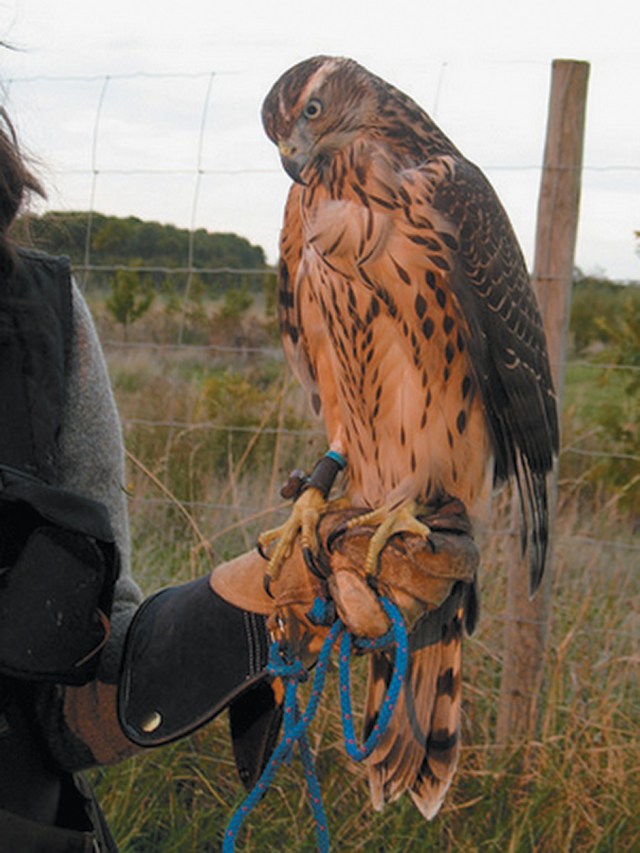
Helen Macdonald with her goshawk, Mabel, near Cambridge, England, 2007

I’ve finished reading Helen Macdonald’s H is for Hawk and want to weigh in on it like someone who’s just dined gourmet and relishing the deed, must boast his good fortune.

I was attracted to Macdonald’s memoir because of its critical esteem in those bastions of literary prowess like The New Yorker and The New York Review of Books, which often ration praise and, even then, not without censure.

H is for Hawk has won two prestigious book awards as well: The Samuel Johnson Prize for non-fiction and Costa Book Award for best book in any genre.

This is Macdonald’s fifth book.

She teaches and does research at Cambridge University.   Her interests include not only falconry, but history and poetry (3 published collections).

Macdonald’s memoir tells the story of her depression following the unexpected death of her father, Alistair MacDonald (2007), a longtime photographer and  journalist for the Daily Mirror, and her resorting to falconry to relieve her grief.

Macdonald’s goshawk, Mabel

This isn’t the first occasion we’ve seen a book testifying to the ability of animals to uplift troubled humans, but may well be among the best. In venturing into the first several pages, I knew immediately I’d be keeping company with a masterpiece.

Macdonald’s training of a goshawk provided a means of continuity with her father, an ardent plane spotter and bird enthusiast, who also taught her patience, a primary motif contributing to her healing and integral to harvesting nature’s plenitude::

My father’s talk of patience had held within it all the magic that is waiting and looking up at the moving sky.

But Macdonald’s memoir is not your romp into a Wordsworthian nature, benevolent and moral.  Mabel kills her prey, suddenly and savagely, or like those artifacts of the human world, airplanes, which link the human and the natural; and yet, even then, there is a vital difference separating the two, with the balance favoring nature:

In my time with Mabel I’ve learned how you feel more human once you have known, even in your imagination, what it is like to be not. And I have learned, too, the danger that comes in mistaking the wildness we give a thing for the wildness that animates it.  Goshawks are things of death and blood and gore, but they are not excuses for atrocities.  Their inhumanity is to be treasured because what they do has nothing to do with us at all.

The writing itself is magnificent in its artfully composed sentences resonant with observation and chiseled detail of landscape and of her travails in training her goshawk, Mabel,  and, most of all, in its poignant psychological journey of retreat from the human community and, ultimately, return to its renewed embrace.

Her memoir is also interlaced with T. H. White’s works, renowned for their Arthurian themes and with his The Goshawk (1951) in particular.

White, who lacked experience, had earlier attempted to train a goshawk, only to fail.  Macdonald, however, didn’t suddenly take up the hobby or, more precisely, being an austringer (i.e., a hawk trainer), having previously trained peregrines, merlins, and kestrels:

While the steps were familiar, the person taking them was not. I was in ruins. Some deep part of me was trying to rebuild itself, and its model was right there on my fist. The hawk was everything I wanted to be: solitary, self-possessed, free from grief and numb to the hurts of human life.

Although MacDonald identifies in many ways with White, who becomes a projection and touchstone of her own anguished struggle to evade life’s seemingly malevolent caprice, she fortunately finds her way past his psychological morass.

As I grew happier his presence receded, his world more and more distant from mine.

Like White I wanted to cut loose from the world, and shared, too, his desire to escape to the wild, a desire that can rip away all human softness and leave you stranded in a world of savage, courteous despair.

Unlike White, she learns that “hands are for other human hands to hold. The wild is not a panacea for the human soul. Too much in the air can corrode it to nothing.”

–rj


Monarch Butterflies: Beleaguered Friends

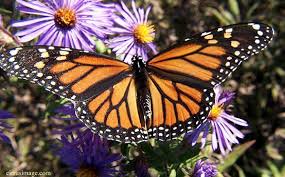
monarchs1Spring is for tidying and trying out new ideas.

This spring I’m bent on turning the back yard into a pollinator’s paradise and bird sanctuary. In particular, I want to get it certified as a waystation for my beleaguered garden companion, the monarch butterfly.

Butterflies, like so many of nature’s creatures, are facing tough times. Unless you and I get involved, these tiger emissaries of beauty won’t be with us much longer.

There are, however, simple things homeowners can do; but first, a few things about the monarch you may not know:

They are a dying species. According to the the Department of Ecology at the University of Iowa, their numbers have declined a startling 81% in the Midwest since 1999.

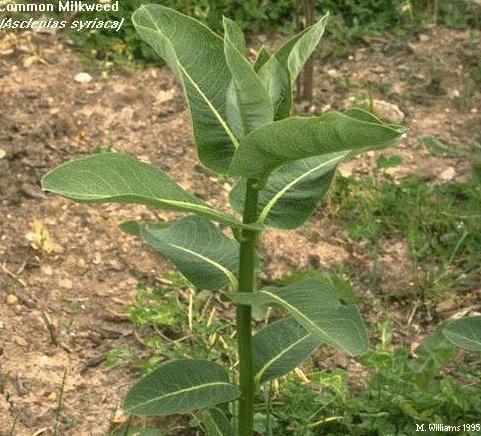
Their demise has come about largely due to the increasing scarcity of the common milkweed and its several varieties. Development and herbicides have taken a huge toll.

Monarch butterflies use no other source for laying their eggs and feeding their larvae.  Here I am reminded of Rachel Carson’s observation how “in nature, nothing stands alone.”

Each year, however, milkweed increasingly gets bulldozed, poisoned, or pulled. In suburbia, the monarch’s last great hope, millions of us obliterate them every weekend with our mowers and weed eater arsenals fresh from Lowe’s and Home Depot.

Farmers haven’t been much help either in their embrace of GMO soybean and corn production and consequent use of toxic herbicides like glyphosate (a probable cancer carcinogen in most processed foods).

I can’t say I haven’t cut down milkweed myself, seeing I didn’t even know what it looked like until recently.

milkweed

But knowing now the plight of the monarch, I aim to make up for my misdeeds against these aerial delights and daily garden companions.

Monarchs are amazing. These diminutive creatures fly 3000 miles, traveling on thermals at a speed of 12-25 mph, from southern Canada and the eastern U. S. every August through September to overwinter in Mexico, returning in spring to produce a new generation.

They don’t have lungs, breathing instead through tiny vents in the thorax, or abdomen, called spiracles.

Monarchs can perceive colors and assess habitat. They can even detect UV lights, something humans can’t do.

This may surprise you, but monarchs store a poison, which helps protect them from predators like frogs, lizards and birds. (I’ve never ceased marveling at the wonders of evolution.)

Monarchs are unique among all animal species in their regeneration pattern. Every spring and summer, three generations, each living only two to six weeks, are born. Then comes that fourth generation in August and September.

Though biologically the same as the others, this generation is mysteriously programmed to live for some eight months, making winter migration possible. It’s this generation, the great grandchildren, who produce progeny, a miracle that continues to baffle scientists.

Now here are things you and I can do to help them out and to get more of them into our yards:

Create a waystation: This means converting a portion of your yard–doesn’t have to be large–that will provide milkweed and nectar plants for monarchs along with habitat and shelter.

You can get your waystation certified. Just go to MonarchWatch.org and follow the link. In just the past two years, waystations have increased nationally from 36 to 234. In Lexington, KY, where I live, their number has gone from 36 to 60!

You will also enjoy the video available at YouTube.com. Look for the Main Street Monarch Migration video. It’s filmed in Kentucky’s gorgeous Audubon State Park, which observes a butterfly festival each year.

Here are some recommended plants to help you create your pollinator sanctuary, via the kind auspices of Lexington photographer and gardener Betty Hall (http://www.bettyhallphotography.com/blog/wp-content/uploads/2012/02/25-Favorite-Native-Plants.pdf). Many of these plants may be suited for your own locale, but try always for indigenous plants as they’ll fare best.

Be sure you include the crucial milkweed you’ll see in her listing. You’ll have to search your locale a bit, since the majority of nurseries, including the box stores, don’t carry them.

Saving the monarchs has taken an international turn. Did you know that President Obama recently discussed the issue with Mexican president, Enrique Peña Nieto and Canadian prime minister Stephen Harper?

The good news is that Mexico has now set aside some 62 square miles of forest in the Sierra Madres for their preservation. You’ll find it by googling Monarch Butterfly Biosphere Preserve,

I find the challenge of keeping our monarch guests around exciting and hope you will too.

–rj


Jung, Archetypes, and A Parrot: The Legacy of Nature’s Genius

Dr. Joanna Burger
Dr. Joanna Burger

I’ve just finished Joanna Burger’s The Parrot That Owns Me: The Story of a Relationship. Funny, I had this book sitting on my shelf, unread, for twelve years. Looking for something to read while eating my breakfast, I pulled it down and started what turned out to be a fun read.

I also learned a great deal about birds and, especially about parrots, surely one of the most intelligent of animal species, though we normally think of primates (gorillas, chimps, orangutans, etc.), dolphins, elephants and pigs as honorary Mensa candidates among our animal kin.

Burger, one of the world’s leading ornithologists and Rutgers University prof with over twenty books to her credit, tells how Tiko, her Red-lored Amazon, practices a repertoire of tonal warnings to distinguish varied predators, most notably, hawks, cats, and snakes.

She writes that “when Tiko gave his hawk call, Mike (her husband) and I would invariably spot a Red-tailed, Sharp-shinned, or Cooper’s Hawk flying overhead or perched in a nearby tree. Tiko’s response was so consistent that there was no question that he recognized hawkdom” (167).

Likewise, Tiko doesn’t like snakes, one of which Burger kept for a while, much to Tiko’s dismay. Only when the snake went into hibernation could he be content in the same room.

But how does Tiko pull this off?   After all, he seems to possess a genetic memory of jungle predators, even though he’s been totally reared in captivity and has never had any interaction with hawks or snakes?

Years ago I had started reading Jung, who has impressed me more than Freud as being on the mark when its comes to the seminal sources lurking behind human behavior. Jung proposed the theory of archetypes, or “primordial images” (Man and his Symbols, 67), reflecting instinctual urges of unknown origins. They can arise in our consciousness suddenly and anywhere apart from cultural influence or personal experience. Often they take shape in our consciousness through fantasy, symbol, or situational pattern.

And so with Tiko as well as ourselves, the instinctual responses perpetuating survival have become wired in the brains of sentient creatures. Untaught, they’re automatic.

Today, science overwhelmingly confirms the accuracy of Jung’s prescience. Take, for example, the eminent biologist Edward O. Wilson, who attests that monkeys “raised in the laboratory without previous exposure to snakes show the same response to them as those brought in from the wild, though in weaker form (In Search of Nature, 19).

The explanation, of course, lies in evolution’s conferring differential survival value through natural selection. Those who learn to respond to fear quickly simply pass on more of their offspring with their response mechanisms.

Wilson goes further, arguing that human culture itself is considerably biological in origin, or genetically prescribed, supported by analytical models (123-24).

A Jungian at heart, I found Tiko’s innate capacity to respond to elements of danger another in a long line of evidence supporting Jung’s pioneering perspective; on this occasion, by way of one of the world’s most astute animal behaviorists, Joanna Burger.

Nature never ceases to amaze me!

–rj


Where are the songs of Spring?

images

Saw a sign yesterday that read, “Spring is coming soon.”  That’s something we’re all wondering about, even in Kentucky, where we’ve been having an unusually cold March, which makes it hard to believe the Kentucky Derby is merely six weeks away.  They say it may be related to melting glaciers changing our wind patterns.

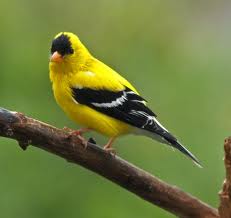
But the real sign nature is about to turn generous was yesterday’s afternoon delight in seeing my goldfinch friends, busy at their feeder, newly returned from their long and distant migration.  I remember late October when suddenly they were gone, the absence of their aerial eagerness and bright collusion of yellow and black; the silence and loneliness of it, like saying good bye to a good friend who had brought abundant joy, “A quality of loss/Affecting our discontent” (Dickinson, “A Light Exists in Spring”).

I’m not a member of the Audubon Society, but I quite understand their love for birds with their bright plumage and merry song.  I think of St. Francis of Assisi whose kindness the birds reputedly reciprocated by sitting on his shoulders.  Sometimes I think they take their own measure of me in their aerial hideaways when I replenish their several feeders in our backyard.

Birds need our help these days more than ever.  I just read the other day that an estimated 100 million birds are killed worldwide each year by outdoor cats and other scavengers.

Diminishing canopy of forest and brush, draining of wetlands, and climate change add to the toll.  Squirrels and other rodents raid their nests, devouring eggs and young hatchlings.

Migration itself can be costly, with many killed and injured, caught in storms or flying into buildings, and sometimes planes.  Many are blown off course and show up in risky environs.  I feel bad that each year several of them smash themselves into our sunroom windows and I am left with their still warm bodies.

Some of them, hawks, are wantonly shot by farmers who see them as predators.  I had an unpleasant experience in New Zealand in hearing of a crusty elderly man who had nothing better to do than shoot hawks as everyday pastime in that gorgeous Taranaki countryside of lush greenery.  In Kentucky, especially in the mountains, hawk-killing takes on a compulsion.

Down the road and around the curve, I often see a sentry red tail hawk on a high telephone wire.  I like what I see when I drive past His Majesty.

I relish reading good poetry and there are poems, great ones by Keats and Shelley, Hopkins and Dickinson, that wonderfully excel in depicting the splendor of birds like “Ode to a Nightingale, “Ode to a Skylark,” “The Windhover,” “A Bird Came Down the Walk” and, sometimes their sadness as in Angelou’s moving “I know why the Caged Bird Sings.”

But I began with the subject of Spring and so Keats’ question of “Where are the songs of spring?” (“Autumn”) comes to mind and finds its answer, for me at least, in yesterday’s return of my yellow-jacketed friends.  Let Spring’s sweet song begin!

Be well,

rj