A Candle Has Gone Out: The Legacy of Jane Goodall

It’s with profound sadness I learned yesterday of primatologist Jane Goodall’s death at age 91.

Blessed with remarkable genes, she lived life with zest up to the very last, tirelessly traveling across international landscapes to raise funds for her Jane Goodall Institute in Tanzania, founded in 1977.

I read her NY Times obituary, but it falls short in evaluating the plenitude of her achievement and its significance for all of us. I learned some time ago that the NYT composes many of its obituaries in advance, ready-to-go like a frozen pizza.

It doesn’t take into account her devotion to the Tanzanians among whom she worked for sixty years, as earnest for their welfare as she was for chimpanzees, humanity’s closest relatives, possessed like us with dual capacity for good and evil.

She gave early warning of climate change as an eyewitness of its exponential ravages in Africa, the front line of its advance.

You can learn much of what she accomplished through reading among her many books The Shadow of Man or A Reason for Hope of her work in Africa, breakthroughs in science, and personal beliefs, some of them controversial such as her advocacy of birth control availability to help African families limit their family size. Tanzania is second among Africa’s 54 nations in population growth. With a present population of 68 million, its projected 2100 population will swell to 283 million, imperiling its subsistence resources.

Goodall had faced an uphill climb in winning acceptance among male scientists, stubbornly suspicious of any woman’s achievement in investigative research. Initially, when setting out for Africa, she had been a waitress and secretary. A wealthy donor, however, recognizing her brilliance, provided the funding for a Ph.D. in ethology at Cambridge University, Goodall one of the rare individuals to directly achieve a Ph. D., not having been an undergraduate.

I confess to a personal attachment to Goodall who, like me, suffered from lifelong prosopagnosia, a neurological disorder inhibiting one’s ability to recognize faces.

Currently the fate of her African investment, employing thousands of Tanzanians, remains under unrelenting threat with population growth, agricultural expansion, deforestation, fragmented forest, habitat loss, logging, and lack of consistent government enforcement of land use laws; not least, the volatility of donor contributions on which the work depends, collectively posing a Sword of Damocles hovering over its future.

There remain just 2300 chimpanzees throughout Tanzania, with an estimated 90 to 100 in Gombe National Park, the site of her research. Those numbers are down from the original 150 as elsewhere in Tanzania, bush meat remains a frequent staple despite its health risks. AIDS had its origin in Africa, consequent with eating chimpanzees harboring the Simian Immunodeficiency Virus (SIV). Goodall was a committed vegan, ardently opposed to factory farming.

Also contributing to their demise is ever expanding human encroachment.

A friend of animals, champion of Mother Earth, always with passion and never without hope, Dr. Goodall is in my pantheon of heroes, her many awards including the Presidential Medal of Freedom (USA), the Steven Hawking Medal of Science for Communication, and designation as Dame Commander of the Order of the British Empire (DBE).

Acknowledging her advanced age, she approached death as her “next great adventure. When you die, there’s either nothing, it’s the end, or there’s something. And things have happened to me in my life that I feel there is something. And if there is, I can’t think of a greater adventure than dying.” 

I wish I lived in a world which lowered its flags in tribute to Dr. Goodall:

”Somehow we might keep hope alive—a hope we can find a way to alleviate poverty, assuage anger, and live in harmony with the environment, with animals, and with each other,” she wrote.

A candle has gone out and I feel lonely and in a dark place.

rj

The Lethal Consequences for Women of Trump’s Suspending Foreign Aid

Waist up portrait of young African American doctor consulting female patient using digital tablet in clinic setting

Yesterday, in a 6-3 vote, liberal members of the court dissenting, the US Supreme Court granted an emergency stay of a lower court decision mandating that the Trump administration disburse the $4 billion dollars in foreign aid approved by Congress.

While the Court’s decision isn’t a final one, the funds must be spent before the end of the fiscal year, endangering their being ever dispensed.

The Court’s decision violates the right of Congress to legislate the nation’s purse, as granted by the Constitution.

The consequences from the holdup are lethal, especially for women in developing nations.

In Uganda, 88 teachers have been dismissed and thousands of students have dropped out, the majority of them girls. In Uganda, only a quarter of remaining students are females.

Early sell off of daughters as young as thirteen is increasingly common, as families seek to buttress income through dowries, consequent with the government’s reduction in food subsidies.

As is, numerous African women have been raped by warring militants, especially in South Sudan and the Democratic Republic of Congo. Rape victims face social stigma and diminished prospects of marriage. The
administration’s policies only add to their plight.

Let me tell you what’s happened in Lesotho, whose primary industry is textiles, its workforce 80% female. Due to Trump’s tariffs and a decrease in aid, orders have dried-up, resulting in mass layoffs.

Across Africa, reduced employment impacts health, imperiling the progress made against AIDS/STD. Most health care workers are women. It used to be that women could access an HIV test, averaging 12 cents a test. With suspension of aid, that option has virtually disappeared.

Pap smears are now largely unavailable; the fallout, cervical cancer rivals maternal mortality.

African children, many of them already undernourished, stunted in growth and suffering mental retardation, face the bleakest of futures.

Some women may resort to transactional sex as means to economic survival, increasing health risk.

With the pervasive suspension of birth control assistance, women lose the ability to limit family size. The average family size in Africa is 4.5. Still more in the Sahel. By the century’s turn, Nigeria alone will have a projected 750 million population.

Poverty is an enemy of the social fabric, contributing to domestic violence.

Poverty contributes to crime, much of it food theft.

Poverty increases migration pressures and with dislocation, still more violence, as is occurring in South Africa, migrants resented as competitors.

Menaced by climate warming, which Trump calls a hoax, Africans are confronted with daily survival made worse by prolonged droughts and tropical diseases.

Trump, however, dismisses developing nations as “shithole countries,” his racism creating a vast milieu of unprecedented suffering.

I’ve largely centered on Africa, but its experience is reenacted in other developing countries as well.

Women, tragically, are Trump’s primary victims.

rj

No Easy Fix: Climate Change is Coming for You!


I’ve always liked environment activist Bill McKibben, longtime prof at Middlebury College and prolific writer, though sometimes I disagree.

For example, he recently parried a reader’s hint that just maybe overpopulation poses our greatest challenge in mitigating the exponential fallout of climate change by saying he didn’t think so, given that where population is rising most, Africa, there’s little contribution to carbon discharge .

While that may presently hold true, the reason for this is Africa’s falling short on Western amenities that along with their comfort and convenience, foster carbon discharge.

The fact is Africa is incipiently engaged in catching-up to the follies of more advanced economies in adopting technologies promoting carbon discharge, especially with regard to excavating industries in places like the Democratic Republic of Congo.

As Africa’s clamor for meat likewise grows with surging population, more deforestation is occurring, and we know that spells diminished carbon sinks, fostering destabilization of weather patterns.

As I write, prolonged drought plagues Africa, creating a vast risk of starvation and malnutrition. What it doesn’t need are more mouths to feed.

In game refuges, elephants and even rhinos, seen as competitors for flora and landscape, are being slaughtered to feed a growing population in Angola, Zimbabwe and, yes, in Bechuanaland, Africa’s last great elephant sanctuary.

McKibben entangles himself similarly in joining the chorus advocating more wind turbines, despite emerging evidence of their dire consequences, at least for seabirds and whales, according to the recent 600 page report from the Bureau of Ocean Energy Management (BOEM).

On the other hand, he’s right about so much of our climate morass.

This year was the hottest on record, with next year unpromising. Phoenix, our fastest America growth city, endured 31 days of 110F temperatures, its emergency rooms overflowing with the burned and dying.

And he’s right—there’s no safe place to move. Vermont, where he lives, sheltered by its mountains, suffered an atmospheric river this past summer, resulting in unprecedented downpours inflicting catastrophic flooding.

Last night, I learned of America’s new housing crisis, this one weather related. It seems 30-year mortgages can’t withstand climate change, natural disasters occurring not only more frequently, but with accelerating violence.

Take Florida, for example, where home insurers are pulling out. Where they remain, and I mean across the nation, annual premiums increases are eroding many homeowners’ ability to pay.

Currently, 9% of the world’s population, or 600 million of us, lives outside what’s known as “the climate niche,” meaning safety zone. By century’s end, an estimated one third of us will fall into this doughnut hole.

Now comes the orange hair threat assuming office, January 20, 2025. Denying climate change as a hoax, he pledges “drill, baby, drill.”

Fasten your seatbelts everyone. Turbulence ahead!

–rj

Good News for Elephants!

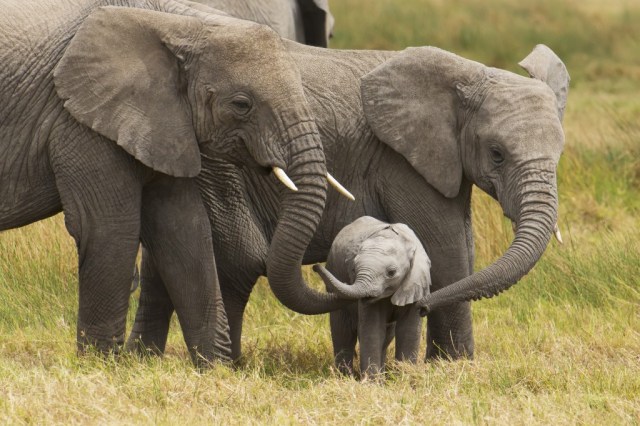
ele542106059-1024x683CNN reported yesterday that Hong Kong, the world’s largest retail market for ivory, will phase out ivory sales over the next eighteen months and impose severe penalties on those engaging in smuggling and trading of endangered species.
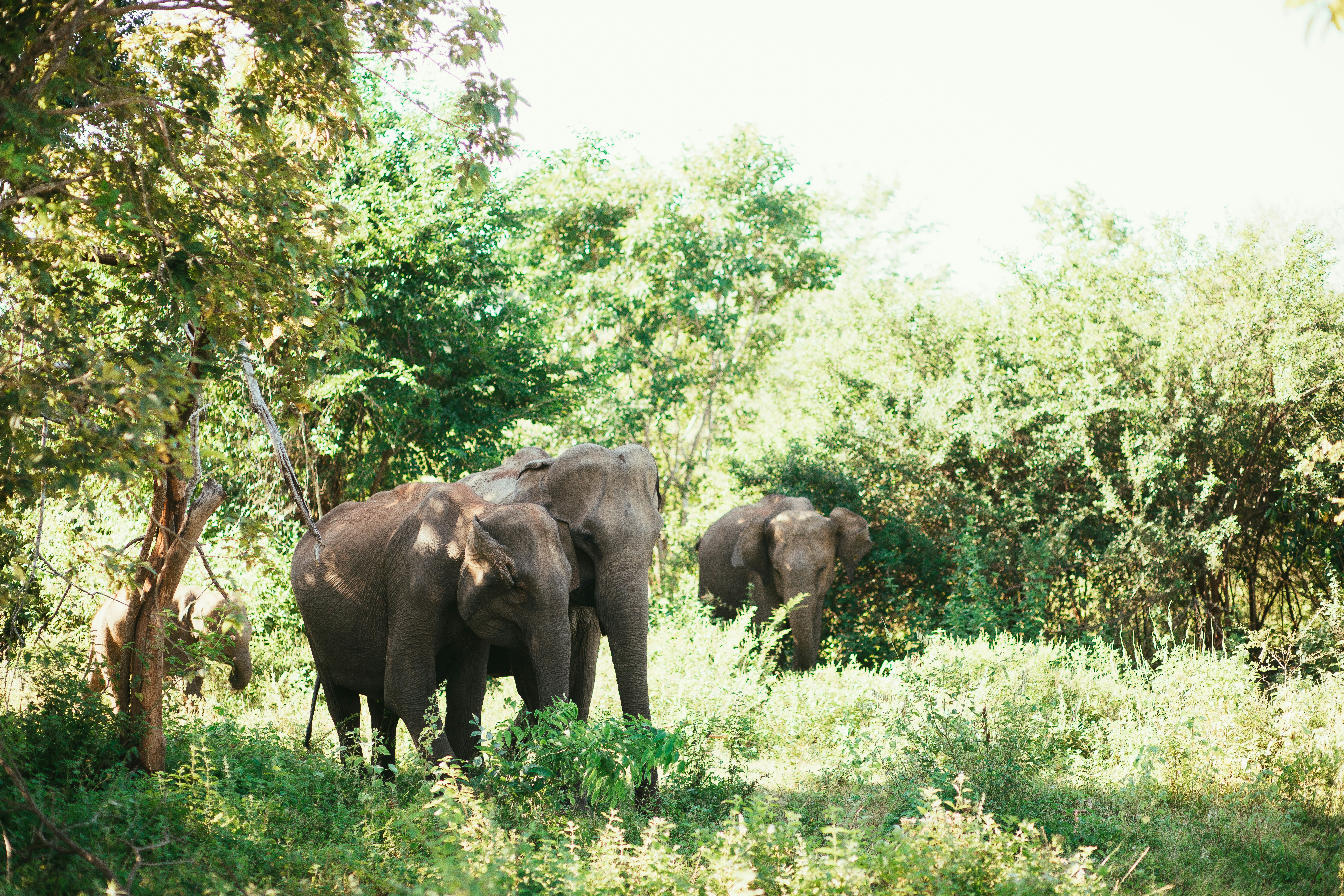
Certainly this is good news! Chinese demand for ivory has long been the primary stimulus to the slaughtering of African elephants, presently an estimated 30,000 annually.

It’s so bad that poaching even outstrips the numbers of elephants being born, which if it continues over the next several decades, will result in these intelligent and emotional creatures vanishing forever.

As just one example, in 1970 Kenya counted 70,000 elephants. That number has dwindled to 38,000.

In 2013, 20,000 elephants were killed across Africa, either through poaching or trophy enthusiasts.

Exacerbating the crisis threatening not only elephants but other exotic wildlife that includes lions and rhinos has been the rise of warlords and terrorists such as the Lord’s Resistance Army and Boku Haram who wantonly prey upon wildlife to finance still more weapon purchases with which to terrorize their fellow Africans.

In all of of this, America is not without blame. The truth is that we are up to our neck in the ivory trade, or second to China in ivory imports, abetted by U.S. law that allows ivory into the country for non-commercial use.

Big game hunters like the dentist who killed Cecil, the Zimbabwe lion, receive fervent support from the powerful NRA, which constitutes one of Washington’s most powerful lobbies. The NRA also backs the large trade in guns with ivory-inlaid stocks.

If the United States along with China, including Hong Kong, were to shut their doors to ivory imports, then our elephant friends would indeed face much better odds.

To bring this about, you and I must never give-up the struggle, converting words into deeds such as liaising with members of Congress, writing op-eds, encouraging corporate giving, and not least, opening up our wallets as well as our hearts to donating what we can to support those frontline organizations (e.g., African Wildlife Foundation and World Wildlife Federation) attempting to bring this cruel carnage to its rightful end.

–rj

And Then There Were None: Mountain Gorillas in Imminent Danger

gorillas1

In this central African park.
Desperate refugees crowd park boundaries.
Charcoal producers strip forests.
Then, last summer [2007], someone killed seven of these magnificent creatures in cold blood.
  (National Geographic)


Yet another species, this time one of our closest relatives, faces a grave threat of extinction– mountain apes, of whom only 700-800 remain.

The Democratic Republic of Congo (DRC) reportedly has asked UNESCO to redraw the boundaries of one of Africa’s largest wildlife sanctuaries, Virunga Park, to facilitate oil drilling.

Consisting of 300 square miles, or 7800 square kilometers, the park shelters not only the gorillas, but other wildlife and Lake Edward, a key fishing resource.

In 2010, the DRC signed a contract with British firm, Soco, to begin exploration, despite its designation as a World Heritage Site, in violation of international law.

Such scenarios inevitably occur whenever economic interests are pitted against environmental concerns. In Africa, however, grinding poverty is so widespread that nations like the DRC must prioritize developing income resources.

On the other hand, much of that poverty is rooted in Africa’s post colonial history of chronic civil strife and kleptomaniac leadership.

Properly developed in a context of political stability, the DRC is rich in natural resources that could vastly improve the well being of its people.

In the DRC, the resultant instability and economic fallout has created anarchy, as rival militias composed of M23, Hutus, Tutsis and Congolese Revolutionary Army deserters roam the country, raping, plundering and killing.

Virunga National Park has, unfortunately, turned into a quagmire of lawlessness as a hideaway for militants, who use the Park’s wildlife and forest for subsistence.

Additionally, nearly 100,000 refugees live on the Park’s fringes, leading to deforestation and poaching.

In 2004, 1,500 hectares of prime mountain gorilla habitat were cleared by illegal settlers in Virunga National Park, according to evidence uncovered by the Congolese Institute for the Conservation of Nature.

What we know is that at least 40 mountain gorillas have been killed in the last several years.

As is, only 480 mountain gorillas remain in the Park’s confines, with no place to go.

Now the oil interests have moved in.

It’s a tragedy in the making.

Gorillas are gentle herbivores, who seek isolation.

As you might suspect, they have a lot in common with you and me.

Gestation is 8.5 months, approximating our own.

Births are nearly always singular.

Mating, unlike that of many animals, can take place anytime.

Helpless at birth, gorillas crawl at two months and walk at about nine months.

They are very intelligent and live in organized troops, governed by a dominant male known as a Silverback.

Diseases like ebola and those acquired from proximity to humans increasingly pose an additional threat.

In northern Gabon, for example, the entire protected population of gorillas and chimpanzees succumbed to ebola in 1994.

There’s also the bush meat trade along with lustful trophy seekers.

While international wildlife groups have contributed funding to shore up anti-poaching patrols, there are simply too few rangers, given the park’s vastness. Inadequately equipped, they’re no match for the often superior armed militia factions. Sadly, 140 rangers have lost their lives defending wildlife.

Their great champion, Dian Fossey, the world’s preeminent primatologist, was brutally murdered in 1985.

As a child I’d lie at night, thinking of Africa, teeming with wildlife, vast herds of elephants, rhino, hippopotami, zebras, antelopes, wildebeests, giraffes and, of course, isolated savannas and mountains abundant in gorillas, chimps and monkeys.

But that was a child’s imagining.

The adult vista, on the contrary, confronts us with vanishing wildlife and the likely soon extinction of these gentle creatures, our human cousins,

When I think of today’s Democratic Republic of Congo, flashes of Joseph Conrad’s The Heart of Darkness with its rampant savagery flood my thoughts and of Kurtz’s agonized lament when confronted with human culpability, “The horror! The horror!”

–rj

China Destroys Ivory Stocks: Too Little too Late?

06sino-ivory02-blog480

I’m pleased again at another good omen for the environment in learning of China’s destruction yesterday of six tons of seized ivory ornaments and tusks.  This is exciting, since China has been overwhelmingly the prime market for ivory, where it’s turned into trinkets and statuary, and it’s the first time China has done this.  Hopefully, it won’t be the last.  This comes on the heels of Tanzania’s recent destruction of four tons of ivory, adding up to about forty slaughtered elephants.  In addition to Tanzania, Kenya and Gabon have recently destroyed large caches of ivory.

Still, China has a long ways to go.  As reported in the NYT on Monday, The Wildlife Conservation Society says that there may be as much as forty-five tons in the total ivory inventory in China, not including Hong Kong.  Let’s face it:  ivory can be lucrative, fetching $1000 a pound.  In poverty stricken Africa, poachers in the field rarely command such profit, pocketed by sophisticated  black market smugglers, but minimally still incentive enough.  Elephant poaching is further exacerbated as the continent’s many warring factions use ivory sales to purchase arms.

What shocks me is our own large stash of ivory, with six tons of ivory destroyed last November.  I guess I shouldn’t be so naive.  We have a large Chinese immigrant community, especially on the West Coast, where demand for ivory, rhino horn, tortoise and shark fin can ratchet up lucrative profits.  In fact, we’re downright hypocrites.  The good old USA ranks second to China in consumption of illegal animal products, including not only those I just mentioned, but even tiger bone!  Nothing is sacred; nothing off limits for crime syndicates operating internationally.

Unabated, the trade will peter out in about ten years.  We’ll simply have run out of elephants, rhinoceroses, sharks and tigers.

But just maybe the window’s opened a bit with China’s move, offering a new vista of hope.  As China’s legacy of ancient wisdom has it, “The longest journey begins with the first step” (Lao Tzu).

–rj