The Elephant Factor in Last Night’s Debate

demsGrowing older may not be a disease, but like many diseases, it’s progressive. Not only do we diminish in physical capacity, but in mental acuteness as well, resulting in a lower threshold in processing information.

Aging needn’t be feared per se, however, since scores of elderly enjoy a quality of life many young people can only envy. Take last night’s Democratic debate. Hillary Clinton, who may very well be elected president in the coming year, is 67; her chief rival, Bernie Sanders, 74;  Jim Webb, former Virginia senator, 69.

Personally, I found their performance under conditions of surely immense pressure immensely gratifying. I say this because I live in an America that frequently denigrates its older citizenry with “old” often taking on pejorative connotation approximating the “n-word.” If it’s hideous to discriminate on the basis of color, no less so when it comes to your age.

Psychologically, we need more discussion on the subject of aging. Does it confer strengths, in this case, in leadership acumen? I believe it does.

Consider what animal studies might show us; for example, elephants where it’s the matriarch, or oldest elephant, that often leads the herd to a waterhole only she knows about. In short, age often confers the wisdom of experience.

When it comes to being president of the United States, it’s hardly an on-the-job learning experience. Every decision in our more than ever complex world is fraught with consequences, some of them impacting upon our very survival. We need leaders who can take us to the water hole.

Of course, younger leadership may connote creativity, or initiation of new approaches to problem solving; older leadership, a rigidity, or running in place.

In a dangerous world, however, I prefer stability. Unfortunately, the human proclivity is to select on the basis of looks, or youthfulness, rather than functioning. Implanted by evolution to augment progeny, beauty proves a formula few of us can resist. I suspect the birds and the bees know a thing or two about this.

Interestingly, the issue of candidates having changed their positions over time came up. I like Hillary’s answer: “I think all of us have changed positions.”

In short, we evolve, experience conferring wisdom. I call it “seasoning.” The elephant thing again.

Oh, shucks! Missing from the debate was crusty Joe Biden, 72.

Just imagine!

–rj


On Visiting Bloedel Reserve

If you have a garden and a library you have everthing you need.–Cicero

I’ve been doing a lot of walking in the Seattle area these past several days, while visiting my daughter and family. As a gardener back home in Kentucky, it’s nice to see what cool temperatures and ample moisture can do for making verdant landscapes and, maybe more to the point, motivating green thumbs to spend time outside, free of humidity, high temperatures and, of course, mosquitoes.

Case in point was yesterday’s day long excursion to Bainbridge Island via one of Seattle’s ubiquitous ferries that add to the area’s delights. There we took in the 150 acre Bloedel Reserve with its rich tapestry of Douglas fir forest intersected by well-kept trails, rhododendron and tea garden displays, reflecting pool and sea vistas.

As the Irish poet Yeats might say, “peace comes dropping slow” in a place like this.

I confess to being a Romantic unashamedly, though tempered sufficiently with realism to know nature’s moods. Unfailingly, gardens possess a spirituality for me, moving me out of myself into an awareness of connection with universal rhythms of genesis, maturation, and ending. I am but a leaf of the tree of life. Beauty lies here in the now, not in a speculative destiny.

there, all days, my heart goes
Because there, first, my heart began to know
The glories of the summer and the snow,
The loveliest of harvest and of spring
.  _Edith Nesbit

–rj

Second Thoughts

thSecond Thoughts

If

I could voyage to the stars,
         gaze into infinity,

unshackle earthly anchors,
        tumble freely,

floating on space,
       drift into solar ports

of dark safety,
       discovering bliss–

I’d like that a lot,
       save jettisoning fellows,

imperfect, but weathered
       by earth’s impromptus,

its sun-drenched fissures,
       yet stubborn harvest

of courage, empathy, and love,
       seeded by struggle.

nourished by hope,
       redemptive.

–rj

Dream Rummaging

We dream–it is good we are dreaming–
It would hurt us–were we awake.
Emily Dickinson

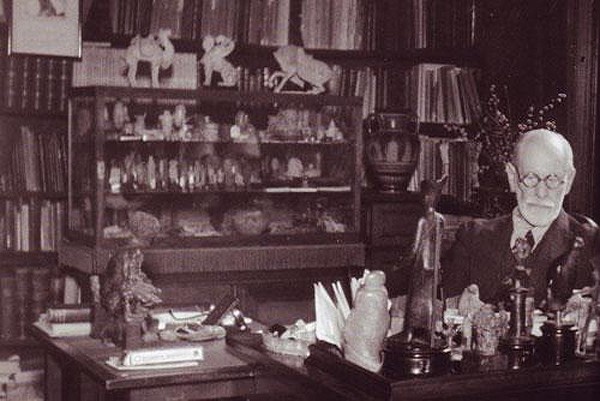
Freud in his London office (1939)

1111_Freuds-Last-Session369887

Do you dream a lot?

I know I do.

Incessantly.

I dream more now that I’ve gotten older, abetted by having to get up in the nights at this juncture.

Should I care about dreams?

Do they have meaning?

Can they help us?

Perhaps show us our real selves?

Make for a better world?

I know I’ve always been interested in them from earliest days.

The catalyst was probably Freud’s massive Interpretation of Dreams, which I confess to reading all the way through.

For Freud, dreams reflected repressed desire, often of libido.

The wish principle always.

But how can that be?

Don’t I often dream my fears?

With Freud, I always sensed a wanna-be novelist at work, ingeniously spinning narratives, howbeit, in the name of science–alas, to confirm an a priori hypothesis without the backup of today’s medical formulae of random testing and cohort studies. But then, how do you quantify something so ethereal as dreams?

But don’t get me wrong.

I think his Civilization and Its Discontents one of the great masterpieces, despite its surprising brevity.

His triad of Id, Ego, and Super Ego continues to spellbind me by virtual of the myriad ways I see it manifest itself in both myself and others.

Auden, as always, said it so well in his “Memory of Sigmund Freud” (1939):

for one who’d lived among enemies so long:
if often he was wrong and, at times, absurd,
to us he is no more a person
now but a whole climate of opinion….

I was surprised to read in neurologist Oliver Sacks’ tell-all memoir, Moving On, published just several months before his death last week, that he was seeing a psychoanalyst for some fifty years–and, remarkably–the same one every week! Sacks kept a notebook on his nightstand, recording his dreams faithfully.

Make no mistake: Sacks is a man I came to love and respect deeply. I just wish I knew why he kept finding psychoanalysis a cornucopia of self-knowledge, apart from crediting it with his rescue from drug addiction acquired from his youthful halcyon California days a la Muscle Beach.

For me, the great influence on how I look at dreams has been Freud’s former disciple, Carl Jung. His notions of anima and animus, often projected in dreams, have proved revelatory personally and hence liberating.

He taught me that so much of living life is finding equilibrium, or the balancing of Ego and Self.  Dreams offer symbols to excesses in ourselves that can be remanded.

He also introduced me to polarity as the essence of mythos truth with its tension of paradox.

If Freud looked to our past as the repository of dream content, Jung saw dreams as projections of possibility and therefore hope.

Jung was more a cultural analyst, or pseudo-anthropologist, finding universality across a wide spectrum of symbolic significance, rummaging what he collectively called archetypes.

In younger days I nearly chose becoming a licensed Jungian therapist and sometimes wonder if I committed one of the great follies in my life in turning down its seduction. Campbell, that ardent Jungian, famously urged we should follow our bliss. That maxim, aside from its latent dangers resident in reductionism, may often prove wise counsel and its rejection the source of substantial human misery.

But to sum up, I think what I’ve liked best in Jung is his acceptance of the banality of evil, Arendt’s phrasing for resident evil in Man. No liberal withering away via socio-economic exegesis, often speciously argued in my view.

Maybe my lifelong fascination with dreams stems from my youthful days drenched in fundamentalist biblical parochialism. There was Joseph, so masterful at dream interpretation that the Pharaoh took him into his confidence, ultimately saving Joseph’s kindred Hebrews.

And of course, there’s Daniel.

For the ancients, dreams gave warning and with it, admonition.

I chose to pursue a Ph. D. in English Literature. Well, you guessed it: Coleridge’s famous Kubla Khan poem, which he explained as the aftermath of an interrupted dream. But that’s just one dream poem. There are scores of other dream poems.

What I’m meaning to say is that there have been so many threads feeding into my dream fixation, not just Freud and Jung who were obviously mesmerized.

Do dreams exhibit patterns?

Do they help us to know ourselves?

I believe they do.

And that’s why I need to go back to exploring my dreams again, now that they seem to occur more frequently.

Like Sacks, I may soon be keeping a notepad on my nightstand.

–rj

Why We Mourn a Lion’s Death

Cecil at Hwange National Paark (2010)

In the aftermath of Cecil’s killing. you may have seen the op piece to the NYT by Goodwell Nzou, a Zimbabwe graduate student at Wake Forest University.

Supposedly, he provides contextual balance, giving us the other side of the story, at least for the average Zimbabwean. For the many of us world wide, however, his version unwittingly says more about the sorry state of conservation in Africa generally and of a latent hostility towards Americans for their hypocrisy and subliminal attack on Zimbabwe culture:

Did all those Americans signing petitions understand that lions actually kill people? That all the talk about Cecil being “beloved” or a “local favorite” was media hype? Did Jimmy Kimmel choke up because Cecil was murdered or because he confused him with Simba from “The Lion King”?

Further:

The American tendency to romanticize animals that have been given actual names and to jump onto a hashtag train has turned an ordinary situation — there were 800 lions legally killed over a decade by well-heeled foreigners who shelled out serious money to prove their prowess — into what seems to my Zimbabwean eyes an absurdist circus.

We Zimbabweans are left shaking our heads, wondering why Americans care more about African animals than about African people.

Don’t tell us what to do with our animals when you allowed your own mountain lions to be hunted to near extinction in the eastern United States. Don’t bemoan the clear-cutting of our forests when you turned yours into concrete jungles.

And please, don’t offer me condolences about Cecil unless you’re also willing to offer me condolences for villagers killed or left hungry by his brethren, by political violence, or by hunger.

Now there’s truth to some of what Nzou says. How would you and I feel about living in a rural landscape where incursions, sometimes with deadly consequences, are happenstance: crops trampled, cattle killed, humans mauled? Additionally, Zimbabweans must face menacing poverty daily. Losing your crop or cattle is no small thing.

And we certainly need to own up to our sorry carnage of animal resources, whether the eastern mountain lion, passenger pigeon, Eastern elk, sea mink, or Carolina parakeet. We almost succeeded in delivering the same fate to both the buffalo and our national icon, the bald eagle.

But these sad deeds belong to a past redundant in stupidity and cruelty. We pillaged Native American lands, employed slave labor, denied women the vote. It’s simply wrong to impose a modern mindset on a cultural past we’ve shed long ago.

His inference that Americans care more about African wildlife than about Africans, however, is surely a stretch:

We Zimbabweans are left shaking our heads, wondering why Americans care more about African animals than about African people.

In 2012, American aid to Africa came to nearly $12 billion. Presently, the U. S. contributes aid to 47 African nations and operates 27 missions on the continent. Americans were on the front line in the recent Ebola crisis, contributing massive medical assistance that included medical personnel and army troops. Over the previous decade, we’ve contributed $50 billion under PEPAR, the President’s Emergency Plan for AIDS relief to test and treat africans for HIV. We’ve taken in thousands of African asylum seekers, etc.

On the other hand, when it comes to caring for their own people, it looks to me like educated Zimbabweans are voting with their feet to leave their country when given opportunity. I wonder if Nzou, who’s been in this country for five years, plans to return and help his people with the skills he acquired in America, presumably through American financial resources.  Last year, American universities shelled out $4.7 million for Zimbabwean scholarships.

But returning to the threat of wildlife to rural villages, my understanding through wide reading about Africa indicates that humans, not animals, are the trespassers, with ever increasing numbers encroaching on wilderness areas.

What’s more, Nzou conveniently circumvents the way in which Cecil was killed. He didn’t stalk or stray into any village. On the contrary, he was lured from Hwange National Park, a game sanctuary, by unscrupulous big game interests. Cecil was also wearing a monitoring collar.

Cecil didn’t threaten any villager.

His death was hideous. Wounded by a high powered crossbow, the twelve year old lion bled slowly for forty hours with an embedded arrow in his side, before being tracked, shot, skinned and beheaded.

A park icon, he delighted tourists, thus offering a boost to Zimbabwe’s strapped economy. While he may not have figured in Zimbabwe’s consciousness, he was certainly loved by park visitors from abroad. No media hype here!

Yes, Nzou is right when he says “in Zimbabwe we don’t cry for lions.” That’s because they don’t give a damn about their wildlife generally, whether in Zimbabwe or the rest of Africa, save for a few exceptions. This helps explain the 800 lions killed by Westerners over the last eight years in Zimbabwe alone.

That’s a truly atrocious figure when you learn that this is out of a population of just 1,690 lions in the country to begin with (lionaid.org).

The truth is that Zimbabwe is riddled with corruption and hunting quotas often exceeded. Meanwhile, its wildlife treasure has been not only decimated, but faces extinction.

In this calumny lies the real hypocrisy and telling shame.

Across Africa, the lion population is in deep trouble just like the continent’s beleaguered elephants, experiencing a 42% decline over the last two decades, according to Scientific American.

Now I don’t want to be simplistic like Nzou, who cherry-picks his arguments, nor a teary-eyed romantic.  Properly  managed hunting can actually help shore-up lion numbers, if done in a context of enforced rules.  But in Africa, that’s a big if and, meantime, trophy hunters largely operate with impunity and pose a serious threat to remaining wildlife.

As Cecil’s killing demonstrates, not even the national parks are off limits.

The major threat, however, comes with the ever advancing pastoral creep in African countries, reducing wildlife habitat.

Nzou would have done better to listen to President Robert Mugabe’s own observation on all of this:  “Cecil the lion was yours and you failed to protect him.”

And so we in the West mourn Cecil’s death, and not without reason.

–rj


Oliver Sacks: Medicine’s Laureate

I find every patient I see, everywhere, vividly alive,
interesting and rewarding; I have never seen a patient
who didn’t teach me something new.  Or stir in me new
feelings and new trains of thought.
–Oliver Sacks

SacksI’ve just finished Oliver Sack’s recently published autobiography, On the Move: a Life. Better, I devoured it.

Medicine has always interested me, and I read a lot of its literature on an almost daily basis. Still, while I know some things about how the body works, I’m largely ignorant when it comes to how the brain functions, its capacity for life enhancement and, conversely, its potential for horrendous suffering, physical and mental, when failing to function properly, either through genetics, injury, disease, or simply aging.

In reading Sack’s book, I’ve made a dent into the immensity of what I’ve missed. After all, Sacks is a neurologist, and a gifted one at that–a doctor fond of research with an extraordinary compulsion for not only writing down his observations of more than fifty years, but in an idiom we laymen can understand.

He’s written eleven books, published in hundreds of medical journals, and with a rare propensity for uniting science and art, has regularly contributed to the likes of The New York Review of Books and my favorite, The New Yorker. The New York Times has appropriately dubbed him “the poet laureate of medicine.”

Do you remember the riveting movie, Awakenings, starring a young Robin Williams and Robert De Niro, with its moving depiction of postencephalitic patients hospitalized for some forty years, initially responding to a bold and controversial therapeutic approach that gave them a brief window of normality, only to relapse? It came from Dr. Sacks’ book of the same title.

You may also know of his popular collection of brain vagary anecdotes published as The Man Who Mistook His Wife For a Hat.

What I find most compelling in Sacks is his innate compassion for his patients, a doctor who sees them as individuals possessing a context integral to their healing and thus worth knowing, a practitioner who conveys to his patients that they matter deeply.

Up there too is his refreshing approach of reaching past the compensational paradigm of contemporary medicine to root out the origins of our morbidities and facilitate their cure.

And no corner thing, there’s his open honesty about his earlier drug addiction.

Likewise, he writes movingly of being gay and about his several loves.

At the personal level, Sacks is a natural draw for me in his love for both science and literature, lifelong zeal for motorbikes and  weight lifting, his introversion, a brother with schizophrenia (which is true of my son), his outspokenness about entrenched medical prejudice with its jealousies and frequent resistance to innovation.  All of these, and more, find their way into On the Move.

I was surprised to learn that Aubrey “Abba” Eden, Israeli diplomat, who always impressed me with his Cambridge accent and articulate English, was a first cousin; likewise, Al Capp, formerly loved for his Little Abner cartoons until his sexual downfall.

Sacks, towards the end of his autobiography, writes of his declining health, without mentioning his now, terminal metastatic melanoma (he’s now 82). I take this omission as his not wanting reader pity to enter into play in judging his autobiography.

The reality, of course, is that Sacks is a very brave man who has lived in death’s neighborhood for many years, both as a physician and in his personal life.  Thus I wasn’t surprised  in the least in his openness and acceptance of his terminal illness elsewhere.  See http://www.nytimes.com/2015/02/19/opinion/oliver-sacks-on-learning-he-has-terminal-cancer.html?_r=0

Below I’ve given you my chosen book highlights, hoping they’ll entice you to read this supremely humane work.  As I write, On the Move has made the Best Seller List of the New York Times:

On being gay:

“You are an abomination,” she said. “I wish you had never been born.”

My mother, so open and supportive in many ways, was harsh and inflexible in this area.

Her words haunted me for much of my life and played a major part in inhibiting and injecting with guilt what should have been a free and joyous expression of sexuality.

On taking tests:

I am very bad at factual exams, yes-or-no questions, but I can spread my wings with essays.

On his brother’s schizophrenia:

…what sort of world Michael lived in, none of us knew. And yet he was very intelligent; he read continually: had a prodigious memory, and seemed to turn to books rather than “reality” to get his knowledge of the world.

On the poet Thom Gunn:

I’m not sure what Thom saw in me at this point, but I found in him great personal warmth and geniality and warmth mixed with fierce intellectual activity. He was incapable of indirection or deceit, but his directness was always accompanied, I thought, by a sort of tenderness, too.

On Robin Williams (who, portrayed Sacks in the film version of Awakenings):

Over the next twenty-five years, Robin and I became good friends, and I grew to appreciate–no less than the brilliance of his wit and his sudden, explosive improvisations–his wide reading, the depth of his intelligence, and his humane concerns.

On medicine:

This gave me a feeling of what was wrong with American medicine, that it consisted more and more of specialists.

…unconscious motives may sometimes ally themselves to physiological propensities. One cannot abstract an illness from the whole pattern, the context, the economy of someone’s life.

On Awakenings:

The postencephalectics had been in a state of suspension for decades–suspension of memory, perception, and consciousness. They were coming back to life, to full consciousness, and mobility. Would they find themselves like Rip Van Winkle, anachronisms in a world that had moved on?

When I gave L-dopa to these patients, their “awakenings” were not only physical, but intellectual.

American Medical Association response to “Awakenings” experiment:

In the summer of 1970 then, in a letter to JAMA, I reported my findings, detailing the total findings of L-dopa in sixty patients whom I had maintained on it for a year. JAMA published my letter, but while I had got plenty of positive responses to my letter in The Lancet, my letter in JMLA was greeted by a strange, rather frightening silence.

The silence was broken a few months later, when the entire letters section in one JMLA was devoted to highly critical and sometimes angry responses from various colleagues.

I thought it was improper of JMLA to publish these attacks without giving me an opportunity to respond to them in the same issue.

I knew that I had something important to say, but I had no way of saying it, of being faithful to my experiences without forfeiting medical “publishibility” or acceptance among my colleagues.

On the death of his mother:

My mother’s death was the most devastating loss of my life–the loss of the deepest and perhaps, in some sense, the realest relation of my life.

On W. H. Auden:

He was …critically important to me during the writing of Awakenings, especially when he said to me, “you’re going to have to go beyond the critical…Be metaphorical, be mystical, be whatever you need.”

I wept after I received Auden’s letter [following publication of Awakenings]. Here was a great writer, not given to facile or flattering words, judging my book a “masterpiece.”

On nursing homes:

In some of these places …I saw the complete subjugation of the human to medical arrogance and technology. In some cases the neglect was willful and criminal–patients left unattended for hours or even abused physically or mentally….I worked in other nursing homes where there was no negligence but nothing beyond basic medical care. That those who entered such nursing homes needed meaning–a life, an identity, dignity, self-respect, a degree of autonomy–was ignored or bypassed; “care” was purely mechanical and physical.

On himself:

I am shy in ordinary social contexts; I am not able to “chat” with any ease. I have difficulty recognizing people (this is lifelong, though worse now my eyesight is impaired). I have little knowledge of and little interest in current affairs, whether political, social, or sexual. Now, additionally, I am hard of hearing, a polite term for deepening deafness. Given all this, I tend to retreat into a corner, to look invisible, to hope I am passed over.

On writing:

The act of writing, when it goes well, gives me a pleasure, a joy unlike any other. It takes me to a place–irrespective of my subject–where I am totally absorbed and oblivious to distracting thoughts, worries, preoccupations, or indeed the passage of time.

__rj



Reflections on the Supreme Court’s EPA Rebuff

A-polar-bear-and-her-cubs-007This has been a busy time for America’s highest court, with gargantuan issues–gay marriage, Obama Care, and approval of a controversial capital punishment drug, cases decided by razor thin majorities.

No less important, perhaps the most impacting of all, is the Supreme Court’s decision ultimately affecting climate change; namely its one vote majority ruling against the EPA’s Mercury and Toxic Standards (MATS) provision, designed to reduce mercury and other air pollutants from the nation’s myriad power plants, especially those utilizing coal.

Though MATS wasn’t specifically disavowed, the Court ruled that the EPA must consider the financial burden it imposes. Accordingly, the case goes back to the U.S. Court of Appeals for the District of Columbia to deliberate new guidelines.

I think the decision horrendous in the context of the preeminent threat we and, especially posterity, face in the context of climate change, which the vast weight of environmental science affirms is human induced.

In fact, if we don’t get our act together, we may find ourselves joining the plethora of species we’ve either driven into extinction or endangered.

On the other hand, I laud justice Elena Kagan, who wrote the minority decision in the 5-4 verdict:

Over more than a decade, EPA took costs into account at multiple stages and through multiple means as it set emissions limits for power plants. And when making its initial ‘appropriate and necessary’ finding, EPA knew it would do exactly that — knew it would thoroughly consider the cost-effectiveness of emissions standards later on. That context matters.

While it’s probable the lower court won’t gut the act, but simply mandate that EPA integrate cost factors upfront, not after-the-fact, as it had done, this may sadly take another five years and still be subject to legal scrutiny.

Climate change, in the meanwhile, isn’t about to go into a stall while we continue to rely upon coal as an energy source for many of our power plants.

The corollary is that like a credit card we don’t pay off, our delay will exact cost burdens exceeding mere cash reckonings in hazarding the health of both ourselves and the impinging on the ecological interplay upon which we depend.

Nobody wants to pay more for energy costs any more than we relish replacing a malfunctioning stove or fridge for a newer, more efficient model, at increased cost. Alas, sometimes it is what it is and we move on.

What moved me to write this post as I awoke today to a new dawn outside my window is a news story just out of the BBC, reporting on “Irreversible Change to Sea Life from CO2, compiled by twenty-two experts in the journal Sciencehttp://www.bbc.co.uk/news/science-environment-3336902

Coral reefs, polar bears, many fish–all gone by century end as oceans continue to heat up, lose oxygen, and become more acidic, consequent with our embrace of CO2 energy sources.

And we’ll not be spared either, as the ocean out of which all life came and upon which it substantially depends, not only overwhelms our coast lines, but our ecosystems as well.

This is the true cost of our delay and our neglect, unacknowledged by the Court as in the  public’s greater interest and for the well-being of Mother Earth.

–rj


Happiness that Money Can’t Buy

Edwin Arlington Robinson

I think we’ve all read E. A. Robinson’s masterful “Richard Cory” poem about a wealthy man, much admired, perhaps envied for his living the good life, who commits suicide.

Whenever Richard Cory went down town,
We people on the pavement looked at him:
He was a gentleman from sole to crown,
Clean favored, and imperially slim.

And he was always quietly arrayed,
And he was always human when he talked;
But still he fluttered pulses when he said,
“Good-morning,” and he glittered when he walked.

And he was rich – yes, richer than a king –
And admirably schooled in every grace:
In fine, we thought that he was everything
To make us wish that we were in his place.

So on we worked, and waited for the light,
And went without the meat, and cursed the bread;
And Richard Cory, one calm summer night,
Went home and put a bullet through his head.

In keeping with the poem’s theme, I recently came across a Federal study published in 2002  that showed that rich neighborhoods have higher rates of suicides than less affluent neighborhoods. This finding may come as a surprise to most people who, like those in the poem, equate wealth with contentment.

The obvious question to ask is why money, possessions, fame and power don’t assure us happiness? The answer is that they fall short in the staying power of simpler values, found largely in ourselves, not things subject to life’s vicissitudes and often paid for with daily stress.

Ironically, having money and all it buys may mask an insecurity, or need for validation,  compounding one’s misery.

According to Solberg, Diener, and Robinson, “Why Are Materialists Less Satisfied?” (2004), those values that truly sustain come down to a relative few:

Personal health.

Security.

Having goals.

Enjoying a rich relationship with others.

I’d even contend that the four can be reduced to just one, security. Defining security more specifically, what we want most is freedom from anxiety in a world of flux. As Freud might have told us, we’re all children crying in the night. Let’s face it: As human beings we’re possessed by egos that generate our desires and foster our insecurities.

This, of course, may help explain the increasing popularity of meditation to relieve our stress or, better, our fright.

I think Tolstoy, that most moral of writers, gets at the truth in his short story, How Much Land Does a Man Need?:

I would not change my way of life for yours,” said she [to her well off sister]. “We may live roughly, but at least we are free from anxiety. You live in better style than we do, but though you often earn more than you need, you are very likely to lose all you have. You know the proverb, ‘Loss and gain are brothers twain.’ It often happens that people who are wealthy one day are begging their bread the next. Our way is safer. Though a peasant’s life is not a fat one, it is a long one. We shall never grow rich, but we shall always have enough to eat.

Recently I saw Hardy’s magnificent Far From the Madding Crowd at the movies and reread the classic. Observing the reenactment of an agrarian tapestry of defined roles amid resplendent, on locale filming in Dorset, Somersetshire and Oxfordshire (Hardy’s Wessex), I couldn’t help remembering Hardy’s nostalgia for a fast fading bucolic way of life providing security, communal intimacy, and defined roles.

In our own time, in contrast, one only has to read sociologist George Packer’s The Unwinding: An Inner History of the New America (2013) to see the carnage of our free-fall from those nets of safety intrinsic to daily life.

If you were born around 1960 or afterward, you have spent your adult life in the vertigo of that unwinding. You watched structures that had been in place before your birth collapse like pillars of salt across the vast visible landscape—the farms of the Carolina Piedmont, the factories of the Mahoning Valley, Florida subdivisions, California schools. And other things, harder to see but no less vital in supporting” the order of everyday life, changed beyond recognition (pp. 12-13).

How much better the simpler life, free of complication with its inherent risk of loss, lived honestly, even if frugally, ample in the extraordinary goodness of family and friends and the joy of pursuing one’s passion.

Ok, so I’m a sentimentalist, I still hold that those times, lived in the plentitude of the simple values I enumerated earlier, provided far more in the way of genuine happiness than today’s stressful, materialistic world that increasingly marginalizes each of us and holds our contentment hostage.

–rj

Edna St. Vincent Millay’s “Recuerdo”: A Close Reading

oly13312.edna-st-vinimage                                                   

                              RECUERDO
                               by Edna St. Vincent Millay

We were very tired, we were very merry—
We had gone back and forth all night on the ferry.
It was bare and bright, and smelled like a stable—
But we looked into a fire, we leaned across a table,
We lay on a hill-top underneath the moon;
And the whistles kept blowing, and the dawn came soon.

We were very tired, we were very merry—
We had gone back and forth all night on the ferry;
And you ate an apple, and I ate a pear,
From a dozen of each we had bought somewhere;
And the sky went wan, and the wind came cold,
And the sun rose dripping, a bucketful of gold.

We were very tired, we were very merry,
We had gone back and forth all night on the ferry.
We hailed, “Good morrow, mother!” to a shawl-covered head,
And bought a morning paper, which neither of us read;
And she wept, “God bless you! for the apples and pears,
And we gave all our money but our subway fares.

It seems almost an anomaly to do a close reading of a poem that seems to not withhold anything in its meaning. Millay tells us that the poem entails–its frame if you will–an all night ferry ride, to and fro, of two companions, ending with the two giving away their previously purchased fruit to a woman either on the ferry or on shore at ride end in the early morning, saving for themselves only their subway fare.

Presumably, this is a poem that captures the frenzied excitement of two lovers, for whom time together, even in a humble setting and with little money (they had bought fruit), is what matters. Millay’s lover-friend, Floyd Dell, one of many, tells us in a 1959 letter that Millay had done the ride with Nicaraguan poet Salomón de la Selva, later affirmed that year by Millay’s sister, Norma, who offered the poem’s Spanish title, “Recuerdo” (i.e., “I Remember”), as evidence. (De la Selva is a lover Milford misses in her biography of Millay (Savage Beauty 2001).

Famously, the poem’s initial two lines, “We were very tired, we were very merry,/We had gone back and forth all night on the ferry” repeat themselves at the beginning of each stanza. Intriguingly, we anticipate a “but” to set up the contrast between the states of fatigue and exuberance, but it doesn’t occur, adding complication, perhaps suggesting the fervency of their passion. The omission could also imply a fatigue leading to silliness.

In their repetition, Millay ensures her readers’ focus on the activities themselves, separately depicted in each stanza: looking into a fire, leaning across a table; lying on a hilltop underneath the moon (stanza 1); eating fruit (stanza 2); buying a morning newspaper, hailing a mother, her head “shawl covered,” to whom they give their remaining fruit (stanza 3).

The references to looking into the fire and lying on a hill-top under the moon may initially appear incongruous in a poem supposedly confined to an all night ferry ride. A closer reading, however, implies they had exited the ferry at some point, perhaps to visit a tavern or café, enjoy the warmth of a fire and, later, lie on a hill top and gaze at the stars before reboarding: “And the whistles kept blowing….”

The mother appellation suggests the lovers’ own freedom from the encumbrances of marital. love. As such, this is a poem intrinsic to the Greenwich Village bohemianism of that era.

While the poem is sparing of the usual metaphors, it turns sharply poetic in the exquisite “And the sky went wan and the wind came cold,/And the sun rose dripping, a bucketful of gold.”

As such, it reflects the poem’s latent contrast between their practiced frugality and the plenitude of their love, reinforced at poem end in their giving their fruit away.The poem haunts with its rhythms–hexameter lines replete with feminine and masculine rhymes along with occasional near rhymes, alliteration and assonance, coalescing into a sensuous ambience.

Redolent with the nuances of memory, the poem sparkles with the effulgence of new love and idealization of a day that endures because of it. And like Whitman, the poem sanctifies the individuality of everyday experience. Despite the denigration of Modernists, the poem’s fundamental strength lies in its very simplicity, affording accessibility and enjoyment.

–R Joly


Dickinson Revisits Keats: “I Died for Beauty”

dickinson2I died for Beauty–but was scarce
Adjusted in the Tomb
When One who died for Truth was lain
In an adjoining room

He questioned softly “Why I failed”?
“For beauty”, I replied–
“And I–for truth–Themself are One
We brethren, are”, He said–

 And so, as Kinsmen, met a Night–
We talked between the Rooms–
Until the Moss had reached our lips–
And covered up–Our names–

Emily Dickinson’s favorite poets were John Keats and Robert Browning. Certainly, “Ode on a Grecian Urn” and “I Died for Beauty” are indubitably linked through their exploration of Platonic idealism in regard to Beauty and Truth.

For Keats, Beauty becomes synonymous with Art, or Imagination. When he famously offers near the ode’s end his maxim, “Beauty is truth, truth beauty,” he means that what the imagination perceives as real is both beautiful and true.  Putting it another way, Art is Truth beautifully rendered.

Dickinson, in contrast, exhibits a more modern, complicated sensibility in her latent suspicion of a priori reasoning. Truth and Beauty, undefined in her poem, are relative terms, not verities. Although she may initially appear accepting of their affinity (i.e., “kindred”) a closer reading indicates that their synthesis isn’t a given. Why are the two entities in separate rooms?  Why must they converse “between the rooms”? In short, they’re separate bed fellows.

What does Dickinson connote in the first speaker’s use of “died,” subsequently rendered “failed” by the second speaker?  If the two entities are related, it consists in their earnest pursuit of absolutes, or closure within the context of human experience. Ironically, failure, not success, informs their liaison in death as we’ll see in the poem’s conclusion.

For the Platonist Keats, their proffered unity transcends mortality.  Not so for Dickinson’s poem in which Truth and Beauty, never articulated, nor the context of their demise, metamorphose into indecipherable headstones, swallowed up by the anonymity of death and its oblivion:

We talked…
Until the Moss had reached our lips–
And covered up–Our names.

In sum, death abrogates every human quest, even the most noble.

–rj