Russia Likely to Intervene in Ukraine

ukraine

Last week, Ukrainian protestors in Kiev’s Maidan (its central square) were mowed down by security forces of the hated Yanukovych regime.  Undeterred, they advanced into the fusillade. What is life without freedom?

I’ve been thinking a lot about Ukraine, no doubt heightened by media coverage of the continuing unrest in that nation of 46 million.  But it’s more than the headlines.  When I was a young boy growing up in Massachusetts, I played with a friend who had recently arrived in the U.S. from Ukraine with his mother and siblings.  Though young, he had seen vestiges of World War II’s carnage.  While I can’t recall the details, they left me with an impression of a people that had endured considerable suffering.

In Lexington, Kentucky, there exists a vibrant, growing Ukrainian community.  We’ve had a lot of renovation done at our house and one of the primary workers is a Ukrainian affectionately dubbed “Slav” by his fellow workers.  We’ve talked about Ukraine on occasion.  On one occasion I accepted his invite to a bake sale at his Ukrainian church.  The church is doing well and is an anchor in providing a social network for newly arrived Ukrainians, which include many young people. The other day, I was walking back to my car after grocery shopping at Meijer’s, when a car honked. It was Slav. He had just returned from the Ukraine.  

Just maybe Lexington’s best roofing enterprise happens to be Ukrainian. My physician is from the Ukraine.  How can I not think about them?

It’s estimated that some 7 million Ukrainians perished from famine following Stalin’s collectivization of Ukraine’s peasant owned farmlands in 1932-33.  Another 10-million perished in World War II.  What most historians miss is that Ukraine bore the biggest brunt of the Nazi invasion, being a total battleground between German and Soviet armies.  Only 5% of Russian territory was occupied.

Following the 1991 collapse of the Soviet Union, Ukraine announced its independence.  There was little Russia could do, since the world’s third largest nuclear arsenal was on Ukrainian soil.  In 2009, an agreement was worked out between the negotiating parties, which included the United States.  One of Ukraine’s demands was a guarantee of its sovereignty.  The U. S. granted Ukraine the same assurances guaranteed to non-nuclear signatories of the Non-Proliferation Treaty (NPT) and the signatories of the Final Helsinki Act (1975).

As I write, paramilitary forces in Russian dominated Crimea have seized the local parliament buildings and its airports and Putin has put 150,000 troops on alert.  The Crimea had been added to the Russian Empire under Catherine II.  In 1954, it was restored to Ukraine by Nikita Khrushchev, an ethnic Ukrainian.

Despite Secretary of State Kerry’s warning to Russia not to interfere, it’s not going to mean much in a way of any meaningful U.S. response, especially with an indecisive president in office who runs from confrontation; has failed to support moderate rebels in Syria, allowing extremist sectarian factions to enter into the fray; has never really signed on to supporting our troops in Iraq or Afghanistan; and is now bent on unilaterally reducing our army to pre-World War II levels.  No one wants war.  But it’s doubtful the EU or U.S. will invoke economic or trade measures either.

What seems a given is that Putin isn’t going to allow Ukraine to cozy-up with the West, culminating in joining the EU and becoming a NATO member.  Putin dreams of reestablishing a political and trade confederation of the former constituencies of the Soviet Union under the auspices of the Eurasian Customs Union (ECU).  Slated to go into full effect in 2015, its prototype presently includes Russia, Belarus, and Kazakstan, with Kyrgyzstan to join soon.  This grand scheme ultimately includes Ukraine, which can only be accomplished by Russian economic pressure and/or military intervention.  Putin’s scheme is to return Russia to its past preeminence, a world competitor on equal footing with the EU, USA, and China.  It’s what Sochi was all about.

Right now, the situation in Ukraine is ominous, given the large Russian majority population in Crimea and eastern Ukraine.  Historians may remember that Hitler used the pretext of a mistreated German minority to invade Poland.

It will only take a spark for history to repeat itself.

–rj

Trans Pacific Partnership: Corporate Mayhem Alive and Well

tpp

Despite President Obama’s spirited pledge to reduce the growing gap between rich and poor, his administration has been covertly involved in negotiating a Trans Pacific Partnership (TPP) trade agreement whose potential fallout would only exacerbate, not lessen, the economic divide, consolidating what is essentially an oligarchy of Wall Street interests.

You may be unfamiliar with the TPP, as it’s not played up in the media, unless you’re a rare aficionado of the marketplace.  Briefly, 14 nations bordering the Pacific, controlling 40% of the world’s GDP and 26% of its trade, have been at work for more than a year, hammering out the final details of a complex agreement that would eliminate tariffs on goods and services.  Composed of 29 chapters, its scope would include not only the area of finance, or banking, but telecommunications (i.e., the Internet), and even food services.  It would have devastating consequences for those of us committed to environmental concerns that include global warming.

Ominously, it includes proposals that would curtail consumer protection across a wide spectrum.  According to Republican Reports, leaked TPP negotiation documents reveal the Obama administration’s attempts to stymie other governments from implementing financial regulations, believing they could mitigate another bank collapse.

These leaked documents (see citizen.org) indicate proposals allowing corporations to sue governments under the auspices of “foreign tribunals,” thus circumventing domestic courts and local laws.  Corporations could even demand financial compensation for “tobacco, prescription, and environment protections” that undermine their profits.

As Senator Elizabeth Warren–I like her more everyday–warns, such provisions allow “a chance for these banks to get something done quietly out of sight that they could not accomplish in a public place without the cameras rolling and the lights on.”

Alarmingly, even without the TPP, over $3 billion has already been paid out to foreign investors under current U.S. trade and investment agreements, with another $14 billion pending, “primarily targeting environmental, energy, and public health policies” (citizen.org).

Representing the U.S. in the negotiations is Obama appointee Stefan Selig, a former Bank of America investment banker nominated to become Under Secretary for International Trade at the Department of Commerce.  Since his nomination, he’s received $9 million in bonuses.  (He had received $5.1 million incentive pay the previous year.)

Slated to join him in the negotiations, pending Congress’ approval, is Michael Froman, presently U.S. Trade Representative.  He received $4 million from CitiGroup as an exit payment in addition to $2 million in connection with his holdings in several investment funds.

This practice of banks lining the pockets of their former cohorts upon joining government is pervasive in the banking industry, pocket money for establishing influence in contexts affecting public financial policy.

Unfortunately, for all the pretty rhetoric coming out of the White House, the oligarchy of the one percent remains entrenched, and even abetted, while the TPP, added to its already formidable arsenal of financial peddling, poses a potent means to intimidating the common citizenry, here and abroad, opposed to its hegemony of privilege.

It certainly doesn’t contribute to economic parity.  According to a study by the Center for Economic Policy and Research, as reported in the Washington Post, the economic gains would largely accrue to the wealthy.

–rj

Governor Cuomo: “They have no place in the state of New York.”

cuomo

As New York governor Andrew Cuomo sees it, pro-life activists, anti-gay activists and Second Amendment supporters aren’t welcome in his state:

Their problem (GOP) is not me and the Democrats; their problem is themselves.  Who are they?  Are these extreme conservatives who are right-to-life, pro-assault weapon, anti-gay?  Is that who they are?  Because if that’s who they are and they’re the extreme conservatives, they have no place in the state of New York, because that’s not who New Yorkers are.

Later, in an open letter to the New York Post, he claimed his remarks had been distorted.   Here, I’ll take him at his word–that he meant that the New York electorate won’t tolerate such views.  Judging by recent elections, he’s right.

Still, the genie is out of the bottle and his phrasing unfortunate, if not symptomatic, of an increasingly trenchant political milieu, though I admit that politics hasn’t ever been a safe place to venture, even at the private level.

I’m further dismayed that much of the current incivility comes from the Progressive wing of the Democratic Party, intolerant of those who disagree with them, subjecting them to highly charged labeling, caricature, and derision.

It didn’t help matters when Mylan Denerstein, counsel to the governor, later published a backtracking piece on the governor’s website, using the phrase, “extremist agenda” for those with such views.

Ironically, with one verbal swoop, the governor sloughs off the sincerity of millions of Roman Catholics and evangelicals who believe abortion to be a termination of a human being or that homosexuality isn’t biologically a genetic component, or gun advocates who believe the Second Amendment supports their viewpoint.

Let me make clear I don’t subscribe to their beliefs, but I do advocate strongly their right to their beliefs in keeping with the First Amendment:  “Congress shall make no law respecting an establishment of religion, or prohibiting the free exercise thereof; or abridging the freedom of speech….”

It’s time for all of us to quit throwing rocks at each other.  It solves nothing except to underscore an underlying insecurity about our views, spilling over into angry backlash rather than testing our beliefs in the arena of public debate.

Cuomo assumes this conservative element is both extreme and a minority viewpoint.  Does this mean that you judge the worth of an idea or belief by how many hold it, or the weight of public opinion?   As that “saint of rationalism, John Stuart Mill, cogently warned us in On Liberty (1859), majorities can ultimately consummate themselves as tyrannies repressing minority opinion even in a democratic context.

Minorities come not just in colors or ethnicities, but in beliefs as well. thus they also fall under the canopy of civil rights and need to be assertively protected.  Only one boundary should exist:

The only freedom which deserves the name is that of pursuing our own good in our own way, so long as we do not attempt to deprive others of theirs, or impede their efforts to obtain it (Mill).

Unfortunately, we’ve seen our liberty for divergent opinion increasingly eroded, ironically, often lurking within the bastions of academe and not just government or media.  Ideas, no matter how repugnant we may view them, deserve their exposure in public debate.

I think Jonathan Rauch, political commentator and Brooking Institute member, summarizes it quite well in his Kind Inquisitor:  The New Attack on Free Thought, Expanded Edition (Univ. of  Chicago, 2013):

A liberal society stands on the proposition that we should all take seriously the idea that we might be wrong.  This means we must place no one, including ourselves, beyond the reach of criticism; it means that we must allow people to err, even where the error offends and upsets, as it often will.

Are you listening, Governor Cuomo?

–rj

The Yacht Mentality that Threatens our Economy

unemploy I turned on the TV while eating lunch yesterday to a feature called “Island Paradises,” thinking Hawaii or maybe some Caribbean gem like Dominica or St. Vincent’s.  Instead, it was about one man’s substantial investment, worth $28 million, in a plus 100 foot long yacht, sporting 3 recreational decks with pools, 7 bathrooms and 15 bedrooms, plus 3 bars and a below deck garage replete with several sleek motorized boats.  Docked in Ft. Lauderdale, it costs– Can you believe this?–$50,000 a fill-up.

I don’t know about you, but this kind of ostentatious display of wealth rankles me, not because I’m covertly envious, but because I think it represents excess and is just plain ethically wrong in a world of so many poor.  Again, I think of the 1% in my own country (USA), who own 37% of its wealth and whose income has actually increased since the economic downturn of 2008 (Pew Report, February 2013).  Meanwhile, hundreds of service food workers have staged walkouts in quest of a more sustainable minimum wage, presently $7.25 an hour. The average food service worker actually makes about $11 an hour, barely above the poverty line for a single parent with one child.

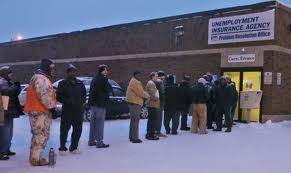
The President is compassionately urging an extension of unemployment benefits for 1.3 million presently receiving unemployment insurance.  (The total number of long term unemployed, however, stands at a stubborn 3.5 million.)  As he rightly put it in Saturday’s weekly address, “The holiday season is a time for remembering the bonds we share and our obligations to one another as human beings.”

It isn’t that the vast majority of these folks are free loaders.  It’s simply that they’ve been looking and can’t find work and that, by the way, is what the drop in unemployment to 7% really means, that thousands of despairing workers have simply given up looking for work. Unfortunately, the longer you’re out of work, the more companies shy away from you.  What’s more, in a strained economy, many companies are resorting to part-timers to circumvent having to pay benefits and to maximize profits.

What really hurts is when you’re past 50 and lose the job you’ve worked at a good many years, anticipating a reasonable retirement package just a few years up ahead.  This recently happened to a friend of ours, an engineer with a strong resumé in computer skills. Though he looked everywhere, he ended-up driving a school bus.  So even if you find work, you’re likely to find your sharply reduced wages sure to contribute to your continuing financial distress.  The situation for blacks and hispanics is even bleaker.

That yacht feature reinvests my thoughts as I write.  The obscenity of it!  The truth is, despite what conservative pundits tell you, a massive transfer of wealth is taking place in America and it’s not Robin Hood style from rich to poor.  Consider this from the Pew Report:

During the first two years of the nation’s economic recovery, the mean net worth of households in the upper 7% of the wealth distribution rose by an estimated 28%, while the mean net worth of households in the lower 93% dropped by 4%.

Think movie stars with their posh Bel-Air and Malibu compounds; instant millionaire athletes, Wall Street traders; bank CEOs.  Hey, think Walmart with its six family progeny having a bloated net worth of $144.7 billion.  Wal-Mart currently pays its “associates” $8.81 an hour.

Again, our President weighs-in:

If Members of Congress don’t act before they leave on their vacations, 1.3 million Americans will lose this lifeline. These are people we know. They’re our friends and neighbors; they sit next to us in church and volunteer in our communities; their kids play with our kids. And they include 20,000 veterans who’ve served this country with honor.

In the meantime, House Speaker John Boehner, emerging as America’s Scrooge, has served notice of his opposition to any extension of unemployment insurance, set to expire December 28.

This is America.  We can do better than a yacht mentality of self-absorption, extravagance and indifference.

–rj

The Heart of Darkness: The Syrian Inferno

Syria2

The civil war in Syrian, which began in March 2011, drags on with all its madness and no end in sight.  In that time, 125,000 (latest figures) have died and 2 million of Syria’s 6 million population fled, spilling its human burden into refugee camps in Lebanon, Jordan, Turkey and Iraq.

All wars are destructive, but civil wars usually are among the worst.  In our own civil war, 600,000 died, which is more than all our wars combined; more than a million perished in Spain; 2 million in Algeria and Korea.  One of the worst scenarios missed by the media is the loss of 5 million lives in the Democratic Republic of the Congo between 1998 and 2008.

The present conflict proves no exceptionWhile we normally associate casualties with the military waging war, the truth is that civilian casualties nearly always exceed military losses by a wide margin; for example, an estimated 20 million European civilians died in World War II.

Syria 3

In Syria,  a good many of these casualties are children.  Consider these recently released findings (UN High Commissioner Report):

11,000 children killed.

More than half of 70,000 families now without a father.

4000 children separated from their families.

Hundreds of children born in refugee camps stateless (unregistered births and no birth certificate).

Most children cut off from school.

All wars are tragic enactments of the primordial vestiges still resident in Man. This conflict, however, has seen some of their worst manifestations, with children deliberately targeted by sniper fire and even tortured.

Horrendous as all of this is, no one seems to have come-up with a chokehold to halt the carnage.  Maybe it’s too late anyway in a struggle that seems to have come down to attrition.  While the Assad regime has gained momentum lately against the rebels, the war has become more complicated with jihadists, including al Qaeda, pouring in from other nations. Increasingly, the struggle has turned sectarian, with Shiites pitted against Sunni. It’s Iraq all over again with long term, intractable violence the likely fallout even after any settlement is reached.

In my view, it needn’t have turned out this way had we armed the moderate rebels from the beginning, even as the Saudis had wanted, and before the entrance of Iranian-supported Hezbollah and al Qaeda in large numbers.  While the Obama administration finally did opt to supply at least light arms to the rebels, it turns out that after a year it hadn’t shipped any.  It’s simply too late to help now, since the old alibi that weaponry might fall into extremists hands has gained a validity that didn’t initially exist.

I blame President Obama for much of Syria’s pro-longed anguish.  From the very beginning, he has been ambivalent, or unable to come to a decision, despite his often pointed rhetoric should the Assad regime use chemical weapons:

We have communicated in no uncertain terms with every player in the region that that’s a red line for us and that there would be enormous consequences if we start seeing movement on the chemical weapons front or the use of chemical weapons (August 2012 News Conferences).

Then came his notorious aborted cruise missile launch in response to Syria’s calling his bluff with its chemical assault on civilians, resulting in a thousand deaths.  As it turns out, there had been previous, smaller scale chemical attacks and the President had not acted.  In mid stream, naval vessels off the Syrian coast ready to launch, the whole world watching, he did an about face, passing the puck to Congress, only to withdraw the vote option when Russia came up with its initiative to negotiate the destruction of the government’s chemical stockpile with Assad.  Got Obama off the hook, to say the least.

Imagine my surprise in all of this!  A Hamlet in the White House, this president suffers from an inability to act.  We should have seen this coming.  In election year 2012, he had the gall to use the bin Laden hit for political fodder, though the truth is he knew of bin Laden’s hideout  since  the summer of 2010, or nearly two years earlier, thus risking his escape.

As liberal Arianna Huffington shared with CBS: ‘We should celebrate the fact that they did such a great job. It’s one thing to have an NBC special from the Situation Room… all that to me is perfectly legitimate, but to turn it into a campaign ad is one of the most despicable things you can do” (Daily Mail).  It turns out that the White House had drawn up a contingency plan with a general for a fall guy should the assassination go awry.

Returning to the cruise missile fiasco, I like how House Democrat Adam Smith, a key member of the House Armed Services Committee, put it:

I don’t think you draw a line like that, that is not well thought out.  You do not say, ‘If you step across this line, we will commit U. S. Military force,’ unless you really mean it, unless you know the full implications of it.

Under the cover of the chemical weapons agreement things have gotten considerably worse for the rebels, with Assad’s forces launching daily bombing raids on the rebels and civilians in the areas they control.

Sadly the American public seems in lock-step with Obama, despite dissenters on his own White House team.  If you dip into Google and Twitter commentary, you’ll find Syria virtually absent as a search or discussion item.  We’re much more into Miley Cyrus.

I think of Auden’s poignant depiction in his “Musee des Beaux Arts” poem with its ironic undertones of the corner existence of human grief in the public world:

About suffering they were never wrong,
The Old Masters: how well they understood
Its human position; how it takes place
While someone else is eating or opening a window or just dully walking along.

………,,

In Brueghel’s Icarus, for instance: how everything turns away
Quite leisurely from the disaster; the ploughman may
Have heard the splash, the forsaken cry,
But for him it was not an important failure; the sun shone
As it had to on the white legs disappearing into the green
Water, and the expensive delicate ship that must have seen
Something amazing, a boy falling out of the sky,
Had somewhere to get to and sailed calmly on.

I think of Syria’s children.

–rj

Detroit elects a white mayor: earnest on a nation’s future

duggan

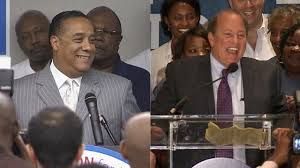
Yesterday, in case you missed it, off year elections took place across America, most notably in Virginia, New Jersey and New York, the results ho-hum, or going according to the pundits.  There was one race, however, that grabbed my attention–the election of Mike Duggan as Detroit’s new mayor.  Duggan happens to be white in a city 80% black. He’s the first white in 40 years elected to that office.

It’s understatement, of course, to say he faces a gargantuan challenge in a floundering, virtually bankrupt, city plagued with endemic poverty and violent crime.  Detroit, by any measure, has become a largely vaporized city, with empty lots and boarded-up houses.  When I lived there in the 60s, the factories still hummed and population stood well over a million in our nation’s fifth largest city.  Today it’s shrunk to just over 700,000 as thousands of the city’s middle class blacks have joined long-gone whites in the suburbs.

In Detroit, it isn’t about color anymore, but about desperation.  I find a silver lining in this sad news–that yes, a populace rightly harboring resentment for past wrongs can move past bitterness, and even prejudice, to embrace giving the tools to the person who can get the job done.

I would love it just as much to see white majorities reciprocate.  We have a black president, historic–yes–but the truth is the majority of whites voted against him both in 2008 and 2012.  I’d like to think it didn’t come down to race, but I shed naivety when I grew up, and I’m wary.

But for today, I’m ecstatic about what happened in Detroit yesterday and you should be too, given our still all too prevalent tensions among races and ethnicities, despite our nation’s model, e pluribus unum (one out of many).  Only a few months ago wounds reopened with the Zimmerman trial.

As always, Dr. King put it eloquently in his “I Have a Dream” speech of 50 years ago:

The marvelous new militancy which has engulfed the Negro community must not lead us to a distrust of all white people, for many of our white brothers, as evidenced by their presence here today, have come to realize that their destiny is tied up with our destiny. They have come to realize that their freedom is inextricably bound to our freedom. We cannot walk alone

The bottom line is that what matters most isn’t color, but compassion centered in human need. Yesterday, Detroit paid earnest on the city’s–and nation’s–future.

Dr. King would be proud.

–rj

Hamlet in the White House: Obama Blinks

obama_2652642b

I had tuned in on Friday to President Obama’s Rose Garden appearance before the media, expecting an updating of data justifying a response to the alleged use of chemical weapons by the Assad regime in Syria.  After all, Secretary of State John Kerry had spoken forcefully to the issue, calling it an act of “thieves and murderers.”  How preternatural it seemed for someone who had so vociferously opposed the Vietnam War, throwing his own medals away, to now be advocating a military strike.  There must be something here.

What I hadn’t counted on was the residue from the UK Parliament rejection of Prime Minister David Cameron’s plea for a military option.  Cameron hadn’t originally planned on asking for Parliament’s permission, only to yield to the reality of low public support in the polls and vociferous objection among even his Labor Party cohorts. He simply wanted to protect his hide, an idea that’s proven to be contagious.

Casting a dark specter over everything was doubtless the protracted war in Iraq, now largely deemed the folly of unreliable intelligence and an understandable passion for taking action following the terrorism of September 11, 2001.  While it’s often been remarked how history repeats itself, it’s not a given that we must repeat its madness.

The psychology in Obama’s turnaround in imitating Cameron fascinates me.  Sometimes we say too much and get ourselves into tight places, with anticipated fall out  locking us into responses our better judgment, tempered by time and reason, tells us are wrong.  From this angle Progressives seem justified in calling Obama’s new mindset courageous.

I see it differently, however, as a failure in will, abetted by a compliant media and a war- weary public.  We have a president who has difficulty making decisions.  For six months he knew the location of Osama bin Laden before taking action.  We’re still awaiting the Keystone decision.  Just the day before, we had heard a horrific litany of the deaths of 1400 civilians, more than 400 of them children, by the Assad regime’s use of chemical agents on its own people.  British, French and Israeli intelligence also corroborate the culpability of the Assad government.

Oddly, the President in his Rose Garden appearance told us he had determined to strike Syria, yet wanted to put it up to the Congress.  I think it unlikely that Congress will approve a strike, perhaps the Senate, but not the Republican House with its contingent of Tea Party isolationists.  This may even play into Obama’s hands, giving him an opportunity to extricate himself, or to climb down the ladder as it were.

But he isn’t going to do so without impunity or a severe loss in credibility.  Even more serious, he’s placed our nation in danger, emboldening aggression abroad by rogue governments.  No one’s talked about it, but the present imbroglio is really about Iran.  His paralysis can only encourage Iran’s efforts to achieve a nuclear arsenal.  If I were the Israelis, I would be deeply troubled.  It’s conceivable that Israel may now see itself as needing to launch a preemptive strike on its own, given the unreliability of the U. S.

Given Obama’s hesitancy towards Syria, what’s the script for Iran?  Do you tip your hand, asking Congress for its permission for a preemptive strike?  Or is it you do nothing, accepting the reality of a nuclear Iran with whom we must learn to live with as we do with North Korea?  Meanwhile, a hostile Iran that sponsors terrorism develops a delivery system potentially targeting Tel Aviv and, ultimately, America.  Let’s face it, as a corollary of the President’s pattern, the odds are that Iran gets its Bomb, despite our stringent embargo.

In the present circumstances, Obama has set a dangerous precedent.  Presidents must be free to act in dealing with contingencies that may arise, and this is what the War Powers Act allows with its 90 day allowance before Congressional oversight kicks-in.  A limited strike on Syria does not violate the Constitution, contrary to what some liberals say.

Mr. Obama is known to admire Lincoln.  But maybe he’s forgotten his history.  Lincoln didn’t ask Congress for permission to war against the eleven successionist states.  In fact, the legality of succession wasn’t allowed to be presented before the Supreme Court.  Lincoln rightly knew he couldn’t win in either the Congress or before the Supreme Court.  My point is, strong presidents lead.

A very good argument can be made that any response now planned would be ineffectual and inflammatory anyway, since the strike is so limited and considerable time has elapsed for Assad to move his military assets into the mountains and his troops into   exempted civilian areas such as schools.  Even more important, the Syrian civil war has now largely turned sectarian, with Sunnis vs Shiites, compounded with the entrance of Hezbollah and al Qaeda insurgents, both of whom target Christians, who comprise 10% of the population.

But this gets us back to square one and our ineffectual president.  Obama created this morass with his dilly-dallying over the last two years, giving extremists time to move in.   His red lines mean nothing, as seen in Assad’s emboldened aggression.  While Syrian dissidents lamented the absence of international outcry following the chemical attack of August 21, Obama was silent for 72 hours.  Later,  he played his usual rhetorical slight of hand, stating the situation defied easy answers.

Mr. President, if we’re reduced to this scenario, then you are its creator, having squandered your options and not acted on your own warnings.  Awful as these deaths from chemical weapons are, they’re minuscule in a sea of 100,000 deaths, most of which could have been prevented had you armed the rebels from the outset.  By the UN’s own estimates, we now have 2 million refugees, 1 million of them children.

Playing Hamlet–to act or not to act–is unbefitting a commander-in-chief and poses grave dangers for America.  As Hisham Melhem, Washington bureau chief of Al Arabiya news channel comments, “He seems unable to make difficult decisions. This will embolden Assad and the opposition jihadis and demoralize the secular, moderate Syrian opposition. Obama is gambling with his reputation at home and abroad.”

With one utterance, Obama has inaugurated a template for disaster, diminishing the powers of the Presidency, making a mockery of American credibility, abandoning Syria’s freedom-fighters, and putting  America and Israel under increased threat from a belligerent Iran ultimately armed with nuclear weaponry.

–rj

Chemical Attack in Syria: Obama Looks the Other Way

SyriaThe videos from Syria are horrific and unprecedented, with row upon row of corpses, many of them children, in what now seems to indicate some kind of chemical agent, perhaps nerve gas, judging by the symptoms, also captured on camera, of the last gasps and spasms of the dying.  Presumably the attack was launched under the auspices of the Assad regime, since it’s well known they possess a huge stockpile of chemical weapons.  It maintains, however, that rebels are simply staging a scenario for Western consumption to provoke intervention.

But this isn’t the way Britain and France see it, the latter calling for possible force if there is verification.  Even, and this is a shocker, Vladimir Putin has called on the Syrian government to allow UN inspectors, already in the country and just twenty minutes away, to visit the scene, though Russia assumes the whole thing is a rebel ruse.  I don’t think for a minute Assad will allow such a thing, though logic would seem to compel it, if what’s happened is simply a rebel scheme.

It’s conceivable Hezbollah or non-government loyalists could have launched an attack like this using make-shift rockets, which they’ve done before, employing tear gas or industrial toxins fired into a confined space.  Bad as the videos are, we don’t see defecation, vomiting and tremors that usually go along with chemical agents.

Because we can’t pin down, at least for now, what precisely happened, we need to refrain from a rush to judgment.  In America we’ve seen enough of war, of thousands of our children killed and maimed, our treasury depleted, and those we’ve fought to liberate us not liking us one bit more.  We got rid of Saddam, Iran’s nemesis, and stoked  its friendship with largely Shiite Iraq.

If this turns out to have been a genuine chemical attack, then such barbarism should meet with a strong response.  It doesn’t require boots on the ground.  No one wants that.  Nor does it mean a no fly zone.   Cruise missiles fired off shore can take out the missile depots.  Give the beleaguered rebels the weaponry they need so that the Assad regime pays a lingering price and this never occurs again.  Include anti-tank missiles as well.

The truth is that the Obama administration has dilly-dallied too long, allowing extremist forces to enter the fray, al Quaeda fighting with the rebels; Hezbollah, for Assad.  Now the war’s momentum, taking a very dangerous turn, increasingly resembles the imbroglio of Sunni vs Shiite, or what we see in Iraq, spinning out of control.

Like an ugly cancer, it threatens to metastasize, drawing in Turkey, Iraq, Jordan and Lebanon, where 42 died in a Tripoli bomb blast today.  Iran, meanwhile has been sending in fighters.

The toll on civilians is immense:  100,000 dead;  two million refugees, one million of them children divested of a future.

Meanwhile, our government is clearly confused, self-contradictory, and plainly ineffectual.

Obama told us a year ago, August 20, 2012, that chemical weapons would be a “red line” and “a game-changer.”  Shortly after, he concluded that they had been used and pledged arms.  No weapons have arrived.  Nothing changed.

If we discover that chemical weapons were indeed deployed on this occasion, and substantially, will it make any difference this time?  Don’t bet on it.  Politicians often say things they don’t really mean, and that’s why we’re wise not to believe them when they do.

Ironic for a nation that owes its own liberation from the intervention of the French two centuries ago.

–rj

Happy Days are here again: and the banks roll on

obama

If you’ve been watching the headlines on the economic front, you may have seen the news about record bank profits in the first quarter of the year to the tune of $40.3 billion, an all time high.  In fact, profits surged 15.8% over the same quarter a year ago. This marks the 14th straight quarter of bank gains. In short, the bailed out banks (you and I paid for that), are making money hand-over-fist.  Not so, mainstream America.

Meanwhile, in the past 12 months, scandal- ridden JP Morgan has garnered $24.4 billion in net profit, evidencing once again that banks could evade laws with impunity.  The precedent, after all, had been the release of the 2000 page examiner’s report on Lehman Brothers in 2010,  suggesting fraud had brought about its bankruptcy, yet nothing was done.

You’d never have expected hand-outs from the Obama administration, given their campaign pledges to look out for us po’folk and their left of center politics.  Their hand-outs, not loans, to banks and other fiscal institutions, are shockingly in the trillions, with $85 billion dished out every month from the Federal Reserve.

But then again, we can better understand the forces in play when we look at the cohorts Obama gathered about himself:  Jacob Lew, former Citigroup executive, appointed deputy secretary of state, with a cool $900,000 bonus in his pocket from Citigroup;  Mark Patterson, Goldman Sachs lobbyist, made chief of staff at the Treasury, despite a ban on lobbyists;  Timothy Geithner, who became the architect of the bailouts, appointed as Treasury secretary, even after it was discovered he hadn’t fully paid his taxes;  Larry Summers, who authored many of the pro-bank policies of the nineties, recruited as a mainstay economic advisor; and Rahm Emmanuel, appointed Chief of Staff, after gleaning $16.5 million as a Chicago investment banker in just 30 months in-between government jobs. All of them Democrats.  All of them with dirty hands.  

At the present moment, Larry Summers is being touted as the next Federal Reserve Chairman, replacing the retiring Ben Bernanke.  A long time Goldman Sachs executive and trader, he played a primary role in deregulating Wall Street in the Clinton administration.

So far, and probably never will happen, not a single bank or CEO has been brought to account for their criminal mismanagement of the people’s money, leading to the 2008 meltdown and consequent suffering for millions of Americans. Their suffering continues.

Now you would think from the President’s major address on the economy this month that happy days are here again for you and me, what with his boast of 7.2 million new jobs created in the business sector in the last four years.  But politicians do prevaricate, and it’s up to you and me to hold their feet to the fire.  Fact is, long term unemployment is at its highest level since the Great Depression, and of the newly minted jobs, most are low wage (often in the service sector), temporary, or part-time.

Curiously, nowhere did the President mention the plight of Detroit facing bankruptcy and the possible erosion of pension and health benefits for the city’s workers, including police and fire personnel.

To give him his due, he did allude to the growing income disparity between the rich and the majority of Americans:

Even though our businesses are creating new jobs and have broken record profits, nearly all the income gains of the past ten years have continued to flow to the top 1 percent. The average CEO has gotten a raise of nearly 40 percent since 2009, but the average American earns less than he or she did in 1999. And companies continue to hold back on hiring those who have been out of work for some time.

But how did this happen?  He didn’t mention government’s largesse to the wealthy through bank bail outs, corporate tax breaks, and reduced wages for autoworkers.  In the first two years of the President’s tenure, or after the downturn of 2008, the richest one percent enjoyed an 11% increase in income, unlike the rest of Americans whose incomes declined.

Again, nobody’s been minding the store.  In 2011, the Senate Permanent Subcommittee  noted Wall Street’s culpability just prior to the 2008 market collapse as “a financial snakepit rife with greed, conflicts of interest and wrongdoing.”

While it may appear that things are humming along nicely, the banks booming, the real estate market up, stocks at their peak, the reality is that more than 3 million of us can’t find work.  Those who do, work for less, often part-time.  Many, particularly those 50 and over, may never work again.  Black youth unemployment is currently at 42 %.

Several million Americans have been foreclosed upon by the banks, losing their biggest investment stake and, sometimes, a whole lot more.  Many others owe the banks for houses purchased at inflated prices, now worth considerably less.

But the banks roll on, too big to take on, as Attorney General Eric Holder recently let slip. What’s more, their lobbyist legions do their work well, busy button-holing members of Congress.  It’s a game of money, always has been, money spelling influence.  It’s America, you know.

This just  in:  The President remains committed to slashing Medicare by $400 billion and Social Security by $130 billion in his projected 2014 budget.  (In 2008, candidate Obama had pledged, reiterated by Biden in 2012, that he wouldn’t cut Social Security.)  Apparently, the bankers are a privileged class; the people, expendable to the exigencies  of  power and influence.

-rj

When media masquerades

Following Tuesday’s State of the Union speech, the Republicans delivered the customary rebuttal, this year, featuring Senator Marco Rubio as their spokesperson.  Then came the now infamous water bottle moment, washing away not only Rubio’s thirst and whatever substantive remarks he made, but possibly notions of his fitness to seek higher office in 2016.  Mind you, I’m not a Republican, nor a Democrat either, having voted the Green Party last November.  I do, however, have a sense of fair play and I found the media’s persistent, even gleeful replay of a human moment thoroughly annoying and partisan.

I don’t know  about you, but sometimes I prefer avoiding the mass media altogether, since it frequently seems to thrive on the negative and sensational to the point of hinting at animosity, or an underbelly of petty meanness analogous to an undercurrent of daily life manifesting itself in the personality that enjoys another’s fall, the venom of daily gossip with fondness for spilling confidences, speculation, insinuation, ridicule and invasion of privacy or creeping over every fence and peering into every window. Its dynamics, whether public or private, are worth exploring, since they have a human origin. The media likewise strays when it embraces advocacy journalism driven by concealed biases or panders to special interest groups or omits asking the right questions.

Like many of you, Karen and I have recently caught-up with Downton Abbey, TV’s highbrow soap opera that has hooked millions in Britain and America (second in viewers to this year’s Superbowl).  Weaving its spell through subtle intra-episode suspense played out in a facsimile of Edwardian elegance contesting with working class aspirations, its characters, all of them, major or minor, are remarkably chiseled into a sharpened relief, foregrounding their composite individuality, and avoiding stereotype.  As with Shakespere’s Iago, insinuation rather than outright deed works its scourge among some of them. Thomas and O’Brien come to mind as primary instigators, motivated by malice, fomenting innuendo.

As such, they’re not strikingly different from an errant press.  Appropriately, one of Downton Abbey’s other candidates for “dishonorable mention” is Sir Richard Carlisle, hard-ball, newspaper mogul who thrives on scandalizing adversaries, influence peddling, and unbridled intimidation.  He decides what makes or doesn’t make news, as his personal needs dictate.  We are not far from how real media works to manipulate opinion or affirm its biases or cast its critics into disrepute.

While I fervently believe in a free press, devotee that I am of John Stuart Mill (On Liberty), I’ve become wiser with the vintage of my years as to its capabilities for abuse as in outing a CIA operative and endangering intelligence sources in adversary nations; or of unbalanced reporting, whether by design or neglect; or of slanting the news through connotative nuance; or of a more sinister modus operandi of interpretive journalism pursuing an a priori agenda of prejudices.

I wish I had time and space to write more fully on the press, both as to its assets and liabilities; but suffice it to say, there lies a latent psychology underlying its behavior, since it’s so human in its making.  Putting ourselves on the alert, we diminish its power to manipulate us.

Be well,

rj