
And Then There Were None: Mountain Gorillas in Imminent Danger

gorillas1

In this central African park.
Desperate refugees crowd park boundaries.
Charcoal producers strip forests.
Then, last summer [2007], someone killed seven of these magnificent creatures in cold blood.
  (National Geographic)


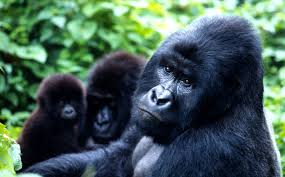
Yet another species, this time one of our closest relatives, faces a grave threat of extinction– mountain apes, of whom only 700-800 remain.

The Democratic Republic of Congo (DRC) reportedly has asked UNESCO to redraw the boundaries of one of Africa’s largest wildlife sanctuaries, Virunga Park, to facilitate oil drilling.

Consisting of 300 square miles, or 7800 square kilometers, the park shelters not only the gorillas, but other wildlife and Lake Edward, a key fishing resource.

In 2010, the DRC signed a contract with British firm, Soco, to begin exploration, despite its designation as a World Heritage Site, in violation of international law.

Such scenarios inevitably occur whenever economic interests are pitted against environmental concerns. In Africa, however, grinding poverty is so widespread that nations like the DRC must prioritize developing income resources.

On the other hand, much of that poverty is rooted in Africa’s post colonial history of chronic civil strife and kleptomaniac leadership.

Properly developed in a context of political stability, the DRC is rich in natural resources that could vastly improve the well being of its people.

In the DRC, the resultant instability and economic fallout has created anarchy, as rival militias composed of M23, Hutus, Tutsis and Congolese Revolutionary Army deserters roam the country, raping, plundering and killing.

Virunga National Park has, unfortunately, turned into a quagmire of lawlessness as a hideaway for militants, who use the Park’s wildlife and forest for subsistence.

Additionally, nearly 100,000 refugees live on the Park’s fringes, leading to deforestation and poaching.

In 2004, 1,500 hectares of prime mountain gorilla habitat were cleared by illegal settlers in Virunga National Park, according to evidence uncovered by the Congolese Institute for the Conservation of Nature.

What we know is that at least 40 mountain gorillas have been killed in the last several years.

As is, only 480 mountain gorillas remain in the Park’s confines, with no place to go.

Now the oil interests have moved in.

It’s a tragedy in the making.

Gorillas are gentle herbivores, who seek isolation.

As you might suspect, they have a lot in common with you and me.

Gestation is 8.5 months, approximating our own.

Births are nearly always singular.

Mating, unlike that of many animals, can take place anytime.

Helpless at birth, gorillas crawl at two months and walk at about nine months.

They are very intelligent and live in organized troops, governed by a dominant male known as a Silverback.

Diseases like ebola and those acquired from proximity to humans increasingly pose an additional threat.

In northern Gabon, for example, the entire protected population of gorillas and chimpanzees succumbed to ebola in 1994.

There’s also the bush meat trade along with lustful trophy seekers.

While international wildlife groups have contributed funding to shore up anti-poaching patrols, there are simply too few rangers, given the park’s vastness. Inadequately equipped, they’re no match for the often superior armed militia factions. Sadly, 140 rangers have lost their lives defending wildlife.

Their great champion, Dian Fossey, the world’s preeminent primatologist, was brutally murdered in 1985.

As a child I’d lie at night, thinking of Africa, teeming with wildlife, vast herds of elephants, rhino, hippopotami, zebras, antelopes, wildebeests, giraffes and, of course, isolated savannas and mountains abundant in gorillas, chimps and monkeys.

But that was a child’s imagining.

The adult vista, on the contrary, confronts us with vanishing wildlife and the likely soon extinction of these gentle creatures, our human cousins,

When I think of today’s Democratic Republic of Congo, flashes of Joseph Conrad’s The Heart of Darkness with its rampant savagery flood my thoughts and of Kurtz’s agonized lament when confronted with human culpability, “The horror! The horror!”

–rj

Expanding the energy portfolio: Utilities awaken

coalEvery month our local power cooperstive, Blue Grass Energy, sends us its superbly put together magazine, Kentucky Living, filled with helpful tips on home maintenance, gardening, recipes, recommended books, regional activities, events, etc.

With all its feel good staples, it’s easy to lose sight of its primary purpose as a public relations gimmick to elicit the public’s support. Your power company is on your side, helping you enjoy the good life, offering some of the lowest energy costs in the nation, largely through the state’s substantial coal reserves.

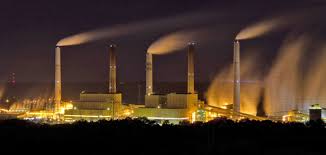
Its editorials, however, consistently make clear that this good life is under a black cloud via the EPA’s increasingly heavy hand, encouraged by Obama’s executive decisions restricting power plant emissions at heavy local cost and marginalization of its coal resources. In its use of coal as their primary energy source, states like Kentucky, not wealthy by any yardstick, will bear a larger cost burden than other states, which they simply can’t afford, the utilities say.

Tuesday is election day and according to the latest polls, Mitch McConnell. is poised to be reelected to yet another term and possibly become senate majority leader, meaning still more congressional gridlock.

Mitch says, “I strongly oppose the EPA’s efforts to shut down Kentucky’s coal industry. I will fight to ensure the future of existing coal-fired power plants.”

He has announced that one his priorities will be to defund the EPA.

His main opponent, Alison Lundergan Grimes, touted as the Democrats’ best shot at ending McConnell’s perennial reign, has simply been a mirror to McConnell on coal issues and climate change. She has even resorted to ludicrously painting McConnell as unfriendly to the state’s coal industry, including miners, even though they’ve repeatedly come to his defense.

As for Libertarian candidate, David Patterson, he tells us that “CO2 is not a pollutant in the quantities seen today.”

Fortunately, aside from the usual debacle of politics, Kentucky utilities are starting to get the message, with movement underway to harvest clean, alternative technologies. The East Kentucky Power Cooperative, for example (which affects our household) has invested $1.7 billion to help clean-up carbon emissions at its coal-fired power plants.

With the hand-writing on the wall, Kentucky’s utilities are pursuing a diverse energy grid, including not only natural gas, but solar, wind, hydro and landfill gas.

All of this will impose increased costs, but the alternative in the context of the exponential menace of climate change makes these efforts of acquiring a diverse energy portfolio least costly in the long term.

–rj


May I recommend?

I confess to being an omnivorous reader and that my iPad has only abetted my hunger for new turf, now so easily accessed with the likes of Publisher’s Weekly, Goodreads, and the Huffington Post. On occasion, I’ve drawn on Fareed Zacharia’s recommendations on his GPS weekly telecast. I maintain links to all the nation’s foremost bookstores like Powell’s as well. And, of course, there is always that behemoth, Amazon.

This past week I was delighted to see two authors among those on the 2014 Long List for the National Book Award for Nonfiction.
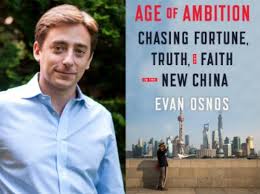
OsnosThe first is Evan Osnos, whose Age of Ambition: Chasing Fortune, Truth, and Faith in the New China I read several months ago following upon Zacharia’s counsel. It’s not my intent, however, to give a lengthy book review here. Besides, you can access copious online reviews with Google or at the Amazon site.

Anyway, Osnos is presently with The New Yorker after having been a roving correspondent in China for eight years. He went everywhere, interviewing citizens across the social-political-economic spectrum.

What amazes me is that he did so speaking fluent Chinese, acquired as a major at Harvard, obviously increasing his access enormously.

He’s also a polished writer exhibiting a lucid style along with cogent analysis.

I hadn’t done any sustained reading on China until Osnos, which–sadly– probably includes the vast lot of us, though China rivals the USA on the world stage.

Certainly, Osnos has his hands on that nation’s pulse.   Essentially, its communist government hasn’t changed in its dedication to controlling all aspects of daily life and maintaining its privileged status despite its seeming anomaly of encouraging a market economy so contrary to the legacy of Mao.

It does so, of course, to keep in check any democratic impulses among its citizenry.  Let them eat cake and they’ll overlook pressing for governmental reform. So far, it seems to have kept the lid on, though Osnos notes that many of the populace seethe underneath, as materialism cannot assuage their desire to be free to think and choose. Accordingly, a revival of interest in religion is also taking place, proving again “that man cannot live by bread alone.”

As a consequence, it’s a fine-balancing act for many Chinese, especially among its entrepreneurial classes, intellectuals, and artisans. The thought police are everywhere monitoring, especially the Internet.

The regime even goes so far as to downplay natural disasters that may point to government malfeasance.

Of course, the Chinese know this well to the point of using code terminology to circumvent the censors.

Osnos doesn’t neglect the full picture, however, as there is a growing emergence of rabid nationalism among some that could ultimately pose a danger on the world stage. In the short term, these zealots pose an additional threat to the cadre of brave dissidents at home.

I went away admiring the quiet heroism of many of the Chinese, and sadly, the hard lot of dissidents who have chosen to articulate their concerns for a more liberal China very openly, risking long imprisonment under harsh conditions and sometimes torture.

If you want to take China’s measure, then this is a book you’ll want to read.

wilsonThe second name among others in the 2014 Long List for Nonfiction is that of the renowned etymologist Edward O. Wilson for his The Meaning of Human Existence. I’m familiar with Wilson’s nimble acuity to persuasively and eloquently deliver a manifesto for nature and its myriad creatures under the duress of both man and global warming in his other books.

I’ve also just recently read his In Search of Nature, surely an environmental classic that explains in layman’s terms the complicated interplay between genetics and environment. Like all sociobiologists, Wilson seeks to unlock the biological origins behind human behavior.

In the Meaning of Human Existence, Wilson boldly asserts that no transcendental design is responsible for our existence. On the contrary, “Our species was created not by a supernatural intelligence, but by chance and necessity out of millions of species in Earth’s biosphere.”

No destiny or purpose is assigned to us, and no afterlife awaits us. Our human moment originates in “the epic of the species, begun in biological evolution and prehistory, passed into recorded history, and urgently now, day by day, faster and faster into the indefinite future.”

Creatures with a social intelligence predisposed for social action enhanced by natural selection, we require the humanities even more than the sciences to define the human condition and guide it into effectual relationships, not only among ourselves, but with earth’s other creatures, for surely our future, and our safety, depends upon biodiversity and its preservation.

Wilson’s view is a brave one, given that the religious instinct along with “tribalism” remain rampant with all their insularity and intolerance:

Human existence may be simpler than we thought. There is no predestination, no unfathomed mystery of life….We are self-made, independent, alone, and fragile, a biological species adapted to live in a biological world.

Accordingly, Wilson movingly pleads that humans in their unique social intelligence extend their embrace to include nature:

We alone among all species have grasped the reality of the living world…. We alone have measured the quality of mercy among our own kind. Might we now extend the same concern to the living world that gave us birth?

As always, Wilson writes a reasoned, yet passionate prose, acute in its honesty, telling in its empathy for both man and his beleaguered companions.

–rj


After we Murder Nature, then What?

environment

After we murder Nature, then what? I know some of you may think this a dubious assumption as to possibility, and I would be among you–that is, until recently.

As is, Nature has atrophied and we live increasingly in asphalt environments, with Nature relegated to a few urban parks and, even then, they tend not to be passive parks given over to Nature, but to ball fields, children’s playgrounds, etc.

As evidence of our increasing sequestering of Nature, consider that more of us in the USA and Canada visit local zoos than attend professional sports events combined!

The pity is that Man is himself the evolutionary outcome of millions of years of a once teeming biodiversity. The question then follows as to what happens to us when we marginalize the very sources of our being and our future.

I’ve seen science estimates of the number of species of existing plants and animals as somewhere between 5 and 100 million. We know that invertebrates vastly outnumber vertebrates like ourselves, perhaps some 10 million, of which only a million have been identified.

Zoologist Edward O. Wilson tells us that if humans were to suddenly disappear, all would still be well on earth; conversely, were the invertebrates to disappear, life would soon revert to its initial state a billion years ago of myriad algae, bacteria, and a few multi-celled organisms (In Search of Nature, 153).

In short, we are intertwined with nature right down to the tiniest organism.

Our mistake is to think that even the smallest entities of Nature, so staggering in numbers, cannot be vulnerable to human excesses:

When a valley in Peru or an island in the Pacific is stripped of the last of its vegetation, the result is likely to be the extinction of several kinds of birds and some dozens of plant species. Whereas we are painfully aware of that tragedy, we fail to perceive that hundreds of vertebrates will also vanish (Wilson, 145).

 As is, humans from their earliest beginnings up to the last century had already wiped out an estimated 10% of flora and fauna species. Alarmingly, bird population is declining rapidly, with a drop of 25% in bird species. Presently, the drop-off in all species, not only birds, is occurring 100 to 1000 times higher than in pre-human times.

Consider the continuing decimation of the Amazonian rainforest, the world’s foremost repository of biodiversity with huge implications for pharmaceuticals, agriculture and oil substitutes and, of course, climate change. Each year, we lose to chainsaws an area approximating half the size of Florida!

Unfortunately, we’ve inherited a primordial disposition that prioritizes personal safety, followed by family, tribe, then outsiders ((Wilson 186), a selfishness that unless it gives way to altruism expressed in environmental regard, is likely to doom us.

Today, we’re hearing a lot about climate change, and it certainly can’t be minimized, since we are largely responsible for it. But it’s not just a matter of carbon, but our burgeoning numbers, with corresponding exponential demands on limited resources. The more population increases, the more decimation, with habitats reduced and species extinguished, many of unknown importance to our survival. Consider Nigeria with its present population of 175 million (2013). PEW research estimates it will reach 440 million by 2050, exceeding the USA population.

Although population rates are declining, the world’s population will be just under 10 billion by 2050, with sub-Saharan Africa experiencing explosive growth, an area already confronted by widespread poverty, disease, and ethnic conflict. Unfortunately, in many places, cultural traditions and religious beliefs continue to dominate.

We can still save the day, but it’s unlikely that we care enough to act meaningfully and quickly.

Take where I live, Kentucky, where we have two senate candidates, Democrat and Republican, trying to shout down each other in denouncing President Obama’s policies affecting environment, especially coal. Accordingly, reducing the powers of the EPA is a foremost goal for both.

Unfortunately, evolution gave homo sapiens a well-developed brain, but pulled up short in maximizing a moral prowess vital to its long term survival.

–rj


Jung, Archetypes, and A Parrot: The Legacy of Nature’s Genius

Dr. Joanna Burger
Dr. Joanna Burger

I’ve just finished Joanna Burger’s The Parrot That Owns Me: The Story of a Relationship. Funny, I had this book sitting on my shelf, unread, for twelve years. Looking for something to read while eating my breakfast, I pulled it down and started what turned out to be a fun read.

I also learned a great deal about birds and, especially about parrots, surely one of the most intelligent of animal species, though we normally think of primates (gorillas, chimps, orangutans, etc.), dolphins, elephants and pigs as honorary Mensa candidates among our animal kin.

Burger, one of the world’s leading ornithologists and Rutgers University prof with over twenty books to her credit, tells how Tiko, her Red-lored Amazon, practices a repertoire of tonal warnings to distinguish varied predators, most notably, hawks, cats, and snakes.

She writes that “when Tiko gave his hawk call, Mike (her husband) and I would invariably spot a Red-tailed, Sharp-shinned, or Cooper’s Hawk flying overhead or perched in a nearby tree. Tiko’s response was so consistent that there was no question that he recognized hawkdom” (167).

Likewise, Tiko doesn’t like snakes, one of which Burger kept for a while, much to Tiko’s dismay. Only when the snake went into hibernation could he be content in the same room.

But how does Tiko pull this off?   After all, he seems to possess a genetic memory of jungle predators, even though he’s been totally reared in captivity and has never had any interaction with hawks or snakes?

Years ago I had started reading Jung, who has impressed me more than Freud as being on the mark when its comes to the seminal sources lurking behind human behavior. Jung proposed the theory of archetypes, or “primordial images” (Man and his Symbols, 67), reflecting instinctual urges of unknown origins. They can arise in our consciousness suddenly and anywhere apart from cultural influence or personal experience. Often they take shape in our consciousness through fantasy, symbol, or situational pattern.

And so with Tiko as well as ourselves, the instinctual responses perpetuating survival have become wired in the brains of sentient creatures. Untaught, they’re automatic.

Today, science overwhelmingly confirms the accuracy of Jung’s prescience. Take, for example, the eminent biologist Edward O. Wilson, who attests that monkeys “raised in the laboratory without previous exposure to snakes show the same response to them as those brought in from the wild, though in weaker form (In Search of Nature, 19).

The explanation, of course, lies in evolution’s conferring differential survival value through natural selection. Those who learn to respond to fear quickly simply pass on more of their offspring with their response mechanisms.

Wilson goes further, arguing that human culture itself is considerably biological in origin, or genetically prescribed, supported by analytical models (123-24).

A Jungian at heart, I found Tiko’s innate capacity to respond to elements of danger another in a long line of evidence supporting Jung’s pioneering perspective; on this occasion, by way of one of the world’s most astute animal behaviorists, Joanna Burger.

Nature never ceases to amaze me!

–rj


Places to see before they disappear

Meet-me-in-Big-Sur6-640x354

The other day I perused the well-stocked magazine rack at my local Kroger and surprisingly came across a special Newsweek issue intriguingly entitled, “100 Places to Explore Before They Disappear.” Teeming with stunning photography you’re accustomed to seeing in magazines like National Geographic, it whets your appetite to get about and see some of these places, six of them right here in the USA. But the rub is that, given the rapidly accumulating consequences of climate change, you’d better do it soon.

As Christiana Figueres, United Nations Climate Chief, cautions, “There is no doubt, if elevated climate is not addressed, it presents a huge risk to many geographic regions around the world, particularly to low-lying islands and to coastal cities.”

As I see it, the catalyst behind these impending geographic upheavals comes down to water, either too much of it (e.g., rising sea levels) or too little (drought).

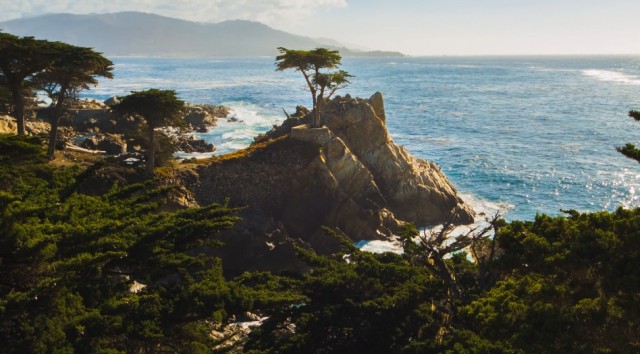
Let’s start with the USA: If there’s one place I absolutely adore above all of California’s myriad tapestry of exotic beauty, it’s Big Sur, hugging the central California coast for 90 miles between Carmel and Ragged Point.   For me, it’s a sacred place in its remoteness, adored by one of our most articulate poets on the environment, the late Robinson Jeffers, whose home is there. Severe drought conditions have converted this once verdant mountain area into a virtual tinder box. Just last year, a devastating forest burned 1000 acres and destroyed 34 homes. It happened in December, not in summer. Last year was California’s hottest year ever recorded. Severe drought and record temperature highs are continuing this year.

Other American vistas in danger:

The Florida Keys from Key Largo to Key West has experienced a sea-level rise of nine inches over the last century, threatening its ground water supply. In the next fifty years, experts are predicting that figure will double.

New Orleans, devastated by Katrina a decade ago, continues to struggle to find ways to protect itself from future storm surges, while concurrently sinking six feet below sea level.

New York City, much like New Orleans, faces a future onslaught of rising sea levels, something hurricane Sandy made very apparent.

The New Jersey shore, stretching 130 miles, has increasingly been exposed to flooding and erosion. Experts predict worse flooding over the next several decades.

Hawaii’s island gem, Kauai, with tourist meccas like Koloa, are now threatened by torrential rain.

The Newsweek issue doesn’t mention other American places under siege like Miami, Boston, Las Vegas and Los Angeles, the latter two running out of water.

It doesn’t get better anywhere else: In fact, it gets worse, especially in Africa with its already burgeoning population confronted not only by poverty, but political, religious and ethnic instability. Its once teeming wildlife, increasingly encroached upon by poachers, will in all probability disappear into memory, given the added stress of climate change with diminished rain and rising temperatures.

Meanwhile, in a throwback to Nero, Congress fiddles while America–and the world– burns in a costly game of partisan politics and subservience to fossil fuel lobbyists. Some not only deny the human contribution to climate change, but climate change itself, ludicrously placing themselves on equal footing with credentialed scientists.

I think again of Robinson Jeffers and his prescient poem, “Shine Perishing Republic,” with its theme of the American dream settling into “the mould of its vulgarity, heavily thickening to empire/And protest, only a bubble in the Molten Mass, pops/And sighs out, and the mass hardens.

It doesn’t have to be this way. While we aren’t able to halt climate change, the consequence of our dependency on fossil fuels, we can mitigate its effects. The lesson of evolution is the necessity of adaptation for an entity to survive. Thus far, we’re not doing very well at that.

–rj


Matthiessen’s The Snow Leopard: Still timely and eloquent

peter-matthiessen-with-leopard-for-web1

I finally got hold of the late Peter Matthiessen’s classic, The Snow Leopard, after a several week delay at Amazon, which was out of it. I had never read Matthiessen before, even though I knew he was a fervent lover of nature.

He began writing the book back in 1972, essentially a daily journal, shortly after the death of his wife, Deborah, from cancer. It tells of his trek across the Himalayas with field biologist George Schaller in quest of the Himalayan blue sheep and, for Matthiessen, in particular, the elusive snow leopard. It would win the National Book Award on its publication in 1978, our country’s most prestigious literary award.

I, too, confess to loving nature intensely to the point that my graduate prof in a Wordsworth course told the other students I had a leg up on comprehending Britain’s foremost nature poet.

In the middle part of my boyhood we lived in Philly, and I do mean the city. Occasionally we’d drive over to the Jersey coast for relief from the asphalt oven that is Philly in summer. For me, it was liberation to be among trees, fruit stands, and the shore.

I used to travel a lot, often abroad, always with camera ready, but I got complaints that there weren’t any people in my photos. I simply preferred landscape and I’m still that way.

But back to Matthiessen, I read several tributes following his death in April and even wrote my own in Brimmings a few weeks ago. I knew I had a lot of catching up to do. After all, he wrote some 33 books, both fiction and non-fiction, excelling at both.

Certainly, I had to read The Snow Leopard after coming upon one reader’s comment that he goes back to it every year, always gleaning new insights. For someone to do this–it’s rare we re-read a book, let alone, continually–implies considerable substance.

Similarly, I also liked what eminent travel writer Pico Iyer, who wrote the Introduction, had to say:

I have been reading Peter Matthiessen’s silver classic for more than a quarter century now, and every time I do, like any classic, it gives off a different light, growing as I do and shifting to meet the needs of every moment,

After comments like that, how could I not want to splurge my time indulging in this book. Out of curiosity, I googled “nature classics,” only to be disappointed to find no mention of the book that deserves company with the likes of Thoreau, Muir, Carson and Leopold. Perhaps it’s because The Snow Leopard, while surely taking in nature with eagle eye observation recorded in some of the most elegant prose ever, moves past nature into spiritual autobiography. In brief, the outer search for the snow leopard ultimately symbolizes his inward pilgrimage to find meaning and, with it, himself.

This said, I hadn’t previously known that Matthiessen was a serious devotee of Buddhism, that gentle faith, from which he continually draws strength and insight in this book, or a sense of what matters in a cosmos of flux and temporality:

Amazingly, we take for granted that instinct for survival, fear of death, must separate us from the happiness of pure and uninterpreted experience, in which body, mind, and nature are the same. And this debasement of our vision, the retreat from wonder, the backing away like lobsters from free-swimming life into safe crannies, the desperate instinct that our life passes unlived, is reflected in proliferation without joy, corrosive money rot, the gross befouling of the earth and air and water from which we came.

I wasn’t prepared for how unflinchingly honest this book is: “I am aware of all that is hollow in myself, all that is greedy, angry and unwise.” Matthiessen acknowledges that things were not well in his marriage with Deborah. There follows his intuitive decision to commit; his ineffectual attempts to show love. After her death It would be a year before this prolific writer found himself able to take up the pen again.

Deeply sensitive and rich in compassion, he is always aware of the plight of nature continually ravaged by humans in their relentless self regard and unbridled exploitation. He laments how even the Himalayas are being depleted of their forests, unsafe despite their remoteness, and with their loss, a habitat that gave sanctuary to unique animals like the blue sheep and snow leopards. Always in Matthiessen you have a sense of a paradise lost, with Man the driving agent of its extinction.

I wish I had time to explore the depth of the book’s many insights, for The Snow Leopard is surely a repository of cerebral wrestlings, an exploration of what it is to live meaningfully in the context of impermanence frequented with suffering. Accordingly, neither the past nor the future really matters, for it is in the Now that we find our paradise and thus our deliverance.

I close with Matthiessen’s sobering admonition:

…almost everywhere, a clear and subtle illumination that lent magnificence to life and peace to death was overwhelmed in the hard glare of technology. Yet that light is always present, like the stars of noon. Man must perceive it if he is to transcend his fear of the meaningless, for no amount of “progress” can take its place. We have outsmarted ourselves, like greedy monkeys, and now we are full of dread.

–rj

Convincing meteorologists that climate change is real

Obamaclimate

You can see from the above photo the challenge our president faces in convincing, of all people, our meteorologists, that climate change isn’t simply cyclic, but ongoing, posing devastating consequences for America, with no region spared. Further, we humans are its driving force.

The National Climate Assessment came out yesterday, only to be immediately dismissed as “alarmist” by–imagine my surprise–Mitch McConnell (R-Ky). Guess he must think the same about the recently released  UN Panel’s 40 volume plus study conducted by leading climate scientists. I’m reminded as a former prof of Victorian lit just what it must have been like for Darwin in the outpouring of public vitriol that followed upon his perceived tampering with hallowed establishment assumptions. By the way, I never cease to be amazed at the gall of politicians assuming equal footing with reputable scientists.

But it isn’t just the Republicans we have to worry about in Washington when it comes to taking climate change seriously and initiating immediate steps to at least mitigate its effects. You see this most pointedly when it comes to the Keystone XL project. Presently there’s a bipartisan effort to get a two-thirds majority in the Senate in favor of the project, assuring veto proof passage.   So far, 11 Democrats have shown willingness to join 45 Republicans in such a move, with one Democrat optimistic of getting several more.

As always, it’s the old song-and-dance scenario of jobs, when the fact is that if we were to put environment on a war-footing we’d have universal employment in harnessing the forces to slow global warming.   Solar energy has considerable promise, for example, and is already a key component in countries like Denmark. Instead of constructing pipelines with their potential for spills–and sabotage–we’d do better in shoring up our coast lines.

How wonderful it would be to see Republicans and Democrats give priority to long term public welfare rather than short term corporate interests and their reelection prospects. (Once again, a good point for term limits. If it exists for the Presidency, why not for Congress?)

As for the meteorologists, a George Mason University survey in 2010 showed only 19% of them accepted human activity as the primary contributor to global warming.  Some deny climate change period! (http://journals.ametsoc.org/doi/abs/10.1175/BAMS-D-13-00091.1 ) While good at short term forecasting, they fall considerably short at the long term. Public icons, they can be given to a narcissism of overreach. Unfortunately, 62% of us trust our TV weather forecasters more than we do climate scientists!

The greatest proofs of climate change lie not simply in natural catastrophes, but in their ever increasingly frequency. We have computer models for that!

above

–rj


Climate Change: Can we win the fight?

divest395581_155622104590737_1008694978_n

We just celebrated Earth Day on April 22, an annual fête of huge importance for those of us wanting to increase the public’s awareness of the challenge of climate change, and our substantial human contribution to it, and ways we might fight it.

It’s an important time for us in another way, too, as this yearly outpouring of Green advocacy transcending borders buoys up our enthusiasm, telling us we’re not alone in our caring. After all, sometimes it seems that we’re on this great big mountain we impulsively thought we could climb; so rituals of solidarity like Earth Day give us pause to catch our breath, reassess, and press on to our worthy goal of a humanity in harmony with nature as one species among others, each necessary to all. Just maybe we can pull this thing off. Anyway, good to dream big rather than live small.

The truth is that so much more needs to be done and that we’ve been moving at a snail’s pace in making climate change a palpable issue for the public. I saw this demonstrated all too clearly in the presidential debates in 2012, or just 18 months ago, with not a single question directed to environmental matters raised by debate moderators.

If the press can seemingly have no feel for the greatest issue ever to menace us with its destructive pay-load should we evade addressing it, then how much less can we expect the public to grasp what’s at stake? As is, individual lifestyle changes like driving less, getting rid of plastic, cutting back on electricity in our homes aren’t going to do the trick. We need more than bandages to treat the Earth’s hemorrhaging.

Now consider that a recent poll suggests that 37% of Americans don’t even believe in climate change. There exist also a good many, perhaps even more, who look at climate change as simply cyclic and that, just maybe, it might even right itself. Of course that view gets us off the hook and we can conduct business as usual.

Just recently the United Nations released the findings of its Intergovernmental Panel on Climate Change, a careful study by credentialed scientists encompassing some 40 volumes. Insiders say they toned down some of their language and projections so as not to unduly frighten, though their findings still emerge as deeply sobering, with none of us escaping vulnerability to what surely are predictions on an apocalyptic scale. In all honesty, I haven’t noticed any work-up by media or any concerted effort by members of Congress to hold hearings on the report and what we might do to save the day. Like many of you, I grow weary–and wary–of their feckless accommodations to corporate interests.

What’s vital is that we impact the political process, as happened with the Vietnam War, ultimately culminating in LBJ’s decision not to pursue reelection. It started with just a few protesters, then took hold and proved unstoppable. Unfortunately, I don’t see anything like this breaking out. I think this is because many of our projections for climate change impacting us lie still in the future, whereas flag covered body bags coming into Dover AFB were a daily, tangible occurrence, which the media ultimately caught up with when it perceived a muscular protest movement, packing a punch, that wasn’t going to go away.

On the other hand, if we haven’t been able to muster cadres of protestors against our Iraq and Afghanistan incursions with their costly toll in life and wounded for a dubious cause, how much less likely for an environmental movement devoid of blood and gore? And that’s what makes climate warming so horrendously insidious, or like some invisible killer we know is out there, but don’t know where he is, or when he’ll strike, or how.

Perhaps our young people will again show us the way as they did with Vietnam by way of their fossil fuel divestment sit-ins sweeping our college campuses, some 300 as I write, with several success stories, including Harvard with its $32 billion endowment. If it’s wrong to destroy our planet, it follows we shouldn’t be seeking to profit from those who do.   I wrote earlier of the Vietnam days when students rallied to make a difference. All of us: unions, retirees, teachers, tech workers, etc., might do well to follow their lead in choosing our retirement portfolios more discriminately.

But divestment has its limitations, too. While it was practiced widely in the 70’s and 80’s to pressure South Africa’s apartheid regime, the invariable result was that other investors stepped in. It’s true value lay in shaping public discourse, and I venture this holds true with this present endeavor.

Still, I question the wisdom of painting with a broad brush the fossil fuel industry as some kind of axis of evil. We need energy. Are our students willing to follow through and divest themselves of their cars and their electricity and take on an Amish likeness? We would do better to focus on the coal sector, our greatest polluter.

I still like our president–articulate in his efforts to assure health care access, social and economic equality, tax, immigration and drug sentencing reform. So far, he’s championed alternative energy efforts, sought restrictions on coal burning power plants, held out against the Keystone XL project, endorsed alternative energy efforts.

As for Keystone, he needs our support even as we must sustain, and grow our protests, to keep a fire under his feet. When I think of Keystone and the big money behind it–think Koch brothers–I get nauseous: the obscenity of it, given the perils of climate change; the stench of it, given its association with pet coke; the callowness of it, given its destruction of farmland, water aquifers, and wildlife habitat.

The President will presumably make his decision after this fall’s elections, but faces immense pressure, even in his own party. It isn’t a given he’ll opt for courage over pragmatism. In the end, it’s important we all get to the polls and endorse environmentally friendly candidates such as the courageous Gary Peters (D-MI), who hopes to succeed retiring senator Carl Levin (D-MI).   Peters has come out against Keystone, provoking the Koch brothers to contribute substantially to his Republican opponent, who now leads in campaign funding. Peters is our leading spokesperson on pet coke. (By the way, you can access online the Sierra Club’s political endorsements, which include Peters.)

If it came down to, say, an errant asteroid making its way to befuddle our planet as once happened, plunging the world into a rebirth of its pre-evolutionary darkness, then you can bet your life we’d all get off our bottoms and fight the good fight. Well, think of that asteroid as climate change.

–rj


Peter Matthiessen: Homegoing

matthiessen

We lost a great writer, Peter Matthiessen, this past weekend. A co-founder of the renowned Paris Review and author of thirty-three books, both fiction and non-fiction, his supreme subject was Nature and, sadly, Man’s pervasive impact upon it:

Species appear, and left behind by a changing earth, they disappear forever, and there is a certain solace in the inexorable. But until man, the highest predator, evolved, the process of extinction was a slow one. No species but man, so far as is known, unaided by circumstance or climactic change, has ever extinguished another. (Wilderness in America [1959]).

Along with other environmentalists, I mourn his loss since his death silences a powerful voice of advocacy for what remains.

I think of the great writers of Nature who have borne sensitive witness to the fragile cocoon of Nature that includes ourselves that I have read across the years, works both of poetry and prose that have refined my sensitivity, shaped my priorities, and taught me awareness of the transience of all living things. All of them have been my teachers.

In poetry, I think of Wordsworth, Shelley, Keats, Hopkins, Dickinson, Frost, Jeffers, for example; as for prose–Thoreau, followed by Muir, Carson, Wilson, Dillard, McKibben and, of course, the most prodigious–Matthiessen.

Of all the books Matthiessen wrote, two stand out to me in particular as robust reads: Shadow Country, a novel featuring a desperado gunned down by his own neighbors in the lawless Everglades wilderness of the nineteenth century; the other, Snow Leopard, a non-fictional account of Matthiessen’s search for the elusive snow leopard in the Himalayas. More than a travel adventure, it depicts the author’s spiritual journey. As stimulating as it is beautiful, lucid in its prose and stunning in its imagery, it may just be one of the finest books to treat both Nature and the Soul ever written and deserves many re-readings.

Both Shadow Country and Snow Leopard won National Book Awards, our country’s most prestigious literary prize. (Matthiessen is the only writer to receive multiple National Book Awards.)

Matthiessen was not your ordinary person. A former CIA spy, son of a well-to-do family, initially conservative in his politics, he ultimately moved to the Left, championing American Indians, Cesar Chavez and exploited migrants, opposed the Vietnam War (bravely refusing to pay taxes) and, of course, became a committed environmentalist.

A deeply spiritual man, he embraced Buddhism following the death of his second wife in 1972, ultimately becoming a Buddhist priest. Snow Leopard reflects a Zen ambience throughout and its acceptance of the Now as the only true consolation we have in a transitory cosmos.

Though he fought ardently for conserving nature, he was troubled by the exponential excesses wrought by anthropocentric interests. As he would lament, “I can hardly point to a victory that we ever won as conservationists that hasn’t been overturned.”

Not all was lost, however:

 …we won some, too — there were long-lasting victories. And if nothing else, we stalled — stalled them off, the developers and exploiters.

All of us Greens will miss him, and yet there remains the fervent advocacy of his many books championing justice; respect for other species and their habitat; the simple life lived mindfully, free from material desire; the valuing of each other.

There couldn’t have been a finer man.

–rj