Finding serenity

I mentioned in a recent post how I’ve been reading Natame Soseki’s The Gate. I’m nearing the end now and just came upon the protagonist, Sosuke, ruminating that “he must find a way to attain serenity in life, given his many troubles and high anxiety.”

Serenity, I had almost forgotten this word I used to bounce around in my thoughts like a rubber ball.  I think it a beautiful word, right up there with love, compassion, empathy, and the like.

But what is it really?

I’m not a religious person, but one of the best definitions comes from the Bible which speaks of “the peace that passes understanding.”

Similarly, theologian Richard Niebuhr said it exceptionally well in a prayer he devised that later became popular and is sometimes erroneously attributed to St. Francis of Assisi.

Its beginning goes like this:

God grant me the serenity
to accept the things I cannot change,
courage to change the things I can;
and wisdom to know the difference.

Alcoholics Anonymous has liked it so much that they recite it at the opening of their Twelve Step sessions.

Danger lurks, however, when we conflate serenity with passivity.  As the news media confirm daily, we live in a world of virtually palpable wrongdoing and robust evil, sometimes beyond words.   All good people must wage the fight, since indifference or passivity surely contributes to their dominion.

Serenity comes from accepting we may not realize our most ardent desires, even those bathed in love and compassion for those who suffer.  Paradoxically,  accepting our often ineffectuality makes room for serenity’s defining characteristic, transcendence.  I like how Bishop Desmond Tutu put it at a time of failing health:

I don’t think I’ve ever felt that same kind of peace, the kind of serenity that I felt after acknowledging that maybe I was going to die of this TB.

The way of serenity isn’t any sudden showering of the gods, for it necessitates self-emptying, or the surrendering of Ego that fosters our suffering with its myriad desires and its denial of our mortality.  Paradoxically, when we do so, it promotes our healing, or as Victor Frankyl expessed it, “The more one forgets himself–by giving himself to a cause to serve or another person to love–the more he actualizes himself.”

The good news is that we can cultivate serenity by pursuing several avenues that unlock bad habits, replacing them with alternatives promoting our well-being.  Here are some that help me:

Cognitive:  Change the way you respond to things that happen to you.  Do you act or react?  Why let someone’s curt remark destroy your day?  Are there positive alternatives to the negative way you’re interpreting things?  Negative thoughts produce emotional distress.  Pluck them by the root.

Music:  Shakespeare once famously said, “Music  hath charms to soothe a savage  breast.”  Avoid the frenetic.  Indulge the soothing.  Music reduces stress levels by 61%.

Exercise:   Physical activity relieves stress, besides being good for your health, giving you less to worry about.  You may want to add restorative yoga or Tai Chi, which have proven their worth over several millennia and are endorsesd by today’s medical community.

Interests:  Find something you like to do such as gardening, hiking, volunteering.

Friends:  Cultivate relationships with positive people.  Establish a support network.

Humor:   Laughter is its own medicine.  Research indicates it can promote blood flow, boost the immune system, and promote sound sleep.

Reading:  There are many fine reads out there written by experts on reducing stress.  Reading reduces stress by 68% according to cognitive neuropsychologist, Dr. David Lewis.  Reading works because it takes us out of ourselves which, of course, fosters serenity.

Eating:  Certain foods like blueberries, almonds, whole grains, and veggies can improve your mood and reduce stress.  You might like to peruse Elizabeth Somer’s thorough study, Food and Mood.

Organizing:  For some of us, including myself, neatness affords me a sense of being on top of things, and is thus its own tranquilizer.

Sleep:  Establish a regular schedule and keep to it.  Avoid stressful activities or exercise three hours before bedtime; same for intense mental activity.

Nature:  It isn’t accidental that nature inspires a lot of poetry or that many people opt for remote vacations away from our noisy world.  Nature enhances sensory awareness, and with it, provides relief from daily stress.  It’s as close as keeping a garden, taking a walk, and cutting the grass.  You can enhance your experience by learning the names of common trees, flowers and birds.  For me, it’s become synonymous with sanctuary.

Meditation:  I like this one best for its quick returns, especially mindfulness meditation.  (See my essay in Recent Posts, “Mindfuness and the recovery….”).  Breathing and focusing can produce immediate relief and the ability to let go of negative thoughts.  Combined with yoga or Tai Chi, you’ve a double whammy against anxiety.

In all honesty, I’ve not gotten there yet, but I’m trying, remembering that the longest journey begins with the first step.  Serenity comes down to doing what I can, subtracting the difference.

Baseball fever!

The crack of the bat; the thud in the mitt; smells of peanuts and cracker jacks; mustarded hot dogs washed down with cold beers.  The fever of it!  Baseball, America’s brain child, after a long winter, true harbinger of Spring, you’re back and I’m a young boy again, with dawn’s early light, heading for alleys, looking for buddies, looking for game.

Like eating Cheerios, I fed on baseball, the daily radio broadcasts pouring out their litany in days when TV was but a rumor.  Pa, ensconced in his leather chair, two virtues in exchange for his addiction to booze, a love for the game and a love for the news, rituals of redemption taking root in his child.

Growing-up in Philly’s waterfront Fishtown, tedious streets of inert row houses and white stoops; scarcely a tree, never a park, we gave it no thought,  adopting stick ball and banging our hits off factory facades, in the same way Ruth and Gehrig began their own long journey, Boys of Summer, with every stroke, tapping our dreams of something better than asphalt heat and danger-laden streets.

Philly sported two teams then, the A’s and Phillies.  I knew the player names readily, reiterated by baseball cards we’d get with our bubblegum and trade with each other, sitting on stoops on sultry summer evenings.

I remember the Whiz Kids winning the pennant in 1950, the euphoria sweeping Philly like an exuberant wind.  They played the World Series afternoons back then.

When I was twelve, I learned how to take the El and find my way to Shibe Park to watch the A’s play and usually lose.  After the game, I’d linger around the gate for autographs and recall, as if yesterday, wide-eyed like a boy hooking his first trout, the  thrill of Dave Philley being my first and, crazy kid that I was, grabbing his arm to touch one of the gods.

Baseball had an innocence back then–an absence of big money, drugs, and player mobility.  It was everything good that we’d like to be good again.  I liked the high mounds, the pitchers around for most of the game, so different from the formula of 100 pitches in vogue today.  It’s hard to win twenty games now, and we’ll never see 30 wins again.  Back then, teams like the Yankees sometimes sported three pitchers with twenty wins by season end.

Ted Williams batted 406 in 1941.  He did it without the sacrifice fly added later, which means he batted for an even higher average, going by today’s rules.

I remember Jackie Robinson’s coming into baseball and democratizing the game.

With sadness now, there’s been a sharp decline, after the long struggle, in African-American players these days.  Thank goodness for the Caribbean ball players who keep baseball from reverting to a white man’s game.

But there are changes that have made baseball better such as the playoffs and, in my opinion, the designated hitter.

What keeps my loyalty is the nature of the skills baseball demands.  Every position features its own requisites not easily acquired.  Baseball has few prodigies ready right out of high school.  Generally you hone your skills over several  seasons, playing college or minor league ball.  You learn by doing to play the game well.

If every position has its own repertoire, no less challenging is swinging the bat, with fast balls clocking 90 mph and more, mixed with curves, sliders and off speed pitches.  There are eight players in front of you and you need to hit the ball where they aren’t, a tall order  the very best players achieve only a third of the time.

What I like better than anything else is the stardom in reach for any player in any game at any moment:  the clutch hit, the stolen base, the home run, the pitcher’s shutout, the fielding gem; the sheer democracy of it, unlike any other sport I know.

Every at bat is the old West renewed, batter against pitcher, in strategy based on probability.

I relish the end game with its relief scenario.  Can the “fireman” put out the fire and save the game?  A duel indeed.  Good relievers require ice in their veins.

Baseball, more than any other sport, comes down to numbers, or record-keeping, with the Hall of Fame a pantheon of its greatest, and a way of measuring.

Football and basketball, today’s popular action sports, may enjoy the public eye but, for me, I revel in baseball’s ritual, the mindness in it, the individuality of it; the the crack of the bat, the thud in the mitt; smells of peanuts and crackerjacks, mustarded hot dogs washed down with cold beers. The sheer Americana of it!

–rj

My passion for reading

I’m always on the look out for a good read, and it doesn’t matter whether it’s fact or fiction.  Biographies, memoirs, diaries, you name it.  But science fiction, romance, adventure, I like these, too.  And then there are the how-to books from zen to gardening, take your pick.

I probably read from 15 to 20 books yearly, not any record-setting pace, but I think a fair number.  I’ve many interests like gardening and studying Spanish, but I try never to crowd out a daily dose of a good book, investing at least an hour every day.

There are a lot of talented writers and engaging topics out there, so sometimes I find it hard to choose, since obviously you can’t read everything.  Book lists come in handy, but I tend to avoid the more popular ones like those in the New York Times or Amazon.  Sometimes I check-in with Publisher’s Weekly.  I’ll also look at the National Book Awards and Booker Prize listings online.  Occasionally, I’ll pick up a choice item on the recommendation of Fareed Zakaria, who always closes his GPS show with a super read.  And then there’s The New York Review of Books, which has never steered me wrong.

In a post I wrote just a few days ago, I mentioned I’d taken-up Mindfulness Meditation. As one of its weekly exercises, they ask you to break out of your habit modes by altering a specific routine; for example, change where you sit at the table at home.  The idea is to get you in-touch with your senses and stimulate awareness that can help you catch destructive thought patterns.  I’ve extended this habit-breaking strategy to my reading, exploring new vistas.  (By the way, novelty has a way of recharging brain cells, warding off dementia.)

It isn’t often I read a book originally written in a language other than English, the exceptions being classics such as The Divine ComedyLes Miserables, Anna Karenina and the like.  I know this is very parochial, since there are many exceptional reads not written by Anglos.  And so I opted for a different pathway a few days ago, downloading Natsume Sodeki’s The Gate (New York Review Books Classics).  Turns out, I made a wise choice.  I had never heard of Sodeki, nor ever read a Japanese novel.  Sodeki happens to be Japan’s most revered modern novelist, something I didn’t know, but now understand.  Discovering a game-changer, I want to read more works by Sodeki and others outside the groove.

I’m optimistic about the future of reading, despite the closing of many bookstores, the precarious profit margins for publishers, and the plethora of community budget woes putting the  squeeze on one of America’s unique treasures: the public library.  Last year more titles were published than ever, though not necessarily in traditional book format, since the times are a changing.  Like most everything else, books evolve with adaptation a corollary for survival.  Electronic books are here to stay and publishers who don’t render increased access to this new format are unlikely to survive.

A uniquely human endeavor, reading will endure.  A few years ago, it was widely forecast that the DVD would close movie theaters and end the big screen tradition.  Well, that hadn’t happened when last I looked and, similarly, TV never replaced the radio, witness the popularity of 24/7 radio talk shows or stations with dedicated music genres and their many listeners

But why this passion in me for reading? I read to be entertained, informed, inspired and, yes, sometimes to be chastised into seeing a new way of thinking.  But mostly, at least with regard to literary texts, I read to engage my feelings through their imaging in metaphor and articulation, often eloquently, into the truths of human experience.  It’s then I know I’m not alone, but linked with others in that existential quest for meaning and affirmation.  As such, reading grows my empathy and compels my compassion. What more could I ask?

Where are the songs of Spring?

images

Saw a sign yesterday that read, “Spring is coming soon.”  That’s something we’re all wondering about, even in Kentucky, where we’ve been having an unusually cold March, which makes it hard to believe the Kentucky Derby is merely six weeks away.  They say it may be related to melting glaciers changing our wind patterns.

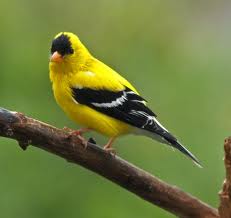
But the real sign nature is about to turn generous was yesterday’s afternoon delight in seeing my goldfinch friends, busy at their feeder, newly returned from their long and distant migration.  I remember late October when suddenly they were gone, the absence of their aerial eagerness and bright collusion of yellow and black; the silence and loneliness of it, like saying good bye to a good friend who had brought abundant joy, “A quality of loss/Affecting our discontent” (Dickinson, “A Light Exists in Spring”).

I’m not a member of the Audubon Society, but I quite understand their love for birds with their bright plumage and merry song.  I think of St. Francis of Assisi whose kindness the birds reputedly reciprocated by sitting on his shoulders.  Sometimes I think they take their own measure of me in their aerial hideaways when I replenish their several feeders in our backyard.

Birds need our help these days more than ever.  I just read the other day that an estimated 100 million birds are killed worldwide each year by outdoor cats and other scavengers.

Diminishing canopy of forest and brush, draining of wetlands, and climate change add to the toll.  Squirrels and other rodents raid their nests, devouring eggs and young hatchlings.

Migration itself can be costly, with many killed and injured, caught in storms or flying into buildings, and sometimes planes.  Many are blown off course and show up in risky environs.  I feel bad that each year several of them smash themselves into our sunroom windows and I am left with their still warm bodies.

Some of them, hawks, are wantonly shot by farmers who see them as predators.  I had an unpleasant experience in New Zealand in hearing of a crusty elderly man who had nothing better to do than shoot hawks as everyday pastime in that gorgeous Taranaki countryside of lush greenery.  In Kentucky, especially in the mountains, hawk-killing takes on a compulsion.

Down the road and around the curve, I often see a sentry red tail hawk on a high telephone wire.  I like what I see when I drive past His Majesty.

I relish reading good poetry and there are poems, great ones by Keats and Shelley, Hopkins and Dickinson, that wonderfully excel in depicting the splendor of birds like “Ode to a Nightingale, “Ode to a Skylark,” “The Windhover,” “A Bird Came Down the Walk” and, sometimes their sadness as in Angelou’s moving “I know why the Caged Bird Sings.”

But I began with the subject of Spring and so Keats’ question of “Where are the songs of spring?” (“Autumn”) comes to mind and finds its answer, for me at least, in yesterday’s return of my yellow-jacketed friends.  Let Spring’s sweet song begin!

Be well,

rj

Mindfulness and the recovery of compassion, empathy and joy

Nearly always I come upon new reads, not through lists but, unexpectedly, in the marketplace of life.  I like it this way–the surprise of it, the joy of discovery, the smack of fate rather than coincidence, like the chance finding of a new friend or bumping into wise counsel, unanticipated, in a corner; its aftermath of empowering, the mystery and the beauty of it.

It happened for me this way yesterday when I came upon Mark Williams and Danny Penman’s Mindfulness:  An Eight Week Plan for Finding Peace in a Frantic World.  Intuiting a must read, I immediately downloaded the kindle version, which also features several sound tracks for the exercises.

I’ve been suffering lately from a good deal of anxiety, largely because of health issues.  I’m not used to things being this way and my need to control makes matters worse.  The trick in life is learning how to cope with issues you can’t always resolve.  While I know the script in my head, it’s quite another thing to carry out.

I like this new way of finding yourself and the freedom it brings, not in resolving, but in coping.  Mindfulness actually isn’t new, but a bedrock of Buddhism.  What changes the scorecard for me, however, is the empirical yield of sophisticated brain-scanning methodologies affirming its effectiveness.  What’s more, it can alter brain patterns long term for the better.  Studies show it substantially reduces depression and its frequent return,  improves blood pressure, lessens chronic pain, and boosts the immune system.  In daily life, it promotes empathy, compassion and joy.

I’ve always had great respect for the potential of meditation to promote both physical and emotional wellness.  My mind, however, works like a metropolitan airport, the runways always full.  Mindfulness meditation may thus work better for me, as instead of eliminating your thoughts, you passively observe them in conjunction with focusing on breathing.  You learn that you are not your thoughts and that thoughts can come and go like black clouds in the sky.  This gives you power to catch wrong thinking or patterns before they impact, and it lends space to help you heal.

Mindfulness is all about bringing us to our senses, and by this, I mean the sensory repertoire of touch, taste, sight, smell and sound.  We take ourselves too seriously and in doing so lose direct contact with the cornucopia of life’s potential blessedness all around us when we subjugate the sensory to the taunt reins of the cerebral.

As Williams and Penman point out, we spend our lives “on automatic pilot,” creatures of habit, oblivious to the priorities that really matter.  Mindfulness takes us out of ourselves, giving us power to discern and thus choose.

I began the eight week course yesterday with the “raisin” exercise, a simple endeavor lasting several minutes that helps rekindle the sensory, noting things like weight, texture, taste, smell and tongue movement.  Once again, I rediscovered Flaubert’s maxim that  “anything looked at long enough becomes interesting.”

I hope this exercise is a harbinger of future benefits as it delivered me from my self-concern, channeling my focus on the here and now.  I thought of other raisins to be savored:  a hooting owl in dawn’s pink-fingered rays, a mountain brook bubbling its way, a child’s innocent giggle, the sweet smell of morning cinnamon toast, the spring rose’s first blush.

I thought of Helen Keller’s eloquent wisdom:

“I who am blind can give one hint to those who see: Use your eyes as if tomorrow you would be stricken blind.  Hear the music of voices, the song of a bird, the mighty strains of an orchestra, as if you would be stricken deaf tomorrow. Touch each object as if tomorrow your tactile sense would fail. Smell the perfume of flowers, taste with relish each morsel, as if tomorrow you could never smell and taste again. make the most of every sense.”

Selah!  I am at peace.

–rj

Further Reflections on the Mediterranean Diet Findings

Michael Milken
Michael Milken

There’s been a lot of euphoria, I think mistaken, over the recent research  findings evaluating the Mediterranean diet.  (See my earlier post, “On the New Mediterranean study:  Proceed with Caution” [March 1, 2013.])  Not only was the alternative low fat diet administered in pedestrian fashion,  e. g., inadequate counseling, but a substantial number of those on the Mediterranean diet suffered heart attacks or strokes.  We need to remember that none of the participants had a history of either at the outset of  the experiment.

But let me be fair.  We’re all different and there’s no plug-in diagnostic that’s going to yield a universal physical metric.  This applies to diet, surely, and explains the plethora of approaches which work for some, but not others.  What we do know is that following a diet that emphasizes complex carbohydrates, low sugar, minimal saturated fats, and plenty of nutrient dense fruits and vegetables along with reduced sodium intake is beneficial.

The Mediterranean diet thus moves in the right direction, but would be even more effective were it to reduce meat and dairy product content.  We might then see not only reduction in coronary disease, but its reversal, which truly low fat diets (10% consumption of total calories) have consistently demonstrated in extended government studies.

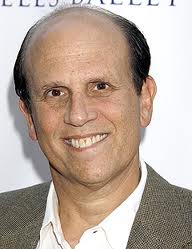
But let me bring up the Michael Milken story.  Do you remember him?  One of Wall Street’s top investors, he was indicted by the government in 1989 for racketeering and securities fraud and served 22 months in prison.  What followed is a story that moves us with its redemption.

Worse than prison, Mike was diagnosed in 1993 with Stage IV prostate cancer at just age 46.  Biopsy indicated it had metastasized and spread to his lymph nodes; consequently, his doctor advised that his scheduled prostatectomy wouldn’t save him.

Mike responded where others might have given-up, launching vigorous research, founding the CaP Cure foundation, and making major changes in his diet by adopting a nonfat, vegetarian regimen.  For Mike, a typical diet will feature mushroom barley soup, a tofu mock egg salad sandwich replete with tofu, carrots and lettuce, and a black bean and corn salad, accompanied by a soy drink.

Mike also founded and heads the Prostate foundation, working closely with Major League Baseball and matching every donated dollar.

It’s now 20-years since that fatal diagnosis.  Mike?  He’s still out there going strong and giving hope to thousands.

You’ll find many of Mike’s favorite low fat, soy-based foods, compiled with the aid of Beth Ginsberg, a grad of the Culinary Institute of America, gathered in The Taste for Living World Cookbook.  With its subtly delicious recipes, it’s a best buy.

Prescription malpractice: widespread and deadly

Good doctors are hard to find and when you’ve found one, you’re still not out of the woods, as even the better ones can often impose undesirable outcomes, especially when it comes to medications.  With IV drugs and the sensitivities involved, the mistakes can prove irreversible and even kill.  According to the Institute of Medicine, up to 5% of medications are faulty.  Each year, some 2000 die.

Frankly, you need to have your wits about you to intuit when to say no to your doctor’s prescription.  Despite the ritual of your supplying their office with your prescription and medical history, doctors rarely review your medications for potential interactions with the new prescription. They may also prescribe an excessive dosage or promote an antibiotic too often or for too long, or lack sensitivity to the special needs of the elderly patient.

You may rightly want to ask your doctor to review your present medications to filter out  potential interactions and side effects of your new prescription, only to be disappointed.  I asked my urologist about the side effects of her recent prescription, only to get a “You’ll have to check with your pharmacist,” this from a physician rated as a “best doctor” at her university online site who has presumably been prescribing this medication throughout her long career.

Just the other day, my GI prescribed librax to help relieve my occasional stomach cramps.  Lo and behold, it’s a benzo with a strong addictive history and you take it three times daily.  It’s also contraindicated, meaning don’t take it if you have BPH, which seems the ultimate fate of most of us men.  He’s a good doctor, but he didn’t get it right on this, simply because he prescribed, like most physicians, off the top of his head.

It makes me wonder, by the way, as to how many doctors stay tuned to the latest research.  I like Dr. David Agus’s own observation in his informative The End of Illness:  “I implore you to ask your doctor, How do you stay current?  Ideally, you want someone who stays up-to-date with the latest literature and technology.  Asking this question isn’t a threat . . . .Playing nice won’t result in you being treated better or your disease being diagnosed sooner.  Much to the contrary, playing too nice and not challenging your doctors when they need to be challenged can leave you in the dust—literally.”

While it’s true your pharmacy always gives you an FDA spec sheet with each of your prescriptions,  too few of us read the fine print.  This begs, the question anyway, since each of us is different and one person’s cup of tea is another’s poison.  Because pharmacies dispense only what a doctor prescribes, this means doctors need to scrutinize medications carefully to maximize healing and/or maintenance while minimizing side effects, some of which can prove profoundly dangerous.

Often there’s no right answer and there may even be several for what ails us.  This means you and I play a key role in researching creditable sources, many of them now available online.  I recommend the prestigious and objective Cochrane database as a best source (http://www.cochrane.org/about-us/evidence-based-health-care/webliography/databases).  Ask your self,  given my medical history and age, what new relevant studies have appeared?  I also recommend drugs.com for tracking drug interactions and, for just $15 a year, Best Pills, Worst Pills (http://www.worstpills.org/) for its no nonsense approach.

The bottom line is that drugs are latent with side effects and tradeoffs.  Should I take androgel for low testosterone to minimize osteoporosis and a hip fracture, knowing it may increase my risk for prostate cancer?

Aspirin has shown itself a potent cancer and heart disease preventative, but is it wise to take it if I have chronic gastritis?

All the more why you and your doctor, in tandem, need to exercise a thorough cautiousness in finding the best fit.  Just a short while ago, our health establishment gave a rich endorsement of the analgesic rofecoxib (Vioxx), which has now been found to double the risk of a heart attack.

If I were reduced to giving one maxim for medical safety, it would come down to this:  Be your own doctor first.

–rj

Additional:  See state seeks to suspend medical licenses following 12 deaths linked to doctors’ prescriptions

http://www.jconline.com/article/20130319/NEWS03/303190027/State-seeks-suspend-medical-licenses-following-12-deaths-linked-doctors-prescriptions

Thoreau’s Walden: a splendid friend

In a recent post, I mentioned how books can become special friends. Across the years, I’ve been entertained, inspired, comforted, and made wiser by many of them.  One special friend has been Henry David Thoreau’s Walden, a book I came upon early as an eager,  wide-eyed student in an American literature survey course way back when. Unfortunately,  Walden was dispensed in highlights, or teaspoon portions, which is like omitting the spices needed for a well-flavored soup.

Years later, I found my “friend” again, and this time read it all the way through in connection with filling in for a colleague on sabbatical.  I had my students read it in full as well, for Walden transcends the classroom in its call to take time out, reassess our values, and set our priorities straight.  It gets at the great Tolstoy question, “How ought we to live?”

One of the splendors of Walden is not just its message, but the succinct, aphoristic way it’s written, demonstrating Thoreau’s cultivation in his classic studies at Harvard.  I’ll share some of the passages that have made Walden so memorable for me and may encourage you to your own luxuriant read.

On temporal space:  

I went to the woods because I wished to live deliberately, to front only the essential facts of life, and see if I could not learn what it had to teach, and not when I came to die, discover that I had not lived.”

On individual responsibility:

What a  man thinks of himself, that it is which determines, or rather indicates his fate.”

On living life simply:  

Most of the luxuries, and many of the so-called comforts of life, are not only not indispensable, but positive hindrances to the elevation  of mankind. . .I am convinced that if all men were to live as simply as I did then, thieving and robbery would be unknown.  These take place only in communities where some have got more than is sufficient while others have not enough.”

On having goals:    

In the long run men hit only what they aim at. Therefore, though they should fail immediately, they had better aim at something high.”

On societal reform:  

“Morning is when I am awake and there is a dawn in me. Moral reform is the effort to throw off sleep.”

On technology:  

We do not ride on the railroad; it rides on us.”

On time:

Time is the stream I go a-fishing in.”

On solitude:  

Why should I feel lonely.  Is not our planet  in the Milky Way?”

–rj

A new rhythm that imperils: reflections on global warming

We owe our existence to it, yet we give it little heed, since it’s always there for us.  In my science classes we called it natural law, the material rules of nature that lie behind the structure and behavior of our universe.  Our earth, for example, rotates on its axis, allowing for alternations of light and dark.  It circles the sun with a mathematical precision on which we base our calendar.  There is the partnership of sun and moon exerting a gravitational force on a rotating earth that lifts and lowers its ocean waters with cyclic surety.  Like a camera lens set on infinity, the examples have no limit in their envisioning.

In sum, there exists a rhythm to the universe, which some have argued evidences a Mind at work, bestowing design and flowing with purpose.  Others, however, contend these laws are merely interplay of cause-effect mechanisms, devoid of intent and ethical regard, as reflected in Japan’s devastating tsunami in 2011, taking 20,000 lives. What we define as tragic is more likely our not heeding their operations.  It’s not wise to build on seismic faults or close to ocean shore.

As you may surmise, I draw comfort from these cosmic rhythms despite their indifference to our human schemes.  I know that tomorrow brings the dawn and, with it, the promise of new beginning.  In our human world, such fidelity is rare.

I find a discordant note, however, in our thoughtless disregard of those laws that sustain us, providing clean air, dependable rainfall, and abundant harvest.  In doing so, we’ve acerbated climate change, a crisis largely of our own making rather than merely cyclical change.  We’ve poisoned our air and water, slashed and burned our way through virgin forest, plundered our fellow animal species and squandered our water resources. Tomorrow’s wars are more likely to be waged over water, not oil.

In ten years, the African elephant, once a million, will vanish into memory along with the rhinoceros, all for the sake of trinkets and aphrodisiacs.  Today I saw the BBC news that sharks may soon become extinct, 100 million already killed, in a fishing industry that preys upon their fins to flavor Asian soup.

In our misdeeds, we’ve set other laws into motion that now imperil rather than sustain, generating melting glaciers that are raising sea levels and a warming tundra with potential for massive release of methane, a toxin deadlier than CO2.

Meanwhile, there was the media’s startling failure in last fall’s presidential debates to question the candidates on our generation’s most perilous challenge.  Locally in  places like Kentucky where I reside, cars sport “friends of coal” license plates and “environmentalist” suggests extremism.  Nationally, and globally, corporate interests prevail to uphold waste in the guise of growth.

As for the public’s response, I see its numbing indifference perhaps most vividly at grocery store checkout.  Though I provide my own cloth bags, I’m virtually self-conscious in my singularity amidst a sea of plastic supported by custom.

We are makers of a new rhythm, but this one brings no comfort.

rj

What if: Reducing chronic worry

We worry about a great many things:  How will my interview go? What will people think of me?  Will I pass the test?  How will I pay this bill?  Will I get the loan?  Do I have cancer?  When worry becomes chronic, it can be debilitating, souring our relationships, triggering illness, and fostering pessimism.

Worrying is always an exercise in control.  It prospers because it temporally gives us a fix, falsely giving us a sense we’re in charge, only to reach an inevitably higher threshold to keep our anxieties in check.

One lasting memory I have of my father was his spending long hours in his favorite chair looking out the window, deep in thought, most of it worry.  In doing so he lost a great deal of life’s joy.  It’s what worry does in overdrive. If he had been paid for every worry he’d have been very rich.

Worry is a bully you need to standup to, not indulge, to make it go away.

It’s also a habit and in this case, needs undoing, and like all bad habits, can be unlearned.

The good news is that its remedy may be less difficult than you may have expected, or a matter of getting a handle on it by changing the way you think about life’s inevitable stresses.

The vast majority of our worries fall into three categories, each with its own remedy:

1.    The unimportant:  So much of what we worry about turns out to be trivial if you apply the test of time.  You’re having trouble with a neighbor. That can be unpleasant. Or what about the deadline for getting that assignment done at work?  Or that you may not get that job or promotion you had your heart set on?  Or that Nancy or Bill may not return your affection?  For perspective, ask yourself what would something like this matter a hundred years from now?  

 2.   The unsolvable:   Common sense should tell us the futility of worrying about fixed verities like death and taxes that can’t be changed no matter how we try.  I know such things can be scary, but we lessen our anxiety when we accept life’s randomness and adopt coping strategies to keep ourselves reasonably safe, and pile-up while we can, the nows of life around us as in fostering good relationships, doing what we enjoy, and thinking positively.

3.   The uncertain:  This category may include what we worry about most.  Will I still have a job?  How can I pay my bills?  Is it cancer?  If we could predict the future, we’d invest wisely and profit immensely in the best stocks, bonds and real estate. But even here, the experts at this sort of thing often predict wrongly and fail miserably. The consolation is that most of the uncertainties we worry about never happen or that we”ve simply squeezed out alternative possibilities with one scenario conclusions, making ourselves miserable.  As Montaigne in his inveterate wisdom once put it, “My life has been full of miserable misfortunes, most of which never happened.”  The trick is to accept uncertainty by not reaching conclusions you’ve no way of knowing are inevitable. It’s always a good thing to question your assumptions and consider alternative outcomes.

Summary:  Worry has a positive role when it alerts us to take action as a preventative. It’s why we save for retirement, buy life and health insurance, limit our indebtedness, change our diet, etc.  It becomes a weight when we wake to it, carry it throughout the day, and take it to bed with us at night.  It can harm relationships and affect our physical and mental health.  Remembering the three primary worry types and putting their coping strategies into daily practice can help you retrieve the happiness you mislaid.

Be well,

rj