Our Survival at Stake: Do We Have a Future?

Sir Francis Bacon
Sir Francis Bacon

As much as we can do it, we should avoid living our lives on assumption that a belief is true simply because we’ve been told it’s so by family, government, religion, politics, economics, or the collective culture in which we’ve been raised.  The only fixed verities are those within the scope of natural law with its defined predictability confirmed by replication.  Our responsibility should be to explore those verities affecting our well-being and allow them fullest scope.  We never escape the inexorable operation of those laws, for whatever we do, there is always a consequence. But sometimes we get to choose.

There is no inherent purpose to life, though many moralists like Tolstoy have implied one in asking, How ought we to live?  Nature works through selection only, reinforcing those causal elements promoting regeneration.  Often it works with infinitesimal numbers, a million seeds to effect a single germination.  It has no ethics.  It is devoid of Mind.

We pride ourselves on our freedom, but we are overwhelmingly conditioned by biology and complex behavioral repertoires sanctioned or extinguished by environment.  It is not the future that shapes us, but what has happened to us that defines what we think and do.  Conversely, this defines our tragedy that may doom us on this earth.

We were not born into a preset regimen other than one genetically imposed, so Locke was right about the tabla rasa, or clean slate, notion of our infancy.  Preconditioning is what happens as we make our journey. It follows that each of us needs to recover that initial state; that what I believe or do should be based on immediate consequences rather than because I am told to do so by law,  government, religion or individuals.  We do need laws in a world of many to ensure equal access to the trough in the context of safety, but there is nothing sacrosanct about any law, belief or opinion that allows it to go unexamined.

One of the inherent drawbacks of the human condition is superimposing belief and practice on others.  History, accordingly, is often bloodied with the cruelties of absolutism forced on others, often in the context of religion or secular ideology.  This week, the Ukraine remembers its 3 million dead, starved to death in 1932-33 by a Stalinist regime bent on enforcing collectivization of that nation’s farmland.

Other than climate change, humanity’s greatest threat comes from Islamic extremists bent on returning to the way of the sword, or Jihad, in imposing their beliefs.  The danger lies in Islam’s not merely being a set of beliefs, but a whole way of life regulating every human behavior, codified ultimately in Sharia mandate.

I alluded earlier to the behavioral quirk in us that may cause our doom.  Conditioned as we are by immediate consequences, we often cede the future for the dividends of the present.  Such is our present circumstance with meeting the exigencies of global warming, declining resources, and burgeoning population. 

In short, unless we can render the future more palpable, allowing us to help shape it for those who come after; indeed, assure its livability with reasonable happiness, then we may be moving into our final chapter.  While altruism is a tenant within humanity and perhaps, in evolutionary vein, promoting survivability (see E. O. Wilson, Sociobiology, 1975), we too often exercise our limited freedom for the immediate.  Like the heroic soldier forfeiting his life on the battlefield to save the lives of his fellows, we need to emulate a consciousness of others that may often conflict with our personal happiness and achievement.

Evolution, paradoxically mindless, has always arbitrated for the future over the present as denominator of survivability and made you and me possible.

The Renaissance philosopher I’ve admired all my life, Francis Bacon, summed it all up in saying, “Nature to be commanded must be obeyed.”  Do not base your life on the beliefs of others.  Live for the world of ideas and sort out those verified by the best science.  Live in the fullest moment of today, but not without regard for the future of your fellows.

–rj

Medicine discovers meditation

stressFunny how the poets I read and taught in college have a way of popping up in my mind, even though I’ve been away from that scene for seven years now.  Take, for instance, the English poet Wordsworth.  He’s famous for his nature poetry and talks about “wise passivity,” by which he meant suspending the thinking part and simply letting the senses imbibe the stillness we often find in nature and arriving at the things that really matter. I’d say he was right on the mark, especially with our modern way of living crowding our space to be ourselves, muffling the intuitive stream that fosters coherence and confers tranquility.

A few days ago I was rummaging through the Tao Te Ching, which I like to do every now and then, since it’s densely packed with wise counsel, and came upon this passage that got me started on this present blog entry:

Act by not acting,
Accomplish by not straining
Understand by not knowing. (63)

 Simple but profound, such counsel promotes understanding and, with it, healing.  We need to teach ourselves to be still that we may intuit the essentials and practice mindfulness, something the East with its contemplative traditions discovered several millennia ago, anticipating poets like Wordsworth and, now, contemporary medicine.  The ancients were right all along about meditation as essential to our best selves.  In a time of ever increasing stress, we need its solace more than ever.  Consider this sober warning in the Harvard Newsletter (March 2011):

Over the years, researchers have . . . gained insight into the long-term effects stress has on physical and psychological health. Over time, repeated activation of the stress response takes a toll on the body. Research suggests that prolonged stress contributes to high blood pressure, promotes the formation of artery-clogging deposits, and causes brain changes that may contribute to anxiety, depression, and addiction. More preliminary research suggests that chronic stress may also contribute to obesity, both through direct mechanisms (causing people to eat more) or indirectly (decreasing sleep and exercise).

With available electroencephalogram testing of alpha brain waves along with pulse rate monitoring and even MRI brain scans focusing on “gray matter” in the brain areas responsible for memory, self-awareness and empathy, we now have empirical data gathered by professionals that can be replicated.  In sum, we know meditation works, which means that it can assuage pain and prevent or heal some of our entrenched ills, whether physical or psychological. The paradigm of medical reliance on medication, surgery, diet and exercise is expanding.  In short, a quiet revolution is underway as medicine discovers the ancient axiom that mind and body are one.

Perhaps its seed was planted most notably in the fascination the Beatles showed for Maharishi Mahesh Yogi, founder of  Transcendental Meditation.  Luminaries such as film director David Lynch; TV notables, Ellen Degeneres and Oprah swear by it.  Hey, George Stephanopoulos is into it too.  TM prides itself on research findings, at this juncture, some 700 plus, allegedly confirming its effectiveness in reducing stress, depression, high blood pressure and cardiac risk.
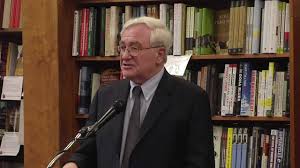
BensonMedicine started to look seriously at a supplementary role for meditation with Harvard’s Herbert Benson putting it to the test via the rigors of refined imaging, using TM volunteers.  As he put it, “Three decades ago it was considered scientific heresy for a Harvard physician and researcher to hypothesize that stress contributed to health problems and to publish studies showing that mental focusing were good for the body.”  Benson opened up medicine to meditation’s possible inclusion with his best selling (four million copies) The Relaxation Response in 1975.  “With meditation alone, the T.M. practitioners brought about striking physiologic change.”

Benson subsequently converted TM into a simple two step approach:  repeat a word or phrase of your own choosing and disregard distracting, every day thoughts by returning to your word or phrase.

Benson’s work was soon popularized in the public world through Norman Cousins, physician Dean Ornish, and a Barbara Walter’s ABC interview.  Still, the medical community for nearly 15 years dismissed Benson’s findings as largely a placebo effect.  That changed as other universities took up their own research, supporting Benson.  Today, Harvard has launched an endowed professorship dedicated to continuing research and treats thousands of clients seeking relief from stress with the Benson method.  Relaxation Response therapy is, in fact, incorporated into specialized programs at Boston’s Harvard linked Beth Israel and Massachusetts General hospitals, with fourteen affiliates nationally.

Today the meditation mainstream seems to be shifting to what’s called “mindfulness meditation,” an adaptation of the Zen approach to medication pioneered by Jon Kabat-Zinn at the University of Massachusetts to treat patients with debilitating diseases and chronic pain.  Like relaxation response meditation, mind-based stress reduction, or MBSR, is science centered, except it differs in how it approaches meditation.  Instead of a word, or mantra, and returning to it when your thoughts wander, you allow your thoughts, noting them, though not analyzing them, returning to focus on your breathing.  The idea is to objectify rather than personalize your thoughts, enabling you to better deal with them.  It’s been shown to activate the gray matter in those areas of the brain responsible for memory, a sense of self and empathy.  It inculcates self acceptance and helps us see that memory belongs to the past and isn’t real.

As such, it works well as a backdrop to the now widespread cognitive approach in counselingYou can actually practicemindfulness” anywhere, or while walking, listening to music, taking in conversation.  Allegedly, it can, with time, help  you become more empathetic through your heightened awareness of your own responses and thus a more diligent listener in social contexts

Whether you use a mantra or mindfulness approach doesn’t really matter since both result in a relaxation effect, though in my very limited experience I find the mantra version easier than mindfulness, which by its very nature can sometimes be distressing.  But there are many kinds of meditation formats, so you may want to search for what makes you most comfortable.  What’s worked especially well for me is known as Restorative Yoga, a derivative of Hatha yoga combining breathing, imaging, muscle relaxation and mild body postures.  I was introduced to it through Nurrie and Rick Stearn’s helpful book, Yoga for Anxiety:  Meditations and Practices for Calming Mind and Body.  Yoga might just be the most integrative of all approaches, administrating to both body and spirit.

I have to be candid: meditation does have its skeptics, some of them arguing that the alleged empirical effects can be attributed to advocate or placebo causes.  Personally, I’ve always found the latter untenable, since if it promotes healing, then the placebo response actually validates the psychosomatic power of the mind, which is ultimately what meditation is all about.

Others argue that random controlled trials (RCT), the gold standard, are lacking, and I’ve found this to have validity; for example, if you turn to the highly regarded Cochrane database, combing scores of medical journals, only one study turns up and it’s equivocal, recommending more randomized testing.

For all the claims that meditation can reduce the risk of heart attack and stroke, the American Heart Association has reserved judgment.  While its definitive report, published in April of this year, does indicate that TM can reduce blood pressure, it urges more research and assigns a lower rating to alternative meditation therapies.  I don’t see a problem here.  Meditation shouldn’t occur in isolation, but in concert with medication when needed, surgery when required, healthier food choices, and regular exercise as constants.

Meditation enthusiasts will rave about its benefits, how it’s made them calmer, more relaxed, better able to deal with both themselves and others, etc., but this is the stuff of anecdote, not science,  Just how do you quantify happiness?  And yet if we see behavioral change such as freedom from drugs; a happier disposition; a gentler, more loving person, we may not be able to measure it, but we know something is going on.

Frankly, I’m impressed with what doctors like Benson and Kabat-Zinn have uncovered.  To be sure, it’s a new science with bumps that need smoothing out, but its future lies in its promise and the empirical base on which it rests.

It seems The American Psychological Association APA) is on board, giving a resounding endorsement to MBSR.  (See Davis and Hayes.  “What are the benefits of mindfulness?” Monitor on Psychology.  July/August2012.  Vol. 43, No. 7.)

Of course, you can resort to SSRIs like Effexor, Zoloft and Lexapro, or quick fixes through benzies like Xanax or Valium, but they come with baggage, or side effects, sometimes worse than any proffered cure.  By the way, research has demonstrated that MBSR is at least half as effective in treating stress as SSRIs.  It’ so effective that the UK’s National Institute for Health and Clinical Excellence has listed MBSR among primary therapies for depression.

As a final caveat, do you remember James Randi, skeptic extraordinaire, debunker of the paranormal?  Though he dismisses TM for its lavish claims that include levitation and psychic prowess to influence social behavior, he nonetheless can accept a relaxation response as ameliorating physical and psychological health, whether through meditation or some other means like music or just plain rest.

That makes sense to me.  After all, isn’t this what meditation comes down to–indulgence in time out?  We all need that.

Teach us to be still.

–rj


Related articles
Do Elephants Think?: And Why it Matters

Elephants stroke and lay brush on a dead friend

I stopped eating meat on Thanksgiving Day, 1996.  I wish I had done it earlier.  I did it for ethical reasons, not health issues.  It’s always struck me that vertebrate animals have consciousness and, as sentient creatures, feel pain.  I’ve been around them enough to know they feature personalities from somber to gregarious, suspicious to fawning.  Despite what you hear about sheep, I had one that was quite the bully.  I’m not censuring those who eat meat. It’s simply a personal decision I made born of compassion, though eventually I might have arrived at the same decision for the sake of the earth, or even for better health.

I love all animals, though most of my life I’ve been a dog person.  I just lost my Bichon buddy several weeks ago after twelve years and though I know time softens grief, he’ll always be somewhere in my thoughts and, certainly, every Bichon  I come across will rekindle memories of my faithful, gentle friend.

In a wider scope, there are undomesticated animals that utterly fascinate me, particularly for their remarkable intelligence, emotion and sensitivity; for instance, apes, whales, dolphins, and elephants.  We know that elephants can weep, mourn for their dead, have long memories, and practice a complex social life.

If elephants have consciousness, and other animals as well, shouldn’t it change how we treat them? Our dilemma stems from our walling ourselves off from them, since anthropomorphizing them, or using words projecting human parity like “love,” “sorrow,” and “regret,” brings them disturbingly close and imposes guilt.  Accordingly, the Canadian government dubs that nation’s annual seal pup clubbing via neutral words like “cull,” “harvest'” or “management plan.”  It’s been said many times that vegetarianism would prosper were we to consider that what we eat may once have possessed a face.

Of course there are those who regard ameliorative efforts to change the lot of animals from prey and product to fellow creatures and companions as an attack on humanity’s rightful role to primacy and a romp in sensitivity.  After all, they’re “simply” animals and we’ve been eating them from prerecorded history, though it begs the question and may point to our ecological follies in substituting anthropocentrism for a rational alternative underscored by climate change.

In an extended, informative analysis, “Do Elephants Have Souls?,” published in The New Atlantis (Winter/Spring 2013), ” managing editor Caitrin Nicol prodigiously uncovers evidence that elephants indeed think with all its implications.

Elephants are among those few animals (dolphins, the great apes, magpies, and man) who recognize themselves in a mirror.

While they may not have refined tools like we do, they’ll employ grass to clean their ears; can dig ponds, subsequently camouflage them with bark and grass.

Nicol tells us that domesticated Asian elephants are known to plug their bells with mud to slip past their human sentries at night and fetch banana treats.

As I mentioned earlier, elephants often bury their dead.  Coming across skeletons, they’ll  hold a vigil.  They’ve been known to react to humans wearing ivory bracelets.

The latter is fundamental to why they’re disappearing so rapidly.  We like them for the wrong reasons.  Sadly, they’re being poached in record numbers from guarded sanctuaries like those in Kenya and South Africa, not just for ivory anymore, but to raise money for terrorists to buy arms.  Recently there have been instances of hundreds of elephants killed in one go.  Even more hideously comes the recent discovery in Zimbabwe’s largest national reserve of cyanide poisoned water resources that take out not only elephants, inflicting lingering, agonizing death, but cause the demise of a vast number of other animals.  Man’s satiety for cruelty breaks the heart.

One thing we can do is to stir the consciences of the Chinese and Vietnamese, who enjoy a large trade in ivory trinkets.  But in our business as usual world of dulled sensitivity and engrained cultural mores, this isn’t likely to happen, though every day we delay contributes further to sealing their doom.

We also need to undertake rewarding villagers who protect the herds with not only money, but daily staples.  Poverty  is so universal in Africa that a relatively few coins at the bottom level makes for an enticing motive nearly impossible to break.  One pair of tusks can easily command  $15,000 on the high end market.

Currently, an estimated 25,000 elephants are poached every year.  At this rate, these glorious, intelligent creatures will vanish into memory within a decade.  Just two centuries ago, twenty-six million elephants roamed Africa’s savannas.  That number has dropped some 98%, says Nicol.

As I see it, it’s not only poaching that threatens, but exploding population as well, with seven children per family now the average in sub-Sahara Africa.  Roaming creatures with gargantuan appetites, elephants are likely to be increasingly viewed as competitors for grazing land that could be used for cattle and farming.

On the plight of animals in general, Nicol movingly quotes the naturalist Henry Beston who in Outermost House (1928) wrote, “We need another and a wiser and perhaps  a more mystical concept of animals….In a world older and more complete than ours they move finished and complete, gifted with extensions of the senses we have lost or never attained, living by voices we shall never hear.  They are not brethren, they are not underlings; they are other nations, caught with ourselves in the net of life and time.” 

As is, we are witnessing an undiminished tragedy of huge proportion affecting not only elephants but other sentient creatures like whales, sharks, and rhinos that, unstopped, ultimately impoverishes all of us and lasts forever.

–rj


Detroit elects a white mayor: earnest on a nation’s future

duggan

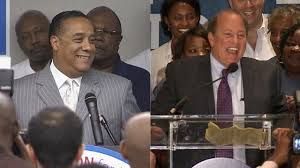
Yesterday, in case you missed it, off year elections took place across America, most notably in Virginia, New Jersey and New York, the results ho-hum, or going according to the pundits.  There was one race, however, that grabbed my attention–the election of Mike Duggan as Detroit’s new mayor.  Duggan happens to be white in a city 80% black. He’s the first white in 40 years elected to that office.

It’s understatement, of course, to say he faces a gargantuan challenge in a floundering, virtually bankrupt, city plagued with endemic poverty and violent crime.  Detroit, by any measure, has become a largely vaporized city, with empty lots and boarded-up houses.  When I lived there in the 60s, the factories still hummed and population stood well over a million in our nation’s fifth largest city.  Today it’s shrunk to just over 700,000 as thousands of the city’s middle class blacks have joined long-gone whites in the suburbs.

In Detroit, it isn’t about color anymore, but about desperation.  I find a silver lining in this sad news–that yes, a populace rightly harboring resentment for past wrongs can move past bitterness, and even prejudice, to embrace giving the tools to the person who can get the job done.

I would love it just as much to see white majorities reciprocate.  We have a black president, historic–yes–but the truth is the majority of whites voted against him both in 2008 and 2012.  I’d like to think it didn’t come down to race, but I shed naivety when I grew up, and I’m wary.

But for today, I’m ecstatic about what happened in Detroit yesterday and you should be too, given our still all too prevalent tensions among races and ethnicities, despite our nation’s model, e pluribus unum (one out of many).  Only a few months ago wounds reopened with the Zimmerman trial.

As always, Dr. King put it eloquently in his “I Have a Dream” speech of 50 years ago:

The marvelous new militancy which has engulfed the Negro community must not lead us to a distrust of all white people, for many of our white brothers, as evidenced by their presence here today, have come to realize that their destiny is tied up with our destiny. They have come to realize that their freedom is inextricably bound to our freedom. We cannot walk alone

The bottom line is that what matters most isn’t color, but compassion centered in human need. Yesterday, Detroit paid earnest on the city’s–and nation’s–future.

Dr. King would be proud.

–rj

Bearded Heroes of a Resurgent Boston

sox4

I watched the Rolling Rally on NESN Saturday with pride and emotion as it wound its way along Boylston Street, over to the Common, then into the Charles (quite literally).   Two million strong, Bostonians lined the streets, often forty deep; stood on steps, looked out windows; and, yes, gazed from roof tops, cheering wildly as their Red Sox heroes passed by in duck boats normally used for touring, waiving back, sometimes slapping hands. Duck boat diplomacy! Certainly, assuredly, unlike so much in life, everything conspired to make this day a success, not least, an unusually warm day in November Boston, a day that will replay itself in memory long after.

Who would have thunk it: that last year’s record 97 losses and last place finish in the American League East would give way to World Series winners?  This was a  motley team in some ways stiched together remarkably, if not cunningly, by general manager Ben Cherington into a flamboyant weave that included a new skipper, John Farrell, articulate, knowledgeable, and able.

Even then, it seemed a no go for the Sox as relief pitching woes mounted up what with sore arms and inability to put out fires.  Ominously, ace pitcher Buchholtz, after a 9 and 0 start, developed a clavicle problem, removing him from the mound till September.  Even in the Series, there was the bullpen collapse of normally reliable Breslow (the Yale biomed whiz).

Chalk up their success to maybe the overachiever syndrome that sometimes compensates for handicap and wins through?  Well, maybe.  For sure, they didn’t get to the winner circle from any embedded superiority.  You might even say this was a David vs. Goliath scenario, replaying itself nightly throughout the season and into the post season against all odds.

The American League playoffs proved better than their hype, the Sox facing an always menacing Tampa Bay, followed by a heavy hitting Detroit team replete with two of the games superior hurlers. Finally, the perennial winning St. Louis Cardinals with, again, fine pitching and, on paper, a knock out bullpen.

It didn’t matter.  The clues, if you think about it, had a way of happening, and kept happening, from the very outset, with the Sox finding ways to win, coming from behind, usually in late innings; each game, a new hero: Big Pappi, Victorino, Gomes, Napoli, Nava;  sometimes Ellsbury on the bases, setting the table; often, a leaping catch by an ever nimble Pedroia or Drew of a smash drive or a diving, in-the-web grab by Gomes.  Slowly I began to believe.  And so did Boston.

They did it so often, thirty times, that it seemed a given–just wait.  Hey, they scratched out one run wins, thrilled us nightly with walk off scenarios, and then there fell into place, as  it were, our secret weapon, passionate, diminutive Koji Uehara, who hitters couldn’t hit.

And how about Lester, fading, only to find himself again, winning games, and anchoring our rotation in the playoffs and Series? Not far behind, Lackey, back from Tommy John surgery, pitching gem after gem right through the Series. “A beautiful thing,” as colorful commentator Dennis Eckersley likes to say.

So many stories here. So many heroes!

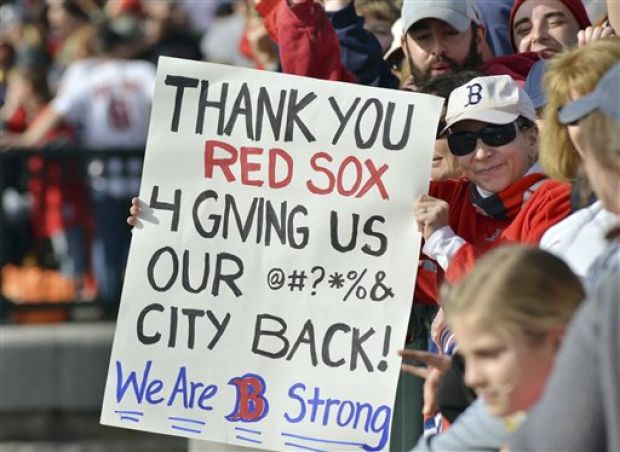
But for me, the most important story is that of April’s human wrought mayhem on Patriot’s Day at the finish line of the world’s favorite marathon.  Once again, as in all such misdeeds, I’m reminded of the human capacity to enact evil.  But I also have faith in the resident goodness of the vast majority to confront and transcend such evil.  As Big Papi famously put it, “This is our … City.  Boston needed to be strong and as the President said, “Boston would celebrate again.”

sox5And that’s where the Red Sox came in, showing the way past adversity to renewal.  That’s what the huge crowds were all about.  They identified with the sleeve patch each player now wore:  “Boston Strong.”

Sadly, in this day of free agency and change as one of life’s non-negotiables, we’ll not see their like again with their bearded idiosyncrasies. Peavy ended up buying the duck boat on which he rode.  (He had previously given us the cigar store Indian, which became a dugout fixture, home and away). Saturday evening, the celebration seemingly carried on, captured in a photo of Napoli, apparently inebriated, bare chested, wandering the streets.  I doubt few Bostonians care.  He earned his indulgence and drinks on the house.  I do know we’ll miss that nightly tugging of the beards!

Every now and then I come across some who disdain sports as a volatile vanity out-of-place in a troubled world.  But I don’t see it that way.  Here we can learn something from wise Vergil, who also knew the depth of suffering first hand.  In one episode of his great Aeneas, he writes entirely of several sport contests.  In his prescience, he knew their analogy with life.  Sports give diversion, and what’s wrong with a time out anyway?  But they are more than that, testing and teaching character, a word whose meaning we’ve largely lost to our own detriment.  Tell me how athletes play the game and I’ll tell you if you can count on them in life.  Their true value lies not in victory, but in pursuit.

This was a team of bonded brothers who went everywhere together.  They loved one another and how we loved them!   They helped Bostonians refocus. The poet Dante defined hell as a place of lost souls who had abandoned hope.  The Red Sox taught Bostonians how to climb out of hell and hope again.  Not least, a whole nation.

sox2How moving their stopping in Copley Square, the singing of God Bless America. Team and city united.  City and team become one.

What a wonderful day.  What a beautiful thing.

Boston Strong.

Thank you, guys!

–rj

My Love Affair with Vermont

vermont2

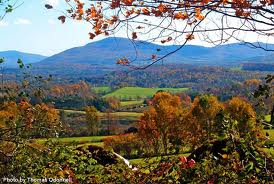
I can’t say how it began, but I know I’ve always had this love affair with Vermont, even though I’ve never lived there.  I suspect it has a lot to do with its mountain greenery, since I’ve always been partial to mountains, those silent sentries walling out an octane world fulsome with pursuit and possession, safeguarding neat valleys of Yankee towns and villages anchored by white steepled churches.

I grew up in Massachusetts with vistas much like this, and Vermont, New England at its best, not far away.  I can’t think of a wooded vista excelling that stretch of aerial road known as U. S. 9 connecting Vermont’s  quaint Bennington and Brattleboro towns in the south that I used to travel often.

A few years back, or 2005, I finally canvassed the state right up to the Canadian border before twisting back to the Massachusetts coast by way of New Hampshire’s lofty White Mountains.  One special delight was visiting Swanton, just south of the Canadian border.  My grandparents had called it home.

Retaining its small population contributes to the state’s Edenic luster, despite the continuous threat of emigres from New York and Massachusetts, not infrequently buying up commanding views, cutting trees, and building spacious palaces of material privilege.

In Vermont box store giants are rare, and thus town centers of mom and pop stores prosper and prove gathering places.  Smallness and simplicity turn back the clock.

I like the democracy of these towns with selectmen, not mayors, held to account by their  citizens in weekly meetings of equals.

vermont3

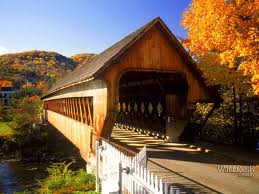
For many of us, Vermont means dairy farms, cradled among gentle hills, producing cheeses by the score; undulating countryside redolent with flaming fall foliage and winter’s maple syrup like no where else.  But it’s also a place of considerable waterways, despite being New England’s only landlocked state.  Every town seems to have its murmuring stream or running river, which sometimes menace human artifacts with storms like last year’s Sandy.  And then there’s Lake Champlain, America’s sixth largest lake, 120 miles long, 14 miles across at its widest point and 400 feet deep.  What grabs me most are its myriad covered bridges, more than anywhere else, archives of a past of horse-drawn carriages catching shelter from cacophonous clouds unleashing summer deluge.

Apart from scenic splendor and sanctuary replete with serenity, I like the state’s progressiveness.  Vermont, by the way, is the only state represented in Congress by a socialist, registered as an Independent.  Small as it is, no state ranks higher in promoting the welfare of its citizens.  It was the first to abolish slavery.  It was also first in granting women the right to vote in 1880.  Unlike neighboring Massachusetts which recently blinked under religious pressure, Vermont has now joined just Oregon and Washington in passing death with dignity legislation.  Vermont was the first state to allow civic unions and, later, gay marriage.   Looking towards the future, it’s promoting a single payer, non-profit health system akin to European and Canadian models.  Concerned about climate change, it has joined eight other states in offering rebate incentives to purchasers of electric cars.

At times, I think of Vermont as almost another country independent of the body politic. In fact, for fourteen years, it was just that–a sovereign nation before joining the Union.  Funny I should write this, but when I was in my twenties I had looked to New Zealand as my deliverance from a meaningless Asian war, burning cities, and assassinations of progressive leaders, including a president who gave possibility to Camelot.  New Zealand responded with immigrant status and employment, yet I didn’t go, for my American roots lay deeper than I knew.

A few years ago, I visited New Zealand and beautiful Taranaki which would have been my home.  I happened to meet several American ex-pats, one of whom shared that California had grown stale for him with its exponential growth in population and social burden, despoiled environment and plighted cities, accelerating crime and sky high taxes, inflated mortgages and a growing economic divide.

I wish now I had asked him if he needed to go so far, even as I had once thought of doing.  Why not Oregon, Washington, Montana?  Why not Vermont?

I wish I had asked myself that question when blessed with those options uniquely granted to the young.

–rj

Women are better lovers

byronThere is this passage in the poet Byron’s Don Juan that has always impressed me as one of the keenest observations concerning women to be found in literature:  “Man’s love is of his life a thing apart,/’Tis woman’s whole existence” (Canto I, 194).

In my thinking, most men lack women’s capacity to love fully.  I write this knowing the tendency of stereotype to overlook exceptions, which are often many.  Still, I think my observation holds.  And thus I count women superior to us men, for surely love is the noblest of human emotions.

Women think with their hearts, though not at risk of their intelligence, for they know how to discern; witness any shopping outing and you’ll catch my drift.  They’re no less so when it comes to sorting out men.

Women frequently assume risk, or gamble on love, unlike many men who prefer the safety of the status quo over commitment.  While marriage in the West continues its decline, given opportunity, most women prefer it; less so, men.  As the late Toronto Star columnist Merle Shain reminds us, “Men opt for security in lieu of feeling and call their decision maturity” (Some Men are more Perfect than Others, p. 6).

 Sometimes women lose heavily, having bet all, and thus they grieve; yet they excel even in their loss, since we’re defined more by what we attempt than what we lose.  The ancient Greeks had it right: assertion validates identity.  Far better to enter into your feelings and chance possibility than to awake one day to numbing emptiness, the sorrow of not having loved and wishing you had.

They say women adore intelligence in their males, and they do; but what really seizes their hearts are the courageous kind, who accepting their vulnerability, refuse to let fear foreclose on happiness.  With brave men such as these, love offers its amplest bloom.

–rj

A Woman for all Seasons: Ruth Bader Ginsberg

ginsbergI’ve been thinking a lot about her these days, surprising myself, since I knew her simply as a fact stored away in my memory for so many years.   Diminutive at just five feet and weighing only one hundred pounds, her small face accentuated by her landmark over sized glasses, there isn’t anything visible to recommend her apart from a flinty chin suggesting determination.  Just goes to tell me how short-sighted I  am when slipping into judging by appearances.  I guess that’s a topic for a follow-up blog.  Anyway, small packages  sometimes pack a wallop.

Ruth Bader Ginsberg hails from Brooklyn, the child of Jewish immigrants from Russia.  Think about how wonderful that is, the promise of America, that in a second generation, children of immigrants or an immigrant parent can weave their way into the American success story.  Think Steve Jobs (Syria), Walt Disney (Canada), Gloria Estefan (Cuba).  Nikki Haley and Nora Jones (India).  Think Barak Obama (Kenya).  Did you know that a good number of our biggest firms owe their existence to immigrants?  Think Boeing (Germany), 3M ( Canada), Home Depot (Russia) for just a few examples.

Now most of us know who Ginsberg is, though she doesn’t command the headlines like some of her U. S. Supreme Court colleagues such as Justices Roberts and Scalia.  Doubtless this stems from her minority position in a long-dominated conservative court, despite her frequent dissents always highlighted by their precocious acuity.

I’m not about to launch a verbose listing of salient background details about Kiki (her nickname), save to note her appointment by President Clinton to the bench in 1993.  I’m frankly more interested here in her character traits lending her the individuality for which she’s noted. 

Although she’s an ardent liberal (former ACLU litigator), she pals with the Scalias, sharing in their mutual love for opera.  Her favorites, Verdi and Puccini.  On the fun side, she’s been an extra in two operas.

Much of her early life was spent in fighting off sexism.  Just out of Columbia Law School in a time of very few female lawyers, justice Felix Frankfurter refused to interview her for a clerkship:  “Does she wear skirts?  I can’t stand girls in pants.”

Combatting injustice of any kind has always motivated Ginsberg throughout her legal career:  “I thought, well maybe the law could catch up with changes in society, and that was an empowering idea.”

By any measure, I admire Ginsberg for her spunky witticism.  On one occasion, Justice William Rehnquist queried her as to why she was making an issue out of gender equality.  Wasn’t having Susan B. Anthony on the dollar coin enough for her?  Famously, she quipped back, “No, your honor, tokens won’t do.”

I also find her very brave.  Twice she’s survived cancer:  colon (1999) and pancreatic  (2009).  With the colon diagnosis she didn’t miss a day on the bench, despite chemo and radiation regimens.  Twelve days after her Whipple surgery to remove a portion of her pancreas, she was hearing oral arguments.  Pancreatic cancer has very few survivors and apparently they got it early through a routine cat scan.  It was the pancreatic cancer taking the life of one of my icons, Steve Jobs, that aroused my curiosity about this angry organ, the pancreas, that led to my researching Ginsberg.

Though she’s given up water skiing and horseback riding, she works out with a trainer two times a week and is up to twenty no cheat pushups.

She’s fluent in Swedish, acquired from two summers there and says she can watch Ingmar Bergman films without subtitles.

Some liberals want her to retire so that President Obama can appoint another liberal as deterrent against a subsequent Republican presidency.  Ginsberg refuses to budge, saying she’ll remain on the bench unless health issues interfere.  Though she’s known more for championing equality issues affecting women, it’s clear she’s also an exemplum of the senior citizen’s ability to continue contributing to the workplace and society as a whole.

I’m glad she’s there, offering rational balance in a time of deepening national division.

–rj

Ransacking nature: Deforestation in Indonesia

indonesia

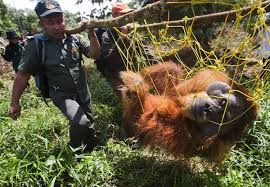
When we hear of deforestation we’re apt to think of Brazil with its persistent denigration of the Amazon jungle.  But an equally bad scenario is that of Indonesia, with half its rich forest tapestry now gone and complete decimation a mere decade away, all for the sake of plantation (usually for palm oil) and logging profits.

A heartless calamity in the making, it has consequences ultimately for all of us.  Consider, for example, that Indonesia ranks third in species diversity after Brazil and the Democratic Republic of Congo.  More specifically, it’s home to between 10 and 15 percent of the earth’s known plant, mammal and bird species.  It’s also residence for tigers, rhinoceroses, and elephants, increasingly refugees from a reduced or degraded habitat.  Soon the unique orangutan and Sumatran tiger may vanish into memory.

orang

While the central government in Jakarta has tried to impose a moratorium on logging, it goes on unabatedly in many distant local areas where law enforcement is rare.  Consequently, Indonesia is now the world’s third largest emitter of greenhouse gases, which promote temperature rise.

Financial incentives topping a billion in U. S. dollars are now underway, but their success remains in doubt, given widespread political corruption.

What’s going on in Indonesia affects not only many of its citizens displaced by plantations, but the global village as well.  Indonesia’s vast peatlands store an estimated 35 tons of carbon.  Burn or drain them and you release their warming carbons into the atmosphere.

Several weeks ago the UN’s updated report on global warming made headlines.  While deliberately opting for a subdued, or conservative report, to avoid ridicule as alarmist, it warns of an approaching irreversibility in limiting global warming if we continue at our present pace of carbon emission.  As the UN report panel’s co-chair warns, “Climate change is the greatest challenge of our time.”

Unfortunately, there still exists a minority of skeptics even among scientists, who primarily proffer up the now recognized slowing-down of temperature rise over the last fifteen years.  The truth is that no one really knows why.  While acknowledging this, the report suggests it may be a matter of variability, or simply a cyclical pause, or staircase effect.  In the long term, however, it suggests tides by century end of up to three feet.  (Other reports put it at five feet.)

Regardless of the debate, the fact remains of our witnessing forest carnage in places like Brazil, Indonesia, and the Malayan archipelago with resultant permanent ecological loss and diversity reduction with unknown consequences for all of us.

If we could invest in humanity’s ultimately viewing its relationship with nature as one of dependence rather than exploitation, then we would surely find our way out of this morass; but this is an unlikely hope, given our seeming inveterate instinct to pursue self-interest rather than collective good, abetted in turn by ignorance and indifference.

–rj

To Truman: Beloved Friend

photo 1

You came into our lives twelve years ago in late August 2001, a compact Bichon bundle of playful love, in a pre-arranged handoff at an I-64 road stop.  I had ordered you by phone from a breeder in Myrtle Beach.  It was instant mutual love.  We decided to call you Truman, and it fit you just right.

Rarely, but it does happen, a mind-boggling event brands itself into memory and we never forget what we were doing and where we were at.  My father often reminisced that early Sunday morning, December 7, 1941.  For me, it had been November 22, 1963 and July 20, 1969 that stood out.  And now a third:  You were getting your first shots.  Our vet, a dog show judge, was admiring your confirmation, saying it was the best he had come across among Bichons in his practice, when the news broke of horrendous misdeeds.  It was September 11, 2001.

Now that’s one of the compelling reasons I’ve always been drawn to dogs and cats.  Unlike many humans caught-up in calculated self-interest with cruel consequences, they want only to love and be loved.  You loved everyone and they loved you.  But you gave me preference, waiting at the door for Daddy’s entrance, then bounding up with enthusiasm on my legs.  How wonderful to come home daily from a world of stress and non-entity to unconditional, uninhibited affection.

How you loved your backyard and how we loved watching you playing the mighty hunter card, one-cautious step after another, standing still, then more steps, gaining, then only, inevitably, the scurrying squirrel, knowing you were there all the time, hustling up the tree.  You at its trunk, patiently looking up, waiting for it to come down

You liked roaming the perimeter or fence line.  Your joy was complete when you heard neighbor dogs bark and scrambled full speed for canine fellowship.  I had read  somewhere that for all their human contact, given a choice, dogs prefer their own kind.  I can understand that, sometimes myself opting for their company over that of homo sapiens.

I remember how tiny you were at first and that there were several times you squeezed through the board fencing, even though I had spent days in winter cold nailing chicken wire over the gaps.  There was the time you got into the neighbor’s yard behind us where several llamas grazed and I climbed over the fence to rescue you from an advancing llama, only to have it come after me.  I grabbed you and jumped over to safety.  Close call for us both!

You liked walking on your leash with me down the street.  I never really had to train you at it, since from the beginning you took instantly to walking at my heel on my left, seldom pulling to get ahead.

But I did enroll you in an individualized obedience course.  Unfortunately, your trainer relied on treats and I could never find a way to wean you away from your addiction and do something simply because it was worthy for its own sake.  But then our own children aren’t all that different.  Getting you to stay was simply impossible for someone as passionate as you.  The gold standard was to take you to a safe area of a shopping mall and get you to stay.  I didn’t even try.  $300 dollars down the drain.  Ironically, you trained me!  Still, you did retain the habit of sitting on cue right up to the end, until your arthritic limbs compelled my pardoning you.

You liked keeping company with us on the couch, snuggling up to Karen and me.  You also had this funny habit of flipping the pillows off the couch and finding your way to the other arm and propping yourself up for a cozy snooze.

You also had this cute habit of carrying your metal dish over to your living room pad after your evening meal and licking it clean.  You delighted us with this gesture from the time you were a pup up almost to the end.

How excited you got to go outside with me to feed the birds whenever you saw me filling the plastic pitcher with seed!

At night when we turned out the living room lights, always the landmark clicking of your nails on the hallway floor as you made your way to join us in slumber.

When you were seven they found a heart murmur and I felt then the first scary pangs I might lose you.  You liked to run at full speed.

Around age nine, they found calcium crystals in your bladder, and so they put you on meds and a special diet.  I don’t know if the crystals caused you any discomfort.  You always acted the happy part.

At age eleven you had slowed down and seemed to labor in your walk.  We put you on glucosomine for that.

Just after your twelfth birthday, or this past June, I took you in for another checkup for the crystals and arthritis.  The ultrasound was distressing, showing not only more crystals despite your prescribed diet, but a tumor  over the right adrenal gland and a nodule adjacent to the left adrenal.  Ominously, the tumor occluded the vena cava, making any surgery risky.   The follow-up radiology report didn’t clearly indicate metastasis, but it remained a possibility.

You were still your active self through June, but then came the weight loss.  Once a robust 21 pounds, you were down to 18 by September, and 14 by the end.  You found it difficult to shadow Daddy from room to room and pretty much snoozed on the couch most of the day.  Your dark black eyes, tinged with sadness, gave off a pleading gaze–as if to say, “please help me”!

I knew things were getting really bad when you increasingly turned away from your food or ate very little, though I tried tempting you with lots of treats and canned meat in place of your former kibbles.  You were always crazy after peanut butter filled bones,  but now  you no longer could muster the appetite to enjoy the feast.

It hurt you to walk and even to lie down.  You couldn’t hold your water.  That last night, Tuesday, I knew we needed to do the right thing when you let out two yelps, one of them when Karen tried to pet your head.  Obviously you were hurting all over.

I caught myself in my own selfishness.  I had wanted to keep you forever.  I should have been thinking about your interests.  I needed to let go as my ultimate gift of love for you, my friend, our friend, always kind, gentle and loving.

Yesterday at the vet’s, we were with you in your final moments.  You seemed unafraid as I stroked you and laid a last kiss on your darling head. You went quickly and peacefully into that long sleep.  No more suffering.

I know that death is part of the deal we make for life, but it doesn’t lessen our grief or bridge the emptiness.  We miss you terribly.  You were a gift of love and we thank you for the daily joy you brought into our lives.  You will be in our hearts forever.

–rj and kj