Reflections in the Aftermath of Brittany Maynard’s Death

maynard

On November 1, Brittany Maynard, 29, slipped into eternity, choosing to end her ordeal with terminal brain cancer under Oregon’s Death with Dignity Act.

Hopefully, her heroic efforts on behalf of the rights of terminally ill patients will initiate renewed focus in other states.

Unfortunately, Brittany had to move to Oregon to realize her choice.

Accordingly, I can’t help but think that the right to die with dignity is our last foremost civil rights barrier.

For that reason, I chose to vote Green in the 2012 election and will do so again. My compassion for those who suffer demands this. The Green Party includes such legislation in its platform.

There are many who oppose such legislation, even doctors, who espouse the Hippocratic oath with its rejoinder, ” I will do no harm.”    Oddly, they don’t object to termination of life support in scenarios of brain death.

A few decades ago, passive euthanasia was nearly universally frowned upon in medical circles and only through brave, legal persistence were laws changed. Nowadays, one of the first things asked when you go to emergency is, “Do you have a living will?”

The Oregon distinction is that patients, fully conscious, make their own decision in cases of terminal illness prognosing death within six months, with the proviso they are state residents and obtain a physician’s prescription for a lethal dose of medication.

The biggest obstacle to progressive, compassionate reform comes from religious interests, who view God as the proper author of life and death, though I’ve found many among them committed to retaining the death penalty option for heinous crimes.

Several days after Brittany died, a Vatican official termed her act “reprehensible,” adding that “the gesture in and of itself should be condemned.”

None of this surprises me, given the sorry, bloody legacy of religion in history and the troubled landscape of today. Much of religion forecloses on free choice, so fundamental to a democratic society.

Unfortunately, there are also those who shackle their potential for empathy with buzz words like “suicide,” and “cowardice,” vestiges of cultural conditioning rather than reasoned judgment.

I actually find the Oregon law, now mirrored in Washington and Vermont, and by default in New Mexico and Montana, still circumscribed by these same interests.

I believe undue suffering should also allow an individual to choose when to exit with dignity apart from terminal illness.

We now live in a time when medical progress has extended life past former norms, howbeit, at the cost of progressive morbidity like Parkinson’s and Alzheimer’s, along with decreased coronary and kidney function.

I remember reading about British author Somerset Maugham, in his ninth decade, confined to a wheel chair and nearly totally blind, longing to die.

I place no premium on the nobility of gratuitous suffering.

Further, it’s easy to make shallow judgments when you don’t enter into the shadow of someone’s suffering.

I was surprised the other day to come upon a doctor in PubMed who has foresworn medical treatment for himself after age 75, finding it more preferable to die than live in prolonged decline and its inevitable forfeiture of quality of life.

Something to think about, though unpleasant, given the alternatives.

–rj

 

Expanding the energy portfolio: Utilities awaken

coalEvery month our local power cooperstive, Blue Grass Energy, sends us its superbly put together magazine, Kentucky Living, filled with helpful tips on home maintenance, gardening, recipes, recommended books, regional activities, events, etc.

With all its feel good staples, it’s easy to lose sight of its primary purpose as a public relations gimmick to elicit the public’s support. Your power company is on your side, helping you enjoy the good life, offering some of the lowest energy costs in the nation, largely through the state’s substantial coal reserves.

Its editorials, however, consistently make clear that this good life is under a black cloud via the EPA’s increasingly heavy hand, encouraged by Obama’s executive decisions restricting power plant emissions at heavy local cost and marginalization of its coal resources. In its use of coal as their primary energy source, states like Kentucky, not wealthy by any yardstick, will bear a larger cost burden than other states, which they simply can’t afford, the utilities say.

Tuesday is election day and according to the latest polls, Mitch McConnell. is poised to be reelected to yet another term and possibly become senate majority leader, meaning still more congressional gridlock.

Mitch says, “I strongly oppose the EPA’s efforts to shut down Kentucky’s coal industry. I will fight to ensure the future of existing coal-fired power plants.”

He has announced that one his priorities will be to defund the EPA.

His main opponent, Alison Lundergan Grimes, touted as the Democrats’ best shot at ending McConnell’s perennial reign, has simply been a mirror to McConnell on coal issues and climate change. She has even resorted to ludicrously painting McConnell as unfriendly to the state’s coal industry, including miners, even though they’ve repeatedly come to his defense.

As for Libertarian candidate, David Patterson, he tells us that “CO2 is not a pollutant in the quantities seen today.”

Fortunately, aside from the usual debacle of politics, Kentucky utilities are starting to get the message, with movement underway to harvest clean, alternative technologies. The East Kentucky Power Cooperative, for example (which affects our household) has invested $1.7 billion to help clean-up carbon emissions at its coal-fired power plants.

With the hand-writing on the wall, Kentucky’s utilities are pursuing a diverse energy grid, including not only natural gas, but solar, wind, hydro and landfill gas.

All of this will impose increased costs, but the alternative in the context of the exponential menace of climate change makes these efforts of acquiring a diverse energy portfolio least costly in the long term.

–rj


Traits we should all want

leadershipI saw a recent piece in the Huffington Post, called “7 Habits of Natural Leaders,” and found it riveting. You don’t necessarily have to be in a leadership position, however, to benefit from making these attributes staples of your everyday life.

I’ll list them and give my own take on each of the attributes:

1.  They dare to fail: I was a prof for nearly forty years and found that most students opted to play it safe–take the easier courses, avoid the good, but tough professors who gave A’s only for singular achievement. I have often thought of Lincoln, who mostly failed in his early political efforts. But he never gave up, and the rest is history.

One of the problems with not assuming risk is that it can pursue us all our lives and we simply run away from all life’s tough spots and sometimes ourselves. If you think about it, we owe our country’s greatness to its founding fathers, willing to risk their lives to confront tyranny.

I have always liked how the poet Robert Browning famously put it: “A man’s reach should exceed his grasp, or what’s a heaven for?”

2.   They follow their purpose. In short, they stay the course. Over my lifetime, I’ve found the real nemesis of success is not that we quit, but that we quit so soon. Consequently we find ourselves saying, “what if?, when with perseverance, we might have achieved our goals.

Strong people can be difficult to get along with, since passion often governs what they do. At the same time, I find them attractive people, the kind you want to be friends with. They have a vision, know what they want, follow their bliss, and are exciting to be around.

3.   They give. I think we shouldn’t just think of giving in the way of money, but of ourselves. Currently, there’s a seeming panic going on about ebola. Several caretakers, or medical staff, have recently returned to the States, victims of the disease. What’s extraordinary to me is that they went to West Africa in the first place to confront this ugly disease. One of them has actually labored in Liberia for sixteen years, trying to improve its meager medical resources.

When it comes to the monetary aspect, while the vast lot of us aren’t rich, we can still give something. As Peter Singer, a philosopher who specializes in ethics, has said–if all of us in western counties just set aside five percent of our incomes for special needs, we’d eradicate poverty.  I would add, maybe a good many of our diseases as well.

I do know that what we give of ourselves and our assets is a sure indicator of our capacity to love.

4.    They give themselves a break: It’s important to sometimes treat yourself. Right now, I try to keep up my health as I grow older, working out on our elliptical machine and even lifting weights.

But I also schedule timeouts, one or two days when I don’t work out, like Wednesdays and Saturdays. It makes my exercise far more palatable, knowing tomorrow I can simply relax, and without the guilt. I sometimes suspect that dieters would be more successful if they’d cheat one day a week.

We Americans are hard-working and studies show we don’t take much time off.

That’s a pity!

5.    They really listen: Now here’s a trait I’m trying hard to achieve. After all, when we interrupt or ignore what someone’s saying to us, it’s a form of self-absorption, maybe even narcissism. Certainly, it’s selfish

It’s also demeaning to others, a way of saying you don’t matter or what you’ve come to me with is trivial. I don’t want to be this way. I want to value people and for them to know that. I want them to feel when they talk to me that they’re the only one in the room. In short, that they matter, for they do.

6.    They seek out new experiences and ways of thinking: Hey, I’m all over this one and hope you are, too. I like seeing new places, meeting people, chance conversations, reading serious books and magazines.

Guess that’s why I love being around college campuses, especially their real beauty–young people excited about life, filled with dreams, willing to challenge cultural norms turned into unthinking rituals.

Always, I yearn for stimulation, of being challenged to new ways of seeing things. TV doesn’t do that for me. I’m into romping blogs, trying new things, meeting people whose ideas may often challenge my own. I aim to grow, not stagnate, to wake tomorrow wiser than I am today.

7.   They empathize with others:  I like this a lot! Can’t come by a better trait than this, putting yourself in another’s shoes. This happened for me in a unique way many years ago when I took a chance and accepted an invitation form a college friend to visit his country, India.

I saw not only the Taj Mahal, but more importantly, how much the greater portion of humanity suffers in the shackles of ubiquitous poverty, disease and early demise.

I have learned since, and am still learning, the way of compassion, for people, animals and, yes, a wounded earth. I wish I were wealthy, not as its own end, but that I might empty my wallet for others.

If there really does exist what they call an “emotional quotient,” or EQ, then surely compassion is its ultimate marker.

I want it, and want it bad. Hope you do, too!

–rj

Pre-diabetic musings

prediabetesI got a rude awakening last week. I had taken just maybe my most comprehensive blood test ever. Disturbingly, my A1C was 5.9, although my fasting glucose was 96.

I’ve known for two years I’m pre-diabetic, but 5.9 is a new threshold for me. Not long ago, through careful eating and nearly daily elliptical machine stints, I had whittled it down to 5.4, though I admit my previous scores have nearly always been from finger sticks rather than lab tests, which my endocrinologist says are more accurate.

Anyway, I’m scratching my head, asking myself, What’s going on? Why should I be even pre-diabetic?

Hey, I’m slender at 175 on a 6’1 frame.

I’ve been a vegetarian for 18 years; in fact, nearly vegan.

I’ve been careful to avoid foods with high sugar content–pastries, cakes, candies, etc.

I don’t eat much fat, at least the bad kind like saturated and trans. I admit, however, to liking nuts. (I eat about 4 ounces daily, mainly to keep my weight up, especially as I’m trying to reduce carbs, the main source for blood sugar and weight gain.)

My nemesis, I think, has been indulging in starchy foods, especially In restaurants, compounded by their normally large portions. I used to have trigs in the 150 range. Giving up potatoes, I find my trigs have stayed below 100. Potatoes, like other starchy foods, are a high GI food, meaning they turn into glucose quickly.

At home, I still indulge in other starches–pasta, rice, and bread–though I always follow the formula for whole wheat sources only and brown rice.

While unrefined grains have lower GI and GL, they can peak your blood sugar several hours later, so you need to check your glucose beyond the usual two hour post meal regimen

My thinking is that if I can eliminate the grains, I can reduce the glucose. But I also know l like these foods so much that I haven’t watched my portions.

It would be easier in all of this if if had the usual excess weight problem. Eighty percent of diabetics do, and when they shed the pounds, the blood results can be impressive.

Skinny diabetics have twice the mortality rate of heavy diabetics. No one really knows why.

The problem with such diets is that confining yourself to greens and beans gets old really fast.

Before closing, I want to mention a recent book on diabetes by endocrinologist Sarfraz Zaidi, called Reverse Your Diabetes. It recommends a five step approach, which includes overcoming stress and using key supplements in addition to the traditional lifestyle changes through diet, exercise, and medication as needed.

His section on supplements is the best I’ve come upon in books dealing with diabetes, with extensive reviews, backed with research findings. Zaidi focuses on reducing insulin resistance foremost in managing diabetes and argues some supplements can help.

I found his take on vitamin D especially good in keeping with his wisdom throughout the book. He points out how the effects of vitamin D are “astounding,” extending to all the organs.

Low vitamin D contributes to insulin resistance.

Nearly all Type 1 and Type 2 diabetics show vitamin D deficiency.

In a landmark Finnish study (2001), later published in the prestigious medical journal, Lancet, children receiving 2000 IU of vitamin D in their first year were then tracked for 31-years for the development of Type 1.

These children showed an 80% reduction in risk for developing Type 1 compared to other children not given vitamin D supplements.

As for Type 2, while being sedentary, obese and over 65 contributes substantially to developing diabetes, all of these factors contribute to vitamin D deficiency as well.

This doesn’t mean that overcoming vitamin D deficiency will right your diabetes, but it can help reduce insulin resistance and thus help you manage it better.

If you’re pre-diabetic like me, there are extensive studies, Zaidi says, that suggest it can help prevent full blown diabetes up to 50%

Though not everyone may agree with Dr. Zaidi, I find his extensive review of the research on vitamin D compelling.

–rj


Say it isn’t so: Fast foods in hospitals

Cleveland Clinic
Cleveland Clinic

A McDonald’s in a hospital cafeteria? Say it isn’t so!

According to McDonald’s, it has 27 franchises In hospitals.

One of them is in the world renowned Cleveland Clinic, in the top tier for treating heart disease and former home base of Dr. Caldwell Esselstyn (Prevent and Reverse Heart Disease).

This isn’t to say the Clinic hasn’t tried to rid itself of this glaring contradiction to its public embrace of lower fat and sodium foods. While it succeeded in shedding Pizza Hut, McDonald’s remains out of contractural obligations agreed to more than a decade ago.

The watchdog Physicians Committee for Responsible Medicine (PCRM) did a survey of 110 hospitals across the country and found that some of them feature as many as 5 fast food outlets:

The Five Worst Hospital Food Environments

St. Luke’s Episcopal Hospital/Texas Heart Institute/Texas Children’s Hospital Complex (Houston, Texas) 4 fast-food outlets and fried-chicken bar in the cafeteria

Medical University of South Carolina University Hospital Complex (Charleston, S.C.): 5 fast-food outlets and a cafeteria serving country-fried steak and other high-fat fare.

Naval Medical Center San Diego Hospital Facility Complex (San Diego, Calif.):3 fast-food outlets; patients order from menu featuring pork chops, meatball sandwiches, and other high-cholesterol fare.

Duke University Hospital Complex (Durham, N.C.): 3 fast-food outlets; patients order from cafeteria menu featuring spicy pork loin and other high-fat items.

Children’s Memorial Hospital Complex (Chicago, Ill.): 1 fast-food outlet; patients’ menu has chicken wings, quesadillas with bacon, and grilled hot dogs.

 McDonald’s says it offers a diversified menu that offers many options like salads.

Bull shit!

There are 14,000 McDonald’s in the U. S. Not one of them offers offers a veggie hamburger (unlike in Europe where it’s a government mandate)!   By the way, of all the fast food franchises in the U.S. and Canada, only Burger King offers a vegetarian burger, though it comes with a white flour bun.

Unfortunately, while some hospitals are trying to rid themselves of these outlets, others are adding still more, according to National Public Radio:

 Chick-fil-A recently set up shop in several facilities, including the Texas Medical Center’s St. Luke’s Episcopal Hospital and the Medical University of South Carolina University Hospital in Charleston, S.C. (Elana Gordon, April 2012).

 (We already know about Chick-fil-A’s strident anti-gay bias.)

Let’s face it: Fast foods are a money maker for some hospitals, quite willing to betray their ethics–forfeiting the well-being of their constituents along with it–for the wrong kind of green.

Perhaps we shouldn’t be all that shocked by such blatant hypocrisy, considering medicine’s Faustian trade off with Big Pharma. (See “Doctors And Hospitals Raking In Billions From Big Pharma, Huge Data Trove Reveals”: http://www.huffingtonpost.com/2014/09/30/doctors-big-pharma_n_5908350.html)

But that’s another subject for another day.

–rj


May I recommend?

I confess to being an omnivorous reader and that my iPad has only abetted my hunger for new turf, now so easily accessed with the likes of Publisher’s Weekly, Goodreads, and the Huffington Post. On occasion, I’ve drawn on Fareed Zacharia’s recommendations on his GPS weekly telecast. I maintain links to all the nation’s foremost bookstores like Powell’s as well. And, of course, there is always that behemoth, Amazon.

This past week I was delighted to see two authors among those on the 2014 Long List for the National Book Award for Nonfiction.
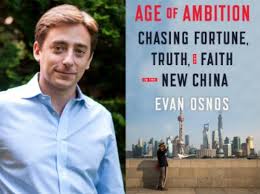
OsnosThe first is Evan Osnos, whose Age of Ambition: Chasing Fortune, Truth, and Faith in the New China I read several months ago following upon Zacharia’s counsel. It’s not my intent, however, to give a lengthy book review here. Besides, you can access copious online reviews with Google or at the Amazon site.

Anyway, Osnos is presently with The New Yorker after having been a roving correspondent in China for eight years. He went everywhere, interviewing citizens across the social-political-economic spectrum.

What amazes me is that he did so speaking fluent Chinese, acquired as a major at Harvard, obviously increasing his access enormously.

He’s also a polished writer exhibiting a lucid style along with cogent analysis.

I hadn’t done any sustained reading on China until Osnos, which–sadly– probably includes the vast lot of us, though China rivals the USA on the world stage.

Certainly, Osnos has his hands on that nation’s pulse.   Essentially, its communist government hasn’t changed in its dedication to controlling all aspects of daily life and maintaining its privileged status despite its seeming anomaly of encouraging a market economy so contrary to the legacy of Mao.

It does so, of course, to keep in check any democratic impulses among its citizenry.  Let them eat cake and they’ll overlook pressing for governmental reform. So far, it seems to have kept the lid on, though Osnos notes that many of the populace seethe underneath, as materialism cannot assuage their desire to be free to think and choose. Accordingly, a revival of interest in religion is also taking place, proving again “that man cannot live by bread alone.”

As a consequence, it’s a fine-balancing act for many Chinese, especially among its entrepreneurial classes, intellectuals, and artisans. The thought police are everywhere monitoring, especially the Internet.

The regime even goes so far as to downplay natural disasters that may point to government malfeasance.

Of course, the Chinese know this well to the point of using code terminology to circumvent the censors.

Osnos doesn’t neglect the full picture, however, as there is a growing emergence of rabid nationalism among some that could ultimately pose a danger on the world stage. In the short term, these zealots pose an additional threat to the cadre of brave dissidents at home.

I went away admiring the quiet heroism of many of the Chinese, and sadly, the hard lot of dissidents who have chosen to articulate their concerns for a more liberal China very openly, risking long imprisonment under harsh conditions and sometimes torture.

If you want to take China’s measure, then this is a book you’ll want to read.

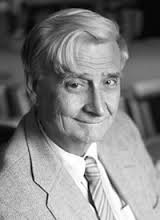
wilsonThe second name among others in the 2014 Long List for Nonfiction is that of the renowned etymologist Edward O. Wilson for his The Meaning of Human Existence. I’m familiar with Wilson’s nimble acuity to persuasively and eloquently deliver a manifesto for nature and its myriad creatures under the duress of both man and global warming in his other books.

I’ve also just recently read his In Search of Nature, surely an environmental classic that explains in layman’s terms the complicated interplay between genetics and environment. Like all sociobiologists, Wilson seeks to unlock the biological origins behind human behavior.

In the Meaning of Human Existence, Wilson boldly asserts that no transcendental design is responsible for our existence. On the contrary, “Our species was created not by a supernatural intelligence, but by chance and necessity out of millions of species in Earth’s biosphere.”

No destiny or purpose is assigned to us, and no afterlife awaits us. Our human moment originates in “the epic of the species, begun in biological evolution and prehistory, passed into recorded history, and urgently now, day by day, faster and faster into the indefinite future.”

Creatures with a social intelligence predisposed for social action enhanced by natural selection, we require the humanities even more than the sciences to define the human condition and guide it into effectual relationships, not only among ourselves, but with earth’s other creatures, for surely our future, and our safety, depends upon biodiversity and its preservation.

Wilson’s view is a brave one, given that the religious instinct along with “tribalism” remain rampant with all their insularity and intolerance:

Human existence may be simpler than we thought. There is no predestination, no unfathomed mystery of life….We are self-made, independent, alone, and fragile, a biological species adapted to live in a biological world.

Accordingly, Wilson movingly pleads that humans in their unique social intelligence extend their embrace to include nature:

We alone among all species have grasped the reality of the living world…. We alone have measured the quality of mercy among our own kind. Might we now extend the same concern to the living world that gave us birth?

As always, Wilson writes a reasoned, yet passionate prose, acute in its honesty, telling in its empathy for both man and his beleaguered companions.

–rj


After we Murder Nature, then What?

environment

After we murder Nature, then what? I know some of you may think this a dubious assumption as to possibility, and I would be among you–that is, until recently.

As is, Nature has atrophied and we live increasingly in asphalt environments, with Nature relegated to a few urban parks and, even then, they tend not to be passive parks given over to Nature, but to ball fields, children’s playgrounds, etc.

As evidence of our increasing sequestering of Nature, consider that more of us in the USA and Canada visit local zoos than attend professional sports events combined!

The pity is that Man is himself the evolutionary outcome of millions of years of a once teeming biodiversity. The question then follows as to what happens to us when we marginalize the very sources of our being and our future.

I’ve seen science estimates of the number of species of existing plants and animals as somewhere between 5 and 100 million. We know that invertebrates vastly outnumber vertebrates like ourselves, perhaps some 10 million, of which only a million have been identified.

Zoologist Edward O. Wilson tells us that if humans were to suddenly disappear, all would still be well on earth; conversely, were the invertebrates to disappear, life would soon revert to its initial state a billion years ago of myriad algae, bacteria, and a few multi-celled organisms (In Search of Nature, 153).

In short, we are intertwined with nature right down to the tiniest organism.

Our mistake is to think that even the smallest entities of Nature, so staggering in numbers, cannot be vulnerable to human excesses:

When a valley in Peru or an island in the Pacific is stripped of the last of its vegetation, the result is likely to be the extinction of several kinds of birds and some dozens of plant species. Whereas we are painfully aware of that tragedy, we fail to perceive that hundreds of vertebrates will also vanish (Wilson, 145).

 As is, humans from their earliest beginnings up to the last century had already wiped out an estimated 10% of flora and fauna species. Alarmingly, bird population is declining rapidly, with a drop of 25% in bird species. Presently, the drop-off in all species, not only birds, is occurring 100 to 1000 times higher than in pre-human times.

Consider the continuing decimation of the Amazonian rainforest, the world’s foremost repository of biodiversity with huge implications for pharmaceuticals, agriculture and oil substitutes and, of course, climate change. Each year, we lose to chainsaws an area approximating half the size of Florida!

Unfortunately, we’ve inherited a primordial disposition that prioritizes personal safety, followed by family, tribe, then outsiders ((Wilson 186), a selfishness that unless it gives way to altruism expressed in environmental regard, is likely to doom us.

Today, we’re hearing a lot about climate change, and it certainly can’t be minimized, since we are largely responsible for it. But it’s not just a matter of carbon, but our burgeoning numbers, with corresponding exponential demands on limited resources. The more population increases, the more decimation, with habitats reduced and species extinguished, many of unknown importance to our survival. Consider Nigeria with its present population of 175 million (2013). PEW research estimates it will reach 440 million by 2050, exceeding the USA population.

Although population rates are declining, the world’s population will be just under 10 billion by 2050, with sub-Saharan Africa experiencing explosive growth, an area already confronted by widespread poverty, disease, and ethnic conflict. Unfortunately, in many places, cultural traditions and religious beliefs continue to dominate.

We can still save the day, but it’s unlikely that we care enough to act meaningfully and quickly.

Take where I live, Kentucky, where we have two senate candidates, Democrat and Republican, trying to shout down each other in denouncing President Obama’s policies affecting environment, especially coal. Accordingly, reducing the powers of the EPA is a foremost goal for both.

Unfortunately, evolution gave homo sapiens a well-developed brain, but pulled up short in maximizing a moral prowess vital to its long term survival.

–rj


What myth can teach us about grief

orpheusI have always liked myths. Even more so when Jung helped me see their inner life and I learned that, far from being just stories spun by human fantasy, they are windows into the psyche, reflecting all the perambulations of experience that define us such as love and hate, courage and fear, loyalty and betrayal, exploration and boundary.

We have this notion of myth, however, as synonymous with what’s untrue; entertaining, but nothing more. But this is to misunderstand, for the story is but the shell. At the heart lies the kernel of truth.

One of my favorite myths is that of Orpheus and Eurydice. You may remember that it tells of the death of Eurydice and of Orpheus’ fervent love for her that brings him into the Underworld, or dwelling place of the dead, seeking her return.

To secure her return, he must observe Hades’ one condition: in leading Eurydice out of death’s realm, he mustn’t look back or he’ll lose her forever.

But of course this is just what Orpheus does, nullifying any possibility for her to resume life.

Not looking back, or what you and I might call second guessing, is inherent in myth. We see it even in the Old Testament when Yahweh enjoins Lot and his wife not to look back at Sodom as they exit its destruction. Lot’s wife disobeys and becomes a pillar of salt.

For me, the myth of Orpheus and Eurydice teaches us that living in the past, or looking back, is self-defeating, for the dead can never return to us, given Nature’s unalterable laws. Orpheus’s backward glance is simply a story artifice to undergird that sober truth.

At another level, Orpheus’s motivating loneliness demonstrates the frailty of the human condition when it comes to losing those we dearly love–a lingering emptiness, the sense of shock that sets in, perhaps anger at what appears unjust, the seeming shallowness of well meaning comforters.

The insightful British writer, Julian Barnes, in writing of his own languishing grief in Levels of Life (2013) following the loss of his wife of more than thirty years, quotes H. L. Mencken:

It is a literal fact that I still think of Sara every day of my life and almost every hour of the day. Whenever I see anything she would have liked, I find myself saying I’ll buy it and take it to her, and I am always thinking of things to tell her.

Time’s gift, however, is that it can soften death’s contours, enabling us to move with life’s currents into new venues, with abiding memory becoming a gift of solace.

Perhaps the heaviest grief falls upon those who have never found someone to love.

To have found love, on the other hand, is the greatest privilege of all, and knowing this gives promise of our healing.

–rj


.


Human Evil and Its Genesis: ISIS

   All man’s troubles arise from the fact
  That we do not know what we are
 And do not agree on what we want to be
               –Vercours (You Shall Know Them)

 ISIS (1)

Like all of you, I’ve been reading and viewing with horror the crimes of IS (Islamic State). Recently, for example, there was the video of captured Iraqi soldiers being herded in crouched chain formation, later ordered to get down in a shallow ditch, hands tied behind their backs, then shot. Human Rights Watch estimates between 560 and 770 were executed, though IS boasts it executed nearly 1700 soldiers after overrunning Camp Speicher near the city of Tikrit in Northern Iraq.

And then there have been the two recent IS videos showing the beheadings of American journalists, James Foley and Steven Sotloff. In the latter, the video ends with displaying Sotloff’s severed head lying beside his body.

IS has also been killing minority Christians and Yadzidis who refuse to convert along with Shiite Muslims, whom they regard as heretics. In one instance, 500 Yadzidis were buried alive.

IS atrocities are not isolated phenomena in the long list of “crimes against humanity” (International Criminal Court) in recent decades. Consider, for example, Rwanda in 1994 with the Hutu majority’s massacre of 800,000 Tutsis in just 100 days. Or Cambodia with its 2,500,000 dead at the hands of the communist Khmer Rouge regime in the late 70s.

But what makes for the forfeiture of humanity in atrocities such as those I’ve noted here? How is it that we can lose every sense of identity with our fellows? Is aggression, singular or collective, something innate, a legacy of evolutionary genetics compelling us to eliminate any perceived threat? Are we any better than warrior ants, the most warlike of any known insect group, who instinctively pursue extinction or enslavement of rival insect communities, are territorial, have a caste system, and are often suicidal in their assaults?

Here I turn to sociobiology, with its emphasis on biology as the catalyst in shaping social behavior among all organisms, including humans.

To begin with, things are not all bad about ourselves, genetically speaking. Yes, we seem to have genes that dispose us towards altruism, and we see such behavior demonstrated repeatedly in daily life right down to the motorist who allows you into his lane. At its most acute level, we see it played out on the battlefield when a soldier falls on a hand grenade, for example, to save the lives of his fellows.

The problem with genetic altruism is that self sacrifice would seem to run contrary to the notion of natural determinism, or the survival of the fittest, ensuring the likelihood of offspring, or evolution’s ultimate purpose. Surely, culture also intervenes here and refines genetic disposition as well.

Overall, however, altruism among social organisms is primarily carried out through “kin selection,” including ourselves. The net result is that the group, or family, survives. In short, even altruism can have its selfish component. Altruism, then, isn’t necessarily the angelic side of ourselves. But at least it’s a better option.

As for there being genes that prescribe aggression, as with altruism, none are known to exist . Behaviorally, however, genes confer a capability to develop a repertoire of aggressive responses, given stressed environments. Otherwise, aggression isn’t likely.   For instance. the social history of the Hopi Indians, an agricultural tribe, exhibits minimal aggressive behavior, In fact, hopi means “peaceful.” On the other hand, the Apaches were often given to battle to protect their land and buffalo herds from intruders.

Similarly, I surmise that genetic disposition, or capability, might help explain the high incidence of crime among some marginalized, or disadvantaged, groups in a given society.

While culture can modify genetic attenuation, it cannot eliminate it. Evolution ultimately imposes limits on malleability of behavior.

The diabolic, however, breaks loose when a fanatical few entice the many to exact violence in contexts of societal duress such as in Nazi Germany and Stalinist Russia following upon the end of the Great War.

In the hands of ideologues, often in political or religious guise, all bets are off when it comes to humane resolution of social tensions, given–not genes as such–but their genetic disposition for either peace or war. Set loose, humans are capable of every vile act conceivable.

And so with IS and the danger it poses for all of us.

–rj


Jung, Archetypes, and A Parrot: The Legacy of Nature’s Genius

Dr. Joanna Burger
Dr. Joanna Burger

I’ve just finished Joanna Burger’s The Parrot That Owns Me: The Story of a Relationship. Funny, I had this book sitting on my shelf, unread, for twelve years. Looking for something to read while eating my breakfast, I pulled it down and started what turned out to be a fun read.

I also learned a great deal about birds and, especially about parrots, surely one of the most intelligent of animal species, though we normally think of primates (gorillas, chimps, orangutans, etc.), dolphins, elephants and pigs as honorary Mensa candidates among our animal kin.

Burger, one of the world’s leading ornithologists and Rutgers University prof with over twenty books to her credit, tells how Tiko, her Red-lored Amazon, practices a repertoire of tonal warnings to distinguish varied predators, most notably, hawks, cats, and snakes.

She writes that “when Tiko gave his hawk call, Mike (her husband) and I would invariably spot a Red-tailed, Sharp-shinned, or Cooper’s Hawk flying overhead or perched in a nearby tree. Tiko’s response was so consistent that there was no question that he recognized hawkdom” (167).

Likewise, Tiko doesn’t like snakes, one of which Burger kept for a while, much to Tiko’s dismay. Only when the snake went into hibernation could he be content in the same room.

But how does Tiko pull this off?   After all, he seems to possess a genetic memory of jungle predators, even though he’s been totally reared in captivity and has never had any interaction with hawks or snakes?

Years ago I had started reading Jung, who has impressed me more than Freud as being on the mark when its comes to the seminal sources lurking behind human behavior. Jung proposed the theory of archetypes, or “primordial images” (Man and his Symbols, 67), reflecting instinctual urges of unknown origins. They can arise in our consciousness suddenly and anywhere apart from cultural influence or personal experience. Often they take shape in our consciousness through fantasy, symbol, or situational pattern.

And so with Tiko as well as ourselves, the instinctual responses perpetuating survival have become wired in the brains of sentient creatures. Untaught, they’re automatic.

Today, science overwhelmingly confirms the accuracy of Jung’s prescience. Take, for example, the eminent biologist Edward O. Wilson, who attests that monkeys “raised in the laboratory without previous exposure to snakes show the same response to them as those brought in from the wild, though in weaker form (In Search of Nature, 19).

The explanation, of course, lies in evolution’s conferring differential survival value through natural selection. Those who learn to respond to fear quickly simply pass on more of their offspring with their response mechanisms.

Wilson goes further, arguing that human culture itself is considerably biological in origin, or genetically prescribed, supported by analytical models (123-24).

A Jungian at heart, I found Tiko’s innate capacity to respond to elements of danger another in a long line of evidence supporting Jung’s pioneering perspective; on this occasion, by way of one of the world’s most astute animal behaviorists, Joanna Burger.

Nature never ceases to amaze me!

–rj