
After the Stars Go Dark: Thermodynamics for Mortals

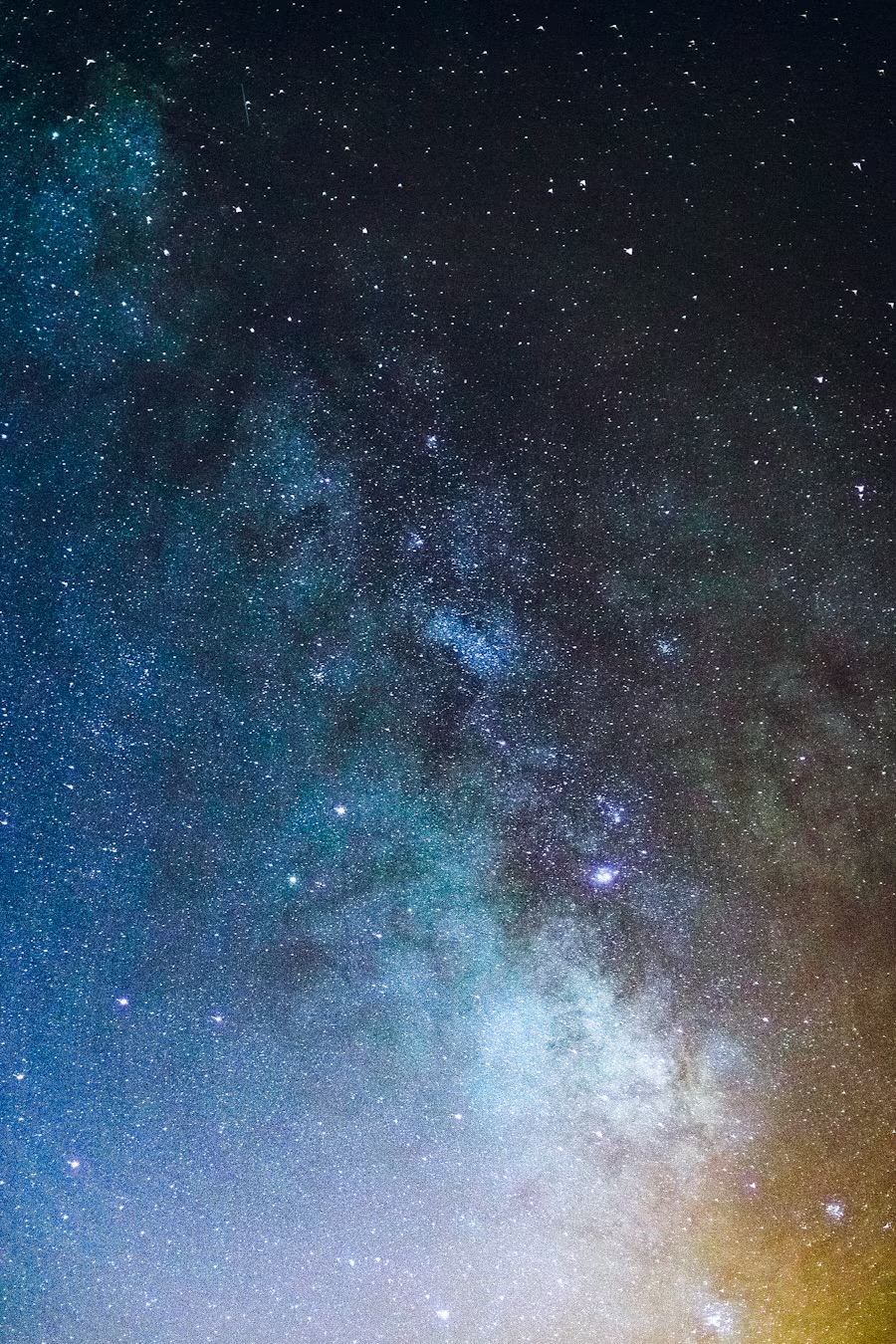
Our universe is mind-boggling in its vastness and mystery. Astronomers estimate it contains on the order of a septillion stars—roughly a 1 followed by twenty-four zeroes—though such figures apply only to the observable universe, bounded by the reach of our most powerful telescopes.

Though stars appear to us as ageless fixtures of deep time, they too—like all things—have beginnings and endings.

Our universe itself burst into being some 13.8 billion years ago. It continues to expand as galaxies rush away from one another, yet it will not expand forever in any form recognizable to us. Ultimately, it will be unable to sustain the structures that make matter—and life—possible.

How it ends remains a matter of fierce conjecture. The leading scenario suggests that as galaxies drift ever farther apart, they will fade beyond visibility; their stars will exhaust their fuel, leaving space cold, dark, and diffuse—a state known as thermodynamic equilibrium, or maximum entropy.

Sleep well, however. Such an ending lies far beyond the human temporal imagination.

Our sun, a middle-aged star at roughly 4.6 billion years old, has another four or five billion years ahead of it. Before its quiet extinction, it will grow hotter and brighter, boiling away Earth’s oceans and transforming the planet into a scorched desert—an irreversible greenhouse effect.

What truly unsettles me is the possibility that other universes may have existed before our own. Classical Big Bang theory posited a singular origin—a point of infinite density from which space and time themselves emerged. More recent theories challenge this view, suggesting instead that our universe may be one episode in an endless cycle of expansion and contraction.

The mystery deepens further. Might other universes exist now, alongside our own? Many physicists think so. If space extends infinitely beyond the observable horizon—currently about 46 billion light-years in radius—there may be regions forever beyond our capacity to detect, perhaps governed by laws of physics unlike our own.

The takeaway is not randomness, but recurrence: a cosmos governed by patterned transformation—birth, death, and regeneration repeating across unimaginable scales.

The end of Earth, and even of our universe, would not mark finality, but transformation.

Our suffering arises from clinging to permanence. The Buddha may have intuited this truth 2,500 years ago: reality is not static but dynamic—endless flux, expansion and contraction. Modern physics echoes the insight in the laws of thermodynamics: energy is neither created nor destroyed, only transformed; and all systems tend toward entropy.

We live, then, not in a fragile accident, but in a universe shaped by the regularity of change itself.

–rj

Confronting Our Fears Grants Happiness

This morning I’ve been reading Thich Nhat Hahn’s Fear: Essential Wisdom for Getting Through the Storm. Many of you are familiar with his books, wise in counsel, encouraging mindfulness engaged in the present, not burdened with trauma from the past or worries about the future.

I reached for Hahn, my amygdala working overtime, given the White House maelstrom.

Hahn reminds me that we are linked to an infinity beyond ourselves. We are all connected: sun, water, forest, and sentient animal friends.

That there is no permanence.

That entropy is life’s law.

I venture that our ultimate anxiety concerns our mortality

Peace comes, however, with its acceptance and doing good for others. Our passing doesn’t mean extinction, but rejoining that eternally existing phenomena that gave rise to our being.

Fundamental to Buddhism is that there is neither birth nor death, but continuum only. The Buddha perceived this truth 2500 years ago, confirmed by the Conservation Law of Mass-Energy —that mass is not created ex nihilo, nor destroyed into nothing. It simply changes its manifestation.

A cloud never really dies in becoming rain or snow.

We must confront our fears, not deny them, if we are to find peace, not seek escape in accumulation or media overload.

While I find the history of religion to be no less than a bloodbath, I think of true Buddhism as a way of life rather than a religion. It posits no deity. I completed an impressive course from a Dutch university several years ago that introduced me to its major tenets and, especially, to mindfulness enhanced through meditation.

I’ve been subsequently amazed with brain imaging results that show serious meditators experience neural changes at several levels, including an increase in gray matter density and cortical thickness in the hippocampus, responsible for learning, memory and emotion.

What impresses me most is that amygdala activity, the brain area responsible for our anxiety, is decreased, often after just eight weeks of consistent practice. I’m all for less anxiety.

With this new brain imaging technology now available, science is just catching up with the intuitive truths of Buddhism. I know of a Princeton professor who has dedicated his research to studying the liaison.

Several years ago, I undertook training in Transcendental Meditation. I didn’t really catch on how to do it effectively until last year when I read Yongey Mingyur Ripoche’s The Joy of Living and learned specific techniques. Unfortunately, I have failed to practice it consistently. I need to mend my ways.

The late film director David Lynch did meditation twice daily, busy as he was, never missing, until the end of his life and wrote a book about it, Catching the Big Fish, which I’ve read.

I am grateful for my time out with Thich Nhat Hahn’s book, a refresh on those values than quiet our anxieties and grant us peace.

Wishing all of you well, I trust my affection for all of you vibrates into a day of happiness.

—rj