Climate Change: Can we win the fight?

divest395581_155622104590737_1008694978_n

We just celebrated Earth Day on April 22, an annual fête of huge importance for those of us wanting to increase the public’s awareness of the challenge of climate change, and our substantial human contribution to it, and ways we might fight it.

It’s an important time for us in another way, too, as this yearly outpouring of Green advocacy transcending borders buoys up our enthusiasm, telling us we’re not alone in our caring. After all, sometimes it seems that we’re on this great big mountain we impulsively thought we could climb; so rituals of solidarity like Earth Day give us pause to catch our breath, reassess, and press on to our worthy goal of a humanity in harmony with nature as one species among others, each necessary to all. Just maybe we can pull this thing off. Anyway, good to dream big rather than live small.

The truth is that so much more needs to be done and that we’ve been moving at a snail’s pace in making climate change a palpable issue for the public. I saw this demonstrated all too clearly in the presidential debates in 2012, or just 18 months ago, with not a single question directed to environmental matters raised by debate moderators.

If the press can seemingly have no feel for the greatest issue ever to menace us with its destructive pay-load should we evade addressing it, then how much less can we expect the public to grasp what’s at stake? As is, individual lifestyle changes like driving less, getting rid of plastic, cutting back on electricity in our homes aren’t going to do the trick. We need more than bandages to treat the Earth’s hemorrhaging.

Now consider that a recent poll suggests that 37% of Americans don’t even believe in climate change. There exist also a good many, perhaps even more, who look at climate change as simply cyclic and that, just maybe, it might even right itself. Of course that view gets us off the hook and we can conduct business as usual.

Just recently the United Nations released the findings of its Intergovernmental Panel on Climate Change, a careful study by credentialed scientists encompassing some 40 volumes. Insiders say they toned down some of their language and projections so as not to unduly frighten, though their findings still emerge as deeply sobering, with none of us escaping vulnerability to what surely are predictions on an apocalyptic scale. In all honesty, I haven’t noticed any work-up by media or any concerted effort by members of Congress to hold hearings on the report and what we might do to save the day. Like many of you, I grow weary–and wary–of their feckless accommodations to corporate interests.

What’s vital is that we impact the political process, as happened with the Vietnam War, ultimately culminating in LBJ’s decision not to pursue reelection. It started with just a few protesters, then took hold and proved unstoppable. Unfortunately, I don’t see anything like this breaking out. I think this is because many of our projections for climate change impacting us lie still in the future, whereas flag covered body bags coming into Dover AFB were a daily, tangible occurrence, which the media ultimately caught up with when it perceived a muscular protest movement, packing a punch, that wasn’t going to go away.

On the other hand, if we haven’t been able to muster cadres of protestors against our Iraq and Afghanistan incursions with their costly toll in life and wounded for a dubious cause, how much less likely for an environmental movement devoid of blood and gore? And that’s what makes climate warming so horrendously insidious, or like some invisible killer we know is out there, but don’t know where he is, or when he’ll strike, or how.

Perhaps our young people will again show us the way as they did with Vietnam by way of their fossil fuel divestment sit-ins sweeping our college campuses, some 300 as I write, with several success stories, including Harvard with its $32 billion endowment. If it’s wrong to destroy our planet, it follows we shouldn’t be seeking to profit from those who do.   I wrote earlier of the Vietnam days when students rallied to make a difference. All of us: unions, retirees, teachers, tech workers, etc., might do well to follow their lead in choosing our retirement portfolios more discriminately.

But divestment has its limitations, too. While it was practiced widely in the 70’s and 80’s to pressure South Africa’s apartheid regime, the invariable result was that other investors stepped in. It’s true value lay in shaping public discourse, and I venture this holds true with this present endeavor.

Still, I question the wisdom of painting with a broad brush the fossil fuel industry as some kind of axis of evil. We need energy. Are our students willing to follow through and divest themselves of their cars and their electricity and take on an Amish likeness? We would do better to focus on the coal sector, our greatest polluter.

I still like our president–articulate in his efforts to assure health care access, social and economic equality, tax, immigration and drug sentencing reform. So far, he’s championed alternative energy efforts, sought restrictions on coal burning power plants, held out against the Keystone XL project, endorsed alternative energy efforts.

As for Keystone, he needs our support even as we must sustain, and grow our protests, to keep a fire under his feet. When I think of Keystone and the big money behind it–think Koch brothers–I get nauseous: the obscenity of it, given the perils of climate change; the stench of it, given its association with pet coke; the callowness of it, given its destruction of farmland, water aquifers, and wildlife habitat.

The President will presumably make his decision after this fall’s elections, but faces immense pressure, even in his own party. It isn’t a given he’ll opt for courage over pragmatism. In the end, it’s important we all get to the polls and endorse environmentally friendly candidates such as the courageous Gary Peters (D-MI), who hopes to succeed retiring senator Carl Levin (D-MI).   Peters has come out against Keystone, provoking the Koch brothers to contribute substantially to his Republican opponent, who now leads in campaign funding. Peters is our leading spokesperson on pet coke. (By the way, you can access online the Sierra Club’s political endorsements, which include Peters.)

If it came down to, say, an errant asteroid making its way to befuddle our planet as once happened, plunging the world into a rebirth of its pre-evolutionary darkness, then you can bet your life we’d all get off our bottoms and fight the good fight. Well, think of that asteroid as climate change.

–rj


Peter Matthiessen: Homegoing

matthiessen

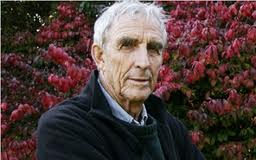
We lost a great writer, Peter Matthiessen, this past weekend. A co-founder of the renowned Paris Review and author of thirty-three books, both fiction and non-fiction, his supreme subject was Nature and, sadly, Man’s pervasive impact upon it:

Species appear, and left behind by a changing earth, they disappear forever, and there is a certain solace in the inexorable. But until man, the highest predator, evolved, the process of extinction was a slow one. No species but man, so far as is known, unaided by circumstance or climactic change, has ever extinguished another. (Wilderness in America [1959]).

Along with other environmentalists, I mourn his loss since his death silences a powerful voice of advocacy for what remains.

I think of the great writers of Nature who have borne sensitive witness to the fragile cocoon of Nature that includes ourselves that I have read across the years, works both of poetry and prose that have refined my sensitivity, shaped my priorities, and taught me awareness of the transience of all living things. All of them have been my teachers.

In poetry, I think of Wordsworth, Shelley, Keats, Hopkins, Dickinson, Frost, Jeffers, for example; as for prose–Thoreau, followed by Muir, Carson, Wilson, Dillard, McKibben and, of course, the most prodigious–Matthiessen.

Of all the books Matthiessen wrote, two stand out to me in particular as robust reads: Shadow Country, a novel featuring a desperado gunned down by his own neighbors in the lawless Everglades wilderness of the nineteenth century; the other, Snow Leopard, a non-fictional account of Matthiessen’s search for the elusive snow leopard in the Himalayas. More than a travel adventure, it depicts the author’s spiritual journey. As stimulating as it is beautiful, lucid in its prose and stunning in its imagery, it may just be one of the finest books to treat both Nature and the Soul ever written and deserves many re-readings.

Both Shadow Country and Snow Leopard won National Book Awards, our country’s most prestigious literary prize. (Matthiessen is the only writer to receive multiple National Book Awards.)

Matthiessen was not your ordinary person. A former CIA spy, son of a well-to-do family, initially conservative in his politics, he ultimately moved to the Left, championing American Indians, Cesar Chavez and exploited migrants, opposed the Vietnam War (bravely refusing to pay taxes) and, of course, became a committed environmentalist.

A deeply spiritual man, he embraced Buddhism following the death of his second wife in 1972, ultimately becoming a Buddhist priest. Snow Leopard reflects a Zen ambience throughout and its acceptance of the Now as the only true consolation we have in a transitory cosmos.

Though he fought ardently for conserving nature, he was troubled by the exponential excesses wrought by anthropocentric interests. As he would lament, “I can hardly point to a victory that we ever won as conservationists that hasn’t been overturned.”

Not all was lost, however:

 …we won some, too — there were long-lasting victories. And if nothing else, we stalled — stalled them off, the developers and exploiters.

All of us Greens will miss him, and yet there remains the fervent advocacy of his many books championing justice; respect for other species and their habitat; the simple life lived mindfully, free from material desire; the valuing of each other.

There couldn’t have been a finer man.

–rj


The UN Panel Report on Global Warming: Is anyone Listening?

Credit: ReutersStringer

If you’ve been keeping up with news about the environment, you’re perhaps aware of this week’s biggest news event, not the elusive search for Malaysia Airlines Flight MH370, or the status quo of Ukraine, or the achieved pinnacle of 7 million enrollees under the Affordable Health Care Act, but the dismal impact studies just completed of the United Nations’ Intergovernmental Panel on Climate Change.  At least this is as it should be, though you’d never know it, given the paucity of TV coverage of the Panel’s exhaustive findings (32 volumes summarized in 49 pages).

Turns out that yesterday’s coverage of the Panel’s released findings by news cable giants CNN, MSNBC, and Fox News was virtually absent, according to media monitoring service, TV Eyes, scanning Monday’s coverage between 6 a.m. and noon: CNN, 40 seconds; MSNBC, 20 seconds; and no surprise, Fox News’s total silence.

Only new comer Al Jazeera America zeroed in on the report, featuring an in depth analysis of the substantial effects of global warming on Bangladesh, which has been battling rising sea levels.

One of the Panel’s projections deals with emerging migrant hoards seeking refuge in other countries.  I didn’t see Al Jazeera’s footage, but I’m aware that India is feverishly building a wall to stem the influx of Bangladesh refugees. (By the way, if you like your news unbiased, al Jazeera is your best bet.)

This sad scenario of media indifference mirrors the largely disturbing absence of the American public’s concern with the issue of global warming, humanity’s greatest threat to its survival since its inauguration into the nuclear age in 1945 and the subsequent threat of nuclear proliferation.

For many, it comes down to jobs vs. environment, or the prioritizing of entitlement interests when the fact is that poverty is likely to grow, not diminish, and affect even the richer nations as global warming’s exponential effects take hold in the guise of drought, record heat waves, forest fires, fierce storms, reduced food production, disease and social violence. Global warming’s incipient effects are already impacting plants and animals and acidifying the oceans with deadly consequences for marine life.

Humans are the primary instigators of global warming, with carbon emissions continuing to rise, and China, the U. S., and India leading the way. Here in my state of Kentucky with its coal slave mentality, the state government has just cut annual coal mine inspections down from 6 to 4.  Sadly, I live in a state where many cars sport specialized plates, bearing “Friends of Coal,” and power companies wage incessant scare propaganda equating coal reduction with rising energy costs and job reduction instead of implementing focused research on clean coal technology.  As I write, a Kentucky coal ash plant has been caught by hidden camera dumping coal ash into the Ohio River and is being sued by the Sierra Club and Land Justice.

Again, Kentucky isn’t alone, but part of a mind-sweep that embraces America. For example, initiatives to promote recycling by outlawing plastic bags are continually defeated even in more friendly environmental places like Seattle.  (I have to confess I feel conspicuous, a seemingly rare upstart, when carrying my cloth bags into Krogers.)

In drought plagued California, swimming pools still adorn Malibu, ball parks sport well manicured grass, and golf courses like Pebble Beach and Cypress Point Club nurture their resplendent greens, even as farmers curtail their crops and California’s biggest cash crop of almond and walnut groves lie in dusty peril.

Golf interests say water consumption amounts to only 1% of California’s total, but omit a plethora of other environmental burdens like fertilizers, pesticides, herbicides, and fungicides, which contribute to contamination of groundwater aquifers and surface waters.

This may seem off the subject, but there’s a new movie in town, Noah, that’s been drawing crowds, grossing $42 million in its initial weekend viewing. I bring it up because in my youthful days of religiosity I remember it took the biblical Noah a year to build the ark and round up the selected progeny of animals (although it escapes me as to what happened to the plants, since there’s no clear indication of their inclusion, though all the animals taken in were herbivores).

Anyway, the guy must have seemed some kind of crazy.  After all, the earth, nourished by mist, hadn’t ever experienced rain before. The gospel of Luke (17:25-27, KJV) makes analogy to Noah and his time, saying

As it was in the days of Noah, so shall it be also in the days of the son of man. They did eat, they drank, they married wives, they were given in marriage, until the day Noah entered into the ark, and the flood came, and destroyed them all.

Looks like Hollywood missed a golden opportunity of transforming an ancient saga of environmental survival into a film of contemporary relevance.

–rj


Trans Pacific Partnership: Corporate Mayhem Alive and Well

tpp

Despite President Obama’s spirited pledge to reduce the growing gap between rich and poor, his administration has been covertly involved in negotiating a Trans Pacific Partnership (TPP) trade agreement whose potential fallout would only exacerbate, not lessen, the economic divide, consolidating what is essentially an oligarchy of Wall Street interests.

You may be unfamiliar with the TPP, as it’s not played up in the media, unless you’re a rare aficionado of the marketplace.  Briefly, 14 nations bordering the Pacific, controlling 40% of the world’s GDP and 26% of its trade, have been at work for more than a year, hammering out the final details of a complex agreement that would eliminate tariffs on goods and services.  Composed of 29 chapters, its scope would include not only the area of finance, or banking, but telecommunications (i.e., the Internet), and even food services.  It would have devastating consequences for those of us committed to environmental concerns that include global warming.

Ominously, it includes proposals that would curtail consumer protection across a wide spectrum.  According to Republican Reports, leaked TPP negotiation documents reveal the Obama administration’s attempts to stymie other governments from implementing financial regulations, believing they could mitigate another bank collapse.

These leaked documents (see citizen.org) indicate proposals allowing corporations to sue governments under the auspices of “foreign tribunals,” thus circumventing domestic courts and local laws.  Corporations could even demand financial compensation for “tobacco, prescription, and environment protections” that undermine their profits.

As Senator Elizabeth Warren–I like her more everyday–warns, such provisions allow “a chance for these banks to get something done quietly out of sight that they could not accomplish in a public place without the cameras rolling and the lights on.”

Alarmingly, even without the TPP, over $3 billion has already been paid out to foreign investors under current U.S. trade and investment agreements, with another $14 billion pending, “primarily targeting environmental, energy, and public health policies” (citizen.org).

Representing the U.S. in the negotiations is Obama appointee Stefan Selig, a former Bank of America investment banker nominated to become Under Secretary for International Trade at the Department of Commerce.  Since his nomination, he’s received $9 million in bonuses.  (He had received $5.1 million incentive pay the previous year.)

Slated to join him in the negotiations, pending Congress’ approval, is Michael Froman, presently U.S. Trade Representative.  He received $4 million from CitiGroup as an exit payment in addition to $2 million in connection with his holdings in several investment funds.

This practice of banks lining the pockets of their former cohorts upon joining government is pervasive in the banking industry, pocket money for establishing influence in contexts affecting public financial policy.

Unfortunately, for all the pretty rhetoric coming out of the White House, the oligarchy of the one percent remains entrenched, and even abetted, while the TPP, added to its already formidable arsenal of financial peddling, poses a potent means to intimidating the common citizenry, here and abroad, opposed to its hegemony of privilege.

It certainly doesn’t contribute to economic parity.  According to a study by the Center for Economic Policy and Research, as reported in the Washington Post, the economic gains would largely accrue to the wealthy.

–rj

China Destroys Ivory Stocks: Too Little too Late?

06sino-ivory02-blog480

I’m pleased again at another good omen for the environment in learning of China’s destruction yesterday of six tons of seized ivory ornaments and tusks.  This is exciting, since China has been overwhelmingly the prime market for ivory, where it’s turned into trinkets and statuary, and it’s the first time China has done this.  Hopefully, it won’t be the last.  This comes on the heels of Tanzania’s recent destruction of four tons of ivory, adding up to about forty slaughtered elephants.  In addition to Tanzania, Kenya and Gabon have recently destroyed large caches of ivory.

Still, China has a long ways to go.  As reported in the NYT on Monday, The Wildlife Conservation Society says that there may be as much as forty-five tons in the total ivory inventory in China, not including Hong Kong.  Let’s face it:  ivory can be lucrative, fetching $1000 a pound.  In poverty stricken Africa, poachers in the field rarely command such profit, pocketed by sophisticated  black market smugglers, but minimally still incentive enough.  Elephant poaching is further exacerbated as the continent’s many warring factions use ivory sales to purchase arms.

What shocks me is our own large stash of ivory, with six tons of ivory destroyed last November.  I guess I shouldn’t be so naive.  We have a large Chinese immigrant community, especially on the West Coast, where demand for ivory, rhino horn, tortoise and shark fin can ratchet up lucrative profits.  In fact, we’re downright hypocrites.  The good old USA ranks second to China in consumption of illegal animal products, including not only those I just mentioned, but even tiger bone!  Nothing is sacred; nothing off limits for crime syndicates operating internationally.

Unabated, the trade will peter out in about ten years.  We’ll simply have run out of elephants, rhinoceroses, sharks and tigers.

But just maybe the window’s opened a bit with China’s move, offering a new vista of hope.  As China’s legacy of ancient wisdom has it, “The longest journey begins with the first step” (Lao Tzu).

–rj

Where are the songs of Spring?

images

Saw a sign yesterday that read, “Spring is coming soon.”  That’s something we’re all wondering about, even in Kentucky, where we’ve been having an unusually cold March, which makes it hard to believe the Kentucky Derby is merely six weeks away.  They say it may be related to melting glaciers changing our wind patterns.

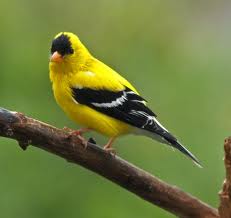
But the real sign nature is about to turn generous was yesterday’s afternoon delight in seeing my goldfinch friends, busy at their feeder, newly returned from their long and distant migration.  I remember late October when suddenly they were gone, the absence of their aerial eagerness and bright collusion of yellow and black; the silence and loneliness of it, like saying good bye to a good friend who had brought abundant joy, “A quality of loss/Affecting our discontent” (Dickinson, “A Light Exists in Spring”).

I’m not a member of the Audubon Society, but I quite understand their love for birds with their bright plumage and merry song.  I think of St. Francis of Assisi whose kindness the birds reputedly reciprocated by sitting on his shoulders.  Sometimes I think they take their own measure of me in their aerial hideaways when I replenish their several feeders in our backyard.

Birds need our help these days more than ever.  I just read the other day that an estimated 100 million birds are killed worldwide each year by outdoor cats and other scavengers.

Diminishing canopy of forest and brush, draining of wetlands, and climate change add to the toll.  Squirrels and other rodents raid their nests, devouring eggs and young hatchlings.

Migration itself can be costly, with many killed and injured, caught in storms or flying into buildings, and sometimes planes.  Many are blown off course and show up in risky environs.  I feel bad that each year several of them smash themselves into our sunroom windows and I am left with their still warm bodies.

Some of them, hawks, are wantonly shot by farmers who see them as predators.  I had an unpleasant experience in New Zealand in hearing of a crusty elderly man who had nothing better to do than shoot hawks as everyday pastime in that gorgeous Taranaki countryside of lush greenery.  In Kentucky, especially in the mountains, hawk-killing takes on a compulsion.

Down the road and around the curve, I often see a sentry red tail hawk on a high telephone wire.  I like what I see when I drive past His Majesty.

I relish reading good poetry and there are poems, great ones by Keats and Shelley, Hopkins and Dickinson, that wonderfully excel in depicting the splendor of birds like “Ode to a Nightingale, “Ode to a Skylark,” “The Windhover,” “A Bird Came Down the Walk” and, sometimes their sadness as in Angelou’s moving “I know why the Caged Bird Sings.”

But I began with the subject of Spring and so Keats’ question of “Where are the songs of spring?” (“Autumn”) comes to mind and finds its answer, for me at least, in yesterday’s return of my yellow-jacketed friends.  Let Spring’s sweet song begin!

Be well,

rj

A new rhythm that imperils: reflections on global warming

We owe our existence to it, yet we give it little heed, since it’s always there for us.  In my science classes we called it natural law, the material rules of nature that lie behind the structure and behavior of our universe.  Our earth, for example, rotates on its axis, allowing for alternations of light and dark.  It circles the sun with a mathematical precision on which we base our calendar.  There is the partnership of sun and moon exerting a gravitational force on a rotating earth that lifts and lowers its ocean waters with cyclic surety.  Like a camera lens set on infinity, the examples have no limit in their envisioning.

In sum, there exists a rhythm to the universe, which some have argued evidences a Mind at work, bestowing design and flowing with purpose.  Others, however, contend these laws are merely interplay of cause-effect mechanisms, devoid of intent and ethical regard, as reflected in Japan’s devastating tsunami in 2011, taking 20,000 lives. What we define as tragic is more likely our not heeding their operations.  It’s not wise to build on seismic faults or close to ocean shore.

As you may surmise, I draw comfort from these cosmic rhythms despite their indifference to our human schemes.  I know that tomorrow brings the dawn and, with it, the promise of new beginning.  In our human world, such fidelity is rare.

I find a discordant note, however, in our thoughtless disregard of those laws that sustain us, providing clean air, dependable rainfall, and abundant harvest.  In doing so, we’ve acerbated climate change, a crisis largely of our own making rather than merely cyclical change.  We’ve poisoned our air and water, slashed and burned our way through virgin forest, plundered our fellow animal species and squandered our water resources. Tomorrow’s wars are more likely to be waged over water, not oil.

In ten years, the African elephant, once a million, will vanish into memory along with the rhinoceros, all for the sake of trinkets and aphrodisiacs.  Today I saw the BBC news that sharks may soon become extinct, 100 million already killed, in a fishing industry that preys upon their fins to flavor Asian soup.

In our misdeeds, we’ve set other laws into motion that now imperil rather than sustain, generating melting glaciers that are raising sea levels and a warming tundra with potential for massive release of methane, a toxin deadlier than CO2.

Meanwhile, there was the media’s startling failure in last fall’s presidential debates to question the candidates on our generation’s most perilous challenge.  Locally in  places like Kentucky where I reside, cars sport “friends of coal” license plates and “environmentalist” suggests extremism.  Nationally, and globally, corporate interests prevail to uphold waste in the guise of growth.

As for the public’s response, I see its numbing indifference perhaps most vividly at grocery store checkout.  Though I provide my own cloth bags, I’m virtually self-conscious in my singularity amidst a sea of plastic supported by custom.

We are makers of a new rhythm, but this one brings no comfort.

rj

Reflections on Spring’s delicate weave

Nothing is so beautiful as Spring –
When weeds, in wheels, shoot long and lovely and lush;
Thrush’s eggs look little low heavens, and thrush
Through the echoing timber does so rinse and wring
The ear, it strikes like lightnings to hear him sing;
The glassy peartree leaves and blooms, they brush
The descending blue; that blue is all in a rush
With richness; the racing lambs too have fair their fling.         

What is all this juice and all this joy?
   A strain of the earth’s sweet being in the beginning
In Eden garden. – Have, get, before it cloy,
   Before it cloud, Christ, lord, and sour with sinning,
Innocent mind and Mayday in girl and boy,
   Most, O maid’s child, thy choice and worthy the winning.

(Gerard Manley Hopkins: “Spring,” Poems and Prose [Penguin Classics, 1985])

photo_20Karen reminded me this morning that come bedtime tonight we’ll need to move our clocks one hour forward. And I’m thinking, can it be that time again?

Actually, it’s something I should welcome, a kind of herald, if you will, of spring’s approach and our soon deliverance from winter’s long night.

I do love its entrance. For one thing, there’s the pleasure of working outside again, hoeing away winter’s scattered debris. They say we’re having temperatures in the high fifties here in Kentucky this weekend and already, in excited revery, I’m planning my priorities for making the weekend count, beginning with haircuts for the shrubbery, a few dead tree limbs to trim, and mulching the rose bed into weedless blackness.

I notice the box stores and gas stations are getting ready, too, witness the potted pansies peeking over their rims that I saw at Walmart today and the high piled bags of mulch when I pulled in for gas this morning.

As a former student and teacher of myth, I can understand the archetypal reverence for this season, mirrored in story, music, and dance celebrating regeneration, or earth’s greening. And there’s that beautiful story the Greeks loved to tell of Persephone’s return from the Underworld in consort with every spring, rekindling a dormant landscape into verdant tapestry. Spring is Easter and Passover, celebrations of passage from death and bondage to new life and future hope. Universally, the egg is its symbol.

But I’m also cognizant that spring isn’t always kind and sometimes lashes its way into entrance, forsaking sweet whisperings redolent of incipient blessedness. In Kentucky, for example, it brings not only the Kentucky Derby, but tornado sirens and, on occasion, flooding, reminding us of the delicate weave of life and death, sorrow and joy that has always defined our destiny.

Alas, we ourselves have been playing havoc with that balance, unwittingly triggering with our technology, fossil fuel dependence, and ravaging of our resources, whether of mineral, plant or animal, our own demise. As in T. S. Eliot’s magnificent Wasteland poem, we have springs more often associated with too little rain, or hot summers arriving too soon, suggesting spring’s own waning in the growing menace of global warming. Our earth weeps to be delivered, but there are no saviors among us to redeem and restore.

But then there are those momentary lulls when Equinox hovers in a topography of gentle wind and earth rages with the fever of life and healing and languorous days of apple and cherry blossom, lilacs, tulips, hyacinths and daffodils and we dream not of a distant heaven, but bathe in a heaven brought down to earth in renewal of Edenic splendor.

Would that this could always be. In the meantime, pile up the nows of halcyon days that sew warmth and bloom and hope.

Be well,

rj

Global warming and its mockers, scoffers and deniers

Courtesy:yahoo.news:  Destroyed home in Dunalley, Tasmania
Courtesy:yahoo.news: Destroyed home in Dunalley, Tasmania

I ran into a man in recent years, educated and professionally accomplished, who didn’t like a lot of my observations and beliefs. They were too liberal and sometimes he’d laugh or scoff.  It so happens that I believe in such things as  a woman’s right to sovereignty over her body, a more just system of taxation, dignity of death legislation, universal health care, gay rights, the priority of green living through simplicity, alternative energy, recycling and vegetarianism.  I voted the Green Party in the recent election.

The last time we conversed, more than a year ago, he admitted to global warming, but thought of it as cyclic rather  than human in origin. That’s ok with me, at least as far as a person’s right to a belief or opinion.  However, I’ve often found a lack of fair exchange when it comes to beliefs like my own, perhaps because I live in conservative Kentucky or no longer have daily access to a university campus where my views often enjoy majority status and poetry is still admired.  Perhaps views like mine simply make people feel uncomfortable with their resonance of gloom and doom, though I counter that acknowledging a problem begins its solution.

But let me confine myself to global warming at the moment. I find the facts are in:  It’s horribly real and its effects are happening universally and exponentially faster than many of our experts had projected.  Our hurricanes occur more frequently and grow more menacing; floods and drought devour our landscape.  In Europe, a prolonged heat wave this past year killed hundreds.  Storms of the century are now decade-ravages, with Katrina and Sandy coming to mind. Meanwhile, the accelerating polar meltdown threatens methane release, a component that exceeds carbon as a dangerous contributor to global warming. Sea tides are rising and coastal cities like New York have begun drawing-up contingency plans.

For another example of what’s going on, there is the current tragedy of bushfires in Tasmania, the result of prolonged drought, high temperatures, and persistent wind gusts.  As I write, 65-homes have been lost, hundreds displaced, and 110 squared miles of land scorched.  In its proximity to  a warming Antarctica, Australia is fast taking on the prototype of our global future, compounded by the increasing impotency of our technology to cope.

Southwest Australia, in particular, knows the scenario of diminished rainfall all too well.  Famed for its vineyards abetted by rich soil and ample rainfall, the region has experienced a 15% drop-off in rainfall since 1975.  Wheat, another regional staple, has been devastated, as seen in the current deluge of impoverished farmers.  Meanwhile, the metropolis city of Perth has seen a 50% decline in its surface water supply since 1975.  Sydney in eastern Australia, may face an even greater crisis if drought continues, despite having some of the world’s largest water reserves (Tim Flannery. The Weather Makers, pp. 127-129; 131).

Climate change does, however, have its ardent critics, so my ethics demand fair play.  In a recent Forbes article, Larry Bell, who comments frequently on climate and energy issues for the magazine, contends that “while most acknowledge that greenhouse warming may be a contributing factor, it is also true that a great many very informed scientists believe that any human contributions to that influence are negligible, undetectable and thereby grossly exaggerated by alarmists, while far more important climate drivers (both for warming and cooling) are virtually ignored.  Particularly consequential among these are long-and short-term effects of ocean cycles along with changes in solar activity” (“Global Warming Alarmism”).

Thank you, Larry, for just the right cough syrup for what ails us.  You wrote your article on May 28, 2012, and say at the very beginning that “global temperatures have been pretty flat despite rising CO2 levels since the big 1998 El Niño ….”. Are you not aware that we can track resilient CO2 particles over the centuries and it demonstrates a rise from 645 gigatons (billion tons) of CO2 prior to the Industrial Revolution, or 1800, to our approximate 869 gigatons currently?  I’m sufficiently aware that association doesn’t confer causality, but it should caution skeptics to reassess.  By the way, half of our present annual CO2 derives from burning fossil fuels.  God only knows the fate of our planet with world population continuing to rise and more coal-fire plants and more cars in the works.

Critics needn’t belly ache about alarmists.  They’ve got inertia on their side.  It’s near impossible, for example, to get rid of plastic bags in our stores, given corporate interests and the abstract nature of a threat seen more theoretical and distant, and thus problematical, by many consumers.  Besides, it’s just damn inconvenient to our comfort zone to change our ways. In a time of budget crisis, government is no help, deferring to present needs while defaulting on our children’s future, reminiscent of its widespread underfunding of pensions for future retirees.

Meanwhile, this just in from the National Oceanic and Atmospheric Association (NOAA):

2012 was the warmest year ever recorded in the U. S., and second only to 1998 in the agency’s “extreme” weather listing.

It was also the driest year on record with an average rainfall of 26.57 inches, or 2.57 inches below normal.  Wildfires destroyed more than 9.2 million acres, the third highest number in our history.

Worldwide, it’s much the same.  According to World Meteorological Organizational Secretary-General Michel Jarraud, “The extent of Arctic sea ice reached a new record low. The alarming rate of its melt this year highlighted the far-reaching changes taking place on Earth’s oceans and biosphere. Climate change is taking place before our eyes and will continue to do so as a result of the concentrations of greenhouse gases in the atmosphere, which have risen constantly and again reached new records.”

As I conclude my post, fire has also swept across large portions of New South Wales, where Sydney is located, destroying forests, pastures and flocks along with many homes.  It’s summer down under, and like here, temperatures are at record highs.

–rj