The Amazon, COP30, and Our Vanishing Future

It has barely made the headlines, but the UN’s COP30 climate summit is now underway in Belém, Brazil. COP—the Conference of the Parties under the UN Framework Convention on Climate Change—has met annually for three decades, each gathering framed as another decisive moment for the planet.

More than 100 American environmental leaders are in attendance. Missing, however, is President Trump, who still calls climate change a “hoax.” His absence is symbolic, but not surprising: it reflects a larger political reluctance to acknowledge the crisis unfolding around us.

Even among nations that accept the science, there is growing tension between the high costs of climate mitigation and the competing pressures of social needs. Yet this framing—climate action versus human welfare—is a false narrative. Climate disruption is already degrading food systems, water security, economic stability, and public health. Inaction is the costliest option of all.

COP’s central mandate is clear: limit global temperature rise to 1.5°C above pre-industrial levels, as pledged in the 2015 Paris Agreement. Countries submit national climate plans (NDCs), augmented every five years. But despite the Agreement’s “ratchet mechanism,” current projections put us on track for 2.5°C to 3°C of warming by century’s end.

At those levels, the world becomes unmistakably harsher: failing crops, drying rivers, rising seas, disappearing species, and regions becoming uninhabitable under extreme heat. And nowhere is the alarm more urgent than in the Amazon Basin.

I’ve been studying this region for years, most recently through an eight-week online course under the auspices of the University of São Paulo.

The Amazon is not merely a forest—it is one of Earth’s greatest climate regulators. Spanning more than seven million square kilometers and home to an extraordinary share of the planet’s animals and plants, it stores 150–200 billion tons of carbon in its intact ecosystems. It cools the continent, generates rainfall, and sustains the livelihoods of millions.

But the Amazon is weakening under relentless human encroachment: logging, mining, agribusiness, hydroelectric projects, roads, railways, and shrinking indigenous territories. Fourteen percent of its pristine forest has already vanished; another seventeen percent is degraded.

Scientists warn that if deforestation—now around 14–17%—reaches 20–25%, the forest may tip into irreversible decline, releasing vast stores of carbon and destabilizing global climate systems, including the Atlantic ocean currents that moderate Europe’s weather.

This would be more than a regional tragedy. It would be a global catastrophe.

The people with the most to lose are those who have protected the forest the longest. When Europeans arrived in 1500, 8–10 million indigenous people lived throughout the Basin. Today, only about 2–2.5 million remain, yet they still speak 300 languages across more than 400 groups. Their 12,000-year history of sustainable land management is one of humanity’s greatest environmental achievements—and one of its least respected.

Meanwhile, fossil fuel interests continue drilling and recording historic profits. Their influence hangs heavily over every climate summit, often shaping negotiations more than science does.

This is the dangerous paradox at the heart of COP30: we gather each year to declare urgency, even as our actions fall fatally short of what the moment demands.

The Amazon is nearing a threshold from which we cannot retreat. The window for preserving a habitable planet is still open, but narrowing fast. What we need now—what COP30 must deliver—is not another set of distant promises but a global commitment to end deforestation, accelerate renewable energy, and center indigenous stewardship.

The science is clear. The stakes are overwhelming. What remains uncertain is our political will.

If the world cannot act decisively now, in Belém—on the doorstep of the very forest that helps stabilize the Earth—then when?

—rj

No Easy Fix: Climate Change is Coming for You!


I’ve always liked environment activist Bill McKibben, longtime prof at Middlebury College and prolific writer, though sometimes I disagree.

For example, he recently parried a reader’s hint that just maybe overpopulation poses our greatest challenge in mitigating the exponential fallout of climate change by saying he didn’t think so, given that where population is rising most, Africa, there’s little contribution to carbon discharge .

While that may presently hold true, the reason for this is Africa’s falling short on Western amenities that along with their comfort and convenience, foster carbon discharge.

The fact is Africa is incipiently engaged in catching-up to the follies of more advanced economies in adopting technologies promoting carbon discharge, especially with regard to excavating industries in places like the Democratic Republic of Congo.

As Africa’s clamor for meat likewise grows with surging population, more deforestation is occurring, and we know that spells diminished carbon sinks, fostering destabilization of weather patterns.

As I write, prolonged drought plagues Africa, creating a vast risk of starvation and malnutrition. What it doesn’t need are more mouths to feed.

In game refuges, elephants and even rhinos, seen as competitors for flora and landscape, are being slaughtered to feed a growing population in Angola, Zimbabwe and, yes, in Bechuanaland, Africa’s last great elephant sanctuary.

McKibben entangles himself similarly in joining the chorus advocating more wind turbines, despite emerging evidence of their dire consequences, at least for seabirds and whales, according to the recent 600 page report from the Bureau of Ocean Energy Management (BOEM).

On the other hand, he’s right about so much of our climate morass.

This year was the hottest on record, with next year unpromising. Phoenix, our fastest America growth city, endured 31 days of 110F temperatures, its emergency rooms overflowing with the burned and dying.

And he’s right—there’s no safe place to move. Vermont, where he lives, sheltered by its mountains, suffered an atmospheric river this past summer, resulting in unprecedented downpours inflicting catastrophic flooding.

Last night, I learned of America’s new housing crisis, this one weather related. It seems 30-year mortgages can’t withstand climate change, natural disasters occurring not only more frequently, but with accelerating violence.

Take Florida, for example, where home insurers are pulling out. Where they remain, and I mean across the nation, annual premiums increases are eroding many homeowners’ ability to pay.

Currently, 9% of the world’s population, or 600 million of us, lives outside what’s known as “the climate niche,” meaning safety zone. By century’s end, an estimated one third of us will fall into this doughnut hole.

Now comes the orange hair threat assuming office, January 20, 2025. Denying climate change as a hoax, he pledges “drill, baby, drill.”

Fasten your seatbelts everyone. Turbulence ahead!

–rj

Places to see before they disappear

Meet-me-in-Big-Sur6-640x354

The other day I perused the well-stocked magazine rack at my local Kroger and surprisingly came across a special Newsweek issue intriguingly entitled, “100 Places to Explore Before They Disappear.” Teeming with stunning photography you’re accustomed to seeing in magazines like National Geographic, it whets your appetite to get about and see some of these places, six of them right here in the USA. But the rub is that, given the rapidly accumulating consequences of climate change, you’d better do it soon.

As Christiana Figueres, United Nations Climate Chief, cautions, “There is no doubt, if elevated climate is not addressed, it presents a huge risk to many geographic regions around the world, particularly to low-lying islands and to coastal cities.”

As I see it, the catalyst behind these impending geographic upheavals comes down to water, either too much of it (e.g., rising sea levels) or too little (drought).

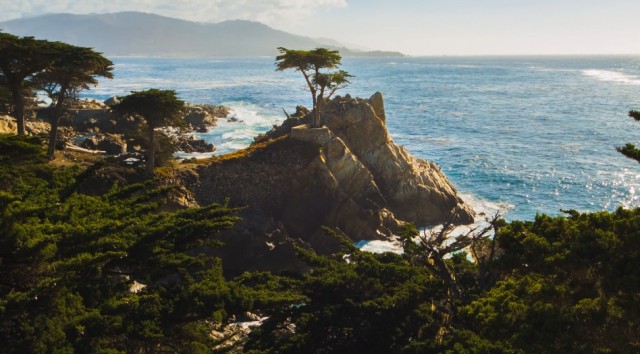
Let’s start with the USA: If there’s one place I absolutely adore above all of California’s myriad tapestry of exotic beauty, it’s Big Sur, hugging the central California coast for 90 miles between Carmel and Ragged Point.   For me, it’s a sacred place in its remoteness, adored by one of our most articulate poets on the environment, the late Robinson Jeffers, whose home is there. Severe drought conditions have converted this once verdant mountain area into a virtual tinder box. Just last year, a devastating forest burned 1000 acres and destroyed 34 homes. It happened in December, not in summer. Last year was California’s hottest year ever recorded. Severe drought and record temperature highs are continuing this year.

Other American vistas in danger:

The Florida Keys from Key Largo to Key West has experienced a sea-level rise of nine inches over the last century, threatening its ground water supply. In the next fifty years, experts are predicting that figure will double.

New Orleans, devastated by Katrina a decade ago, continues to struggle to find ways to protect itself from future storm surges, while concurrently sinking six feet below sea level.

New York City, much like New Orleans, faces a future onslaught of rising sea levels, something hurricane Sandy made very apparent.

The New Jersey shore, stretching 130 miles, has increasingly been exposed to flooding and erosion. Experts predict worse flooding over the next several decades.

Hawaii’s island gem, Kauai, with tourist meccas like Koloa, are now threatened by torrential rain.

The Newsweek issue doesn’t mention other American places under siege like Miami, Boston, Las Vegas and Los Angeles, the latter two running out of water.

It doesn’t get better anywhere else: In fact, it gets worse, especially in Africa with its already burgeoning population confronted not only by poverty, but political, religious and ethnic instability. Its once teeming wildlife, increasingly encroached upon by poachers, will in all probability disappear into memory, given the added stress of climate change with diminished rain and rising temperatures.

Meanwhile, in a throwback to Nero, Congress fiddles while America–and the world– burns in a costly game of partisan politics and subservience to fossil fuel lobbyists. Some not only deny the human contribution to climate change, but climate change itself, ludicrously placing themselves on equal footing with credentialed scientists.

I think again of Robinson Jeffers and his prescient poem, “Shine Perishing Republic,” with its theme of the American dream settling into “the mould of its vulgarity, heavily thickening to empire/And protest, only a bubble in the Molten Mass, pops/And sighs out, and the mass hardens.

It doesn’t have to be this way. While we aren’t able to halt climate change, the consequence of our dependency on fossil fuels, we can mitigate its effects. The lesson of evolution is the necessity of adaptation for an entity to survive. Thus far, we’re not doing very well at that.

–rj


Climate Change: Can we win the fight?

divest395581_155622104590737_1008694978_n

We just celebrated Earth Day on April 22, an annual fête of huge importance for those of us wanting to increase the public’s awareness of the challenge of climate change, and our substantial human contribution to it, and ways we might fight it.

It’s an important time for us in another way, too, as this yearly outpouring of Green advocacy transcending borders buoys up our enthusiasm, telling us we’re not alone in our caring. After all, sometimes it seems that we’re on this great big mountain we impulsively thought we could climb; so rituals of solidarity like Earth Day give us pause to catch our breath, reassess, and press on to our worthy goal of a humanity in harmony with nature as one species among others, each necessary to all. Just maybe we can pull this thing off. Anyway, good to dream big rather than live small.

The truth is that so much more needs to be done and that we’ve been moving at a snail’s pace in making climate change a palpable issue for the public. I saw this demonstrated all too clearly in the presidential debates in 2012, or just 18 months ago, with not a single question directed to environmental matters raised by debate moderators.

If the press can seemingly have no feel for the greatest issue ever to menace us with its destructive pay-load should we evade addressing it, then how much less can we expect the public to grasp what’s at stake? As is, individual lifestyle changes like driving less, getting rid of plastic, cutting back on electricity in our homes aren’t going to do the trick. We need more than bandages to treat the Earth’s hemorrhaging.

Now consider that a recent poll suggests that 37% of Americans don’t even believe in climate change. There exist also a good many, perhaps even more, who look at climate change as simply cyclic and that, just maybe, it might even right itself. Of course that view gets us off the hook and we can conduct business as usual.

Just recently the United Nations released the findings of its Intergovernmental Panel on Climate Change, a careful study by credentialed scientists encompassing some 40 volumes. Insiders say they toned down some of their language and projections so as not to unduly frighten, though their findings still emerge as deeply sobering, with none of us escaping vulnerability to what surely are predictions on an apocalyptic scale. In all honesty, I haven’t noticed any work-up by media or any concerted effort by members of Congress to hold hearings on the report and what we might do to save the day. Like many of you, I grow weary–and wary–of their feckless accommodations to corporate interests.

What’s vital is that we impact the political process, as happened with the Vietnam War, ultimately culminating in LBJ’s decision not to pursue reelection. It started with just a few protesters, then took hold and proved unstoppable. Unfortunately, I don’t see anything like this breaking out. I think this is because many of our projections for climate change impacting us lie still in the future, whereas flag covered body bags coming into Dover AFB were a daily, tangible occurrence, which the media ultimately caught up with when it perceived a muscular protest movement, packing a punch, that wasn’t going to go away.

On the other hand, if we haven’t been able to muster cadres of protestors against our Iraq and Afghanistan incursions with their costly toll in life and wounded for a dubious cause, how much less likely for an environmental movement devoid of blood and gore? And that’s what makes climate warming so horrendously insidious, or like some invisible killer we know is out there, but don’t know where he is, or when he’ll strike, or how.

Perhaps our young people will again show us the way as they did with Vietnam by way of their fossil fuel divestment sit-ins sweeping our college campuses, some 300 as I write, with several success stories, including Harvard with its $32 billion endowment. If it’s wrong to destroy our planet, it follows we shouldn’t be seeking to profit from those who do.   I wrote earlier of the Vietnam days when students rallied to make a difference. All of us: unions, retirees, teachers, tech workers, etc., might do well to follow their lead in choosing our retirement portfolios more discriminately.

But divestment has its limitations, too. While it was practiced widely in the 70’s and 80’s to pressure South Africa’s apartheid regime, the invariable result was that other investors stepped in. It’s true value lay in shaping public discourse, and I venture this holds true with this present endeavor.

Still, I question the wisdom of painting with a broad brush the fossil fuel industry as some kind of axis of evil. We need energy. Are our students willing to follow through and divest themselves of their cars and their electricity and take on an Amish likeness? We would do better to focus on the coal sector, our greatest polluter.

I still like our president–articulate in his efforts to assure health care access, social and economic equality, tax, immigration and drug sentencing reform. So far, he’s championed alternative energy efforts, sought restrictions on coal burning power plants, held out against the Keystone XL project, endorsed alternative energy efforts.

As for Keystone, he needs our support even as we must sustain, and grow our protests, to keep a fire under his feet. When I think of Keystone and the big money behind it–think Koch brothers–I get nauseous: the obscenity of it, given the perils of climate change; the stench of it, given its association with pet coke; the callowness of it, given its destruction of farmland, water aquifers, and wildlife habitat.

The President will presumably make his decision after this fall’s elections, but faces immense pressure, even in his own party. It isn’t a given he’ll opt for courage over pragmatism. In the end, it’s important we all get to the polls and endorse environmentally friendly candidates such as the courageous Gary Peters (D-MI), who hopes to succeed retiring senator Carl Levin (D-MI).   Peters has come out against Keystone, provoking the Koch brothers to contribute substantially to his Republican opponent, who now leads in campaign funding. Peters is our leading spokesperson on pet coke. (By the way, you can access online the Sierra Club’s political endorsements, which include Peters.)

If it came down to, say, an errant asteroid making its way to befuddle our planet as once happened, plunging the world into a rebirth of its pre-evolutionary darkness, then you can bet your life we’d all get off our bottoms and fight the good fight. Well, think of that asteroid as climate change.

–rj