Why Wendell Berry Still Matters

I’ve been absent from Brimmings for nearly a week, recovering from a serious bout with the flu—the fever lingering for ten days. A chronic cough remains my daily companion.

That hasn’t stopped me from reading—slowly, attentively—six books already this year.

As I’ve previously shared, alongside my annual eclectic reading list, I’ve committed to a topical approach to reading as a way of resisting intellectual grazing and cultivating sustained attention (Topical Reading). I’ve begun with Kentucky sage Wendell Berry, now in his ninety-second year.

I didn’t want to one day come upon his obituary and feel the guilt pangs of having neglected an agrarian pacifist, a champion of the local, often described, without much exaggeration, as America’s “moral conscience.”

Berry has farmed a 125-acre hilly tract adjacent to the Ohio River at Port Royal in Henry County, Kentucky, for more than forty years. Farming, for him, is not metaphor but moral practice. As he writes, “The care of the Earth is our most ancient and most worthy, and after all our most pleasing responsibility.”

Academically, Berry is no lightweight: a BA and MA in English from the University of Kentucky, a Stegner Fellowship at Stanford, and a Guggenheim that took him to Italy, he taught briefly at New York University before returning—against the counsel of colleagues who believed he was jettisoning a promising academic career—to rural Kentucky and the family farm.

They were wrong.

Berry has since written more than fifty books spanning essays, novels, and poetry. His great theme is stewardship—not management or control, but reverent care. “The idea that people have a right to an economy that destroys nature is a contradiction,” he writes, insisting that economic life must answer to ecological reality.

For the farmer Berry, stewardship begins with the soil: an antipathy to chemicals, a reverencing of the biosphere, and a life lived according to natural rhythms. He is deeply opposed to industrial agriculture, which he regards as a cultural as well as ecological calamity: “Industrial agriculture is not just bad for farmers; it is bad for land, for rural communities, and ultimately for culture.”

Among American environmental writings, the two most salient works I’ve encountered are Thoreau’s Walden (1854) and Rachel Carson’s Silent Spring (1962). Thoreau’s aphoristic brilliance lends itself to endless quotation: “Our life is frittered away by detail… Simplify, simplify,” while Carson’s prose approaches poetry. Her opening paragraphs of Silent Spring remain, to my mind, the finest in environmental literature, exposing the arrogance behind what she called “the control of nature, a phrase conceived in arrogance, born of the Neanderthal age of biology and philosophy.”

I’m only in the early stages of getting acquainted with Berry, but he keeps distinguished company with Thoreau and Carson in his passion for preserving nature’s bounty and the pulchritude of a simplified life lived in fidelity to place and community.

In this sense, Berry reaches back to Thomas Jefferson, whom he quotes more than any other figure: “In my own politics and economics I am Jeffersonian.” Jefferson believed liberty was best secured in small, decentralized communities of independent producers, warning that distant power—whether governmental or economic—inevitably corrodes responsibility and freedom.

Though Berry was an activist who vehemently opposed the Vietnam War and has voted Democratic, his politics resist easy classification. He has lamented that America’s two major parties have grown increasingly to resemble one another.

There may appear, at first glance, to be overlap with libertarianism—his opposition to big government, military expansion, and imperial intervention—but the resemblance is superficial. Libertarianism exalts the autonomous individual; Berry emphasizes communal obligation. “We do not have to sacrifice our economic well-being in order to act responsibly toward our land and our neighbors,” he writes. “Rather, we must do so in order to preserve our economic well-being.”

Berry has his critics. His suspicion of technology strikes some as untenable in a hungry, overpopulated world. Can an aggregate of small family farms feed a wired and burgeoning global population, particularly in parts of Africa?

I find myself grappling with his apparent parochialism. Only a tiny fraction of Americans now farm. What of the rest of us who earn our livelihoods elsewhere? And in an interconnected age, can the local truly stand apart from the global?

Berry would respond that the issue is not technology itself, but dependence. “There is a difference between being technologically advanced and being technologically dependent,” he reminds us—a distinction too often elided in contemporary debates.

Ironically, Berry would fit comfortably in an Amish community. He still plows with horses. He owns no computer, television, or mobile phone, and has no internet access. He writes first in pencil, then types. He uses electricity sparingly, supplemented by solar panels, and his writing studio is without electricity. He walks the talk, living a life rooted—quite literally—in the land. Thoreau would have approved.

An iconoclast, Berry remains well worth reading. Growth, he reminds us, is not synonymous with the earth’s welfare. Economies, like soils, can be exhausted. Big government and industrial systems, he argues, erode local responsibility, foster dependency, and inflame military and international tensions. Rural poverty in places like Appalachia persists, in his view, because urban prosperity has been purchased by the plundering of these regions.

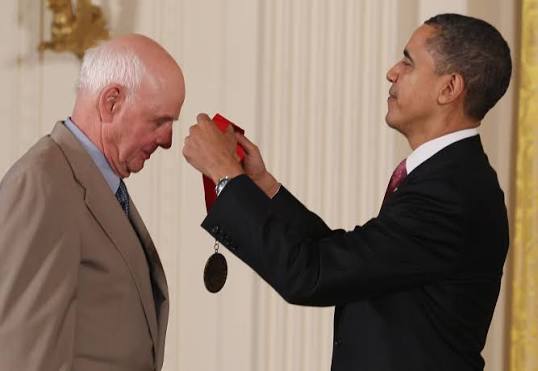
In 2013, President Barack Obama awarded Berry the National Humanities Medal.

In 2015, he became the first living writer inducted into the Kentucky Writers Hall of Fame.

That same year, the Library of America published a boxed set of his work—an honor accorded to only two living American writers at the time.

Berry may be impractical. He may be impossible to scale. But he leaves us with an uncomfortable and necessary reminder: care, once abandoned, is not easily restored—and neither are the land, the culture, nor the communities that depend upon it.

—rj

Read Eighty Books a Year: A Reader’s Arithmetic:

Stephen King reads sixty or more books a year. I’m lucky if I reach twenty—and the disparity bothers me more than I care to admit. Not because I value quantity over quality, but because there are simply too many books I want to live with, too many voices I want time to answer back to.

Time flows from us like a running faucet. Time is our common currency granted daily. How do we spend it? It comes down to our priorities.

King has been candid about how he does it. He treats reading as a necessity, not a luxury, reading every day for two or three hours, sometimes more. As he puts it in On Writing: “If you don’t have time to read, you don’t have the time (or the tools) to write.”

That rings true for me. When I write, it’s almost always in response to what I’ve read—to extend an argument, disagree with it, enthuse about it, or share it with others.

King refuses to slog through books that fail to engage him. He abandons them without guilt. Interest propels reading; boredom kills it. And he always has a book with him—reading while waiting, traveling, between tasks, or before bed. Those fragments accumulate.

The numbers themselves are demystifying. Suppose your goal is eighty books a year with an average length of 300 pages. That’s 24,000 pages annually. Divide by 365, and you arrive at roughly 66 pages a day. At a moderate pace of about 40 pages per hour, that comes to around an hour and forty minutes of daily reading.

That’s doable.

My final tip is one that has helped me most: read in clusters. Choose a topic that genuinely interests you and commit to five or six books in that area.

Reading a single book from a wildly eclectic list can feel shallow; focused reading builds momentum, deepens understanding, and increases motivation.

This year, for example, I’ve chosen to immerse myself in Kentucky sage Wendell Berry—two biographies and three of Berry’s own books. Depth, it turns out, can be the best catalyst for volume.

—rj

On Reading A.S. Byatt’s Possession: A Serendipitous Find

I’ve been reading A. S. Byatt’s Possession, published in 1990 and now hailed as a contemporary masterpiece.

Each year, I compile a carefully chosen list of books I hope to read. Possession was among them, though I can’t quite recall how I first came upon Byatt.

It has turned out to be an inspired choice—a rare literary mystery centered on a scholarly quest to uncover a suspected love affair, pieced together from newly discovered letters between the Victorian poet Randolph Henry Ash, modeled on the married Robert Browning, and poet Christabel LaMotte, inspired by Christina Rossetti.

If such a relationship can be proven, it would mark a major coup for the novel’s modern-day protagonists, Roland and Maud, who join forces to solve this academic puzzle.

I won’t be a spoiler; I’m still reading, mesmerized by Byatt’s creative brilliance. Drawing on her vast knowledge of Victorian literature, she invents letters, diaries, and poems that feel astonishingly authentic—plausible echoes of Browning and Rossetti themselves.

There’s also a compelling counterpoint: as Roland and Maud pursue their literary investigation, they, too, seem to fall in love. And the suspense deepens with rival scholars competing to uncover the same secret.

Possession won the Booker Prize and became an international favorite, translated into more than thirty languages. A film version followed—all of which amazes me, as I wouldn’t have expected a novel so steeped in academia to achieve bestseller status.

Byatt, an academic for many years and fluent in several languages, left teaching in 1983 to write full time. Gifted with formidable imagination, she could also be intimidating in her intellectual precision and resistance to literary fashion. Critic, novelist, short-story writer, and essayist, she produced twenty-five books and, in 1999, was made a Dame Commander of the Order of the British Empire (DBE) for her services to literature.

Her prose is detailed, introspective, and resonant—at times, poetic. More than any writer I’ve read, she possessed an extraordinary gift for mimicry, able to write convincingly in many voices.

I’ve especially liked this passage, though there are many others:

It is a dangerous business, reading of the passions of the dead. We try on their feelings, like garments, and for a moment we seem to stand in their light — and yet, as we close the book, we find ourselves once again alone in our own darkness, aware that our borrowed flame is only memory’s trick.

She is the writer’s writer.

As Jay Parini wrote in his 1990 New York Times review, “Possession is a tour de force that opens every narrative device of English fiction to inspection without, for a moment, ceasing to delight.”

–rj

On Reading Cormac McCarthy’s All the Pretty Horses

I have now read Cormac McCarthy’s All the Pretty Horses, remarkable in its stark, yet lyrical beauty reminiscent of Hemingway and Faulkner, intense in its palpable confrontation of goodness with evil; an elegy for a lost way of life; a saga of idealism’s betrayal; of mythic passage from innocence into knowledge offering no redemption, apart from the grace of endurance and a refusal to forfeit honor.

The traditional rancher spreads of west Texas have fallen on hard times, threatening a way of life. The novel opens appropriately with the death of central protagonist John Grady Cole’s grandfather, a former baron among ranch owners. The ranch, grown to 18,000 acres in 1871, has been sold, an inheritance lost. Working with horses is the only life Grady knows:

The Grady name was buried with that old man the day the norther blew the lawnchairs over the dead cemetery grass. The boy’s name was Cole. John Grady Cole.

The first of a three novels known as the Border Trilogy, All the Pretty Horses underscores the death of the Western frontier, once ripe with promise of plenitude—fortunes to be made and dreams fulfilled.

Foregrounded in historical fact, a pastoral, unfenced way of life has fallen prey to change—the dividing of holdings among family, increased taxation, a drift of young people to the cities, mechanization, the invasion of industry, government’s encroachment, relentless droughts—above all, the railroad’s ubiquity, all of which McCarthy turns into metaphor for an agrarian culture bound by hard labor and a code of honor irretrievably lost. Metaphor becomes elegy.

All the Pretty Horses  narrates the journey of cowboys John Grady and his friend Lacey Rawlins from West Texas into Mexico, joined later by a mysterious youth, Jimmy Blevins, who owns a gun and rides an elegant bay mare, foreshadowing trouble ahead.

The novel abounds in resounding passages, poetic in resonance, like this one of stellar vastness, a cosmos indifferent to Man and of a fusion with nature and of a connection now severed:

He lay on his back in his blankets and looked out where the quartermoon lay cocked over the heel of the mountains. In that false blue dawn the Pleiades seemed to be rising up into the darkness above the world and dragging all the stars away, the great diamond of Orion and Cepella and the signature of Cassiopeia all rising up through the phosphorous dark like a sea-net. He lay a long time listening to the others breathing in their sleep while he contemplated the wildness about him, the wildness within.

Acquaintance with archetype helps readers tap more easily into the novel’s multiple levels of meaning—the hero archetype of initiation, trial, and return; the paradisiacal garden of northern Mexico’s La Purisima with its grassland abundance, grazing cattle of upwards of a thousand head, and 400 horses, attended by valeros, finding fulfillment in their labor; a siren temptress, Alejandra, the forbidden fruit, daughter of wealthy hacendado Don Héctor:

She passed five feet away and turned her fineboned face and looked full at him. She had blue eyes and she nodded or perhaps she only lowered her head.

The hero’s mentor appears, Dueña Alfonsa, great aunt of Alejandra, delivering stern warning from experience, that fate often annuls human wish and that economic and social determinism govern universally. Unlike traditional mentors, she’s unhelpful, even sinister, serving as forewarner and enforcer of social codes.

Not unexpectantly, trespass —Grady and Alejandra have become lovers—makes inevitable Grady’s expulsion from paradise, commencing an ordeal with uncertain outcome in a world where idealism is often judged as weakness and evil corrupts honor with impunity.

Unjustly imprisoned, Grady and Rawlins undergo brutal imprisonment for a crime they never committed. Blevins has  been executed earlier by a rogue officer. We have reached the novel’s nadir, a replay of mythic hell. A Mexican prison, governed by bribery and savagery, tests their courage and capacity to endure.

Dueña Alfonso buys their freedom, under condition he not return to La Purisima, only to have Grady resist and encounter Alejandra’s rejection.  Rawlings has returned to Texas.

Throughout, the novel remains faithful to its hero archetype—the hero, wiser now, returns to exact justice, wounded not only by a rifle’s bullets, but a pervasive knowledge of human capacity for caprice and injustice. Grady’s loss of his horses is inextricably linked to his identity. He returns to reclaim them, necessitating violence.

Restoration of wrong occurs, but not without a tarnished innocence and a sadness that knowledge brings.

Symbolism abounds, particularly through the horses of the narrative that give rise to the novel’s title. Virtual characters, they symbolize a dying way of life and nature’s nobility.

Grady’s affinity with horses affirms a vestige of traditional human communion with nature, once vibrant, but now vulnerable to a modern world in disconnect.

I have only one criticism, and that concerns its last fifty pages in which the prose splendor slackens and we arrive at a conclusion seemingly hurried and simplistic, anticlimactic in contrast to the mesmerizing narrative of its preceding pages that sustain a reader’s interest.

But make no mistake. McCarthy succeeds in writing an extraordinary novel, and I am embarrassed to have not caught-up with him sooner.

He passed from us in 2023 at age 89, having written twelve novels, several plays and short stories. Several of his books became movies.

He was his own person, disdaining celebrity status, living much of his life in poverty. Like Grady, he persevered. Recognition came late, beginning with All the Pretty Horses, which won the National Book Award, our nation’s highest literary award. He was 59 and now famous.

I intend to continue with his trilogy, then on to Blood Meridian, which many critics regard as his opus magnum.

Transcending time and geography, McCarthy rivals Faulkner as our greatest American author.

–rj


My Journey Through Books: From Childhood to Lifelong Learning

I’ve been a reading addict since childhood, when as a young boy I’d walk a mile—sometimes more—just to lose myself in a library’s cool hush, seated at a table, surrounded by shelf-lined books inviting adventure.

My love for animals found early confirmation in the Dr. Doolittle books I devoured. I read every one. Years later, that same fascination with the speech of creatures led me to Jane Goodall’s revelatory studies of chimpanzees—proof that empathy can grow into insight.

Another passion took root in the dusty bleachers of Shibe Park—later Connie Mack Stadium—in Philadelphia. I loved baseball with an intensity only children know, lingering outside the gates, hungry for autographs as players boarded their buses. I read passionately about my idols—Ruth, Gehrig, immortals who remain with me.

Travel books, too, called out to me. Mutiny on the Bounty and its aftermath on Pitcairn’s Island transported me to the South Seas, where I imaginatively romped through Tahiti, New Zealand, and Australia. In later years, that early enchantment led me to consider emigrating to New Zealand. I was, in fact, approved.

Languages fascinated me. One day, at ten, I brought home books in Russian from Philadelphia’s Free Library, expecting the Cyrillic script to magically transform itself into English. That early infatuation would one day carry me across the world to Russia and the homesteads of Tolstoy, Dostoevsky, and Chekhov.

I call myself an autodidact, though I’ve graduated from several reputable universities. I started behind most students, having fled a troubled home at seventeen, enlisting in the Air Force, which sent me to Korea. Our base library was a single room, yet its shelves were somehow populated with a few classics. One off-duty evening, I pulled down a book called Look Homeward, Angel. It changed my life.

After Korea, I read everything Thomas Wolfe wrote, visited his home in Asheville, eventually enrolling as a Ph.D. student at his alma mater—the University of North Carolina at Chapel Hill, “Pulpit Hill” in Wolfe’s novel. On my first campus day, waiting to register for classes, I bumped into a retired professor, who asked what brought me to Chapel Hill. “Thomas Wolfe,” I said without hesitation.

A serendipity moment, that professor had known Wolfe. Becoming lifelong friends, they traveled together to prewar Germany, where Wolfe witnessed the Nazi persecution of Jews, which he would later feature in You Can’t Go Home Again. He shared anecdotes about Wolfe, who stood six feet, six inches. His hands too wide to use a typewriter, Wolfe wrote standing up, a refrigerator top serving for a desk.

Despite the scores of books I’ve read, there remain gaps I want to fill. The books I’ve read have been my faithful companions along life’s road, shaping who I am.

Were I granted another life, I think I’d come back as a librarian. No other choice comes close.

Finding New Ways to Choose Books I Want to Read

Every New Year’s Day for the past six years I’ve posted on Brimmings my annotated recommendations for the finest fiction and nonfiction reads. I spend hours culling my lists from authoritative sources. I give emphasis to canonical works, both domestic and international—books intellectually stimulating, challenging, and broadening, the kind that will still be read generations hence. Often one of my criteria has been to fill gaps in my own reading, those books I should have read long ago, but somehow missed.

But lately I’ve been musing on a new way of choosing books—more personal than public, more in keeping with my desire to read systematically, to fill in the areas I don’t know well but should.

While my published lists have value, they fall short of providing full acquaintance with an author through a single recommendation. A fragmented forest, bisected by a highway or development, comes to mind—isolated stands of trees cut off from the territorial expanse essential for their flourishing.

It used to be that when I encountered a great writer for the first time, I would read five books: two about the author (often biographies), and three by the author. It worked well—Tolstoy, for example.

But now I want to do better still.

Perhaps I could read not only by author but by theme—a focus on, say, the environment, doing a minimal five books, maybe beginning with the late E. O. Wilson, who never disappoints, or the sagacious Carl Sagan. Reading only The Great Gatsby hardly gives one the fullest sweep of Fitzgerald’s range and mastery. It’s like movie buffs: if you admire Tom Hanks, you don’t stop at one film.

To really round out my education, I should read chronologically, starting with the classics. I’ve read and taught Euripides’ Medea, but it’s only one play—nineteen of his tragedies survive.

So yes, I can focus on an author or a theme—or read chronologically across disciplines.

Here’s another approach: why not read geographically, and I mean largely internationally? I know so little of Chinese literature, philosophy, and culture—the same for India and Japan.

Or I could venture a European country that most readers overlook—Finland, for example, a nation whose people are addicted to both writing and reading, dark interminable Arctic nights surely contributing. I already have Finland on my list.

I’ll still publish my annual New Year’s list, but when push comes to shove, know that privately I’ll be trekking the road not taken.

–rj

Thoughts After Reading Virginia Woolf’s Diary

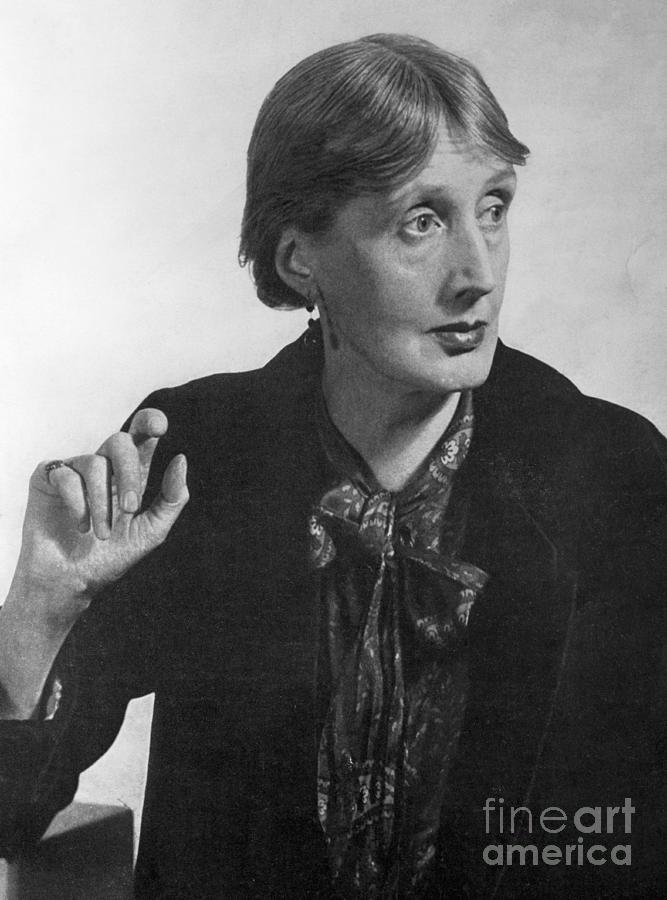
I’m almost done reading Virginia’s Woolf’s Diary, 1918-1941. She means much to me ever since Howard Harper, a Woolf authority at UNC, introduced her to me.

Such a scintillating intellect. Writing didn’t come easily to her, frequented with anxiety, sensitivity to criticism, writer’s block, and bouts of depression. Without husband Leonard, I doubt she’d have pulled off her prodigious achievement.

The Diary serves largely as her workbook of creative struggle—getting things right, the interplay of new formulations, the unleashing of her interiority.

The Diary catalogues books she’s reading and plans to read. It teems with recall of literary and artist luminaries she knew intimately, many associated with the Bloomsbury Group to which she belonged—Strachey, Forster, Keynes, and her sister Vanessa Bell among them. Henry James, George Meredith and T. S. Eliot were frequent household guests.

She’s opinionated about several of her rivals, Joyce for instance. She adored Proust: “My great adventure is really Proust. Well—what remains to be written after that? You can’t go further than that.” And, of course, there were Shakespeare, Dostoevsky, Tolstoy, and not least, Dante, to whom she turned often.

She read Homer, Plato, Aristotle, Sophocles, and Euripides in the original Greek and continued so throughout her life. I have her essay, “On Not Knowing Greek.”

Woolf spoke French fluently and read Proust, Gide, Flaubert and Maupassant in French. I hadn’t known until reading the Diary that she read Dante’s The Divine Comedy in Italian.

Largely self-educated apart from courses in the classics taken at the Women’s Department of King’s College (Women were excluded from Oxford and Cambridge), her intellectual achievements are extraordinary.

I introduced my students in Modern Novel to her “A Room of Their Own,” a feminist classic elaborating the interiority of female consciousness and exposing the barriers silencing women’s voices. And then, there was Mrs. Dalloway and To a Light House, now canon staples of English literature.

Nonetheless, in reading the Diary I found myriad passages that grieve me. She could be elitist, contemptuous of the working class; condescending towards blacks; antisemitic: “I do not like the Jewish voice: I do not like the Jewish laugh”; she felt uncomfortable in the company of the disabled.

In many ways, her views were not atypical of the mindset of the snobbish British upper class in the days of Empire.

Despite these faults, I try always to separate the artistry from the life; otherwise, there would be few artists to pursue, given the human proclivity to misbehave.

And so, over the years, I keep coming back to Woolf—her ability to recreate the inner life, to make universal the world of the quotidian; the beauty of her lyrical prose, her experimentations with narrative, her wrestlings with life’s frequent inequities.

Reading Ove Knausgaard at 4 AM: A Friend to See Me Through the Night

I woke up at 4 a.m. this morning, dawn’s light still absent, an annoying habit of mine, worsened by turning-in too late, despite ardent resolve to do better. God knows, I need more than four hours of sleep, and I pay for it, drifting off repeatedly as day unfolds.

To cope, I try teasing myself back to slumber—whatever works—like counting up to 100 in Italian, gleaned from daily Italian lessons. Or better, groping for the iPad beside me to resume my daylight read, Karl Ove Knausgaard’s massive My Struggle, despite blue light barriers to sleeping well.

I read a lot—mainly books I often list in Brimmings each New Year’s Day. Right now, I’m deep into Book Two of My Struggle, part of a six-volume series totaling nearly 3,600 pages—or three times the length of War and Peace.  In contemporary writing, only Elena Ferrante’s Neapolitan Novels, at roughly 2,000 pages, come close in length. (Proust’s Remembrance of Things Past runs to 3000 pages across seven volumes.)

Overall, Book Two details Knausgaard’s move to Sweden, his family life with second wife, Linda, and their three children; the tensions arising from his obligations to family life and dedication to writing:

Now I had everything I had dreamed of having since I was a teenager: a family, a wife, children—yet none of it made me happy. On the contrary, I was constantly on the verge of tears, I was always angry, always tired.”

The love I had for Linda was not stable and warm but consuming and often destructive.

I’m attempting all six volumes. I wonder how many have done this and for what reasons. My guess is very few have climbed the mountain, but I’m liking the climb.

In his penchant for recalling past event, interspersed with personal reflection narrated over several volumes, Knausgaard has often been compared with Marcel Proust.

While his prose may lack Proust’s lyricism, it compensates with acute playback of places lived, voices heard, and life’s everyday ironies. It’s like he’s sitting across from you, filling the room, talking to you directly.

Though he’s won several Scandinavian literary awards, he’s yet to take home a prestigious International Booker translation prize or Nobel.

Writing in Norwegian hasn’t helped. There are only 5.5 million Norwegians. It’s the uphill climb all non-English writers face in an industry still dominated by native Anglophones.  And so I commend  The New York Review of Books for its continued effort to revive works originally not written in English.

Some critics think Knausgaard narcissistic for his self-focus, but they forget: he’s writing memoir. Anyway, when is writing anything but a quest to be heard or validated? I think they’re being simplistic.

In Norway, readers were shocked at Knausgaard’s inclusion of family and friends, names unchanged, intimate details not held back. An uncle threatened to sue and former wife, Linda, suffered mental distress, requiring therapy.

Knausgaard can make anyone uncomfortable. He doesn’t hold back about life’s often brutal truths. But to me, that’s his strength. I like writers who unflinchingly deliver human experience.

Knausgaard writes what’s known as autofiction, a blurring of the distinction between the factual and the fictional. Memory, subject to filtering, is unreliable. We cannot even say we fully know ourselves. By this yardstick, even autobiography becomes an act of arbitrary inventory—selecting, omitting, fabricating—and, hence, approximates fiction, or as Knausgaard puts it, memory “is not a reliable quantity in life” as it  “doesn’t  prioritise the truth, but rather self-interest.”

I admire his directness and minute detail. I revel in his feel for nature’s splendors, vignettes of people and their eccentricities, the fiery fever of first love; thoughts on today’s politics, obsessions imposing self-censure, the ennui often accompanying contemporary existence, and not least, the myriad burdens of the writer’s life.

I always longed to be away from it. So the life I led was not my own. I tried to make it mine, this was my struggle, because of course I wanted it, but I failed, the longing for something else undermined all my efforts.

The foregoing passage helps explain the series title, My Struggle, with its provocative echoes of Hitler’s Mein Kampf.  Knausgaard’s struggle, however, is an existential one—that of locating oneself in a world often hostile to individuality, of finding balance between writing and family, each under pressure of cultural conformity.

…perhaps it was the prefabricated nature of the days in this world I was reacting to, the rails of routine we followed, which made everything so predictable that we had to invest in entertainment to feel any hint of intensity?

Knausgaard’s critique of cultural homogenization, creeping across Europe like some unchecked fungus, especially resonates with me:

There was the revulsion I felt based on the sameness that was spreading through the world and making everything smaller? If you traveled through Norway now you saw the same everywhere. The same roads, the same houses, the same gas stations, the same shops. As late as the sixties you could see how local culture changed as you drove through Gudbrandsdalen, for example, the strange black timber buildings, so pure and somber, which were now encapsulated as small museums in a culture that was no different from the one you had left or the one you were going to. And Europe, which was merging more and more into one large, homogeneous country. The same, the same, everything was the same.

Thoughts arise of  a visit to Moscow’s Red Square with my students, of fast-food chains—TGI Friday’s, McDonald’s, Pizza Hut, KFC—littering its periphery, exporting America’s consumer culture and eroding local identity; memories of a journey to France—a student lamenting time and money visiting Europe, only to find blue jeans, blaring American music, and global brands echoing home.

There ‘s a humility clinging to Knausgaard’s narrative, a confessed reticence to assert himself in a society indifferent and perhaps judgmental in its appraisal of those differing from the norm:

I subordinated myself, almost to the verge of self-effacement; some uncontrollable internal mechanism caused me to put their thoughts and opinions before mine.

I saw myself as the weak, trammeled man I was, who lived his life in the world of words.

My Struggle abounds in quotable reflections that I hasten to underscore like this hauntingly melancholic passage, evoking a past where dignity, nature, and artistry coexisted—however harsh the drawbacks of its era:

…if there was a world I turned to in my mind, it was that of the sixteenth and seventeenth centuries, with its enormous forests, its sailing ships and horse-drawn carts, its windmills and castles, its monasteries and small towns, its painters and thinkers, explorers and inventors, priests and drugstores. What would it have been like to live in a world where everything was made from the power of your hands, the wind, or the water? What would it have been like to live in a world where the American Indians still lived their lives in peace? Where that life was an actual possibility? Where Africa was unconquered? Where darkness came with the sunset and light with the sunrise? Where there were too few humans and their tools were too rudimentary to have any effect on animal stocks, let alone wipe them out? Where you could not travel from one place to another without exerting yourself, and a comfortable life was something only the rich could afford, where the sea was full of whales, the forests full of bears and wolves, and there were still countries that were so alien no adventure story could do them justice, such as China, to which a voyage not only took several months and was the prerogative of only a tiny minority of sailors and traders, but was also fraught with danger. Admittedly, that world was rough and wretched, filthy and ravaged with sickness, drunken and ignorant, full of pain, low life expectancy and rampant superstition, but it produced the greatest writer, Shakespeare, the greatest painter, Rembrandt, the greatest scientist, Newton, all still unsurpassed in their fields, and how can it be that this period achieved this wealth? Was it because death was closer and life was starker as a result? Who knows?

Knausgaard has this way of arresting you mid-thought and making you reassess your values.

Book 2  emphasizes the fissure between the expected of you and living your true self. For writers living in a world of the utilitarian with its compromises, the challenge of finding equilibrium can be daunting :

To write is to carve a path through the wilderness. It is to find something that has not been said before, something you can believe in, something that gives meaning to your life.

Again, the unstinting honesty, whether commenting on contemporary mores, engaging in philosophic reflection, or offering informed opinion separating the trivial from the significant.

They say Book 6, 1000 pages long, is steep in philosophical reflection. Whatever, I look forward to the climb.

The New Yorker critic James Wood praises Knausgaard’s ability to extract the profound from the mundane as “hypnotically compelling.”

The Atlantic’s William Deresiewicz applauds Knausgaard’s philosophical depth as a “contemporary Proustian endeavor.”

Life is never simple for Knausgaard in his dense weave of mystery and randomness, of inheritance and free will, of human frailty and moral striving..
I find that compelling.

And so, even when I awake, the silent stars my sole companions, I find pleasure in his company, a friend to see me through the night.

–rj


Dr. Henry Marsh’s And Finally: Matters of Life and Death


Am reading Henry Marsh’s And Finally: Matters of Life and Death. Marsh is a retired brain surgeon, who recently was diagnosed (2021) with advanced prostate cancer, presently in remission, but with a 75% chance of reoccurrence.

His previous books include Do No Harm and Admissions: Life as a Brain Surgeon, both well received. Professionally, he has published 179 papers in peer reviewed journals and performed 50,000 surgeries over a 40-year span.

In his fulsome writing, Marsh reminds me of the late neurosurgeon Oliver Sacks, gifted in eloquence, humble, and unfailingly compassionate.

Perhaps I’m stereotyping, but he’s unlike many in the medical sciences, consumed by professional interests and profit motive, insensitive or ignorant of the arts and, professionally, objectifying their patients rather than seeing them as individuals, each with gradients of need and longing.

One of his cherished accomplishments is the creation of two balcony gardens for neurological patients at St. George’s hospital

Impressively, he’s been working pro bonum with colleagues in Ukraine since 1992. Neither cancer nor the Russian 2022 invasion of Ukraine has deterred the good doctor visiting the country regularly to consult and advise colleagues.

At home, Marsh is an assisted dying activist.

Of his previous Do No Harm, now translated into 37 languages, The Economist wrote that it’s “so elegantly written it is little wonder some say that in Mr Marsh neurosurgery has found its Boswell.”

Marsh reads widely, owns several thousand books, keeps a garden, raises bees, and enjoys woodcrafting.

I’m early in my reading of And Finally, so I’ll delay full commentary for another post when fully read. But let me share a passage I read this morning that amplifies Marsh’s writing talent infused with observation and an affinity for nature, under assault by climate change:

The {COVID} lockdown coincided with perfect spring weather – so fine, prolonged and warm that it spoke of climate change. The bushes in the little paradise of my back garden almost all burst into flower all at once, and the trees went from being bare winter skeletons to towers of spreading green leaves in a matter of days. The bees came rushing out of their hive in front of my workshop and shot up into the sunlight, rejoicing in vertical zigzags. And the lockdown brought complete peace and quiet. The air felt as fresh as if you were in the countryside and the sky was a clear and deep blue. The only sounds were of birds singing, children playing and the wind in the trees. And at night, at first there was a full moon, looking down kindly on the suddenly silent city, and you could see the stars. It was a vision of heaven, here in London, SW19. Time had stopped. Eternity is not the infinite prolongation of time but instead its abolition.

The silence and clear air, and the return of birdsong, reminded us of what we have already lost with cars, pollution and the changing climate, and the unnaturally fine weather told us that Nature is out of joint, and that there is much, much worse to come.

I feel it in my bones. This is going to be a great read.

—rj