The Trump administration’s assault on the environment in the context of exponential climate change exhibits all too well the earmarks of corporate denial in the pursuit of monetary gain that will reap catastrophic consequences.
When Rachel Carson’s Silent Spring appeared in 1962, it moved two presidents to take action, Kennedy ordering an investigation of pesticide use and Nixon founding the Environmental Protection Agency.
Unfortunately, Trump’s EPA version bears little resemblance and to chart his myriad changes would try your patience.
I confess to being an environmental zealot. I read eco literature vividly, keep up with the latest happenings, donate regularly to environmental groups.
I support protecting endangered species like the whooping crane, manatee, blue and finback whales. I accept evolution’s tapestry of a variegated offspring, reaping the legacy of successful adaptation over vast aeons of time, our human presence but a wink by comparison.
I do not subscribe to the administration’s either/or assumption of jobs vs. environment. On the contrary, abundant studies show commitment to the Green New Deal would inaugurate new technologies and promote GNP growth. According to a University of Massachusetts study, commitment to a climate jobs program would generate 1.5-2 million net jobs annually for a decade (Pollin et al.).
Trump and his lackeys ignore such research. They are of a stubborn mindset, devotees of fossil industry interests,
Recently, this administration waived thirty environmental and public health studies in pursuit of building a wall through the Lower Rio Grande Valley National Wildlife Refuge, placing endangered species habitats and ecosystem corridors in jeopardy.
Meanwhile, they’ve slashed the EPA budget by 65%, cancelled or unenforced dozens of environmental rules, opened the Arctic National Wildlife Refuge and US coastal waters to oil drilling, slated public lands with their indigenous monuments for auctioning, and severely reduced national park staffing.
As for the Endangered Species Act, this administration has compromised it to allow for economic considerations. Good-bye, my beloved manatees, the Everglades, Yosemite as we once knew it in its pristine beauty,
As Rachel Carson reminds us, “Beauty — and all the values that derive from beauty — are not measured and evaluated in terms of the dollar.” (Lost Woods).
Addendum:
Yesterday, my heart quickened as Dee Dee and I drove into Lexington, honked our horn at several groups of Trump protestors gathered along the way, who exuberantly reciprocated our waves.
I altered my routine last week, signing up for an eight week edX course, The Living Amazon: Science, Cultures and Sustainability in Practice.
It’s all that I could hope for, an intense, but well-informed analysis of the Amazon’s plight, with 21% of its forest already harvested to make room for cattle ranches, mining and lumber interests.
The fallout for its 1 million indigenous, suddenly brought into contact with an entrenched, and growing profit-motive corporate presence, has been disastrous, violence not uncommon, indigenous lands degraded or appropriated, and cultures eroded.
Not only does the Amazon, so vital to mitigating climate change, need saving, but social justice must prevail.
The course, hosted by distinguished earth system scientist Carlos Nobre, is conducted in Portuguese, but subtitled in Spanish, and English.
Despite the Amazon’s plight, Nobre doesn’t lose hope that remedies can be found to halt the carnage while simultaneously offering a prosperous economic future, founded on eco-safeguards and beneficial for its indigenous peoples.
Frankly, if we don’t achieve solutions, the consequences will prove apocalyptic for all of us. As is, we’re nearing the tipping point of no return in the existential challenge of climate change.
In actuality, the Amazon transcends Brazil, the Amazon basin embracing portions of nine countries, housing the largest tropical forest on earth and, with its river system, 7 million square kilometers, or about 40% of South America.
50 diverse Andean-Amazonian ecosystems are within its traverse, collectively comprising 13% of the world’s biodiversity. 34% of the world’s birds and 20% of its mammals are endemic to the basin.
The Amazon biome functions as an important carbon sink, helping to reduce the global heating rate. Unfortunately, its effect seems to be weakening, the basin experiencing diminished rainfall and forest fire occurrence.
I’m excited about this course and trust that informed, I can do my part in helping sustain the Amazon’s crucial contribution to earth’s welfare.
Famed entomologist E. O. Wilson passed into infinity in December, 2021. He was 92.
I came upon him late in my life, but not too late for him to have left me with a reverence for his boundless intellect, inveterate inquisitiveness, and fervent championing of our fellow creatures, mostly outside human ken, myriad species vital to Man’s survival, yet victims of humanity’s arrogant trespass.
Recently, an extended research project, launched by the World Wildlife Fund, revealed that of the 32,000 species it analyzed, 69% of them are in decline. Shockingly, 2.5% of mammals, fish, reptiles, birds and amphibians have gone extinct just since 1970 (World Wildlife Report).
While species extinction surely is an integral fact of our 4.5 billion old planet’s history, the salient evidence of natural selection favoring those able to adapt to largely inveterate climate distillations, several near-Earth object (NEOs) visitations, volcanic acidification of oceans and acid rain, impacting land chemistry, their repetition has become marginalized by evolution’s new arbiter of destiny, homo sapiens.
“The message is clear and the lights are flashing red,” says WWF International’s Director General Marco Lambertini, one of the report’s authors.
Climate change threatens the next massive die-off, witnessed in every day record breaking temperatures, accelerating violent storms, rising sea levels, droughts, and massive fires.
Meanwhile, we continue to pour heat-trapping gases like carbon dioxide and methane into the atmosphere. All of this affects habitat, destroying the intricate ecological web that sustains us.
It doesn’t make for breaking news headlines, but should, that the Arctic is warming four times faster than the rest of our planet, threatening the demise of the jet stream, resulting in still more climate instability.
We live our lives addicted to trivia, fingers in our ears, indifferent to the existential challenge that poses our extinction. It seems a human predilection to forfeit the future for indulgence in the ephemeral present. Rome burns while Nero plays his fiddle.
Thus far, efforts to mitigate climate change and restore balance have failed to achieve their targets. We even have a candidate running for the presidency who’s pledged to roll back environmental regulations.
Not to be outdone, we have President Biden’s recent approval of the Willow Project (March 1923), allowing ConocoPhillip’s massive oil drilling rights on Alaska’s North Slope in the National Petroleum Reserve, despite his campaign promise he’d prohibit drilling on public lands (The Willow Project).
We knew where Trump stood, but we trusted Biden, whose administration has also approved the auctioning off of 73 million acres of waters in the Gulf of Mexico to offshore oil and gas drilling interests, encompassing an area twice the size of the Willow Project (Common Dreams).
Universal human-induced loss of forest, wetlands, and ecosystems hastens the trajectory of apocalyptic consequence for future generations.
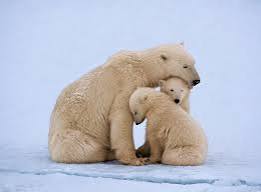
Meanwhile, beleaguered polar bears attempt to adapt, but aren’t succeeding. Given the melting ice, they cannot access their traditional foods, resulting in their numbers declining 30% since 1980 (Polar bear decline).
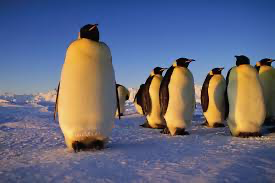
Penguins haven’t fared any better, their numbers declining up to 10% (Penguins declining).
Truth be known, we’re approaching a tipping point at which the ecosystem collapses.
E. O. Wilson rightly faulted humans for earth’s crisis: “Deeming ourselves rulers of the biosphere and its supreme achievement, we believe ourselves entitled to do anything to the rest of life we wish. Here on Earth our name is Power” (Half-Earth: our Planet’s Fight for Life).
Each species is its own miracle. By the century’s end, most of today’s faltering species will be gone:
No birdsong to greet the new day, No crickets rubbing their wings; An absence of croaking frogs at the pond, Zinging dragonflies but memory. Amid parched landscape, a wounding silence.
The only biodiversity we’re going to have left is Coke versus Pepsi. We’re landscaping the whole world one stupid mistake at a time. —Chuck Palahnuk, Lullaby
The year is 2060. You are gone, but your grandchild reads to her children from a book filled with drawings of creatures once abundant and a source of wonder, now the stuff of children’s story books, only not of some fearsome Tyrannosaurus Rex, Megalodon, or Woolly Mammoth, but of elephants, giraffes, lions, tigers, rhinos, whales and monarch butterflies, now vanquished, never to grace our earth again.
Distressingly, largely due to the exponential increase in the human footprint, this is our grandchildren’s bleak future. No more condors, manatees; no more of our closest relatives, chimpanzees, orangutans, and mountain gorillas, natural selection’s vast repertoire of unique, splendid entities reaching back several million years, thoughtlessly extinguished by Homo sapiens.
Apart from the scientific community, the public appears largely unaware, perhaps even indifferent, to this unprecedented threat to species loss and the risks it imposes for its own welfare. This extends to climate change, largely human induced. A current PEW poll reveals only 41% of Americans regard it as a priority issue.
As to how many species exist, whether flora or fauna, we don’t really know. New species are continually being discovered, while others have recently become extinct or face extinction. What we do know is that many species have gone extinct even before their discovery. An estimated million others are likely to go extinct in the next several decades.
This leaves us in a quandary: do we attempt to preserve existing species for future generations or do we simply resort to preserving those serving immediate human interests? Unfortunately, our present trending indicates the latter with species everywhere in free fall.
A useful acronym for the specifics governing this decline is HIPPO: habitat loss, invasive species, pollution, population growth, over exploitation:
Habitat: Three quarters of the earth’s terrestrial environment has been altered by human activity; 66% of the marine environment.
Invasive species: Since 1970, invasive, alien species have increased 70% across 21 countries.
Pollution: 300-400 million tons of heavy metals, solvents, toxic sludge among other wastes from industrial facilities have been dumped into the world’s waters.
Population growth: The world’s population averaged an annual 1.7 increase between 1950 (2.5 billion) and 2010 (6.9 billion). In 2022, world population has reached 7. 6 billion. (Pew Research). While the growth rate has generally been plummeting, not so in Africa, averaging an annual 2.54 increase. By 2050, Nigeria will overtake the U.S. in population (The Economist); 800 million by 2300 (qz.com).
Over-exploitation: In 1930, an estimated 10 million elephants roamed Africa. Currently, that number has dwindled to 416,000, largely due to poaching and conflict (World Wildlife Federation). On the high seas, factory ships are removing fish faster than they can be replenished. Japan continues to hunt whales. Sharks are killed in the thousands for their fins (fin soup a Chinese delicacy), their carcasses thrown into the sea. Chimpanzees, our closest relatives, hunted for meat and increasingly suffering habitat loss, are now a threatened species.
Climate change needs to be added, giving us HIPPCO. It ranks second to habitat loss in imperiling biodiversity. Largely due to climate change, we are losing our polar bears, just 31,000 remaining; coral reefs with their independent ecosystem, nourishing myriad aquatic life, are dying as the sea warms and storm intensity and frequency increase. The speed of heat increase due to reliance on fossil fuels over the last 100 years now exceeds that of the previous 10,000 years.
Extinction isn’t new to earth’s history. Geologists have noted five principal occurrences, the most famous that of 65 million years ago, when a 12 kilometer wide asteroid crashed into the Yucatan, leaving a crater 10 kilometers deep and 180 kilometers wide, killing 70% of the earth species, including the dinosaurs, ending the Mesozoic Era, or Age of Reptiles, and ushering in the Cenozoic Era and the rise of mammals after 10 million years of evolution.
Humans came late on the scene. In the 1980s, aquatic biologist Eugene Stoermer coined the term Anthropocene to depict a new epoch, human dominated. In this epoch, the Earth faces a new menace, wrought not by an asteroid, but by Man. The massive extinction of this human-centered epoch has been popularized as the Sixth Extinction.
The fundamental source of our dilemma is our disconnect from nature. We have fostered Nature as something apart from ourselves. It exists, but it’s outside ourselves, an entity to be exploited for human needs.
The truth is we exist as constituents of a vast biosphere complex of interrelated life forms dependent on one another for well-being. Remove an element of this web and you potentially unleash a house of cards scenario of collapse.
Take, for example, the chestnut tree dominating the forests of Eastern North America before European settlement. Tall, fast growing, numbering an estimated four billion, their canopy housed millions of birds and their nuts provided food for many birds, insects and mammals. Then came the Asian pathogen fungus Cryphonectriaparasitica of the early 20th century. With the loss of these magnificent trees came the demise of caterpillars metamorphosing into moth pollinators, along with the plunge into oblivion of the once prodigious passenger pigeon.
In our earth’s nearly 4 billion year history, we estimate that of the 4 billion species evolved by nature, 99% are extinct. But such extinctions resulted from natural antecedents apart from human causation. Increasingly, Man has become the arbiter of species decline, not evolution or cyclic climate change, or asteroid collision. In the last 500 years, 900 species have gone extinct and the pace quickens.
Currently, 35,000 species face extinction risk, according to the International Union for Conservation of Nature’s Red List of Threatened Species:
Among these, 1 in 7 bird species.
A quarter of the world’s mammals
40% of amphibians
34% of conifers
37% of sharks and rays
21% of reptiles
33% of reef corals
It gets worse than that. The latest UN IPBES Global Assessment report (2019) forecasts more than a million species are likely to go extinct in coming decades.
The biosphere, which includes ourselves, is Nature’s survival gift, complex and delicate, requiring balance of its constituents. Safe-guarding it is crucial and its benefits not to be taken for granted. Healthy Plants convert the sun’s energy, making it available for other life forms. Bacteria and other living organisms convert organic matter into nutrients enriching the soil. Pollinators are essential to food production. Plants and oceans act as major carbon sinks. Did you know that of the 50,000 known medicinal plants, up to a fifth face extinction from deforestation? Or that approximately 120 drugs derived from rainforest plants are used to treat cancer, leukaemia malaria, heart diseases, bronchitis, rheumatism, diabetes, arthritis or tuberculosis?
As the late eminent biologist E. O. Wilson pleads in his compelling Half Earth,
The biosphere does not belong to us; we belong to it. The organisms that surround us in such beautiful profusion are the product of 3.8 billion years of evolution by natural selection. We are one of its present-day products, having arrived as a fortunate species of Old World primates. And it happened only a geological eyeblink ago. Our physiology and our minds are adapted for life in the biosphere, which we have only begun to understand. We are now able to protect the rest of life, but instead we remain recklessly prone to destroy and replace a large part of it.
Our Earth has taken ill and we are its cause. Paradoxically, we must be its healer.
I finished reading E. O. Wilson’s remarkable book, The Meaning of Human Existence, two weeks ago and am now finally getting to tell others why I like it so much.
For one thing, I admire its author, an eminent, cerebral champion of eco diversity given to candor that may arch the backs of some. Years ago, a member of the Marxist oriented Progressive Labor Party poured a pitcher of water on him for advocating the genetic origin of human behavior, a surely unpopular stance with today’s still entrenched view of social conditioning as the compelling factor in the ongoing nature vs. nurture debate.
The controversy once got so heated that it spilled over in 2001 into the front pages of the New York Times and Time Magazine, with some members of the science community dismissing Wilson as a misogynist and racist.
Of course, I learned long ago that scientists, just like the rest of us, are hardly free from biases that can prejudice challenges to accepted axioms rooted more in assumption–and sometimes, pecuniary interests–than objective research or the empirical.
And always there are the social ameliorists, who can be downright bullying in their evangelical intensity.
For me, Wilson makes a lot of sense. If we can take evolution into our own hands and genetically induce behavioral as well as physiological outcomes in animals such as canines, why would this not be true of evolution as a mechanism at large?
But Wilson has survived the controversy and, you name it, he’s won virtually every academic and journalism award, including two Pulitzers.
The novelist Ian McEwan aptly described Wilson as “an intellectual hero,” and that he didn’t “know of another working scientist whose prose [was] better than his. He can be witty, scathing and inspirational by turns. He is a superb celebrator of science in all its manifestations, as well as being a scourge of bogus, post-modernist, relativist pseudo-science, and so-called New Age thinking” (qtd. in The Guardian, 16 February, 2001).
This most recent book, in many ways a summation of his copious research across several decades, has been nominated for the National Book Award.
It’s far more than a tome on science, however. Replete with wisdom and concern for a diminishing biodiversity on which our survival depends, it ultimately addresses the human condition marred by tribalism, redundant in self-interest, and often (think today) exhibiting a religious and political mindset:
The great religions are…tragically, sources of ceaseless and unnecessary suffering. Their exquisitely human flaw is tribalism. It is tribalism, not the moral tenets and humanitarian thought of pure religion, which makes good people do bad things.
In more secular societies, faith tends to be transmuted into religion-like political ideologies. Sometimes the two great categories are combined.
The Meaning of Human Existence pleads for the convergence of science and the humanities to not only confront human behavior but pursue its origin that we might remedy it.
The self-contained world of the humanities describes the human condition–but not why it is the one thing and not another. The scientific worldview is vastly larger. It encompasses the meaning of human existence–the general principles of the human condition, where the species fits in the Universe, and why it exists in the first place.
With resounding pathos, not unexpected in a man who loves Nature so fervently, Wilson also laments our intransigent myopia that unwittingly plants the seeds of our own demise and, hence, betrays our future:
Too paralyzed with self-absorption to protect the rest of life, we continue to tear down the natural environment, our species’ irreplaceable and most precious heritage. And it is still taboo to bring up population policies aiming for an optimum population density, geographic distribution and age distribution.
I think Wilson is spot on. While the humanities can teach us how to behave, they cannot rid us of the conflicting dynamics of individualism versus altruism implanted by evolution.
And that is our tragedy. We must learn to conceive ourselves as unique offspring possessed of divided sensibilities, the finale of vast eons of time, that we might weave a more rational way of living.
Though it’s folly to suppose we can annul our fissure, we can do better. We do not have the gods to blame, nor a devil to curse. And if this frees us from a good deal of our tribalism, then so much the better.
It pains me to think this may be Wilson’s last book, since he will turn 86 next June. As is, he’s lost none of his mettle in provoking us to examine our assumptions and liberate ourselves.
In doing so, he reminds me of those Old Testament prophets that would, at great risk, prognosticate the calamitous fallout of an unheeded warning.
I confess to being an omnivorous reader and that my iPad has only abetted my hunger for new turf, now so easily accessed with the likes of Publisher’s Weekly, Goodreads, and the Huffington Post. On occasion, I’ve drawn on Fareed Zacharia’s recommendations on his GPS weekly telecast. I maintain links to all the nation’s foremost bookstores like Powell’s as well. And, of course, there is always that behemoth, Amazon.
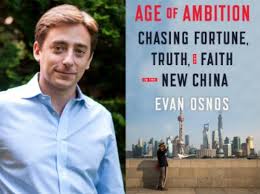
This past week I was delighted to see two authors among those on the 2014 Long List for the National Book Award for Nonfiction. The first is Evan Osnos, whose Age of Ambition: Chasing Fortune, Truth, and Faith in the New China I read several months ago following upon Zacharia’s counsel. It’s not my intent, however, to give a lengthy book review here. Besides, you can access copious online reviews with Google or at the Amazon site.
Anyway, Osnos is presently with The New Yorker after having been a roving correspondent in China for eight years. He went everywhere, interviewing citizens across the social-political-economic spectrum.
What amazes me is that he did so speaking fluent Chinese, acquired as a major at Harvard, obviously increasing his access enormously.
He’s also a polished writer exhibiting a lucid style along with cogent analysis.
I hadn’t done any sustained reading on China until Osnos, which–sadly– probably includes the vast lot of us, though China rivals the USA on the world stage.
Certainly, Osnos has his hands on that nation’s pulse. Essentially, its communist government hasn’t changed in its dedication to controlling all aspects of daily life and maintaining its privileged status despite its seeming anomaly of encouraging a market economy so contrary to the legacy of Mao.
It does so, of course, to keep in check any democratic impulses among its citizenry. Let them eat cake and they’ll overlook pressing for governmental reform. So far, it seems to have kept the lid on, though Osnos notes that many of the populace seethe underneath, as materialism cannot assuage their desire to be free to think and choose. Accordingly, a revival of interest in religion is also taking place, proving again “that man cannot live by bread alone.”
As a consequence, it’s a fine-balancing act for many Chinese, especially among its entrepreneurial classes, intellectuals, and artisans. The thought police are everywhere monitoring, especially the Internet.
The regime even goes so far as to downplay natural disasters that may point to government malfeasance.
Of course, the Chinese know this well to the point of using code terminology to circumvent the censors.
Osnos doesn’t neglect the full picture, however, as there is a growing emergence of rabid nationalism among some that could ultimately pose a danger on the world stage. In the short term, these zealots pose an additional threat to the cadre of brave dissidents at home.
I went away admiring the quiet heroism of many of the Chinese, and sadly, the hard lot of dissidents who have chosen to articulate their concerns for a more liberal China very openly, risking long imprisonment under harsh conditions and sometimes torture.
If you want to take China’s measure, then this is a book you’ll want to read.
The second name among others in the 2014 Long List for Nonfiction is that of the renowned etymologist Edward O. Wilson for his The Meaning of Human Existence. I’m familiar with Wilson’s nimble acuity to persuasively and eloquently deliver a manifesto for nature and its myriad creatures under the duress of both man and global warming in his other books.
I’ve also just recently read his In Search of Nature, surely an environmental classic that explains in layman’s terms the complicated interplay between genetics and environment. Like all sociobiologists, Wilson seeks to unlock the biological origins behind human behavior.
In the Meaning of Human Existence, Wilson boldly asserts that no transcendental design is responsible for our existence. On the contrary, “Our species was created not by a supernatural intelligence, but by chance and necessity out of millions of species in Earth’s biosphere.”
No destiny or purpose is assigned to us, and no afterlife awaits us. Our human moment originates in “the epic of the species, begun in biological evolution and prehistory, passed into recorded history, and urgently now, day by day, faster and faster into the indefinite future.”
Creatures with a social intelligence predisposed for social action enhanced by natural selection, we require the humanities even more than the sciences to define the human condition and guide it into effectual relationships, not only among ourselves, but with earth’s other creatures, for surely our future, and our safety, depends upon biodiversity and its preservation.
Wilson’s view is a brave one, given that the religious instinct along with “tribalism” remain rampant with all their insularity and intolerance:
Human existence may be simpler than we thought. There is no predestination, no unfathomed mystery of life….We are self-made, independent, alone, and fragile, a biological species adapted to live in a biological world.
Accordingly, Wilson movingly pleads that humans in their unique social intelligence extend their embrace to include nature:
We alone among all species have grasped the reality of the living world…. We alone have measured the quality of mercy among our own kind. Might we now extend the same concern to the living world that gave us birth?
As always, Wilson writes a reasoned, yet passionate prose, acute in its honesty, telling in its empathy for both man and his beleaguered companions.
After we murder Nature, then what? I know some of you may think this a dubious assumption as to possibility, and I would be among you–that is, until recently.
As is, Nature has atrophied and we live increasingly in asphalt environments, with Nature relegated to a few urban parks and, even then, they tend not to be passive parks given over to Nature, but to ball fields, children’s playgrounds, etc.
As evidence of our increasing sequestering of Nature, consider that more of us in the USA and Canada visit local zoos than attend professional sports events combined!
The pity is that Man is himself the evolutionary outcome of millions of years of a once teeming biodiversity. The question then follows as to what happens to us when we marginalize the very sources of our being and our future.
I’ve seen science estimates of the number of species of existing plants and animals as somewhere between 5 and 100 million. We know that invertebrates vastly outnumber vertebrates like ourselves, perhaps some 10 million, of which only a million have been identified.
Zoologist Edward O. Wilson tells us that if humans were to suddenly disappear, all would still be well on earth; conversely, were the invertebrates to disappear, life would soon revert to its initial state a billion years ago of myriad algae, bacteria, and a few multi-celled organisms (In Search of Nature, 153).
In short, we are intertwined with nature right down to the tiniest organism.
Our mistake is to think that even the smallest entities of Nature, so staggering in numbers, cannot be vulnerable to human excesses:
When a valley in Peru or an island in the Pacific is stripped of the last of its vegetation, the result is likely to be the extinction of several kinds of birds and some dozens of plant species. Whereas we are painfully aware of that tragedy, we fail to perceive that hundreds of vertebrates will also vanish (Wilson, 145).
As is, humans from their earliest beginnings up to the last century had already wiped out an estimated 10% of flora and fauna species. Alarmingly, bird population is declining rapidly, with a drop of 25% in bird species. Presently, the drop-off in all species, not only birds, is occurring 100 to 1000 times higher than in pre-human times.
Consider the continuing decimation of the Amazonian rainforest, the world’s foremost repository of biodiversity with huge implications for pharmaceuticals, agriculture and oil substitutes and, of course, climate change. Each year, we lose to chainsaws an area approximating half the size of Florida!
Unfortunately, we’ve inherited a primordial disposition that prioritizes personal safety, followed by family, tribe, then outsiders ((Wilson 186), a selfishness that unless it gives way to altruism expressed in environmental regard, is likely to doom us.
Today, we’re hearing a lot about climate change, and it certainly can’t be minimized, since we are largely responsible for it. But it’s not just a matter of carbon, but our burgeoning numbers, with corresponding exponential demands on limited resources. The more population increases, the more decimation, with habitats reduced and species extinguished, many of unknown importance to our survival. Consider Nigeria with its present population of 175 million (2013). PEW research estimates it will reach 440 million by 2050, exceeding the USA population.
Although population rates are declining, the world’s population will be just under 10 billion by 2050, with sub-Saharan Africa experiencing explosive growth, an area already confronted by widespread poverty, disease, and ethnic conflict. Unfortunately, in many places, cultural traditions and religious beliefs continue to dominate.
We can still save the day, but it’s unlikely that we care enough to act meaningfully and quickly.
Take where I live, Kentucky, where we have two senate candidates, Democrat and Republican, trying to shout down each other in denouncing President Obama’s policies affecting environment, especially coal. Accordingly, reducing the powers of the EPA is a foremost goal for both.
Unfortunately, evolution gave homo sapiens a well-developed brain, but pulled up short in maximizing a moral prowess vital to its long term survival.




 Brimmings: up from the well