Meditation Goes Mainstream: Western Medicine says Yes

meditation

It’s just me in the sunroom before breakfast, sprawled out on my yoga mat, doing meditation for 15 or 20 minutes.  A series of deep breaths and letting my limbs go slack, a visualizing of a good moment.  The hard part is getting the habit, but having a time and place helps a lot..

The best motivator, however, is how relaxed it makes me feel, and coming from, me, I don’t say that lightly.  As a child raised in an alcohol ravaged home, security wasn’t a given and each day meant finding my place under the sun.  I used to think I was simply a chronic worrier and worried even about that.  Children of alcoholics often try to control their environment to maintain stability.  They find it difficult to tolerate loss or uncertainty.  They like their parameters tightly drawn.

You can take benzies like Valium or Xanax for anxiety and while they’ll work in the short run, they treat symptoms only and, worse, are often addictive.  As for anti-depressants, they may work for some, but then how intact do they leave the user?  I prefer taking a different route, sovereign over my psyche rather than pharmaceutically lobotomized.  I suspect they’re overly prescribed anyway.  And then there are the side-effects that sometimes make matters worse.

Anxiety is triggered by our perceiving danger.  This needn’t be limited to a threat to our safety, but losing our financial way through job loss, investments turned bad, the sudden onset of illness.  Sometimes it’s the loss of a friend or loved one that pulls the trigger.  The common denominator, no matter the source, rests within the mind, or the way we think about things.  Nothing can threaten us unless we give it permission.  We are what we think about.  Anxiety is future saturated, or our thinking fearfully about what may happen to us; depression is present tense.  We think the worst has already happened.

Meditation quiets our panic, producing a mindfulness that can sort out, clarify and more cogently respond to what troubles us.  When we’re stressed fear takes ascendancy, preempting alternative, positive ways of responding to crisis.

Meditation has now increasingly become a part of the medicinal arsenal that had traditionally been limited to pharmaceuticals and surgery in Western medicine.  We know that meditation has restorative benefits for the body when we incorporate the mind into our notion of the corporeal.   In fact, we can measure its physiological results in lowered metabolism, heart and breathing rates and replicate those results.  For a fascinating exploration and summary of the empirical data, pick-up The Relaxation Response by renowned Harvard cardiologist, Herbert Benson.

I happen to be a subscriber to Mind, Mood & Memory, a newsletter put out by one of the world’s internationally acclaimed medical facilities, Massachusetts General Hospital.  In its most recent issue (September 2013), Ann Webster, PhD., Director of MGH’s Program for Successful Aging at Benson-Henry Institute, informs us that “among these strategies for successful aging, perhaps the most effective is engaging in practices such as meditation, yoga, deep breathing, or repetitive prayer that help elicit the relaxation response.  Regular experience of the RR helps counteract stress and other factors linked with higher risk for illness and aging, and causes enormously positive physical, emotional, and cognitive changes.”

This doesn’t mean a trained counselor becomes superfluous.  A good psychologist can target needs and offer ameliorative insights to enhance reduction of stress and promote physical and mental health.  The best medicine is always integrative.

And what do I feel like when I open my eyes and put my mat away?  Hard to put into words, but something similar to the snowflake calm that descends when I play Enya and  find my bullying ghosts have fled..

–rj

On living with ambiguity

Those of you familiar with the Myers-Briggs Type Indicator will recall that its end letter comes down to either a P or a J, denoting perception vs judgment modalities.  P types can tolerate, if not thrive on, open-ended movies.  Conversely, J’s like their movies to end with all the pieces in place.  As essentially an everyday existentialist, I’ve always found bonafide certainty elusive.  Thus, I generally come out in the wash as a P, with speculation often more fun for its U-Turn potential than the dead end of the J alternative.

But hold your horses. This doesn’t mean I’m closed to fixed verities and the closure they provide.  Who wants to cast his fate with an ambiguous lover, or speculate about whether he’ll have his job next month or, omigod, is it cancer?  Like the next guy, I want the bad guys rounded-up and justice meted out.  What a wonderful world it’d be if we could truly accept things as they appear, knowing nobody practices deceit, a world with no need for lawyers to protect us from the fraudulent.  No need for the clergy either to put right God’s way of doing things.  And so with psychiatrists, since there’d be nothing to be anxious about in a world absent of unknowns.  But as Voltaire’s Candide discovered the hard way, we don’t live in the best of all possible worlds.

I wouldn’t even be writing this entry if it hadn’t been for coming, serendipity fashion, upon Emily Dickinson’s powerful poem, “We Grow Accustomed to the Dark” with its blunt rendering of our stumbling angst in a cosmos devoid of moon and stars to light our journey through the metaphysical night, reminding me again of ambiguity’s pervasiveness and our struggles to find our way:

We grow accustomed to the Dark—
When light is put away—
As when the Neighbor holds the Lamp
To witness her Goodbye—
A Moment—We uncertain step
For newness of the night—
Then—fit our Vision to the Dark—
And meet the Road—erect—
And so of larger—Darkness—
Those Evenings of the Brain—
When not a Moon disclose a sign—
Or Star—come out—within—
The Bravest—grope a little—
And sometimes hit a Tree
Directly in the Forehead—
But as they learn to see—
Either the Darkness alters—
Or something in the sight
Adjusts itself to Midnight—
And Life steps almost straight.

Here Dickinson fashions the poem’s edifice by way of analogy from everyday life of our initial difficulty seeing things when suddenly plunged into darkness until our vision adjusts and we find our way, or think we do (“And life seems almost straight”).  The equivocation comes in the persona’s almost, which we mustn’t miss in Dickinson’s typical closet subtlety, perhaps mirroring the metaphysical poets Donne and Herbert she read avidly.

When the narrator tells “Of something in the sight/Adjusts itself to Midnight,” we come to the bottom line of how we manage our journey through the psyche’s dark night (“Those Evenings of the Brain”), perhaps through religious faith, a mainstream fixture for many in the Calvinist Amherst of her time.

My point, and I think Dickinson’s as well, is that in a cosmos absent of Divine revelation and explicit meaning, our need for closure–to abolish life’s curves and set its steps straight, exerts itself in human constructs, epistemologically, whether done through provisos of faith or artist metaphor.

It isn’t just nature that abhors a vacuum.  We despise it too.  In the end, Jung is wrong, for we are all J’s at heart!  Life is very often a search for meaning and, if tenuous in its ambiguity, compels us to define it, however vulnerable its artifice.

–rj

Dodging puddles: Things we avoid

As a college freshman, there was one essay we had to read in composition class that made an indelible impression on me that lingers still: George Orwell’s “Hanging,” with its vivid irony in observing the curious behavior of an about to be executed criminal in Burma, where Orwell had served in the British imperial police for six years years.  The narrator takes no part, except to observe:

It is curious, but till that moment I had never realised what it means to destroy a healthy, conscious man. When I saw the prisoner step aside to avoid the puddle I saw the mystery, the unspeakable wrongness, of cutting a life short when it is in full tide. This man was not dying, he was alive just as we are alive. All the organs of his body were working – bowels digesting food, skin renewing itself, nails growing, tissues forming – all toiling away in solemn foolery. His nails would still be growing when he stood on the drop, when he was falling through the air with a tenth of a second to live. His eyes saw the yellow gravel and the grey walls, and his brain still remembered, foresaw, reasoned – even about puddles. He and we were a party of men walking together, seeing, hearing, feeling, understanding the same world; and in two minutes, with a sudden snap, one of us would be gone – one mind less, one world less.

While the essay surely delivers a right upper cut to capital punishment, its underbelly embraces that instinctual element in all of us for well-being, or the comfort zone, or as the behaviorists tell us, the quest for pleasure and the avoidance of pain.

This got me thinking just now of the myriad ways we try avoiding life’s stressors, or dodging puddles, and so this brief list to which I’m sure you can add your own items:

Accepting personal responsibility:  Beginning with Adam blaming Eve, it’s been a human tendency to fault others for our often self-inflicted wounds or make excuses for bad behavior.  Rationalization, like a subterranean stream, lies embedded in the psyche, seemingly dormant, only to spring to the surface in moments of duress.

In baseball, the sport I passionately love, I see it all the time, the batter striking out, jawing with the ump about a wrong call; the pitcher disgruntled with a strike zone, scowling menacingly at the call-maker.

In the legal realm, even in the most heinous crimes, defendants rarely plead guilty, buttressed by lawyers resorting to context.

Unfortunately, evasion rewards wrong conduct and encourages its repetition, often alienating our fellows, and even those we love; in worse case scenarios, severing relationships.  Its remedy lies in keeping our temper hosted, maybe counting to ten.  What really helps is learning from our shame  and wanting to do better to be our best selves.

Confronting fear:   No one lives without anxiety.  It’s simply a matter to what degree.   We can either face up to our fears or let them take charge, minimizing our happiness.   Unfortunately, many of us resort to escapism, often through excessive indulgence in diversions such as TV, movies, net surfing and video games.  When we take hold of our worries we often discover their baseless origins, making it easier to give them the toss.

This isn’t easy, of course, and often takes practice or determined resolve to see it through.  Small steps count, particularly in desensitizing  ourselves to chronically embedded fears such as public speaking or phobias that make us dread high places, narrow spaces, and social gatherings.

Running away doesn’t solve anything and, worse, may feed our anxiety and exacerbate our escapism.  The bottom line is, Who is in charge:  you or your fears?

Avoiding exercise:   Along with making changes in your diet, namely, cutting back on fats, sugar and salt, exercising vigorously minimally five days a week fosters good health, significantly reducing your risks for heart attack, stroke, diabetes, and even cancer.  But it’s easier said than done.  Who likes coming home from work having to exercise?  For many of us it’s simply a good idea we’d like to go away, since it gnaws at our conscience knowing its importance, yet our seeming inability to get it done.

The trick is setting up a time and place; for me, it’s first thing shortly after breakfast that’s now a fixed habit.  For some, going right to a gym before coming home works best. The good thing is that it takes only about six weeks to establish the habit and it’s self-reinforcing in its dividends, reducing weight and stress while increasing energy and improving our mood.

Giving-up cravings:  Bad habits inevitably lead to bad consequences. The problem is that they can be pleasurable, not only to the senses, but psychologically as modes of escape.  Consequently, indulgences in eating, smoking and alcohol dominate a good many and, unresolved, become addictions affecting personal health, wallets, daily focus, and even those we love.

Alas, even the best counsel often falls short of remedy, for their resolution depends on motivation, which sometimes comes only as things worsen and we don’t like our excesses and what they do.  And even this is sometimes not enough.

But there are exercises psychologists often miss that can strengthen our resolve.  Try focusing, for example, on your goal.  Visualize it.  Post pictures on your mirror or wall that capture it.  See yourself as thin, muscular, photogenic. Or family amazed and delighted that you no longer smoke or drink.

Meditation with its centering on a mantra to reinforce focus provides yet another formidable exercise in strengthening will power and fostering self-realization.  Replace bad choices with positive alternatives: carrot sticks coated in hummus instead of potato chips;  fruit replacing candy and baked goods.  You can do this!

Unpleasant tasks:  There are things we don’t like to do and wish they would go away like paying bills, writing a paper, household tasks, running errands, etc.  Accordingly, we procrastinate, with the inevitable result the list grows longer and guilt accumulates.  I like to schedule things, a thing here or a thing there, making keeping-up more manageable.  It also helps to think of what happens if I don’t follow through.

And then there are the good vibes that always come when I follow through.  Having said this, there are some things that may need elimination, if possible, from your list if the payoff doesn’t justify the effort. The more what we do fulfills ourselves, the less difficult it becomes to do them and the more joy leftover to spend on others.

Truth facing:  There are things we don’t want to hear, since they make us  uncomfortable.  I’m as guilty as the next fellow.  Yesterday, my doctor asked me if I’d been checking my blood pressure and I had to confess I’ve been afraid to.  It’s silly behavior on my part, for it changes nothing and can make things worse.  Similarly, it’s sometimes not fun turning on the news, but again, we live in a real world where, yes, bad things happen, injustice occurs, people suffer.

I believe global warming exists and we’re the primary factor, but I know good people who don’t share this view.  They have every right, of course, though sometimes we filter what makes us feel insecure.  It helps to have someone you can talk to who really listens and can provide context, or a larger view of things.

Don’t flagellate yourself because you have anxieties.  We all have them sometime or other.  Just don’t hide behind them.  As for personal beliefs distilled into unthinking habit, better a mindset that follows truth than hugs deception.

Change:  Time often brings new outcomes and altered perspective.  It keeps company with sadness, for in forfeiting our past we often leave behind something of ourselves.  Memory may help us revisit, but the reality is we can’t go home again.  Transitory creatures in an ephemeral world, we wish for permanence of life’s good things: experiences that gave joy and provided purpose and vitality; family and friendships that made for laughter and sharing and assured our acceptance; eagerness with each dawn to make good on the new day’s promise.

Though, understandably, we like to structure our security, we often find our best made dikes prove puny against time’s flow.  But change also has its recompense:  a fresh start and a maturity that refines our goals, separating the wheat from the chaff; a way of atoning for past shortcomings; a means to resolving festering resentments with new found forgiveness nourished by time’s insights.

Change teaches us to cherish now what we must ultimately let go.  Although change demands adaptation, it also makes room for new possibilities trekking unexplored roads and discovering fresh vistas that soften our losses.  The poet Tennyson had it right, “Ring out the old.  Ring in the new.”

Be well.  Do well!

rj

Finding centeredness and discovering peace the Tao way

yin

Whenever I fix lunch for myself, which is usually everyday other than weekends, I like to read something with it, since my spouse isn’t normally present to make lunch interesting.  The other day I found a book on the shelf I hadn’t read since it first came out in 1990, Diane Drehler’s The Tao of Peace, predicated on Lao Tsu’s monumental Tao Te Ching, deriving back to two and a half millennia ago.  Translated more than any other work except perhaps the Bible and the Koran, this brief work may just well be the wisest book ever written, though relatively brief in its 5000 words.

Rich in its gleanings of human experience, it teaches the Tao (pronounced with a d), a term difficult to translate but approximating something like Reality, or Nature, or the system of things.  I like to think of its as the Way, referring to “the way of things”.  You name what humans encounter, the Tao Te Ching deals with it, offering seekers an inner peace in an often troubled world through simple, balanced living that promotes a psychological equilibrium.

In its Chinese text, the Tao is essentially a poem replete with an ambiguity that actually enriches its capability for multiple interpretation.  Accordingly, you can find many texts that are hardly word-for-word translations, but adaptations of what seems the salient undergrowth of each verse or numbered section.  Some adaptations excel, capturing not only the essential simplicity of the original manifested through its economy, but also its rich resonance latent in its density.  The very best renderings are sheer poetry, mirroring the Tao’s intent in brilliant, often modern, metaphor.  Drehler’s readings constitute revisions, rather than translations, but are sumptuous and compelling in their summary eloquence.  Here are a sample few:

The Tao as enduring counsel:

Why did the ancients cherish the Tao?
Because through it
We may find a way of peace,
Leaving behind a world of cares,
And hold the greatest treasure under heaven (Tao 62).

The Tao as journey:

A tree that reaches past your embrace grows from
one small seed,
A structure over nine stories high begins with a handful
of earth.
A journey of a thousand miles starts with a single step ((Tao 64)

The Tao as synthesis:

All life embodies yin,
And embraces yang,
Through their union (Tao 42).

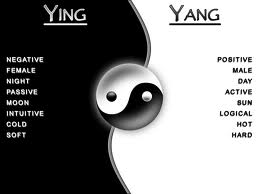
Yin and yang, by the way, are the composite opposites of natural phenomena that must blend to achieve an equilibrium that sustains rather than destroys.

Yin connotes the passive, creative entity associated with the earth, the feminine, valleys, streams and night (moon); yang, the assertive, or male element associated with mountains, the heavens, and the light (sun).. The Swiss psychiatrist Carl Jung drew heavily upon yin and yang for his concepts of anima and animus, the female and male, their synthesis necessary for humans to achieve individuation, or psychical unity,

One of my favorite Drehler renderings is Tao 76.

The Tao as flexibilty:

At birth all people are soft and yielding.
At death they are hard and stiff.
All green plants are tender and yielding.
At death they are brittle and dry.
When hard and rigid,
We consort with death.
When soft and flexible,
We affirm greater life.

But as I suggested at the outset, the Tao lends itself to varied readings encompassing the canopy of human experience.  I like, for example, Brian Browne Walker’s recent translation from the Chinese, Tao Te Ching of Lao Tsu.  It covers all the verses poetically and with a special capacity for capturing antithesis, ever at the core of Tao’s yin-yang approach to experiencing life wholly:

Tao’s warning to  Nature’s despoilers:

Those who dominate nature
And seek to possess it
Will never succeed,
For nature is a living system, so sacred
That those who use it profanely
Will surely lose it;
And to lose nature
Is to lose ourselves (Tao 29).

In closing, I’m absolutely in love with Walker’s verse tribute, here in bold, to the tenor of this great work, which I think you’ll like as well:

        I

       gratefully acknowledge

the wind and the rain,

the snow and the sun,

each and everyone,

the  trees, the water

singing beneath the

ice of frozen rivers,

the mountains

and valleys,

the cold ground

and warm grass

the light and the darkness,

the creatures, poetry,

music, family,

friends,

the gift and

mystery of my life,

the eternal

Tao.

————

May life always find you blessed with peace, centered in the wisdom of the abiding Tao!

rj

How fear erodes love

Like many of you, I follow the news, only to come away frequently dismayed. For all our pretense to rationality, people often seem governed more by passion than reason.  History strikes me as repeated scenarios of human excess, or what Freud astutely called manifestations of the Id, or pleasure principle. I like to think of this inchoate anomaly as the Child within.

There are pretty much seven salient emotions that define and undergird human behavior:  love, hate, hurt, anger, joy, sadness and, last but not least, fear.  The latter generally takes several primary forms: the fear of abandonment, of ineffectualness, of future events, and of mortality.

We’re all afraid in different ways to different degrees, but often don’t realize it, since it’s deeply imbedded within the Unconscious, tracing back to the loss of our hammocked security within our mother’s womb.  We carry no memory of those halcyon days of dependency, but the psyche remembers its glory and the anguish of its loss; so much so that we spend a good deal of our lives seeking commensurate bliss.

I’ve always relished the Edenic garden myth of Genesis with its several resonances of Man’s true estate.  In that story we learn that God made a woman to be a companion for the man he had made, for it wasn’t good for him to dwell alone.  In essence, we’re social creatures and need others to complete ourselves. But I wonder if there’s more going on here, say the underlying, primordial fear in whoever wrote this story of loneliness. Was the writer reflecting his own wrestlings with abandonment?

Such fear may lie behind the quest of so many for validation, whether through achievement, wealth, or power.  We want badly  to be esteemed. We want to draw the crowd.

This fear of abandonment doubtless explains a good deal of romantic love–a quest to find the parental surrogate with us “till death do us part.” Unfortunately, it may also fuel the often failure of this kind of love, since ultimately our happiness derives from within.  Sadly, it perpetuates relationships that frequently denigrate Self.  For a few, death is even preferable to rejection or desertion.

Our world is filled with children who never experienced kinship with an ideal mother in the first place, intensifying their adult quest and making them doubly vulnerable to masquerades of affection.  It may also explain, though inexcusable, much of the misogyny that still abounds expressed in myriad ways, sometimes brutally, by men who project their mother-loss on all women.

Fear of abandonment may lead to a need to control others, as if by putting them on a leash you can prevent their straying.

It also feeds jealousy, that brooding insecurity that suspicions a consort may be enamored away by someone more attractive.

It may likewise accentuate the need for young people to seek the crowded weekend bar, for what’s more hell for a single than a Saturday night alone?

Certainly, it factors into misbehavior and criminality, the need to gain attention or be confined and thus taken care of.

In the public realm, our insecurity renders politics manipulative, with appeals to our fears rather than the public good.  Government becomes a public parent, taking care of all, increasing our dependency, minimizing our self-sufficiency.  We now face an unprecedented federal debt that may do us all in.

Finding our way past this fear is problematic, since we tend to conflate all our fears with thoughts, and thus resort to rationalizations for what we do.  Fears like those of abandonment give rise to a sordid array of  compulsions and resultant follies

But back to where I began.  Properly motivated, love’s the grandest gig in town when conducted rationally in loving another for their individuality and not as some kind of throw pillow. Similarly, finding good friends enhances our lives, not because they cushion our loneliness, but because it makes good sense to bind with those with whom you share commonalty of interest.

Ultimately, our deliverance from anxiety over abandonment comes from diminishing the dominion of feelings; it begins with identifying them and uprooting them as our motivators: What am I really seeking in this relationship? Why am I not seeing the red flags?  Why this person?  Love must be built on more than a therapy for loneliness.  Love is marvelous.  For the right reasons!

The Smile that Hides the Soul

I have a number of books that supposedly clue you into discerning the personalities of people based on their physical gestures, things like hands on hips,  the turned up corners of the mouth, the wrinkling of the forehead or lifting of the eyebrows,  etc.  The problem is that body language can differ from one culture to another.  While close spatial contact with lots of touching may convey caring in, say, a Hispanic culture, it’s apt to raise the specter of territorial invasion among white North Americans.  I know families, for example, that simply don’t touch.

My take on kinetics, or body language, is to approach the subject with caution.  But it’s more than this, too.  I’m simply suspicious of reductionist approaches that promise us a mirroring of the human psyche and, often as not, a means to its manipulation, if we just read the body cues right and fine-tune our approach.

No, we humans are offspring of eons of evolutionary survival stratagems that camouflage thoughts, and with good reason in a world that often cannot tolerate a baring of the soul with its sonar witness to salient distress as a life component we’re uncomfortable  acknowledging.  We feel safer behind walls.

Thus we’re prone to exercising considerable dissembling skills to avoid alienating our fellows and exacerbating our isolation, for no matter what form physical pain, anguish, and grief assume, there’s always the immense individuality of suffering which even the greatest empathy cannot transcend.

Emily Dickinson, like all gifted poets grounded in sensory acuity, knew this well, typically drawing upon Nature for analogies of  concealment, undermining the conflation of appearance with reality in “The Wounded Deer Leaps Highest” with its successive examples of a deer’s leap, a gashed rock, a sprung trap, and, in the human realm, flushed cheeks and even laughter, suggesting a dynamism masking covert wounding:

A wounded deer leaps highest
I’ve hunter the hunter tell;
Tis but the ecstasy of death,
And then the brake is still.

The smitten rock that gushes,
The trampled steel that springs;
A cheek is always redder
Just where the hectic stings!

Mirth is the mail of anguish,
In which it caution arms
Lest anybody spy the blood
And “You’re hurt exclaim.

As the closing stanza poignantly bears witness, we put on a brave act hiding our grief, as though expressing it were a weakness, with resulting pity simply reinforcing our isolated fate.  Culture has insisted men, in particular, should be very good at this.

We are complex in our emotions and body language.  In the space of three years, Dickinson  would lose 26 friends and relatives to death; but she also knew that life goes on and the game must still be played.

–rj


Exploring the motives behind the Boston bombings

In Kentucky, this week brought news of a prisoner at the Eastern Kentucky Correctional Complex dead of stab wounds to his neck inflicted by another inmate.  Authorities are presently still investigating the incident, but what baffles even more is learning that the perpetrator was up for parole this June, or just two months from now.  Once again, human motives entice with their mystery and form the bedrock of modern psychology.

It was my wife who brought this anomaly to my attention, and I replied that maybe it was poor impulse control, which some experts have suggested lies behind a great deal of violence and criminality.  Having worked with juvenile youth in trouble with the law, I find much to support this view.  I also know that people, any of us, have different thresholds or breaking points, for acting out unconscious motives.

This leads to the great question as to whether human beings are fundamentally rational creatures.  The great Irish writer, Jonathan Swift, apparently didn’t think so, writing Gullivers Travels to debunk such pretense.  You’ll remember that in this precursor to Planet of the Apes,  the horses are invested with rationality in contrast to the Yahoos, or human kind, swayed by their passions.  Voltaire wasn’t far behind Swift in harboring a similar view in Candide, in which humanity’s misdeeds obliterate any claim to rationality.

In modern literature, Stevenson’s Dr Jekyll and Mr Hyde, Conrad’s The Heart of Darkness, and Golding’s Lord of the Flies continue in the same vein.  You might say it’s Thomas Hobbes’ philosophical dismissal of Man put to fiction:  “The source of every crime is some defect of the understanding; or some error in reasoning; or some sudden force of the passions.”

Freud and Jung, though perhaps relegated to the back burner these days, established that there lies in all of us powerful, unconscious dynamics motivating our behavior.  We are not always who we seem to be and, thus, may not always comprehend our own motivations.

Last week began with terror in Boston instigated by two brothers supposedly in their embrace of a militant, or jihadist, Islam.  I would quarrel with this, for their motives may again lie deeper in the quagmire of the psychological.  After their violence, the younger brother returned to campus and gave a lift in his car to another student.  Neighbors have commented on their surprise that these two could commit such mayhem.  The wife and in-laws of the older brother have expressed shock.

I think we’ve all seen this script before.  People can be masters of disguise, fooling neighbors, families and friends.  Now comes word from the New York police commissioner that the brothers may have been planning on skipping down to New York to party in the aftermath.  Such callousness, of course, reflects a total lack of conscience that made their savagery possible.

My point is that they may have been in denial of their true motivation, rooted in envy and personal ineffectuality and living primarily on welfare. Now the survivor is offering the conflicts in Iraq and Afghanistan as shallow justification, not radicalization by foreign sources.  More likely, in my mind, they were out to make headlines, buoying up their low self-esteem.  Humans, however, are frequently unable to deal with dissonant truths about themselves and thus will resort to rationalization.  As Sir Walter Scott aptly put it in Marmion, “Oh, what a tangled web we weave when first we practice to deceive.”

I haven’t read him, but Dr. Mark Leary of Duke University has written richly on the subject of motivation, twelve books in all.  One of the biggest motivators, according to Leary, seems to be our need to impress our fellows.  This helps explain the lust for social status–the big house, luxurious car, making big bucks, obtaining power.  But for those who can’t find entry, low self esteem may result in a murderous spite bent on inflicting pain.  Misdeeds like those of Aurora,  Virginia Tech,  or Newtown and, now Boston, are  wrought by losers seeking to get even.  As such, they will always constitute a clear and present danger.

Come to think of it, it was the Tsarnaev uncle in Maryland who publicly called his nephews “losers. ” He got that right!

–rj

Finding serenity

I mentioned in a recent post how I’ve been reading Natame Soseki’s The Gate. I’m nearing the end now and just came upon the protagonist, Sosuke, ruminating that “he must find a way to attain serenity in life, given his many troubles and high anxiety.”

Serenity, I had almost forgotten this word I used to bounce around in my thoughts like a rubber ball.  I think it a beautiful word, right up there with love, compassion, empathy, and the like.

But what is it really?

I’m not a religious person, but one of the best definitions comes from the Bible which speaks of “the peace that passes understanding.”

Similarly, theologian Richard Niebuhr said it exceptionally well in a prayer he devised that later became popular and is sometimes erroneously attributed to St. Francis of Assisi.

Its beginning goes like this:

God grant me the serenity
to accept the things I cannot change,
courage to change the things I can;
and wisdom to know the difference.

Alcoholics Anonymous has liked it so much that they recite it at the opening of their Twelve Step sessions.

Danger lurks, however, when we conflate serenity with passivity.  As the news media confirm daily, we live in a world of virtually palpable wrongdoing and robust evil, sometimes beyond words.   All good people must wage the fight, since indifference or passivity surely contributes to their dominion.

Serenity comes from accepting we may not realize our most ardent desires, even those bathed in love and compassion for those who suffer.  Paradoxically,  accepting our often ineffectuality makes room for serenity’s defining characteristic, transcendence.  I like how Bishop Desmond Tutu put it at a time of failing health:

I don’t think I’ve ever felt that same kind of peace, the kind of serenity that I felt after acknowledging that maybe I was going to die of this TB.

The way of serenity isn’t any sudden showering of the gods, for it necessitates self-emptying, or the surrendering of Ego that fosters our suffering with its myriad desires and its denial of our mortality.  Paradoxically, when we do so, it promotes our healing, or as Victor Frankyl expessed it, “The more one forgets himself–by giving himself to a cause to serve or another person to love–the more he actualizes himself.”

The good news is that we can cultivate serenity by pursuing several avenues that unlock bad habits, replacing them with alternatives promoting our well-being.  Here are some that help me:

Cognitive:  Change the way you respond to things that happen to you.  Do you act or react?  Why let someone’s curt remark destroy your day?  Are there positive alternatives to the negative way you’re interpreting things?  Negative thoughts produce emotional distress.  Pluck them by the root.

Music:  Shakespeare once famously said, “Music  hath charms to soothe a savage  breast.”  Avoid the frenetic.  Indulge the soothing.  Music reduces stress levels by 61%.

Exercise:   Physical activity relieves stress, besides being good for your health, giving you less to worry about.  You may want to add restorative yoga or Tai Chi, which have proven their worth over several millennia and are endorsesd by today’s medical community.

Interests:  Find something you like to do such as gardening, hiking, volunteering.

Friends:  Cultivate relationships with positive people.  Establish a support network.

Humor:   Laughter is its own medicine.  Research indicates it can promote blood flow, boost the immune system, and promote sound sleep.

Reading:  There are many fine reads out there written by experts on reducing stress.  Reading reduces stress by 68% according to cognitive neuropsychologist, Dr. David Lewis.  Reading works because it takes us out of ourselves which, of course, fosters serenity.

Eating:  Certain foods like blueberries, almonds, whole grains, and veggies can improve your mood and reduce stress.  You might like to peruse Elizabeth Somer’s thorough study, Food and Mood.

Organizing:  For some of us, including myself, neatness affords me a sense of being on top of things, and is thus its own tranquilizer.

Sleep:  Establish a regular schedule and keep to it.  Avoid stressful activities or exercise three hours before bedtime; same for intense mental activity.

Nature:  It isn’t accidental that nature inspires a lot of poetry or that many people opt for remote vacations away from our noisy world.  Nature enhances sensory awareness, and with it, provides relief from daily stress.  It’s as close as keeping a garden, taking a walk, and cutting the grass.  You can enhance your experience by learning the names of common trees, flowers and birds.  For me, it’s become synonymous with sanctuary.

Meditation:  I like this one best for its quick returns, especially mindfulness meditation.  (See my essay in Recent Posts, “Mindfuness and the recovery….”).  Breathing and focusing can produce immediate relief and the ability to let go of negative thoughts.  Combined with yoga or Tai Chi, you’ve a double whammy against anxiety.

In all honesty, I’ve not gotten there yet, but I’m trying, remembering that the longest journey begins with the first step.  Serenity comes down to doing what I can, subtracting the difference.

Mindfulness and the recovery of compassion, empathy and joy

Nearly always I come upon new reads, not through lists but, unexpectedly, in the marketplace of life.  I like it this way–the surprise of it, the joy of discovery, the smack of fate rather than coincidence, like the chance finding of a new friend or bumping into wise counsel, unanticipated, in a corner; its aftermath of empowering, the mystery and the beauty of it.

It happened for me this way yesterday when I came upon Mark Williams and Danny Penman’s Mindfulness:  An Eight Week Plan for Finding Peace in a Frantic World.  Intuiting a must read, I immediately downloaded the kindle version, which also features several sound tracks for the exercises.

I’ve been suffering lately from a good deal of anxiety, largely because of health issues.  I’m not used to things being this way and my need to control makes matters worse.  The trick in life is learning how to cope with issues you can’t always resolve.  While I know the script in my head, it’s quite another thing to carry out.

I like this new way of finding yourself and the freedom it brings, not in resolving, but in coping.  Mindfulness actually isn’t new, but a bedrock of Buddhism.  What changes the scorecard for me, however, is the empirical yield of sophisticated brain-scanning methodologies affirming its effectiveness.  What’s more, it can alter brain patterns long term for the better.  Studies show it substantially reduces depression and its frequent return,  improves blood pressure, lessens chronic pain, and boosts the immune system.  In daily life, it promotes empathy, compassion and joy.

I’ve always had great respect for the potential of meditation to promote both physical and emotional wellness.  My mind, however, works like a metropolitan airport, the runways always full.  Mindfulness meditation may thus work better for me, as instead of eliminating your thoughts, you passively observe them in conjunction with focusing on breathing.  You learn that you are not your thoughts and that thoughts can come and go like black clouds in the sky.  This gives you power to catch wrong thinking or patterns before they impact, and it lends space to help you heal.

Mindfulness is all about bringing us to our senses, and by this, I mean the sensory repertoire of touch, taste, sight, smell and sound.  We take ourselves too seriously and in doing so lose direct contact with the cornucopia of life’s potential blessedness all around us when we subjugate the sensory to the taunt reins of the cerebral.

As Williams and Penman point out, we spend our lives “on automatic pilot,” creatures of habit, oblivious to the priorities that really matter.  Mindfulness takes us out of ourselves, giving us power to discern and thus choose.

I began the eight week course yesterday with the “raisin” exercise, a simple endeavor lasting several minutes that helps rekindle the sensory, noting things like weight, texture, taste, smell and tongue movement.  Once again, I rediscovered Flaubert’s maxim that  “anything looked at long enough becomes interesting.”

I hope this exercise is a harbinger of future benefits as it delivered me from my self-concern, channeling my focus on the here and now.  I thought of other raisins to be savored:  a hooting owl in dawn’s pink-fingered rays, a mountain brook bubbling its way, a child’s innocent giggle, the sweet smell of morning cinnamon toast, the spring rose’s first blush.

I thought of Helen Keller’s eloquent wisdom:

“I who am blind can give one hint to those who see: Use your eyes as if tomorrow you would be stricken blind.  Hear the music of voices, the song of a bird, the mighty strains of an orchestra, as if you would be stricken deaf tomorrow. Touch each object as if tomorrow your tactile sense would fail. Smell the perfume of flowers, taste with relish each morsel, as if tomorrow you could never smell and taste again. make the most of every sense.”

Selah!  I am at peace.

–rj

What if: Reducing chronic worry

We worry about a great many things:  How will my interview go? What will people think of me?  Will I pass the test?  How will I pay this bill?  Will I get the loan?  Do I have cancer?  When worry becomes chronic, it can be debilitating, souring our relationships, triggering illness, and fostering pessimism.

Worrying is always an exercise in control.  It prospers because it temporally gives us a fix, falsely giving us a sense we’re in charge, only to reach an inevitably higher threshold to keep our anxieties in check.

One lasting memory I have of my father was his spending long hours in his favorite chair looking out the window, deep in thought, most of it worry.  In doing so he lost a great deal of life’s joy.  It’s what worry does in overdrive. If he had been paid for every worry he’d have been very rich.

Worry is a bully you need to standup to, not indulge, to make it go away.

It’s also a habit and in this case, needs undoing, and like all bad habits, can be unlearned.

The good news is that its remedy may be less difficult than you may have expected, or a matter of getting a handle on it by changing the way you think about life’s inevitable stresses.

The vast majority of our worries fall into three categories, each with its own remedy:

1.    The unimportant:  So much of what we worry about turns out to be trivial if you apply the test of time.  You’re having trouble with a neighbor. That can be unpleasant. Or what about the deadline for getting that assignment done at work?  Or that you may not get that job or promotion you had your heart set on?  Or that Nancy or Bill may not return your affection?  For perspective, ask yourself what would something like this matter a hundred years from now?  

 2.   The unsolvable:   Common sense should tell us the futility of worrying about fixed verities like death and taxes that can’t be changed no matter how we try.  I know such things can be scary, but we lessen our anxiety when we accept life’s randomness and adopt coping strategies to keep ourselves reasonably safe, and pile-up while we can, the nows of life around us as in fostering good relationships, doing what we enjoy, and thinking positively.

3.   The uncertain:  This category may include what we worry about most.  Will I still have a job?  How can I pay my bills?  Is it cancer?  If we could predict the future, we’d invest wisely and profit immensely in the best stocks, bonds and real estate. But even here, the experts at this sort of thing often predict wrongly and fail miserably. The consolation is that most of the uncertainties we worry about never happen or that we”ve simply squeezed out alternative possibilities with one scenario conclusions, making ourselves miserable.  As Montaigne in his inveterate wisdom once put it, “My life has been full of miserable misfortunes, most of which never happened.”  The trick is to accept uncertainty by not reaching conclusions you’ve no way of knowing are inevitable. It’s always a good thing to question your assumptions and consider alternative outcomes.

Summary:  Worry has a positive role when it alerts us to take action as a preventative. It’s why we save for retirement, buy life and health insurance, limit our indebtedness, change our diet, etc.  It becomes a weight when we wake to it, carry it throughout the day, and take it to bed with us at night.  It can harm relationships and affect our physical and mental health.  Remembering the three primary worry types and putting their coping strategies into daily practice can help you retrieve the happiness you mislaid.

Be well,

rj