Climate Imperils South Pacific Paradise

CookIslands-Rarotonga-TeManga-mgl20030609-01

I shudder when I hear people ridicule the idea of global warming.  In the face of overwhelming evidence, they strike me as flat earth mentalities, superficial, and therefore menacing, for surely climate change poses the greatest challenge of our time, with our very survival at stake.

The effects of climate change are already packing a devastating punch, with sea levels rising steadily.   Soon many nations may find themselves resorting to, excuse my phrase, “a Dutch treat,” in desperate attempts to dam the invasive salt tides out.  Holland, after all, knows a thing or two about sea inundation and leads the world in coping technology that famously includes robust dykes and picturesque windmills.  Despite this, its infinite efforts proved futile in 1953 when storm surges overwhelmed Dutch barriers, drowning 2000 people.

Today, Holland is more ready than ever with higher, more massive barriers, establishing deltas of frontal protection for coastal cities like Rotterdam and state-of-the-art early warning systems, replete with precision evacuation plans. New Orleans? (Katrina); New York? (Sandy).   With increased urbanization, Rotterdam is even talking about “floating houses,” i.e, houseboats, encompassing 120 acres. Hey, scarce wonder I admire this tiny nation with colossal mindfulness.

But not all countries have the resources of the Netherlands to pull it off, which means certain disaster for many undeveloped countries, especially in Africa. But none of us is outside the box either, no matter who we are, or where we live, for we live as part of a delicate ecological weave of cause and effect.  Throw a stone into a pond and you’ll get ripples.

That stone is global warming, abetted by human callousness.  Now the ripples of severe heat, drought, forest fires, floods, disease, and food reduction are readily evident, commensurate with incipient streams of thousands of refugees fleeing impoverished–and often war torn–countries to seek a better life among the more affluent nations.

As of last year, there were 435,000 registered asylum seekers in Europe.  Here in America, the preferred immigrant destination, an estimated 12 million undocumented immigrants have breached our borders, a precursor of things to come, for as temperatures rise, so will the press of an increasingly desperate humanity.

The connection between global warming and escalating asylum seekers?  More than you may have surmised.  Consider, for example, Syria’s seemingly intractable bloody civil war. Evidence exists that a prolonged drought may have contributed substantially to increased prices and fewer goods such as food, igniting demands for a solution.  While correlation isn’t proof, the fact is the drought internally displaced 1.8 million of the population.  /Some farmers lost 80% of their livestock.

Similarly, the so-called “Arab spring” with its daily tumultuous mobs crowding the streets of Tunisia, Libya and Egypt was, in reality, food shortage rioting and hardly a revolutionary quest for democratization as the media might have you believe. (See Center for Climate and Security/ http://climateandsecurity.org)

One of the problems when it comes to the matter of global warming is its time warp scenario of a distant future, making it difficult for many of us to wrap our minds around it. Not so for those who find the future intruding upon their doorstep in the here and now.

I like to travel and one place I’d love to visit is the Cook Islands in the South Pacific with its coral reefs, white sand beaches, coconut palms, turquoise lagoons and teeming friendliness, fifteen tiny islands offering gargantuan oasis in a troubled world, a place where people still care about each other and go out of their way not to offend.

Rarotonga, Aítutaki, Atiu, Takimunu–their very names–sensuous with Polynesian rhythms–arouse my appetite for indulgence in this Lotus land in far away seas where time seems to stand still.

And yet these islands of languorous ease are but one savage cyclone away from being virtually washed away in a future world of arbitrary storm violence of increasing intensity and frequency.  As is, the seas continue their relentless rise.

Sadly, just since 1997 the Cook Islands have suffered several devastating cyclones, heavily damaging its infrastructure, particularly the coral reefs central to the protection of the Islands’ coastal zones and lagoons with their teeming biodiversity.   Much of the Cook Islands’ income depends, of course, on tourism and the viability of these reefs and lagoons.

Consider the looming fate of Tuvalu, another South Sea nation of nine atolls covering 26 square miles.   Experts say that in the next 50 years Tuvalu’s entire population, currently 12,000, will need to be evacuated.

Already Tuvalu’s agricultural land has been compromised by progressively higher tides and you can see vistas of palm trees embedded in deep water.  New Zealand has promised to take-in all its people, so they are at least fortunate in that regard.  Not so nearby island nations like the Cook Islands, Fiji, Marshall and Solomon Islands.  In the meantime, coastal erosion and inundation of crop lands has taken on regularity rather than exception.

Many islanders are already choosing to leave, but where can they all go, some 5 million in all?

Ask these islanders if global warming is real. Being on the frontline, they should know.

–rj


Peter Matthiessen: Homegoing

matthiessen

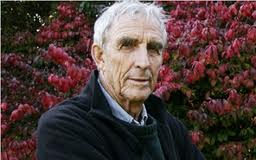
We lost a great writer, Peter Matthiessen, this past weekend. A co-founder of the renowned Paris Review and author of thirty-three books, both fiction and non-fiction, his supreme subject was Nature and, sadly, Man’s pervasive impact upon it:

Species appear, and left behind by a changing earth, they disappear forever, and there is a certain solace in the inexorable. But until man, the highest predator, evolved, the process of extinction was a slow one. No species but man, so far as is known, unaided by circumstance or climactic change, has ever extinguished another. (Wilderness in America [1959]).

Along with other environmentalists, I mourn his loss since his death silences a powerful voice of advocacy for what remains.

I think of the great writers of Nature who have borne sensitive witness to the fragile cocoon of Nature that includes ourselves that I have read across the years, works both of poetry and prose that have refined my sensitivity, shaped my priorities, and taught me awareness of the transience of all living things. All of them have been my teachers.

In poetry, I think of Wordsworth, Shelley, Keats, Hopkins, Dickinson, Frost, Jeffers, for example; as for prose–Thoreau, followed by Muir, Carson, Wilson, Dillard, McKibben and, of course, the most prodigious–Matthiessen.

Of all the books Matthiessen wrote, two stand out to me in particular as robust reads: Shadow Country, a novel featuring a desperado gunned down by his own neighbors in the lawless Everglades wilderness of the nineteenth century; the other, Snow Leopard, a non-fictional account of Matthiessen’s search for the elusive snow leopard in the Himalayas. More than a travel adventure, it depicts the author’s spiritual journey. As stimulating as it is beautiful, lucid in its prose and stunning in its imagery, it may just be one of the finest books to treat both Nature and the Soul ever written and deserves many re-readings.

Both Shadow Country and Snow Leopard won National Book Awards, our country’s most prestigious literary prize. (Matthiessen is the only writer to receive multiple National Book Awards.)

Matthiessen was not your ordinary person. A former CIA spy, son of a well-to-do family, initially conservative in his politics, he ultimately moved to the Left, championing American Indians, Cesar Chavez and exploited migrants, opposed the Vietnam War (bravely refusing to pay taxes) and, of course, became a committed environmentalist.

A deeply spiritual man, he embraced Buddhism following the death of his second wife in 1972, ultimately becoming a Buddhist priest. Snow Leopard reflects a Zen ambience throughout and its acceptance of the Now as the only true consolation we have in a transitory cosmos.

Though he fought ardently for conserving nature, he was troubled by the exponential excesses wrought by anthropocentric interests. As he would lament, “I can hardly point to a victory that we ever won as conservationists that hasn’t been overturned.”

Not all was lost, however:

 …we won some, too — there were long-lasting victories. And if nothing else, we stalled — stalled them off, the developers and exploiters.

All of us Greens will miss him, and yet there remains the fervent advocacy of his many books championing justice; respect for other species and their habitat; the simple life lived mindfully, free from material desire; the valuing of each other.

There couldn’t have been a finer man.

–rj


The UN Panel Report on Global Warming: Is anyone Listening?

Credit: ReutersStringer

If you’ve been keeping up with news about the environment, you’re perhaps aware of this week’s biggest news event, not the elusive search for Malaysia Airlines Flight MH370, or the status quo of Ukraine, or the achieved pinnacle of 7 million enrollees under the Affordable Health Care Act, but the dismal impact studies just completed of the United Nations’ Intergovernmental Panel on Climate Change.  At least this is as it should be, though you’d never know it, given the paucity of TV coverage of the Panel’s exhaustive findings (32 volumes summarized in 49 pages).

Turns out that yesterday’s coverage of the Panel’s released findings by news cable giants CNN, MSNBC, and Fox News was virtually absent, according to media monitoring service, TV Eyes, scanning Monday’s coverage between 6 a.m. and noon: CNN, 40 seconds; MSNBC, 20 seconds; and no surprise, Fox News’s total silence.

Only new comer Al Jazeera America zeroed in on the report, featuring an in depth analysis of the substantial effects of global warming on Bangladesh, which has been battling rising sea levels.

One of the Panel’s projections deals with emerging migrant hoards seeking refuge in other countries.  I didn’t see Al Jazeera’s footage, but I’m aware that India is feverishly building a wall to stem the influx of Bangladesh refugees. (By the way, if you like your news unbiased, al Jazeera is your best bet.)

This sad scenario of media indifference mirrors the largely disturbing absence of the American public’s concern with the issue of global warming, humanity’s greatest threat to its survival since its inauguration into the nuclear age in 1945 and the subsequent threat of nuclear proliferation.

For many, it comes down to jobs vs. environment, or the prioritizing of entitlement interests when the fact is that poverty is likely to grow, not diminish, and affect even the richer nations as global warming’s exponential effects take hold in the guise of drought, record heat waves, forest fires, fierce storms, reduced food production, disease and social violence. Global warming’s incipient effects are already impacting plants and animals and acidifying the oceans with deadly consequences for marine life.

Humans are the primary instigators of global warming, with carbon emissions continuing to rise, and China, the U. S., and India leading the way. Here in my state of Kentucky with its coal slave mentality, the state government has just cut annual coal mine inspections down from 6 to 4.  Sadly, I live in a state where many cars sport specialized plates, bearing “Friends of Coal,” and power companies wage incessant scare propaganda equating coal reduction with rising energy costs and job reduction instead of implementing focused research on clean coal technology.  As I write, a Kentucky coal ash plant has been caught by hidden camera dumping coal ash into the Ohio River and is being sued by the Sierra Club and Land Justice.

Again, Kentucky isn’t alone, but part of a mind-sweep that embraces America. For example, initiatives to promote recycling by outlawing plastic bags are continually defeated even in more friendly environmental places like Seattle.  (I have to confess I feel conspicuous, a seemingly rare upstart, when carrying my cloth bags into Krogers.)

In drought plagued California, swimming pools still adorn Malibu, ball parks sport well manicured grass, and golf courses like Pebble Beach and Cypress Point Club nurture their resplendent greens, even as farmers curtail their crops and California’s biggest cash crop of almond and walnut groves lie in dusty peril.

Golf interests say water consumption amounts to only 1% of California’s total, but omit a plethora of other environmental burdens like fertilizers, pesticides, herbicides, and fungicides, which contribute to contamination of groundwater aquifers and surface waters.

This may seem off the subject, but there’s a new movie in town, Noah, that’s been drawing crowds, grossing $42 million in its initial weekend viewing. I bring it up because in my youthful days of religiosity I remember it took the biblical Noah a year to build the ark and round up the selected progeny of animals (although it escapes me as to what happened to the plants, since there’s no clear indication of their inclusion, though all the animals taken in were herbivores).

Anyway, the guy must have seemed some kind of crazy.  After all, the earth, nourished by mist, hadn’t ever experienced rain before. The gospel of Luke (17:25-27, KJV) makes analogy to Noah and his time, saying

As it was in the days of Noah, so shall it be also in the days of the son of man. They did eat, they drank, they married wives, they were given in marriage, until the day Noah entered into the ark, and the flood came, and destroyed them all.

Looks like Hollywood missed a golden opportunity of transforming an ancient saga of environmental survival into a film of contemporary relevance.

–rj


The Black Box of the Human Heart: Reflections on Missing Flight MH370

malaysian_plane_missing-464343

I ask myself, how does a sleek, technologically sophisticated airliner equipped with all the latest fallback security devices vanish suddenly without a trace?  After a week of wasted mass resources and time, the Malaysian government has finally owned up to a willful human act on the part of someone knowledgeable about aircraft, perhaps one of the Boeing craft’s two pilots.

The anomaly is that no terrorist entity has claimed responsibility.  Suicide may loom as the cause and it has precedent in two previous incidents.  What we do know is that someone turned off the transponder which signals the craft’s location to radar just an hour into flight.

Additionally,  a portion of the Boeing’s 777 Aircraft Communications Addressing and Reporting System (ACARS) was turned off.  The transmitting portion of the ACARS, however, still functioned.  Most pilots wouldn’t know how to turn it off, as it requires access to the electronic bay below the cockpit.  Thus the plane continued to transmit blips picked up by Inmarsit satellite for several hours.  Though not conveying data, these blips can assist in identifying the flight’s general region.

We know, too, that someone was guiding the plane, deliberately flying an alternate aerial pathway, initially traceable by Malaysian military.

From the very beginning (March 8), the mystery of Flight MH370’s disappearance has been compounded by confusion, with a plethora of false sightings, contrary statements, and denials. Unfortunately, other nations with more sophisticated technology such as the United States were denied access to the raw data from the outset, perhaps due to national pride.

It’s also painful to learn that airport security in Kuala Lumpur didn’t bother to check Interpol’s database listing of missing passports.  Subsequently, we learned of two passengers on the flight with stolen passports.  Though seemingly unconnected with the flight’s demise, their boarding of the Malaysia Airlines fight is disconcerting.  I would think twice about booking a flight with this airline, even if they gave me a gratis ticket.  This makes me curious about how the Airline is faring.  Its legal problems are surely just beginning.

We all feel for the families involved–the confusion, the scuttled hopes, the Airline’s reported insensitivity in conveying prompt and frequent updates.  And then, the terrible final moments of the passengers.  Were they conscious or did the pilot ultimately provoke decompression by flying higher after setting a course on automatic pilot for the Indian Ocean known for its huge depths?  This would explain the absence of cell phone messages.  Given this challenge and the sheer vastness of the area being searched, I doubt we’ll ever find the plane’s impact scene and the black box unraveling this flight’s mystery.

The horror of a mind that can work such evil is something I’ve never been able to bend my mind around, though history witnesses to its frequent occurrence.  For all our seeming sophistication, Conrad and Stevenson had it right when they wrote of “the heart of darkness” and the Dr. Jekyll and Hyde complex lurking within Man.  Jung called it the Shadow;  Freud, the Id, those subterranean depths of self-regarding human consciousness that on occasion explode into visibility with a lava of cruelty and hate.

–rj

Virgin Balzac Reader: First Impressions

balzac

I’ve been meaning for a long time to read the 19th century French writer Honoré Balzac (1799-1850), just maybe the first really modern writer of novels in his realistic depiction of people, particularly as to what motivates them, with keen observations of places, trends, and social discourse.  I’m actually embarrassed to say I haven’t tried him out before, as I earned my bread for some forty years teaching literature at the college level.  While it’s true that my specialty was 19th century British literature, I often taught some of the great French masters like Voltaire, Flaubert, Proust, Camus and Gide.

Balzac I somehow missed, maybe because my own profs had themselves passed him by, though considerable talents like Henry James, Flaubert, Zola and Proust modeled much of their work on his methods: long sentences weighted in details; psychological probing focused on characters, both major and minor, fraught with ambiguities amplified by an acutely observant omniscient narrator acquaintance.  Hard to believe they could do this, when you ultimately discover he’s widely thought of as one of our preeminent writers of fiction.

I came upon Balzac finally via The New York Review of Books, which recently published a collection of his short stories as part of its Classic Books series.  It seemed a good place to start with this prolific writer who penned some 85 novels and novellas under the canopy of The Human Comedy in the short space of 20-years, the first modern writer to make a living by his pen.  (Dickens got the message, obviously.)  Some say Balzac worked himself to an early death, writing to pay off his many debts.

Every human type is plainly exhibited in The Human Comedy, which in some ways, makes it analogous to Chaucer’s Canterbury Tales, with the frequent use of a frame device in which a narrator employs a particular circumstance–locale/event–as foreground for story telling.  Unlike Chaucer, a narrator may himself serve as a frame device, setting up minor and highly divergent sub-narrators spinning their own versions of people and events.  What’s more, you don’t have Chaucer’s naive narrator, who often, comically, misses the truth left for readers to discern.  Balzac’s narrators are deeply serious about divulging the truth behind the vagaries of human guises.

My first impressions of Balzac have been mixed.  He’s certainly your acute observer of every palate of human experience, whether of fashion, politics, religion, historical figures and events, even–and surprisingly, coming so early–repressed libido urges within his characters.  There is also a fluidity, or speed, to his sentences, however long they may be, which, unlike James, avoids a tangled syntax.  Frequently, however, he digresses, leaving off finishing one story before indulging in another, followed by still others, as if imitating the desultory nature of most of our conversations.  In a very real sense, Balzac is all about story telling, or the verbal interplay between people.  He could probably have achieved success in drama, and actually did write several plays.

At the moment, I find myself, however, drowning in detail, sprawling sentences sometimes running two pages held together by semicolons and, as I’ve hinted, numerous digressions to the point I lose track of whom and what.  If Balzac is about rendering conversation, surely he misses the mark, for none of us dialogs this way, or the way of essay.

But everything in Balzac, by the same token, has a way of taking on a life of its own, places as well as people, particularly Paris.  You are there, on a street, in a room, an invisible witness to every nuance of quotidian humanity, encyclopedic, exhaustive in minutiae, often disturbing, but always revelatory.

To get at Balzac better and reach a more informed impression I, of course, need to go on to some of his masterpieces like Eugenie Grandet, Père Goriot, and Lost Illusions.  Otherwise, it’s like visiting France and omitting Paris.

–rj

Artemis Cooper’s Fermor Biography: A Great Read

artemiscooperI just finished Artemis Cooper’s splendid biography (Patrick Leigh Fermor: An Adventure).

Fermor, who died in 2011 at age 96,  is widely regarded as the foremost travel writer of the last century–ever observant, never boring, blessed with diligent recall, and unexcelled with metaphor.  When you read Fermor, you’re getting not only description, but history and art amid the first stirrings of fascism in pre-World War II Europe.

The apex of his writing is, of course, his recounting of his three year walk (1933-35) across Europe, or from Rotterdam to Istanbul in two volumes:  A Time of Gifts and Between the Woods and the Water.  Sadly, it’s a Europe that’s largely vanished with its post Great War vestiges of Hapsburg resplendence; of unfettered freedom-loving peasants; of an untamed Danube not yet shackled by dams, bounded by bird-saturated wetlands; of fulsome traditions and extant vernaculars; of a redolent human goodness replete in hospitality transcending class or wealth; of a Europe not yet initiated into the apocalyptic horrors of fascism and the aftermath of Soviet hegemony across Eastern Europe.

Gifted with an ebullient personality along with many a youth’s folly, he made friends easily and treasured these friendships across the years.  They included every day people–shopkeepers, peasants, gypsies, monks–along with luminaries like Evelyn Waugh, Cyril Connally, Dylan Thomas, and Philip Toynbee.  He was especially close to Lawrence Durrell and Ian Fleming.

Here let me confess I prefer biography to autobiography because I think it’s in the former you’re more likely to find honesty than among the raconteurs of the latter, often promoting themselves or embroidering their narrative through boasts or claims difficult to confirm.

Fortunately, we have one surviving Fermor journal that records his journey, assuring us it happened.  Even so, any perusal of it tells us what we surmised–that despite his prodigious talents for memory and detail, no 18-year old could possess the salient knowledge Fermor displays forty years later in his layered recall.

In short, Fermor added details across the years, embellishing his journals through vast, omnivorous reading–often in their original languages (he was fluent in six of them)–in a laboring  akin to fashioning a mosaic.  At times, he confessed to steeping his writing in imaginative touches like riding horseback across the Hungarian steppes.  At heart, Fermor was an ardent Romantic who sometimes linked himself with Byron, who like himself had a fondness for Greece and fought for its freedom.  I wasn’t surprised then that like his hero, he swam the Hellespont.  What shocked me was that he was 69.

Like, Byron, he also had many lady loves, despite his long relationship and later marriage to Joan Raynor, whose mother was heiress to a fortune made in woolens manufacturing. (Be warned that when you learn of Fermor’s women friends you’re probably right to assume they were loves.)  What enabled Joan and Paddy’s marriage to survive these amours was their foreswearing of sexual jealousy.  In fact, Joan was observed providing Paddy with money on one occasion, should he need a woman in his travels.  His early love affair–before Joan– with the Rumanian princess, Balasha Cantacuzine, sixteen years older than himself, is certainly moving in its ultimate tragedy of ensuing separation with the onset of war and later Communism.

I know I risk understatement when I say Fermor had an intensity about him when it came to life.  Passionate, he wanted to know the full palette of human experience and verbally paint its textures.  A consummate intellectual, he never put on airs with his encyclopedic command of many disciplines, whether music, art, history, literature or languages.

He was also a brave and ingenious man, serving in World War II as a naval officer assigned to the Intelligence Corps and dropped into Crete as a liaison to the Cretan resistance against the occupying Germans.  Ultimately, in one of the war’s greatest exploits, he would mastermind the capture of the commanding German general on Crete.  Cooper is very thorough in presenting the many facets of this endeavor and the narrow escape of Fermor and his fellow partisans from German reinforcements in search of their general.

Cooper unflinchingly gives us full portraiture of Fermor.  Not everyone liked his tendency to dominate a conversation, for example.  Politically, he was conservative and despised the Communists who created havoc in civil war Spain, opposed resistance efforts in Crete, and contributed to considerable violence in post-war Greece.  He had also killed a fellow member of his Cretan guerrilla unit in an accidental shooting incident he could easily have avoided with more diligence to gun safety.  As for his writing, some critics argue his long sentences, weighted with details, may trip up readers and frequent digressions provoke their annoyance.  We learn, too, that he smoked as many as seventy cigarettes a day.

Cooper knew Fermor firsthand as the granddaughter of Lady Diana Cooper, who found Fermor captivating and remained a lifelong friend and correspondent:

He could illuminate any subject under the sun, and had a memory that had retained most of the thousands of books he had read over the years.  He knew all her favourite passages from Browning, Shakespeare, Tennyson, Meredith and Keats by heart–and much more besides….

As for Paddy, he worshipped Diana, not just for her indestructible beauty, but for the original cast of her mind, the flourish of her phrases, and the blind eye she turned to convention.

The New York Times has recently listed her book as one of the year’s (2013) most notable biographies; likewise the prestigious New York Review of Books, which had already proven its fondness for Fermor by printing several of his works as “Classics.

Having recently read A Time of Gifts, I found the biography an exceptional read in translating an extraordinary life into an effulgence of candor, scholarship and artistry.  I can’t think of a better memorial.

–rj

Reflections on Boyd’s Any Human Heart: Elegant Solemnity

51PW49A1GYL._BO2,204,203,200_PIsitb-sticker-arrow-click,TopRight,35,-76_AA278_PIkin4,BottomRight,-66,22_AA300_SH20_OU01_Have just finished William Boyd’s riveting novel, Any Human Heart, nearly 500 pages long.  You may remember it had appeared on PBS as an award-winning three part adaptation.  That’s what led me to the novel, the fictional playback of the posthumous journals of Logan Mountstuart, novelist and free lance journalist, whose life of eight and half decades virtually bookends the previous century.  Though a fictional work, Boyd ingeniously transmutes it into a rerun of much of that century’s principal happenings, replete with landmark political and cultural figures.  We almost believe Mountstuart is real.  Boyd even supplies copious endnotes!  Obviously, Boyd did his homework.

Most readers embrace this novel warmly, despite its weight of persistent melancholy.  Life for Mountstuart adds up to luck and unluck and, subtracting the difference, hoping your assets top your liabilities.  For Mountstuart, there’s an awful lot of bad luck, though you could argue much of it’s of his own doing rather than a conspiracy of fate.

There are readers who don’t like him.  I see things differently–Mountstuart an anti-hero in the sense we all are, living behind masks, or an assemblage of many selves, creatures often governed by inertia, self-absorption, insecurity, pettiness, obsessive evolutionary drives– and not infrequently, self-pity; in sum, a panoramic narrative of human finiteness foregrounded in the human condition that forestalls its amelioration.

I see a character refreshingly honest about his failings, indeed his saving grace, who by story end, arrives at a greater, more compassionate self, reaching beyond narcicissm to embracing others; distilling what good elements remain through sharpened awareness; at last accepting of mortality’s proximity in keeping with the tenor of his several journals underscoring the ephemerality of experience.

Any Human Heart just happens to be one of the wisest novels I’ve read in a long time with its plethora of acute observations, reminding me of Herzog’s insightful ruminations in Bellow’s eponymous work.  Accordingly, I’ve jotted some of them down, hoping you’ll like them as I do and perhaps want to try out this novel for yourself: 

On life:

Every life is both ordinary and extraordinary–it is the respective proportions of those two categories that make that life appear interesting or humdrum.

That’s all your life amounts to in the end: the aggregate of all the good luck and the bad luck you experience.  Everything is explained by that simple formula. 

You can’t make these unilateral pacts with life:  you can’t say that’s it, my emotions are securely locked away away, now I’m impregnable, safe from the world’s cruelties and disappointments.

On religion:

It was all a bit obscure to me and now I understand why I don’t give religion much thought.  The awful boredom of uncritical faith.  All great artists are doubters.

I’ve never understood how a person of real intelligence can believe in a god. Or gods.

Shelley was so right:  Atheism is an absolute necessity in this world of ours.  If we are to survive as individuals we can rely only on those resources provided by the human spirit–appeals to deity or deities are only a form of pretense.  We might as well howl at the moon.

On sexual initiation

I could only marvel at her nudity.  It seems to me that first time of mutual nakedness is almost a more lasting memory than the sex act.

On mortality:

We’re not ready for it–for people of our age to die.  We think we’re safe for a while, but it’s a dream.  No one’s safe.

That moment when you realize quite rationally, quite unemotionally–that the world in the-not-so-distant future will not contain you: that the trees you planted will continue growing but you will not be there to see them.

We all want a sudden death but we know we’re not all going to be provided with one.  So our end.  So our end will be our ultimate bit of good or bad luck–the final addition to the piles.

On NYC:

I miss New York more than I would have imagined.  I miss those perfect spring days.  Wraiths of steam rising from the manhole vents backlit by slanting early morning sun.  Cross streets thick with cherry trees in bloom.  The way time seems to slow to a crawl in diners and coffee shops.

On health:

Those of us who have the luck to enjoy good health forget about this vast parallel universe of the unwell–their daily miseries, their banal ordeals.  Only when you cross that frontier into the world of ill-health do you recognize its quiet, massive presence, its brooding permanence.

On pets:

He’s only an old dog, I tell myself, and he lived a full and happy dog’s life.  It may sound stupid, but I loved him and I know he loved me.  That meant there was an uncomplicated traffic of  mutual love in my life and I find it hard to admit it’s over.

On good writing:

The studied opulence, the ornament for the sake of ornament, grows wearing and one longs for a simple, elegant, discursive sentence.  This is the key difference:  in good prose precision must always triumph over decoration.

–rj


A great talent: Patrick Leigh Fermor’s A Time of Gifts

fermorI’m always eager for a good read and get ecstatic when I find one.  There are so many possibilities out there that I try to choose wisely, usually from several sources such as NPR, The Times Literary Supplement, and my favorite with its nearly 200 reprints of notable works, The New York Review of Books.

The latter is the source for my newest read, Patrick Leigh Fermor’s standout travel saga, A Time of Gifts (1977).  I’m embarrassed at missing out on Fermor these many years, liking travel narratives as I do, but then that’s why I keep the NYRB close-by.

Fermor was just an amazing guy in explorer Sir Richard Burton mold, fiercely independent, assertive and bold; linguistically gifted, courageous and cunning.  Joining the Irish Guards In World War II, he fought in Greece and served with a guerrilla unit on the isle of Crete, where he disguised himself as a shepherd for 18 months, living in mountain caves, while successfully master-minding the abduction of a German general.  He was knighted in 1994, for his service to literature and promotion of British-Greek relations.

In A Time of Gifts, Fermor begins his recall years later (age 62), of his three year walk across Europe to Constantinople as a 19-year with little more than a backpack in 1933. He actually only gets half-way by the close, and so there’s a sequel, Between the Woods and the Water, but even then, you don’t get to the Bosphorus.  It little matters, for what we have is splendid, as we follow this young man hobnobbing with rich and poor, gypsies and priests, occasionally sleeping in ancient monasteries.  His account of Germany in 1933, which saw Hitler becoming Chancellor, fascinates.  On one occasion, he strays into a beer hall filled with Nazis.

What attracted me to A Time of Gifts amid a plethora of can’t go wrong choices were multiple reviewer comments on Fermor’s stylistic talent, one reviewer likening him to Sir Thomas Browne as the best of the best prose masters across the several centuries. As a former teacher of English for some forty years, I’m an aficionado of style, or the mastery of the cadence of the English sentence.  Talented writers know the weave of sentences spun into art, exemplary in the literary world, especially in the 19th century in the likes of Newman, Ruskin, and Pater.

Of course, I’ve only begun A Time of Gifts, but his writing already excites me with its prowess, not only in its trenchant rhythms, but through its sensory capacity for total awareness.  To possess such talent for minutiae down to a grain of sand like this would make Flaubert (le mot juste) proud.  Let me try out a passage on you:

The gables of the Rhine-quays were gliding past and, as we gathered speed and sailed under one of these spans of the first bridge, the lamps of Cologne all went on simultaneously. In a flash the fading city soared out of the dark and expanded in a geometrical infinity of electric bulbs. Diminishing skeletons of yellow dots leaped into being along the banks and joined hands across the flood in a sequence of lamp-strung bridges. Cologne was sliding astern. The spires were the last of the city to survive  and as they too began to dwindle, a dark red sun dropped through bars of amber into a vague Abendland that rolled glimmering away towards the Ardennes.

Informed mastery like this, housed in rhythmic sentences acute with colorful detail, sets Fermor apart as one of our greatest travel writers since John Ruskin.

You can read more about him in Artemis Cooper’s magnificent biography (2012).  Having full access to his papers, she tells us that Fermor left behind a completed draft that gets him to Constantinople and that it will be published soon.

Despite losing some of his sight and hearing, he remained active almost up to the day of his death at age 96 in 2011.

In a book he had been reading, he wrote:  “Love to all and kindness to all friends, and thank you for a life of great happiness.”  Now that’s an epitaph we can only envy.

–rj

Finding centeredness and discovering peace the Tao way

yin

Whenever I fix lunch for myself, which is usually everyday other than weekends, I like to read something with it, since my spouse isn’t normally present to make lunch interesting.  The other day I found a book on the shelf I hadn’t read since it first came out in 1990, Diane Drehler’s The Tao of Peace, predicated on Lao Tsu’s monumental Tao Te Ching, deriving back to two and a half millennia ago.  Translated more than any other work except perhaps the Bible and the Koran, this brief work may just well be the wisest book ever written, though relatively brief in its 5000 words.

Rich in its gleanings of human experience, it teaches the Tao (pronounced with a d), a term difficult to translate but approximating something like Reality, or Nature, or the system of things.  I like to think of its as the Way, referring to “the way of things”.  You name what humans encounter, the Tao Te Ching deals with it, offering seekers an inner peace in an often troubled world through simple, balanced living that promotes a psychological equilibrium.

In its Chinese text, the Tao is essentially a poem replete with an ambiguity that actually enriches its capability for multiple interpretation.  Accordingly, you can find many texts that are hardly word-for-word translations, but adaptations of what seems the salient undergrowth of each verse or numbered section.  Some adaptations excel, capturing not only the essential simplicity of the original manifested through its economy, but also its rich resonance latent in its density.  The very best renderings are sheer poetry, mirroring the Tao’s intent in brilliant, often modern, metaphor.  Drehler’s readings constitute revisions, rather than translations, but are sumptuous and compelling in their summary eloquence.  Here are a sample few:

The Tao as enduring counsel:

Why did the ancients cherish the Tao?
Because through it
We may find a way of peace,
Leaving behind a world of cares,
And hold the greatest treasure under heaven (Tao 62).

The Tao as journey:

A tree that reaches past your embrace grows from
one small seed,
A structure over nine stories high begins with a handful
of earth.
A journey of a thousand miles starts with a single step ((Tao 64)

The Tao as synthesis:

All life embodies yin,
And embraces yang,
Through their union (Tao 42).

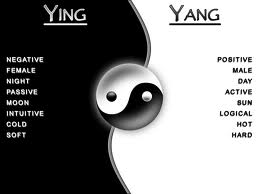
Yin and yang, by the way, are the composite opposites of natural phenomena that must blend to achieve an equilibrium that sustains rather than destroys.

Yin connotes the passive, creative entity associated with the earth, the feminine, valleys, streams and night (moon); yang, the assertive, or male element associated with mountains, the heavens, and the light (sun).. The Swiss psychiatrist Carl Jung drew heavily upon yin and yang for his concepts of anima and animus, the female and male, their synthesis necessary for humans to achieve individuation, or psychical unity,

One of my favorite Drehler renderings is Tao 76.

The Tao as flexibilty:

At birth all people are soft and yielding.
At death they are hard and stiff.
All green plants are tender and yielding.
At death they are brittle and dry.
When hard and rigid,
We consort with death.
When soft and flexible,
We affirm greater life.

But as I suggested at the outset, the Tao lends itself to varied readings encompassing the canopy of human experience.  I like, for example, Brian Browne Walker’s recent translation from the Chinese, Tao Te Ching of Lao Tsu.  It covers all the verses poetically and with a special capacity for capturing antithesis, ever at the core of Tao’s yin-yang approach to experiencing life wholly:

Tao’s warning to  Nature’s despoilers:

Those who dominate nature
And seek to possess it
Will never succeed,
For nature is a living system, so sacred
That those who use it profanely
Will surely lose it;
And to lose nature
Is to lose ourselves (Tao 29).

In closing, I’m absolutely in love with Walker’s verse tribute, here in bold, to the tenor of this great work, which I think you’ll like as well:

        I

       gratefully acknowledge

the wind and the rain,

the snow and the sun,

each and everyone,

the  trees, the water

singing beneath the

ice of frozen rivers,

the mountains

and valleys,

the cold ground

and warm grass

the light and the darkness,

the creatures, poetry,

music, family,

friends,

the gift and

mystery of my life,

the eternal

Tao.

————

May life always find you blessed with peace, centered in the wisdom of the abiding Tao!

rj

Character: Passport to Destiny

English: Virgil Reading the Aeneid to Augustus...
English: Virgil Reading the Aeneid to Augustus, Octavia, and Livia (Photo credit: Wikipedia)

I’ve read a lot of books across the years, not surprising I suppose for someone who’s invested more than forty-years in academia.  Of those many books, there are a chosen few I’d take with me into island exile.  Let me list them.  I’d add some poets, too, but not right now:

David Copperfield
Walden
The Varieties of Religious Experience
On Liberty.
Mill’s Autobiography
The Odyssey
To Have or To Be
How to Find Freedom in an Unfree World
Ulysses
The Aeneid

I fashioned this list in less than a minute, since each of the items triggers easily recalled memories of excited discovery, awe, and insight.  David Copperfield, for example, I read in eighth grade. From the very beginning I loved it, identifying with David, whose childhood, in good measure, mirrored my own as well as that of Dickens.

Walden, with its eloquence, gave sanctuary not only in wilderness, but in its verbal tranquility.

And there’s John Stuart Mill, that proverbial “saint of rationalism,” two of his books here.  On Liberty taught me to hold out against censorship for the rest of my days; how to discern between just and unjust laws; the importance of protecting minority voices in a democratic society.

His Autobiography demonstrated a first rate humanity, a life of balanced thought and feeling, a passion for social justice. There isn’t any person I’d like to imitate more.

I could go on about the remaining works, too, as each of them has constituted a grace upon my life–a favoring of wisdom and influence.  Of all of them, the one I esteem most is surely Vergil‘s The Aeneid, which I chose to teach in my literature classes for a good many years.

Now I’m not about to launch a book review here.  I simply offer that this ancient, extended poem, ostensibly a tribute to his patron, Augustus Octavian, whom some historians rank as among the wisest of rulers, ultimately deals with what the Romans regarded as pietas, or the ability to rule one’s passions.  As such it mirrors the civic code for good leaders everywhere, sadly forfeited by most.

But The Aeneid is good for you and me as well in its call for balanced living in the stasis of mind and heart, thought and emotion, logos and pathos.  To conquer yourself is to conquer a world.

When I studied in Europe on two occasions, England and France, I came upon an important word, character, something I find rarely talked about in America.  Europeans would often talk of someone’s character, encompassing integrity markers like dependability, perseverance, equanimity, fairness, empathy, all adding up to a fundamental decency. It’s what Vergil advocated. It’s what Mill is all about. It’s what I’d like, when all things are said and done, people to say of me:  “I like his character.”  I think it’s what you want too.

Our schools need to inculcate character along with academics. What helps assure success isn’t so much raw intelligence or mastery of a discipline, but the ability to govern oneself exemplified in channeling our emotions into riverbeds of altruism that foster others even as it nurtures our best selves in well-doing.

I like how Daniel Goleman summed it up in his best selling Emotional Intelligence (1995):

Much evidence testifies that people who are emotionally adept–who know and manage their own feelings well, and who read and deal effectively with other people’s feelings–are at an advantage in any domain of life, whether romance and intimate relationships or picking up the unspoken rules that govern success in organizational politics.  People with well-developed emotional skills are also more likely to be content and effective in their lives, mastering the habits of mind that foster their own productivity (p. 36).

Life doesn’t just happen.  We make it happen, for good or bad. We do it best when we learn pietas, or character, with its legacy of decency and discipline fostering empowerment and destiny..

Be well,

rj